
Festive Kids Christmas Handprint Crafts
 By Speech Blubs Team•Dec 22, 2025•25 min.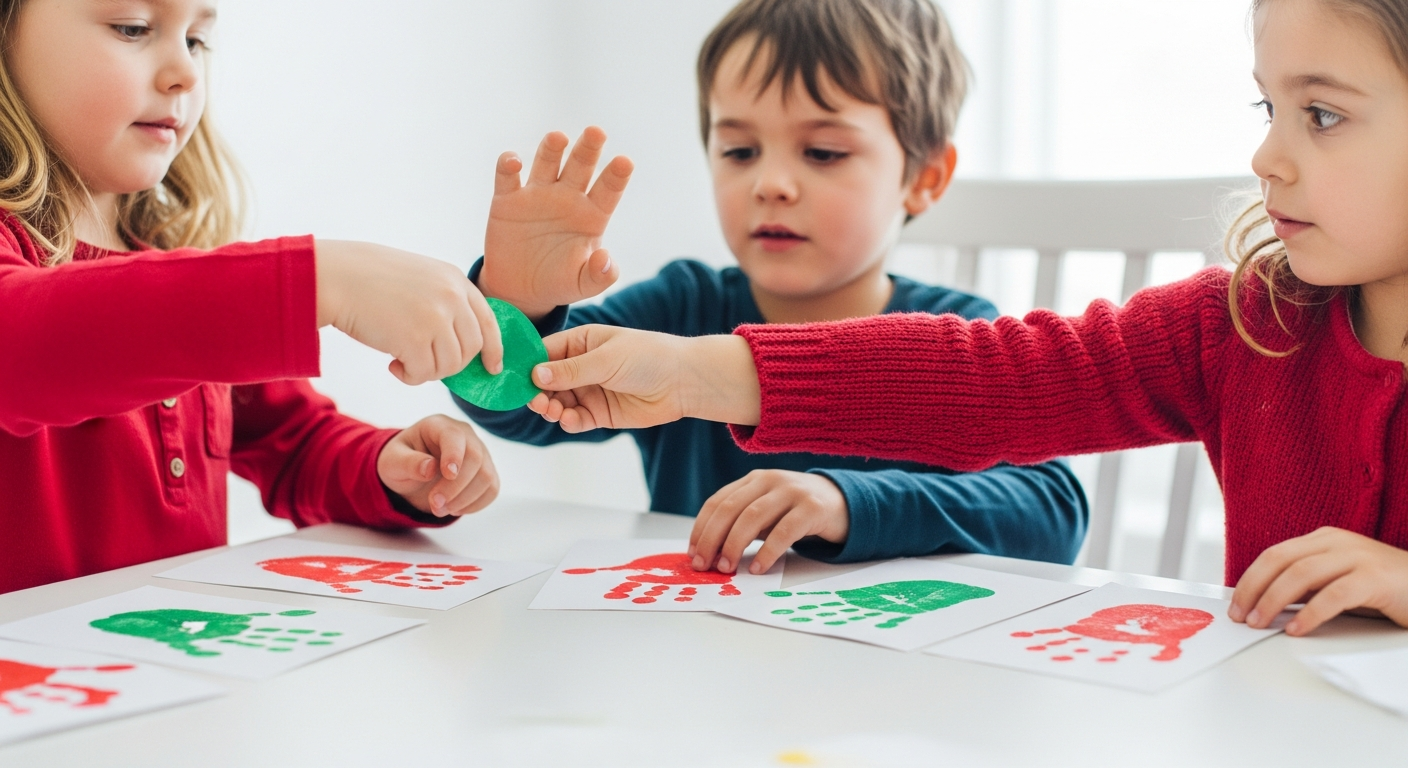
Table of Contents
- Introduction
- Why Handprint Crafts Are More Than Just Art
- Getting Started: Essential Supplies for Handprint Crafts
- Classic Christmas Handprint Craft Ideas for Kids
- Tips for a Smooth and Joyful Crafting Experience
- Beyond the Craft: The Lingering Benefits for Communication Skills
- How Speech Blubs Elevates Your Child's Communication Journey
- Unlock the Full Potential with Speech Blubs' Yearly Plan
- Conclusion
- FAQ
The holiday season twinkles with magic, laughter, and the precious moments we share with our children. For many parents, this time of year is a quest to bottle up the fleeting joys of childhood, to create tangible memories that will warm hearts for years to come. What if we told you there's a simple, heartwarming activity that does exactly that, while also quietly nurturing your child's development? We're talking about kids Christmas handprint crafts. These aren't just adorable decorations; they're tiny time capsules, capturing the size of your child's hand at a specific moment in time, infused with their unique creativity.
In this comprehensive guide, we'll dive into the enchanting world of Christmas handprint crafts. We'll explore why these projects are so much more than just a fun afternoon activity, detailing their profound developmental benefits and offering a sleigh-full of imaginative ideas. Most importantly, we'll show you how to maximize these moments, turning simple crafting into powerful opportunities for communication and learning, especially when paired with enriching experiences like Speech Blubs. By the end, you'll be ready to transform little hands into timeless treasures and create beautiful memories that truly speak volumes.

Introduction
There's something uniquely captivating about a child's handprint. It's a testament to their growth, a tiny mark of their presence in the world. Imagine preserving that mark, year after year, as a festive ornament or a cherished piece of holiday art. These aren't just crafts; they are tangible memories, capturing the magic of childhood Christmases in a way that photographs sometimes can't. Far from being just decorative, engaging in handprint crafts offers a rich tapestry of developmental benefits, from fine motor skill refinement to sparking imaginative conversations.
This blog post will guide you through the wonderful world of kids' Christmas handprint crafts, offering a treasury of ideas that are both fun to make and meaningful to keep. We'll delve into the many ways these simple activities can support your child's growth, touching on language development, sensory exploration, and emotional expression. Furthermore, we’ll highlight how tools like Speech Blubs can seamlessly integrate into your crafting routine, transforming creative play into powerful communication practice. Get ready to gather your supplies, embrace the festive mess, and create not just crafts, but lasting connections and developmental leaps with your little ones.
Why Handprint Crafts Are More Than Just Art
At first glance, a handprint craft might seem like a simple artistic endeavor, a way to pass an afternoon. However, for young children, these activities are profound multi-sensory experiences packed with developmental advantages. Engaging in handprint crafts offers a unique blend of memory-making, skill-building, and family bonding that goes far beyond the finished product.
Preserving Precious Memories
Children grow up incredibly fast, and the holidays often highlight just how quickly those little hands become bigger. Handprint crafts provide a tangible snapshot of your child's size and stage of development at a particular moment. Imagine unwrapping an ornament made years ago, seeing that tiny handprint, and instantly recalling the giggles and focused concentration that went into making it. These crafts become family heirlooms, evoking nostalgia and reminding us of cherished Christmases past. They’re a beautiful way to mark the passage of time and celebrate your child's journey.

Boosting Developmental Skills
Beyond sentimental value, handprint crafts are a powerhouse for skill development across several domains:
- Fine Motor Skills: The act of pressing a hand into paint, grasping a paintbrush, or gluing on embellishments requires precision and control. These actions help strengthen the small muscles in the hands and fingers, which are crucial for tasks like writing, buttoning clothes, and even articulation in speech. The hand-eye coordination involved is also a significant benefit.
- Sensory Exploration: The tactile experience of paint, glue, and different textures (glitter, cotton balls, felt) provides rich sensory input. Children learn about wet, sticky, smooth, rough, and soft through direct engagement. This sensory exploration is vital for brain development and helps children process and understand their environment.
- Cognitive Development: Following instructions ("First, dip your hand in the paint, then press it onto the paper"), understanding concepts ("big" hand vs. "small" hand, "up" vs. "down"), and problem-solving (what color next? where should the eyes go?) all contribute to cognitive growth. Planning the steps and seeing the creation come to life builds sequential thinking.
- Language and Communication: This is where handprint crafts truly shine as a communication opportunity. As you craft together, you naturally engage in conversation. You can describe colors ("What a bright red!"), actions ("Let's press your hand down"), and objects ("That's Santa's beard"). Asking open-ended questions like "What do you want to add next?" or "Tell me about your reindeer" encourages expressive language. For parents whose children are working on their communication skills, these moments are invaluable. Speech Blubs, which was born from our founders' personal experiences with speech problems, complements these activities perfectly by offering a scientifically-backed, playful approach to developing key communication skills. We'll delve deeper into this connection shortly.
- Emotional Expression and Creativity: Crafts offer a safe space for children to express themselves, make choices, and feel a sense of accomplishment. The pride they feel in their handmade creation boosts self-esteem and confidence.
Fostering Family Connection and Bonding
In our busy lives, dedicated, screen-free family time can sometimes feel elusive. Handprint crafting provides a wonderful excuse to slow down, connect, and create together. It's an opportunity for shared laughter, collaborative effort, and meaningful conversation. These moments strengthen bonds, create a sense of shared history, and lay the foundation for positive communication habits within the family. It's a time for parents to model patience, encouragement, and the joy of creation.
Getting Started: Essential Supplies for Handprint Crafts
Before the artistic fun begins, a little preparation goes a long way to ensure a smooth and enjoyable crafting experience for everyone. Having the right materials at hand not only simplifies the process but also opens up more possibilities for creativity and discussion.
Here's a checklist of essential supplies:
- Child-Safe Paints: Non-toxic, washable tempera or acrylic paints are a must. Offer a variety of festive colors like red, green, white, brown, and gold.
- Paper or Canvas: Sturdy cardstock, construction paper, or small canvases work best for handprints. Consider different colors to make your crafts pop.
- Paint Brushes or Sponges: For applying paint evenly to hands, or for adding details later.
- Wipes or Damp Cloths: Essential for quick clean-ups, especially for messy hands!
- Protective Gear: An old t-shirt or smock for your child, and newspaper or a plastic tablecloth to protect your workspace.
- Embellishments: Get creative with glitter, googly eyes, cotton balls (for Santa's beard!), small pom-poms, pipe cleaners, felt scraps, buttons, and ribbons.
- Child-Safe Glue: A glue stick or white school glue for attaching embellishments.
- Scissors: Child-safe scissors (for older kids) or adult scissors for cutting shapes.
- Markers or Permanent Pens: For adding details, names, dates, or personal messages.
- Optional: Hole punch, string/ribbon (for ornaments), laminating sheets (for preservation).
Turning Supply Gathering into a Language Lesson
Even the act of gathering supplies can be a rich language-learning opportunity! Involve your child in finding the "red paint" or asking "Where is the glue?" This builds vocabulary and encourages them to follow simple instructions. For children who are still building their vocabulary, you can narrate each step: "Let's find the red paint," or "We need to get the paper." This kind of repetition and contextual learning is incredibly powerful.
If your little one is working on identifying colors or naming objects, our Speech Blubs app offers dedicated sections like "Colors" and "Words" that can reinforce these concepts. Imagine them practicing "red" and "green" in the app, then immediately applying that knowledge while choosing paint for their Christmas tree handprint. It's a wonderful synergy of learning and play!
Classic Christmas Handprint Craft Ideas for Kids
Now, let's dive into some specific, delightful handprint craft ideas that are perfect for the Christmas season. Each idea comes with suggestions for how to turn the crafting process into a valuable communication experience, complemented by the methodologies we champion at Speech Blubs.
1. Handprint Santa Claus
What you'll need: White cardstock, red paint, white paint, pink or peach paint, black marker, googly eyes, cotton balls, glue.
How to make it:
- Paint your child's palm red, leaving the thumb and four fingers unpainted.
- Paint the thumb pink/peach (for Santa's face) and the four fingers white (for his beard).
- Press the painted hand firmly onto the cardstock, with fingers pointing down.
- Once dry, add details: draw a small hat on the red palm (using a black marker for an outline and a white dot for a pom-pom), glue on googly eyes, and use cotton balls for the hat's trim and a fluffy beard. Draw a nose and a rosy cheek.
Speech Blubs Connection: This craft is fantastic for targeting descriptive language and body parts.
- Vocabulary: "Red" hat, "white" beard, "pink" face, "round" eyes.
- Actions: "Paint," "press," "glue."
- Describing: "Santa has a long white beard!" "His hat is pointy."
- Storytelling: Talk about what Santa does, where he lives, and what he brings. For a parent whose child loves learning about people and their roles, the "People" section within Speech Blubs can help solidify vocabulary related to facial features and descriptive adjectives, making the craft even more meaningful.
2. Handprint Christmas Tree
What you'll need: Green paint, brown paint, paper (white or light blue), glitter, small pom-poms, star stickers, glue.
How to make it:
- Paint your child's hand entirely green.
- Press the handprint onto the paper, fingers pointing upwards. Repeat 2-3 times, slightly overlapping and layering the handprints to form a tree shape. You can also do multiple hands (e.g., green, then a lighter green, then a darker green) for a fuller effect.
- Use brown paint to add a tree trunk at the bottom.
- Once dry, decorate! Glue on glitter, small pom-poms as ornaments, and place a star sticker at the top.
Speech Blubs Connection: This craft is a natural fit for concepts like colors, counting, and spatial awareness.
- Colors: "Green" tree, "red" pom-poms, "yellow" star.
- Counting: "How many fingers do you see?" "Let's count your handprints."
- Spatial Concepts: "On top," "at the bottom," "next to."
- Requesting: "More glitter, please!" "Can I have a red pom-pom?" If your child is working on early counting or color identification, the "Colors" and "Numbers" categories in Speech Blubs can provide excellent practice, helping them connect the virtual learning with the real-world craft.
3. Handprint Reindeer
What you'll need: Brown paint, paper, googly eyes, red pom-pom (for Rudolph's nose), markers.
How to make it:
- Paint your child's hand entirely brown.
- Press the handprint onto the paper, fingers pointing upwards. The palm becomes the reindeer's head, and the fingers become the antlers.
- Once dry, glue on googly eyes and a red pom-pom for the nose.
- Use a black marker to draw a mouth and small ears.
Speech Blubs Connection: This is perfect for animal sounds, body parts, and imaginative play.
- Animal Sounds: Practice "neigh" or "snort" for the reindeer.
- Body Parts: "Eyes," "nose," "antlers."
- Storytelling: Talk about Rudolph and his shining nose. "What does Rudolph say?" "Where does he live?"
- Actions: "Fly," "pull." For a child who loves animals, the "Animal Kingdom" section of Speech Blubs offers engaging video modeling activities that help children produce animal sounds and names. Practicing "moo" and "baa" with the app can build foundational skills that translate to new animal sounds like those for a reindeer.
4. Handprint Mistletoe or Wreath
What you'll need: Green paint, red paint, paper, red pom-poms or small red buttons, glue, ribbon.
How to make it:
- Paint your child's hand green.
- Press multiple green handprints in a circular pattern on the paper to form a wreath or mistletoe bunch. You can vary the direction of the fingers slightly.
- Once dry, glue red pom-poms or buttons onto the "leaves" as berries.
- Add a ribbon bow at the top for a festive touch.
Speech Blubs Connection: This craft encourages descriptive language, shape recognition, and spatial concepts.
- Shapes: "Circle" for the wreath, "round" berries.
- Colors: "Green" leaves, "red" berries, "red" ribbon.
- Actions: "Press," "glue," "tie."
- Concepts: "Many" handprints, "all around." This activity supports vocabulary building for specific holiday items and descriptive adjectives, skills that are actively nurtured through Speech Blubs’ diverse categories.
5. Handprint Angel
What you'll need: White or skin-tone paint, yellow paint, paper, glitter, small piece of yellow pipe cleaner or ribbon (for halo), marker.
How to make it:
- Paint your child's hand white or a skin tone.
- Press the handprint onto the paper, fingers pointing downwards. This will be the angel's body and dress.
- Once dry, paint a small circle for the head above the palm.
- Use yellow paint to add wings on either side of the body, or paint yellow handprints overlapping the body to create wing shapes. Add yellow paint or glitter for hair.
- Glue a small loop of yellow pipe cleaner or ribbon above the head for a halo. Draw a gentle face with a marker.
Speech Blubs Connection: This craft can inspire discussions about kindness, gentleness, and imaginative play.
- Vocabulary: "Wings," "halo," "gentle," "sparkle."
- Concepts: "Up high," "flying."
- Emotions: Discussing feelings of peace and joy associated with angels.
- Action Verbs: "Fly," "sing," "watch." Our comprehensive approach at Speech Blubs, which blends scientific principles with play, ensures that children are exposed to a wide array of words and concepts in an engaging way, perfectly complementing the imaginative play of crafting an angel.
6. Handprint Snowman/Snow Globe
What you'll need: White paint, light blue paper, orange marker, black marker, small twigs, buttons, glitter.
How to make it:
- Paint your child's hand white.
- Press the handprint onto the blue paper, fingers pointing downwards. The palm forms the snowman's body, and the fingers can be the base.
- Once dry, use an orange marker for a carrot nose and black marker for eyes and a button mouth.
- Glue on small buttons for the snowman's body and tiny twigs for arms.
- Add a scarf and hat using felt scraps or markers. Sprinkle glitter around for a snowy effect.
Speech Blubs Connection: Great for winter vocabulary, colors, and descriptive adjectives.
- Winter Vocabulary: "Snow," "cold," "snowman," "hat," "scarf."
- Shapes & Colors: "Round" buttons, "orange" nose, "black" eyes.
- Sequencing: "First we paint, then we press, then we decorate!"
- Concepts: "Melting," "freezing." For a child working on connecting words with actions and objects, Speech Blubs provides a rich environment for learning, with categories like "Words" and "Actions" that reinforce these concepts through engaging video modeling.
7. Handprint Ornaments (Salt Dough or Clay)
What you'll need: Salt dough (recipe below) or air-dry clay, rolling pin, cookie cutters (optional), straw or skewer, festive paint, glitter, ribbon.
Salt Dough Recipe: 1 cup flour, 1/2 cup salt, 1/2 cup water. Mix well, knead until smooth. How to make it:
- Roll out salt dough or clay to about 1/4 inch thickness.
- Help your child press their hand firmly into the dough/clay to make a clear impression.
- Use a cookie cutter or knife to trim around the handprint, or simply leave it as an oval/circle.
- Use a straw or skewer to create a hole at the top for hanging.
- Bake salt dough at 250°F (120°C) for 2-3 hours until hard, or let air-dry clay dry according to package instructions.
- Once cooled/dry, paint and decorate! Add glitter, write the year, and thread a ribbon through the hole.
Speech Blubs Connection: This craft offers extensive opportunities for sensory vocabulary and following multi-step instructions.
- Sensory Words: "Soft," "sticky," "smooth," "hard," "rough."
- Action Verbs: "Roll," "press," "cut," "bake," "paint."
- Sequencing: "First, we mix the dough. Next, we roll it flat." This hands-on process directly supports language development by associating words with tangible experiences. Activities within Speech Blubs are designed to develop these foundational language skills, allowing children to practice "action words" and "descriptive words" in a dynamic, play-based environment.
Tips for a Smooth and Joyful Crafting Experience
To truly make these Christmas handprint crafts a bonding and developmental success, a few simple strategies can transform potential chaos into cherished memories.
- Preparation is Your Best Friend: Lay out all materials before you call your child. Cover your workspace, have wipes ready, and ensure paint pots are open. Explaining the steps beforehand can also help manage expectations and excitement.
- Embrace the Mess (Within Reason): Handprint crafts will get messy, and that's part of the fun! Dress your child in old clothes, and accept that some paint might stray. Focus on the joy of creation rather than pristine cleanliness.
- Focus on the Process, Not Perfection: The goal isn't a gallery-worthy masterpiece but a unique creation from your child's hand. Celebrate their effort, their choices, and the joy they find in making. Avoid correcting their artistic decisions.
- Integrate Language Opportunities Naturally:
- Narrate: "I'm painting your hand green now." "You're pressing it down so carefully!"
- Ask Open-Ended Questions: "What color should Santa's beard be?" "How does the glitter feel?" "Tell me about your reindeer's antlers." These questions encourage more than a 'yes' or 'no' answer, prompting descriptive language.
- Label and Describe: Point out colors, shapes, textures, and actions as they happen. "This is a smooth pom-pom." "You're gluing the eyes on."
- Sing Songs: Christmas carols or simple songs about colors and actions can make the experience even more engaging and language-rich.
- Allow for Choice and Independence: Offer choices (e.g., "Do you want red or green glitter?"). Let them glue their own embellishments (even if they're a bit lopsided!). This fosters autonomy and builds confidence.
- Make it a Team Effort: Sit with your child, participate, and enjoy the moment together. Your engagement is the most valuable tool for fostering communication and connection.
Beyond the Craft: The Lingering Benefits for Communication Skills
While the immediate joy of creating a handprint craft is clear, the long-term benefits for your child's communication skills are equally significant. These seemingly simple activities lay critical groundwork for confident expression and understanding.
- Vocabulary Expansion: Crafting introduces a wealth of new words: colors, shapes, textures, action verbs (press, glue, cut, paint), and specific holiday vocabulary (Santa, reindeer, angel, ornament). Repeated exposure in a fun, tangible context helps cement these words in your child's memory.
- Following Instructions: From gathering supplies to executing each step of a craft, children practice receptive language skills by listening to and following multi-step directions. This skill is foundational for learning in all areas and for effective communication.
- Expressing Creativity and Self-Expression: The ability to make choices, experiment with materials, and create something unique fosters a sense of self and encourages children to express their ideas non-verbally, which often leads to verbal expression as they describe their creations.
- Storytelling and Narration: Your child's craft becomes a prop for storytelling. They can describe how they made it, what it represents, and who it's for. This develops narrative skills, sequencing events, and using descriptive language.
- Fine Motor Skills and Speech Articulation: The strengthening of fine motor skills in the hands and fingers might seem unrelated to speech, but it’s part of a broader developmental picture. Strong fine motor control is essential for pre-writing skills, but it also reflects overall neurological development, which can support the precise movements required for speech articulation (e.g., control of the jaw, tongue, and lips).
Our mission at Speech Blubs is to empower children to "speak their minds and hearts," and we understand that every activity, from crafting to daily routines, presents an opportunity for communication growth. Our innovative approach ensures that these foundational skills are not just practiced but mastered in a joyful and effective way.
How Speech Blubs Elevates Your Child's Communication Journey
At Speech Blubs, we believe that every child deserves the chance to express themselves fully, to speak their minds and hearts. Our company was born from a very personal place: our founders all grew up facing their own speech challenges, and they created the very tool they wished they had during their childhoods. This personal connection drives our commitment to providing an immediate, effective, and joyful solution for the 1 in 4 children who need speech support.
We understand that you, as a parent, are constantly seeking ways to support your child's development. While handprint crafts offer wonderful opportunities for language and fine motor skill development, Speech Blubs provides a focused, scientifically-backed, and incredibly engaging complement to these activities.
Our Unique Approach: Smart Screen Time & Video Modeling
In a world filled with passive entertainment, we offer a refreshing alternative: "smart screen time." Instead of children passively watching cartoons, Speech Blubs turns screen time into an active, interactive learning experience. We blend scientific principles with play, creating one-of-a-kind activities.
Our core methodology is video modeling. Children learn by watching and imitating their peers, who are natural and relatable role models. This powerful approach leverages mirror neurons, making learning feel intuitive and fun. When your child sees another child making a sound, mimicking an action, or saying a word, they are more likely to imitate it themselves. This is particularly effective for developing complex communication skills.
Real-World Scenarios Where Speech Blubs Shines:
Imagine you're making a handprint reindeer:
- Scenario 1: Learning Animal Sounds: Your little one might be struggling to make the "neigh" sound for a reindeer or even simple animal sounds. Our "Animal Kingdom" section within Speech Blubs features engaging videos where other children make various animal sounds. This focused practice can help them develop the vocalizations needed for imaginative play during crafting.
- Scenario 2: Identifying Colors: As you choose paint for your Christmas tree, your child might hesitate when you ask for "green." The "Colors" section in Speech Blubs provides vibrant, interactive lessons that reinforce color recognition and naming, making them more confident in identifying the right shade for their craft.
- Scenario 3: Practicing Action Verbs: When you say, "Let's press your hand," or "Time to glue the eyes," your child is hearing action verbs. Our app has dedicated sections that focus on "Actions," allowing children to watch and imitate peers performing various verbs, strengthening their understanding and use of these crucial words. This directly supports their ability to follow multi-step instructions during crafting.
Speech Blubs isn't just an app; it's a powerful tool for family connection. We encourage adult co-play and support, turning learning into shared moments of discovery and joy. It's a supplemental resource that works beautifully alongside your child's overall development plan and, when applicable, professional therapy, fostering a love for communication and building confidence without overpromising specific outcomes like "your child will be giving public speeches in a month." Instead, we focus on the process: reducing frustration, developing key foundational skills, and creating joyful family learning moments.
Our method is backed by science, placing us in the top tier of speech apps worldwide with a high MARS scale rating. Don't just take our word for it; see what other parents are saying about their child's success with Speech Blubs. If you're unsure whether your child could benefit from a little extra support, take our quick 3-minute preliminary screener to get a simple assessment and a free 7-day trial.
Unlock the Full Potential with Speech Blubs' Yearly Plan
We're transparent about our pricing because we believe in providing exceptional value to every family. Choosing the right plan ensures you get the most out of what Speech Blubs has to offer.
Here’s a breakdown of our plans:
- Monthly Plan: For $14.99 per month, you get access to the core Speech Blubs app and its vast library of engaging activities.
- Yearly Plan: For an incredible $59.99 per year, you unlock the ultimate Speech Blubs experience. This breaks down to just $4.99 per month, which means you save a massive 66% compared to the monthly plan!
Why the Yearly Plan is the Best Choice:
The Yearly plan isn't just significantly cheaper; it also includes a host of exclusive, high-value features designed to give your child the most comprehensive support:
- 7-Day Free Trial: Only with the Yearly plan do you get to explore the full functionality of Speech Blubs for an entire week, absolutely free. This allows you and your child to experience the magic of video modeling firsthand before committing. The Monthly plan does not include a free trial.
- The Extra Reading Blubs App: Beyond speech, communication involves reading. The Yearly plan includes full access to our companion Reading Blubs app, providing an integrated approach to literacy development. This is not included with the Monthly plan.
- Early Access to New Updates: Be among the first to experience our latest features, content, and improvements, ensuring your child always has access to the most cutting-edge tools.
- 24-Hour Support Response Time: Our dedicated support team is there for you, offering prompt assistance whenever you need it, typically within 24 hours.
The Monthly plan does not come with these fantastic extra benefits. For the best value, the most features, and the peace of mind of a free trial, the Yearly plan is the clear superior choice. It’s an investment in your child's communication journey that pays dividends in confidence, connection, and joy.
Conclusion
The holiday season is a precious time for creating memories and fostering connections. Christmas handprint crafts offer a unique opportunity to do both, producing adorable keepsakes while simultaneously boosting your child's fine motor skills, cognitive abilities, and, most importantly, their communication development. Each dab of paint and every press of a tiny hand lays a foundation for greater self-expression and understanding.
As you embark on these festive crafting adventures, remember that every interaction—every question asked, every instruction followed, every color named—is a building block for confident communication. To truly maximize these moments and provide your child with a powerful, scientifically-backed tool for speech and language development, we invite you to explore Speech Blubs. Our app transforms passive screen time into engaging, interactive learning, using innovative video modeling to help children speak their minds and hearts.
Ready to fill your home with laughter, learning, and beautiful handmade memories this Christmas? Start your journey today! We encourage you to sign up for our 7-day free trial and choose the Yearly plan to unlock all the premium features, including the Reading Blubs app and priority support, all while saving 66%. Download Speech Blubs on the App Store or Google Play and begin creating unforgettable moments and fostering lifelong communication skills.
FAQ
Q1: What age group are Christmas handprint crafts best suited for?
A1: Christmas handprint crafts are wonderful for a wide range of ages, from toddlers (with significant adult assistance) up to early elementary school children. Toddlers enjoy the sensory experience of paint and the simple act of pressing their hand, while older children can take more ownership in decorating and adding intricate details, making choices about colors and embellishments. The developmental benefits, particularly for fine motor skills and language, are applicable across these age groups.
Q2: How can I make Christmas handprint crafts less messy?
A2: While a little mess is part of the fun, you can minimize it by being prepared. Lay down newspaper or a plastic tablecloth to protect your surfaces. Dress your child in an old T-shirt or an art smock. Have a bowl of warm, soapy water or a stack of wet wipes ready for immediate hand washing after painting. You can also apply paint with a brush directly to your child's hand rather than letting them dip their hand into a paint pot. Focus on one handprint at a time for quick clean-up.
Q3: What are the primary developmental benefits of handprint crafts for young children?
A3: Handprint crafts offer a rich array of developmental benefits. They significantly boost fine motor skills through actions like painting, pressing, and gluing. They provide valuable sensory exploration through different textures (wet paint, sticky glue, rough glitter). Cognitively, children practice following instructions, problem-solving, and sequencing. Most importantly, they create abundant opportunities for language development, including vocabulary expansion, descriptive language, asking and answering questions, and even early storytelling.
Q4: How does Speech Blubs specifically complement handprint crafting activities?
A4: Speech Blubs seamlessly enhances the developmental opportunities of handprint crafting by providing focused, interactive practice for the language skills utilized during crafts. For instance, if your child is making a handprint reindeer, our "Animal Kingdom" section can help them practice animal sounds. If they're choosing colors for a Christmas tree, the "Colors" section reinforces color recognition. The app's video modeling helps children learn action verbs ("press," "glue") and descriptive words, making it easier for them to understand and follow instructions and articulate their creative choices during crafting. It turns screen time into "smart screen time" that supports and builds upon the language-rich experiences you create with hands-on activities.
About the author