
Festive Pine Cone Crafts: Joyful Holiday Fun for Kids
 By Speech Blubs Team•Dec 22, 2025•21 min.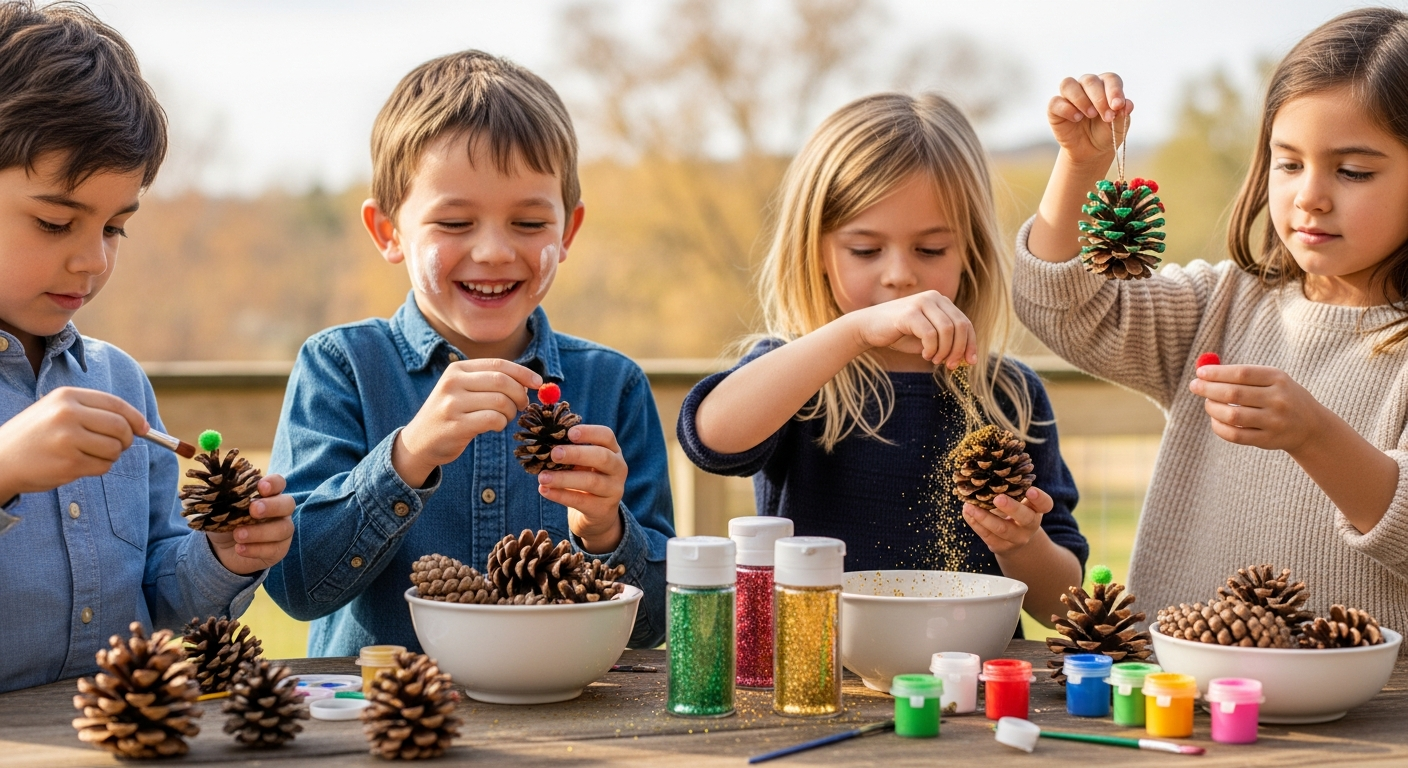
Table of Contents
- Introduction
- Why Pine Cone Crafts? More Than Just Decoration
- Preparing for Your Pine Cone Crafting Adventure
- Delightful Christmas Pine Cone Craft Ideas for Kids
- Boosting Language & Communication Through Crafting
- Speech Blubs: Empowering Communication Beyond Crafts
- Maximizing the Value of Speech Blubs: Our Plans
- Conclusion
- Frequently Asked Questions (FAQ)
Introduction
The crisp air, the twinkling lights, the scent of pine – there's an undeniable magic that settles in during the holiday season. For many families, this magic is found not just in store-bought decorations, but in the warmth of shared moments, particularly those spent crafting together. Imagine the simple joy in your child's eyes as they transform an ordinary pine cone, gathered from a walk in the woods or a local park, into a sparkly Christmas tree, a mischievous reindeer, or a wise old owl. This isn't just about creating pretty ornaments; it's about nurturing creativity, developing crucial motor skills, and, perhaps most importantly, opening doors for communication and connection. These seemingly simple activities offer a powerful platform for learning and growth, turning playful moments into rich developmental opportunities. In this post, we'll dive into the enchanting world of Christmas pine cone crafts for kids, exploring how these delightful activities foster creativity, enhance fine motor skills, and, crucially, lay a vibrant foundation for language development and meaningful family interactions.

Why Pine Cone Crafts? More Than Just Decoration
At first glance, a pine cone might seem like just another piece of nature's debris. But for a child, it's a world of potential, a canvas waiting for imagination. Engaging in pine cone crafts during the holiday season offers a treasure trove of developmental benefits that extend far beyond simply making pretty decorations. These activities are incredibly rich for sensory exploration, cognitive growth, and emotional expression, creating a holistic learning experience.
A Sensory Symphony
Pine cones engage multiple senses. Their rough, textured surfaces provide tactile stimulation, inviting little hands to explore and describe what they feel. The subtle, earthy scent evokes the outdoors, even when crafting indoors. This multi-sensory engagement is vital for cognitive development, helping children connect different sensory inputs to form a more complete understanding of their world. As children manipulate the cones, they learn about weight, shape, and structure, all contributing to a richer sensory vocabulary.
Building Fine Motor Skills with Nature
Consider the intricate act of decorating a pine cone. Children must grasp the cone, apply glue, place small beads or pom-poms onto its scales, or carefully paint its crevices. Each of these actions requires precision, hand-eye coordination, and dexterity – key components of fine motor skill development. These are the same skills that are essential for tasks like writing, buttoning clothes, and using utensils. For a parent whose 3-year-old struggles with pencil grip or has difficulty manipulating small objects, the tactile feedback and varied textures of pine cones offer a less intimidating, more engaging way to strengthen those crucial hand muscles. It’s a playful workout for tiny fingers, building foundational strength and control without feeling like a chore.
Sparking Creativity and Imagination
Unlike pre-packaged craft kits with rigid instructions, pine cone crafts often invite open-ended play. A pine cone can become anything a child imagines – a tiny elf, a fantastical creature, a mini Christmas tree, or even a spaceship. This freedom of expression is crucial for fostering imagination and problem-solving skills. Children learn to think outside the box, experiment with materials, and bring their unique visions to life. This creative freedom boosts self-confidence and encourages a sense of accomplishment.

Connecting with Nature and the Outdoors
Bringing pine cones indoors for crafting naturally connects children with the environment. It sparks curiosity about where pine cones come from, what trees they grow on, and the broader natural world. This connection fosters an appreciation for nature, teaching children about seasonal changes and the beauty found in their surroundings. It's an opportunity to discuss botany in a hands-on way, learning about seeds, trees, and ecosystems.
Early Learning Concepts: Pre-Literacy and Pre-Math
Crafting with pine cones offers countless opportunities to introduce early learning concepts. Children can count the pine cones they collect, sort them by size, or create patterns with decorations. They learn about shapes as they use different craft materials. Following multi-step instructions ("first we paint, then we add glitter") builds sequencing skills, which are critical for both pre-literacy and pre-math development. Describing their creations using descriptive words like "rough," "smooth," "big," "small," "sparkly," and "green" expands their vocabulary and expressive language.
Emotional Well-being and Expression
Crafting is a wonderful outlet for emotional expression. The focused attention required can be calming and stress-reducing for children. The pride they feel upon completing a project boosts their self-esteem and fosters a sense of accomplishment. Sharing their creations with family members reinforces their sense of belonging and contributes to positive emotional development. It's a tangible way for children to see the fruits of their labor and receive positive reinforcement.
Preparing for Your Pine Cone Crafting Adventure
Before the glitter flies and the glue flows, a little preparation goes a long way to ensure a smooth, enjoyable, and safe crafting experience. Think of this as laying the groundwork for maximum fun and minimal stress.
Pine Cone Collection and Cleaning
The adventure often begins with a nature walk! Head to a local park, forest, or even your backyard if you have pine trees, and encourage your children to gather pine cones. This initial step is an experience in itself, offering fresh air and discovery. Once collected, pine cones need a little preparation to ensure they are clean and pest-free.
Here’s a simple method:
- Shake out debris: Vigorously shake each pine cone to dislodge any loose dirt, leaves, or tiny insects.
- Wash (optional): For extra cleanliness, you can briefly rinse them in a bucket of warm water with a splash of vinegar. Be gentle and don't soak them for too long.
- Bake to sterilize: The best way to get rid of any lingering critters or sap is to bake them. Preheat your oven to a low temperature (around 200-250°F or 90-120°C). Line a baking sheet with foil and spread the pine cones in a single layer. Bake for about 30-60 minutes, or until the cones are fully opened and dry. Keep a close eye on them to prevent burning. Let them cool completely before crafting. This step not only cleans them but also helps them fully open up, making them even more beautiful for decorating.
Gathering Your Crafting Supplies
Once your pine cones are clean and ready, it’s time to gather the other exciting elements! Having a well-stocked craft station makes the creative process seamless.
- Adhesives: Child-safe craft glue (PVA glue) is essential. A glue gun can be used by an adult for faster, stronger bonds, but always with supervision.
- Decorations: This is where the magic happens!
- Paints: Acrylic craft paints in festive colors (greens, reds, whites, metallics).
- Glitter: Fine glitter or glitter glue for that holiday sparkle.
- Small embellishments: Pom-poms, beads, sequins, small buttons, googly eyes.
- Natural elements: Small twigs, dried berries, tiny pebbles for added texture.
- Textiles: Felt scraps, cotton balls (for snow), yarn, ribbons, pipe cleaners.
- Tools: Paintbrushes, small bowls for paint, scissors (child-safe), tweezers (for small items).
- Workspace Protection: Lay down newspaper, old sheets, or a plastic tablecloth to protect your surfaces from paint and glue.
- Cleaning Supplies: Keep wet wipes or a damp cloth handy for sticky fingers and spills.
Setting Up a Kid-Friendly Crafting Station
Create an inviting and accessible workspace.
- Accessible materials: Arrange supplies in easy-to-reach containers or trays.
- Comfortable seating: Ensure children can comfortably sit or stand at their crafting surface.
- Good lighting: Adequate light prevents eye strain and makes details clearer.
- Space to dry: Designate an area where finished crafts can dry undisturbed.
Prioritizing Safety
Always supervise young children during crafting activities, especially when using scissors, small beads (choking hazard), or hot glue guns. Ensure glues and paints are non-toxic and child-safe. Talk to your children about safe crafting practices, like not putting small objects in their mouths and cleaning up spills.
Delightful Christmas Pine Cone Craft Ideas for Kids
Now for the fun part – the actual crafting! These ideas are designed to be engaging, developmentally beneficial, and infuse your home with festive cheer. For each craft, we’ll highlight specific ways it helps your child learn and grow.
1. Pine Cone Christmas Trees
This is a classic for a reason! Transforming a humble pine cone into a miniature Christmas tree is incredibly satisfying and visually appealing.
- How to Make It:
- Paint the entire pine cone green (or white for a snowy look!). Let it dry completely.
- Once dry, glue small pom-poms, beads, sequins, or tiny pieces of felt onto the scales as "ornaments."
- Add a glittery pipe cleaner or a small star sticker to the top as a tree topper.
- For a stable base, glue the bottom of the pine cone to a small wooden disc or a jar lid.
- Developmental Benefits:
- Language: Encourage descriptive words like "sparkly," "tiny," "big," "tall," "round," "green." Practice action words like "paint," "glue," "decorate," "dry."
- Fine Motor: Precise application of glue and placement of small decorations hones fine motor control and hand-eye coordination.
- Color Recognition: Naming and identifying colors while selecting decorations.
- Following Instructions: A multi-step process that builds sequencing skills.
2. Pine Cone Animals: Owls, Reindeer, and More!
Pine cones make fantastic bodies for woodland creatures. This craft sparks imagination and storytelling.
- How to Make It:
- Pine Cone Owls: Glue two googly eyes near the top, felt circles for wings on the sides, and a small felt triangle for a beak. You can also add small ear tufts with felt or feathers.
- Pine Cone Reindeer: Glue googly eyes, a red pom-pom for a nose, and small brown pipe cleaners twisted into antlers on top.
- Pine Cone Hedgehogs: Use felt for small ears and a pointy nose, and draw on eyes, or add googly eyes.
- Developmental Benefits:
- Language: Encourage animal sounds ("hoo-hoo," "baa"), naming animal body parts (antlers, wings, beak, nose), and creating simple stories about their pine cone animal. "My reindeer is flying to the North Pole!"
- Imagination: Bringing characters to life fosters imaginative play and narrative skills.
- Fine Motor: Manipulating small pieces like googly eyes and pipe cleaners, and cutting felt shapes, refines dexterity.
- Relatable Scenario: For a parent whose 3-year-old "late talker" loves animals, making a pine cone reindeer can be a fantastic, low-pressure way to practice animal names and sounds. As they play with their crafted reindeer, they can then reinforce these sounds and words in our "Animal Kingdom" section on Speech Blubs, watching our video models. This blends screen-free play with smart screen time, creating a powerful learning loop.
3. Glittery Pine Cone Ornaments
Simple, elegant, and wonderfully festive, these ornaments catch the light beautifully.
- How to Make It:
- Tie a loop of string or ribbon around the top scale of a pine cone for hanging.
- Brush craft glue all over the pine cone.
- While the glue is wet, sprinkle generously with glitter, or roll the pine cone in a tray of glitter.
- Let it dry completely.
- Developmental Benefits:
- Language: Use descriptive words like "sparkly," "shimmery," "sticky," "rough." Practice action words: "dip," "roll," "hang," "shake."
- Fine Motor: Managing the glue and glitter requires careful hand movements and controlled pouring/sprinkling.
- Sensory Exploration: Experiencing the textures of glue and glitter adds to sensory input.
4. Pine Cone Wreaths
A collaborative project that makes a beautiful centerpiece or door decoration.
- How to Make It:
- Use a sturdy cardboard ring or a foam wreath base.
- Glue various sizes of pine cones onto the base, arranging them closely to cover the ring. An adult may need to assist with a hot glue gun for this step.
- Once the pine cones are secure, children can decorate the wreath with small bows, artificial berries, mini pom-poms, or even sprigs of evergreen.
- Developmental Benefits:
- Language: Spatial concepts ("around," "in between," "on top," "next to"), counting pine cones, describing the overall shape (circle, round). Great for discussing "more" or "less" pine cones needed.
- Collaboration: Working together on a larger project fosters teamwork and communication skills.
- Problem-Solving: Deciding how to best arrange the pine cones to fit the wreath.
5. Pine Cone Garland
Create a festive garland to drape across a mantelpiece or window.
- How to Make It:
- Tie a long piece of twine or thick yarn.
- Attach pine cones along the string at intervals. You can tie the string around the top scale of each cone, or use a small screw eye inserted into the base of each cone (adult assistance needed for this).
- Children can then decorate the individual pine cones with paint, glitter, or small glued-on items before attaching them to the string, or after for a simpler approach.
- Developmental Benefits:
- Language: Discussing patterns ("red, green, red, green"), length ("long," "short"), and sequence.
- Fine Motor: Tying knots, threading string (if using beads between cones), and careful decoration.
- Measurement Concepts: Estimating how many pine cones are needed for a certain length.
6. Pine Cone Snowy Villages or Table Decor
Turn a collection of decorated pine cones into a charming winter scene.
- How to Make It:
- Decorate various pine cones as snowy trees (white paint, glitter) or little characters.
- Arrange them on a flat surface (a tray, a piece of wood) covered with cotton balls or faux snow.
- Add small toy animals, figurines, or miniature houses to complete the scene.
- Developmental Benefits:
- Language: Rich opportunities for storytelling and descriptive language as children create and talk about their village. "The little bear is walking through the snowy forest."
- Imaginative Play: Creating an entire world fosters imaginative and symbolic play.
- Spatial Reasoning: Arranging objects in a space to create a scene.
Boosting Language & Communication Through Crafting
Crafting is inherently communicative. It’s a hands-on activity that provides a natural, low-pressure environment for children to practice and expand their language skills. The tangible nature of pine cone crafts makes abstract concepts concrete, creating numerous opportunities for verbal interaction.
Encouraging Descriptive Language
As children create, prompt them to describe what they are seeing, feeling, and doing. "What color is that paint?" "How does the pine cone feel – is it rough or smooth?" "Look at the shiny glitter!" By using specific, rich vocabulary, you’re modeling language and expanding their descriptive abilities. This helps children articulate their observations and express their unique artistic vision.
Following Directions and Sequencing
Craft projects involve a sequence of steps. "First, we need to paint the pine cone green. Then, we wait for it to dry. After that, we can add the sparkly decorations." Breaking down instructions into manageable chunks helps children develop listening skills, understand temporal concepts, and improve their ability to follow multi-step directions – a crucial skill for school readiness and daily life.
Asking and Answering Questions
Engage your child by asking open-ended questions: "What do you want to make next?" "Why did you choose that color?" "How do you think we can attach this pom-pom?" This encourages them to think critically, articulate their thoughts, and engage in conversational turn-taking. Similarly, answering their questions about the materials or process builds their understanding and vocabulary.
Storytelling and Narrative Development
Once the pine cone creations are complete, they become characters in a story. "Tell me about your glittery pine cone tree. Where does it live?" "What adventure did your pine cone reindeer go on?" This encourages narrative development, helping children structure thoughts, recall details, and express their creativity verbally. It's a wonderful bridge from creation to communication.
Turn-Taking and Sharing
When crafting with multiple children or as a family, opportunities for turn-taking and sharing naturally arise. "Whose turn is it to use the green paint?" "Can you share the blue glitter, please?" These interactions teach important social communication skills, conflict resolution, and empathy.
Emotional Vocabulary
Crafting can elicit a range of emotions. Children might express frustration if something doesn't work as planned, pride in their finished piece, or joy in the creative process. Encourage them to articulate these feelings: "It looks like you're feeling a bit frustrated with the glue. Let's try this together." This helps them develop emotional literacy, connecting feelings to words.
Crafting creates a rich environment for conversation and discovery, offering a perfect "screen-free alternative" that complements our approach at Speech Blubs. Just as we at Speech Blubs believe in making learning playful and interactive, these hands-on activities serve as a powerful foundation for developing key communication skills.
Speech Blubs: Empowering Communication Beyond Crafts
While hands-on activities like pine cone crafting are invaluable for holistic development, sometimes children need a little extra, targeted support to "speak their minds and hearts." This is where Speech Blubs comes in. We understand the unique journey of every child, because our company was born from the personal experiences of our founders, who all grew up with speech problems and created the tool they wished they had. We know firsthand the frustration of not being understood and the joy of finding your voice.
Our mission at Speech Blubs is to provide an immediate, effective, and joyful solution for the 1 in 4 children who need speech support. We achieve this by blending scientific principles with play, creating one-of-a-kind "smart screen time" experiences. We are a screen-free alternative to passive viewing, like cartoons, and a powerful tool for family connection, designed to be used with your child, not just by them.
Our Unique Approach: Video Modeling
What truly sets Speech Blubs apart is our unique "video modeling" methodology. Children learn best by observing and imitating their peers. Our app features real children demonstrating thousands of words, sounds, and phrases. When your child watches another child make a sound or a facial expression, their mirror neurons are activated, making it easier and more natural for them to imitate and learn. This method is backed by extensive research, placing us in the top tier of speech apps worldwide for efficacy and engagement.
For a child who might be shy about speaking, the peer video modeling in Speech Blubs provides a non-intimidating, fun way to practice sounds and words. It's much like how crafting offers a low-pressure environment for verbal exploration. After making their pine cone character, they could then find and imitate a similar character's sound or name in the app, reinforcing the learning in a multi-modal way. This natural progression helps build confidence and make communication a positive experience.
Personalized Support and Joyful Learning
Speech Blubs is more than just an app; it's a supportive community and a structured program designed to grow with your child. We provide activities that target a wide range of speech and language areas, from first sounds and words to more complex sentences and social communication skills. Parents frequently share their success stories, highlighting the progress their children have made and the confidence they’ve gained. You can read some inspiring parent experiences on our testimonials page.
If you're wondering whether your child could benefit from targeted speech support, we've made it easy to get started. Consider taking our quick 3-minute preliminary screener. It involves 9 simple questions and provides an assessment and a personalized next-steps plan, along with offering a free 7-day trial of Speech Blubs. It’s a valuable first step in understanding your child’s communication journey.
Maximizing the Value of Speech Blubs: Our Plans
We believe in making our transformative speech support accessible to as many families as possible. That's why we offer flexible plans, but we want to be transparent about which option provides the most value and the most comprehensive experience for your child.
Our two main plans are:
- Monthly Plan: For $14.99 per month, you get access to the core Speech Blubs app features. This plan is a good starting point if you want to try it out without a longer commitment.
- Yearly Plan: For an annual payment of just $59.99 per year, this plan breaks down to an incredible $4.99 per month! This is our most popular and most recommended option, offering significant savings and exclusive benefits.
Why the Yearly Plan is the Best Choice
Choosing the Yearly plan isn't just about saving money (you save a remarkable 66% compared to the monthly plan!). It's about unlocking the full potential of Speech Blubs and gaining access to a complete suite of features designed to maximize your child's progress:
- 7-Day Free Trial: The Yearly plan is the only way to experience Speech Blubs with a no-risk, 7-day free trial. This allows you to explore all the features and see the engaging content firsthand before committing.
- Reading Blubs App Included: Gain exclusive access to our companion app, Reading Blubs! This app further supports your child's early literacy development, creating a powerful synergy with their speech and language growth.
- Early Access to New Updates: Be among the first to experience new features, content, and improvements as soon as they are released, keeping your child's learning fresh and exciting.
- 24-Hour Support Response Time: Enjoy priority customer support with a guaranteed response within 24 hours, ensuring you get help and answers quickly whenever you need them.
The Monthly plan does not include these high-value benefits, making the Yearly plan the clear choice for families looking for the most comprehensive, supportive, and cost-effective path to empowering their child's communication journey. We are dedicated to your child's success, and the Yearly plan is designed to provide everything you need for sustained progress and joyful learning.
Conclusion
The holiday season is a magical time, filled with opportunities for connection and growth. Engaging in Christmas pine cone crafts for kids is far more than just a festive activity; it's a powerful avenue for developing fine motor skills, sparking creativity, and, crucially, fostering rich language and communication abilities. From describing textures and colors to following multi-step instructions and creating imaginative stories about their pine cone characters, these crafts provide a natural, joyful environment for children to explore and expand their expressive capabilities.
These wonderful hands-on moments lay a strong foundation, and when paired with targeted support, the potential for growth is immense. At Speech Blubs, we are committed to empowering children to "speak their minds and hearts," offering an effective and joyful solution for families seeking to nurture their child's communication skills. Our unique video modeling methodology provides "smart screen time" that complements screen-free play, guiding children through engaging activities designed to build confidence and fluency.
Ready to nurture your child's communication skills and unlock a world of expressive joy? Begin your journey today! We encourage you to start with our best-value Yearly plan, which includes a 7-day free trial so you can experience all the amazing features, including the Reading Blubs app and priority support.
Download Speech Blubs on the App Store or get it on Google Play to start your free trial now. Alternatively, you can create your account on our website and begin your journey toward clearer, more confident communication for your child. Choose the Yearly plan to get the best value and access to the full suite of Speech Blubs benefits!
Frequently Asked Questions (FAQ)
Q1: What age group are pine cone crafts best suited for?
Pine cone crafts are wonderfully versatile and can be adapted for a wide range of ages, generally from toddlers (with close supervision for small parts) up to school-aged children. For younger children (2-4 years old), focus on simpler tasks like painting and gluing larger embellishments. Older children (5+ years old) can handle more intricate designs, detailed painting, and complex assembly, making it a fun activity for the whole family.
Q2: Are there any safety concerns with collecting and crafting with pine cones?
Yes, it's important to consider a few safety aspects. When collecting pine cones, ensure children don't pick up anything sharp or from potentially contaminated areas. Always clean and sterilize pine cones by baking them (as described above) to eliminate bugs and sap. During crafting, supervise young children, especially when using small items like beads or buttons, which can be choking hazards. Ensure all glues and paints are non-toxic and child-safe.
Q3: How can I make pine cone crafts more engaging for a child who struggles with focus?
For children who have difficulty with sustained attention, break the craft into very small, manageable steps. Offer choices (e.g., "Do you want to use red or green paint first?"), and keep the atmosphere light and playful. Focus on the process, not just the finished product. Incorporate movement breaks and connect the craft to their interests (e.g., if they love animals, make a pine cone animal). Remember that even a few minutes of engaged crafting is beneficial.
Q4: How does Speech Blubs complement hands-on activities like pine cone crafts?
Speech Blubs offers targeted, engaging speech and language development activities that perfectly complement the foundational skills learned through hands-on play. While crafting builds fine motor skills, creativity, and introduces descriptive language in a real-world context, Speech Blubs reinforces articulation, vocabulary, and communication confidence through interactive "smart screen time." For instance, a child can make a pine cone reindeer and then practice animal sounds and names using our video modeling in the app. This creates a holistic approach, blending screen-free and guided screen time to nurture a child's ability to speak their minds and hearts.
About the author