
Finding a Private School for Speech Delay
 By Speech Blubs Team•Mar 9, 2026•14 min.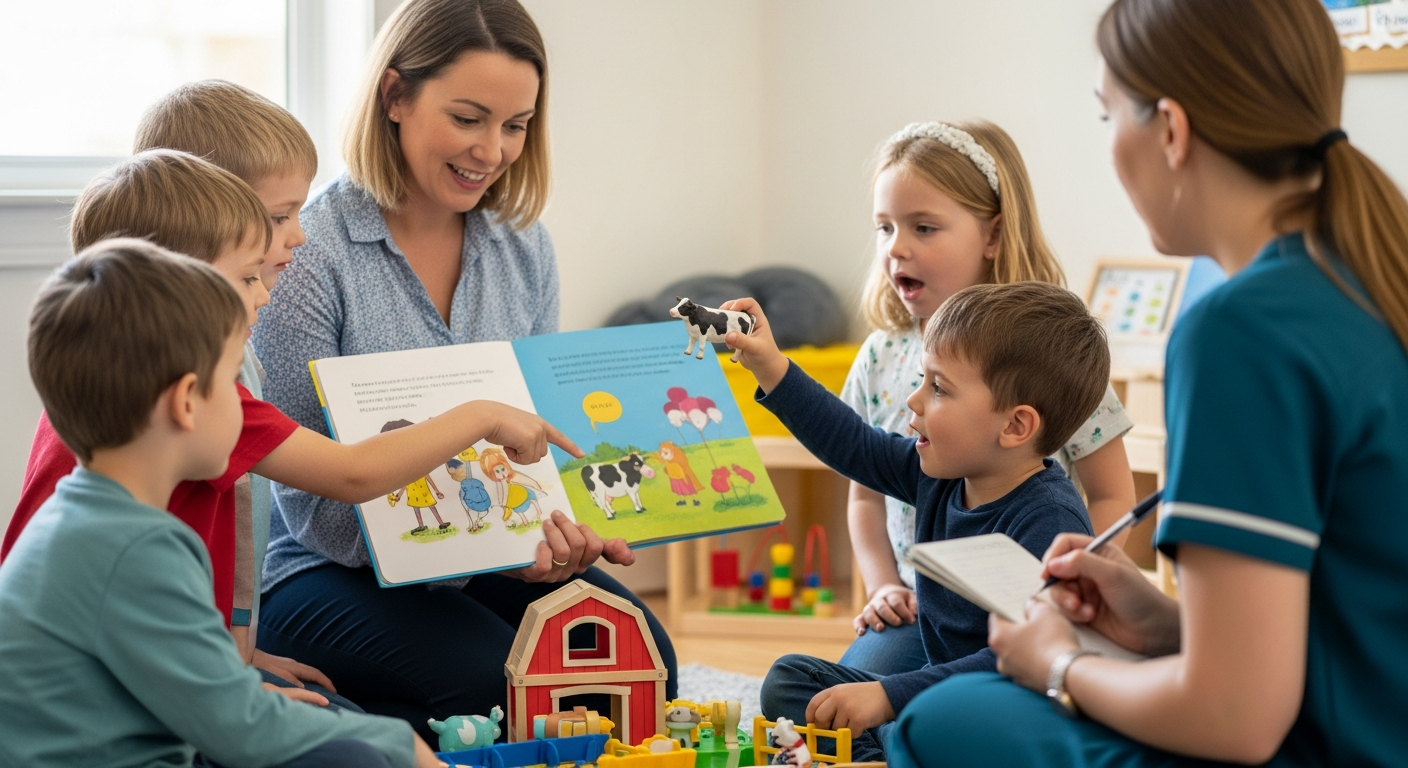
Table of Contents
- Introduction
- Why Parents Seek Private Schools for Speech Delay
- Key Features to Look for in a Specialized School
- Understanding Speech vs. Language Disorders
- The Role of Home Support: Bridging the Gap
- Creating Joyful Family Learning Moments
- Choosing the Right Path: Public, Private, or Hybrid?
- Investing in Your Child’s Future
- Practical Tips for Parents of Kids with Speech Delays
- The Importance of Peer Interaction
- Realistic Expectations and the Road Ahead
- Conclusion
- Frequently Asked Questions
Introduction
Imagine sitting in a park, watching your three-year-old try to join a group of children playing "tag." While the other kids are shouting directions and laughing, your child stands on the periphery, pointing and letting out a frustrated grunt because the words won't come. You’ve tried the "wait and see" approach, and you’ve likely spent hours researching milestones, yet the gap between your child and their peers seems to be widening. This moment of isolation is often what sparks the intensive search for a private school for speech delay.
At Speech Blubs, we understand that this journey is filled with both hope and anxiety. Our founders grew up with speech challenges themselves, and they created the very tool they wished they had as children. Our mission is to empower every child to "speak their minds and hearts," providing a joyful, effective solution for the one in four children who need speech support. Whether you are currently exploring private education or looking for ways to support your child's learning at home, it is essential to find an environment that treats communication not just as a subject, but as a foundation for life.

In this post, we will explore why parents consider private schools for speech delay, what specific features make these schools successful, and how you can bridge the gap between classroom learning and home life using "smart screen time" and peer-led modeling. We believe that with the right combination of professional education and engaging home activities, your child can build the confidence they need to thrive.
Why Parents Seek Private Schools for Speech Delay
For many families, the transition from a public school setting to a private one is born out of a desire for more specialized, intensive support. While public schools are required by law to provide services through an Individualized Education Program (IEP), the reality of large class sizes and limited resources can sometimes mean a child isn't getting the frequency of intervention they truly need.
The Power of Small Ratios
One of the most immediate benefits of a private school for speech delay is the student-to-teacher ratio. In many specialized schools, such as Oak Hill Academy or The Parish School, you might find ratios as low as 5:1 or 6:1. This allows for personal attention that is nearly impossible in a standard classroom. For a child who struggles with expressive or receptive language, having an adult close by to "narrate" the day and provide immediate feedback is game-changing.
Integrated Therapy Models
In a traditional setting, a child might be "pulled out" of class for 30 minutes of speech therapy twice a week. In a specialized private school, therapy is often integrated into the entire school day. This means Speech-Language Pathologists (SLPs) are physically present in the classroom, working alongside teachers to ensure that every lesson—from math to recess—is an opportunity for language development.
A Focus on the "Whole Child"
Specialized private schools often move beyond just "fixing" a speech delay. They focus on social-emotional regulation, motor skills, and building self-esteem. When a child can't communicate effectively, they often experience high levels of frustration, which can lead to behavioral challenges. A private school environment is usually better equipped to handle these "big feelings" with empathy and specialized strategies, ensuring the child feels safe and understood.

Key Features to Look for in a Specialized School
If you are currently touring schools or researching options, it can be overwhelming to know what questions to ask. Not all private schools are created equal, especially when it concerns neurodiversity and communication disorders.
1. Evidence-Based Methodology
Ask the admissions team about the scientific principles they use. Do they utilize visual supports? Do they incorporate "modeling" where students learn from seeing others? At Speech Blubs, we rely heavily on the science of video modeling. This approach works because it leverages "mirror neurons" in the brain; when a child watches a peer perform a task or say a word, their brain reacts as if they are doing it themselves. A high-quality private school should have a similarly robust, research-backed framework.
2. Specialized Staffing
It isn't enough to have one SLP for the whole school. Look for institutions that employ a multidisciplinary team. This might include:
- Speech-Language Pathologists (SLPs): To focus on articulation, fluency, and language processing.
- Occupational Therapists (OTs): To help with sensory integration and fine motor skills.
- Behavioral Coordinators: To support emotional regulation and social cues.
- Counselors: To support the mental health of both the student and the family.
3. Transition and Life Skills
As children get older, a "speech delay" often evolves into a need for complex social communication. Look for schools that offer "transition programs" or social skills groups. These programs help students navigate the nuances of conversation, friendship, and eventually, the workplace or higher education.
Understanding Speech vs. Language Disorders
When searching for a private school for speech delay, you might encounter various terms that seem confusing. Understanding these differences can help you find a school that specializes in your child's specific needs.
Speech Disorders
These involve the physical production of sounds.
- Articulation: Difficulty making specific sounds (e.g., saying "wabbit" instead of "rabbit").
- Fluency: Challenges with the flow of speech, such as stuttering.
- Voice: Issues with the pitch, volume, or quality of the voice.
Language Disorders
These involve the understanding or use of symbols and words.
- Receptive Language: Difficulty understanding what others are saying.
- Expressive Language: Difficulty sharing thoughts, ideas, and feelings.
- Mixed Receptive-Expressive: Challenges in both understanding and producing language.
Many students at schools like Mainspring Academy or Brightmont Academy have a mix of these challenges. Knowing where your child falls on this spectrum will help you determine if a school's curriculum—and your home support tools—are targeting the right areas.
The Role of Home Support: Bridging the Gap
Even the best private school for speech delay is only one piece of the puzzle. Progress truly accelerates when the strategies used in the classroom are reinforced at home. However, we know that after a long day of school and therapy, the last thing a child wants is more "work."
This is where "smart screen time" comes into play. Unlike passive cartoons that offer no interaction, Speech Blubs provides a joyful, peer-led experience that feels like play.
Peer-Led Video Modeling
Our unique approach uses video modeling, where your child watches other children (our "Blubers") perform speech exercises. For a child who might feel intimidated by an adult therapist, seeing a "cool kid" on the screen making a "lion" sound or practicing a new word makes the process much less threatening and much more fun.
If you’re unsure exactly where your child stands or what to focus on first, we recommend taking our quick 3-minute preliminary screener. It involves 9 simple questions and provides you with a personalized assessment and a next-steps plan to guide your journey.
Practical Scenarios for Home Learning
Consider a parent whose 4-year-old loves everything to do with the kitchen. In a private school setting, the teacher might use "snack time" to practice requests. At home, you can use the "Yummy Time" section of Speech Blubs to practice the names of fruits and vegetables together. By co-playing and imitating the children in the app, you turn a standard afternoon into a high-value learning moment.
For a child who is particularly fond of animals, the "Animal Kingdom" section offers a motivating way to practice basic sounds like "moo," "baa," and "roar." These foundational sounds are the building blocks of more complex communication.
Creating Joyful Family Learning Moments
One of the biggest risks of a speech delay is the strain it can put on the parent-child relationship. When communication is a constant struggle, everyday moments can become battlegrounds of frustration. Our goal at Speech Blubs is to reduce that friction.
By using our app as a supplement to professional therapy or a specialized private school, you are fostering a love for communication. When your child finally mimics a sound or uses a new word they saw in the app, the joy and confidence they feel are immeasurable. This confidence then carries back into the classroom, creating a positive feedback loop of learning.
Don't just take our word for it—read what other parents are saying about their success stories. Many families find that our app is the "spark" that finally gets their child excited about talking.
Choosing the Right Path: Public, Private, or Hybrid?
Deciding on a private school for speech delay is a significant financial and emotional commitment. For many families, the cost of private tuition (which can range from $15,000 to over $40,000 per year) is a major factor.
When Private School is the Best Choice:
- Your child is not making progress in their current setting despite having an IEP.
- Your child’s frustration is leading to significant behavioral issues or school refusal.
- You want an environment where therapy is the "norm," not the exception.
When a Hybrid Approach Works:
Many families choose to keep their child in a public or standard private school but supplement heavily with external resources. This might include private SLP sessions and daily use of tools like Speech Blubs. This "hybrid" model allows the child to stay in their local community while still receiving specialized "smart screen time" that targets their specific needs.
Investing in Your Child’s Future
Whether you choose a specialized private school or a hybrid approach, the goal remains the same: giving your child the tools to express themselves. At Speech Blubs, we strive to make high-quality speech support accessible and affordable for every family.
Transparency in Pricing
We believe in building trust through transparency. While private school tuition is a massive investment, supplemental support shouldn't have to be.
- Monthly Plan: $14.99 per month.
- Yearly Plan: $59.99 per year.
The Yearly Plan is our best value, breaking down to just $4.99 per month (a savings of 66%). More importantly, the Yearly Plan provides a much more comprehensive experience, including:
- A 7-day free trial to ensure it's a perfect fit for your child.
- Access to our Reading Blubs app, which helps transition speech skills into literacy skills.
- Early access to all new updates and 24-hour support response time.
To get the full suite of features and the free trial, we highly recommend choosing the Yearly plan when you create your account.
Practical Tips for Parents of Kids with Speech Delays
Navigating the world of special education is a marathon, not a sprint. Here are a few ways to support your child’s development today:
- Narrate Your Life: Even if your child isn't talking back yet, talk to them. "I'm picking up the blue cup. Now I'm pouring the water." This constant exposure to language is vital.
- Use Visuals: Children with speech delays often process visual information better than auditory information. Use picture schedules for morning and bedtime routines.
- Wait for the Response: It’s tempting to finish your child's sentences or give them what they want the moment they point. Instead, wait 5–10 seconds. Give them the space to try to form the word.
- Celebrate Small Wins: Did they make a new vowel sound? Did they use a gesture they’ve never used before? Celebrate it! Building confidence is just as important as building vocabulary.
- Incorporate Peer Modeling: Use the Speech Blubs app for 10–15 minutes a day. Sit with your child, laugh with the "Blubers" on screen, and practice the mouth movements together.
The Importance of Peer Interaction
One thing that a private school for speech delay provides is a community of peers who are "just like them." In a traditional school, a child with a speech delay might feel "different" or "slow." In a specialized setting, they see others working through the same challenges.
Speech Blubs replicates this "peer-to-peer" magic digitally. When a child sees another child wearing a funny digital hat and making a "pop" sound, the barrier of "therapy" disappears. It becomes a game they want to win. This social aspect of learning is one of the most powerful tools in a parent's arsenal.
Realistic Expectations and the Road Ahead
It is important to remember that every child’s journey is unique. We don't promise that your child will be giving public speeches in a month. What we do promise is a process that fosters a love for communication, reduces daily frustration, and develops key foundational skills.
By combining the specialized environment of a private school with the engaging, scientifically-backed tools provided by Speech Blubs, you are creating a comprehensive support system. You are moving from a place of "waiting and seeing" to a place of active, joyful empowerment.
Conclusion
Finding the right private school for speech delay can feel like a daunting task, but it is a powerful step toward ensuring your child has the support they need to succeed. These schools offer the small ratios, integrated therapy, and whole-child focus that can make all the difference in a child’s development. However, the learning doesn't stop when the school bell rings.
At Speech Blubs, we are here to support your family every step of the way. Our peer-led video modeling methodology is a powerful supplement to any educational or therapeutic plan, providing a screen-free alternative to passive viewing and a way to create joyful family learning moments. We invite you to join our community and see the difference that "smart screen time" can make.
Ready to take the next step? Download Speech Blubs on the App Store or Google Play to begin. For the best value and access to all our exclusive features, including the Reading Blubs app and a 7-day free trial, be sure to select our Yearly plan. Your child has a voice that deserves to be heard—let’s help them find it together.
Frequently Asked Questions
1. Is a private school always better than public school for a speech delay?
Not necessarily. Many public schools have excellent speech programs and dedicated SLPs. However, parents often choose private schools for speech delay when they need smaller class sizes, more frequent therapy, or a specialized curriculum that a general public school may not be able to provide. It depends entirely on your child's specific needs and the resources available in your local district.
2. Can Speech Blubs replace professional speech therapy?
No, Speech Blubs is designed to be a powerful supplement to professional therapy, not a replacement for it. While the app uses scientific principles like video modeling to encourage speech, a certified SLP can provide personalized diagnoses and hands-on interventions that an app cannot. Think of Speech Blubs as the "homework" that your child actually wants to do!
3. What exactly is "video modeling" and why does it work?
Video modeling is an evidence-based teaching method where a child learns a behavior or skill by watching a video of someone else performing it. In our case, children watch their peers (other kids) making sounds and saying words. This is effective because of "mirror neurons"—cells in the brain that fire both when an individual performs an action and when they observe someone else doing it, making imitation much more natural.
4. How do I know if my child needs a specialized school or just extra support?
If your child is falling significantly behind developmental milestones, showing high levels of frustration, or not progressing in a standard classroom despite having an IEP, it may be time to look at specialized options. We recommend starting with our 3-minute preliminary screener to get a better sense of your child's current communication level and potential next steps.
About the author