
Fluffy Fun: Easy Sheep Crafts for Kids
 By Speech Blubs Team•Jan 13, 2026•24 min.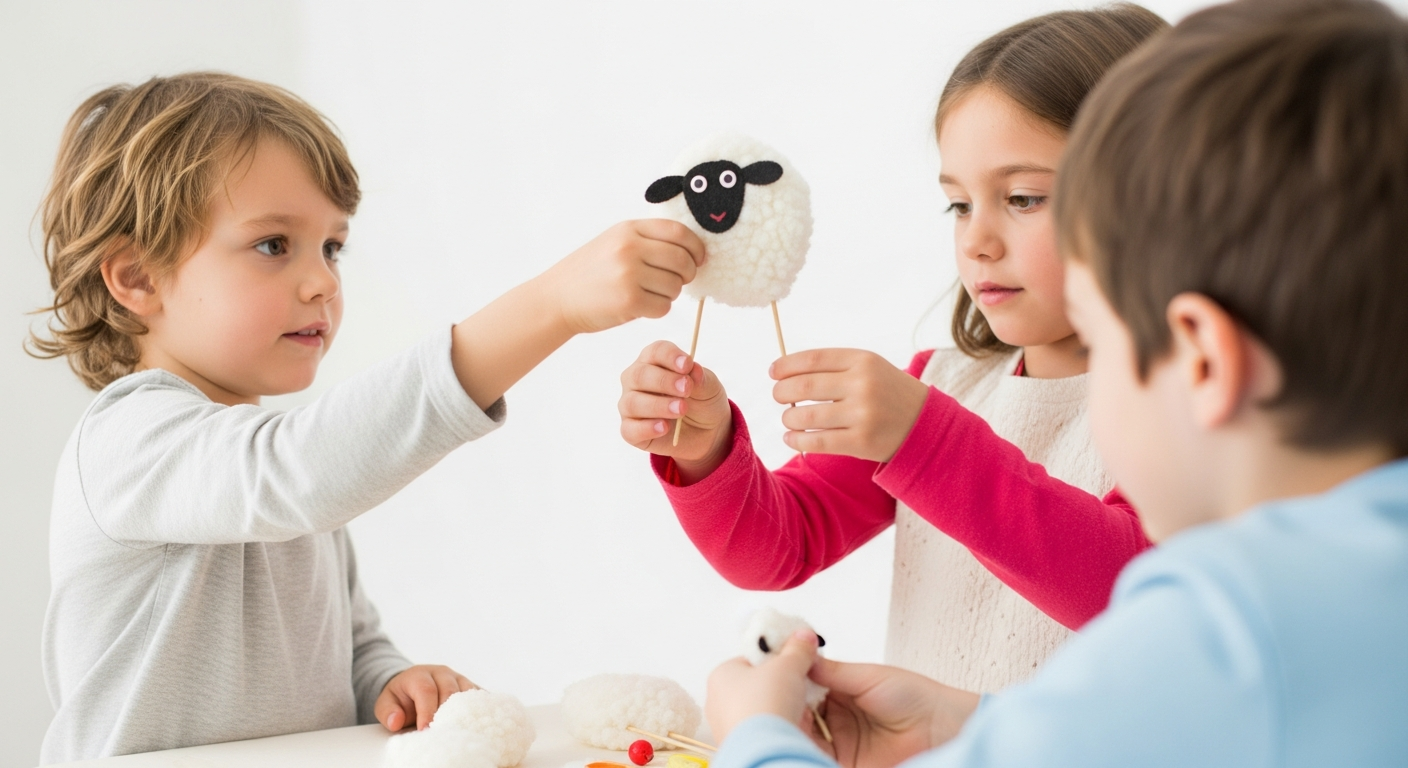
Table of Contents
- Beyond the Baa: Why Sheep Crafts Are More Than Just Fun
- Your Crafting Flock: Gathering Easy Supplies
- Ewe-nique Creations: Easy Sheep Crafts for Every Age
- Extending the Flock: More Learning and Fun
- Why Choose Speech Blubs? Our Commitment to Your Child's Voice
- Pricing & Value: Investing in Your Child's Future
- Conclusion
- FAQ Section
Remember that moment when your child first pointed to an animal in a book and made its sound? Perhaps it was a "moo" for a cow or a "woof" for a dog. There's a special kind of magic in seeing their eyes light up as they connect with the world around them, especially when it comes to farm animals. Sheep, with their gentle "baa" and wonderfully soft wool, hold a particular charm for little ones, sparking curiosity and a desire to engage.
In a world increasingly filled with screens, finding activities that are both engaging and genuinely enriching can sometimes feel like a quest. That's why we at Speech Blubs are passionate about "smart screen time" that complements hands-on, creative play. This comprehensive guide is dedicated to bringing the adorable world of sheep into your home through a variety of easy, engaging crafts perfect for children of all ages. We'll explore how these delightful creations not only provide endless fun but also foster crucial developmental skills, from fine motor coordination to language development, offering a wonderful, screen-free alternative to passive viewing. Get ready to gather your crafting supplies, because we're about to embark on a delightful journey where every "baa" is a step towards discovery, family bonding, and joyful learning that truly helps your child speak their mind and heart.

Beyond the Baa: Why Sheep Crafts Are More Than Just Fun
Crafting with children is a powerful tool for holistic development. When we encourage our little ones to create, we're not just providing a fun distraction; we're nurturing a wide array of skills that will serve them throughout their lives. Sheep crafts, with their inviting textures and relatable animal theme, are particularly excellent for unlocking these benefits, making them a fantastic addition to any child's learning journey.
Developing Essential Skills Through Play
Imagine a child carefully selecting a cotton ball, dabbing it with glue, and then pressing it onto a sheep outline. This seemingly simple action is a symphony of developmental leaps, each contributing to their overall growth:
- Fine Motor Skills and Dexterity: The act of picking up small cotton balls, manipulating glue sticks, carefully cutting paper shapes, or twisting pipe cleaners all demand precise hand-eye coordination. These actions strengthen the small muscles in the fingers and hands, which are crucial for tasks like writing, buttoning clothes, tying shoelaces, and countless other daily activities. The more opportunities children have to refine these skills in a playful context, the more confident and capable they become in managing their world.
- Sensory Exploration: The very essence of a sheep craft often involves a rich sensory experience. Children engage with the soft, fluffy texture of cotton, the smooth feel of paper, the stickiness of glue, and sometimes even the squishy resistance of clay. These varied tactile inputs provide invaluable sensory stimulation, helping children develop their tactile senses and understand different material properties. Exploring textures can be both incredibly calming and stimulating, opening up new pathways for learning about the world around them and contributing to their overall sensory processing.
- Creativity and Imagination: There is no single "right" way to make a sheep craft. Children are encouraged to choose colors, add unique accessories, give their sheep distinct personalities, or even invent a backstory for their creation. This freedom to imagine and innovate is fundamental to developing creative thinking, a skill that transcends the art table and enriches every aspect of life, from problem-solving to storytelling and even understanding different perspectives. It empowers them to think outside the box and express their unique selves.
- Problem-Solving and Critical Thinking: What happens if the glue doesn't hold? How can I make the sheep stand up without falling over? These are small but significant challenges that children naturally encounter during crafting. They learn to think flexibly, experiment with different solutions (e.g., trying more glue, using a different material for legs), and adapt their approach. This process fosters resilience and critical thinking, teaching them that mistakes are opportunities for learning and adjustment. For instance, designing a 3D sheep from a toilet paper roll introduces basic engineering principles like stability and structure in a fun, accessible way.
- Cognitive Development and Concept Reinforcement: Crafts can be fantastic visual and tactile aids for learning. A sheep craft can be a natural springboard for discussing farm animals, their habitats, what they eat, the valuable products we get from them (like wool and milk), and even basic biological concepts. This makes abstract concepts concrete and memorable, helping children build a deeper understanding of the world. It’s a wonderful way to connect classroom learning with hands-on experience.
- Language and Communication Skills: As children craft, they often naturally narrate their process, describe their choices, and ask questions. This organic interaction promotes vocabulary expansion (using words like "fluffy," "wool," "hoof," "baa," "sticky," "smooth," "cut," "glue," "attach"), encourages descriptive language, and builds their ability to articulate thoughts and ideas. It's a natural conversation starter for shared learning experiences, allowing parents and caregivers to model language and engage in meaningful dialogues. This direct engagement with language is precisely what we champion at Speech Blubs.
- Emotional Expression and Self-Esteem: The act of creating something with one's own hands, seeing it come to life, and then proudly sharing it with others, significantly boosts a child's self-esteem and confidence. Crafting provides a safe and positive outlet for emotional expression, allowing children to channel their feelings into a tangible form, whether it's the sheer joy of creation or the satisfaction of mastering a new skill. This sense of accomplishment empowers them to believe in their abilities and fosters a positive self-image.
The Speech Blubs Difference: "Smart Screen Time" for Growing Minds
At Speech Blubs, we believe in empowering children to "speak their minds and hearts." Our company was born from the personal experiences of our founders, who all grew up facing speech challenges. They created the very tool they wished they had—an immediate, effective, and joyful solution for the 1 in 4 children who need speech support. We understand the importance of balancing traditional play with innovative learning tools, which is why we've blended scientific principles with play into one-of-a-kind "smart screen time" experiences.

While these crafts offer invaluable screen-free engagement, Speech Blubs provides a powerful complementary tool, transforming passive viewing (like cartoons) into active, engaging learning. Our unique approach utilizes "video modeling," where children learn complex communication skills by watching and imitating their peers. This method naturally leverages children's innate ability to mimic, making learning fun and intuitive. Just as a child might imitate the sounds a sheep makes while crafting, they can imitate real children in our app, building their vocabulary and pronunciation. Discover more about our mission and approach by visiting our homepage.
Your Crafting Flock: Gathering Easy Supplies
Before diving into the creative fun, a little preparation goes a long way. Having your materials ready not only makes the crafting process smoother but also helps manage expectations for younger children who might get impatient waiting for supplies. One of the greatest beauties of sheep crafts is their accessibility; many of the required materials are likely already tucked away in your craft bin or easily found at your local grocery or dollar store.
Essential Crafting Shepherd's Kit
Think of these as the core elements you’ll want on hand for most sheep crafts. They are inexpensive, versatile, and form the backbone of countless creative projects:
- Paper: White printer paper for drawing, construction paper (black for faces/legs, white for bodies, various colors for accents), and thicker cardstock for more durable creations.
- Glue: Good old white craft glue (PVA glue) is versatile for cotton balls and paper. Glue sticks are excellent for younger children, as they are less messy and easier to handle independently. For more advanced projects or quick assembly (with adult supervision!), a low-temp hot glue gun can be invaluable.
- Scissors: Child-safe scissors are a must for little hands. Ensure they are sharp enough to cut paper cleanly but designed with safety in mind.
- Cotton Balls: The quintessential "wool" for almost every sheep craft. You'll want a generous supply – they tend to disappear quickly in enthusiastic little hands!
- Markers, Crayons, or Colored Pencils: For drawing faces, adding details, or coloring templates. These allow for personalization and artistic expression.
- Googly Eyes: These instantly add personality, a touch of whimsy, and bring any creature to life, making the sheep truly adorable.
Ready for More? Creative Additions
Ready to get a little more adventurous? These additional supplies open up a world of possibilities for unique sheep creations, adding texture, dimension, and new challenges:
- Q-tips (Cotton Swabs): Excellent for creating unique textures and offering a fine motor challenge when inserting them into a base.
- Yarn/Wool Scraps: For wrapping, weaving, or creating a more realistic textured "fleece." Different colors can make for fun, imaginative sheep.
- Paper Plates: The perfect versatile base for masks, rocking sheep, or even decorative wreaths.
- Toilet Paper or Paper Towel Rolls: Essential for creating 3D standing sheep or imaginative puppets. They are also a great way to repurpose household items.
- Felt or Foam Paper: Great for no-fray shapes, adding dimension, and introducing different tactile experiences. Felt is soft, foam is firm.
- Popsicle Sticks: For puppet handles, sturdy legs, or providing structural support to 3D creations.
- Craft Paint (Acrylic or Tempera): For adding vibrant color to paper plates, toilet rolls, or even for dyeing cotton balls for a rainbow sheep!
- Small Ball of Clay: A wonderful, pliable base for creating 3D Q-tip sheep, offering a different tactile experience and sculptural challenge.
- Bubble Wrap: An unexpected but fantastic tool for creating unique "wool" textures through printing.
- Paper Lunch Bags: The foundation for charming sheep puppets, encouraging imaginative play.
- Glitter or Sequins: For a touch of sparkle and extra flair (use sparingly for easy cleanup!).
- Ribbon or Pipe Cleaners: For decorative elements, flexible legs, or creating hanging loops.
Safety First: A Parent's Guide
Crafting should always be a safe and enjoyable experience for everyone. Here are a few quick tips to ensure your crafting session is fun and worry-free:
- Supervision: Always supervise young children, especially when using scissors, hot glue guns (even low-temp ones), or small items that could be choking hazards.
- Age-Appropriate Tools: Provide child-safe scissors for little hands. Reserve sharper tools for adult use or older children with direct supervision.
- Ventilation: If using paints, aerosols, or strong-smelling glues, ensure adequate ventilation by opening a window or crafting outdoors.
- Mess Management: Cover your work surface with newspaper, an old tablecloth, or a craft mat. Have wipes or a damp cloth handy for sticky fingers and spills. An old apron can also save clothes!
Ewe-nique Creations: Easy Sheep Crafts for Every Age
Now for the fun part! Let's dive into some delightful sheep crafts. We'll explore how to adapt each project for different age groups, highlighting the specific developmental benefits and opportunities for language enrichment.
Classic Cotton Ball Sheep: The Fluffy Favorite
This is often the first sheep craft parents think of, and for good reason—it’s simple, satisfying, and incredibly tactile!
- Materials: Sheep outline (you can draw one freehand, print a template, or even just draw a large oval for the body), cotton balls, white craft glue, black marker, and optional googly eyes.
- For Toddlers (1-2 years):
- Activity: Focus on the sensory experience and basic fine motor skills. Pre-draw or print a simple sheep outline. Put a small puddle of glue on a plate and let them dip cotton balls into it before pressing them onto the sheep's body. Let them use a marker to scribble on the sheep's face.
- Benefits: Develops pincer grasp (picking up cotton balls), hand-eye coordination, and sensory exploration (feeling the sticky glue and soft cotton).
- Language Connection: Use descriptive words: "soft," "fluffy," "sticky." Practice animal sounds: "Baa!" "Can you find the sheep's head? Where is its body?"
- For Preschoolers (3-4 years):
- Activity: Encourage more independence. Have them color the sheep's face and legs with a marker or crayon. Then, they can squeeze glue directly onto the sheep's body outline and meticulously place the cotton balls. Assist with cutting out the sheep shape once dry if desired.
- Benefits: Refines fine motor control, practices following multi-step instructions, and boosts creativity in decorating the face.
- Language Connection: Encourage narration: "I am coloring the face," "I am putting the wool on the sheep." Ask open-ended questions: "What is your sheep doing?" or "Where does a sheep live?"
- For Elementary Age Kids (5+ years):
- Activity: Encourage advanced details and customization. They can draw a detailed sheep, including a more expressive face and hooves. Suggest dyeing some cotton balls with food coloring or watercolors for a rainbow sheep effect before gluing. They might even cut out intricate cloud shapes from cotton balls for a more layered wool texture.
- Benefits: Fosters advanced fine motor skills, planning, problem-solving (e.g., how to make dyed cotton look best), and artistic expression.
- Language Connection: Discuss textures: "rough," "smooth," "fluffy." Practice describing their sheep using adjectives: "My sheep is a sparkly rainbow sheep with curly wool." These rich descriptive words are great for building vocabulary, a skill we deeply support at Speech Blubs. Ready to bring more fun learning into your child's day? Download Speech Blubs on the App Store or Google Play to begin your adventure!
Q-Tip Sheep: A Textural Twist
This craft uses an unexpected material to create a unique, spiky wool texture and offers a fantastic fine motor challenge.
- Materials: A small ball of modeling clay (about 1-2 inches diameter), Q-tips (unused!), felt or foam paper for the head and ears, googly eyes, scissors, and craft glue.
- Activity:
- Prepare Q-tips: For the body, carefully cut several Q-tips in half, leaving about a ¼ inch of the stem attached to the cotton end. For legs, cut two Q-tips in half to make four shorter leg pieces. (Adult assistance needed for cutting Q-tips).
- Form the Body: Roll the clay into a ball.
- Add the Wool: Insert the shorter, halved Q-tips into the clay ball until the surface is covered, creating a "wool" effect. This is a wonderful challenge for small hands.
- Create the Head: Cut a small oval shape from felt or foam for the head. Cut two tiny ear shapes and glue them to the back of the head. Attach googly eyes.
- Assemble: Insert the four Q-tip legs into the bottom of the clay body. Use a stronger craft glue or low-temp hot glue (adult only!) to attach the head to the body.
- Benefits: Excellent for fine motor precision (inserting Q-tips), bilateral coordination (holding clay with one hand, inserting with the other), and problem-solving (making the sheep stable on its legs).
- Language Connection: Describe textures: "spiky," "bumpy," "smooth" (clay). Discuss body parts: "head," "ears," "legs," "body." Ask, "How many Q-tips did we use for the legs?" This counting practice can be extended to concepts like "more" and "less."
Paper Plate Rocking Sheep: Wobbly Wonders
This craft teaches basic physics principles in a playful way, creating a sheep that can actually rock back and forth!
- Materials: Paper plate, cotton balls, black construction paper, craft glue, scissors, markers, googly eyes.
- Activity:
- Cut the Plate: Fold the paper plate in half and cut along the fold line. You will use one half.
- Decorate: Have your child glue cotton balls all over the curved side of the paper plate half.
- Add Features: From black construction paper, cut out a sheep's head and four slender leg shapes. Have your child draw a face on the head and glue on googly eyes.
- Assemble: Glue the head and legs to the flat, straight edge of the paper plate (the bottom of the rocking sheep). Ensure the legs are spaced to provide balance.
- Rock and Play: Once dry, your sheep will rock gently from side to side!
- Benefits: Improves scissor skills, teaches basic principles of balance and stability, and encourages 3D construction.
- Language Connection: Use action words like "rock," "wobble," "balance," "tip." Discuss spatial concepts: "up," "down," "side-to-side." Ask, "Why does the sheep rock?" This introduces cause and effect.
Toilet Paper Roll Sheep: Stand-Up Friends
Repurpose those empty toilet paper rolls into adorable 3D sheep that can stand on their own!
- Materials: Empty toilet paper roll, cotton balls, black and white construction paper, craft glue, scissors, markers, googly eyes.
- Activity:
- Cover the Roll: Have your child glue cotton balls all around the toilet paper roll until it's completely covered, resembling a fluffy sheep's body.
- Create Head and Legs: From white construction paper, cut out an oval for the head and two small ear shapes. From black construction paper, cut out four thin rectangular strips for the legs.
- Decorate: Have your child draw a face on the white oval and glue on googly eyes.
- Assemble: Glue the black paper legs to the inside bottom edge of the toilet paper roll. Then, glue the head and ears to the top front of the roll.
- Benefits: Develops spatial reasoning (understanding how parts fit together in 3D), scissor skills, and creative construction. Great for demonstrating how to transform everyday objects.
- Language Connection: Practice prepositions: "on top," "underneath," "inside," "around." Discuss the parts of the sheep and their function. Ask, "Where is the sheep going?" or "What does a sheep eat?" Explore our world of interactive learning by downloading Speech Blubs on the Google Play Store today!
Sheep Puppet Pals: Storytelling Stars
Puppets are fantastic for fostering imaginative play and building confidence in verbal expression.
- Materials: Paper lunch bag or popsicle stick, black and white construction paper, cotton balls, craft glue, scissors, markers, googly eyes.
- Activity (Paper Bag Puppet):
- Body and Wool: Glue cotton balls to the main front section of a paper lunch bag (the larger flat side).
- Head: Cut a sheep's head shape from white construction paper. Draw a face with markers and glue on googly eyes.
- Ears and Legs: Cut two small ear shapes and four leg shapes from black construction paper.
- Assemble: Glue the head to the flap of the paper bag. Glue the ears to the sides of the head. Glue the legs to the bottom edge of the bag.
- Play: Your child can put their hand inside the bag and make the sheep talk!
- Activity (Popsicle Stick Puppet):
- Draw/Cut: Draw or cut out a sheep shape from white construction paper.
- Decorate: Glue cotton balls onto the sheep's body. Draw a face, or use construction paper for details and googly eyes.
- Attach: Glue the finished sheep to a popsicle stick.
- Benefits: Encourages imaginative play, storytelling, role-playing, and social-emotional development. Puppets provide a safe "voice" for shy children.
- Language Connection: Facilitates dialogue, creating narratives, practicing different voices, and expanding vocabulary through character interaction. Ask, "What does your sheep puppet say?" "Who is its friend?" or "What adventure will your sheep go on today?" Ready to help your child find their voice and embark on communication adventures? Create your account and begin your 7-day free trial today at Speech Blubs!
Extending the Flock: More Learning and Fun
Crafting is just the beginning! These sheep creations can be wonderful springboards for broader learning experiences and deeper connections with your child.
Book Nook: Sheep-Themed Stories
Reading aloud is one of the most powerful ways to foster language development, literacy, and a love for stories. Pair your sheep crafts with some delightful sheep-themed books:
- Where Is the Green Sheep? by Mem Fox: A wonderfully repetitive and engaging book perfect for younger children, encouraging them to identify colors and positions.
- Baa, Baa, Black Sheep (various versions): Classic nursery rhyme with simple, singable text.
- Pete the Cat: Old MacDonald Had a Farm by James Dean: A fun, musical twist on a classic, encouraging animal sound imitation and rhythm.
- A Sheep's Perspective: Explore non-fiction books about sheep, their lives on a farm, and how wool is harvested.
These books not only expand vocabulary but also introduce narrative structures and encourage prediction and comprehension.
Farm Animal Sounds & Songs
Singing and making animal sounds are fantastic for auditory processing, speech imitation, and developing rhythm and pitch.
- "Old MacDonald Had a Farm": A timeless favorite that encourages children to practice a wide array of animal sounds, including "baa, baa" for the sheep! Use your newly crafted sheep puppets to bring the song to life.
- "Baa, Baa, Black Sheep": This classic rhyme is perfect for practicing the "baa" sound and simple counting or color recognition.
- Action Songs: Incorporate actions with animal sounds to engage gross motor skills alongside speech.
Nature Connection: Meet Real Sheep (Virtually or In-Person)
If possible, take a trip to a local farm, petting zoo, or even a farm museum. Seeing real sheep can deepen a child's understanding and appreciation for the animals they've crafted. If an in-person visit isn't feasible, explore high-quality educational videos or documentaries about farm life. This real-world connection makes learning more concrete and memorable.
Speech Blubs: Your Partner in Communication Journey
These crafts are incredible for hands-on learning, and Speech Blubs is designed to seamlessly integrate into your child's communication development. Our app offers interactive, play-based activities that support and extend the language skills nurtured through crafting. For a parent whose 3-year-old "late talker" loves animals, the "Animal Kingdom" section in Speech Blubs offers a fun, motivating way to practice "moo" and "baa" sounds, building confidence through video modeling and imitation. Children watch their peers make sounds and words, then imitate them, reinforcing correct pronunciation and vocabulary. This active engagement turns screen time into "smart screen time." Unsure if your child could benefit? Take our quick 3-minute preliminary screener to get a simple assessment and a free 7-day trial.
Why Choose Speech Blubs? Our Commitment to Your Child's Voice
At Speech Blubs, we are driven by a singular mission: to empower children to "speak their minds and hearts." Our journey began from a deeply personal place. Our founders, who themselves navigated the challenges of speech problems during childhood, created the very tool they wished they had—a solution that is immediate, effective, and joyful. We understand that navigating speech development can be challenging, and we're here to provide a supportive hand.
It's estimated that 1 in 4 children will need some form of speech support. We are committed to providing an accessible and engaging solution, blending proven scientific principles with captivating play. This fusion creates what we proudly call "smart screen time"—a purposeful and active engagement that stands in stark contrast to passive viewing like cartoons. Speech Blubs transforms screen time into a powerful tool for learning, fostering family connection and interaction around shared activities.
Our unique methodology, known as "video modeling," is at the core of our success. Children learn complex communication skills by watching and imitating real children, rather than animated characters. This approach leverages the power of mirror neurons, making the learning process intuitive, effective, and incredibly motivating. Our scientific methodology is backed by research, placing us in the top tier of speech apps worldwide. You can explore our research page to learn more. Don't just take our word for it; hear from other parents who have seen remarkable progress in their children's communication skills by visiting our testimonials page.
Pricing & Value: Investing in Your Child's Future
We believe in transparency and providing exceptional value. We offer two main subscription plans for Speech Blubs, designed to fit different family needs, but one clearly stands out as the best choice for both benefits and savings.
Monthly Plan:
- Price: $14.99 per month.
- Includes: Access to the Speech Blubs app.
- Does NOT include: 7-day free trial, the extra Reading Blubs app, early access to new updates, or our priority 24-hour support response time.
Yearly Plan: The Best Value & Full Experience
- Price: $59.99 per year.
- Breakdown: This breaks down to just $4.99 per month – an incredible 66% saving compared to the monthly plan!
- Includes:
- A 7-day free trial: Experience the full app before committing.
- The extra Reading Blubs app: Double the fun and learning with our companion reading app!
- Early access to new updates: Be among the first to explore new features and content.
- Priority 24-hour support response time: Get your questions answered quickly and efficiently.
- Why it's the best choice: The Yearly plan not only saves you significant money but also unlocks a comprehensive suite of features and benefits designed to maximize your child's learning journey and provide you with peace of mind.
Ready to invest in their voice and unlock the full potential of Speech Blubs? We strongly encourage you to choose the Yearly plan to get your free 7-day trial and the complete suite of features, including the bonus Reading Blubs app! Begin your child's communication adventure today by creating your account at Speech Blubs.
Conclusion
Engaging in easy sheep crafts with your children is so much more than a simple pastime. It's a joyful journey that nurtures critical developmental skills—from fine motor dexterity and sensory exploration to creativity, problem-solving, and vital language development. Each cotton ball glued and every sheep sound imitated contributes to building a confident, expressive child who loves to communicate. These hands-on activities foster precious family bonding moments and create lasting memories, all while offering a refreshing break from passive screen time.
At Speech Blubs, we are dedicated to complementing these invaluable experiences with our innovative approach to "smart screen time," empowering children to speak their minds and hearts. Our video modeling technique, where children learn by imitating their peers, provides a fun, effective, and scientifically backed way to support their speech and language journey. Together, crafts and Speech Blubs create a powerful, holistic environment for your child's growth.
Don't wait to empower your child with the gift of confident communication. Take the first step today! We invite you to experience the full potential of Speech Blubs by starting your 7-day free trial with our Yearly plan, which also includes the bonus Reading Blubs app and priority support, saving you 66% compared to the monthly option.
Download Speech Blubs on the App Store or Google Play Store, or create your account directly on our website to unlock a world of learning and fun!
FAQ Section
Q1: What age group are these easy sheep crafts best for?
A1: These sheep crafts are wonderfully versatile and can be adapted for children of almost any age! For toddlers (1-2 years), focus on simple actions like dabbing glue and placing cotton balls for sensory and fine motor development. Preschoolers (3-4 years) can enjoy more independent coloring, gluing, and simple cutting. Elementary-aged children (5+ years) can tackle more intricate details, creative customization, and 3D constructions, allowing their imagination to soar. Always ensure adult supervision, especially with scissors or small parts.
Q2: What are the main developmental benefits of crafting for children?
A2: Crafting offers a wealth of developmental benefits. It significantly boosts fine motor skills and hand-eye coordination (crucial for writing), provides rich sensory exploration, sparks creativity and imagination, and encourages problem-solving and critical thinking. Additionally, crafting enhances cognitive development by reinforcing concepts, improves language and communication skills through narration and discussion, and builds emotional expression and self-esteem as children proudly create something with their own hands.
Q3: How can Speech Blubs enhance my child's communication journey alongside these crafts?
A3: Speech Blubs perfectly complements hands-on activities like crafting by providing "smart screen time" that actively engages children in language development. While crafts build foundational skills, Speech Blubs uses a unique "video modeling" methodology where children learn by watching and imitating their peers, reinforcing sounds, words, and sentences in an interactive and joyful way. For example, if your child enjoys making animal sounds during a sheep craft, the "Animal Kingdom" section in Speech Blubs can further encourage and refine those sounds through engaging video prompts, building their confidence in verbal expression.
Q4: Which Speech Blubs plan offers the best value and features for my family?
A4: The Yearly plan for Speech Blubs offers the absolute best value and the most comprehensive experience for your family. At just $59.99 per year (breaking down to $4.99/month), you save 66% compared to the monthly plan. The Yearly plan also includes a 7-day free trial, the bonus Reading Blubs app, early access to new updates, and priority 24-hour support. The Monthly plan ($14.99/month) does not include these additional high-value benefits. We highly recommend choosing the Yearly plan to unlock all features and provide your child with the most enriching and supported learning environment.
About the author