
Flying High: An Easy Kite Craft for Kids
 By Speech Blubs Team•Jan 13, 2026•22 min.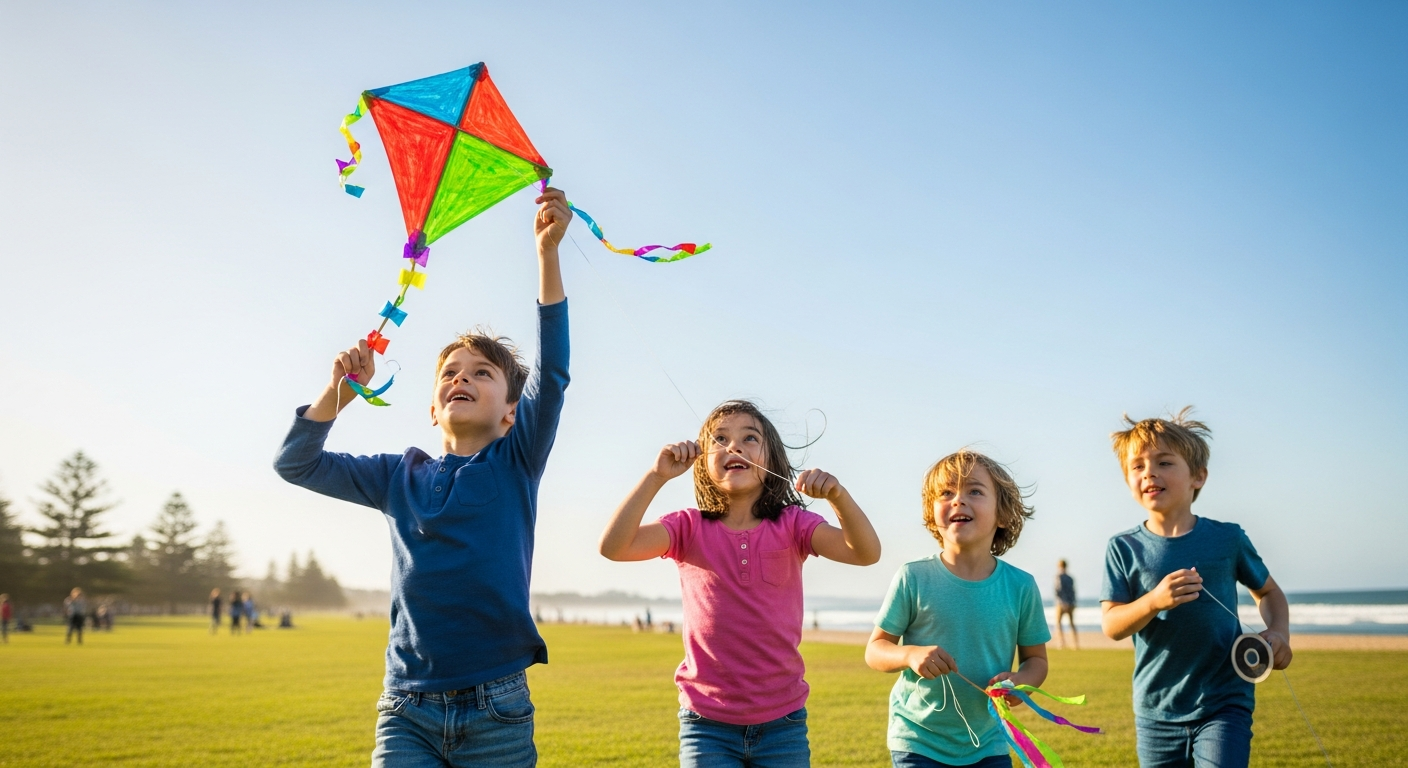
Table of Contents
- Introduction
- Why Kite Crafts Soar for Child Development
- Getting Started: Essential Materials for Your Easy Kite Craft Adventure
- Three Super Easy Kite Crafts for Kids
- Safety First: Flying Your Homemade Kite
- Beyond the Craft: Extending the Learning and Fun
- Empowering Every Child to Speak Their Hearts and Minds with Speech Blubs
- Unlock Your Child's Full Potential: Speech Blubs Pricing & Value
- Conclusion
- Frequently Asked Questions About Easy Kite Crafts & Child Development
Imagine the pure delight on your child's face as they watch something they created themselves dance gracefully against the big blue sky. That moment, when a simple piece of paper or a lunch bag takes flight, is more than just fun; it's a spark of magic, wonder, and profound learning. In a world full of digital distractions, returning to hands-on activities like crafting an "easy kite craft for kids" offers invaluable opportunities for growth, connection, and communication. This post isn't just about making a kite; it’s about harnessing the wind for developmental leaps, fostering creativity, and empowering little voices to speak their minds and hearts.
Introduction
Have you ever witnessed the unbridled joy of a child launching a kite for the first time? The sheer exhilaration as their creation catches the breeze, soaring higher and higher, is a core memory in the making. But beyond the simple pleasure, crafting a kite offers a rich tapestry of developmental benefits, from honing fine motor skills to sparking imaginative language. In this comprehensive guide, we'll dive into several incredibly easy kite crafts for kids, exploring how each snip, fold, and tie contributes to their overall growth. We'll also discover how these activities naturally align with and are amplified by tools like Speech Blubs, where our mission is to empower children to communicate effectively and joyfully. Crafting kites is more than just a pastime; it's a powerful avenue for learning, problem-solving, and building a foundation for confident communication, with Speech Blubs enriching every step of that journey.

Why Kite Crafts Soar for Child Development
Crafting, especially something as dynamic as a kite, provides a multi-sensory experience that is incredibly beneficial for children's development. It’s a holistic activity that engages the mind, body, and emotions, laying groundwork for essential skills far beyond the craft itself.
The Power of Play and Creation
When children engage in kite crafting, they are developing a wide array of skills:
- Fine Motor Skills: The precision required for cutting paper, folding creases accurately, taping small sections, and tying string knots all work to strengthen the small muscles in their hands and fingers. This dexterity is crucial for tasks like writing, buttoning clothes, and self-feeding.
- Gross Motor Skills: Once the kite is built, the true fun begins! Running with the kite, launching it, and controlling the string require coordination, balance, and whole-body movement. These gross motor skills are vital for physical development and active play.
- Following Instructions: Each step of a kite craft provides an excellent opportunity to practice listening comprehension and sequential thinking. Children learn to follow multi-step directions, which is a fundamental skill for academic success and daily routines.
- Problem-Solving: What if the kite doesn't fly? This is where critical thinking kicks in! Children (with a little guidance) learn to identify issues, brainstorm solutions, and experiment with adjustments. This iterative process teaches resilience and adaptability.
- Creativity & Self-Expression: Choosing colors, adding designs, and personalizing their kite allows children to express their unique personalities. This creative outlet boosts self-esteem and fosters imaginative thinking.
Language Takes Flight with Every Fold and Flap
Perhaps one of the most exciting aspects of kite crafting is its profound impact on language development. The activity naturally creates countless opportunities for communication, both receptive (understanding) and expressive (speaking).

- Vocabulary Expansion: As you craft, you'll naturally introduce new words. Think about terms like "string," "tail," "bridle," "frame," "crease," "fold," "tape," "soar," "glide," "wind," "breeze," "launch," "pull," and "release." Describing the kite’s parts, its colors, and its movement enriches a child’s lexicon.
- Descriptive Language: Encouraging your child to describe their kite – "It's a long, colorful tail!" or "Watch the red kite fly high!" – helps them use adjectives and adverbs to paint vivid pictures with words. This is a critical step in developing richer and more nuanced communication.
- Narrative Skills: After the kite takes flight, prompt your child to tell a story about its adventures. "What did your kite see in the sky?" "Who did it meet?" This fosters storytelling abilities, imagination, and sequential recounting of events.
- Understanding Concepts: Kite flying naturally introduces spatial concepts (up/down, high/low, far/near), comparative concepts (fast/slow, light/heavy, big/small), and cause-and-effect (the wind makes it fly).
- Social Communication: Sharing the experience with a parent or friend involves turn-taking, asking for help, explaining ideas, and celebrating successes. These interactions build vital social communication skills.
For a child who might be a "late talker" and is fascinated by vehicles and movement, engaging in a kite craft can be a fantastic way to introduce new words. As they decorate their kite, you can talk about how it "flies" like a plane or "soars" like a bird. Then, you can transition to Speech Blubs’ "Vehicles" section to practice sounds like "vroom" and "whoosh," or the "Animal Kingdom" to imitate bird sounds. We've seen firsthand how children who love these interactive segments in our app find new motivation to speak, often applying their new vocabulary to real-world play. You can start exploring these engaging sections by downloading Speech Blubs on the Apple App Store or Google Play Store today.
Getting Started: Essential Materials for Your Easy Kite Craft Adventure
One of the beauties of these easy kite crafts is that they often use materials you already have around the house. This makes them perfect for a spontaneous afternoon activity! Before you begin, gather your supplies to ensure a smooth and fun crafting session.
Here’s a general list of essential materials that will cover most of our kite crafts:
- Paper: Rectangular sheets (A4 or 8.5x11 inches) are ideal. Lightweight construction paper, printer paper, or even paper bags work wonderfully.
- String/Yarn/Twine: A lightweight but sturdy string is essential for the kite line. Cotton thread, jute string, or yarn are great options.
- Scissors: Child-safe scissors are recommended for little hands.
- Tape: Clear sticky tape (scotch tape) is versatile for securing pieces. Stronger glue sticks or all-purpose glue can also be useful.
- Hole Punch: For creating clean holes for the string. If you don't have one, a sharp pencil can work, with adult supervision.
- Decorations: Markers, crayons, colored pencils, stickers, washi tape, paint, ribbons, paper streamers, or even bottle caps can be used to personalize your kites. Just be mindful not to add too much weight!
- Optional Structural Elements: Paper straws, small wooden skewers (with ends trimmed), popsicle sticks, or pipe cleaners can be used for frames or handles.
Tips for Gathering Materials:
- Involve Your Child: Let them help collect the items. This is a mini scavenger hunt that builds anticipation and engagement.
- Set Up a "Craft Station": Lay out all materials neatly on a protected surface. This helps with organization and encourages focus.
- Keep it Simple: Don't feel the need to buy anything fancy. The charm of these crafts is in their simplicity and accessibility.
Three Super Easy Kite Crafts for Kids
Now, let's get to the fun part! We've selected three different easy kite crafts, each offering unique ways to build and decorate. Remember, adult participation is key – these are wonderful opportunities for bonding and guiding your child through the steps.
Craft 1: The Classic Folded Paper Kite
This is arguably the simplest kite you can make, perfect for very young children or for a quick craft session. Its elegance lies in its basic construction and surprising ability to catch the wind.
Materials:
- One rectangular piece of lightweight paper (A4 or 8.5x11 inches)
- String (about 2-3 feet long)
- Hole punch (or a pencil for piercing)
- Optional: Sticky tape, markers, crayons, stickers for decoration
Step-by-Step Instructions:
- Fold Paper in Half Widthways: Take your rectangular piece of paper. Bring the two shorter ends together and press firmly along the fold to create a strong crease down the middle. This crease is essential for the kite's structure.
- Decorate Your Kite (Optional): This is a fantastic time for creative expression! Using markers, crayons, or stickers, let your child decorate one side of the folded paper. Encourage them to talk about their design choices – "What color will your kite be?" "What shapes will you add?" Remember not to weigh it down too much, or it won't fly well.
- Create the Kite Shape: With the paper still folded, take the front top corner (the one opposite the fold) and bend it down towards the central crease you just made. Do not fold it; simply bring the corner down so it creates an angled flap. Repeat this same bend on the back layer of paper. You're essentially creating two angled flaps that meet at the center crease, forming the classic kite "diamond" shape at the top. The exact position isn't critical but will affect flight.
- Secure the Flaps: You can use a stapler to secure these two bent corners to the main body of the kite. If you don't have a stapler, you can pierce through the two corners and the body of the kite with your hole punch in step 5.
- Make a Hole for the String: Near the front of the central crease (where the two bent flaps meet), use your hole punch to create a small hole. If you're using thin string or anticipate a lot of use, you might reinforce this hole with a small piece of sticky tape.
- Attach the String: Thread one end of your string through the hole and tie a secure knot. A simple double knot works well.
- Optional Handle: If your string is loose, tie the other end to a pencil, pen, or a small stick. This creates a simple handle that makes it easier for little hands to hold and control the kite.
Tips for Optimal Flight: The beauty of this kite is its simplicity. It's designed for gentle breezes and short flights, perfect for toddlers to run with. Experiment with the angle of the bent corners; slight adjustments can change its flight path.
This "Classic Folded Paper Kite" is a wonderful way to introduce the concept of learning by imitation. Just as children learn to make the kite by watching and mimicking your actions, at Speech Blubs, our core methodology is built on "video modeling." Children learn to make sounds and say words by watching and imitating their peers on screen. This mirrors the natural learning process and leverages the power of mirror neurons in the brain, making speech development engaging and effective. You can delve deeper into the scientific research behind our highly-rated app on our Research page.
Craft 2: Whimsical Paper Bag Kites
Repurposing everyday items for crafts is not only eco-friendly but also wonderfully accessible. Paper bag kites are surprisingly robust and offer a large canvas for decoration.
Materials:
- One paper lunch bag
- Yarn or strong twine/string (about 3-4 feet long for the main string)
- Popsicle stick (or a small sturdy stick)
- Scissors
- Tape
- Streamers or lightweight ribbon for the tail (5-6 feet long for best flight, but shorter for young children)
- Embellishments: Markers, crayons, paint, stickers, construction paper scraps, washi tape
Step-by-Step Instructions:
- Decorate the Paper Bag: This is where the whimsical magic begins! Lay the paper bag flat. Let your child go wild decorating the entire surface. They can draw designs, create patterns with stickers and washi tape, or even paint it (ensure paint is dry before proceeding). Encourage them to create an "animal kite" or a "rainbow kite."
- Make a Hole for the Kite String: On the closed bottom base of the paper bag, use your scissors to snip a small hole. This is where the main kite string will attach.
- Prepare the Kite Handle: Cut a piece of yarn or string about 18-24 inches long. Tie one end securely to the middle of a popsicle stick. This stick will serve as a stopper inside the bag to prevent the string from pulling through.
- Attach the Main Kite String: Feed the other end of the yarn (the one not tied to the popsicle stick) through the hole you made in the paper bag. Once it’s through, the popsicle stick will rest against the inside bottom of the bag, holding the string in place when the kite flies.
- Create the Kite Tail: To the open end of the paper bag, use tape to attach your streamers or lightweight ribbons. A long tail (5-6 feet) generally helps with stability and flight. For younger children, a shorter tail (2-3 feet) is easier to manage. You can use multiple colors and textures for a vibrant effect!
Creative Embellishment Suggestions:
- Cut out paper shapes and glue them on.
- Use sponges or bottle caps to make paint stamps.
- Add glitter glue for extra sparkle (once dry).
For a child who is a 'late talker' and loves animals, decorating a paper bag kite with animal faces and patterns can be highly motivating. As they draw a lion on their kite, you can make lion roaring sounds. Then, take them to Speech Blubs' "Animal Kingdom" section to reinforce those sounds and words, watching peers imitate "roar" or "meow." This creates a wonderful link between tangible play and structured learning, helping to expand their vocabulary and sound production. You can explore the Animal Kingdom and many other exciting categories by downloading Speech Blubs on the Apple App Store or Google Play Store for free today!
Craft 3: Delightful Mini Paper Straw Kites
These mini kites are adorable, surprisingly sturdy, and a fantastic project for developing fine motor precision. The use of paper straws adds a fun, modern twist to the classic kite frame.
Materials:
- Two coordinating pieces of craft paper (8.5 x 11 inches)
- Two paper straws
- String or twine for the kite string (at least 25-30 inches long)
- Light-weight string, twine, or decorative ribbon for the tail (at least 20 inches long)
- Decorative ribbon scraps for tail embellishments
- Strong glue stick (Elmer's X-treme School Glue Stick is recommended)
- All-purpose craft glue
- Scissors
- Pencil
- Ruler
Step-by-Step Instructions:
- Prepare the Kite Base: Take your two coordinating papers. Cut both in half along the longest edge (resulting in two 5.5 x 8.5-inch pieces of each color).
- Create a Two-Tone Sheet: Using a strong glue stick, cover the back of one 5.5 x 8.5-inch piece with glue. Carefully place a different colored 5.5 x 8.5-inch piece directly on top, smoothing it down to ensure no bubbles. This creates a sturdy, colorful base.
- Mark the Kite Shape: On your glued-together paper, use a ruler and pencil to mark the kite shape. Measure and mark a spot at the top and bottom of your paper at 2.75 inches from the long edge. Measure and mark the long edges at 3 inches from the short edge. Use your ruler to connect these four marks to form a classic diamond kite shape.
- Cut Out the Kite: Carefully cut along your drawn lines to reveal your kite shape.
- Assemble the Kite Handle: Cut one paper straw into thirds (eyeball it, doesn't need to be exact). Cut a length of your main kite string (25-30 inches). Tie one end of the string to the middle of the full-length paper straw. Tie the other end of the string to the middle of one of the cut straw pieces. The full straw is your main handle, and the small piece acts as a stopper inside the kite. Add a drop of all-purpose glue to the knots to secure them.
- Create the Straw Frame: Place the side of the kite you want to be the bottom (where the straws will attach) face up on your table. Use a ruler and pencil to draw a faint "cross" by connecting opposite corners. Squeeze a bead of all-purpose craft glue along these drawn lines.
- Attach the Straw Frame: Carefully place your two remaining cut straw pieces along the glue lines, forming the kite's internal frame. Position the main string's knot (the one attached to the small straw piece) as close to the center of the cross as possible before pressing the straws down. Allow the glue to dry completely for a few minutes.
- Add the Kite Tail: Cut a 20-inch (or longer) piece of lightweight ribbon or string for the tail. Thread it through the long straw that forms the vertical spine of the kite. Add a bead of glue at the top of this straw to prevent the tail string from falling out.
- Decorate the Tail: Tie a few decorative ribbon scraps to the tail string. You can shape the tail so it looks like it's flowing in the wind. Allow all glue to dry completely.
Decorating Tip: My kids love to give their mini kites "faces" with glitter glue or googly eyes, adding even more personality!
This craft, with its multiple precise steps, is excellent for practicing sequential instruction following. For children who might struggle with multi-step directions, breaking down the process into smaller, manageable chunks is key. Our Speech Blubs app is designed with this in mind, offering clear, visual instructions and interactive activities that encourage focus and understanding of sequences, building confidence in their ability to follow directions and communicate their needs. Ready to see the difference? Create your account and begin your 7-day free trial today.
Safety First: Flying Your Homemade Kite
Once your magnificent kite is complete, it's time for its maiden voyage! But before you dash out the door, a few safety considerations will ensure the experience is fun and worry-free.
- Choose a Safe Flying Location: Look for large, open fields or parks, away from busy roads, power lines, tall trees, and buildings. These clear spaces prevent your kite from getting tangled or causing hazards.
- Check the Weather: A gentle, steady breeze is ideal. Avoid strong winds or stormy weather. Not only can strong winds damage your homemade kite, but they can also make it difficult to control.
- Adult Supervision is Key: Always fly kites with an adult present. An adult can help untangle strings, retrieve a kite from an unexpected landing spot, and ensure your child stays safe in open areas.
- Be Mindful of Others: If you're in a public park, be aware of other people, especially smaller children or pets, to avoid accidental collisions with your kite or string.
Beyond the Craft: Extending the Learning and Fun
The fun doesn't have to end once the kite lands. The kite crafting and flying experience can be a springboard for further learning and communication opportunities.
- Read Books About Kites: Visit your local library or bookstore to find picture books about kites, wind, or flight. Reading together reinforces vocabulary and introduces new concepts.
- Learn About Wind and Aerodynamics: For slightly older children, this is a great chance to introduce basic science concepts. Discuss what makes the kite fly, how the wind works, and why certain shapes are better for flying.
- Draw and Journal: Encourage your child to draw pictures of their kite flying or to dictate a story about their kite's adventures. This combines creative expression with language development and early literacy skills.
- "What Did Your Kite Do Today?": After flying, prompt your child with open-ended questions. "Tell me about the highest your kite flew!" "Did it do any tricks?" This encourages descriptive language and narrative skills.
Even after the kite lands, Speech Blubs continues to support your child's language journey. Our diverse range of categories, from "Animal Kingdom" to "Yummy Time," provides endless opportunities to practice new words, refine sounds, and build confidence. Many parents share how our app helps their children become more expressive and outgoing. For example, parents often tell us how a child who was previously hesitant to speak now excitedly shares stories about their day or describes their favorite toys. These are the moments we cherish, reflecting our commitment to empowering children to communicate effectively. See what other parents are saying about their child's success with Speech Blubs on our Testimonials page.
Empowering Every Child to Speak Their Hearts and Minds with Speech Blubs
At Speech Blubs, our mission is deeply personal. Our company was born from the personal experiences of our founders, who all grew up with speech problems and created the tool they wished they had. We are profoundly committed to empowering children to "speak their minds and hearts," providing an immediate, effective, and joyful solution for the 1 in 4 children who need speech support. We believe that every child deserves the chance to express themselves clearly and confidently.
Our approach blends scientific principles with play, transforming screen time from passive viewing (like cartoons) into one-of-a-kind "smart screen time" experiences. Our unique "video modeling" methodology, where children learn by watching and imitating their peers, is backed by scientific research and leverages the power of mirror neurons to facilitate natural speech development. It's a powerful tool for family connection, turning learning into a shared, interactive adventure. For parents who are unsure if their child could benefit from speech support, we offer a quick, easy, and free resource. Take our quick 3-minute preliminary screener to get a simple assessment and a personalized next-steps plan. It's a great way to gain clarity and discover how Speech Blubs can support your child's communication journey.
Unlock Your Child's Full Potential: Speech Blubs Pricing & Value
We believe in transparent pricing and providing exceptional value to families. Supporting your child’s speech and language development with Speech Blubs is an investment in their future, and we want to make it as accessible and beneficial as possible.
We offer two straightforward plans:
- Monthly Plan: For just $14.99 per month, you can access our comprehensive app.
- Yearly Plan: Our best value, at only $59.99 per year. This breaks down to an incredible $4.99 per month, offering substantial savings!
The Yearly Plan is the clear choice for families looking for the most benefits and the best value. By choosing the Yearly Plan, you save a remarkable 66% compared to the monthly option. But the savings are just the beginning – the Yearly Plan also includes exclusive, high-value features designed to enhance your child's learning experience:
- A 7-day free trial: Experience the full power of Speech Blubs before committing.
- The extra Reading Blubs app: Double the fun and learning with our companion reading app.
- Early access to new updates: Be the first to enjoy new features and content.
- 24-hour support response time: Get prompt assistance whenever you need it.
The Monthly Plan, while flexible, does not include these incredible benefits. We encourage you to choose the Yearly Plan to unlock the full suite of features, get your 7-day free trial, and provide your child with the most comprehensive support for their communication development.
Conclusion
Creating an easy kite craft with your child is far more than just a fleeting activity; it's a profound journey of discovery, creativity, and connection. From the initial folds that strengthen fine motor skills to the triumphant run that builds gross motor coordination and the descriptive language used to narrate its flight, every step nurtures crucial developmental milestones. These simple crafts foster problem-solving, ignite imagination, and, most importantly, create rich opportunities for communication and bonding.
At Speech Blubs, we stand with you in this joyful pursuit of empowering your child. We understand that every word learned, every sound mastered, and every confident expression contributes to a child's ability to "speak their minds and hearts." Our app, rooted in scientific methodology and driven by a deeply personal mission, provides a powerful, engaging, and joyful resource to support your child’s speech and language development every day.
Ready to watch your child's confidence and communication soar, both through crafting and innovative digital play? Don't miss out on the incredible value and comprehensive support our Yearly Plan offers.
Download Speech Blubs today on the Apple App Store or Google Play Store and start your 7-day free trial! To get the full suite of features and our best value, remember to select the Yearly plan when you sign up. Prefer to start on the web? Create your account and begin your free trial here.
Frequently Asked Questions About Easy Kite Crafts & Child Development
Q1: What age group are these kite crafts best for? A1: These easy kite crafts are suitable for a wide range of ages, generally from toddlers (with significant adult help) to early elementary school children. Younger children will focus more on decorating and simple folding, while older children can handle more complex cutting, measuring, and independent assembly. The joy of flying them, however, is universal!
Q2: My child struggles with following instructions; how can I help them with crafting? A2: For children who struggle with multi-step directions, break each step down into its simplest components. Use clear, concise language and pair your words with actions, demonstrating each part. Use visual cues, like pointing or gesturing. Patience and positive reinforcement are key. Remember, the goal is participation and connection, not perfection. Tools like Speech Blubs also help build receptive language skills by focusing on understanding and following directions in an engaging, interactive format.
Q3: How do these crafts specifically help with speech development? A3: Kite crafts naturally encourage speech development by introducing new vocabulary related to materials, actions, and flight. They provide opportunities for descriptive language, storytelling, and social interaction. Parents can prompt their children to use words like "up," "down," "fast," "slow," "red," "blue," "cut," and "fly," turning the craft into an organic language lesson. This hands-on experience enhances the concepts learned and practiced in apps like Speech Blubs.
Q4: What if our homemade kite doesn't fly well? A4: Don't get discouraged! Homemade kites, especially simple ones, can be a bit finicky. Use it as a learning opportunity. Discuss with your child: "Why do you think it's not flying?" "Is it too heavy?" "Do we need more wind?" You can try adding a longer tail for stability, reinforcing the string attachment point, or finding a breezier location. The process of troubleshooting is a valuable lesson in problem-solving and resilience, reinforcing that it's okay for things not to be perfect the first time.
About the author