
Free Christmas Activities for Kids: Holiday Joy!
 By Speech Blubs Team•Dec 19, 2025•21 min.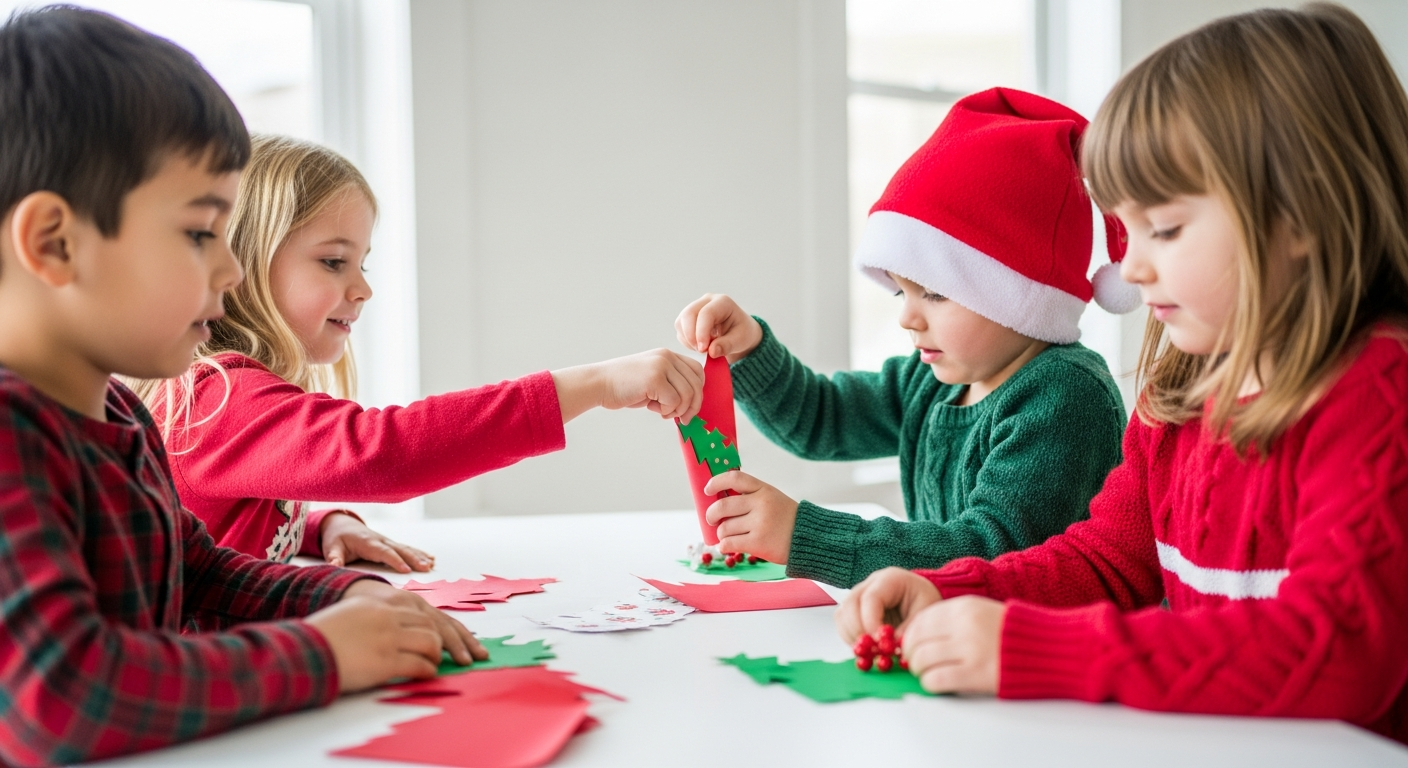
Table of Contents
- The Magic of Making Memories (Not Spending Money)
- Creative Crafts & DIY Decorations
- Festive Fun in the Kitchen (No-Bake & Simple Recipes)
- Outdoor Winter Adventures
- Cozy Indoor Games & Storytelling
- Community & Giving Back (Local & Free)
- Turning Play into Powerful Communication Moments
- Your Partner in Communication: Speech Blubs
- Conclusion
- FAQ
The holiday season is a magical time of year, filled with twinkling lights, festive music, and the joyful anticipation of celebration. Yet, for many parents, the pressure to create unforgettable experiences often comes with the unspoken expectation of spending a fortune. But what if the most cherished memories, the most profound learning moments, and the most engaging activities didn't cost a thing? What if the true magic of Christmas lay not in expensive gifts or elaborate outings, but in shared laughter, simple creations, and heartfelt connections?
This Christmas, we invite you to rediscover the joy of togetherness through a wealth of free, engaging activities that will not only light up your child's eyes but also nurture their development in countless ways. From sparking creativity with homemade crafts to fostering language skills through festive games, we'll explore how simple, everyday moments can become powerful opportunities for growth, learning, and strengthening family bonds. Our mission at Speech Blubs is to empower children to speak their minds and hearts, and we believe that every interaction, especially during the holidays, is a chance to build confidence and communication skills. Get ready to embrace the spirit of the season with a treasure trove of ideas that prove the best things in life, and the best holiday memories, truly are free.

The Magic of Making Memories (Not Spending Money)
In a world often preoccupied with consumption, the holidays can sometimes feel like a race to acquire more. However, the most lasting gifts we can give our children are not material possessions, but shared experiences and dedicated time. Free Christmas activities offer a unique opportunity to shift the focus from "getting" to "being" – being present, being creative, and being together. These moments of connection are invaluable, fostering emotional security, encouraging imaginative play, and naturally creating environments rich in language and interaction. When we engage in activities that don't require an entrance fee or a shopping cart, we open the door to genuine engagement, where the process of creation and exploration takes precedence over the final product.
Think about the sheer joy on a child's face as they spot their handmade ornament on the tree, or the pride in their voice as they recount a story told during a cozy fort-building session. These are the moments that truly matter, forging strong family bonds and creating a tapestry of memories that will last a lifetime. For children, especially those developing their communication skills, these low-pressure, high-engagement activities provide a natural backdrop for practicing new sounds, expanding vocabulary, and expressing themselves freely. They learn through doing, seeing, and experiencing, making language acquisition an organic and joyful journey. It’s about leveraging everyday experiences to build foundational skills, a principle central to our approach at Speech Blubs, where we blend scientific principles with play to support every child's communication journey.
Creative Crafts & DIY Decorations
Unleash your child's inner artist with a variety of Christmas crafts that use readily available materials, often things you already have at home! These activities are not only fun but also fantastic for developing fine motor skills, encouraging following instructions, and expanding descriptive vocabulary.

Paper Snowflakes: A Winter Wonderland of Words
Creating paper snowflakes is a timeless activity that requires nothing more than paper and scissors. As you fold the paper, talk about the shapes you're making: "Let's fold it in half, then in half again. Look, now it's a triangle!" When cutting, describe the actions: "Snip, snip, snip goes the scissors!" Once unfolded, marvel at the unique patterns and encourage your child to describe what they see: "Wow, this one has lots of pointy parts!" or "Yours looks like tiny stars!" This simple craft introduces concepts of symmetry, patterns, and provides a rich context for naming shapes and discussing textures.
Homemade Ornaments: Telling Stories Through Decor
Transform everyday items into cherished ornaments. Salt dough (flour, salt, water) is incredibly versatile and can be shaped with cookie cutters, then painted once dry. Collect pinecones from a nature walk and decorate them with glitter, paint, or small pompoms. Even old bottle caps can become tiny masterpieces. As you create, encourage your child to talk about their vision. "What color will you paint this star? Why did you choose that one?" For a parent whose 3-year-old 'late talker' loves animals, making animal-shaped salt dough ornaments offers a fun, motivating way to practice sounds and names. For example, when making a "moo" cow or a "baa" sheep, you can model the animal sounds and names, encouraging imitation. "Look, a cow! What does a cow say? Mooo!" This playful repetition is a cornerstone of language development.
Christmas Cards for Loved Ones: A Heartfelt Message
Creating homemade Christmas cards for grandparents, aunts, uncles, or friends is a wonderful way to foster empathy and an understanding of social connection. Provide paper, crayons, markers, and even some old magazines for collage elements. Talk about who the card is for and what message they might want to convey. "What do you want to tell Grandma? Maybe we can draw her a big hug!" Even pre-writers can dictate their message, which you can then write down, showing them the power of written communication. This activity encourages expressing feelings, thinking about others, and recognizing familiar names and faces.
Recycled Material Creations: Imagination Unleashed
Gather toilet paper rolls, paper towel tubes, cereal boxes, and other clean recyclables. Challenge your child to create a Christmas-themed sculpture or decoration. A toilet paper roll might become a reindeer, a cereal box a miniature sleigh. This activity encourages problem-solving, creative thinking, and a wealth of descriptive language as children explain what they are building and why. "I need tape to make the reindeer's antlers stay up!" or "This box will be the chimney, and Santa will go down it!"
These craft activities provide fantastic opportunities for natural language exposure. Children learn best by doing, and when they are engaged in hands-on tasks, they are more likely to absorb new vocabulary and practice speech sounds in a meaningful context. This aligns perfectly with our approach at Speech Blubs, where we create "smart screen time" experiences that encourage active participation rather than passive viewing. For more ideas on how to turn everyday moments into communication goldmines, consider exploring our resources and downloading Speech Blubs on the App Store or Google Play Store to support your child's development.
Festive Fun in the Kitchen (No-Bake & Simple Recipes)
The kitchen is a hub of activity during the holidays, and it offers an incredible sensory-rich environment for language development. Simple, no-bake, or low-effort recipes are perfect for involving children of all ages.
Decorating Holiday Cookies: A Feast for the Senses
Whether you bake them from scratch or buy plain cookies, decorating is where the fun truly begins! Provide various frostings, sprinkles, candies, and edible glitter. As your child decorates, talk about the colors, shapes, and textures. "Oh, you chose the red frosting! Is it smooth or bumpy? Let's add some star sprinkles!" This activity is excellent for counting, sequencing (first frosting, then sprinkles), and making choices. It’s also a wonderful way to practice requesting: "More sprinkles, please!"
Hot Cocoa Bar: Warmth and Words
Set up a simple hot cocoa bar with different toppings like mini marshmallows, whipped cream, chocolate syrup, and candy cane pieces. Let your child choose their additions. This is perfect for following multi-step instructions ("First cocoa, then marshmallows"), making choices, and using descriptive language ("My cocoa is warm and sweet!"). It’s a cozy way to share stories and connect.
Fruit Skewers: Healthy and Festive Shapes
Cut various fruits (strawberries, green grapes, banana slices) into festive shapes using small cookie cutters, or simply create color patterns reminiscent of candy canes or Christmas trees on skewers. This activity introduces healthy eating habits while working on fine motor skills and sequencing. "First a red strawberry, then a green grape, then a white banana!" This simple repetition can be very beneficial for early communicators.
These kitchen activities naturally foster conversation and vocabulary expansion. From naming ingredients to describing tastes and textures, every step is an opportunity to learn. We believe in making learning joyful and effective, which is why our app incorporates real-life scenarios and video modeling to help children understand and replicate communication skills. For more information on our scientifically backed methods, you can visit our research page.
Outdoor Winter Adventures
Even in colder weather, the outdoors offers unique opportunities for exploration, observation, and communication. Bundle up and enjoy these free outdoor Christmas activities!
Christmas Light Tour: A Dazzling Display of Language
One of the most beloved free Christmas activities is driving or walking around your neighborhood to admire the holiday lights and decorations. This is a fantastic opportunity for descriptive language. "Look at the blinking lights! Do you see the reindeer on the roof? How many blue lights can you count?" Encourage your child to point, name colors, and describe the scenes they see. This visual feast naturally sparks conversation and encourages children to use more complex sentences as they express their awe and observations.
Winter Scavenger Hunt: Puzzling Fun
Create a simple list of outdoor Christmas-themed items for your child to find in your yard or local park. Examples include a red berry, a pinecone, a branch shaped like an antler, a piece of something shiny, or even just something green. This activity encourages problem-solving, following instructions, and understanding prepositions ("Is it under the bush?"). For non-readers, use pictures or simply describe the items aloud.
Snow Play (If Applicable): Sensory and Action Words
If you're lucky enough to have snow, the possibilities are endless and free! Building a snowman, making snow angels, or simply playing in the fresh powder provides rich sensory input. Focus on action words and descriptive vocabulary: "Scoop the snow! It's cold and fluffy! Let's roll a big ball for the snowman's belly." This direct experience with nature is incredibly engaging for children and a natural catalyst for speech.
Nature Walk for Winter Treasures: Collecting and Describing
Take a walk in a local park or wooded area to collect "winter treasures" like interesting leaves, pinecones, or smooth stones. Talk about the items you find: "This leaf is crunchy!" or "Look at the rough texture of this bark." These natural finds can then be used in the craft activities mentioned earlier, creating a lovely connection between different activities.
Outdoor play, even in winter, is crucial for children's physical and cognitive development. It provides a change of scenery, fresh air, and countless opportunities for children to interact with their environment and, in turn, with you. At Speech Blubs, we believe in supporting development through diverse experiences, and our app complements these real-world interactions by providing structured speech practice in a fun, engaging format. If you're wondering about your child's communication progress, take our quick 3-minute preliminary screener to get a simple assessment and a free 7-day trial.
Cozy Indoor Games & Storytelling
When the weather outside is frightful, indoor fun can be delightful! These activities require minimal preparation and can be adapted for various ages, focusing on imagination, turn-taking, and active listening.
Holiday-Themed Charades or Pictionary: Guessing Games Galore
Adapt classic games like charades or Pictionary with a Christmas twist. Write down or draw simple holiday words or phrases on slips of paper (e.g., "Santa," "reindeer," "decorating the tree," "singing carols"). This encourages non-verbal communication, expressive language (when guessing), and turn-taking. It’s also a fantastic way to develop an understanding of different concepts and vocabulary related to the holidays.
Christmas Story Time: Journeys Through Imagination
Gather your family for a cozy Christmas story time. Read your favorite holiday books aloud, or even better, encourage your child to tell their own Christmas story. Use prompts like, "What if Santa got stuck in the chimney?" or "What kind of present would a talking reindeer ask for?" This activity enhances listening comprehension, fosters imagination, and encourages narrative skills. Ask open-ended questions about the stories: "What do you think happened next?" or "How do you think the character felt?"
Building a Fort: Architecting Adventures
Transform your living room into a magical fort using blankets, pillows, chairs, and whatever else you can find. This activity is wonderful for cooperative play, problem-solving, and spatial awareness. As you build, talk about the steps: "We need a big blanket for the roof!" or "Where should the door go?" Once the fort is complete, it becomes the perfect setting for storytelling, reading, or quiet play, all of which are rich in communication opportunities.
Singing Carols: Harmonizing and Hypothesizing
Singing Christmas carols is a joyful way to engage in language and rhythm. It helps with memory, auditory processing, and emotional expression. Don't worry about perfect pitch; focus on the fun! You can even make up new verses or silly sounds to familiar tunes. This repetitive and rhythmic activity can be particularly beneficial for children who are working on speech sounds and fluency.
DIY Christmas Photo Booth: Strike a Pose!
Create a fun backdrop using a festive blanket or streamers. Gather some simple props like Santa hats, scarves, or even homemade paper mustaches and reindeer antlers. Take turns posing and making silly faces. This encourages children to express emotions, understand different expressions, and engage in social interaction. Reviewing the photos afterward provides another opportunity for discussion and laughter.
These indoor activities demonstrate that enriching experiences don't need elaborate setups. They are about active participation and interaction, which are key pillars of language development. Our app, Speech Blubs, offers a similar active learning experience with our "video modeling" methodology, where children learn by watching and imitating their peers, making communication practice engaging and effective. We believe in providing an immediate, effective, and joyful solution for the 1 in 4 children who need speech support, blending scientific principles with play. See what other parents are saying about their child's success with Speech Blubs.
Community & Giving Back (Local & Free)
The Christmas season is also a time for community spirit and giving. Many local events are free, and there are countless ways to involve your child in acts of kindness that cost nothing but time and effort.
Visiting Local Library for Holiday Events: A Hub of Free Fun
Check your local library's schedule for free holiday-themed story times, craft workshops, or musical performances. Libraries are community treasures that offer enriching experiences without any cost. These events expose children to new environments, encourage good listening habits, and provide opportunities for social interaction with other children and adults.
Attending Free Community Tree Lighting or Parades: Festive Spectacles
Many towns host free tree lighting ceremonies or Christmas parades. These events are sensory delights, filled with music, lights, and excitement. Talk about what you see: "Look at the marching band! What color is that float?" It’s a wonderful way to experience the festive atmosphere as a community and work on observational skills and descriptive language.
Making Handmade Gifts for Neighbors/Family: Spreading Cheer
Extend the spirit of giving by helping your child create simple handmade gifts for neighbors, teachers, or family friends. This could be a decorated pinecone, a hand-drawn picture, or a small bag of decorated cookies. This teaches empathy, the joy of giving, and allows for planning and creativity. Discuss who the gift is for and why they might appreciate it.
Volunteering (Simple Tasks): Learning Compassion
Look for simple, age-appropriate volunteer opportunities in your community, such as helping to sort donated toys or clothes at a local charity (under adult supervision). Even small tasks can teach children about helping others, fostering a sense of responsibility and compassion. These experiences provide concrete examples for discussing feelings, needs, and gratitude.
Engaging in community activities and acts of kindness helps children understand their place in the world and develop crucial social-emotional skills. These experiences provide a rich context for discussing complex emotions and developing a broader understanding of human connection. At Speech Blubs, we recognize the importance of holistic development, and our tools are designed to support not just speech, but the comprehensive communication skills that allow children to truly connect with the world around them.
Turning Play into Powerful Communication Moments
The beauty of these free Christmas activities lies in their potential to transform into powerful communication opportunities. It’s not just about doing the activity; it’s about how you interact during it. For a parent whose 3-year-old 'late talker' loves animals and is hesitant to speak, a simple activity like making animal-shaped salt dough ornaments can be incredibly effective. Instead of just handing them the dough, sit with them, model the sounds and names of the animals as you make them. "Let's make a pig! Oink, oink!" Hold the pig ornament to your ear, pretending it's talking. "Oink, oink!" Encourage your child to imitate. If they make a sound, even if it's not perfect, celebrate it! Expand on their attempts: if they say "pi," you can say, "Yes, a pig! A pink pig!" This expansion helps them hear the correct pronunciation and adds new vocabulary.
This intentional interaction is what we call "responsive communication" – where you respond to your child's cues, expand on their utterances, and create a low-pressure environment for them to practice. This mirrors the core philosophy behind Speech Blubs. Our app was born from the personal experiences of our founders, who all grew up with speech problems and created the tool they wished they had. We understand the frustration of wanting to communicate but not having the words. Our unique "video modeling" methodology, where children learn by watching and imitating their peers, taps into the natural human inclination to learn from others. It's a screen-free alternative to passive viewing, encouraging active participation and turning screen time into "smart screen time." By seeing real children their age make sounds and words, your child feels connected and motivated to join in.
Our commitment is to providing an immediate, effective, and joyful solution for children, blending scientific principles with play. We are driven by the belief that every child deserves to speak their mind and hearts, and that communication should be a source of joy, not frustration.
Your Partner in Communication: Speech Blubs
While these free Christmas activities offer fantastic communication opportunities, sometimes parents need an extra tool to support their child's speech development. That’s where Speech Blubs comes in. We offer a vibrant, engaging platform designed to complement your efforts and make speech practice fun for your child. Our app utilizes our unique video modeling technique, where children learn by watching and imitating real kids their age. This technique has been shown to be incredibly effective in engaging children and encouraging them to vocalize and practice new sounds and words.
From building foundational sounds to expanding vocabulary and developing conversational skills, Speech Blubs provides a structured yet playful environment. It’s a powerful tool for family connection, as you can participate alongside your child, celebrating their progress and reinforcing what they learn. While we never promise guaranteed outcomes, we are dedicated to fostering a love for communication, building confidence, reducing frustration, and developing key foundational skills through joyful family learning moments. Speech Blubs is a powerful supplement to your child's overall development plan and, when applicable, professional therapy, providing consistent, engaging practice right at your fingertips.
When you're ready to explore Speech Blubs, we want to make it easy and valuable for your family. We offer transparent pricing options: you can subscribe monthly for $14.99 per month, or choose our Yearly plan for $59.99 per year. The Yearly plan breaks down to just $4.99/month, meaning you save 66% compared to the monthly subscription!
The Yearly plan is truly the best value, not only because of the significant savings but also because it includes exclusive, high-value features. With the Yearly plan, you get:
- A 7-day free trial to experience the full benefits of Speech Blubs before committing.
- The extra Reading Blubs app, helping your child on their literacy journey.
- Early access to new updates and a 24-hour support response time, ensuring you always have the latest features and quick assistance.
The Monthly plan, while flexible, does not include these incredible benefits. To get the most out of your Speech Blubs experience, we highly recommend choosing the Yearly plan to unlock the free trial and the full suite of features that will empower your child's communication journey. Create your account and begin your 7-day free trial today and select the Yearly plan to start building confident communicators!
Conclusion
The Christmas season doesn't have to be defined by spending, but rather by sharing, connecting, and creating. By embracing these free Christmas activities, you're not just providing entertainment; you're investing in your child's development, fostering their creativity, strengthening family bonds, and most importantly, nurturing their communication skills. Every craft, every song, every moment of shared laughter becomes a building block for confident expression.
Remember, the most powerful tool you have is your presence and interaction. Talk, listen, expand, and celebrate every small step in your child's communication journey. These free holiday activities, combined with mindful engagement, offer an unparalleled opportunity to make this Christmas truly special and developmentally enriching.
Ready to further support your child's communication journey with a joyful and effective tool? Take the first step towards empowering your child to "speak their minds and hearts." Download Speech Blubs on the App Store or get it on Google Play today! Don't forget to choose the Yearly plan when you sign up to unlock your 7-day free trial, the Reading Blubs app, and all the exclusive features designed to give your child the best possible start. Let's make this holiday season a time of joyful connection and confident communication!
FAQ
Q1: How can free Christmas activities help my child's language development?
A1: Free Christmas activities naturally create engaging, low-pressure environments rich in sensory experiences and opportunities for interaction. Whether it's describing the colors of Christmas lights, naming ingredients while decorating cookies, or telling stories during fort building, these activities provide natural contexts for vocabulary expansion, practicing speech sounds, following instructions, and developing narrative skills through shared experiences and conversations with caregivers.
Q2: What if my child is a late talker or has speech difficulties? Can these activities still be beneficial?
A2: Absolutely! These activities are incredibly beneficial for children with speech difficulties. The key is adapting them to your child's level and focusing on interaction. Model words and sounds clearly, use gestures, ask open-ended questions, and expand on any sounds or words your child produces. For example, during a craft, if your child points to a red object and says "reh," you can say, "Yes, that's a red star! Good job!" These joyful, stress-free interactions are crucial for building confidence and encouraging communication.
Q3: How does Speech Blubs fit in with these free holiday activities?
A3: Speech Blubs acts as a powerful supplement to these real-world activities. While you're creating memories and fostering communication through play, Speech Blubs provides structured, engaging "smart screen time" that reinforces speech and language skills. Our unique video modeling method, where children learn by imitating peers, can help practice sounds, words, and concepts in a fun, active way, complementing the natural learning happening during your free holiday fun. It ensures consistent practice in an appealing format.
Q4: Are there any specific features in Speech Blubs that would align well with Christmas-themed learning?
A4: While Speech Blubs doesn't have an exclusive "Christmas" category, many of our existing sections can be beautifully integrated with holiday themes. For instance, our "Food Fun" section can reinforce vocabulary learned while baking cookies. Our "Animal Kingdom" can connect to making animal ornaments, practicing sounds. The "Outdoor" category can be used after a Christmas light tour to describe what was seen. Our app is designed to build foundational skills that are applicable across all aspects of a child's life and environment, making everyday moments, including holidays, rich with learning potential.
About the author