
Free Christmas Crafts for Kids: Festive Fun & Skill Building
 By Speech Blubs Team•Dec 22, 2025•19 min.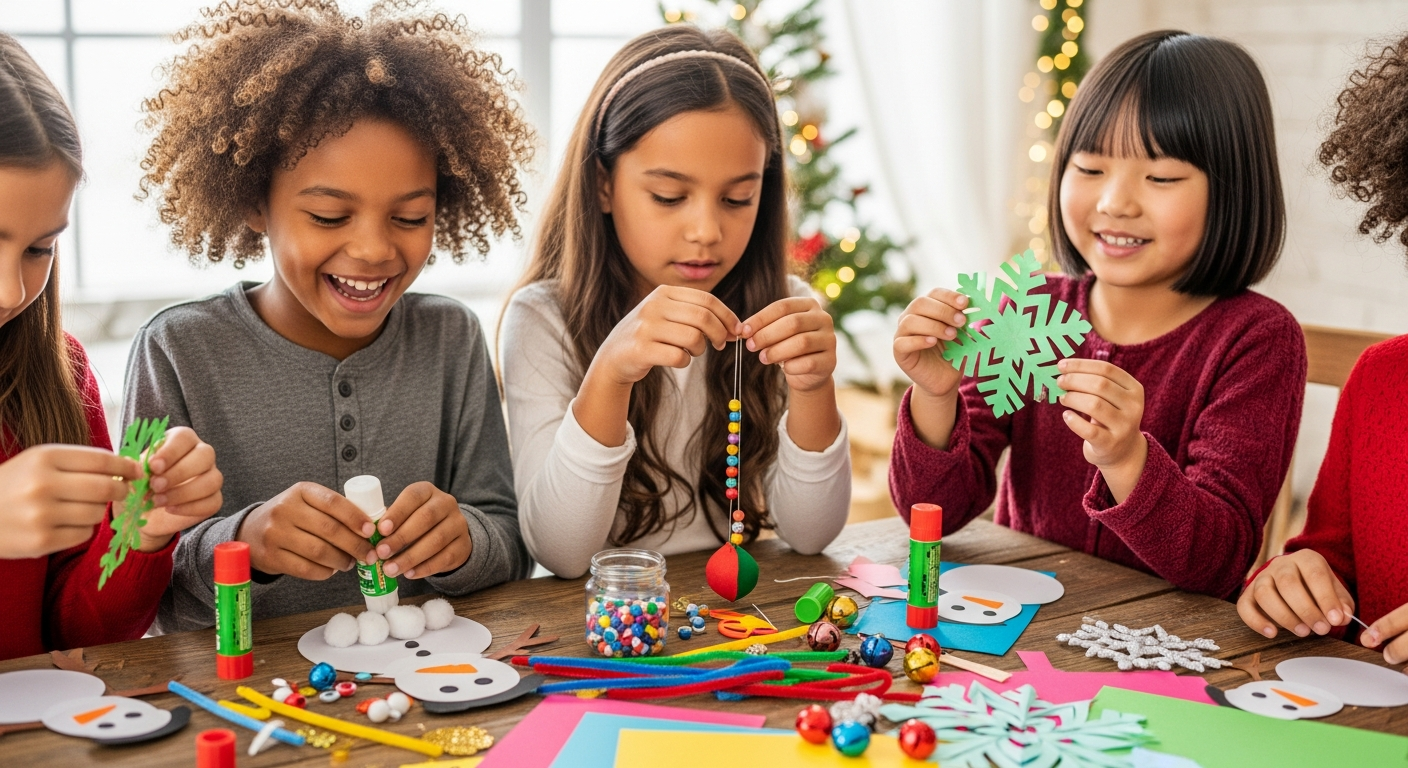
Table of Contents
- Introduction
- Why Free Christmas Crafts Are a Holiday Gift for Development
- Get Started with Zero-Cost Christmas Craft Supplies
- Our Favorite Free Christmas Craft Ideas for Kids (with Skill Building in Mind!)
- Maximizing Language & Learning During Craft Time
- When to Consider Extra Support: A Gentle Nudge
- Make Learning Joyful: The Speech Blubs Approach
- Unlocking Full Potential with Speech Blubs: Choose Your Plan
- Conclusion
- Frequently Asked Questions About Christmas Crafts & Child Development
Introduction
As the holiday season draws near, the air fills with a unique blend of excitement, anticipation, and perhaps a touch of stress for parents. We all dream of creating magical Christmas memories for our children, but the pressure to deliver elaborate gifts and expensive experiences can often overshadow the simple joys of the season. What if we told you that some of the most cherished holiday moments and powerful developmental boosts come from the most unexpected and, best of all, free sources?
This blog post is your guide to unlocking the magic of Christmas through imaginative, budget-friendly crafts that don't cost a dime. We'll explore a treasure trove of ideas using materials you likely already have around the house or can find in nature. More than just festive decorations, these activities are incredible catalysts for building essential skills, especially in language and communication, all while strengthening family bonds. Get ready to transform everyday items into holiday masterpieces and witness your child's creativity and confidence blossom. Engaging in free Christmas crafts isn't just about festive décor; it's a powerful, joyful way to boost a child's developmental skills, especially communication, and create lasting family memories.

Why Free Christmas Crafts Are a Holiday Gift for Development
Beyond the immediate relief of saving money during an often-expensive time of year, engaging in free Christmas crafts offers a wealth of developmental advantages for children of all ages. These aren't just activities to pass the time; they are rich learning experiences disguised as festive fun, helping to empower children to grow into confident communicators.
Boosting Fine Motor Skills and Creativity
When children manipulate materials like paper, glue, pinecones, or fabric scraps, they are actively refining their fine motor skills. Cutting with scissors, carefully applying glue, coloring within lines, or delicately placing small embellishments all contribute to improved hand-eye coordination and dexterity. These are foundational skills crucial for everything from writing to self-care tasks. Moreover, with open-ended craft projects, children are encouraged to think outside the box, experiment with colors and textures, and bring their unique visions to life, nurturing a boundless sense of creativity and self-expression.
Nurturing Language and Communication Skills
Perhaps one of the most significant, yet often overlooked, benefits of crafting is its profound impact on language and communication development. Craft time naturally creates opportunities for rich linguistic interactions:
- Vocabulary Expansion: Children learn new words related to materials (e.g., "bumpy" pinecone, "smooth" paper, "sticky" glue), actions (e.g., "fold," "cut," "glue," "paint"), and Christmas themes (e.g., "star," "angel," "snowflake," "Santa").
- Following Instructions: Simple craft steps help children practice understanding and executing multi-step directions, a key aspect of receptive language.
- Descriptive Language: As they work, encourage them to describe what they see, feel, and create. "My reindeer has big, brown antlers!" "This snowflake is sparkly and white."
- Questioning and Answering: Crafting sparks curiosity. "What happens if I mix these colors?" "Where should Santa's beard go?" Parents can model asking and answering questions, fostering conversational turns.
- Narrative Skills: Once a craft is finished, children often love to tell stories about their creations – who made it, what it is, and what adventures it might have. This builds early narrative abilities.
At Speech Blubs, we understand the power of interactive learning. Our approach focuses on creating engaging, "smart screen time" experiences where children learn complex communication skills by watching and imitating their peers through our unique "video modeling" methodology. Craft time offers a wonderful, screen-free parallel, providing a natural environment for families to interact, discuss, and practice new words and concepts together. Just like our app provides a joyful solution for the 1 in 4 children who need speech support, these craft activities offer an immediate, effective way to encourage communication at home.

Enhancing Problem-Solving and Cognitive Growth
Crafting isn't always smooth sailing, and that's a good thing! When a piece doesn't fit quite right, or a design doesn't turn out as expected, children engage in essential problem-solving. They might need to figure out how to attach a wobbly arm to a snowman, or how to adapt their plan when they run out of a certain color. This process strengthens their cognitive flexibility, critical thinking, and sequencing abilities as they learn to plan steps and adjust to challenges.
Strengthening Family Bonds
In our busy lives, dedicated quality time can sometimes feel elusive. Crafting together provides a precious opportunity for shared experiences, laughter, and focused interaction. It creates a space for parents and children to connect, collaborate, and make cherished memories. These moments of co-creation reduce passive screen time and foster a deeper family connection, embodying our mission at Speech Blubs to provide tools that enrich family interaction and empower children to speak their minds and hearts.
Get Started with Zero-Cost Christmas Craft Supplies
The beauty of "free" Christmas crafts lies in their accessibility. You don't need fancy art store supplies; often, the most creative and meaningful projects come from items already within your home or backyard. Embrace the art of repurposing and see your child's imagination soar with these readily available materials:
Recycled Wonders from Around the House:
- Toilet Paper and Paper Towel Rolls: The ultimate craft chameleon! Perfect for characters, trees, garlands, or even small gift boxes.
- Paper Plates: Ideal for masks, wreaths, or festive characters.
- Newspapers and Magazines: Fantastic for collage, rolling into tubes, cutting shapes, or tearing for textural effects. The vibrant colors in magazines can add a lovely touch.
- Cardboard Boxes (cereal boxes, delivery boxes): Sturdy bases for ornaments, gingerbread houses, or larger display pieces.
- Plastic Bottles and Bottle Caps: Can be transformed into snowmen, bells, or used for printing with paint.
- Old Buttons, Fabric Scraps, Yarn Bits: Leftover bits from sewing projects or old clothing can add texture and color to any craft.
- Aluminum Foil: Creates wonderful shiny ornaments, snow, or robot-like figures.
- Old Greeting Cards/Gift Wrap: Repurpose beautiful patterns and images into new cards, ornaments, or collages.
Nature's Free Bounty:
- Pinecones: Collect various sizes for ornaments, tabletop trees, or festive animals.
- Twigs and Small Branches: Excellent for creating stars, snowflakes, mini trees, or rustic ornaments.
- Leaves: Fall leaves can be pressed and used for wreaths, collages, or painted designs. Even evergreen leaves can be integrated.
- Stones/Rocks: Paint them with festive designs – snowmen, Santa faces, or ornaments.
- Acorns and Seed Pods: Small, natural embellishments.
Basic Household Essentials (Likely Already There!):
- Scissors: For cutting paper and light cardboard.
- Glue (liquid glue or glue sticks): Essential for assembling pieces.
- Tape (masking tape, clear tape): Another adhesive option.
- Markers, Crayons, Pencils: For drawing, coloring, and detailing.
- Salt: Can be mixed with flour and water for homemade playdough or used for sensory snow.
- Flour, Water, Oil: For DIY playdough or simple paste.
- String, Yarn, or Dental Floss: For hanging ornaments or creating garlands.
- Old Paint (if available, even dried-up bits can be revived): A little goes a long way.
- Cotton Balls/Pads: Great for snow, Santa's beard, or fluffy animals.
By encouraging children to hunt for these "treasures," you're not just finding craft supplies; you're also fostering observation skills, resourcefulness, and a greater appreciation for their environment. It’s an adventure before the crafting even begins!
Our Favorite Free Christmas Craft Ideas for Kids (with Skill Building in Mind!)
Let's dive into some fantastic, truly free Christmas craft ideas that promise hours of fun and invaluable developmental practice. Remember, the goal is interaction and process, not perfection!
Nature's Gifts: Outdoor-Inspired Christmas Creations
Gathering materials for these crafts is an adventure in itself, getting kids outdoors and observing their natural surroundings.
- Pinecone Ornaments:
- Materials: Collected pinecones, string/yarn scraps, any old paint (even a tiny bit!), or small fabric scraps.
- Instructions: Tie a loop of string to the top of the pinecone for hanging. Kids can paint the tips "snowy" white, or dab colors for festive cheer. Glue small fabric scraps or yarn bits as tiny scarves or hats.
- Developmental Benefits: Fine Motor: Tying, painting, gluing small pieces. Language: Describe the pinecone ("bumpy," "spiky," "brown," "pointy"), colors, and actions ("paint," "tie," "decorate"). Discuss where pinecones come from.
- Language Tip: Ask, "How does the pinecone feel?" "What colors are we using to make it festive?"
- Twig Stars or Snowflakes:
- Materials: Small twigs collected from a walk, glue (or tape for older kids), string for hanging.
- Instructions: Arrange twigs into star or snowflake shapes and glue them together at the intersections. Let dry completely. Tie a string for hanging.
- Developmental Benefits: Problem Solving: Arranging twigs to form shapes. Fine Motor: Gluing precisely. Language: Discuss shapes ("triangle," "star," "pointy"), counting twigs, describing "long" and "short" pieces.
- Speech Blubs Connection: Just like we encourage children to imitate sounds and words through "video modeling," parents can model describing the shapes they're creating ("Look, a triangle! It has three sides!").
- Leaf Wreaths or Ornaments:
- Materials: Collected leaves (various shapes and colors), an old paper plate with the center cut out (to form a ring), or cardboard scraps, glue.
- Instructions: Glue leaves onto the paper plate ring or cardboard shape, overlapping them to create a full wreath. For ornaments, simply glue leaves onto a cardboard shape (like a star or circle).
- Developmental Benefits: Creativity: Arranging colors and textures. Fine Motor: Gluing. Language: Naming colors, shapes ("round," "leafy"), and textures ("smooth," "crinkly"). Discuss the seasons.
- Language Tip: "Which leaf is your favorite? Why?" "Can you find a red leaf for the wreath?"
Paper Plate & Cardboard Tube Magic
These household discards are surprisingly versatile and perfect for little hands.
- Paper Plate Santas/Reindeer/Snowmen:
- Materials: Paper plates, markers/crayons, scraps of paper (from magazines or old documents) for features, glue.
- Instructions: Kids can draw and color a face on the paper plate. Cut out paper shapes for eyes, nose, mouth, hats, antlers (for reindeer), or a carrot nose (for a snowman). Glue them on. Cotton balls (if available) are great for Santa's beard!
- Developmental Benefits: Facial Recognition: Understanding and creating facial features. Fine Motor: Cutting, gluing, coloring. Language: Naming body parts ("eyes," "nose," "mouth," "beard," "antlers"), colors, emotions ("happy Santa").
- Scenario: For a child who is expanding their vocabulary for facial features, trying to name "ears," "eyes," "nose," and "mouth" while drawing a reindeer's face can be highly motivating.
- Toilet Paper Roll Characters (Elves, Santa, Reindeer, Angels):
- Materials: Toilet paper rolls, markers/crayons, paper scraps, fabric scraps, glue.
- Instructions: Kids can color the toilet paper roll as the body. Cut out small paper shapes for hats, arms, ears, wings, etc., and glue them on to create various Christmas characters.
- Developmental Benefits: Imaginative Play: Creating characters for storytelling. Fine Motor: Coloring, cutting small shapes. Language: Naming characters, actions (e.g., "flying reindeer," "singing angel"), descriptive words ("tall," "shiny," "happy").
- Speech Blubs Connection: This mirrors the joyful imitation in our app. Encourage kids to make character sounds, like Santa's "Ho Ho Ho!" or a reindeer's "snort."
- Handprint/Footprint Christmas Art:
- Materials: Paper, paint (if available) or even just markers to trace, markers for details.
- Instructions: Trace your child's hand or foot onto paper. Turn a handprint upside down to become Santa's beard, or multiple green handprints into a Christmas tree. Footprints can be turned into reindeer bodies. Add details with markers.
- Developmental Benefits: Body Awareness: Recognizing hand and foot. Fine Motor: Tracing, coloring details. Language: Naming body parts, colors, discussing transformation ("My hand is now Santa's beard!").
- Language Tip: "Whose hand is this? Is it big or small?" "What color will your handprint tree be?"
Upcycled & Repurposed Wonders
Give old items new life as festive décor!
- Magazine Christmas Trees/Wreaths:
- Materials: Old magazines, glue, cardboard base (for wreath).
- Instructions: For trees, roll up magazine pages tightly, glue the ends, and glue them standing up on a cardboard circle. For wreaths, cut magazine pages into strips, curl them, or fold them into rosettes, then glue onto a cardboard ring.
- Developmental Benefits: Creativity: Choosing colors and patterns from magazines. Fine Motor: Rolling, cutting, gluing. Language: Describing colors, patterns, textures ("shiny," "smooth"), and shapes.
- For a parent whose 3-year-old 'late talker' loves bright colors, sorting through magazines to find 'red' or 'blue' pages can be a fun, motivating way to practice color words.
- Newspaper Snowflakes:
- Materials: Old newspapers, scissors.
- Instructions: Fold newspaper squares multiple times and then cut out intricate patterns. Unfold to reveal unique snowflakes.
- Developmental Benefits: Fine Motor: Precise cutting. Problem Solving: Predicting how cuts will look when unfolded. Language: Concepts of "folding," "cutting," "unfolding," "patterns," "symmetrical."
- Language Tip: "How many times did you fold it?" "Look at your beautiful pattern!"
- Button Art Ornaments:
- Materials: Old buttons (from clothes, craft stash), cardboard scraps (cut into festive shapes like stars, trees, circles), glue.
- Instructions: Kids glue buttons onto the cardboard shapes, arranging them in patterns or randomly.
- Developmental Benefits: Pattern Recognition: Arranging buttons. Fine Motor: Picking up and placing small buttons. Language: Naming colors, sizes ("big," "small"), shapes ("round," "square"), and counting.
Maximizing Language & Learning During Craft Time
Crafting naturally sparks conversation, but with a little intentionality, you can transform these joyful moments into powerful language-building opportunities.
- Be a Language Model: Talk through what you're doing. "First, I'm cutting the paper. Now, I'm gluing it here." This helps children understand sequencing and builds their vocabulary.
- Encourage Descriptive Language: Prompt your child to use adjectives. Instead of "nice star," try "Tell me about your shiny, yellow star." Ask about colors, shapes, sizes, and textures. "How does the pinecone feel? Is it smooth or bumpy?"
- Ask Open-Ended Questions: Questions that require more than a "yes" or "no" answer encourage more elaborate responses. "What's your favorite part about making this reindeer?" "What adventures will your snowman have today?"
- Narrative Building: Once a craft is complete, encourage your child to tell a story about it. "Who is this snowman? What does he like to do?" This helps develop narrative skills, a cornerstone of communication.
- Sound Play: Incorporate playful sounds. For a reindeer craft, make a "snorting" sound. For Santa, a hearty "Ho Ho Ho!" This encourages sound imitation and oral motor practice. For children who are exploring new sounds, mimicking Santa's "ho ho ho" or a reindeer's snort during craft time can be a playful start. Just like in Speech Blubs, where children learn by imitating their peers in our engaging "video modeling" activities, you can model these sounds and words.
- Connect to Real-World Experiences: Relate the craft to things they know. "This tree looks like the big tree we saw at the park!" This strengthens connections and makes learning more meaningful.
Remember, our mission at Speech Blubs is to empower children to "speak their minds and hearts." By engaging in these interactive, language-rich craft activities, you're nurturing their ability to express themselves, building confidence, and fostering a love for communication in a natural, playful way.
When to Consider Extra Support: A Gentle Nudge
Every child develops at their own pace, and a wide range of normal exists when it comes to speech and language. However, as parents, it's natural to sometimes wonder if our child could benefit from a little extra support. While a few missed words during craft time are perfectly normal, consistent difficulty in certain areas might warrant a closer look.
Signs that could suggest a need for additional speech and language support include:
- Significantly limited vocabulary for their age.
- Difficulty following simple, multi-step instructions.
- Persistent frustration when trying to communicate their needs or wants.
- Frequent difficulty being understood by familiar people.
- Lack of interest in interactive activities or conversation.
If you're ever wondering about your child's speech development, our quick 3-minute preliminary screener can offer some immediate insights and a personalized next-steps plan. It's a simple, no-pressure way to gain clarity and empower you with information.
Make Learning Joyful: The Speech Blubs Approach
At Speech Blubs, we believe that learning should always be joyful and accessible. Our company was born from the personal experiences of our founders, who all grew up with speech problems and created the tool they wished they had. We are committed to providing an immediate, effective, and joyful solution for the 1 in 4 children who need speech support, blending scientific principles with play into one-of-a-kind "smart screen time" experiences.
We understand that parents are looking for screen-time alternatives to passive viewing like cartoons. That's why we've designed Speech Blubs to be an interactive, engaging tool that provides a powerful opportunity for family connection. Our unique approach of teaching complex communication skills utilizes a "video modeling" methodology, where children learn by watching and imitating their peers. This technique is highly effective because children are naturally drawn to observing and copying other kids, making the learning process feel like play.
Our scientifically-backed approach has placed us in the top tier of speech apps worldwide, a fact you can explore further on our research page. We've seen countless families benefit, fostering a love for communication, building confidence, and creating those joyful learning moments we all cherish. You can also read more about what other parents are saying about their child's success with us on our testimonials page.
Unlocking Full Potential with Speech Blubs: Choose Your Plan
We believe in making powerful speech development tools accessible to every family. To help you choose the best option, we offer transparent pricing:
- Monthly Plan: For $14.99 per month, you get access to our core features, supporting your child's communication journey month by month.
- Yearly Plan: Our most popular and highly recommended option, priced at just $59.99 per year. This breaks down to an incredible value of only $4.99 per month, allowing you to save 66% compared to the monthly plan!
The Yearly Plan is not just cheaper; it's packed with exclusive, high-value features designed to give your child the most comprehensive support:
- 7-Day Free Trial: Experience the full Speech Blubs app and all its benefits with absolutely no commitment before you subscribe.
- The Extra Reading Blubs App: Unlock an additional app focused on early reading skills, perfectly complementing their speech development.
- Early Access to New Updates: Be among the first to explore exciting new content and features.
- 24-Hour Support Response Time: Get your questions answered quickly and efficiently by our dedicated support team.
The Monthly plan does not include these additional benefits, making the Yearly plan the clear best choice for families seeking the full suite of our developmental tools and the best value.
Conclusion
The holiday season is a magical time for children, and engaging in free Christmas crafts offers a wonderful opportunity to enhance that magic while simultaneously fostering crucial developmental skills. From boosting fine motor coordination and sparking creativity to, most importantly, nurturing language and communication, these simple, accessible activities provide a rich environment for growth and family bonding. You don't need expensive supplies to create cherished memories and support your child's development; often, the best tools are found in your home or backyard.
By embracing these playful, interactive experiences, you're not just making decorations; you're building confidence, reducing frustration, and empowering your child to find their voice. These moments of co-play and guided interaction are invaluable, perfectly aligning with our mission at Speech Blubs to make communication joyful and accessible for every child.
Ready to empower your child's communication journey and experience the full magic of joyful learning? Start your 7-day free trial today by selecting our best-value Yearly plan when you download Speech Blubs from the App Store or Google Play. Or, if you prefer to sign up via our website, begin your journey by creating your account here and get ready to unlock a world of confident communication and playful learning. Let's make this holiday season a time of joyful creation and confident communication!
Frequently Asked Questions About Christmas Crafts & Child Development
Q1: What are the best free materials for Christmas crafts?
A1: The best free materials are often found around your home or in nature! Think recycled items like toilet paper rolls, paper plates, newspapers, magazines, cardboard boxes, and old buttons. Natural elements like pinecones, twigs, leaves, and small stones also make excellent, free craft supplies. Don't forget basic household items like glue, tape, scissors, markers, and crayons you likely already own.
Q2: How do crafts help with speech development?
A2: Crafting naturally encourages speech and language development by providing opportunities for vocabulary expansion (e.g., describing colors, shapes, textures), following instructions, asking and answering questions, and building narrative skills as children describe their creations. It creates a rich, interactive environment for conversation and sound play, similar to the "video modeling" approach we use at Speech Blubs to encourage imitation and communication.
Q3: Are these crafts suitable for all ages?
A3: Many free Christmas crafts can be adapted for various age groups. Younger children might focus on simpler tasks like gluing pre-cut shapes or coloring, with more adult assistance. Older children can handle more complex cutting, detailed drawing, and independent problem-solving. The key is to choose activities appropriate for your child's developmental stage and to always provide adult supervision and support.
Q4: How can I encourage a reluctant child to do crafts?
A4: To encourage a reluctant child, try giving them choices ("Would you like to make a pinecone ornament or a paper plate Santa?"). Keep the activity short and focused initially, and don't pressure them for perfection. Emphasize the fun and process over the final product. Setting up a dedicated "craft station" with appealing materials, playing festive music, and joining in yourself can also make the activity more inviting. Connecting the craft to their favorite Christmas stories or characters can also spark interest.
About the author