
Free Fun Activities for Kids: Spark Joy & Learning
 By Speech Blubs Team•Jan 13, 2026•22 min.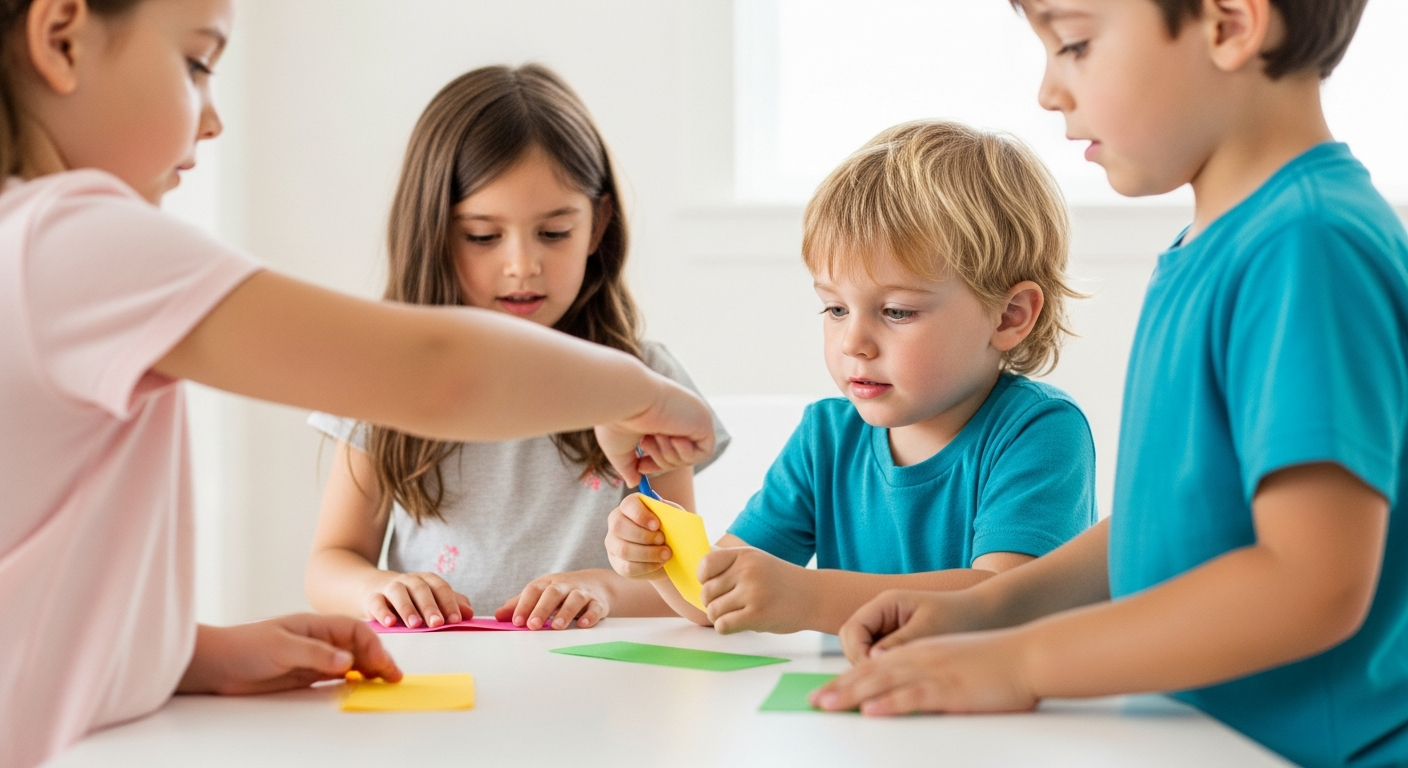
Table of Contents
- Introduction
- The Power of Play: Why Free Activities Matter for Child Development
- Outdoor Adventures: Exploring the World for Free
- Indoor Creativity: Unleashing Imagination Without Spending a Dime
- Practical Life Skills: Fun & Learning in Everyday Routines
- Fostering Communication Skills through Play
- Unsure Where to Start? Try Our Free Screener!
- Maximizing Your Child's Speech Journey with Speech Blubs
- Conclusion
- FAQ
Introduction
Picture this: it’s a chilly afternoon, the screens are off, and your child looks at you with wide eyes and the dreaded phrase, "I'm bored!" As parents, we’ve all been there. In an increasingly digital world, finding engaging, enriching, and – crucially – free activities for our children can feel like a quest. Yet, these moments of unstructured, screen-free play are not just time fillers; they are vital building blocks for imagination, problem-solving, social skills, and, most importantly, communication.
This post isn't just a list; it's a treasure map to countless hours of joy, discovery, and developmental growth, all without spending a single dime. We'll explore a wide array of activities, from outdoor adventures that connect kids with nature to indoor crafts that ignite creativity, and even everyday routines that transform into learning opportunities. Our aim is to empower you with ideas that foster a love for communication, build confidence, reduce frustration, and create priceless family memories. These simple yet powerful activities lay the foundational skills necessary for children to thrive, helping them to speak their minds and hearts, and to truly connect with the world around them.

The Power of Play: Why Free Activities Matter for Child Development
Play is often seen simply as a way for children to pass the time, but for child development experts, it’s a powerhouse. It’s the primary way children learn about their world, themselves, and others. Engaging in diverse, free activities provides a rich, multi-sensory environment crucial for holistic growth.
Beyond Entertainment: Cognitive and Social Benefits
When children engage in play, especially open-ended activities, they're not just having fun; they're actively developing critical cognitive and social skills. Consider a child building a fort with blankets and pillows. This isn't just creative; it involves spatial reasoning, planning, problem-solving, and often, negotiation if they're building with a sibling or friend. They might decide on roles – "You hold this side, I'll find another blanket!" – which naturally promotes verbal communication and collaboration.
These activities foster imagination, allowing children to create entire worlds and scenarios. This imaginative play is a direct precursor to narrative skills, helping children understand story structure, character development, and sequence – all fundamental to effective communication. Whether they’re pretending to be explorers in the backyard or chefs in a pretend kitchen, they are practicing expressing ideas, asking questions, and understanding different perspectives.
Social skills flourish during shared play. Turn-taking in a game, sharing art supplies, or resolving a small conflict over whose turn it is to push the swing all teach invaluable lessons in empathy, cooperation, and emotional regulation. Children learn to articulate their needs and desires, listen to others, and compromise. These interactions are essential for developing the complex communication skills needed throughout life.
Reducing Screen Time, Boosting Connection
In an age where screens are ever-present, intentionally seeking out screen-free activities becomes even more vital. Passive screen viewing, like watching cartoons, often leads to isolated consumption, missing out on the rich, back-and-forth interactions that are the bedrock of language development. Free activities provide a powerful alternative, drawing children into real-world engagement and fostering genuine human connection.

However, we understand that not all screen time is created equal. At Speech Blubs, we are deeply committed to providing immediate, effective, and joyful solutions for children who need speech support. Our founders experienced speech challenges growing up and created the tool they wished they had: a "smart screen time" experience. We blend scientific principles with play, offering a unique alternative to passive viewing. Our revolutionary video modeling methodology, where children learn by watching and imitating their peers, activates mirror neurons and transforms screen time into an active, engaging learning opportunity. It’s a powerful tool for family connection, as parents can co-play and support their child through the activities.
To learn more about our mission and how we help children speak their minds and hearts, visit our homepage.
Outdoor Adventures: Exploring the World for Free
The great outdoors is a boundless playground, offering endless opportunities for free fun and crucial developmental stimulation. From your backyard to a local park, these activities encourage physical movement, sensory exploration, and language growth.
Nature Hunts & Exploration
Nature walks and scavenger hunts are fantastic ways to engage children with their environment. Give your child a list of things to find: a smooth stone, a crinkly leaf, a feather, a specific type of flower, or something red. This simple activity sharpens observational skills and introduces new vocabulary. As they find each item, encourage them to describe its color, texture, shape, and even its smell. "Look, a bumpy pinecone!" or "This leaf is soft and green, like a caterpillar's bed."
Relatable Scenario: For a parent whose 3-year-old "late talker" loves animals, a backyard bug hunt can be a motivating way to practice sounds and short phrases. As they discover a "buzz-buzz bee" or a "creepy-crawly worm," they can imitate the sounds and actions, building their confidence in verbalizing observations. This direct interaction provides context and excitement for sound production.
Another idea is to simply sit quietly and listen to the sounds of nature. What birds do they hear? Can they hear the wind rustling leaves? This practices auditory processing and helps them develop descriptive language. Later, they can draw what they heard or saw, fostering expressive art alongside language.
Park & Playground Fun
Your local park or playground is a classic go-to for free entertainment. Beyond the obvious physical benefits of running, climbing, and swinging, these spaces are rich in social and communicative opportunities.
- Swings: Pushing a child on a swing offers a simple back-and-forth exchange. "Ready, set, push!" "Higher!" "Stop!" These short phrases reinforce cause and effect and turn-taking.
- Slides: Waiting for a turn, asking for help, or simply expressing excitement ("Whee!") are all valuable communication practice.
- Open Fields: Bring a soft ball for kicking or throwing. Even without equipment, running games like "tag" or "Red Light, Green Light" encourage following instructions, spatial awareness, and verbal cues.
These activities are perfect for developing gross motor skills, but also for practicing social cues, sharing, and verbal negotiation with other children. They learn to navigate social situations and express themselves in a dynamic environment.
Backyard & Neighborhood Games
Transform your own outdoor space or neighborhood into an arena for fun and learning.
- Chalk Art: The driveway or sidewalk becomes a giant canvas. Drawing together encourages shared attention, color naming, and describing what they're creating. You can draw simple games like hopscotch or tic-tac-toe, adding structure to the play.
- Obstacle Courses: Use items you already have: pillows to jump over, a broomstick to crawl under, a bucket to toss a ball into. Designing and navigating an obstacle course involves following multi-step instructions, problem-solving, and verbalizing actions ("I'm crawling under!").
- Hide-and-Seek or Tag: These classic games are fantastic for developing social interaction, understanding rules, and using simple command words like "Ready or not, here I come!" and "You're IT!"
These games foster teamwork, healthy competition, and the ability to articulate strategies or feelings within a game. They’re excellent for children who need practice with reciprocal communication in a playful context.
Indoor Creativity: Unleashing Imagination Without Spending a Dime
When the weather isn't cooperating, or you simply need a calmer activity, your home is bursting with potential for free, imaginative play. These indoor activities stimulate creativity, fine motor skills, and vital communication abilities.
Arts & Crafts with Household Items
You don’t need fancy art supplies to foster creativity. Look around your home – the possibilities are endless!
- Drawing & Painting: Paper, pencils, crayons, or even homemade washable paint (flour, water, food coloring) can lead to hours of artistic expression. Encourage your child to describe their drawings. "Tell me about your blue monster!" or "What's happening in this picture?" This helps them connect their visual creations with verbal narratives.
- Collages: Old magazines, newspapers, fabric scraps, and glue sticks (or homemade glue) can be transformed into vibrant collages. Children can sort materials by color, texture, or theme, and explain their choices.
- Fort Building: Couch cushions, blankets, chairs, and laundry baskets can become magnificent castles, cozy reading nooks, or secret clubhouses. This activity encourages planning, cooperation (if building with others), and imaginative role-playing. Children will use descriptive language to guide construction ("The big blanket goes on top!") and dramatic language once inside ("Welcome to my royal palace!").
These activities refine fine motor skills, essential for writing and other tasks, while providing a rich context for self-expression and storytelling.
Storytelling & Role-Playing
Role-playing and storytelling are foundational to language development, helping children understand different perspectives, practice various voices, and structure narratives.
- Puppet Shows: Socks, paper bags, or stuffed animals can become characters in an elaborate puppet show. Encourage your child to invent dialogues, create plotlines, and use different voices for each character. This is particularly effective for children who might be hesitant to speak directly, as the puppet provides a "mask" that can boost confidence. Relatable Scenario: For a child working on articulation, a puppet show where they can practice specific sounds for different characters (e.g., a "silly snake" for 's' sounds, a "roaring lion" for 'r' sounds) can be incredibly motivating and fun. It provides a low-pressure environment to produce sounds in context.
- Dress-Up: Old clothes, scarves, and accessories can transform children into doctors, princesses, superheroes, or astronauts. This encourages imaginative play, where they act out scenarios, solve problems, and communicate as their chosen character. "Doctor, my teddy bear has a boo-boo!" sparks dialogue and role-play.
- Collaborative Storytelling: Start a story with a sentence, then have your child add the next sentence, and so on. This fosters turn-taking, active listening, and creativity in constructing a narrative together. "Once upon a time, a fluffy cloud floated over a giant apple tree..."
At Speech Blubs, we understand the power of imitation and dramatic play. Our "video modeling" method allows children to learn complex communication skills by watching and imitating their peers. Many of our activities are designed to be like mini-role-plays, where children see other kids making animal sounds, expressing emotions, or acting out scenarios, which then encourages them to do the same. This active engagement is a screen-free alternative to passive viewing, making it a valuable tool for families.
DIY Games & Challenges
Indoor games don't require expensive sets. You can create engaging challenges with everyday objects.
- Indoor Obstacle Course: Arrange pillows to step on, chairs to crawl under, and blankets to tunnel through. Time them to add a competitive (and fun!) element. This reinforces following multi-step instructions and spatial vocabulary ("over," "under," "through").
- Board Games & Card Games: If you have them, classic board games or a simple deck of cards can provide hours of entertainment. Games like "Go Fish" or "Memory" enhance vocabulary, matching skills, and turn-taking.
- Puzzles: Jigsaw puzzles develop spatial reasoning, problem-solving, and patience. Talking through the puzzle ("Where does this piece go? What color is this?") enhances descriptive language.
- Dance Party: Put on some music and just dance! This is great for physical energy release and expressing emotions through movement. Encourage them to describe how the music makes them feel.
These activities are not just about passing time; they're about active learning, fostering critical thinking, and providing numerous opportunities for rich linguistic interactions.
Practical Life Skills: Fun & Learning in Everyday Routines
The mundane tasks of daily life can be transformed into playful, educational experiences that teach children invaluable life skills while boosting their communication abilities. These activities integrate learning into routines, making it natural and engaging.
Kitchen Helpers
The kitchen is a fantastic classroom! Involving children in meal preparation or cleanup is not just about teaching them responsibility; it's a rich environment for language development and practical skills.
- "Cooking" Adventures: Give children safe tasks like washing vegetables, stirring ingredients, or mashing soft fruits. As you work, name the ingredients, describe the actions, and explain the steps. "We're chopping the carrots," "This batter is sticky!" This builds vocabulary, sequencing skills, and the ability to follow multi-step instructions. Relatable Scenario: For a child struggling with action verbs, having them "help" make a snack can provide direct, kinesthetic learning. "Pour the milk," "Stir the mix," "Spread the butter." Each action is immediately associated with a word, reinforcing understanding and use.
- Packing Lunches: Let them choose and pack safe items for their lunch or a picnic. This involves decision-making and categorization. "Do we need an apple or a banana?"
- "Washing Dishes": Provide a basin of soapy water and unbreakable plastic dishes for them to "wash." This is excellent sensory play and introduces concepts like "clean," "dirty," "wet," and "dry."
These activities develop fine motor skills, independence, and a deeper understanding of everyday vocabulary and processes.
Home Organization & Chores
Turning chores into games can make them enjoyable and educational.
- Scavenger Hunts for Tidying Up: Ask your child to find all the red toys and put them in a basket, or collect all the dirty socks. This enhances categorization skills and following instructions. "Find five things that belong in the toy bin!"
- Dusting & Wiping: Give them a small cloth and let them "help" dust low surfaces or wipe down tabletops. Talk about what they're doing: "You're wiping the table; now it's shiny!"
- Sorting Laundry: Sorting clothes by color or family member is a great way to learn categories and build vocabulary.
These tasks teach responsibility and organization while offering natural contexts for conversation and instruction following.
Community Exploration (Free Options)
Stepping out into your community opens up a world of free learning experiences.
- The Library: Far more than just books, libraries offer story times, puppet shows, and often have free passes to local museums or attractions. Children can check out books, puzzles, or even educational games. The process of choosing a book, checking it out, and returning it teaches responsibility and respect for shared resources. Many libraries also offer digital borrowing options through apps, extending their free offerings.
- Pet Stores: A visit to a pet store can be a fascinating opportunity to observe different animals, discuss their characteristics, and learn new animal names and sounds. Just be sure to set expectations beforehand that no pets will be going home!
- Hardware Stores: Some hardware stores, like Home Depot, offer free kids' workshops on specific days, allowing children to build simple projects. This introduces them to tools, construction, and problem-solving.
These community outings broaden children's horizons, expose them to new environments and social situations, and provide rich vocabulary experiences. They learn to ask questions, observe details, and engage with different aspects of the world.
Fostering Communication Skills through Play
Every free activity, whether it's building a fort or helping in the kitchen, is a golden opportunity to nurture your child's communication skills. It's in these natural, unscripted moments that language truly blossoms.
The Link Between Play and Language Development
Open-ended play, the kind that free activities naturally encourage, is the bedrock of language development. When children are engaged in play, they are motivated to communicate their ideas, needs, and observations. This active engagement contrasts sharply with passive screen consumption, where interaction is minimal or absent.
Consider how play fosters:
- Expressive Language: Children narrate their actions ("I'm making a cake!"), ask questions ("Where's the blue crayon?"), make requests ("Can I have the big block?"), and describe what they see, hear, and feel ("The sand is so soft!").
- Receptive Language: They follow instructions ("Put the teddy bear in the car."), understand concepts ("The small box goes inside the big box."), and comprehend stories told by you or during imaginative play.
- Social-Pragmatic Skills: Play teaches turn-taking in conversation, maintaining eye contact, understanding body language, and adapting communication to different social contexts. These are the nuances of communication that make interactions meaningful.
- Vocabulary Expansion: Every new experience, object, or concept encountered during play offers new words and phrases to learn and integrate into their lexicon.
How Speech Blubs Amplifies Learning
At Speech Blubs, our mission is to empower children to "speak their minds and hearts." We believe that every child deserves to find their voice, and our platform is designed to make that journey joyful and effective. Our company was born from the personal experiences of our founders, who all grew up with speech problems and created the tool they wished they had. We are committed to providing an immediate, effective, and joyful solution for the 1 in 4 children who need speech support.
Our unique approach blends scientific principles with play, transforming screen time into one-of-a-kind "smart screen time" experiences. We provide a screen-free alternative to passive viewing, like cartoons, by encouraging active participation. The core of our methodology is "video modeling," where children learn by watching and imitating their peers. This technique activates mirror neurons in the brain, making learning natural and highly effective. When a child sees another child making a specific sound, word, or action, they are naturally inclined to imitate, leading to stronger speech and language development.
We've garnered global recognition for our innovative, research-backed method. Our app has been rated in the top tier for effectiveness by the MARS scale, a leading measure of mobile health app quality. This scientific foundation ensures that while children are having fun, they are also benefiting from proven speech development techniques. You can explore the research behind our approach and see why we are in the top tier of speech apps worldwide.
We also pride ourselves on being a powerful tool for family connection. The activities within Speech Blubs are designed for adult co-play and support, turning learning moments into joyful shared experiences. Don't just take our word for it; see what other parents are saying about their child's success with Speech Blubs.
Ready to empower your child's voice and turn screen time into "smart screen time"? Download Speech Blubs on the App Store or Google Play to begin your child's journey to joyful communication.
Unsure Where to Start? Try Our Free Screener!
Sometimes, as parents, it can be hard to know if your child truly needs extra support with their speech and language development. You might have a gut feeling or have noticed a few things, but you’re not sure what the next steps are. We totally get it.
To help clear up any uncertainty, we've developed a simple, quick tool just for you. Take our preliminary screener – it only takes 3 minutes and asks 9 simple questions. This screener provides an immediate assessment and a personalized next-steps plan tailored to your child’s needs. It's a fantastic way to get clarity and understand how you can best support your little one's communication journey, and it can also lead you to a free 7-day trial of our app!
Or, if you’re ready to dive straight into the fun and discover the engaging world of "smart screen time," you can create your Speech Blubs account and begin your 7-day free trial today. It's never too early or too late to empower your child's voice.
Maximizing Your Child's Speech Journey with Speech Blubs
Investing in your child's development is one of the most rewarding things you can do, and we believe effective speech support should be accessible and affordable. We’ve structured our plans to offer flexible options, with clear value, so you can choose what works best for your family.
The Value of Our Yearly Plan
We offer two main subscription plans to access the full suite of Speech Blubs features:
- Monthly Plan: This plan is available at $14.99 per month. It offers flexibility for those who prefer a month-to-month commitment.
- Yearly Plan: This is by far our most popular and value-packed option, priced at just $59.99 per year. When you break it down, that’s an incredible value of only $4.99 per month! By choosing the Yearly plan, you save 66% compared to the monthly option, making it the smartest choice for continuous support.
Beyond the significant cost savings, the Yearly plan unlocks exclusive, high-value features designed to enhance your child’s learning experience even further:
- 7-Day Free Trial: Experience the full power of Speech Blubs completely free for a week, giving you and your child ample time to explore all the activities and see the benefits firsthand. This trial is only available with the Yearly plan selection.
- Extra Reading Blubs App: Gain full access to our complementary Reading Blubs app, designed to further support early literacy and phonics development, creating a holistic language learning experience. This valuable app is not included with the Monthly plan.
- Early Access to New Updates: Be among the first to explore new games, activities, and features as soon as they are released, ensuring your child always has fresh, engaging content.
- 24-Hour Support Response Time: Receive priority support from our dedicated team, ensuring any questions or concerns you have are addressed quickly and efficiently.
It's important to note that the Monthly plan does not include the 7-day free trial, the Reading Blubs app, early access to updates, or the expedited support response time. The Yearly plan truly offers the complete, most effective, and most economical package for your child's speech and language development.
A Powerful Supplement to Development
We believe in setting realistic expectations. Speech Blubs is a powerful, engaging, and scientifically-backed tool designed to supplement your child's overall development plan. While we don't guarantee your child will be giving public speeches in a month, we are committed to fostering a love for communication, building confidence in speaking, reducing the frustration often associated with speech challenges, and developing key foundational skills. Our activities are crafted to create joyful family learning moments, always with the implicit understanding that adult co-play and support are integral to maximizing their benefits. When applicable, Speech Blubs can also be a wonderful complement to professional therapy, providing consistent practice and reinforcement at home.
Choose the Yearly Plan for the best value and unlock the full suite of features, including your 7-day free trial, to give your child the comprehensive support they deserve!
Conclusion
From the magic of a blanket fort to the wonder of a nature walk, the world is full of enriching, free fun activities for kids that do more than just entertain. They are crucial for developing cognitive abilities, fostering social skills, and building a robust foundation for communication. By actively engaging in these screen-free experiences, you empower your child to explore, imagine, and express themselves in meaningful ways.
These activities, combined with our "smart screen time" approach at Speech Blubs, create a holistic environment for language growth. We blend the joy of play with scientific methodology, offering a unique video modeling experience that truly helps children speak their minds and hearts. Our commitment is to provide effective, accessible, and joyful solutions, helping children gain confidence, reduce frustration, and develop the foundational skills they need to thrive.
Ready to embark on a journey of joyful communication? Download Speech Blubs today on the App Store or Google Play and sign up for our Yearly plan to enjoy a 7-day free trial and all the exclusive features designed to help your child find and use their voice!
FAQ
Q1: Why are screen-free activities important for kids? A1: Screen-free activities are vital because they encourage active learning, imagination, problem-solving, and social interaction. They provide opportunities for children to engage with their physical environment and interact directly with others, which are crucial for developing cognitive, motor, and communication skills in ways that passive screen viewing cannot.
Q2: How can I encourage my child to try new free activities, especially if they prefer screens? A2: Start by involving them in the choice of activity and framing it as an "adventure" or "challenge." Keep it short and flexible initially. Model enthusiasm yourself and participate with them. Gradually introduce the activity as a fun alternative, and perhaps offer a small, non-material reward (like a special story time or an extra hug) after successful screen-free play. Consistency and making it a routine help a lot.
Q3: How does Speech Blubs fit into my child's development, especially alongside free play? A3: Speech Blubs is designed to complement and amplify the benefits of free play. While screen-free activities build general skills, our app offers "smart screen time" with scientifically-backed video modeling, helping children practice specific speech and language skills by imitating peers. It transforms passive screen viewing into an active, engaging, and highly effective learning experience that integrates seamlessly with a child's overall development, often as a powerful tool for family co-play.
Q4: What's the best way to get started with Speech Blubs and access all its features? A4: The best way to get started with Speech Blubs is by choosing our Yearly plan. This gives you the best value at just $59.99 per year (saving you 66% compared to monthly payments). With the Yearly plan, you also unlock a 7-day free trial, access to the Reading Blubs app, early access to new updates, and 24-hour priority support. Simply create your account on our website or download the app and select the Yearly plan to begin your free trial and access all these exclusive benefits.
About the author