
Frog Toddler Craft: Fun Activities for Speech and Play
 By Speech Blubs Team•Feb 20, 2026•14 min.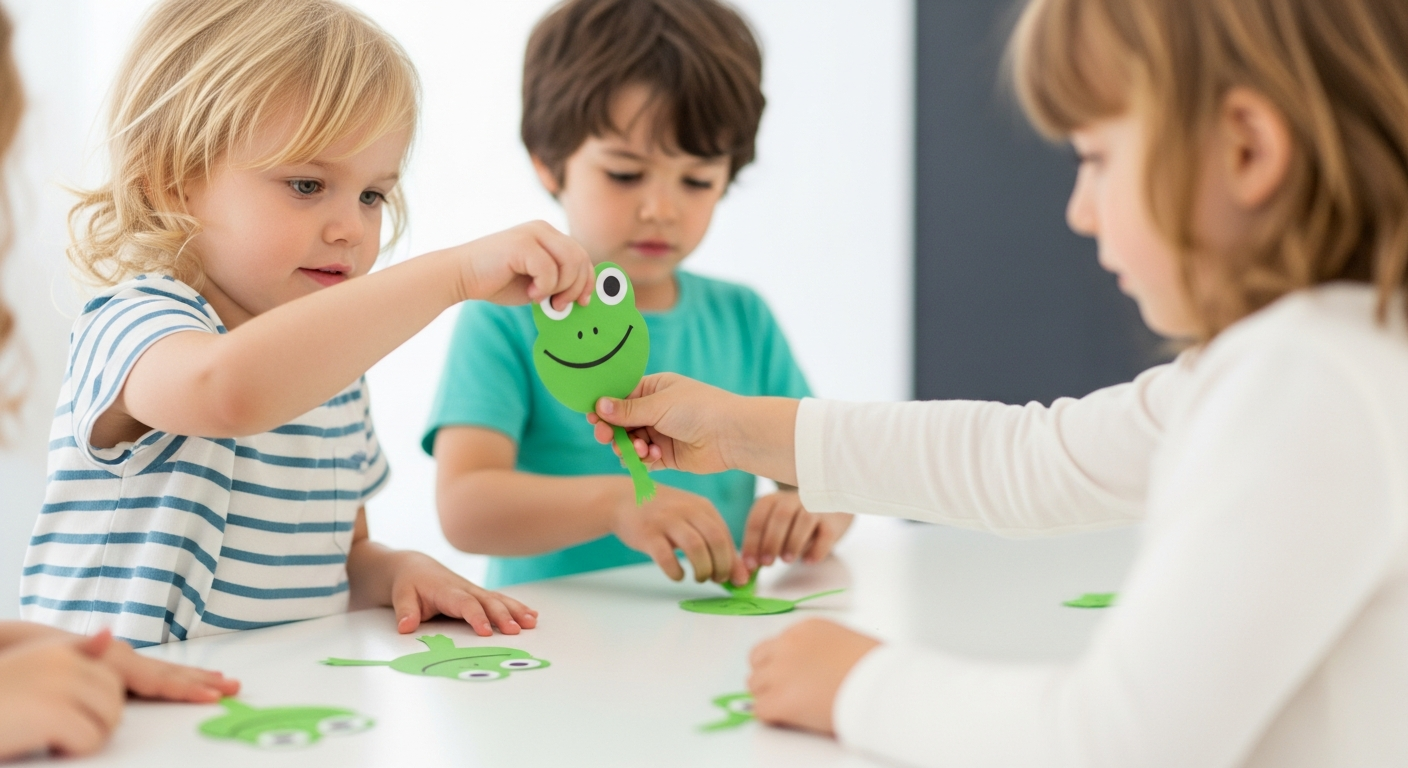
Table of Contents
- Introduction
- Why Frog Crafts are Great for Development
- The Speech Blubs Approach: Smart Screen Time
- Activity 1: The "Sticky Tongue" Paper Plate Frog
- Activity 2: The Toilet Paper Roll "Leaping Frog"
- Activity 3: Frog Life Cycle Discovery Plate
- Activity 4: Handprint Frog Keepsake
- Strengthening the Connection Between Craft and App
- Understanding the Value of the Yearly Plan
- Practical Scenarios: How to Use These Crafts
- Setting Realistic Expectations
- Summary of Key Takeaways
- Frequently Asked Questions
- Conclusion
Introduction
"Five green and speckled frogs sat on a speckled log, eating some most delicious bugs. Yum, yum!" If you have a toddler at home, chances are you’ve sung this catchy tune more times than you can count. But have you ever stopped to wonder why frogs are such a staple in early childhood education? Beyond their bright green color and silly "ribbit," frogs represent a world of wonder, transformation, and—most importantly for us at Speech Blubs—endless opportunities for language development.
The purpose of this guide is to provide you with a variety of engaging, hands-on frog toddler craft ideas that do more than just fill an afternoon. We are going to explore how these simple activities can foster fine motor skills, encourage sensory exploration, and act as a powerful springboard for communication. Whether your child is a "late talker" or simply a curious explorer, these crafts are designed to create joyful family learning moments that stick.

In this post, we will cover everything from the classic paper plate frog to educational life cycle activities. We will also discuss how to integrate "smart screen time" using the Speech Blubs app to reinforce the sounds and concepts your child learns during craft time. At Speech Blubs, our mission is to empower children to speak their minds and hearts, and we believe that the best way to do that is through the universal language of play. By the end of this article, you’ll have a toolkit of activities that blend scientific principles with pure, unadulterated fun.
Why Frog Crafts are Great for Development
Frogs are fascinating creatures that capture a child's imagination. From their long, sticky tongues to their incredible jumping abilities, they offer a wealth of descriptive words and actions for a child to mimic. When we engage a toddler in a frog toddler craft, we aren't just making a decoration; we are building the foundation for complex skills.
Fine Motor Skill Development
Crafting involves a lot of "heavy lifting" for tiny hands. Ripping construction paper, squeezing glue bottles, and manipulating small googly eyes all strengthen the intrinsic muscles of the hand. These are the same muscles your child will eventually use for writing, buttoning their coat, and using a fork. For instance, when a toddler squishes up small pieces of black paper to make "flies" for their frog, they are practicing a pincer grasp that is vital for their physical development.
Language and Vocabulary Building
Every step of a craft is an opportunity for a "language sandwich." You can describe what you are doing ("We are painting the plate green"), ask choice-based questions ("Do you want the big eyes or the small eyes?"), and practice fun onomatopoeia like "ribbit," "hop," and "splash." At Speech Blubs, we focus on these foundational communication skills, helping children move from simple sounds to meaningful words.
Sensory Integration
Toddlers learn best when they use all their senses. The cold, wet feeling of green paint, the sticky texture of glue, and the crinkle of paper all provide sensory input that helps a child’s brain organize information. This type of play reduces frustration and builds confidence as children learn to navigate different textures and materials.

The Speech Blubs Approach: Smart Screen Time
Before we dive into the specific crafts, it’s important to mention how we support these hands-on activities. At Speech Blubs, we provide a powerful tool for family connection that serves as a screen-free alternative to passive viewing. Our app is built on the concept of video modeling, a scientifically proven methodology where children learn by watching and imitating their peers.
If you are working on a frog craft, you can enhance the experience by opening the "Animal Kingdom" section of our app. There, your child can watch other children make frog sounds and imitate their facial expressions. This peer-to-peer interaction is far more effective than watching a cartoon because it activates "mirror neurons" in the brain, making it easier for your child to mimic the mouth movements required for speech. To see the science behind our method and why we are rated so highly on the MARS scale, you can read our research here.
Activity 1: The "Sticky Tongue" Paper Plate Frog
This is perhaps the most popular frog toddler craft because it doubles as a game! It focuses on the most exciting part of a frog: its ability to catch flies.
Materials Needed:
- A paper plate
- Green paint (or markers)
- Red construction paper
- Black construction paper
- Googly eyes (optional)
- Glue or tape
Step-by-Step Instructions:
- Paint the Base: Have your child paint the entire paper plate green. Don’t worry about it being perfect; the "process" is more important than the "product." As they paint, narrate the action: "Brush, brush, brush! The plate is turning green!"
- Create the Mouth: Once the paint is dry, fold the paper plate in half. This creates a large, hinged mouth that your toddler can open and shut.
- Add the Eyes: Glue two large eyes to the top of the folded plate. If you don’t have googly eyes, you can cut two white circles and draw black dots in the center.
- The Sticky Tongue: Cut a long, thin strip of red construction paper. Wrap it around a pencil to give it a "curly" look. Glue one end of the tongue inside the fold of the plate.
- Make the Flies: This is a great fine motor exercise. Give your child small scraps of black paper and show them how to rip and crumble them into little balls. These are the "flies."
How to Use This for Speech Practice:
Once the craft is finished, play a game! Use the frog to "catch" the flies. Every time the frog eats a fly, say "Gulp!" or "Yum!" You can also practice counting as the frog eats: "One fly, two flies, three flies!" This interactive play mimics the joyful learning moments we encourage at Speech Blubs. If you’re curious about how other parents have used these strategies to help their children overcome speech delays, check out our testimonials.
Activity 2: The Toilet Paper Roll "Leaping Frog"
Recycling household items is a fantastic way to teach children about sustainability while having fun. This craft is perfect for toddlers who love to move.
Materials Needed:
- Empty toilet paper roll
- Green construction paper (or green paint)
- Scissors
- Glue
Step-by-Step Instructions:
- Cover the Roll: Wrap the toilet paper roll in green paper or paint it green.
- Cut the Legs: From the green construction paper, cut out two "L" shaped legs for the back and two smaller rectangles for the front.
- Assemble: Glue the legs to the bottom of the roll so that the frog looks like it is sitting and ready to pounce.
- Add a Face: Draw a big smile and two eyes at the top of the roll.
The Learning Connection:
Use this craft to practice "action words." Make the frog "jump" and "hop." Say the word "Up!" every time the frog leaps and "Down!" when it lands. For a child who is just starting to use words, these simple, high-frequency verbs are excellent for building a functional vocabulary.
Activity 3: Frog Life Cycle Discovery Plate
For older toddlers or those ready for a bit more "science," a life cycle craft is a wonderful way to teach sequencing—a key cognitive skill that also helps with storytelling and sentence structure.
Materials Needed:
- Paper plate
- Printable images or drawings of an egg, tadpole, tadpole with legs, and adult frog
- Crayons or markers
Step-by-Step Instructions:
- Divide the Plate: Use a marker to divide the paper plate into four equal sections.
- Sequence the Stages: In the first section, draw small circles for "eggs." In the second, a "tadpole." In the third, a "tadpole with legs," and in the last, a "frog."
- Tell the Story: Move your finger around the plate and explain how the frog grows. "First, there were eggs. Then, a tiny tadpole hatched!"
Why Sequencing Matters:
Learning the order of events is essential for communication. When a child understands "First, Then, Last," they can begin to describe their day or tell you what they want. At Speech Blubs, we teach these complex communication skills through play, helping children understand the flow of language. If you're unsure where your child stands in their development, you can take our quick 3-minute preliminary screener to get a simple assessment and a free 7-day trial.
Activity 4: Handprint Frog Keepsake
Parents love handprint crafts because they capture a moment in time. Toddlers love them because they involve getting their hands a little messy!
Materials Needed:
- Green washable paint
- White paper
- Markers
Step-by-Step Instructions:
- Paint the Hand: Coat your child’s palm and fingers with green paint.
- Press: Press their hand firmly onto the white paper with fingers spread wide (these are the frog’s legs!).
- Detailing: Once the paint is dry, turn the paper so the fingers are pointing down. Draw a frog face on the palm area.
Parent Tip:
Co-play is essential here. Talk about the "cold" paint and the "squishy" feeling. Encouraging your child to describe their sensory experiences helps them develop a richer vocabulary.
Strengthening the Connection Between Craft and App
While hands-on crafts are irreplaceable, we know that modern parents often need a "smart" way to use screen time. Speech Blubs was born from the personal experiences of our founders, who all grew up with speech problems and created the tool they wished they had. We don’t want to replace your craft time; we want to enhance it.
Imagine your child has just finished making their paper plate frog. They are excited, but they might not have the words to express it. This is the perfect time to download Speech Blubs on the App Store or Google Play.
By using the app for 10-15 minutes after a craft, you are reinforcing the theme of the day. The child in the video modeling exercises becomes a "friend" who is doing exactly what your child just did—talking about frogs! This creates a cohesive learning environment that reduces frustration and builds the confidence needed to "speak their minds and hearts."
Understanding the Value of the Yearly Plan
We want to be transparent about our pricing to help you make the best choice for your family. While we offer a Monthly plan for $14.99 per month, our Yearly plan is the clear best choice for families committed to their child's development.
The Yearly plan is $59.99 per year, which breaks down to just $4.99/month. That is a savings of 66%! But it’s not just about the cost. The Yearly plan includes exclusive, high-value features that the Monthly plan does not:
- A 7-day free trial to explore all the features risk-free.
- The extra Reading Blubs app, which helps transition speech skills into early literacy.
- Early access to all new updates and features.
- 24-hour support response time from our dedicated team.
Choosing the Yearly plan ensures that you have a comprehensive suite of tools at your fingertips as your child grows and hits new milestones. You can create your account and begin your trial here.
Practical Scenarios: How to Use These Crafts
Let’s look at a real-world scenario. Imagine a parent whose 3-year-old is a "late talker." This child loves the outdoors but gets frustrated when they can't name the things they see.
During a weekend walk, they see a frog near a pond. The parent notices the child's interest and decides to do a frog toddler craft that afternoon. They make the "Sticky Tongue" frog together. As they play, the parent uses the Speech Blubs app to show the child a peer saying "Frog." The child, motivated by the craft they just built, tries to imitate the "F" sound. There’s no pressure, just joy. Over the next few days, they revisit the craft and the app, and slowly, the frustration begins to melt away as the child develops a foundational skill.
This is the power of combining hands-on play with scientifically backed digital tools. It isn't about guaranteed outcomes like "giving public speeches in a month," but rather about fostering a love for communication and creating those small, joyful breakthroughs.
Setting Realistic Expectations
At Speech Blubs, we believe in being honest with parents. Every child develops at their own pace. A frog toddler craft is a wonderful tool, and our app is a powerful supplement, but they are parts of a larger picture. If you have significant concerns about your child’s development, we always recommend consulting with a professional speech-language pathologist. Our tool is designed to support and enhance professional therapy and general developmental plans, providing a fun and effective way to practice at home.
Summary of Key Takeaways
- Frogs are Ideal Subjects: Their sounds, colors, and movements provide a rich vocabulary for toddlers.
- Crafts Build Skills: Ripping, gluing, and painting develop fine motor and sensory skills.
- Communication is the Goal: Use crafts to practice onomatopoeia, action words, and sequencing.
- Speech Blubs Enhances Play: Our video modeling methodology helps children learn to speak by watching their peers.
- Value Matters: The Yearly plan offers the best value, including the Reading Blubs app and a 7-day free trial.
Crafting with your toddler is about more than just the end result. It’s about the "ribbits," the messy hands, and the shared smiles. It’s about giving them the tools to eventually tell you exactly what’s on their mind.
Frequently Asked Questions
1. What if my toddler is too young for scissors?
For younger toddlers, you should do all the cutting beforehand. Focus on letting them do the painting, gluing, and paper-ripping. Ripping paper is actually an incredible fine motor activity that prepares them for using scissors later on!
2. How can I encourage my child to make frog sounds?
Start by making the sounds yourself in a silly, exaggerated way. Use the Speech Blubs app to show them other children making the sound. Often, seeing another child do it makes it feel more like a game and less like a "lesson," which encourages them to join in.
3. My child has a short attention span. Which craft is best?
The "Handprint Frog" is usually the quickest. It provides immediate sensory feedback with the paint and a clear "result" very quickly. You can also break the more complex crafts, like the paper plate frog, into two sessions: one for painting and one for decorating.
4. How does the Reading Blubs app help my child?
Reading Blubs is included in our Yearly plan and is designed to build on the speech skills your child learns. It focuses on phonics and early literacy, helping children connect the sounds they are making to letters and words on a page. It’s the perfect next step once your child starts building their vocabulary.
Conclusion
Creating a frog toddler craft is a beautiful way to spend time with your child while supporting their growing brain. From the fine motor challenge of crumbling "flies" to the language-rich experience of narrating a frog's life cycle, these activities are packed with developmental benefits. At Speech Blubs, we are honored to be a part of your journey. Our goal is to provide you with the resources—both digital and physical—to help your child blossom into a confident communicator.
Ready to take the next step in your child’s language adventure? Download Speech Blubs on the App Store or Google Play to begin. For the best experience and the full suite of features—including the Reading Blubs app and a 7-day free trial—be sure to select our Yearly plan. Let’s work together to help your little one speak their mind and heart, one "ribbit" at a time!
About the author