
Fun Activities for Kids on the Spectrum: Play & Grow
 By Speech Blubs Team•Jan 13, 2026•19 min.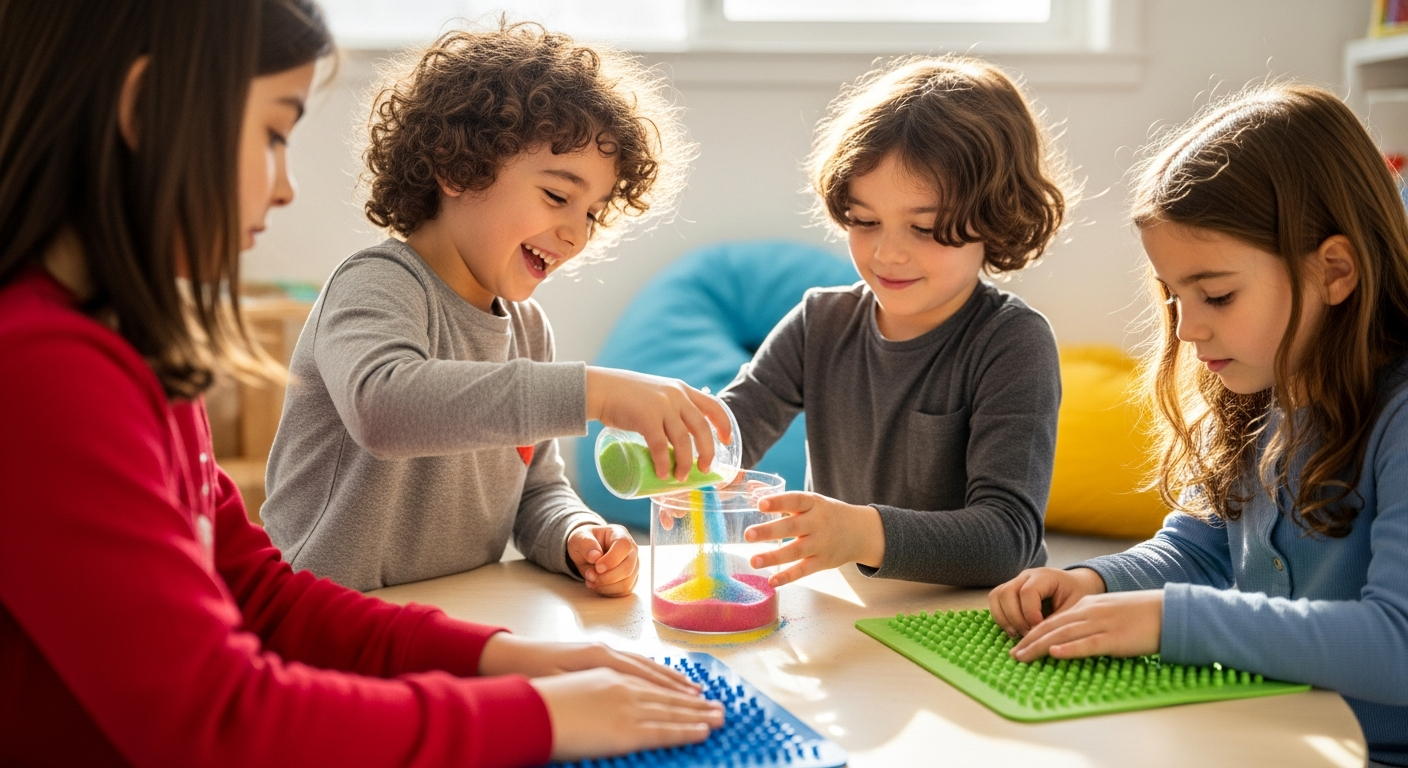
Table of Contents
- Introduction to Autism and Play
- The Transformative Power of Play-Based Learning
- Fun Activity Categories for Kids on the Spectrum
- Choosing the Right Activities for Your Child
- Speech Blubs: Your Partner in Joyful Communication Growth
- Conclusion
- Frequently Asked Questions
For many parents, the world of childhood play is often imagined as a spontaneous dance of social interaction, imaginative scenarios, and boisterous energy. But what if your child experiences the world differently, where social cues are a puzzle, sensory input can be overwhelming, and communication feels like navigating a maze? This is often the reality for children on the autism spectrum, a neurodivergent condition affecting about 1 in 36 children. Autism spectrum disorder (ASD) means their brains are wired in a unique way, bringing incredible strengths and unique challenges, especially when it comes to play. It's not about "fixing" anything; it's about understanding and supporting their journey.
In this comprehensive guide, we'll explore why play is such a vital vehicle for learning and connection for all children, particularly those on the spectrum. We'll dive into a rich collection of fun, engaging, and supportive activities designed to foster communication, social understanding, sensory regulation, and cognitive growth. We'll also see how innovative tools like Speech Blubs can integrate seamlessly into these playful learning moments, empowering children to develop essential skills in an enjoyable and effective way. Our mission at Speech Blubs is to empower children to speak their minds and hearts, and we believe joyful play is at the core of that journey.

Introduction to Autism and Play
Play is universally recognized as the work of childhood. It's how children explore, experiment, and make sense of their world. Through play, they develop crucial skills – from the physical dexterity needed to stack blocks to the complex social understanding required to negotiate a game of make-believe. However, for children on the autism spectrum, the landscape of play can present unique challenges that parents and caregivers need to understand and address empathetically.
Autism is a spectrum disorder, meaning its symptoms and support needs vary widely from child to child. While some children on the spectrum may excel in specific areas of play, others might find traditional play scenarios overwhelming or uninteresting. Common areas where children with ASD may experience differences in play include:
- Social Communication: Understanding unspoken social cues, interpreting body language, engaging in reciprocal back-and-forth interactions, and sharing interests can be challenging. This is often referred to as the "double empathy problem," where neurotypical and neurodivergent individuals may struggle to understand each other's communication styles.
- Sensory Processing: Many children with autism have heightened or reduced sensitivities to sensory input – sights, sounds, textures, smells, and tastes. A "fun" activity for one child might be intensely overwhelming or understimulating for another.
- Repetitive Behaviors and Interests: Children on the spectrum may engage in repetitive actions (like lining up toys) or have intense, focused interests. While these can sometimes limit participation in a wide range of activities, they can also be powerful avenues for deep engagement and learning when harnessed appropriately.
- Executive Functioning: Skills like planning, organizing, initiating tasks, and shifting attention can impact a child's ability to follow rules in games, transition between activities, or engage in structured play.
Recognizing these differences isn't about seeing them as deficits, but as unique aspects of a child's experience. By understanding these variations, we can intentionally create play environments and activities that are not only fun but also deeply supportive of their development. This approach fosters a love for communication, builds confidence, reduces frustration, and creates joyful family learning moments, forming a powerful supplement to a child's overall development plan.

The Transformative Power of Play-Based Learning
Despite the challenges, play remains an invaluable tool for growth and development for children on the spectrum. When adapted thoughtfully, play-based activities offer a natural, enjoyable way to build essential skills across multiple domains:
- Developing Social Skills: Play provides a low-pressure environment to practice turn-taking, sharing, understanding emotions, and engaging in cooperative activities.
- Improving Communication Skills: From imitating sounds to expressing desires and understanding instructions, play naturally encourages both verbal and non-verbal communication.
- Enhancing Sensory Processing: Carefully chosen sensory activities can help children explore and integrate sensory information in a safe and regulated way, reducing anxiety and increasing comfort.
- Boosting Cognitive Skills: Puzzles, building tasks, and imaginative play stimulate problem-solving, critical thinking, memory, and logical reasoning.
- Building Fine Motor Skills: Activities like drawing, manipulating small objects, or crafting enhance hand-eye coordination and dexterity.
- Developing Patience and Emotional Regulation: Structured games with rules help children learn to wait, manage frustration, and regulate their emotional responses.
At Speech Blubs, we wholeheartedly embrace the power of play. Our founders, who grew up with speech challenges themselves, created the tool they wished they had: a platform that blends scientific principles with play to offer an immediate, effective, and joyful solution for children needing speech support. We believe in providing "smart screen time" experiences that are interactive and engaging, offering a screen-free alternative to passive viewing and a powerful tool for family connection. Our unique video modeling methodology, where children learn by watching and imitating their peers, is a testament to the idea that learning should be fun and relatable.
Fun Activity Categories for Kids on the Spectrum
Let's explore a range of activities, thoughtfully categorized to address different developmental areas, all while keeping the joy of play at the forefront.
Sensory Activities: Exploring the World Through Touch, Sound, and Sight
Sensory experiences are incredibly important for children on the spectrum, whether they are seeking more input or need help regulating an overwhelming environment. These activities can help children process sensory information, develop body awareness, and regulate emotions.
Hands-On Tactile Exploration
- Sensory Bins: Easily customizable, sensory bins can be filled with rice, beans, pasta, water beads, sand, or even leaves. Add scoops, small toys, and various textures. For instance, a child who is typically sensitive to textures might start by exploring dried beans with a spoon before progressing to touching them directly. This promotes independent play and tactile exploration.
- Shaving Cream Play: Spread shaving cream on a table surface or a large tray. Add a few drops of food coloring for visual appeal. Children can draw, make patterns, or even "clean" toy animals. The frothy texture provides unique sensory input.
- Homemade Slime and Playdough: The tactile experience of making and playing with slime or playdough is immensely satisfying. Recipes are abundant online. This activity encourages fine motor skills, creativity, and exploration of different textures. You can hide small objects within the slime for a treasure hunt, adding an element of surprise.
- Finger Painting: A classic for a reason! Finger painting allows direct engagement with the medium, feeling the cool, slick paint. Add glitter or sand to the paint for varied textures. This is a fantastic way for children to express themselves freely without the pressure of precise motor control.
- Rainbow Pasta: Cooked pasta (spaghetti, linguine) can be dyed with food coloring and presented for play. The slippery, soft texture is intriguing, and the vibrant colors add visual stimulation. Children can sort, pile, or even "stir" the pasta with kitchen utensils.
Visual and Auditory Sensory Play
- Sensory Bottles or Tubes: These portable tools can be calming and visually stimulating. Fill clear bottles with water, glitter glue, loose glitter, small beads, or tiny trinkets. The slow movement of the contents provides a fascinating visual focus and can aid in emotional regulation.
- Water Tray Play: A simple tray filled with water can become an ocean of possibilities. Add food coloring, soap for bubbles, or various toys (boats, plastic animals, cups). Children can splash, pour, and explore the sensation of water. On a hot day, this is a refreshing and engaging activity.
- Ice Tray Discoveries: Freeze water in ice trays with small toys (animal figurines, small blocks) embedded inside. Children can then explore the cold ice, watch it melt, and discover the hidden treasures. Adding food coloring to the water before freezing creates a beautiful watercolor effect as the ice melts.
- Bubble Foam: A unique twist on traditional bubbles, made by blending bubble bath, water, and food coloring. The dense, foamy texture is perfect for digging, hiding toys, and creating tracks.
For parents who are concerned about mess, many of these activities can be adapted for a "mess-free" experience by placing materials like paint, slime, or water in a sealed Ziploc bag. This still allows for tactile exploration without the cleanup.
Social and Communication Activities: Building Connections
Developing social and communication skills is a key focus for many children on the spectrum. These activities aim to teach these complex skills in structured, supportive, and fun ways.
Understanding Emotions and Social Cues
- Emotion Cards: Use printable cards depicting various emotions. Help your child identify the emotion, discuss what it looks like, and what situations might evoke it. You can even use these to role-play how different characters in a story might feel.
- "What Would You Do?" Scenarios: Create simple scenarios (e.g., "Someone took your toy," "Your friend is sad") and discuss how your child would react, what they would say, and how others might feel. This helps practice empathy and problem-solving in social situations.
- "How Would It Feel to Be...": When reading a book, pause and ask your child to imagine being a character. "How would Cinderella feel with mean stepsisters?" or "What happy memory would Peter Pan think of to fly?" This encourages perspective-taking and emotional recognition.
Practicing Interaction and Communication
- Sharing Time: Model sharing your own interests first, then encourage your child to bring in a favorite item to share. This teaches active listening and how to articulate interests. If your child loves dinosaurs, this is a perfect opportunity for them to talk about their passion.
- Name Game: In a small group or with family, practice introductions. "I am [Your Name]." Then, have the child say their name and repeat yours. This simple activity helps children learn names and practice basic social greetings.
- Board Games: Games like Candyland, Connect Four, or even simple matching games require turn-taking, following rules, and some degree of interaction. These are excellent for practicing patience and understanding social rules in a fun context.
- Role-Playing with Puppets or Dolls: Using puppets or action figures can make role-playing less intimidating. Act out social situations, practice dialogue, or explore different emotions. This can be especially helpful for children who struggle with initiating conversations.
- Social Stories and Scripts: Create simple, personalized stories that describe social situations and appropriate responses. For example, a story about "Going to the Grocery Store" might outline steps like greeting the cashier and saying "thank you." These provide predictable frameworks for navigating potentially confusing social events.
This is where Speech Blubs shines. Our entire methodology is built on video modeling, where children learn by observing and imitating their peers on screen. This approach taps into mirror neurons, making learning feel natural and engaging. For a child who might struggle with direct social interaction, watching other children say words, make sounds, and express emotions provides a safe, non-threatening way to learn and practice. For instance, if your 3-year-old "late talker" loves animals but finds it hard to make the sounds, the "Animal Kingdom" section in Speech Blubs offers a fun, motivating way to practice "moo," "baa," and "roar" by imitating friendly peer models. It's a screen-free alternative to passive viewing, transforming screen time into "smart screen time" that truly supports communication development and fosters family connection. You can begin your journey by downloading Speech Blubs on the App Store or Google Play today!
Cognitive and Fine Motor Activities: Building Skills and Minds
These activities are designed to stimulate problem-solving, logical thinking, memory, and dexterity, laying strong foundations for academic and life skills.
- Building Activities (Blocks, LEGOs, Magna-Tiles): Construction toys are fantastic for developing spatial reasoning, planning, and fine motor skills. Start with simple structures and gradually introduce more complex challenges. Encourage your child to describe what they are building, extending the activity into communication practice.
- Sorting Games: Provide objects to sort by color, shape, size, or category (e.g., animals, vehicles). This improves organizational skills, attention to detail, and problem-solving. You can even use snacks for a rewarding sorting activity!
- Matching Games: Picture matching, shape matching, or color matching games enhance memory, visual perception, and cognitive skills. These can range from simple card games to digital matching activities.
- Musical Instruments: Exploring simple instruments (shakers, drums, keyboards) helps develop fine motor skills, rhythm, and self-expression. Music can also be a powerful calming agent and a way to engage auditory senses positively.
- Puzzles: Jigsaw puzzles, shape sorters, or logic puzzles are excellent for problem-solving, fine motor coordination, and perseverance. Start with chunky knob puzzles and progress to more intricate designs.
- Science Experiments: Simple, safe experiments (like making volcanos with baking soda and vinegar, or exploring magnets) can be fascinating and introduce basic scientific concepts. These engage curiosity and critical thinking.
- Creative Writing & Storytelling (for older/higher-functioning children): Encourage writing short stories, poems, or even creating comic books. This fosters imagination, language development, and self-expression. For children who prefer visual communication, tools like StoryCorps or drawing stories can be excellent.
- Coding & Robotics (for older/higher-functioning children): For children who show an interest in logic and systems, introductory coding games or robotics kits can be highly engaging. These activities build problem-solving, sequential thinking, and attention to detail.
Many of Speech Blubs’ activities subtly incorporate fine motor and cognitive skill-building. For example, children tap on specific objects, swipe to reveal new words, or follow visual cues, which all contribute to hand-eye coordination and cognitive processing within a language-rich environment.
Calming and Regulation Activities: Finding Inner Peace
Emotional and sensory overwhelm can be significant challenges for children on the spectrum, often leading to meltdowns or shutdowns. Providing tools and strategies for self-regulation is crucial.
- Coloring and Art: The focused, repetitive motion of coloring or drawing can be incredibly calming. Keep a variety of coloring pages, crayons, markers, or paints readily available as a go-to calm-down activity.
- Calm-Down Cards: Create or use pre-made cards with simple suggestions for self-regulation (e.g., "Take 5 deep breaths," "Count to 10," "Hug a stuffed animal," "Listen to music"). Teach your child to use these cards when they feel overwhelmed.
- Mindfulness Exercises: Simple mindfulness techniques, such as focusing on breathing ("smell the flower, blow out the candle") or naming things they can see, hear, or feel in the present moment, can help children manage anxiety and bring them back to a regulated state.
- Grounding Techniques: Help your child identify five things they can see, four things they can feel, three things they can hear, two things they can smell, and one thing they can taste. This technique helps shift focus away from overwhelming emotions to the present environment.
- Yoga Poses: Simple yoga poses can promote body awareness, gentle movement, and stress reduction. There are many child-friendly yoga videos and books available that make it fun and accessible.
- Sensory Tools: Provide access to sensory tools like fidget toys, weighted blankets, sensory chewies, or calming music. These can help children manage sensory input and regulate their emotions proactively.
- Student Retreat Zone (Calm Corner): Designate a quiet, comfortable space in your home where your child can retreat when feeling overwhelmed. Stock it with calming tools, soft pillows, books, or sensory bottles. This provides a safe haven for self-regulation.
The structured and predictable nature of Speech Blubs can also serve as a calming influence. Children thrive on routine and clear expectations. The app's clear instructions, positive reinforcement, and engaging visuals create a supportive environment where children can learn and practice without feeling overwhelmed, thereby reducing frustration.
Choosing the Right Activities for Your Child
Every child on the spectrum is unique, with individual strengths, preferences, and sensory profiles. Tailoring activities to meet their specific needs is key to success and enjoyment.
- Follow Their Interests: This is paramount. If your child loves trains, incorporate trains into activities – counting train cars, drawing trains, making train sounds. When activities align with their passions, engagement skyrockets, and learning becomes effortless.
- Utilize Visual Aids: Many children on the spectrum are visual learners. Use pictures, diagrams, or written instructions to help them understand tasks and follow steps. Visual schedules can also help with transitions and daily routines.
- Play to Their Strengths: If your child excels at puzzles, offer more complex building sets. If they are drawn to music, explore different instruments or rhythm games. Building on strengths fosters confidence and a positive learning experience.
- Keep It Simple and Direct: Break down complex tasks into smaller, manageable steps. Use clear, concise language for instructions. This prevents overwhelm and encourages independence.
- Create a Supportive Environment: Ensure the play area is safe, free from excessive distractions, and predictable. Minimize sudden loud noises or bright, flickering lights if your child is sensitive to them.
- Embrace Adult Co-Play: Your active participation is invaluable. Sit with your child, model behavior, offer gentle prompts, and celebrate small successes. Play with them, not just supervise.
Unsure where to start or if your child could benefit from additional support? Take our quick 3-minute preliminary screener. It involves 9 simple questions and provides an assessment along with a next-steps plan, including a free 7-day trial of Speech Blubs.
Speech Blubs: Your Partner in Joyful Communication Growth
At Speech Blubs, we understand the incredible journey of raising a child on the autism spectrum. Our company was born from the personal experiences of our founders, who all grew up with speech problems and created the tool they wished they had. We are committed to providing an immediate, effective, and joyful solution for the 1 in 4 children who need speech support, blending scientific principles with play into one-of-a-kind "smart screen time" experiences. We stand proudly by our methodology, which is backed by science and places us in the top tier of speech apps worldwide. See our research here.
Our app provides a screen-free alternative to passive viewing (like cartoons) and a powerful tool for family connection. We never make unsubstantiated claims; instead, we focus on fostering a love for communication, building confidence, reducing frustration, developing key foundational skills, and creating joyful family learning moments.
Unbeatable Value for Your Family
We believe every child deserves the best opportunity to communicate, which is why we've made Speech Blubs accessible and packed with value. We offer two main plans:
- Monthly Plan: For just $14.99 per month.
- Yearly Plan: Our most popular and highly recommended option, priced at an incredible $59.99 per year. That breaks down to just $4.99 per month, allowing you to save a remarkable 66% compared to the monthly plan!
The Yearly Plan isn't just about significant savings; it's about unlocking the full Speech Blubs experience and providing the most comprehensive support for your child's journey:
- 7-Day Free Trial: Experience the full power of Speech Blubs before committing.
- The Extra Reading Blubs App: Double the learning with our dedicated reading app, included exclusively with the yearly plan.
- Early Access to New Updates: Be the first to enjoy new features and content.
- 24-Hour Support Response Time: Get priority assistance whenever you need it.
The Monthly plan does not include these valuable benefits. To get started with the best value and unlock all these amazing features, we encourage you to choose the Yearly plan and begin your 7-day free trial today. Ready to watch your child thrive? Create your account and begin your 7-day free trial today!
Conclusion
Engaging in fun activities is not just about keeping children on the spectrum entertained; it's about nurturing their growth, supporting their unique way of experiencing the world, and fostering meaningful connections. By embracing diverse play strategies – from sensory exploration to social games, cognitive challenges, and calming routines – we empower our children to develop essential skills in a way that is joyful, respectful, and effective.
Remember, every small step is a significant victory. Focus on celebrating their efforts, adapting activities to their interests and needs, and creating a loving environment where they feel safe to explore and communicate. Tools like Speech Blubs are here to partner with you, offering scientifically-backed, playful experiences that make communication development an exciting adventure. We are dedicated to helping every child find their voice, and helping them to speak their minds and hearts.
Don't wait to give your child the gift of joyful communication. Download Speech Blubs on the App Store or Google Play today and start your 7-day free trial. Make sure to select the Yearly plan to unlock all the premium features, including the Reading Blubs app and priority support, for the best value and comprehensive support for your child's communication journey. See what other parents are saying about their child's success with Speech Blubs by reading our testimonials.
Frequently Asked Questions
Q1: How do I know which activities are best for my child on the spectrum?
A1: The best activities are those that align with your child's individual interests and sensory preferences. Start by observing what naturally engages them. If they love water, try water play. If they are fascinated by textures, introduce a sensory bin. Always follow their lead and adjust activities to their comfort level and developmental stage. Don't be afraid to experiment, and remember that flexibility is key.
Q2: My child struggles with social interaction. How can I encourage it through play?
A2: Begin with low-pressure, structured activities that have clear rules, like simple board games that require turn-taking. Role-playing with puppets or dolls can be less intimidating than direct interaction. Utilizing tools like social stories or even an app like Speech Blubs, which employs video modeling with peers, can provide a safe way for children to observe and imitate social and communication skills before applying them in real-world interactions. Adult co-play and modeling are also incredibly valuable.
Q3: What if my child gets overwhelmed during an activity?
A3: If your child shows signs of overwhelm (e.g., increased stimming, withdrawal, distress), gently pause the activity. Provide a quiet, safe space for them to regulate, perhaps with calming sensory tools like a weighted blanket or a sensory bottle. Respect their need for a break and try to identify what triggered the overwhelm so you can adjust future activities. Always prioritize their comfort and emotional regulation over completing the activity.
Q4: How does Speech Blubs specifically help children on the autism spectrum?
A4: Speech Blubs utilizes a unique video modeling approach, where children learn by observing and imitating their peers, which is highly effective for many children on the spectrum. It provides a structured, engaging, and predictable "smart screen time" experience that focuses on core communication skills, from early sounds to complex sentences. This engaging format helps build confidence, reduces frustration, and integrates seamlessly into play, making learning fun and effective. It's a powerful supplement to a child's overall development plan. Visit our homepage to learn more.
About the author