
Fun Activities for Kids with Autism: Boost Skills & Joy
 By Speech Blubs Team•Jan 13, 2026•29 min.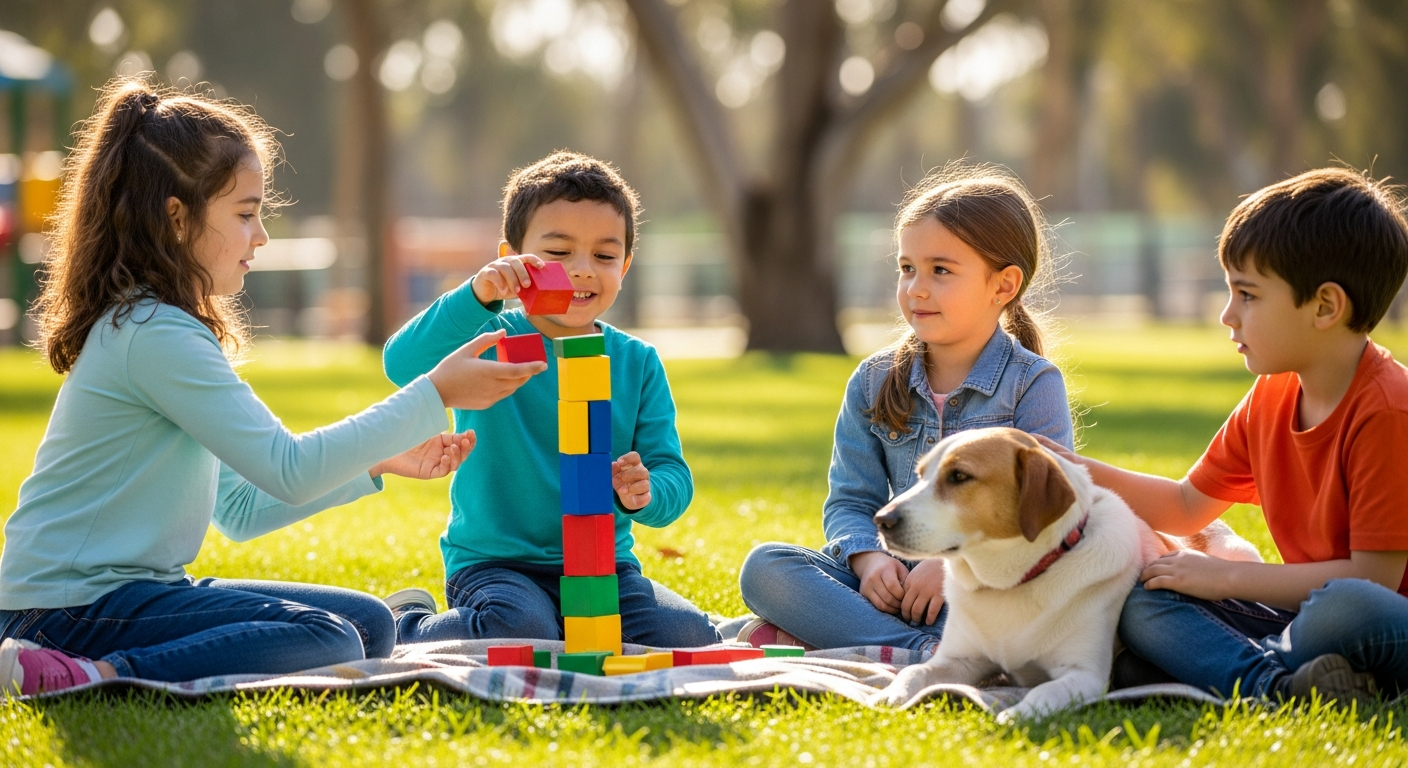
Table of Contents
- Introduction
- Understanding Autism and Play: A Unique Landscape
- The Power of Play: A Foundation for Growth
- Social Connection Through Play: Engaging Social Skills Activities
- Sensory Exploration: Activities for Regulation and Discovery
- Calming and Emotional Regulation: Finding Inner Peace
- Developing Fine Motor Skills: Hands-On Fun
- Boosting Cognitive Development: Playful Learning
- Empowering Communication: Language-Rich Activities
- Outdoor Adventures: Connecting with Nature
- Structured Learning Activities: Building Foundational Skills
- Choosing the Right Activities: Tailoring to Your Child's Needs
- Addressing Play Challenges: Practical Tips for Parents
- Speech Blubs: Your Partner in Joyful Communication Development
- Unlocking the Full Potential: Speech Blubs Pricing and Value
- FAQ
- Conclusion
Introduction
Ever feel like finding engaging activities for your child with autism is like searching for a specific star in a galaxy of options? Many parents and caregivers face this unique challenge, striving to discover activities that are not only enjoyable but also genuinely supportive of their child's development. Autism Spectrum Disorder (ASD) presents a beautiful spectrum of unique strengths and needs, and understanding these can transform playtime into powerful learning experiences.

This comprehensive guide is designed to illuminate a path through that galaxy. We’ll explore a diverse array of fun, enriching activities tailored to foster growth in social skills, sensory regulation, emotional well-being, fine motor control, cognitive development, and, crucially, communication. Our purpose is to provide you with practical, heartfelt strategies and resources, including how tools like Speech Blubs can seamlessly integrate into your family's journey. By the end, you’ll have a treasure trove of ideas, empowering you to create joyful, impactful moments that help your child speak their mind and heart, fostering confidence and reducing frustration in their everyday interactions.
Understanding Autism and Play: A Unique Landscape
Autism Spectrum Disorder (ASD) is a neurodevelopmental condition, meaning that autistic individuals experience and interact with the world in ways that differ from what is typically considered neurotypical. It's truly a spectrum, and every child's experience is unique, with varying strengths, challenges, and support needs. While ASD is clinically defined, it's vital to remember that it describes a different way of thinking and experiencing, not something "wrong" to be fixed.
For children with autism, play is just as fundamental to development as it is for any child, yet it can present a unique set of challenges and opportunities. These differences often stem from:
- Social Communication Differences: Autistic children may find it challenging to interpret neurotypical social cues, understand non-literal language, engage in reciprocal conversations, or intuitively grasp the "unwritten rules" of play. This isn't a lack of empathy but often a "double empathy problem," where neurotypical and neurodivergent individuals may struggle to understand each other's communication styles.
- Sensory Processing Variations: Many children with ASD experience the world with heightened or diminished sensory sensitivities. Loud noises, bright lights, certain textures, or even specific smells can be overwhelming or, conversely, highly sought after. These sensory differences can significantly impact their comfort and ability to engage in various play environments.
- Repetitive Behaviors and Interests: Autistic children might engage in repetitive actions (stimming) or develop intense, focused interests. While these can sometimes be perceived as limiting, they can also be powerful avenues for deep learning and provide comfort and regulation.
- Executive Functioning Challenges: Skills like planning, organizing, managing time, and shifting focus can be more challenging for some autistic children. This can affect their ability to follow multi-step game rules, initiate spontaneous play, or transition between activities.
Recognizing these unique aspects isn't about highlighting deficits but about understanding how to best support and empower your child to thrive through play, fostering an environment where they feel understood, capable, and joyful.

The Power of Play: A Foundation for Growth
Play is far more than just fun; it is the natural language of childhood and a powerful engine for development. For children with autism, engaging in carefully chosen, supportive play activities can be particularly transformative, offering a safe and natural environment to practice and build essential skills.
The benefits of play-based activities for children with ASD are profound:
- Developing Social Skills: Play provides invaluable opportunities to practice interaction, learn turn-taking, sharing, and understanding different perspectives. Structured games and role-playing can make abstract social concepts more concrete and manageable.
- Improving Communication Skills: From imitating sounds to forming sentences, play encourages verbal and non-verbal communication. It creates a low-pressure environment for children to express their thoughts and feelings, and to understand others.
- Enhancing Sensory Processing: Sensory play activities help children explore different inputs in a controlled manner, leading to better regulation and increased comfort with everyday sensory experiences.
- Boosting Cognitive Skills: Problem-solving, critical thinking, memory, and logical reasoning are all honed through activities like puzzles, building, and sorting games.
- Building Fine Motor Skills: Many play activities naturally develop hand-eye coordination and dexterity, crucial for tasks like writing and self-care.
- Developing Patience and Emotional Regulation: Engaging in activities with rules, such as board games, can teach children to manage frustration, wait their turn, and cope with winning and losing.
- Promoting Emotional Recognition: Pretend play, social stories, and activities focused on emotions can help children identify and express their own feelings, and recognize them in others.
By embracing the power of play, we equip children with autism not just with new skills, but with confidence, joy, and a deeper connection to the world around them.
Social Connection Through Play: Engaging Social Skills Activities
Developing social skills is a cornerstone of a child's overall well-being. For children with autism, who may navigate social interactions differently, structured and engaging play can be an incredibly effective way to build these crucial abilities. The goal isn't to change who they are, but to equip them with tools to connect with others on their own terms.
Here are some fun activities that can foster social growth:
Emotion Cards and Social Stories
Visual aids are often powerful tools. Emotion cards (printable cards depicting various facial expressions and situations) can help children recognize and label feelings in themselves and others. Discussing scenarios like "What makes someone feel happy?" or "How might this person feel if their toy broke?" makes emotions tangible. Similarly, social stories—short, personalized narratives describing social situations and appropriate responses—can prepare children for new experiences, such as visiting a doctor or attending a birthday party. They provide a predictable script that builds confidence.
Role-Playing Games
Pretend play, using dolls, puppets, or costumes, allows children to practice social scenarios in a safe environment. You could role-play simple interactions like ordering food at a restaurant, greeting a friend, or sharing a toy. For example, if your child struggles with initiating conversations, you can act out greeting scenarios, practicing phrases like "Hi, my name is [name]. Do you want to play with blocks?" This playful practice helps them internalize social scripts.
Group Board Games
Board games are fantastic for teaching essential social rules like turn-taking, following instructions, and gracefully handling winning and losing. Simple games like "Connect Four," "Uno," or "Candy Land" are excellent starting points. Remember to model good sportsmanship and provide gentle reminders about waiting for one's turn. The focus should always be on the shared experience and fun, not just the outcome.
Sharing Time
A classic elementary school activity, sharing time can be adapted for home or small group settings. Encourage your child to bring an item they are passionate about – a favorite toy, a rock collection, or a picture they drew. This activity not only provides a natural opportunity to talk about their interests but also teaches active listening as they listen to others. Lead by example, sharing something you're excited about first.
Storytelling Circles
This activity encourages cooperative communication and listening. Start a story, then each person adds a sentence or two to continue the narrative. This fosters creativity and requires participants to pay attention to what others have said, building a shared experience. It’s a low-pressure way to practice verbal contribution and imaginative play.
When a child with autism learns to articulate their thoughts and desires, social interactions become much more accessible and rewarding. At Speech Blubs, we believe that empowering children to "speak their minds and hearts" is key to unlocking their social potential. Our app uses a unique "video modeling" methodology, where children learn by watching and imitating their peers. This visual learning approach is highly effective for many autistic children, providing clear, achievable examples of speech and social communication. Practicing simple phrases, emotional expressions, and conversational turn-taking within the app can build foundational skills that translate directly into more confident and joyful social interactions. For instance, a child who loves animals can practice animal sounds and names in our "Animal Kingdom" section, preparing them to confidently share their knowledge during a sharing time activity.
Sensory Exploration: Activities for Regulation and Discovery
Sensory experiences play a significant role in the lives of children with autism. Some may seek intense sensory input, while others are highly sensitive and can become overwhelmed by certain sights, sounds, or textures. Sensory play provides a controlled and engaging way for children to explore, integrate, and regulate their responses to the world around them.
Sensory Bins
These versatile tools are a favorite for a reason! Fill a bin with various materials like rice, dried beans, water beads, sand, or pasta. Add small toys, scoops, cups, and funnels. Children can explore textures, practice scooping and pouring (developing fine motor skills), and engage in imaginative play. A child who is texture-sensitive might start with a bin of smooth, soft pom-poms and gradually introduce different textures, like dried lentils.
Water Play
The calming and fluid nature of water makes it a fantastic sensory medium. Whether it's playing in a small basin with cups and toys, or a supervised bath with colorful bath bombs, water play helps develop motor skills through pouring and splashing. It can be incredibly soothing for children who find the sensation of water comforting, helping to reduce anxiety.
Playdough and Slime
These tactile materials offer satisfying sensory experiences that can be molded, stretched, and shaped. Playdough and slime are excellent for building fine motor strength in hands and fingers, fostering creativity, and providing deep pressure input through kneading. Encourage your child to express themselves by creating shapes or characters.
Fidget Toys and Sensory Sound Resources
Fidget toys, from simple spinners to textured balls, can help children self-regulate and maintain focus. For auditory sensitivities, consider noise-canceling headphones for overwhelming environments. Conversely, incorporate calming sounds like white noise, or rhythm instruments like shakers or drums for enjoyable auditory input. Musical chairs or "Simon Says" (with sound cues) can be great interactive options.
Scientific Slime Experiments
Making slime from scratch isn't just a science lesson; it's a multi-sensory experience! The process involves measuring, mixing, and observing chemical reactions, all while engaging with various textures and colors. This activity provides rich tactile input and can be adapted to your child's preferences.
Sensory play can also be a wonderful precursor to communication development. When a child is calmly engaged with a sensory activity, their brain is often more open to learning and interaction. For a child who might be easily overstimulated, the controlled visual and auditory input of the Speech Blubs app can be a calming and focused activity. Our "smart screen time" approach ensures that children are actively engaged and imitating, rather than passively observing. The clear visuals and distinct sounds in our sections, like "Yummy Time" (practicing food-related words) or "Vehicle Sounds" (imitating car noises), provide a structured sensory experience that supports language acquisition without overwhelming the child.
Calming and Emotional Regulation: Finding Inner Peace
Emotional regulation is a vital skill for all children, and for those with autism, who may experience heightened emotional responses or sensory overload, having effective calming strategies is essential. These activities help children identify their feelings, understand their impact, and develop techniques to manage stress and overwhelm.
Coloring and Art Therapy
The simple act of coloring can be incredibly grounding. It encourages focus, mindfulness, and provides an outlet for emotions without requiring verbal expression. Keep a variety of coloring pages, crayons, markers, or paints on hand. Drawing or painting "how they feel" can also be a therapeutic way for children to externalize complex emotions.
Calm-Down Cards and Mindfulness Exercises
Create a set of "calm-down cards" with visual reminders of soothing activities, such as "take three deep breaths," "hug a stuffed animal," or "find a quiet space." Mindfulness exercises, like deep breathing techniques or the "5-4-3-2-1" grounding technique (naming 5 things you can see, 4 you can touch, 3 you can hear, 2 you can smell, and 1 you can taste), help children focus on the present moment and manage anxiety.
Yoga and Movement
Gentle yoga poses promote body awareness, flexibility, and relaxation. Poses like "child's pose" or "cat-cow" are easy for children to learn and can be done together. Movement, like stretching or dancing to calming music, can also help release tension and provide a healthy way to regulate energy.
Creating a Student Retreat Zone
Designate a quiet, comfortable space in your home where your child can retreat when feeling overwhelmed. Stock it with calming sensory tools like weighted blankets, soft pillows, fidget toys, or books. This provides a safe, predictable haven for self-regulation.
Calm Down Bottles
These DIY tools, made with water, glitter, and glue in a sealed bottle, offer a mesmerizing visual focus as the glitter settles. Shaking and watching the glitter can be a surprisingly effective way for children to calm their minds and bring their focus back to the present.
For parents seeking more insight into their child's communication development, our preliminary screener is a valuable first step. This quick, 3-minute assessment with 9 simple questions can help you understand your child's communication strengths and identify areas where additional support might be beneficial, providing you with an assessment and next-steps plan.
Developing Fine Motor Skills: Hands-On Fun
Fine motor skills – the coordinated movements of small muscles in the hands and fingers – are crucial for everyday tasks like writing, dressing, and eating. Many fun activities for kids with autism naturally incorporate the development of these skills, making learning an enjoyable process.
Kitchen Activities
The kitchen is a fantastic learning lab! Involving your child in simple tasks can dramatically boost fine motor skills:
- Washing fruits and vegetables: Manipulating produce under running water.
- Measuring ingredients: Scooping beans, flour, or water into cups, improving hand-eye coordination.
- Stirring batter: Strengthening arm and hand muscles.
- Filling muffin tins: Practicing precision with a spoon or small pitcher.
- Trimming herbs or tearing lettuce: Developing finger dexterity.
These activities also introduce concepts of measurement, sequencing, and even expand their palate as they interact with new foods.
Building Blocks and Construction Toys
LEGOs, wooden blocks, and other construction sets are timeless for a reason. They encourage children to grasp, stack, connect, and build, which are all excellent for fine motor development. These activities also foster spatial reasoning, problem-solving, and creativity as they translate their ideas into tangible structures.
Puzzles
From simple knob puzzles for toddlers to more complex jigsaw puzzles, these activities require children to manipulate small pieces, fit them into specific spaces, and use a pincer grasp. Puzzles are excellent for hand-eye coordination, problem-solving, and visual perception.
Clay Sculpting and Crafts
Working with clay, playdough, or even kinetic sand provides wonderful tactile input while strengthening hand muscles. Pinching, rolling, flattening, and shaping helps develop dexterity and allows for creative expression. Other crafts involving cutting with child-safe scissors, gluing small pieces, or stringing beads are also highly beneficial.
Boosting Cognitive Development: Playful Learning
Cognitive development encompasses a wide range of skills, including problem-solving, memory, attention, and logical thinking. Play provides a natural and enjoyable context for children with autism to sharpen these abilities, often without even realizing they are "learning."
Sorting and Matching Games
These activities are highly effective for developing organizational skills, attention to detail, and problem-solving. Use colored blocks, picture cards, socks, or even small toys. Ask your child to sort by color, shape, size, or category (e.g., "all the animals go here," "all the red items go there"). Matching games with pictures or memory cards are also great for enhancing visual perception and memory.
Building Activities
Beyond fine motor skills, building with LEGOs, blocks, or other construction toys significantly boosts cognitive functions. Children learn about spatial reasoning, balance, cause and effect, and planning as they construct towers, houses, or imaginative structures. Encouraging them to follow simple instructions or patterns can also improve their ability to sequence and follow directions.
Puzzle Time
Puzzles are fantastic for developing logical thinking and problem-solving. They require children to analyze shapes, recognize patterns, and strategize how pieces fit together. Start with simple puzzles and gradually introduce more complex ones as your child's skills grow. This activity also enhances concentration and persistence.
Musical Instruments
Exploring simple musical instruments like tambourines, maracas, or xylophones can stimulate cognitive development through auditory processing and rhythm. Children learn to identify different sounds, understand patterns, and coordinate movements with music. This can also be a wonderful outlet for self-expression.
At Speech Blubs, we leverage play to stimulate cognitive growth alongside communication. Our app’s structured activities, like identifying objects and actions through "Who am I?" or "What's wrong?", engage children in critical thinking and problem-solving, all while reinforcing vocabulary and sentence structure. The visual cues and clear structure provide a supportive learning environment, helping children connect words to concepts in a meaningful way.
Empowering Communication: Language-Rich Activities
Communication is at the heart of human connection, and fostering strong language skills is one of the most empowering gifts we can give our children. For children with autism, who may experience unique communication challenges, language-rich play activities are invaluable.
Reading Books and Storytelling
Reading together is a powerful way to build vocabulary, comprehension, and a love for language. Point to pictures, ask open-ended questions (e.g., "What do you think happens next?"), and encourage your child to retell parts of the story in their own words. Asking "How would it feel to be the character?" helps build empathy and emotional vocabulary. Storytelling circles, as mentioned earlier, also promote active listening and verbal contribution.
Singing Together and Music Play
Music is a universal language, and singing familiar songs can be incredibly effective for language development. Repetitive songs with simple lyrics and actions, like "The Wheels on the Bus" or "Old MacDonald Had a Farm," help children learn new words, remember sequences, and practice articulation in a joyful, low-pressure way. Playing simple instruments alongside singing enhances rhythm, coordination, and auditory processing.
Speech Blubs: Your Partner in Joyful Communication Development
At Speech Blubs, our mission is to empower children to "speak their minds and hearts," building the confidence to express themselves. Our company was born from the personal experiences of our founders, who all grew up with speech problems and created the tool they wished they had. We are committed to providing an immediate, effective, and joyful solution for the 1 in 4 children who need speech support.
We blend scientific principles with play into one-of-a-kind "smart screen time" experiences. This is not passive viewing like cartoons; it's an active, engaging tool for family connection. Our unique approach teaches complex communication skills through "video modeling," where children learn by watching and imitating their peers. This method is incredibly effective for many children with autism who benefit from visual learning and peer examples.
For a parent whose child is a "late talker" and struggles with expressive language, the Speech Blubs app offers a vast library of themed activities. For instance, the "Zoo Animals" section provides video models of children making animal sounds and saying animal names. This immediate imitation and positive reinforcement help build foundational speech skills. For children learning conversational skills, our interactive stories and sentence-building activities provide structured practice. We ensure the learning process is fun and engaging, fostering a love for communication, building confidence, reducing frustration, and creating joyful family learning moments.
We understand that you want the best for your child, and our method is backed by science, placing us in the top tier of speech apps worldwide. You can learn more about our research and methodology here.
Outdoor Adventures: Connecting with Nature
Getting outside provides a wonderful change of scenery and unique sensory experiences. Outdoor activities are fantastic for physical health, sensory regulation, and fostering a connection with the natural world, which can be incredibly calming and enriching for children with autism.
Nature Walks and Exploration
Taking a nature walk can be a peaceful and stimulating activity. Encourage your child to explore at their own pace, focusing on different sensory inputs: the crunch of leaves underfoot, the sound of birds, the textures of tree bark, or the smell of flowers. Collecting interesting rocks, leaves, or pinecones can turn a walk into a treasure hunt, fostering curiosity and observation skills.
Gardening
Gardening is a rewarding activity that teaches patience, responsibility, and provides wonderful tactile experiences. Children can help plant seeds, water plants, feel the soil, and observe the growth cycle. It connects them to where their food comes from and gives them a sense of accomplishment.
Bubble Play
Simple yet incredibly effective, blowing and chasing bubbles offers fantastic visual tracking and gross motor practice. The fleeting, delicate nature of bubbles can be both mesmerizing and calming, providing joyful sensory engagement without overwhelming input. It's a low-pressure activity that almost always brings smiles.
Trampoline Play
Jumping on a trampoline provides excellent proprioceptive input (deep pressure) and vestibular input (movement and balance), which many children with autism find highly regulating and enjoyable. It's a fantastic way to release energy, improve balance and coordination, and get vigorous physical exercise in a controlled setting.
Obstacle Courses
Create a simple obstacle course in your backyard or a park using household items like pillows, blankets, hula hoops, or stepping stones. Activities like crawling under a tunnel, jumping over cushions, balancing on a line, or throwing a ball into a basket encourage problem-solving, motor planning, and coordination. This can be adapted to your child's specific physical abilities and sensory preferences.
Structured Learning Activities: Building Foundational Skills
While unstructured play is vital, structured learning activities offer a predictable and focused environment that many children with autism thrive in. These activities are designed to build foundational cognitive and practical skills in an engaging way.
Puzzle Time
As mentioned earlier, puzzles are excellent for developing problem-solving skills, hand-eye coordination, and spatial reasoning. They offer a clear goal and a sense of accomplishment upon completion. Choose puzzles that align with your child's interests, featuring their favorite characters, animals, or vehicles.
Sorting and Matching Games
Beyond basic categorization, you can introduce more complex sorting tasks. For example, sorting buttons by color and size, or matching animals to their habitats. These activities strengthen cognitive flexibility, attention to detail, and the ability to identify relationships between items.
Building Blocks and Construction Toys
Structured building challenges can take this activity to the next level. Provide your child with a picture or a simple blueprint to follow, using LEGOs, Duplos, or magnetic tiles. This enhances their ability to follow directions, plan ahead, and work towards a specific outcome, while still enjoying the creative process of building.
Choosing the Right Activities: Tailoring to Your Child's Needs
Every child with autism is unique, and what works wonderfully for one may not resonate with another. The key to successful engagement is tailoring activities to your child's individual needs, strengths, and preferences.
Here are some essential tips for choosing and adapting activities:
- Follow Their Interests: This is paramount. If your child loves dinosaurs, incorporate dinosaurs into puzzles, sensory bins, or storytelling. If they are fascinated by trains, find train-themed games or create train tracks outdoors. Activities aligned with their passions are inherently more motivating and engaging.
- Utilize Visual Aids: Many autistic children are visual learners. Use picture schedules to outline the steps of an activity, visual timers to indicate how long an activity will last, or "first/then" boards to structure transitions. Visual cues reduce anxiety and help children understand expectations.
- Play to Their Strengths: Does your child excel at puzzles? Offer more complex logic games. Are they particularly good with numbers? Incorporate counting into daily activities like setting the table or sorting toys. Capitalize on what they do well to build confidence and enjoyment.
- Keep It Simple and Direct: Break down tasks into small, manageable steps. Overwhelm can lead to disengagement. Clear, concise instructions, paired with visual demonstrations, are often more effective than lengthy verbal explanations.
- Observe Sensory Preferences: Pay close attention to your child's sensory profile. Do they seek deep pressure? Incorporate weighted blankets or trampoline play. Are they sensitive to certain textures? Offer a variety of materials in sensory bins, allowing them to choose what feels comfortable. Create quiet spaces for children who are easily overstimulated.
- Embrace Predictability and Routine: While flexibility is good, many children with autism thrive on predictability. Introducing new activities within a familiar routine or preparing them for changes can reduce anxiety and increase participation.
Addressing Play Challenges: Practical Tips for Parents
Even with the best intentions and activities, challenges can arise during playtime. It's important to approach these moments with patience, understanding, and a toolkit of strategies to ensure play remains a positive and growth-promoting experience.
Here’s how to effectively address common play challenges:
- Make It Easy and Adaptable: If a game is too complex, simplify the rules. If a task requires too many steps, break it down. For example, if a board game is too long, modify it to end sooner or focus on just one aspect, like rolling the dice and moving pieces, rather than complex strategy.
- Offer Breaks and Quiet Spaces: Recognize the signs of sensory overload or fatigue. Offer a designated "student retreat zone" or a quiet corner where your child can take a break, engage with a fidget toy, or simply decompress. Respect their need for solitude if that's what helps them regulate.
- Facilitate Supervised Playdates: Social interactions can be tricky. Organize small, supervised playdates with peers, perhaps starting with just one other child. Be present to help guide interactions, prompt sharing, and model appropriate responses. Structured activities, like building a LEGO castle together, can provide a clear framework for interaction.
- Use Diverse Communication Methods: Don't rely solely on verbal instructions. Use visual schedules, picture cards, gestures, or even social stories to explain expectations and transitions. This multi-modal approach ensures your child understands what's happening and what's expected of them.
- Create a Calm and Safe Environment: Minimize distractions in the play area. Ensure it's free of overwhelming noises or bright lights if your child is sensitive. A predictable, organized space can help a child feel secure and more able to engage.
- Stick to a Routine (with Flexibility): While predictability is comforting, life isn't always rigid. Establish a general routine for play, but also teach and practice flexibility. For instance, having "free play" time followed by a structured activity can help children transition.
- Be a Role Model: Children learn by observing. Model positive social behaviors, emotional regulation, and how to engage with different activities. Narrate your actions: "I'm going to share these blocks," or "I'm feeling a little frustrated, so I'm taking a deep breath."
- Celebrate Small Victories: Acknowledge effort and progress, no matter how small. Did your child take turns once? Did they try a new texture? Positive reinforcement builds confidence and encourages continued engagement.
Unsure where to start with communication support? Take our quick 3-minute preliminary screener to get a simple assessment and a free 7-day trial of Speech Blubs. It’s designed to provide you with an immediate plan tailored to your child’s needs.
Speech Blubs: Your Partner in Joyful Communication Development
At Speech Blubs, we are more than just an app; we are a community-driven solution born from the personal experiences of our founders, all of whom grew up with speech problems. We created the tool we wished we had—an immediate, effective, and joyful solution for the 1 in 4 children who need speech support. Our core mission is to empower children to "speak their minds and hearts," fostering confidence and reducing the frustration that often accompanies communication challenges.
We integrate scientific principles with play, transforming screen time into "smart screen time." Unlike passive cartoons, our app uses a unique "video modeling" methodology where children learn by actively watching and imitating their peers. This peer-to-peer learning is incredibly powerful, especially for children with autism, who often benefit from visual cues and clear, relatable examples. Our activities are designed to be interactive, encouraging direct imitation of sounds, words, and even complex sentences, making the learning process engaging and fun.
Speech Blubs is a powerful tool for family connection, too. It provides a structured, positive environment for parents and children to play and learn together. Imagine watching your child light up as they successfully imitate a new sound or confidently complete a sentence, all while giggling with you! These are the joyful learning moments we strive to create.
We're proud of the positive impact we've had on families worldwide. See what other parents are saying about their child's success with Speech Blubs by visiting our testimonials page. Our commitment to delivering high-quality, research-backed support is unwavering, and our app holds a top-tier rating on the MARS scale, a testament to its effectiveness and scientific grounding.
Ready to see the difference Speech Blubs can make? Download Speech Blubs on the App Store or Google Play to begin your child's journey to confident communication.
Unlocking the Full Potential: Speech Blubs Pricing and Value
We believe in making effective speech support accessible, and we offer transparent pricing to fit your family's needs. To ensure you get the most out of Speech Blubs, we encourage you to explore our plan options:
- Monthly Plan: For $14.99 per month, you get access to our core features.
- Yearly Plan: This is by far our best value at $59.99 per year, which breaks down to just $4.99 per month.
The Yearly Plan offers superior value and an enriched experience. When you choose the Yearly plan, you not only save 66% compared to the monthly subscription, but you also unlock exclusive, high-value features designed to accelerate your child's progress and enhance your family's experience:
- 7-Day Free Trial: The Yearly plan includes a full 7-day free trial, allowing you and your child to explore the app's comprehensive features and experience the magic of video modeling firsthand before committing. The Monthly plan does not include a free trial.
- Extra Reading Blubs App: Gain full access to our Reading Blubs app, a fantastic companion tool that further supports early literacy development, included only with the Yearly plan.
- Early Access to New Updates: Be among the first to benefit from our continuous improvements and exciting new content.
- 24-Hour Support Response Time: Enjoy prioritized customer service, ensuring any questions or concerns are addressed promptly.
To truly experience the full suite of benefits and embark on a comprehensive journey of communication development with your child, we highly recommend choosing the Yearly plan. It’s the smart choice for dedicated parents looking for the best value and features. Get started by creating your account and activating your 7-day free trial today!
FAQ
What are the best types of activities for kids with autism?
The best activities are those that align with your child's unique interests and sensory preferences. Generally, activities that support social skills (like board games), sensory regulation (like sensory bins), emotional expression (like coloring), fine motor development (like building blocks), cognitive growth (like puzzles), and communication (like singing or using Speech Blubs) are highly beneficial. Always observe your child's engagement and adapt accordingly.
How can Speech Blubs help my child's communication?
Speech Blubs is designed to empower children to "speak their minds and hearts" through its unique video modeling approach. Children learn by imitating peers in fun, interactive video activities, which is particularly effective for many with autism. It builds foundational speech sounds, words, and sentences, fosters confidence, reduces frustration, and promotes joyful family connection. It's an active, "smart screen time" experience, offering structured learning in an engaging format.
How do I know if an activity is working for my child?
Look for signs of engagement, joy, and focused attention. If your child is actively participating, showing curiosity, or repeating aspects of the activity, it's a good sign. Observe if they are developing new skills (e.g., improved turn-taking, making new sounds, better hand-eye coordination) or showing better emotional regulation after the activity. Positive responses, even small ones, indicate success.
What if my child has sensory sensitivities?
When planning activities, always consider your child's sensory profile. For heightened sensitivities, create calming environments, offer noise-canceling headphones, and introduce textures gradually in sensory bins. For those who seek sensory input, incorporate activities like trampoline jumping, deep pressure, or engaging rhythm instruments. Providing choices and control over sensory experiences is key to positive engagement.
Conclusion
The journey of nurturing a child with autism is one filled with unique discoveries, profound love, and endless opportunities for growth. By thoughtfully selecting and adapting fun activities, we can create enriching experiences that go beyond mere entertainment, transforming playtime into powerful avenues for skill development. From fostering social connections through role-playing to building communication confidence with tools like Speech Blubs, every activity is a step toward empowering your child to navigate their world with greater ease and joy.
Remember, the goal isn't perfection, but progress—celebrating every new sound, every shared glance, every moment of self-expression. By embracing your child's unique strengths and preferences, you can unlock their full potential, helping them to speak their minds and hearts with clarity and confidence.
Ready to embark on a journey of joyful discovery and confident communication with your child? We invite you to experience the transformative power of Speech Blubs. Sign up for your 7-day free trial today by choosing our best-value Yearly plan, and unlock the full suite of features designed to help your child thrive. You can also download the Speech Blubs app directly from the Apple App Store or Google Play Store. Let's unlock their potential together!
About the author