
Fun Airplane Activities for Kids: Smooth Flights & Happy Little Travelers
 By Speech Blubs Team•Jan 13, 2026•18 min.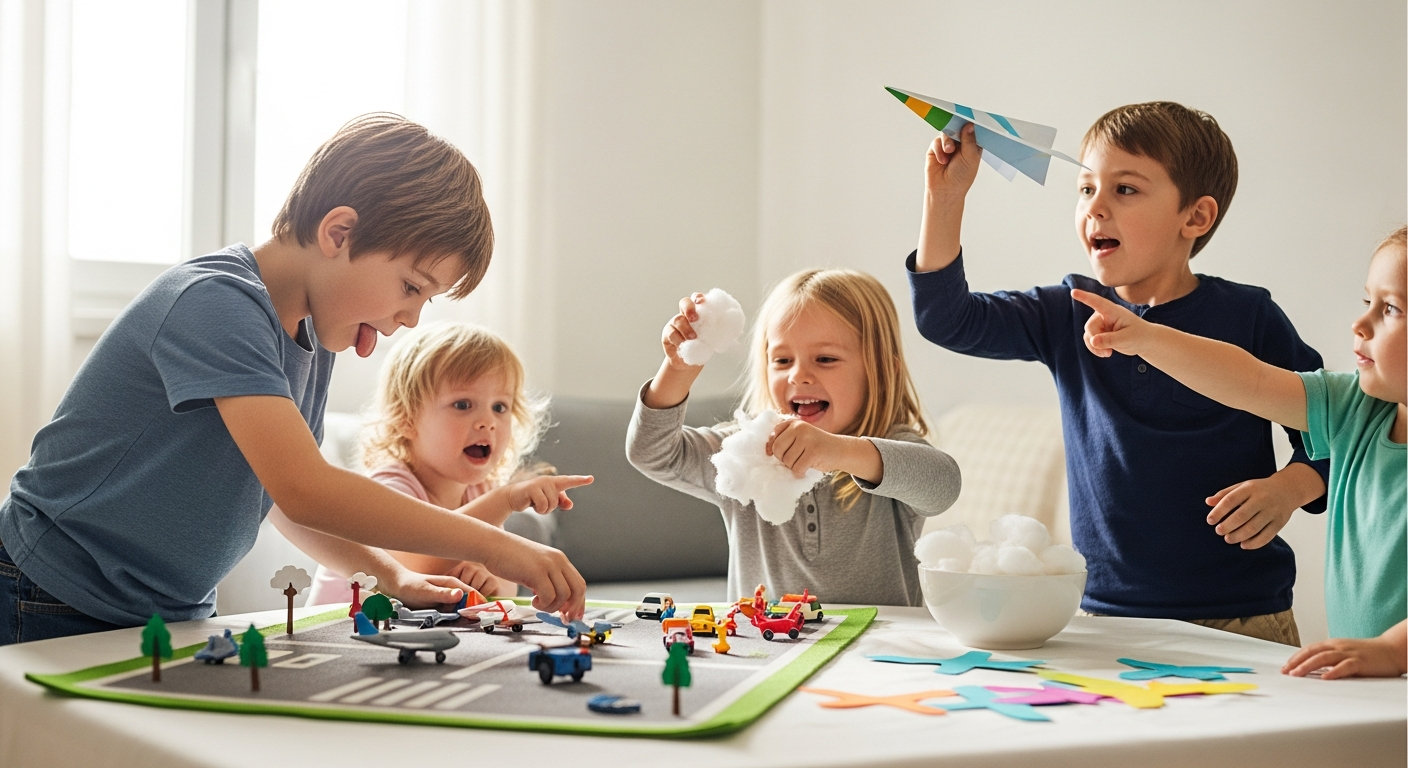
Table of Contents
- Introduction
- Pre-Flight Preparation: Setting the Stage for Success
- The In-Flight Entertainment Kit: Curating Your Arsenal
- Beyond the Activities: Nurturing Connection & Calm
- Conclusion
- FAQ
The mere mention of flying with children can send shivers down even the most seasoned parent's spine. Visions of endless "Are we there yet?" choruses, mid-flight meltdowns, and the dreaded glares from fellow passengers often replace any romantic notions of family travel. But what if we told you that air travel with your little ones doesn't have to be a source of stress? What if, with a bit of savvy preparation and a treasure trove of engaging activities, those hours in the sky could transform into a unique opportunity for connection, learning, and genuine fun? This isn't just wishful thinking; it's an achievable reality. By strategically planning and packing the right tools, you can navigate the friendly skies with confidence, turning potential turbulence into smooth sailing and creating cherished memories along the way.
Introduction
Picture this: you've planned the perfect family vacation, dreamt of sandy beaches or snowy mountains, only to be jolted back to reality by the daunting prospect of the flight itself. The confined space, the unfamiliar environment, and the sheer length of the journey can feel like a recipe for disaster with energetic children in tow. Yet, countless families successfully traverse the globe with their kids, not by magic, but by mastering the art of in-flight entertainment and preparation. This comprehensive guide is designed to equip you with an arsenal of practical, engaging, and genuinely fun airplane activities for kids of all ages, alongside invaluable tips for pre-flight planning and navigating common challenges. Our aim is to help you reframe air travel not as a hurdle to endure, but as an exciting part of the adventure, filled with opportunities for learning and connection.

Pre-Flight Preparation: Setting the Stage for Success
The key to a smooth flight begins long before you even step foot in the airport. Thoughtful planning can dramatically reduce stress and set a positive tone for the entire journey.
Choosing Your Flight Time Wisely
Selecting the right flight time can make a significant difference. For younger children, consider flights that align with their natural sleep schedule. An overnight flight that departs in the early evening might allow them to settle in, have a meal, and then drift off to sleep as the cabin lights dim. Mid-morning flights can also be ideal, as children are typically well-rested and in good spirits, ready for engagement. If possible, avoid flights during peak tantrum times or those that cut across their regular nap schedule too sharply, as overtiredness is a primary instigator of in-flight woes.
Packing Your Carry-On Right: The Essential Survival Kit
Your carry-on bag is your lifeline in the sky. It needs to be a well-organized command center filled with essentials for comfort, sustenance, and entertainment.
Clothing Changes
Always pack at least one full change of clothes for each child, and ideally one for yourself too. Accidents happen—spills, unexpected motion sickness, or potty training mishaps. Having fresh, clean clothes readily available can avert a sticky, uncomfortable situation. Opt for comfortable layers like leggings, long-sleeved tops, and a light fleece jacket, as cabin temperatures can fluctuate. For toddlers, even if they're potty trained, consider pull-ups for the flight, especially during takeoff and landing when bathroom access is restricted.
Hydration and Snacks
Airport food can be pricey and limited in child-friendly options. Pack a variety of healthy, non-perishable snacks that your child enjoys, such as Cheerios, pretzels, crackers, string cheese, granola bars, dried fruits, or yogurt melts. Empty, leakproof water bottles are crucial; you can fill them up after passing through security. Staying hydrated helps combat cabin dryness and keeps energy levels stable.

Comfort Items and Medicine
Don't forget comfort items like a favorite small blanket or a beloved stuffed animal that can provide a sense of security in an unfamiliar environment. A kids' neck pillow can also aid in comfortable rest. Be sure to pack any necessary medications, ear drops for pressure changes, pain relievers, and a small first-aid kit with bandages and antiseptic cream. A few candies or chewable treats can also be a godsend for soothing ears during ascent and descent.
Headphones
Volume-limiting headphones specifically designed for children are a must. They protect sensitive ears and allow kids to enjoy their audio without disturbing others. Make sure they are comfortable and easily connect to your devices.
Airport Strategy: Burning Energy and Setting Expectations
The airport itself presents a unique challenge and opportunity.
Pre-Boarding Energy Release
Before boarding, give your children ample opportunity to run, jump, and burn off as much energy as possible. Find a quiet corner, an empty gate, or a designated play area. A tired child is often a calmer child on the plane.
Discussing "Airplane Rules"
Talk to your child beforehand about what to expect on the plane. Explain "airplane rules" – staying in their seat, using quiet voices, and being mindful of other passengers. This conversation helps set expectations and provides a framework for behavior. You can frame it as a special adventure where they get to be a "big helper."
The In-Flight Entertainment Kit: Curating Your Arsenal
Once on board, your carefully curated bag of activities will be your secret weapon. The key is variety and novelty.
Screen Time: A Savvy Supplement, Not the Sole Solution
Let's be honest: screen time is often a lifeline on flights, and there's absolutely no judgment here. In the 21st century, technology can be a powerful ally. However, the goal is "smart screen time" – experiences that engage and educate rather than simply pacify. This is where tools like Speech Blubs shine.
At Speech Blubs, we believe in empowering children to speak their minds and hearts, and our app offers a unique, engaging, and scientifically-backed approach to language development. Our founders, all with personal experiences of speech challenges in childhood, created the tool they wished they had. When you download Speech Blubs from the Apple App Store or Google Play Store, you're not just getting an app; you're getting a powerful tool for joyful learning that can be enjoyed even offline, making it perfect for flights. Our unique video modeling methodology, where children learn by watching and imitating their peers, activates mirror neurons and makes learning complex communication skills fun and effective. It's a screen-free alternative to passive viewing like cartoons, fostering active engagement and family connection.
For parents whose children benefit from structured learning or speech support, having Speech Blubs available offline is invaluable. Imagine your child happily engaging with the "Animal Kingdom" section, practicing animal sounds and names, or mimicking facial expressions in our "Fun with Faces" activities, all while soaring through the clouds. This kind of interactive engagement helps build foundational communication skills, reduces frustration, and fosters confidence. To discover how Speech Blubs can support your child's communication journey, you can also explore our main homepage for more information.
Mess-Free & Quiet Activities (Ages 1-3)
Toddlers thrive on hands-on exploration but require activities that are contained and quiet.
Water Wow Books
These reusable coloring books by Melissa & Doug are pure magic. Kids "paint" with a water-filled pen, revealing colors and images that disappear when dry, allowing for endless reuse. They are completely mess-free, making them perfect for tiny airplane tray tables. For a child who loves animals, like our early talker who is learning to make animal sounds, the "Farm Animals" Water Wow book can be a fantastic way to practice "moo" and "baa." This interactive play directly complements the sound imitation and word practice found in Speech Blubs' themed sections.
Reusable Sticker Books
Toddlers adore stickers, and reusable sticker books offer hours of quiet play. Scenes of farms, vehicles, or fantastical worlds provide a backdrop for imaginative storytelling and fine motor skill development as they peel and place the stickers. These are excellent for developing hand-eye coordination and vocabulary as you name the objects together.
Stacking Cups
Simple, lightweight stacking cups are surprisingly versatile. Kids can stack them tall, nest them, or even use them to "hide" small toys. This promotes problem-solving, spatial reasoning, and fine motor skills. Ask your child to count the cups as they stack, or name the colors, turning a simple toy into a language-rich activity.
Soft, Small Toys
Bring a few beloved small figures or soft toys. These can engage children in imaginative play without disturbing others. A small dinosaur or a few animal figurines can lead to quiet, imaginative scenarios on the tray table.
Suction Spinners
These colorful spinners attach to the airplane window or tray table with a suction cup, providing captivating visual and tactile stimulation. They keep little hands busy and mesmerized, offering a calming distraction. Our third baby loved these from a very young age, engaging his visual tracking and fine motor skills.
Sensory Boards or Fidget Cubes
For children who benefit from tactile input, a small sensory board or a fidget cube can provide satisfying stimulation. These typically have various buttons, zippers, textures, and switches that can keep fingers busy and minds focused.
Engaging & Educational Play (Ages 4-7+)
For preschoolers and early elementary children, activities can become a bit more complex, blending fun with learning.
LCD Drawing Tablets
These electronic doodle pads allow kids to draw, write, and erase with the touch of a button. They are mess-free, lightweight, and perfect for practicing letters, numbers, or unleashing artistic creativity. For a child who loves to draw, this can provide hours of entertainment without needing paper or pencils.
Plus Plus Blocks
These unique, interlocking puzzle pieces encourage creative construction. Because each piece is the same, losing one isn't a disaster, and they pack compactly into a tube. Kids can create 2D mosaics or 3D structures, fostering spatial reasoning and problem-solving. As they build, you can encourage them to describe their creations, using descriptive language that reinforces the vocabulary and sentence structures they might be practicing in Speech Blubs.
Wikki Stix and Pipe Cleaners
Made from wax-coated yarn, Wikki Stix are bendable, reusable, and mess-free. Kids can twist them into shapes, letters, or pictures, or even use them to create intricate patterns on the tray table. Similarly, pipe cleaners can be bent and shaped into animals, figures, or abstract art, encouraging fine motor skills and creative expression. For a child who enjoys imaginative play, constructing characters out of pipe cleaners can lead to exciting storytelling, much like the prompts in Speech Blubs encourage verbal narratives and social communication practice.
Travel Games (e.g., Dobble/Spot It)
Compact card games like Dobble (known as "Spot It!" in the USA) are fantastic for family interaction. They involve quickly finding matching symbols between cards, boosting observation skills and quick thinking. These games are fun for all ages and promote healthy competition and turn-taking.
Scratch Art
This mess-free craft involves scratching off a black surface to reveal colorful patterns underneath. It's incredibly satisfying and helps develop fine motor control and artistic expression. It's a quiet activity that yields impressive results, captivating children across a broad age range.
Fidget Toys
A small collection of fidget toys – like bendy snakes, infinity cubes, or dancing animals – can be incredibly helpful for children who need to keep their hands busy. These sensory tools can improve focus and provide a calming outlet for restless energy.
Activity Books & Workbooks
Highlights activity books have stood the test of time for a reason. Packed with puzzles, mazes, and "Hidden Pictures," they offer engaging challenges. Themed activity books, like "On the Plane" books with airplane-related puzzles, can also heighten excitement for the journey. Workbooks designed for a child's age group can also offer a structured learning opportunity, practicing math or literacy skills in a fun context.
Simple Puzzles (Tangrams, Rhyming Puzzles)
Travel-friendly puzzles like tangrams (geometric shapes to form pictures) or two-part rhyming puzzles are excellent for cognitive development. They require focus and problem-solving and are generally quiet and self-contained. For beginning readers, rhyming puzzles can be particularly helpful in reinforcing phonological awareness.
Low-Tech & Interactive Fun (All Ages)
Sometimes, the simplest activities are the most effective, fostering connection and engagement without screens or elaborate setups.
Books, Books, Books!
Bring a few new, thin paperback books that are easy to pack. For younger kids, board books or search-and-find books are ideal. For early readers, thin paperbacks from a favorite series can provide hours of quiet entertainment. Reading together is a fantastic way to bond and build vocabulary.
Drawing Supplies
A small pencil case filled with washable markers, crayons (especially Stabilo Cappi pens with their connected lids to prevent loss), and a pad of paper is a classic for a reason. Drawing allows for self-expression and imagination. Encourage your child to draw what they see outside the window, their dream vacation, or even a story. This shared creative time is a wonderful opportunity for communication and can spark conversations that enhance language development, much like the interactive elements of Speech Blubs encourage descriptive language.
Coupon Files with Mini Activities
A clever hack is to use a coupon file with multiple compartments, filling each with a different small, standalone activity: mini coloring pages, small toy cars, stickers, sticky notes, or a memory match game. The novelty of "opening a new compartment" can reignite interest throughout the flight.
Paper Airplanes or Origami
Pre-cut paper airplane templates or simple origami instructions can transform a piece of paper into a flying friend or an intricate shape. This fosters fine motor skills, following instructions, and imaginative play.
Speech Blubs: Your Partner in Joyful Communication
In all these activities, whether screen-based or hands-on, the underlying goal is to foster a love for communication and connection. This is precisely where Speech Blubs aligns with your family's journey. Our mission is to empower children to speak their minds and hearts, believing that every child deserves a voice. We were founded by individuals who intimately understood the challenges of speech development, creating the tool they wished they had during their own childhoods.
We're committed to providing an immediate, effective, and joyful solution for the 1 in 4 children who need speech support. Our app blends scientific principles with play, creating one-of-a-kind "smart screen time" experiences that are miles away from passive viewing. The scientific research supporting our video modeling methodology, which activates mirror neurons and facilitates learning through imitation, has placed us in the top tier of speech apps worldwide. You can explore the research behind our method to understand more about its effectiveness.
Speech Blubs isn't just an app; it's a powerful tool for family connection, encouraging co-play and shared learning moments. It’s designed to be a significant supplement to your child's overall development plan and, when applicable, professional therapy, building confidence and reducing frustration. But don't just take our word for it; read what other parents are saying about their child's success with Speech Blubs.
Unsure if your child could benefit from speech support? Take our quick 3-minute preliminary screener to get a simple assessment and a personalized next-steps plan. It's a great way to gain insight and includes a free 7-day trial of Speech Blubs.
Beyond the Activities: Nurturing Connection & Calm
While a bag full of activities is essential, your presence and attitude are equally, if not more, important.
The Importance of Parental Presence and Interaction
Even with the best toys, your child will crave your attention. Engage with them, ask questions about their drawings, play a game of I-Spy, or read a story together. These moments of shared interaction are invaluable for language development and strengthening your bond. Talk about what you see outside the window, describe the airplane sounds, or invent stories about the clouds. These conversational exchanges are vital for building vocabulary and narrative skills.
Managing Expectations (for Both Kids and Parents)
It's crucial to set realistic expectations. Your child might not play with every activity you brought, and there will likely be moments of restlessness or fussiness. That's perfectly normal. Focus on making the journey as comfortable and engaging as possible, rather than striving for perfection. Remember, you will likely never see these passengers again, and your child has every right to be there.
Handling Meltdowns: Empathy, Distraction, and Flexibility
Despite your best efforts, a meltdown might still occur. When it does, your response is key.
- Stop Caring About Others: The first step is to let go of any self-consciousness about other passengers. Your primary focus is your child.
- Distraction is Your Friend: Offer a new surprise activity, point out something interesting, or start a silly game. "What's that button?" or "Look what I have!" can shift their focus.
- Empathy and Validation: Acknowledge their feelings. "I know it's hard to sit still," or "You're feeling frustrated, aren't you?" can help them feel understood.
- Be Flexible: If your usual screen time rules are strict, an airplane might be the time to relax them. Offer a favorite snack, even if it's a special treat. Sometimes, a temporary deviation from routine is worth the peace it brings.
- Movement (if possible): If the seatbelt sign is off, a quick walk to the restroom or to stretch in the galley with a flight attendant's permission can sometimes reset a child.
Conclusion
Flying with children is undoubtedly a unique challenge, but with the right preparation, a varied toolkit of engaging activities, and a positive mindset, it can be a rewarding experience. By embracing "smart screen time" with apps like Speech Blubs, incorporating mess-free crafts, and prioritizing genuine connection, you're not just surviving the flight—you're transforming it into an opportunity for growth, learning, and unforgettable family moments. Remember, every flight is a new adventure, and with these strategies, you're well-equipped to make it a happy one for everyone on board.
Ready to embark on a journey of joyful communication with your child? There's no better time to start building foundational speech and language skills than today.
Don't wait! Download Speech Blubs on the Apple App Store or Google Play Store and begin your 7-day free trial. To unlock the full suite of features and the best value, make sure to choose our Yearly plan for just $59.99 per year (that's only $4.99/month, saving you 66% compared to the Monthly plan!). The Yearly plan includes the Reading Blubs app, early access to new updates, and 24-hour support response time – benefits not available with the Monthly plan ($14.99/month). Take the first step towards empowering your child's voice and creating a brighter future for their communication. Create your account and begin your 7-day free trial today!
FAQ
Q1: What are the best mess-free activities for a plane with a toddler?
A1: For toddlers, mess-free activities are key. Some of the best options include Water Wow books (which use a water-filled pen to reveal colors), reusable sticker books, suction spinners that stick to windows, and small, soft toys like animal figurines. These items require minimal cleanup and keep little hands busy without creating a mess in the confined space of an airplane seat.
Q2: How can I manage screen time on a long flight without making my child cranky?
A2: Balance is crucial for screen time. While it can be a lifesaver, avoid making it the only activity. Download a variety of engaging apps like Speech Blubs, which offers "smart screen time" through interactive learning and video modeling. Also, download movies and shows offline. Intermix screen time with low-tech activities, snacks, and parent-child interaction to provide variety and prevent overstimulation, which can lead to crankiness. Volume-limiting headphones are also essential.
Q3: What should I pack in my carry-on for myself when traveling with kids?
A3: Beyond your children's essentials, remember to pack a few key items for yourself. This includes a complete change of clothes (accidents happen to parents too!), essential medications, a small snack, and possibly a good book or podcast downloaded to your phone. Don't forget your own comfortable neck pillow and a reusable water bottle. Being prepared for your own needs will help you remain calm and present for your children.
Q4: How can Speech Blubs help my child's communication during travel?
A4: Speech Blubs is an excellent travel companion because it provides engaging, interactive, and educational "smart screen time" that supports language development. The app features activities like video modeling, where children learn by imitating peers, which can be particularly engaging in a new environment. You can download Speech Blubs content for offline use, ensuring your child has access to fun, communication-boosting exercises even without Wi-Fi. It helps reinforce vocabulary, practice sounds, and build confidence, transforming flight time into valuable learning moments.
About the author