
Fun and Creative Toddler Art Activity Ideas for Growth
 By Speech Blubs Team•Feb 23, 2026•15 min.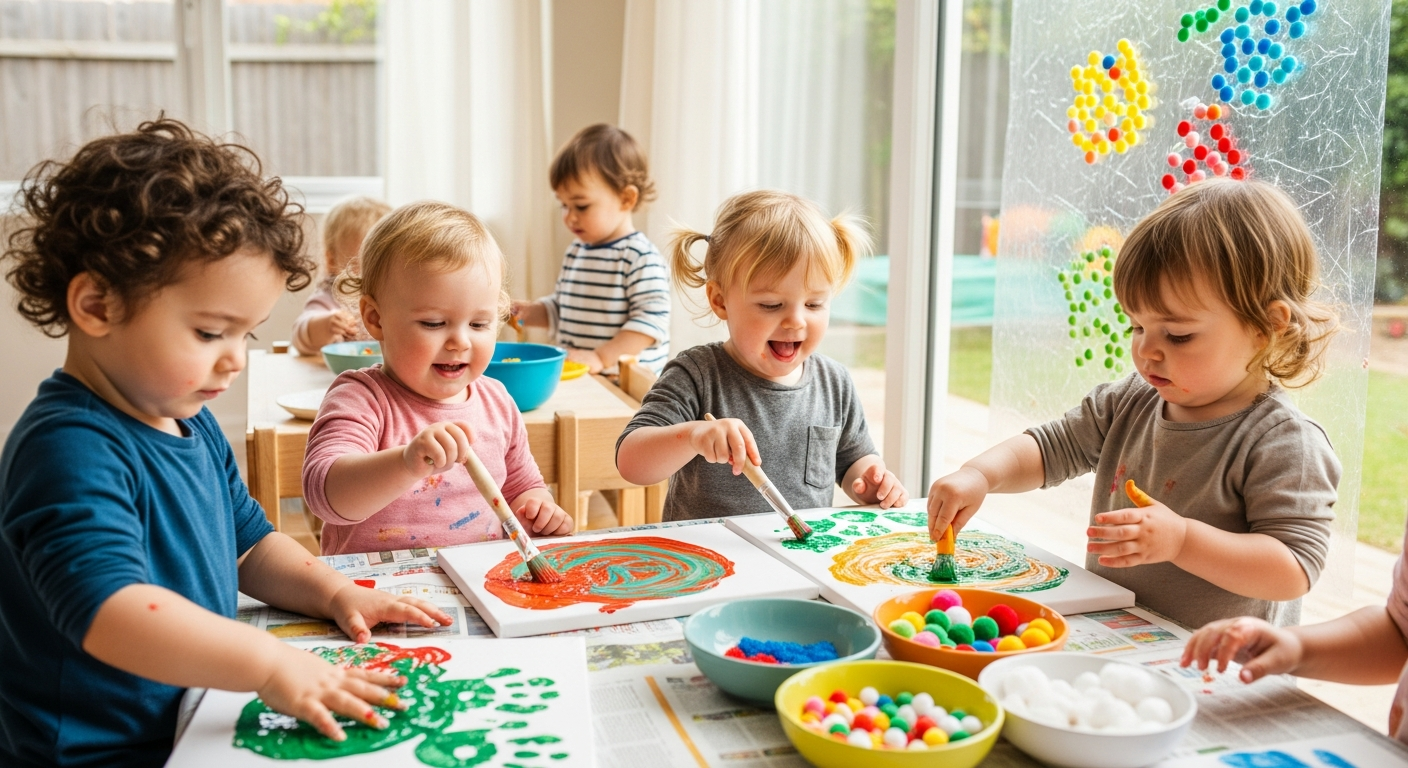
Table of Contents
- Introduction
- Why Art is Crucial for Toddler Development
- Getting Started: Low-Mess Toddler Art Activity Ideas
- Sensory Art Exploration for Tiny Hands
- Building Fine Motor Skills Through Creativity
- Movement and Large-Scale Art
- How Art Supports Language and Speech Development
- Using "Smart Screen Time" to Inspire Creativity
- Practical Tips for Stress-Free Art Sessions
- Why Choose a Yearly Plan for Your Child's Growth?
- Conclusion
- Frequently Asked Questions
Introduction
Have you ever watched a toddler discover a bottle of glue or a tray of finger paint for the first time? To an adult, it looks like an impending cleanup crisis, but to a child, it is a world of pure, unadulterated exploration. Did you know that when a child engages in creative play, they aren't just making a mess; they are actually building the neural pathways required for complex problem-solving and language development? Art is one of the most powerful ways for little ones to express what they cannot yet put into words.
In this post, we are going to dive deep into a variety of toddler art activity ideas that are designed to be engaging, educational, and, in many cases, surprisingly easy to clean up. We will cover everything from sensory-rich finger painting to fine motor skill-builders like bead stringing and contact paper collages. Our goal is to provide you with a toolkit of activities that foster a love for communication, build your child’s confidence, and create joyful family learning moments.

At Speech Blubs, we believe in empowering every child to "speak their minds and hearts." Our founders started this journey because they personally experienced speech challenges as children and wanted to create the joyful, effective tool they wish they’d had. By the end of this article, you will see how blending creative art with our scientifically-backed "smart screen time" can help your child develop the foundational skills they need to thrive.
Why Art is Crucial for Toddler Development
Before we jump into the activities, it is important to understand the "why" behind the paint and glitter. For a toddler, art is a full-body experience. It involves the eyes, the hands, and often the sense of smell and touch. This multisensory engagement is critical for several areas of development.
Fine Motor Skill Enhancement
When a child picks up a small bead, squeezes a glue bottle, or grips a chunky crayon, they are strengthening the tiny muscles in their hands and fingers. These are the same muscles they will eventually use to hold a pencil in school or fasten the buttons on their coat. Art activities provide a fun, low-pressure environment to practice these essential movements.
Cognitive and Sensory Exploration
Toddlers are natural scientists. They want to know what happens when blue paint meets yellow paint or how it feels to squish cold, wet clay between their toes. Art allows them to experiment with cause and effect, spatial awareness, and color theory. It encourages them to make choices and see the immediate results of those decisions.
Emotional Expression and Confidence
Sometimes, a toddler’s big emotions are too complex for their developing vocabulary. Art provides an outlet for those feelings. Completing a project—no matter how abstract it might look to us—gives a child a massive boost in confidence. It says, "I made this," and that sense of agency is vital for their self-esteem.
If you are curious about how your child is reaching their developmental milestones, you can take our quick 3-minute preliminary screener. It consists of 9 simple questions and provides an assessment and a next-steps plan to support your child's growth.

Getting Started: Low-Mess Toddler Art Activity Ideas
We know that "mess" is often the biggest barrier for parents when it comes to art. However, creativity doesn't always have to involve a gallon of paint on the carpet. Here are some of our favorite low-mess options.
1. The Magic of the Sticky Wall
This is a favorite for parents who want a high-engagement, zero-cleanup activity. All you need is a roll of contact paper (shelf liner). Tape a large piece to the wall, sticky side out, using painter’s tape.
- The Activity: Provide your toddler with a basket of lightweight items like feathers, tissue paper scraps, foam shapes, or even bits of yarn.
- The Benefit: They can stick things on and pull them off repeatedly. This builds hand-eye coordination and teaches them about the concept of "tackiness."
- The Connection: For a child who is working on labeling objects, you can name each item as they stick it to the wall. If they stick a blue feather, you can say, "Blue! Soft feather!" This reinforces vocabulary in a natural, playful setting.
2. Tidy Watercolors in Ice Cube Trays
Standard watercolor palettes can get muddy and messy quickly. To keep things contained, try the ice cube tray method.
- The Activity: Pour a small amount of liquid watercolor (or water with food coloring) into each compartment of an ice cube tray. Place the tray on a large cookie sheet alongside a piece of thick paper.
- The Benefit: The cookie sheet catches any drips, and the deep compartments of the ice cube tray prevent colors from mixing too much.
- The Connection: This setup is perfect for practicing "dip" and "wash." You can model the actions, much like we use video modeling in our app, where children learn by watching and imitating.
3. Contact Paper Nature Collages
This is an excellent way to combine a walk outside with an art project.
- The Activity: Give your child a small bag to collect leaves, flower petals, and flat sticks during a walk. When you get home, lay out a piece of contact paper (sticky side up) and let them arrange their "treasures" on it.
- The Benefit: It connects the physical world with artistic representation. It’s also completely glue-free!
- The Connection: Use this time to talk about what you found. "Look, a yellow leaf! Is it crunchy or smooth?" This type of descriptive language is a cornerstone of early communication.
Sensory Art Exploration for Tiny Hands
Sensory play is a pillar of early childhood education. When toddlers engage their senses, they are more likely to retain information and stay focused on the task at hand.
4. Homemade Edible-Safe Flour Paint
If you have a "mouther" who still tries to taste everything, this simple kitchen recipe is a lifesaver.
- The Recipe: Mix 1 cup of flour, 1 cup of water, and several drops of food coloring. Whisk until smooth.
- The Activity: This paint has a unique, thick texture. It isn't meant for fine detail, but it is perfect for finger painting on large sheets of paper or cardboard.
- The Benefit: It’s economical and safe. Plus, your child gets to help you "cook" the paint, which adds another layer of learning.
- The Connection: For a child whose 3-year-old "late talker" phase includes an interest in food, the "Yummy Time" section of our app can be a great companion here. You can practice the sounds of eating—"Mmm," "Yum," "Gulp"—while you play with your flour paint. To see how other parents have navigated these stages, check out our parent testimonials.
5. Playdough Masterpieces
Playdough is a classic for a reason. It is incredibly versatile and provides deep sensory input that can be very calming for some children.
- The Activity: Instead of just giving them the dough, provide "loose parts" like uncooked pasta, large buttons, or plastic animals.
- The Benefit: Pushing objects into the dough strengthens finger muscles. It also encourages "pretend play," which is a major milestone in cognitive development.
- The Connection: As your child builds a "house" or a "mountain" for their plastic lion, you can use the Speech Blubs app to look up the "Animal Kingdom" section. Practice the "Roar!" sound together as the lion explores the playdough world.
Building Fine Motor Skills Through Creativity
As toddlers grow, they move from using their whole hand to using their "pincer grasp" (thumb and forefinger). These activities are designed specifically to hone that precision.
6. Stringing Beads and Macaroni
This is one of the best ways to practice bilateral coordination—using both sides of the body together.
- The Activity: Use large wooden beads or dry penne pasta and a thick piece of yarn or a shoelace. Tie one bead to the end of the string to act as a stopper.
- The Benefit: It requires intense focus and steady hands.
- The Connection: You can practice counting as each bead goes on. "One, two, three!" or work on colors. "Now let's find a red one." This builds the foundation for math and categorization skills.
7. Button and Pom-Pom Gluing
Using glue is a major event in a toddler’s life. It requires controlled squeezing and careful placement.
- The Activity: Draw simple shapes on a piece of cardboard. Give your child a bottle of school glue and a bowl of colorful pom-poms or large buttons. Let them fill in the shapes.
- The Benefit: Squeezing the glue bottle is a fantastic hand-strengthening exercise.
- The Connection: This is a great time to talk about shapes. "Put a button on the circle!" If your child is struggling with following directions, keep it simple and celebrate every small success. Our goal is to foster a love for learning, not perfection.
Movement and Large-Scale Art
Toddlers learn through movement. Sometimes, sitting at a table is just too much to ask of their energetic little bodies. These activities get them up and moving.
8. Life-Sized Body Tracing
This activity is always a hit because it’s all about them!
- The Activity: Have your toddler lie down on a large roll of butcher paper. Trace around their body with a marker. Then, let them "fill themselves in" with crayons, stickers, or paint.
- The Benefit: It helps with body awareness and self-identity.
- The Connection: This is the perfect opportunity to learn the names of body parts. "Where are your eyes? Let's draw eyes!" You can use the "Face Mask" features in the app to see funny hats or glasses on a digital version of their face, then draw them on the paper version! Ready to try? Download Speech Blubs on the App Store or Google Play to begin.
9. Painting with Movement
If you have a safe outdoor space or a garage, try "action painting."
- The Activity: Tape a large piece of paper to the floor. Give your child a fly swatter dipped in paint, or let them roll toy cars through paint and across the paper.
- The Benefit: It uses large muscle groups and allows for a release of energy.
- The Connection: Use "action words" like "Smack!", "Roll!", "Fast!", and "Slow!" This helps children associate physical sensations with the words that describe them.
How Art Supports Language and Speech Development
You might be wondering, "What does painting have to do with talking?" The answer is: everything. Communication is not just about the sounds that come out of a child’s mouth; it’s about the desire to share an experience with another person.
When you sit on the floor and engage in art with your child, you are creating a shared focus. This is called "joint attention," and it is the absolute foundation of language. By narrating what they are doing—"You are using the red paint!" or "That’s a big circle!"—you are providing a rich linguistic environment.
Furthermore, art reduces the pressure to perform. Many children who struggle with speech feel frustrated when they can't make themselves understood. In an art session, there is no "wrong" answer. This builds their confidence and makes them more willing to take risks with their verbal communication.
At Speech Blubs, we use a similar principle through our "video modeling" methodology. In our app, children see other kids—their peers—making sounds and saying words. This triggers "mirror neurons" in the brain, making the child want to imitate what they see. Whether it's imitating a peer on a screen or imitating you as you draw a sun, the mechanism of learning is the same: joy, imitation, and connection.
Using "Smart Screen Time" to Inspire Creativity
We often hear from parents who are worried about screen time. We understand! Many digital experiences for kids are passive, like watching cartoons that don't require any interaction. That’s why we created a "smart screen time" alternative.
Speech Blubs is designed to be a tool for family connection, not a digital babysitter. We encourage "co-play," where you sit with your child and interact with the app together. You can use the app to get inspired for your next art project. For example, after playing with the "Giant Creatures" section, you might decide to build a dinosaur out of egg cartons.
Our app is a powerful supplement to a child’s overall development plan. While it isn't a replacement for professional therapy when needed, it is a joyful, evidence-based way to practice key foundational skills at home. To get started, you can create your account and begin your 7-day free trial today.
Practical Tips for Stress-Free Art Sessions
To make these toddler art activity ideas successful, keep these practical tips in mind:
- Focus on the Process, Not the Product: Your toddler isn't trying to paint a masterpiece; they are exploring the materials. If they end up with a brown smudge, that’s okay! The value is in the doing.
- Prepare the Environment: Use drop cloths, old towels, or do art in the bathtub. When you aren't worried about the carpet, you’ll be much more relaxed and encouraging.
- Keep it Short: A toddler's attention span is short. If they are done after five minutes, let them move on. You can always leave the supplies out (if safe) for them to return to later.
- Follow Their Lead: If you want to paint flowers but they want to paint "monsters," go with the monsters! Creative play is most effective when it is child-led.
Why Choose a Yearly Plan for Your Child's Growth?
We want to be transparent and helpful when it comes to supporting your child’s journey. While we offer different ways to access our tools, we always recommend our Yearly plan as the best path forward for families.
Our pricing is straightforward:
- Monthly Plan: $14.99 per month.
- Yearly Plan: $59.99 per year.
When you choose the Yearly plan, you aren't just saving 66% (which brings the cost down to only $4.99 per month); you are also getting access to exclusive features that support a holistic learning experience. The Yearly plan includes:
- A 7-day free trial so you can explore everything risk-free.
- The Reading Blubs app, which helps transition those early speech skills into literacy.
- Early access to new updates and a 24-hour support response time from our team.
Investing in a yearly plan allows you to make Speech Blubs a consistent part of your routine, providing the repetition and variety that toddlers need to truly master new skills.
Conclusion
Toddler art activity ideas are about so much more than just keeping little hands busy. They are an invitation for your child to explore, to feel confident, and to begin the lifelong journey of communicating their thoughts and feelings. Whether you are building a sticky wall, tracing their tiny body on butcher paper, or making edible paint in your kitchen, you are building the building blocks of their future.
Remember, every child develops at their own pace. Our mission at Speech Blubs is to provide the support and the joy necessary to make that development as smooth and happy as possible. We want to help your child find their voice, one "smart screen time" moment and one paint stroke at a time.
We invite you to join our community of over 5 million parents who are dedicated to their children's growth. Choose the Yearly plan today to get your 7-day free trial and gain access to the full suite of features, including Reading Blubs. Let's start this journey together and watch your child speak their mind and heart!
Frequently Asked Questions
What are the best art materials to start with for a 2-year-old?
For a 2-year-old, we recommend starting with chunky, easy-to-grip materials. Large crayons (often called "egg" crayons), washable tempera sticks, and playdough are excellent choices. Since toddlers at this age are still developing their fine motor skills, look for items that don't require too much pressure to leave a mark. Always ensure materials are non-toxic and labeled as age-appropriate.
How can I make art time less messy?
The best way to manage mess is to define the boundaries. Use a "mess mat" or a cheap shower curtain liner on the floor. Doing art in a high chair can also keep the mess contained. For the ultimate low-mess experience, try "water painting" where your child uses a paintbrush and plain water on dark-colored construction paper; the paper changes color when wet but leaves no stain!
My child won't sit still for art. What should I do?
This is completely normal! Toddlers are built to move. Instead of forcing them to sit at a table, try "vertical art." Tape paper to a wall or an easel so they can stand and move their whole body while they create. You can also try "action art," like rolling painted toy cars, which incorporates their need for movement into the creative process.
How does Speech Blubs help with my child's development?
Speech Blubs uses a scientifically-proven method called video modeling. By watching other children perform speech exercises and activities, your child is naturally motivated to imitate them. This builds foundational communication skills, boosts confidence, and turns screen time into an active, educational experience. It’s designed to be used alongside real-world activities like the art projects mentioned in this post.
About the author