
Fun and Easy Toddler Art Activities for Creative Growth
 By Speech Blubs Team•Mar 25, 2026•14 min.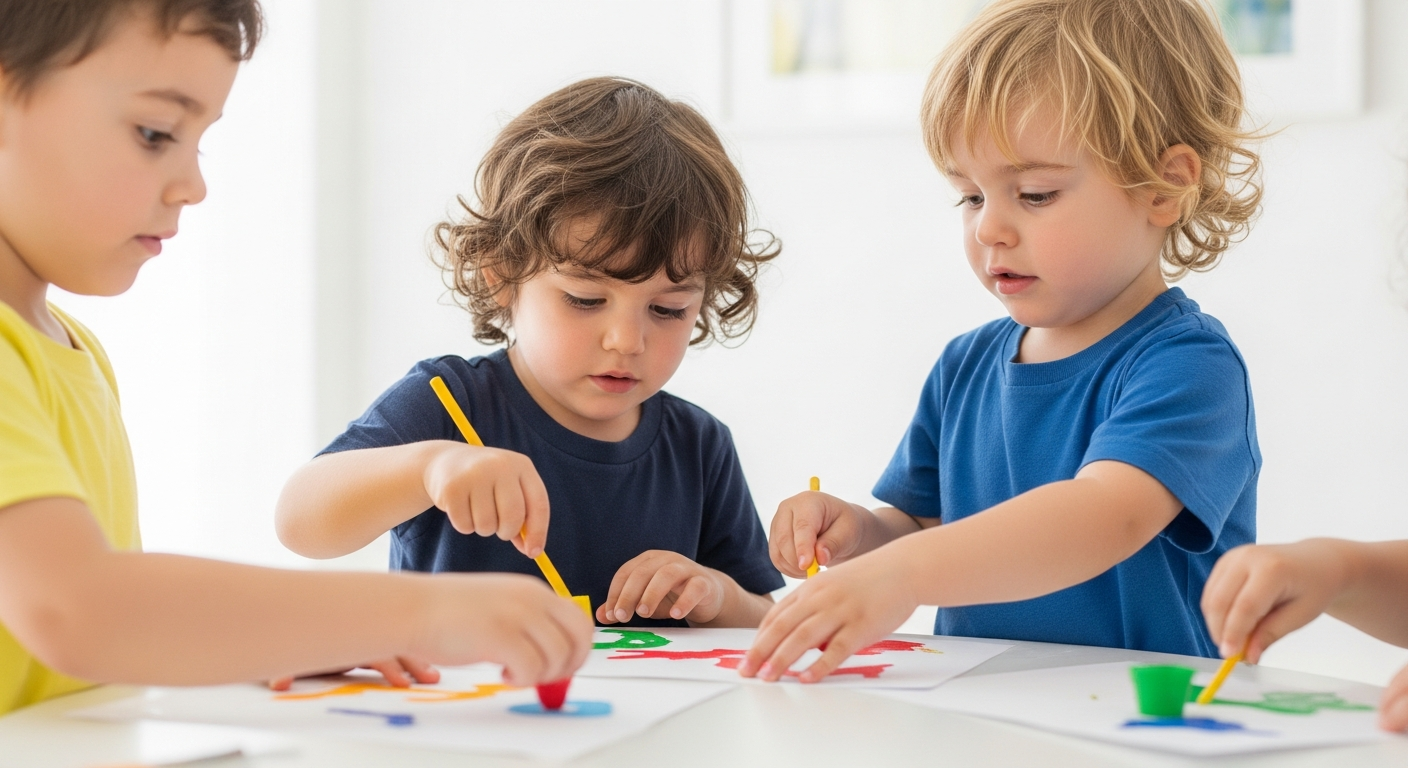
Table of Contents
- Introduction
- The Power of Process Art for Language Development
- Low-Mess Toddler Art Activities for Busy Days
- Sensory-Rich Art for Exploratory Learners
- Fine Motor Skills and Precision Activities
- Using Speech Blubs as "Smart Screen Time"
- Choosing the Right Plan for Your Family
- Creative Play with Household Items
- Creating a Joyful Learning Environment
- Practical Tips for Success
- FAQ
- Conclusion
Introduction
Have you ever watched your toddler stare in absolute wonder at a smear of bright blue paint on their own palm? To us, it might look like a messy cleanup waiting to happen, but to a two-year-old, it is a scientific discovery, a sensory explosion, and a brand-new way to communicate without saying a single word. At Speech Blubs, we believe that every squiggle, splash, and sticker is a step toward a child learning to "speak their minds and hearts."
Art isn't just about creating a refrigerator-worthy masterpiece; it is a vital developmental tool that bridges the gap between physical movement and cognitive expression. For the 1 in 4 children who may need extra support with their speech and language development, creative play offers a low-pressure environment to practice new sounds, follow multi-step directions, and build the confidence needed to interact with the world.

In this post, we will explore a variety of engaging toddler art activities that foster fine motor skills, sensory processing, and language foundation. We’ll also show you how these hands-on moments perfectly complement our "smart screen time" philosophy, helping you turn everyday play into a powerful learning experience. By the end of this article, you will have a toolkit of mess-friendly ideas and a deeper understanding of how creative expression fuels your child’s journey toward clear communication.
The Power of Process Art for Language Development
When we talk about toddler art activities, we often emphasize "process over product." This means we care much more about the squishing of the clay and the sweeping of the brush than we do about whether the final result actually looks like a house or a dog.
For a child working on their communication skills, the process is where the "language magic" happens. As they dip a brush into yellow paint, you have the perfect opportunity to model words like "dip," "wet," "yellow," and "bright." If they are struggling to squeeze a glue bottle, they are learning the physical persistence and hand strength that will eventually help them with fine motor tasks like holding a pencil or even forming certain speech sounds.
Our founders at Speech Blubs understand this journey intimately. Having grown up with speech challenges themselves, they created the tool they wished they had—one that blends scientific principles with the pure joy of play. This same spirit of joyful discovery is what makes art such an effective partner for speech therapy. When a child is engaged in a fun activity, their brain is more "open" to learning.
If you are curious about where your child stands in their developmental journey, we invite you to take our quick 3-minute preliminary screener. It involves just 9 simple questions and provides an assessment and next-steps plan to help you support your little one’s growth.
Low-Mess Toddler Art Activities for Busy Days
We know that "toddler" and "art" often equate to "giant mess" in a parent’s mind. However, creativity doesn’t always require a power wash of the kitchen afterward. Here are some fantastic low-mess options that keep the focus on fun.

1. The Sticky Wall Collage
This is a favorite for parents who want to avoid glue spills. Simply take a piece of clear contact paper and tape it to a wall or a window, sticky side facing out.
- The Activity: Give your toddler scraps of tissue paper, feathers, bits of ribbon, or even leaves collected from a walk. Let them press the items onto the sticky surface.
- Speech Connection: This is great for practicing "on" and "off." As they pull a feather back off the wall, say "Off!" When they press it back on, say "On!"
- Speech Blubs Integration: After they finish their nature-themed sticky wall, you might head over to the "Nature" or "Animal Kingdom" sections of the app. Watching peers imitate animal sounds through our video modeling methodology reinforces the vocabulary they just used during their art session.
2. Water "Painting"
If you want zero cleanup, this is the gold standard.
- The Activity: Give your child a small cup of water and a few different-sized paintbrushes. Let them "paint" on a piece of dark-colored construction paper or even outside on the sidewalk or a wooden fence. The water darkens the surface, creating a "temporary" masterpiece that disappears as it dries.
- Speech Connection: Use this time to talk about "disappearing" and "reappearing." Ask, "Where did the circle go?" This builds foundational cognitive skills related to object permanence and cause-and-effect.
3. Tempera Paint Sticks
If you haven't tried paint sticks yet, they are a game-changer. They have the vibrant color of tempera paint but the form factor of a large glue stick. They dry almost instantly, meaning no smearing on sleeves or carpets.
- The Activity: Roll out a large piece of butcher paper on the floor and let your toddler go wild.
- Scenario: For a parent whose 3-year-old "late talker" loves colors, using paint sticks is a high-motivation way to practice color names. You can hold two sticks and ask, "Do you want red or blue?" Waiting for them to point or attempt the sound helps reduce communication frustration.
Sensory-Rich Art for Exploratory Learners
Toddlers learn through their senses. The way something feels, smells, and even sounds contributes to their understanding of the world.
4. Foamy Finger Painting
Standard finger paint is great, but foamy paint adds a whole new dimension of tactile feedback.
- The Activity: Mix a small amount of washable finger paint with a bit of dish soap, water, and cornstarch in a blender. The result is a thick, bubbly foam that holds its shape.
- The Process: Place the foam on a tray and let your child squish it. They can use brushes or their hands.
- Why it works: Sensory play helps regulate the nervous system, making it easier for children to focus. This "calm alert" state is the perfect time to introduce new concepts. To see how other parents have used sensory play alongside our app to help their children thrive, check out our parent testimonials.
5. Bubble Wrap Stomp
Who doesn't love the sound of bubble wrap popping?
- The Activity: Tape a large piece of bubble wrap over a sheet of paper that has small dollops of paint on it. Let your toddler walk, jump, or stomp on the bubbles.
- The Result: They get the auditory satisfaction of the "pop" and the visual surprise of the paint spreading underneath.
- Speech Connection: This is a perfect gross motor activity to pair with "action words." Say "Jump!" "Pop!" and "Stomp!" as they move.
Fine Motor Skills and Precision Activities
Building the muscles in the hands and fingers is a precursor to many life skills, including the fine motor coordination required for certain aspects of speech production.
6. Stringing "Big" Beads
- The Activity: Use large, wooden beads or even dry penne pasta and a thick piece of yarn or a shoelace.
- The Challenge: Threading the string through the hole requires immense focus and hand-eye coordination.
- Speech Connection: This is a fantastic "turn-taking" activity. "Your turn to pull, my turn to hold." Social communication skills like turn-taking are foundational for conversation.
7. Tearing and Ripping Paper
Don't be afraid of "destruction"! Ripping paper is actually a complex motor skill.
- The Activity: Give your toddler various types of paper—tissue paper, old magazines, construction paper—and let them rip them into pieces. They can then glue these pieces onto a larger sheet to make a mosaic.
- The Benefit: It builds the "pincer grasp" (using the thumb and forefinger), which is essential for future writing and self-feeding.
Using Speech Blubs as "Smart Screen Time"
In today's world, it is unrealistic to avoid screens entirely, but not all screen time is created equal. At Speech Blubs, we provide a screen-free alternative to passive viewing, like cartoons, and offer a powerful tool for family connection instead. We call this "smart screen time."
Our app uses video modeling, a scientifically proven method where children watch other children perform an action or say a word. Because toddlers are naturally wired to imitate their peers (thanks to "mirror neurons" in the brain), this approach is much more effective than watching an adult or an animated character.
Imagine your child has just finished a "Body Tracing" art activity where you traced their outline on a giant piece of paper and colored in the "nose," "eyes," and "mouth." You can then transition to the "Face" section of the Speech Blubs app. Your child will see a peer sticking out their tongue or touching their nose. Because they just "built" a face on paper, the digital peer's movements feel relevant and exciting.
Ready to see the difference for yourself? You can download Speech Blubs on the Apple App Store or get it on the Google Play Store to begin your journey.
Choosing the Right Plan for Your Family
We are committed to providing an immediate, effective, and joyful solution for families. To help you get the most out of our platform, we offer two main subscription options. While both provide access to our core library of 1,500+ activities, they differ in value and features.
- Monthly Plan: For $14.99 per month, you get full access to the Speech Blubs app. This is a great "pay-as-you-go" option if you want to test things out for a short period.
- Yearly Plan (Best Value): Our yearly plan is $59.99 per year, which breaks down to just $4.99 per month. This is a 66% savings compared to the monthly rate.
Why choose the Yearly Plan? Beyond the significant cost savings, the Yearly plan is designed to be a comprehensive developmental ecosystem. It includes:
- A 7-Day Free Trial: Experience the full power of the app before committing.
- Reading Blubs App: Access to our companion app that focuses on early literacy and reading skills.
- Priority Support: 24-hour support response time to ensure your questions are always answered.
- Early Access: Be the first to try new updates and features as we roll them out.
For parents looking to create a long-term, joyful learning environment, the Yearly plan is the clear choice. You can create your account and begin your 7-day free trial today through our web portal.
Creative Play with Household Items
You don't need a trip to a specialty craft store to enjoy toddler art activities. Many of the best tools are already in your pantry or recycling bin.
8. Cardboard Box "Car" or "House"
Never underestimate the power of a large shipping box.
- The Activity: Give your child crayons or markers and let them sit inside the box to decorate the "walls."
- Speech Connection: This creates a defined "play space." Use words like "inside," "outside," "door," and "window." If they are pretending it's a car, practice "Beep beep!" and "Vroom!"
- Scenario: If your child is obsessed with the "Things That Go" section of Speech Blubs, building a cardboard car is the perfect real-world extension. They can watch the "car" video in the app, practice the sound, and then "drive" their cardboard creation around the living room.
9. Nature Paintbrushes
- The Activity: Go on a "nature walk" and collect evergreen sprigs, large leaves, or sturdy dried grass.
- The Process: Use a rubber band to attach these items to a stick or a clothespin. Dip them in paint and see the different textures they create.
- Language Tip: Use descriptive adjectives! Is the pine needle brush "pokey"? Is the leaf brush "smooth"? These words expand your child's descriptive vocabulary.
10. The Ice Cube Tray Palette
This is a great tip for organizing watercolor painting.
- The Activity: Instead of using a messy cup, put a small amount of liquid watercolor or food coloring into each well of an ice cube tray. Place the tray on a cookie sheet to catch any drips.
- The Benefit: It teaches the child to "dip" carefully and keeps the colors separated (for at least a few minutes!).
Creating a Joyful Learning Environment
At Speech Blubs, we don't just want children to speak; we want them to feel the joy of being heard. Art is a foundational piece of that puzzle. When a child creates something and shows it to you, they are initiating a "communicative act." They are saying, "Look at what I did! Connect with me!"
Our role as caregivers is to meet that enthusiasm with empathetic expertise. We don't need to correct their technique or tell them that a "sky shouldn't be green." Instead, we should mirror their excitement. "I see your green sky! It's so bright!" This validation builds the confidence a child needs to take risks with their language.
Our scientific methodology is rooted in this same principle of positive reinforcement. By watching other children succeed in the app, your child sees that communication is fun and achievable. It isn't a "chore" or a "lesson"—it's a game.
Practical Tips for Success
- Follow Their Lead: If they want to spend 20 minutes just squishing a sponge and not actually painting, let them! The sensory input they are getting is what their brain needs at that moment.
- Describe, Don't Question: Instead of asking "What is that?" (which can feel like a test to a toddler), try describing what you see. "You are moving the brush back and forth. You used a lot of red!"
- Manage Expectations: Your child won't always have a long attention span. Some days, an "art activity" might last five minutes, and that's okay. The goal is to create joyful family learning moments, not to finish a project.
- Co-Play is Key: Toddler art activities are most effective when an adult is present to provide the language "soundtrack." You are the bridge between the physical action and the word.
For more information on how we support global child development, visit the Speech Blubs homepage to explore our mission further.
FAQ
What are the best art supplies for a messy toddler?
For mess-prone toddlers, we recommend "low-mess" tools like tempera paint sticks, watercolor brushes that hold water in the handle, and clear contact paper for "glue-free" collages. Washable crayons and finger paints are also essentials. Always look for "non-toxic" and "washable" labels to ensure safety and easy cleanup.
How does art help a child with a speech delay?
Art helps by providing a low-pressure way to practice communication. It builds fine motor skills needed for speech, encourages following directions, and provides a "topic" for conversation. By labeling colors, actions, and textures, parents can model vocabulary in a way that feels like play rather than therapy.
At what age should I start art activities with my toddler?
You can start simple sensory art as early as 12–18 months. At this age, it’s mostly about exploring textures (like "painting" with yogurt or high-chair finger painting). By age 2, they can begin using chunky crayons and large brushes. Always supervise your child to ensure they don't put supplies in their mouths.
Can I use Speech Blubs alongside professional speech therapy?
Absolutely! We frame the app as a powerful supplement to a child’s overall development plan. Many speech-language pathologists (SLPs) recommend Speech Blubs as a way for parents to continue the "work" of therapy at home through engaging, smart screen time. It’s a great way to maintain momentum between sessions.
Conclusion
Toddler art activities are more than just a way to pass a rainy afternoon; they are a vital component of your child's cognitive and linguistic growth. From the fine motor precision of stringing beads to the sensory exploration of foamy paint, every activity provides a rich "language environment" where your child can flourish.
At Speech Blubs, we are honored to be a part of your parenting journey. Our mission is to empower children to speak their minds and hearts, blending the best of science with the pure magic of play. Whether you are using our app to practice new sounds through video modeling or sitting on the floor together covered in paint-stick squiggles, you are building the foundation for a lifetime of confident communication.
Don't wait to start fostering those joyful learning moments. Choose our Yearly plan today to take advantage of the 66% discount and receive your 7-day free trial, plus the bonus Reading Blubs app. It is the best way to ensure your child has access to the full suite of tools they need to thrive.
Start your 7-day free trial by signing up on our website or download Speech Blubs from the App Store today. Let's make learning to talk the most fun part of your child's day!
About the author