
Fun and Easy Toddler Halloween Handprint Crafts for Home
 By Speech Blubs Team•Feb 20, 2026•14 min.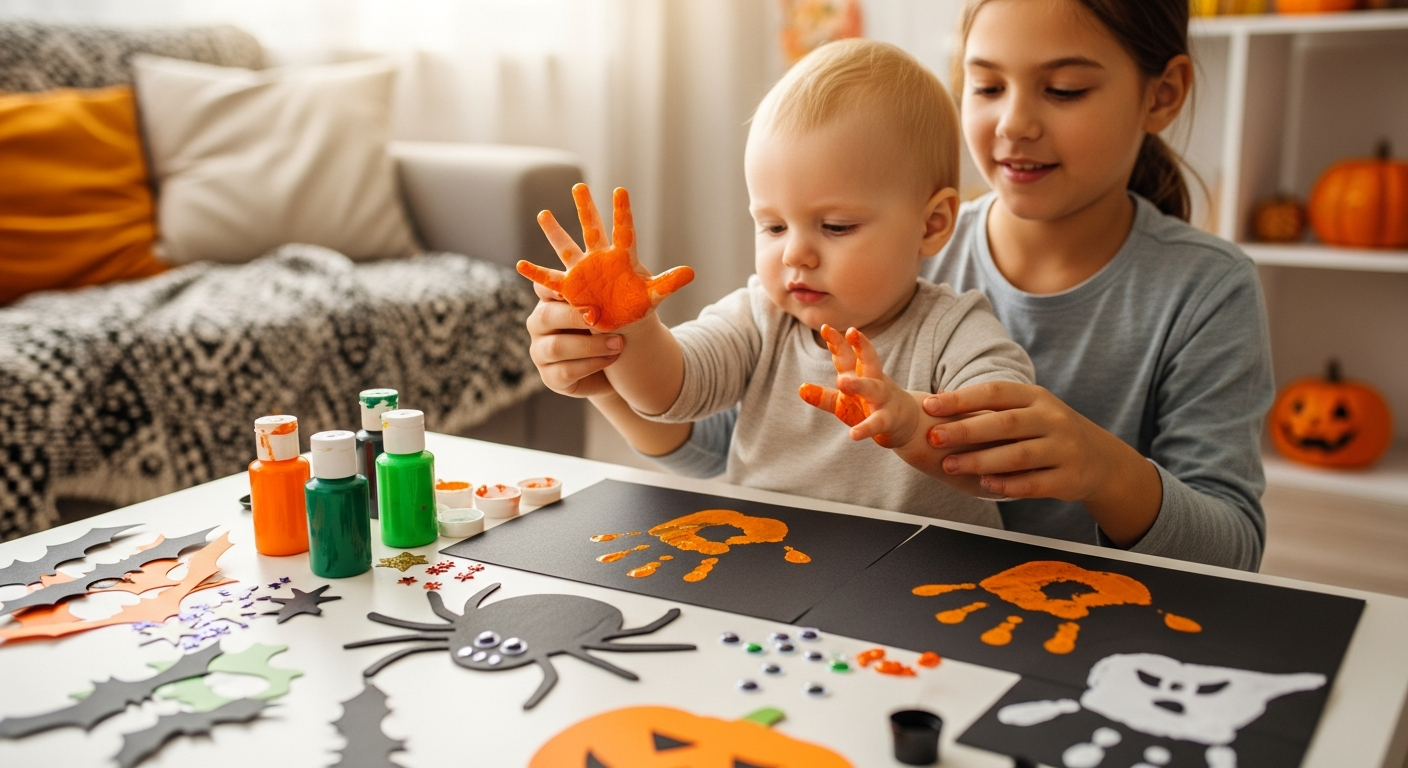
Table of Contents
- Introduction
- Why Handprint Crafts Are Developmental Powerhouses
- Setting Up for Success: Supplies and Preparation
- 10 Spooky Toddler Halloween Handprint Crafts
- Taking it Further: Air-Dry Clay Keepsakes
- The Role of Adult Co-Play
- Managing the "Toddler Factor"
- The Science of Our Methodology
- Transforming Screen Time into "Smart Time"
- Choosing the Right Plan for Your Family
- Real Stories from Parents
- Conclusion
- FAQs
Introduction
Do you ever look at those tiny, paint-smudged hands and wish you could freeze time? There is something incredibly special about the early years of parenthood, but let’s be honest: it can also be a season filled with questions. Is my child hitting their milestones? Are they communicating as much as they should be? At Speech Blubs, we understand these feelings deeply because our founders grew up with speech challenges themselves. They created the tool they wished they had—a way to empower children to speak their minds and hearts through joyful, scientific play.
In this article, we are going to explore the magic of toddler Halloween handprint crafts. We’ll show you how a simple afternoon of finger painting can become a powerful developmental tool. We will cover ten unique craft ideas, the supplies you need, and—most importantly—how to use these activities to boost your child’s communication skills. By the end, you’ll see how blending creative play with "smart screen time" can create a holistic environment where your little one can thrive.

Our main message is simple: you don’t need to be a professional artist or a therapist to support your child’s growth. With a bit of orange paint, some googly eyes, and a spirit of fun, you can build confidence and connection that lasts far beyond the spooky season.
Why Handprint Crafts Are Developmental Powerhouses
Before we dive into the "how-to," let’s talk about the "why." As experts in child development, we look at every activity through the lens of growth. Handprint crafts are more than just cute keepsakes to hang on the fridge; they are sensory-rich experiences that challenge a toddler's brain and body in the best ways possible.
Fine Motor Skill Development
Toddler Halloween handprint crafts require a surprising amount of physical coordination. When your child presses their palm onto paper, they are learning about pressure and spatial awareness. When they pick up a small googly eye or a piece of yarn for "witch hair," they are practicing the pincer grasp—the same skill they will eventually use to hold a pencil or button their coat.
Sensory Exploration
Many toddlers are hesitant about new textures. The cold, squishy feeling of tempera paint is a massive sensory input. For children who might be sensory-avoidant, participating in a low-pressure craft at home with a trusted caregiver can help them desensitize and become more comfortable with different tactile experiences.
Language and Vocabulary Building
This is where the magic happens. While you paint, you have a captive audience. You can use this time to narrate what you are doing—a technique we often recommend at Speech Blubs. You might say, "Look at the orange paint! It feels cold. Now we press... one, two, three!" This exposure to descriptive language helps build their receptive vocabulary.
If you’re concerned about your child’s current language progress, remember that you aren't alone. In fact, 1 in 4 children need some form of speech support. You can take our quick 3-minute preliminary screener to get a simple assessment and a free 7-day trial to see where your child stands and how we can help.

Setting Up for Success: Supplies and Preparation
To keep the experience joyful and reduce frustration (for both of you!), preparation is key. You don’t need an expensive art studio, but a few specific supplies will make the process much smoother.
- Non-Toxic Tempera Paint: We prefer tempera over standard washable paint because the colors are more vibrant, which is perfect for capturing those spooky Halloween vibes.
- White Cardstock: Standard printer paper is too thin and will curl when it gets wet. Cardstock provides a sturdy base for heavy paint and little hands.
- Black Markers or Sharpies: These are essential for adding details like mouths, stitches, or outlines once the paint is dry.
- Googly Eyes and Glue: Everything is cuter with googly eyes!
- Wet Wipes and a Plastic Tablecloth: Trust us on this one. Having a "clean-up station" ready to go prevents the orange paint from migrating to your white sofa.
10 Spooky Toddler Halloween Handprint Crafts
Now, let’s get into the fun part! Here are ten ways to turn those tiny hands into Halloween masterpieces.
1. The Classic Ghost Handprint
This is perhaps the easiest craft to start with.
- How to do it: Paint your child’s entire hand with white paint. Press it upside down (fingers pointing toward the bottom of the page) onto black or dark blue cardstock.
- The Speech Connection: As you make the ghost, practice the "Oooo" sound together. In our app, we use peer-to-peer video modeling to show kids how to form these vowel sounds. You can find similar "spooky" sounds in our "Early Sounds" section.
2. The Friendly Pumpkin Handprint
- How to do it: Paint the palm and fingers orange, but paint the very tip of the middle finger (or the thumb) green for the stem. Press it onto the paper. Once it’s dry, use a black marker to draw a Jack-o'-lantern face.
- The Speech Connection: Talk about emotions. Is the pumpkin happy? Is he scared? This is a great way to introduce "feeling" words.
3. Frankenstein’s Monster
- How to do it: Paint the palm green and the fingers black. When you press it down, the black fingers become Frankenstein's hair. Add two "bolts" on the side of the palm with grey paint or a marker.
- The Speech Connection: For a child who loves monsters, this is a highly motivating activity. If your 3-year-old is a "late talker," use the monster's "grrr" or "stomp" sounds to encourage vocalization.
4. The Wiggly Spider
- How to do it: This one uses two handprints. Paint one hand black and press it down (minus the thumb). Then, paint the other hand black and press it down so the palms overlap, with the fingers pointing outward on both sides. These are the spider’s eight legs!
- The Speech Connection: This is the perfect time to sing "The Itsy Bitsy Spider." Repetition in song is a cornerstone of language development.
5. The Wicked Witch
- How to do it: Paint the palm green and the fingers a bright color like orange or purple for the hair. After it dries, draw a triangular black hat on top of the palm.
- The Speech Connection: Ask your child, "What does the witch say?" Practice a "Cackle" or a high-pitched "He-he-he!" These variations in pitch are great for oral motor exercise.
6. The Bright Candy Corn
- How to do it: Paint the heel of the hand yellow, the middle of the palm orange, and the fingers white. Press it down to create a striped, candy-like shape.
- The Speech Connection: Focus on colors. "Yellow, orange, white." Sequential naming is a foundational skill for longer sentences.
7. The Night Bat
- How to do it: Similar to the spider, use two black handprints side-by-side with the palms touching. The fingers become the wings. Draw a small head in the middle.
- The Speech Connection: Talk about "night" and "day." Use the "B" sound for "Bat." For more practice with animal sounds, download Speech Blubs on the App Store and explore our "Animal Kingdom" section.
8. The Silly Monster
- How to do it: Let your child pick their favorite color (purple, red, or bright blue). Make a handprint and then add as many googly eyes as they want!
- The Speech Connection: Use this to practice counting. "One eye, two eyes, three eyes!"
9. The Scary Zombie
- How to do it: Use a pale green or grey for the handprint. Once dry, add "stitches" with a black marker and maybe a few red paint drops for a spooky effect.
- The Speech Connection: Practice the "Z" sound. It’s a vibrating sound that children often find fascinating to feel in their throats.
10. The Vampire (Dracula)
- How to do it: Paint the fingers black (for the cape/hair) and the palm a pale beige. Add a red "bow tie" at the bottom of the palm.
- The Speech Connection: Talk about "long" and "short" as you look at the fingers.
Taking it Further: Air-Dry Clay Keepsakes
If you want something that lasts longer than paper, you can use air-dry clay. Roll out a hunk of clay to about half an inch thick and have your toddler press their hand into it. Once it dries (usually 24-48 hours), you can paint it just like the paper versions. This creates a 3D ornament that you can bring out every Halloween.
These tactile activities are powerful supplements to professional therapy or digital learning. They ground the "smart screen time" experiences in the physical world. You can create your account and begin your 7-day free trial today to find more activities that pair perfectly with these physical crafts.
The Role of Adult Co-Play
We always emphasize that Speech Blubs is a tool for family connection, not a "babysitter." The same applies to crafting. The real value of toddler Halloween handprint crafts isn't the final product—it’s the twenty minutes you spend on the floor with your child, talking, laughing, and exploring.
When you use our app, we encourage you to sit with your child. Watch the other children on the screen together. This "video modeling" works because children are naturally inclined to imitate their peers. When they see a child on the screen making a "Moo" sound, and then they see you making a "Moo" sound, it reinforces that communication is a joyful, social act.
Managing the "Toddler Factor"
We know that crafting with a two-year-old can sometimes feel more like a wrestling match than an art session. Here are some realistic tips from our experts:
- Keep it short: A toddler’s attention span is often only 5 to 10 minutes. If they only want to do one handprint, that’s okay!
- Follow their lead: If they want a blue pumpkin, let them have a blue pumpkin. Building confidence and a love for creation is more important than color accuracy.
- Embrace the mess: Messy play is vital for development. If you’re prepared for the cleanup, the mess becomes much less stressful.
The Science of Our Methodology
At Speech Blubs, we don't just create games; we create "smart screen time" based on scientific principles. Our use of video modeling is backed by the concept of mirror neurons. When a child observes another child performing an action (like saying a word), the same neurons in their brain fire as if they were performing the action themselves.
This is why our app is a powerful supplement to physical activities like handprint crafts. While the craft builds fine motor skills and tactile awareness, the app focuses on the oral motor and linguistic side of things. Together, they create a comprehensive developmental environment. You can read more about our research and why our method is top-rated on our dedicated science page.
Transforming Screen Time into "Smart Time"
We often hear parents express guilt about screen time. We want to change that narrative. There is a massive difference between passive viewing—like letting a child watch endless cartoons—and active, "smart screen time."
Speech Blubs is designed to be an interactive experience. We want your child to be loud! We want them to mimic the kids on the screen, to laugh, and to engage. When you pair this with a physical activity like Halloween crafting, you are hitting all the major developmental markers: cognitive, linguistic, sensory, and motor.
If you’re ready to see how this approach can help your child, get Speech Blubs on Google Play and start your journey today.
Choosing the Right Plan for Your Family
We want to be transparent about our pricing so you can make the best choice for your budget. We offer two main paths:
- The Monthly Plan: At $14.99 per month, this is a great way to test the waters.
- The Yearly Plan: This is our most popular option and the best value by far. At $59.99 per year, it breaks down to just $4.99 per month.
When you choose the Yearly Plan, you don’t just save 66%; you also get:
- A 7-day free trial to ensure it’s the right fit.
- The Reading Blubs app included at no extra cost.
- Early access to new updates.
- 24-hour support response time.
The Monthly plan does not include the free trial or the Reading Blubs app, so we highly recommend the Yearly plan to get the full suite of tools for your child’s development.
Real Stories from Parents
We are so proud of the community we’ve built. Parents around the world have shared how Speech Blubs helped their children find their voices. Whether it’s a child who finally said "Mama" or a toddler who stopped being frustrated because they could finally point to what they wanted, these stories are our "why." You can read more testimonials from parents who have been exactly where you are.
One parent, Sarah, shared that her "late talker" son loved the "Animal Kingdom" section so much that he started imitating the "Roar" of the lion. She paired this with a handprint lion craft at home, and the combination of the visual modeling and the physical paint play was the breakthrough they needed. This is the kind of joyful learning we strive for every day.
Conclusion
Toddler Halloween handprint crafts are more than just a way to fill an October afternoon. They are a bridge to communication, a workout for tiny muscles, and a treasury of memories. By narrating your actions, encouraging imitation, and celebrating every "scary" ghost and "silly" monster your child creates, you are providing the foundational support they need to "speak their minds and hearts."
We invite you to join our mission. Let’s move away from passive screens and toward a world where technology and physical play work hand-in-hand to empower the next generation.
Ready to get started? Download Speech Blubs on the App Store or Google Play to begin. Remember to choose the Yearly plan to unlock your 7-day free trial, the Reading Blubs app, and the best long-term value for your family. Happy crafting, and Happy Halloween!
FAQs
1. What is the best age to start toddler Halloween handprint crafts?
You can start as early as 12 months! While younger toddlers will need more help and may only enjoy the sensory aspect of the paint, children aged 2 to 4 will get the most out of the creative and language-building aspects of the activity.
2. My child hates getting their hands dirty. Can we still do these crafts?
Absolutely! If your child is sensory-sensitive, try using a "brush" instead of dipping their hand in paint, or let them wear thin latex-free gloves. You can also do "handprint" shapes by tracing their hand with a marker and letting them color it in.
3. How do these crafts actually help with speech?
Crafting creates a "joint attention" moment where you and your child are focused on the same thing. This is the perfect environment for language learning. By naming colors, actions (press, lift, wash), and characters (ghost, witch), you are building their vocabulary in a meaningful context.
4. Why should I use Speech Blubs alongside these activities?
Speech Blubs provides the "expert" modeling that complements your "at-home" play. While you provide the physical experience, our app uses peer-to-peer video modeling to show your child the mouth movements and sounds associated with these Halloween themes, making the learning process faster and more fun.
About the author