
Fun and Easy Toddler Polar Bear Craft Ideas for Winter
 By Speech Blubs Team•Feb 19, 2026•14 min.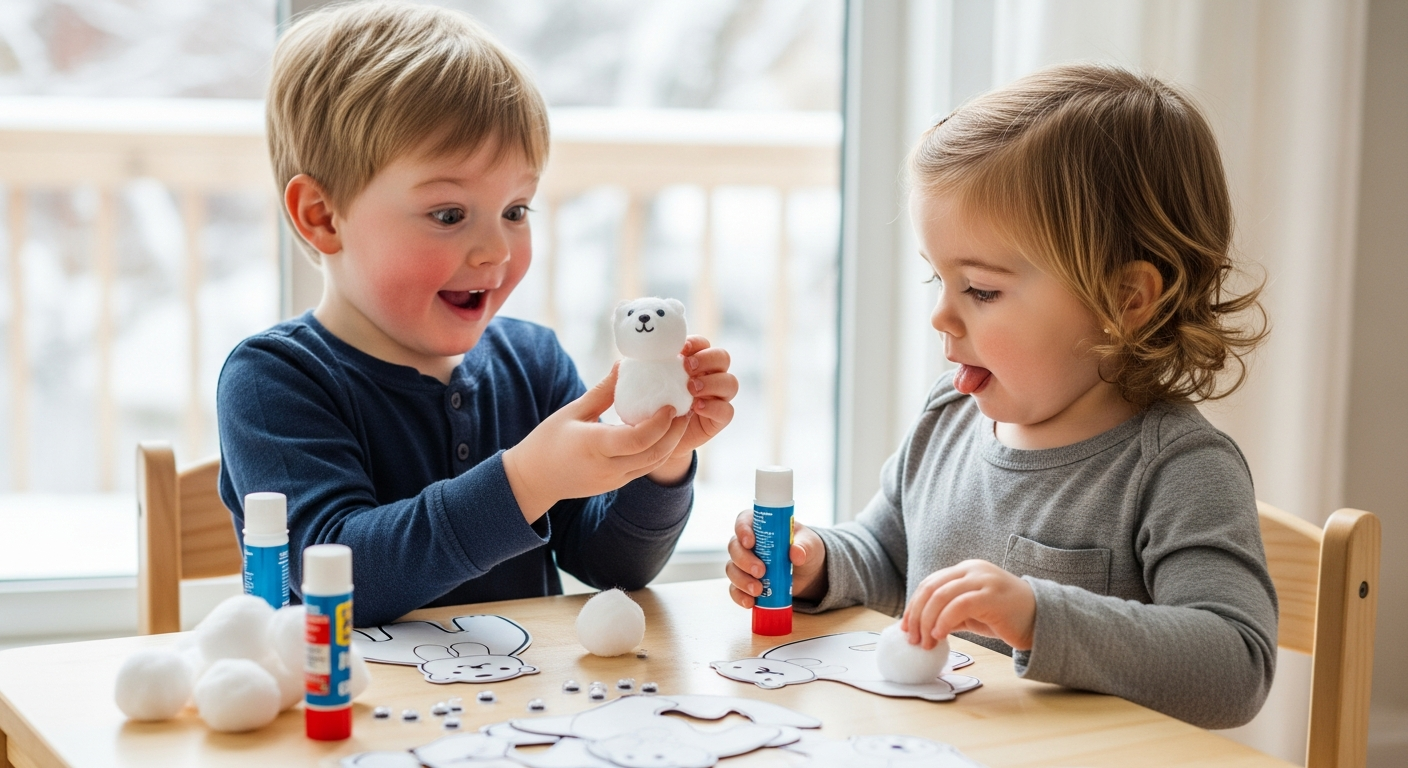
Table of Contents
- Introduction
- Why Crafting is a Secret Weapon for Speech Development
- The Classic Cotton Ball Polar Bear
- The Polar Bear Handprint Keepsake
- Paper Plate Polar Bear Masks
- Fork-Painted "Fluffy" Polar Bear
- Edible Marshmallow Polar Bears
- Integrating Speech Blubs into Your Crafting Routine
- Transparent Pricing: Investing in Your Child’s Future
- Setting Realistic Expectations
- Creating a Sensory Arctic Bin
- The Science of Play at Speech Blubs
- Tips for a Stress-Free Crafting Session
- Conclusion
- FAQs
Introduction
Did you know that approximately 1 in 4 children will experience some form of speech or language delay during their early developmental years? As parents, we are always looking for ways to bridge the gap between "screen time" and "real-world" learning, especially when the weather turns chilly and we are stuck indoors. Winter provides a magical backdrop for exploration, and few creatures capture a child’s imagination quite like the majestic polar bear.
The purpose of this guide is to provide you with a treasure trove of toddler polar bear craft ideas that do more than just decorate your refrigerator. At Speech Blubs, our mission is to empower children to "speak their minds and hearts," and we believe that purposeful play is the most effective way to achieve this. Whether your little one is just beginning to babble or is starting to form complex sentences, these activities are designed to foster a love for communication, build confidence, and create joyful family learning moments.

In this post, we will explore various hands-on projects—from cotton ball textures to handprint keepsakes—while showing you how to integrate these activities with "smart screen time" to boost your child's developmental milestones. By the end of this article, you’ll have a full week’s worth of arctic adventures ready to go, along with a deeper understanding of how creative play supports speech development.
Why Crafting is a Secret Weapon for Speech Development
Before we dive into the glue and glitter, let’s talk about why we, as experts in child development, advocate so strongly for crafting. For a toddler, a craft isn't just about the final product; it’s a sensory-rich environment where language naturally blooms. When you sit down to create a toddler polar bear craft, you are creating a "communication temptation."
Building Vocabulary Through Sensory Input
Think about the words associated with a polar bear: cold, white, fluffy, soft, big, ice, snow. As your child touches a cotton ball or feels the coldness of blue paint, their brain is making connections between a physical sensation and a linguistic label. This is the foundation of vocabulary building.
Fine Motor Skills and the Brain
There is a fascinating neurological link between the fine motor skills used in crafting—like pinching a cotton ball or gripping a crayon—and the areas of the brain responsible for speech. By strengthening those tiny hand muscles, you are also supporting the neural pathways that will eventually help your child control the complex muscles of the mouth and tongue.
Social Interaction and Imitation
At the heart of the Speech Blubs methodology is "video modeling," where children learn by watching and imitating their peers. Crafting follows a similar logic. When you demonstrate how to stick a nose on a paper bear, and your child imitates you, they are practicing the very same "mirroring" skills that are essential for learning how to form sounds and words. To see this science in action, you can explore our research page, which explains how mirror neurons play a critical role in childhood development.

The Classic Cotton Ball Polar Bear
This is perhaps the most iconic toddler polar bear craft because it is incredibly accessible and provides an intense tactile experience.
Materials Needed:
- White cardstock or a paper plate
- Cotton balls (lots of them!)
- Non-toxic school glue
- Black construction paper (for the eyes and nose)
- A small bowl
Step-by-Step Instructions:
- Draw the Outline: On your white paper, draw a large, simple silhouette of a polar bear. Don't worry about being an artist; a big "cloud" shape with four legs and two ears works perfectly!
- The "Glue Squish": Let your toddler help you squeeze the glue onto the bear’s body. Use this as an opportunity to practice "action words." Say, "Squeeze, squeeze, squeeze!" or "Sticky glue!"
- The Fluffing: Show your child how to pull the cotton balls apart to make them "extra fluffy." This is great for fine motor development.
- The Application: Have your child press the cotton onto the glue. As they work, narrate the process: "Soft bear," "White fur," "Pat, pat, pat."
- The Face: Finish by gluing on two black circles for eyes and a larger oval for the nose.
Speech Tip: For a parent whose 3-year-old "late talker" loves animals, the "Animal Kingdom" section of our app offers a fun, motivating way to practice "grrr" sounds or the "B" sound in "Bear." You can download Speech Blubs on the App Store to find the polar bear character and let your child see a real peer making those same animal sounds!
The Polar Bear Handprint Keepsake
Handprint crafts are a favorite among parents because they capture a moment in time. They are also excellent for teaching body awareness.
Materials Needed:
- Blue construction paper (the "arctic sky")
- White washable tempera paint
- A paintbrush
- Markers
Step-by-Step Instructions:
- Paint the Hand: Paint your child’s palm and four fingers (excluding the thumb) with white paint.
- The Print: Help them press their hand firmly onto the blue paper. The fingers will be the bear’s legs, and the palm will be the body.
- The Head: Use a paintbrush or your child’s thumb to add a round head on the side of the palm (opposite the fingers).
- Setting the Scene: Once dry, use markers to add eyes, a nose, and maybe some "snow" (white dots) in the background.
Pro-Parent Tip: While waiting for the paint to dry, it's a great time to engage in some "smart screen time." Instead of passive viewing, use a tool designed by experts. Our founders, who all grew up with speech problems, created the tool they wished they had. You can start your 7-day free trial today and explore the "Early Logopedics" section to keep the learning momentum going.
Paper Plate Polar Bear Masks
Masks are incredible for encouraging "pretend play," which is a milestone usually reached around age two. Pretend play is essentially a child's first foray into storytelling and complex communication.
Materials Needed:
- A paper plate
- A large craft stick (Popsicle stick)
- Cotton balls or white paint
- Black paper or a marker
- Sturdy tape or glue
Step-by-Step Instructions:
- Cut the Eyes: Cut two circles out of the paper plate so your child can see through them.
- Decorate: Let your toddler paint the plate white or glue cotton balls all over it.
- Add Ears: Cut two semi-circles from another plate or white paper and attach them to the top.
- The Handle: Tape the craft stick to the bottom of the plate. This allows your child to hold the mask up to their face without needing a restrictive elastic band.
- Play!: Hold the mask up and say, "I am a bear! Roar!" Encourage your child to do the same.
This activity is a perfect companion to our video modeling technique. In the Speech Blubs app, children watch other kids perform actions and make sounds. When your child puts on a mask, they are literally "stepping into the shoes" (or fur!) of the character, making them much more likely to vocalize. If you're curious about how this helps, check out our testimonials to see how other parents have used play to spark breakthroughs.
Fork-Painted "Fluffy" Polar Bear
If you want to avoid the mess of cotton balls but still want that "textured" look, fork painting is a fantastic alternative. It’s also a great way to repurpose kitchen items!
Materials Needed:
- A plastic fork
- White paint
- Black construction paper
- A pre-drawn bear outline
Step-by-Step Instructions:
- Dip the Fork: Place a glob of white paint on a tray. Show your child how to dip the back of the fork into the paint.
- Make the Fur: Instead of "painting" with a brush, have the child "stamp" or "drag" the fork from the center of the bear outline outward. This creates lines that look exactly like thick, arctic fur.
- Sensory Talk: Discuss the texture. "Is the fork pokey?" "The paint is cold!"
This specific movement—moving from the center outward—helps with hand-eye coordination. If you find your child struggling with these types of tasks or if you're just curious about their overall development, we recommend taking our quick 3-minute preliminary screener. It involves just 9 simple questions and provides you with a personalized assessment and a next-steps plan.
Edible Marshmallow Polar Bears
Sometimes, the best way to a toddler's heart (and their vocabulary) is through their stomach! This edible toddler polar bear craft is perfect for a snowy afternoon.
Materials Needed:
- Large and small marshmallows
- A small amount of frosting (to act as "glue")
- Mini chocolate chips or blueberries (for eyes)
Step-by-Step Instructions:
- The Body: Use one large marshmallow as the body.
- The Head: Use a bit of frosting to stick a second marshmallow (can be slightly flattened) on top as the head.
- The Extremities: Use mini marshmallows for the ears and paws.
- The Features: Add mini chocolate chips for the eyes and nose.
Oral Motor Benefit: Eating and speaking use many of the same muscles. Chewing different textures, licking frosting, and articulating sounds like "Mmmm" for "marshmallow" are all subtle ways to work on oral motor strength. At Speech Blubs, we believe in a holistic approach, blending these joyful moments with scientific principles.
Integrating Speech Blubs into Your Crafting Routine
We know that 1 in 4 children need extra support, and our goal is to provide an immediate, effective, and joyful solution. Our app is not a replacement for the quality time you spend crafting; rather, it's a powerful supplement.
What is Video Modeling?
Our unique approach uses "video modeling." When your child sees a peer on a screen—not a cartoon, but a real child—their mirror neurons fire. They think, "If that kid can say 'Polar Bear,' I can too!" It turns screen time into an active, imitative experience rather than a passive one.
Making the Most of Your Session
After finishing your toddler polar bear craft, open the app and find the Arctic-themed exercises.
- Mimic the Peer: Watch the child in the app make a bear sound.
- Use the Mirror: Use the in-app camera feature so your child can see themselves "wearing" the digital polar bear filters. This reinforces the "pretend play" we started with the paper plate masks!
You can find all these features and more by downloading the app on the Google Play Store.
Transparent Pricing: Investing in Your Child’s Future
We believe in being transparent with our community to build trust. We want every child to have the chance to "speak their minds and hearts," so we offer flexible plans to fit your family's needs.
Monthly Plan
- Cost: $14.99 per month.
- Includes access to our library of 1,500+ activities.
- Note: Does not include the Reading Blubs app or a free trial.
Yearly Plan (The Best Value)
- Cost: $59.99 per year (breaks down to just $4.99 per month).
- Save 66% compared to the monthly plan.
- Exclusive Features:
- 7-Day Free Trial: Try everything before you commit.
- Reading Blubs App: A companion app to help with early literacy.
- Early Access: Be the first to try new updates.
- Priority Support: 24-hour response time from our team.
We highly recommend the Yearly Plan to ensure your child has the consistent, long-term support needed to foster real progress.
Setting Realistic Expectations
As a child development expert, I want to remind you that every child’s journey is unique. While a toddler polar bear craft and Speech Blubs are powerful tools, they are part of a larger puzzle. You might not see your child giving public speeches in a month, and that’s okay!
Focus on the small wins:
- A new sound imitation.
- Increased eye contact during a craft.
- A decrease in frustration when they try to communicate a need.
- A shared laugh during a "smart screen time" session.
These activities are designed to build foundational skills and confidence. If you have concerns about your child's progress, these tools are excellent supplements to professional speech therapy.
Creating a Sensory Arctic Bin
To take your toddler polar bear craft experience to the next level, consider creating a sensory bin. Sensory bins are a staple in speech therapy because they encourage "self-talk" and "parallel talk."
How to Build It:
- The Base: Use white rice, cotton balls, or even shaving cream (for a "snowy" feel).
- The Characters: Add small plastic polar bears, penguins, and "icebergs" (made from blue blocks or frozen sponges).
- Tools: Give your child spoons, cups, and tongs.
Language Strategy: As your child plays, use "Parallel Talk." This means you describe what they are doing. "You are scooping the bear! The bear is hiding in the snow. Oh no, the bear is cold!" This provides a constant stream of language input without the pressure of asking the child questions.
The Science of Play at Speech Blubs
At Speech Blubs, we don't just make games; we build developmental bridges. Our methodology is rooted in the fact that children learn best when they are having fun and feeling connected to their caregivers.
Our company was born from the personal experiences of our founders. They knew the frustration of struggling to communicate, and they poured that empathy into every aspect of the app. By combining scientific principles with play, we provide a screen-free alternative to passive viewing. When your child uses Speech Blubs, they aren't just watching a screen; they are engaging in a dialogue with a peer.
Tips for a Stress-Free Crafting Session
We know that crafting with a toddler can sometimes feel like controlled chaos. Here are a few tips to keep the "joyful" in your family learning moments:
- Embrace the Mess: Use a plastic tablecloth or an old sheet. If you're stressed about the glue, your child will pick up on that energy.
- Keep it Short: A toddler's attention span is typically 2-3 minutes per year of age. If they want to stop after five minutes, that’s fine!
- Follow Their Lead: If your "polar bear" ends up looking like a purple blob, celebrate it! The goal is communication and creativity, not anatomical accuracy.
- Narrate Everything: Use simple sentences. "Glue on." "Eye there." "Big bear."
Conclusion
Creating a toddler polar bear craft is a wonderful way to embrace the winter season while proactively supporting your child's speech and language development. From the tactile joy of cotton balls to the social-emotional benefits of mask-making, these activities provide a rich foundation for communication.
Remember, you are your child's best teacher, and these moments of connection are where the real "magic" happens. By pairing these physical activities with the "smart screen time" provided by Speech Blubs, you are giving your child a comprehensive, science-backed head start.
Are you ready to see your child "speak their mind and heart"? Download Speech Blubs today and start your 7-day free trial. We highly recommend the Yearly Plan for the best value, including the Reading Blubs app and priority support. Let’s make this winter a season of breakthroughs and joyful learning!
FAQs
1. Is my toddler too young for a polar bear craft?
Not at all! For younger toddlers (around 18 months), focus on the sensory aspects. Let them touch the cotton balls or "squish" the paint through a Ziploc bag. As they grow, they can take on more complex tasks like sticking and painting. Always ensure adult supervision with small parts like googly eyes or marshmallows.
2. How does the Speech Blubs app help with these crafts?
The app provides the "audio-visual" component of learning. While the craft is tactile, the app uses peer-led video modeling to show your child how to say the words and make the sounds associated with the animals they are creating. It’s a multi-sensory approach to learning.
3. My child won't sit still for a craft. What should I do?
That is perfectly normal! Break the craft into tiny steps. Do the "glue" part before lunch and the "cotton ball" part after a nap. You can also use the Speech Blubs app as a "hook" to get them interested in the animal first. If they see a fun polar bear on the screen, they might be more motivated to make one!
4. What if my child isn't making sounds yet?
Don't worry. Focus on "receptive language" (understanding) and "pre-linguistic skills" like pointing, eye contact, and imitation. Taking our preliminary screener can give you a better idea of where your child is on the developmental spectrum and provide you with a plan to encourage those first sounds.
About the author