
Fun and Educational Ocean Activities for Toddlers
 By Speech Blubs Team•Feb 23, 2026•14 min.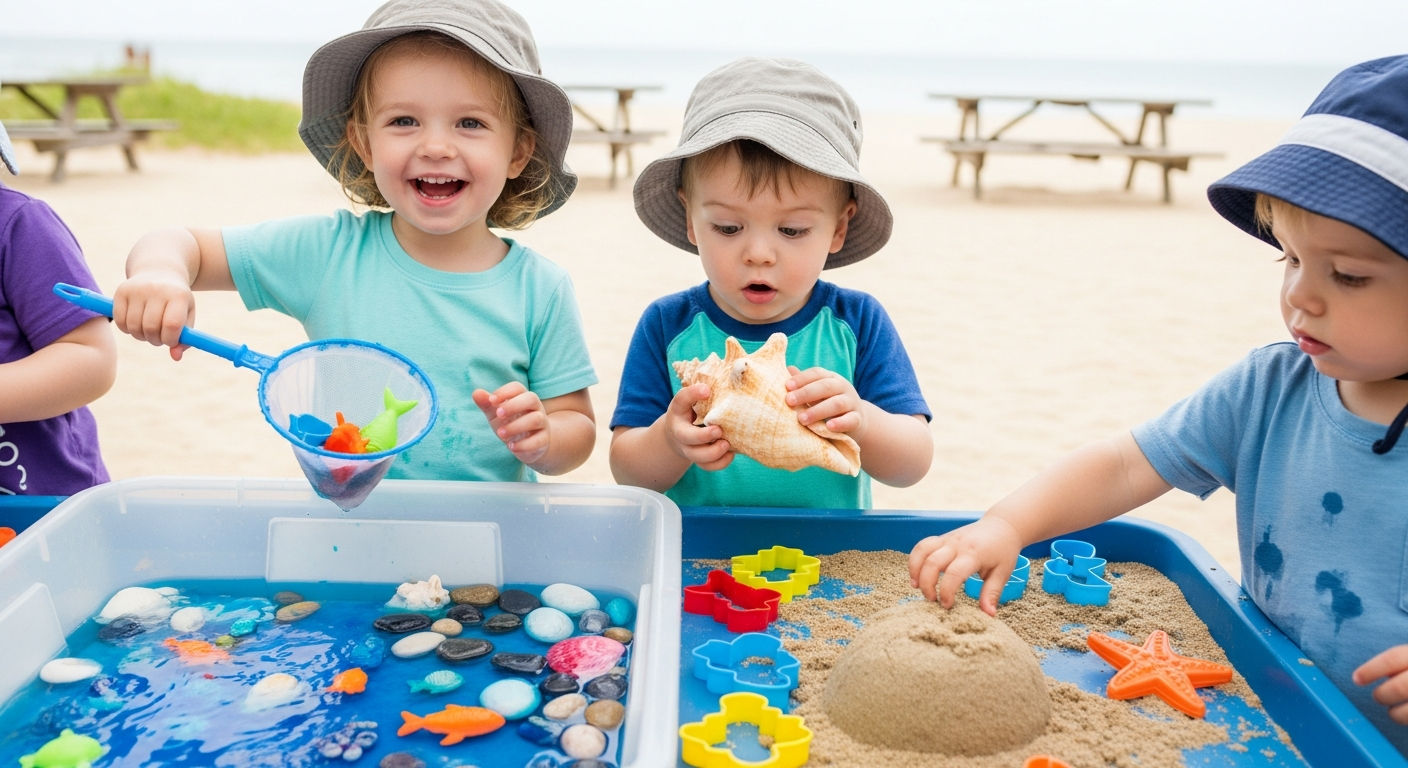
Table of Contents
- Introduction
- The Sensory Magic of the Deep Blue
- Creative Arts: Bringing the Reef to Your Living Room
- STEM Exploration for Little Sailors
- Fine Motor Skills and "Ocean Rescue" Missions
- Building Vocabulary: Speaking the Language of the Sea
- Speech Blubs: Your Partner in "Smart Screen Time"
- Practical Tips for Success
- Exploring the Layers of the Ocean at Home
- Fostering a Love for Conservation
- Conclusion
- Frequently Asked Questions
Introduction
Did you know that over 70% of our planet is covered by water, yet for a toddler, the ocean is often a magical mystery contained within the pages of a picture book or the glass walls of a local aquarium? There is something inherently captivating about the deep blue sea that draws children in, from the rhythmic "shush" of the waves to the vibrant, alien-like creatures that call the reefs home. As parents and educators, we have a unique opportunity to harness this natural curiosity to build foundational skills in language, motor coordination, and sensory processing.
In this post, we are going to dive deep into a treasure trove of toddler ocean activities that you can easily set up at home. We will explore sensory bins that mimic the textures of the shore, art projects that spark creativity, and simple STEM experiments that introduce basic scientific concepts. More importantly, we will discuss how these activities serve as a springboard for communication. At Speech Blubs, we believe in empowering children to "speak their minds and hearts," and there is no better way to do that than through the joy of play. By the end of this article, you’ll have a comprehensive roadmap for creating an "under the sea" adventure that fosters a love for learning and boosts your child's confidence in their growing abilities.

The Sensory Magic of the Deep Blue
Sensory play is the cornerstone of early childhood development. For toddlers, the world is understood through touch, sight, sound, and even taste. When we create ocean-themed sensory experiences, we aren't just keeping them busy; we are building neural pathways.
The Famous Spaghetti Ocean
One of our favorite ways to introduce the concept of "seaweed" and "water" is through dyed spaghetti. It’s safe, inexpensive, and provides a fascinating tactile experience. To make this, simply cook spaghetti as usual, drain it, and toss it with a few drops of blue and green food coloring.
Once it’s cooled, place it in a large bin with some plastic sharks, dolphins, and whales. As your toddler squishes the "seaweed" between their fingers, they are working on fine motor strength. You can encourage language development by narrating their actions: "Look at the blue water! The shark is swimming through the noodles." This type of parallel talk is a core strategy we advocate for at Speech Blubs to help children connect words to actions.
Jelly Ocean Rescue
For little ones who are still in the "everything goes in the mouth" phase, a jelly ocean is a brilliant, taste-safe alternative. Prepare a large batch of blue gelatin (using unflavored gelatin and food coloring if you want to avoid sugar) and submerge plastic sea creatures before it sets.
Give your toddler a spoon or a plastic "rescue" tool. Their mission? To save the animals from the "deep sea jelly." This activity is fantastic for hand-eye coordination. It also creates a perfect opportunity to practice functional language. If they get a turtle out, you can celebrate with a "Yay! The turtle is out!" If you want to see how your child's communication skills are progressing before diving into these activities, you can take our quick 3-minute preliminary screener to get a personalized assessment and a free 7-day trial.
Creative Arts: Bringing the Reef to Your Living Room
Art is a powerful way for children to process what they’ve learned about the world. When a toddler paints a fish, they aren't just making a mess; they are practicing symbolic representation—the idea that a shape on a page represents a real-life object.

Tape-Resist Clownfish
Inspired by everyone’s favorite orange fish, this activity is great for toddlers who are working on their grip. Place strips of painter's tape across a paper cutout of a fish. Let your child go wild with orange paint—they can use brushes, sponges, or even their fingers. Once the paint is dry, peel away the tape to reveal the white "stripes" underneath. The "reveal" moment is often met with gasps of delight, providing a great "wow!" moment to encourage spontaneous vocalizations.
Salt Painting Sea Scenes
Salt painting is a mesmerizing process that combines science and art. Draw an outline of an octopus or a jellyfish using white glue. Have your toddler pour salt over the glue until it’s completely covered, then shake off the excess. Using a pipette or a very wet brush, drop blue or purple watercolor paint onto the salt. Watch as the paint "travels" along the salt lines.
This activity is excellent for developing the "pincer grasp" (if using a pipette), which is a precursor to writing. It also introduces the concept of absorption. While your child is focused on the colors moving, you can model "ocean" sounds. The "swish, swish" of the brush or the "drip, drip" of the paint are perfect opportunities to practice early speech sounds. Our method at Speech Blubs is backed by extensive research into video modeling, showing that when children see their peers making these sounds, they are much more likely to imitate them.
STEM Exploration for Little Sailors
It is never too early to introduce the "why" behind the world. Toddler-appropriate STEM (Science, Technology, Engineering, and Math) focuses on observation and cause-and-effect.
The Saltwater Density Egg
Why is it easier to float in the ocean than in a swimming pool? You can show your toddler with a simple egg experiment. Fill two jars with water. In one, add several tablespoons of salt and stir. Place an egg in the fresh water (it will sink) and then in the salt water (it will float).
Even if they don't understand the physics of density yet, they understand the "magic" of the floating egg. This is a great time to use "thinking" words like "look," "wait," and "wow." If you’re looking for more ways to engage your child in "smart screen time" that complements these real-world experiments, you can download Speech Blubs on the App Store to explore our "Animal Kingdom" section.
The Blubber Glove
If your child wonders how whales stay warm in the icy Arctic, the blubber glove is a classic. Fill one plastic bag with shortening (like Crisco) and place another empty bag inside it, taping the edges so the shortening is sandwiched between the layers. Have your child put their hand in the "blubber glove" and dip it into a bowl of ice water. Then, have them dip their bare hand in. The difference is immediate! They will feel how the "fat" protects the hand from the cold.
Expert Tip: Use these moments of wonder to build vocabulary. Words like "cold," "warm," "thick," and "soft" are all great adjectives to introduce during sensory-heavy STEM activities.
Fine Motor Skills and "Ocean Rescue" Missions
Fine motor skills involve the small muscles in the hands and wrists. These are crucial for everything from buttoning a shirt to using a fork. Ocean activities provide a fun "mission-based" way to practice these skills.
Frozen Ocean Rescue
This is a perfect activity for a hot summer day. Freeze several plastic sea creatures in a large block of ice. Give your toddler a spray bottle filled with warm water, a small salt shaker, and perhaps a child-safe toy hammer. Their job is to "rescue" the animals from the iceberg.
Using a spray bottle is one of the best ways to build hand strength, which directly impacts a child's ability to control their movements. As they work, you can encourage them to name the animals they see. For a parent whose 3-year-old "late talker" loves animals, the "Animal Kingdom" section of our app offers a fun, motivating way to practice these names after the ice has melted. You can get started by creating your account and beginning your 7-day free trial today.
Pipe Cleaner Fishing
Twist several colorful pipe cleaners into the shape of fish, leaving a small loop at the "mouth." Give your child another pipe cleaner with a hook on the end (or a small magnetic fishing rod). Let them "fish" for the different colors. You can ask them to "catch the blue fish" or "find the red one," which builds both fine motor skills and color recognition.
Building Vocabulary: Speaking the Language of the Sea
At Speech Blubs, we are deeply committed to providing an effective and joyful solution for the 1 in 4 children who need speech support. Our founders grew up with speech challenges themselves, which is why we focus on making language learning feel like a game rather than a chore.
When you are doing these ocean activities, you are creating a "language-rich environment." This doesn't mean you have to talk constantly; it means you are providing meaningful context for new words.
Video Modeling and Imitation
One of the unique features of our app is our "video modeling" methodology. In the app, children watch videos of other kids (their peers) making sounds and saying words. This triggers "mirror neurons" in the brain, making the child want to imitate what they see.
Imagine you are playing with the "Fizzy Ocean" activity (baking soda and vinegar). As the bubbles erupt, you can mimic the "pop pop pop" sound. Then, you can open Speech Blubs and find a similar sound or animal. The combination of tactile play and seeing a peer do the same thing on screen is a powerful developmental tool. Don’t just take our word for it—see what other parents are saying about their child's success with our joyful approach.
Speech Blubs: Your Partner in "Smart Screen Time"
We know that many parents are wary of screen time, and for good reason. Passive viewing, like watching endless cartoons, doesn't often encourage interaction. However, we believe in "smart screen time"—experiences that are interactive, educational, and designed to be shared with a caregiver.
Why Choose the Yearly Plan?
If you find that your child is responding well to the activities and the app, we highly recommend our Yearly plan. While we offer a monthly subscription for $14.99, the Yearly plan is the clear best choice for families committed to their child's growth.
At $59.99 per year, it breaks down to just $4.99 per month—a 66% savings compared to the monthly rate. But the value goes beyond the price. The Yearly plan includes:
- A 7-day free trial so you can explore all the content risk-free.
- The Reading Blubs app, which helps transition those early speech skills into literacy.
- Early access to new updates and features.
- 24-hour support response time from our dedicated team.
The monthly plan does not include these exclusive benefits, making the Yearly plan the most comprehensive tool for your child’s development. Ready to dive in? Download Speech Blubs on Google Play to begin your journey.
Practical Tips for Success
When conducting these toddler ocean activities, keep these three "E's" in mind:
- Empathy: Understand that toddlers have short attention spans. If they only want to play with the spaghetti ocean for five minutes, that’s okay! Follow their lead.
- Expertise (Yours!): You are the expert on your child. You know which textures they love and which ones they might find overwhelming. If your child is sensitive to messy play, start with a dry sensory bin (like sand and shells) before moving to "slimy" things like jelly.
- Engagement: The goal isn't a perfect craft; it's a joyful family learning moment. Put away your phone (unless you're using Speech Blubs together!) and get down on the floor with them.
Creating a Routine
Consistency is key for toddlers. You might decide that "Ocean Tuesdays" is your day for themed play. Linking a digital tool like Speech Blubs with physical play creates a holistic learning loop. You can watch the "Underwater" section of the app in the morning, and then recreate those movements or sounds with a bubble foam bin in the afternoon.
Exploring the Layers of the Ocean at Home
For older toddlers or preschoolers, you can introduce the concept of the different "zones" of the ocean. This is a great way to talk about light and darkness.
- The Sunlight Zone: Use clear water and lots of bright-colored fish.
- The Twilight Zone: Use a bit of blue food coloring and maybe some "glow in the dark" stars or fish.
- The Midnight Zone: Use dark blue or even black water (water beads work great here) and talk about the creatures that have their own "flashlights," like the anglerfish.
This simple setup helps children understand that the ocean is a vast, tiered world. It also expands their vocabulary to include concepts like "deep," "dark," "bright," and "bottom."
Fostering a Love for Conservation
Even at a young age, we can teach our children to be "ocean helpers." A "Beach Clean-up" bin is a fantastic activity. Fill a tray with sand and water, but add some "yucky" things like plastic bottle caps or bits of paper. Give your child a pair of tongs and ask them to "help the turtles" by removing the trash.
This builds empathy for animals and introduces the idea of environmental stewardship. It's a powerful way to show them that their actions matter—a core value we hold at Speech Blubs.
Conclusion
The ocean is a world of wonder, and through these toddler ocean activities, you are giving your child the keys to explore it. Whether you are squishing blue spaghetti, "rescuing" animals from ice, or painting a tape-resist clownfish, you are doing more than just playing—you are building the foundational skills of communication, confidence, and curiosity.
At Speech Blubs, we are here to support you every step of the way. Our mission is to help your child find their voice through the power of play and "smart screen time." We don't promise overnight miracles; instead, we offer a scientifically-backed, joyful supplement to your child's development that reduces frustration and builds a love for learning.
Ready to start your adventure? We invite you to begin your 7-day free trial today. Download the app or sign up on our website to unlock a world of interactive learning. Remember to choose the Yearly plan to receive the best value, including the Reading Blubs app and priority support. Let's work together to help your little one speak their mind and heart!
Frequently Asked Questions
What age are these ocean activities best for?
Most of these activities are designed for toddlers aged 1 to 4. However, they are easily adaptable. For younger toddlers, focus on the sensory aspect (the feel of the water or sand). For older children, you can add more complex elements, like sorting animals by habitat or discussing the "blubber" experiment in more detail.
How can I make these activities less messy?
If you're worried about the mess, take the play outside! A water table or a plastic bin on the grass makes clean-up a breeze. Inside, you can use a large "messy mat" or even an old shower curtain under your sensory bin. Also, activities like "Ocean in a Bottle" (water, oil, and glitter in a sealed plastic bottle) provide sensory fun with zero mess.
My child is a "late talker." Will these activities help?
Yes! Language is built on experience. By providing these rich, multi-sensory experiences, you are giving your child something to talk about. Combine these activities with the video modeling in Speech Blubs to encourage imitation and reduce the frustration that often comes with speech delays.
Do I need special equipment for the STEM experiments?
Not at all! Most of our recommended STEM activities use common household items like eggs, salt, vinegar, baking soda, and plastic bags. The goal is to show your child that science is everywhere, not just in a lab.
About the author