
Fun and Educational Toddler Bunny Craft Ideas for Spring
 By Speech Blubs Team•Feb 20, 2026•12 min.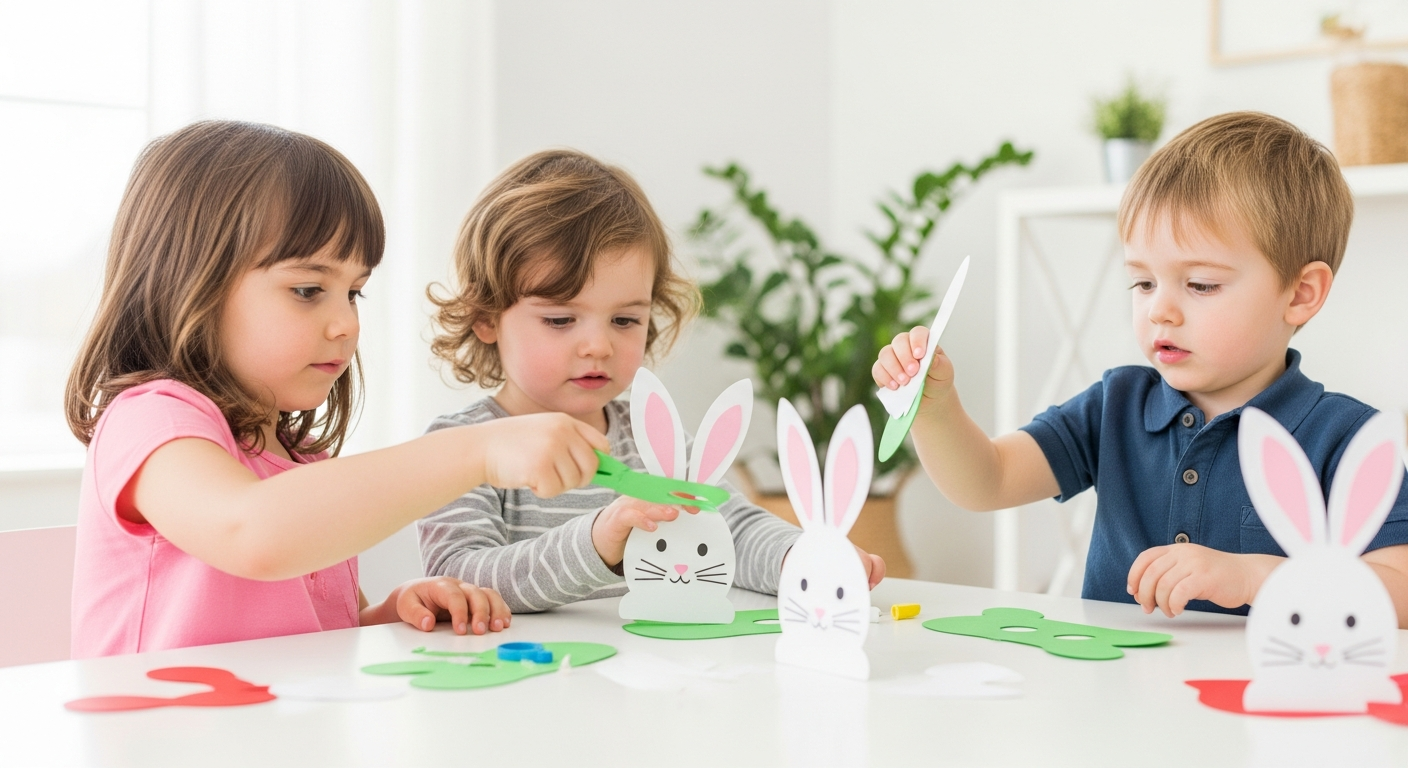
Table of Contents
- Introduction
- The Developmental Magic of Creative Play
- Choosing the Right Toddler Bunny Craft for Your Child
- Why Video Modeling is the Secret to Success
- Integrating Speech Blubs into Craft Time
- More Creative Bunny Craft Ideas
- Setting Realistic Expectations
- Transparent Pricing and Value
- Tips for a Stress-Free Crafting Session
- The Speech Blubs Difference
- Enhancing Vocabulary Through "Bunny Talk"
- Planning a Bunny-Themed Day
- Conclusion
- FAQs
Introduction
Did you know that a group of bunnies is actually called a "fluffle"? Just the word itself sounds soft, cozy, and full of joy—much like the experience of watching a toddler discover the world around them. Whether it’s the twitch of a nose or a sudden "binky" (that adorable jump-and-twist bunnies do when they are happy), rabbits have a unique way of capturing a child's imagination. But beyond the cuteness, these long-eared friends offer a wonderful opportunity for developmental growth.
In this post, we are going to explore a variety of toddler bunny craft ideas that are as educational as they are adorable. We believe that every moment of play is a chance for a child to find their voice. Our mission at Speech Blubs is to empower children to speak their minds and hearts, and often, that journey starts with something as simple as a cotton ball and some glue.

We will cover why creative play is essential for speech development, provide step-by-step instructions for several easy bunny crafts, and show you how to turn crafting time into a language-rich environment. Whether your little one is already a chatterbox or is among the 1 in 4 children who may need a little extra speech support, these activities are designed to build confidence and foster a love for communication.
The Developmental Magic of Creative Play
When you sit down with your child to start a toddler bunny craft, you aren't just making a decoration for the refrigerator. You are creating a "smart screen time" alternative that engages multiple senses. At Speech Blubs, our founders created the tools they wished they had when they were growing up with speech problems. They understood that learning isn't just about repetition; it's about joy, connection, and imitation.
Building Fine Motor Skills
Crafting requires a lot of "heavy lifting" for tiny fingers. Peeling back contact paper, squeezing glue bottles, and placing small pom-poms onto a specific spot all help develop the fine motor skills necessary for writing and self-care later in life. More importantly, these physical actions are closely linked to brain development in areas that also handle language.
Sensory Exploration and Language
A "fuzzy bunny" isn't just a noun; it’s a sensory experience. As your toddler touches a soft cotton ball or a sticky piece of tape, they are receiving tactile input. This is the perfect time to introduce descriptive adjectives. Is it soft? Is it sticky? Is it white? By narrating these actions, you are providing a rich linguistic model for your child to eventually imitate.
Choosing the Right Toddler Bunny Craft for Your Child
Not every craft is a perfect fit for every child. Depending on your toddler's age and attention span, you might want to choose an activity that focuses on sensory exploration or one that results in a fun toy they can play with afterward.
For the Sensory-Seeker: The Contact Paper Fuzzy Bunny
This is a fantastic "low-mess" option that kids absolutely love. It focuses on the "stick and release" sensation that is so fascinating to toddlers.

Materials Needed:
- Clear contact paper
- Permanent marker
- Cotton balls
- Construction paper (for ears and eyes)
- Painter's tape
Instructions:
- Draw a large bunny outline on the non-sticky side of the contact paper.
- Tape the contact paper to a window or wall with the sticky side facing out.
- Let your child pull apart cotton balls to make them "fluffy" and stick them onto the bunny.
Pro-Tip for Speech: As your child sticks each piece, say the word "pop" or "stick." This simple CV (consonant-vowel) word is often easier for late talkers to mimic. If your child is already using the Speech Blubs app, you might recognize this as a foundational step in our "video modeling" methodology—encouraging children to watch, listen, and repeat.
For the Animal Lover: The Paper Plate Rocking Bunny
If your child loves toys that move, this craft turns into an interactive "friend" they can play with. For a parent whose 3-year-old "late talker" loves animals, the "Animal Kingdom" section of our app offers a fun, motivating way to practice sounds like "hop hop" or "boing," which can be used while playing with this specific craft.
Materials Needed:
- A paper plate (folded in half)
- Glue
- Pink and white construction paper
- Googly eyes
Instructions:
- Fold the paper plate in half so it can "rock" back and forth on the table.
- Glue two long ears to the top of the fold.
- Add a face with googly eyes and a pink nose.
- Gently push the bunny to make it rock.
Why Video Modeling is the Secret to Success
At Speech Blubs, we use a unique scientific approach called video modeling. This isn't just "watching cartoons." Our app features real children—peers of your own child—demonstrating facial movements and sounds. Research shows that children are far more likely to imitate other children than they are to imitate adults.
You can bring this concept into your toddler bunny craft time. Before you start, watch a video of a bunny together or look at a peer-led video in our "Early Sounds" section. When your child sees another child making a "bunny face" or saying "B-B-Bunny," their mirror neurons fire, making it easier for them to try the sound themselves.
If you’re unsure where your child stands in their development, we recommend taking our quick 3-minute preliminary screener. It involves 9 simple questions and provides an immediate assessment and a personalized next-steps plan.
Integrating Speech Blubs into Craft Time
We advocate for "co-play." This means that instead of handing a tablet to a child and walking away, you use the app as a bridge for connection.
- Preparation: Open Speech Blubs and find an animal-themed activity. Let your child interact with the "smart screen time" for a few minutes to get excited.
- Transition: Say, "The bunny is hopping! Let's go make our own bunny!"
- Active Crafting: Use the same sounds and words from the app while you work on your toddler bunny craft.
- Reinforcement: Once the craft is done, use it to act out the scenes your child saw on the screen.
Our method is backed by science and has helped millions of families find the joy in communication. By blending these digital tools with physical activities, you are providing a holistic learning environment.
More Creative Bunny Craft Ideas
The Handprint Bunny
This is a classic keepsake. It’s perfect for practicing the names of body parts (fingers, hand, palm) and colors.
- Trace your child’s hand on a piece of paper.
- The thumb and pinky become the bunny’s arms.
- The middle and ring fingers are folded back (or cut off) to leave the index and middle finger as the ears.
- Draw a face on the palm area.
The Pine Cone Bunny
For an outdoor-loving toddler, go on a "nature hunt" first. Finding the pine cone is half the fun!
- Glue felt ears to the top of a pine cone.
- Use a small white pom-pom for the tail.
- This adds a great "rough" texture to the sensory experience, contrasting with the soft cotton balls used in other crafts.
Setting Realistic Expectations
It is important to remember that every child develops at their own pace. While we want to provide the best tools possible, we never suggest guaranteed outcomes like "your child will be speaking in sentences by next week." Instead, our goal is to foster a love for communication, build confidence, and reduce the frustration that often comes with speech delays.
Consistent, joyful practice is the key. Whether you are using the Google Play version or the Apple version of our app, think of it as a powerful supplement to your child's daily routine and, if necessary, professional therapy.
Transparent Pricing and Value
We believe in being upfront with parents so you can make the best decision for your family. We offer two main paths to access our full library of over 1,500 activities:
- Monthly Plan: $14.99 per month. This is a great way to test the waters.
- Yearly Plan: $59.99 per year. This is our best value, breaking down to just $4.99 per month.
We strongly recommend the Yearly Plan because it is designed to support long-term development. When you choose the Yearly Plan, you also get:
- A 7-day free trial to explore everything we offer.
- The Reading Blubs app, which focuses on early literacy.
- Early access to new updates and a 24-hour support response time.
The Monthly plan does not include these additional benefits, making the Yearly option the clear choice for families committed to their child's speech journey. You can create your account and start your trial today to see the difference for yourself.
Tips for a Stress-Free Crafting Session
- Embrace the Mess: Toddlers are messy by nature. Use a tray or a plastic tablecloth to make cleanup easier. The goal is the process, not a perfect end product.
- Follow Their Lead: If your toddler wants to give their bunny three ears or a blue nose, let them! This autonomy builds confidence.
- Keep it Short: A toddler's attention span is usually only a few minutes long. It's okay if you don't finish the craft in one sitting.
- Use Positive Reinforcement: Instead of saying "good job," try being specific: "I love how you pushed that cotton ball down so hard!"
The Speech Blubs Difference
Why do parents choose us? It’s because we understand the struggle. We aren't just a tech company; we are a group of individuals who lived through speech challenges. We know the frustration of not being able to say what’s in your heart.
Our app is a screen-free alternative to passive viewing. Unlike cartoons that just wash over a child, Speech Blubs requires active participation. It is a tool for family connection. When you sit with your child and do a toddler bunny craft while using our app, you are creating "smart screen time" moments that matter. Don't just take our word for it—read our parent testimonials to see how other families have found success.
Enhancing Vocabulary Through "Bunny Talk"
As you work on your craft, try to use "parallel talk." This is where you describe what your child is doing as they do it.
- "You are picking up the glue."
- "The bunny has long ears."
- "Squeeze, squeeze, squeeze!"
This constant stream of modeled language helps your child map words to actions. If they make a sound, even if it’s not a perfect word, celebrate it! If they say "ba" for bunny, respond with, "Yes, bunny! You made the bunny!" This validation is crucial for building the confidence needed to keep trying new sounds.
Planning a Bunny-Themed Day
To maximize the educational impact, you can turn a simple toddler bunny craft into a themed learning day:
- Morning: Read a book about rabbits.
- Mid-Morning: Use the Speech Blubs app to practice animal sounds and facial gestures.
- Lunch: Have "bunny snacks" (carrots and cucumbers).
- Afternoon: Complete one of the crafts mentioned above.
- Evening: Practice "hopping" around the living room before bath time.
This repetition across different contexts helps solidify new concepts and vocabulary in a toddler's mind.
Conclusion
Creating a toddler bunny craft is about much more than just the end result. It is an opportunity to bond, to explore new textures, and to practice the foundational skills of communication. At Speech Blubs, we are honored to be a part of your child’s journey. Whether you are navigating a speech delay or simply looking for high-quality, "smart screen time" that encourages growth, we are here to support you.
Our mission is to give every child the chance to speak their mind and heart. We invite you to join our community of families who are turning playtime into progress.
Ready to see your child's confidence grow? Download Speech Blubs on the App Store or Google Play today. To get the best value, including a 7-day free trial, the Reading Blubs app, and exclusive updates, be sure to select our Yearly plan. Let’s make this spring a season of hopping, crafting, and—most importantly—talking!
FAQs
What is the best age for a toddler bunny craft?
Most of these crafts are designed for children aged 18 months to 4 years. For younger toddlers, focus on sensory-heavy activities like the contact paper bunny. For older toddlers, you can introduce more complex tasks like using safety scissors or following multi-step instructions for the paper plate bunny.
How can I encourage my late talker to participate in crafting?
The key is to follow their interests. If they love a particular color or texture, lean into that. Use the "smart screen time" in the Speech Blubs app to get them excited about the theme first. Don't pressure them to speak; instead, model the sounds yourself and create a low-stress environment where they feel safe to experiment.
Do I need expensive supplies for these crafts?
Not at all! Most of our recommended crafts use everyday household items like paper plates, cotton balls, and scrap paper. We believe that effective learning shouldn't be a financial burden. The most important "supply" is your time and engagement.
Can Speech Blubs replace professional speech therapy?
Speech Blubs is a powerful supplement to a child's overall development plan and professional therapy. While it provides immediate, joyful, and effective support based on scientific principles like video modeling, it is not a replacement for a clinical diagnosis or one-on-one sessions with a licensed Speech-Language Pathologist (SLP) if your child requires them. Always consult with a professional if you have concerns about your child's milestones.
About the author