
Fun and Educational Toddler Sensory Activities for 2 Year Olds
 By Speech Blubs Team•Feb 23, 2026•12 min.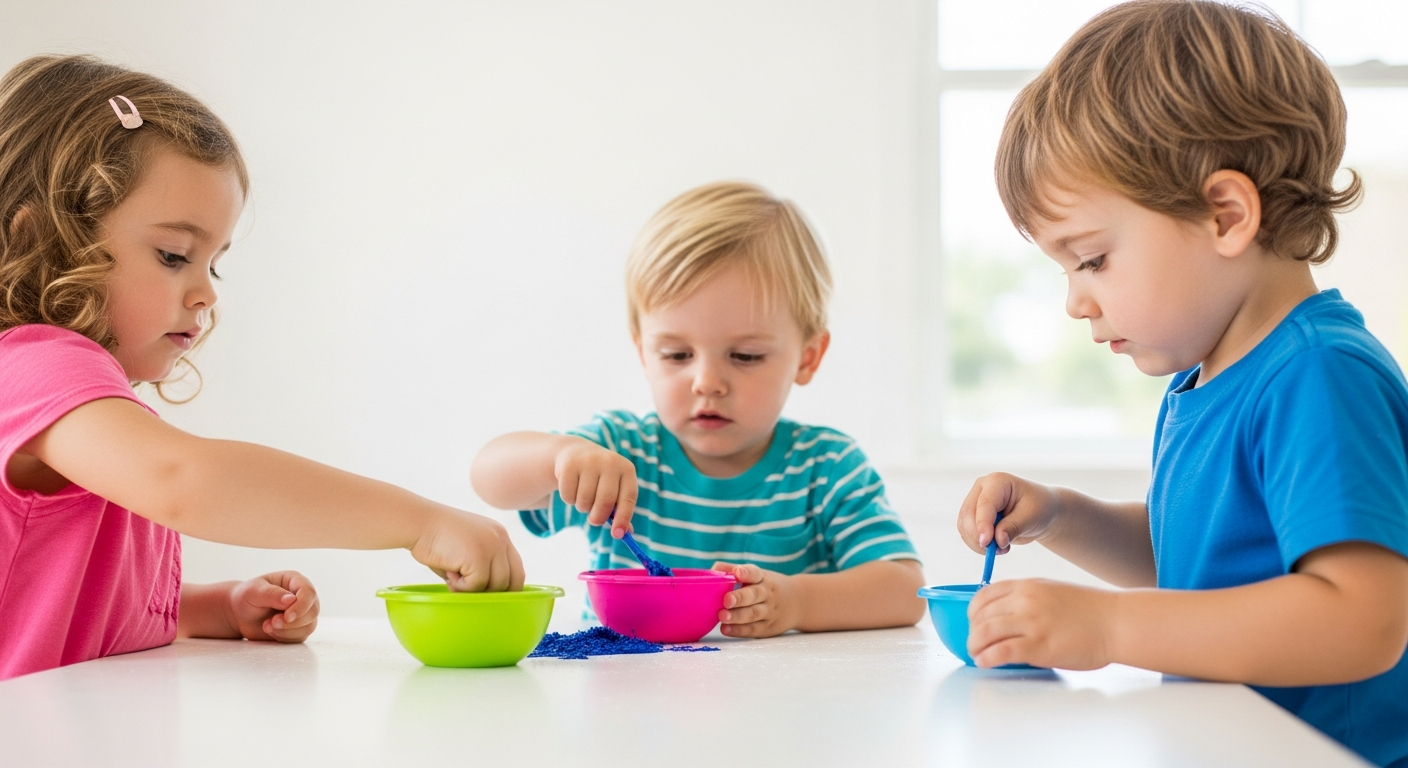
Table of Contents
- Introduction
- Why Sensory Play Matters for Your Two-Year-Old
- Managing the Mess: Tips for Stressed Parents
- Tactile Sensory Bins for 2 Year Olds
- Taste-Safe Sensory Activities
- Visual and Auditory Sensory Play
- Outdoor and Movement-Based Activities
- How Speech Blubs Enhances Sensory Learning
- Choosing the Right Plan for Your Family
- Frequently Asked Questions
- Conclusion
Introduction
Have you ever wondered why your two-year-old is suddenly obsessed with squishing their peas, splashing every drop of water out of the bathtub, or trying to climb the most unstable pile of pillows in the living room? It might look like chaos, but you are actually witnessing a vital developmental process in action. At age two, children are essentially tiny scientists, and their laboratory is the world around them. Research shows that 1 in 4 children will face a speech or developmental delay, and sensory play is one of the most powerful tools we have to support these early learners.
In this post, we will explore a wide variety of toddler sensory activities for 2 year olds that go far beyond simple "play." We will dive into why these activities are essential for brain development, how they foster language skills, and how you can manage the mess while creating joyful learning moments at home. Our mission at Speech Blubs is to empower children to speak their minds and hearts, and we believe that sensory-rich environments are the foundation for those first meaningful words.

By the end of this article, you’ll have a toolkit of easy-to-implement ideas that build confidence, reduce frustration, and help your child reach those critical developmental milestones. Whether you’re looking for a low-mess indoor activity or a way to turn snack time into a learning session, we’ve got you covered.
Why Sensory Play Matters for Your Two-Year-Old
Two years old is often called the "terrific twos" (though we know it can feel like the "terrible twos" sometimes!). This is a period of massive neurological expansion. Your child is shifting from the "animated gibberish" of babyhood to using two- and three-word phrases. They are beginning to understand themselves as individuals separate from you, which is why "no" becomes their favorite word.
Sensory play—activities that stimulate the senses of touch, sight, smell, sound, and taste—helps bridge the gap between physical movement and cognitive processing. When a child engages their senses, they are building "sensory memories." These memories are the building blocks for more complex skills later in life, such as problem-solving, social interaction, and executive functioning.
Strengthening the Five Senses and Beyond
Most parents focus on the primary five senses, but sensory play also supports two other critical systems:
- Vestibular Sense: This is the inner ear system that handles balance and spatial orientation. When your toddler spins, swings, or jumps, they are training their vestibular system.
- Proprioceptive Sense: This is the body’s ability to perceive its position in space. Activities like pushing a heavy basket or squishing playdough help children understand how much force their muscles need to use.
At Speech Blubs, we leverage these natural developmental stages through our "smart screen time" experiences. Our founders grew up with speech problems and created the tool they wished they had—one that uses peer-to-peer video modeling to encourage children to imitate sounds and words in a way that feels like play. When you combine our app with physical sensory activities, you’re providing a holistic learning environment for your child.

Managing the Mess: Tips for Stressed Parents
Let’s be honest: "sensory play" is often code for "stuff all over the floor." The fear of the cleanup can sometimes prevent us from letting our toddlers explore. However, the mess is temporary, but the learning is permanent. Here are some strategies we use to keep things manageable:
- The "Bin" Rule: Use a large, shallow plastic bin to contain materials like rice, beans, or water. If the materials stay in the bin, the play continues.
- The Drop Cloth Strategy: Lay down an old shower curtain liner or a cheap plastic tablecloth under the activity area. When play is over, you can simply gather the corners and shake the mess back into the bin or the trash.
- Take it Outside: If an activity involves "cloud dough" or heavy painting, take it to the grass or the balcony.
- High Chair Boundaries: For very messy activities like yogurt painting, the high chair tray is the perfect, easy-to-wipe "canvas."
"Sensory play helps bring children back into their bodies, focusing on the five senses to help them regain a sense of equilibrium. It helps children learn to calm down in times of stress and can ground them as they work through life's challenges."
Tactile Sensory Bins for 2 Year Olds
Sensory bins are a classic for a reason. They provide a self-contained world for your child to explore. If you are unsure if your child is ready for these, you can take our quick 3-minute preliminary screener to get an assessment of their current developmental level and a free 7-day trial.
1. The Classic Rice Table
Uncooked rice is a fantastic filler. It’s easy to clean up and provides a satisfying "pitter-patter" sound as it falls.
- How to do it: Fill a bin with rice. Add measuring cups, funnels, and hidden "treasures" like plastic dinosaurs or colorful buttons.
- Speech Connection: Practice words like "pour," "hide," "find," and "empty."
2. Cloud Dough (Taste-Safe)
Cloud dough has a unique texture that is both powdery and moldable.
- The Recipe: Mix 8 parts flour with 1 part vegetable oil (e.g., 4 cups flour to 1/2 cup oil). It feels like soft sand that holds its shape when squeezed.
- Why it works: It builds hand strength, which is essential for future writing skills.
3. Oobleck: The Magic Fluid
Oobleck is a "non-Newtonian" fluid, meaning it acts like a liquid when poured but turns into a solid when you squeeze it.
- The Recipe: Mix 2 parts cornstarch with 1 part water. Add a drop of food coloring if you like.
- The Experience: Watch your toddler’s amazement as the "solid" ball they just made melts through their fingers.
Taste-Safe Sensory Activities
Since two-year-olds still experience much of the world through their mouths, taste-safe activities are a parent's best friend.
4. Yogurt Finger Painting
If you're worried about your child eating traditional paint, try yogurt!
- How to do it: Divide plain Greek yogurt into small containers and mix in a few drops of food coloring.
- The Activity: Let them "paint" on a high chair tray or a large piece of paper. It’s cold, creamy, and completely safe to lick.
5. Edible "Cheerios" Sand
Traditional sand can be a choking hazard or just plain gross if swallowed.
- The DIY Version: Blend stale Cheerios or crackers in a food processor until they reach a sandy consistency.
- The Setup: Put the "sand" in a bin with some construction trucks. This is perfect for a child who loves the "Big Wheels" or "Construction" sections in the Speech Blubs app. You can practice saying "dig," "beep beep," and "dirt" together!
6. Aquafaba Bubble Foam
Bubble foam is incredibly engaging, but dish soap can sting the eyes or taste terrible.
- The Taste-Safe Secret: Use the liquid from a can of chickpeas (aquafaba). Whip it with a hand mixer and a tiny bit of cream of tartar until it forms stiff, fluffy peaks. It’s basically a giant bowl of safe-to-touch "meringue."
Visual and Auditory Sensory Play
Communication isn't just about touch; it's about what we see and hear. These activities help fine-tune a child's observation skills.
7. Sensory Bottles (Discovery Bottles)
If you want a zero-mess option, sensory bottles are the answer.
- How to do it: Fill empty plastic water bottles with various items. One could have water, glitter, and dish soap for a "calm down" effect. Another could have dry beans for a "shaker" sound.
- Safety Tip: Use hot glue or strong tape to seal the caps permanently.
8. Light and Shadow Play
Turn off the lights and grab a flashlight.
- The Activity: Use your hands to make shadow puppets on the wall. This encourages your child to focus their attention and can lead to wonderful "peer-to-peer" imitation, much like our video modeling methodology.
9. Musical Pots and Pans
It’s loud, yes, but it’s foundational.
- The Lesson: Give your child a wooden spoon and different-sized pots. They will learn that hitting a small metal pot sounds different than hitting a plastic bowl. This teaches cause-and-effect and rhythm, both of which are critical for speech patterns.
Outdoor and Movement-Based Activities
Sometimes toddlers just need to move their whole bodies. These activities support the vestibular and proprioceptive systems.
10. The Nature Texture Hunt
Take a walk around the neighborhood with a specific goal.
- The Hunt: Find something "scratchy" (bark), something "soft" (a leaf), and something "cold" (a stone).
- The Benefit: This builds descriptive vocabulary and helps children connect words to physical sensations.
11. Ice Excavation
This is a perfect summer activity.
- How to do it: Freeze small plastic toys (like toy bugs or cars) inside a large container of water.
- The Activity: Give your child a small spray bottle of warm water or a toy hammer to "rescue" the toys from the ice.
How Speech Blubs Enhances Sensory Learning
At Speech Blubs, we believe that "smart screen time" can be a powerful supplement to these physical activities. While sensory bins provide the tactile input, our app provides the social and communicative framework. For example, if your child is playing with a water bin, you can use the "Yummy Time" or "Water Fun" sections in the app to see other children making the sounds of splashing or drinking.
Our app is designed to be used with a parent. It’s not a passive experience like watching cartoons. Instead, it’s a tool for family connection. By watching other children—their peers—demonstrate communication, your child is more likely to feel confident enough to try it themselves. You can Download Speech Blubs on the App Store or Google Play to start this journey today.
Realistic Expectations for Your Child
Every child develops at their own pace. Using sensory activities or our app won't turn your child into a public speaker overnight. However, these tools are designed to:
- Foster a genuine love for communication.
- Reduce the frustration that comes with not being able to express needs.
- Build the foundational motor and cognitive skills required for speech.
- Create joyful, shared moments between you and your child.
Choosing the Right Plan for Your Family
We want to make speech support accessible to everyone. To get the most out of your experience, we recommend our Yearly Plan. While we do offer a Monthly plan for $14.99, the Yearly plan is the best value at $59.99 (which is only $4.99 per month).
Why choose the Yearly Plan?
- 7-Day Free Trial: You can explore everything we have to offer before committing.
- Reading Blubs App: You get full access to our Reading Blubs app, which helps transition speech skills into early literacy.
- Priority Support: Get 24-hour response times from our support team and early access to all new updates.
- Significant Savings: You save 66% compared to the monthly subscription.
If you are ready to jump in, create your account and begin your 7-day free trial today.
Frequently Asked Questions
1. My child still puts everything in their mouth. Is sensory play safe?
Yes, but you must choose your materials wisely. Focus on "taste-safe" recipes like the yogurt paint, edible "Cheerios" sand, or oobleck mentioned above. Always supervise sensory play to ensure your child doesn't swallow large items or materials that could be a choking hazard.
2. How often should we do these activities?
There is no set rule, but even 10–15 minutes of dedicated sensory play a day can make a difference. Consistency is more important than duration. You might choose to do a sensory bin on rainy days and a nature walk on sunny days.
3. What if my child hates getting their hands messy?
Some children have sensory sensitivities and may find certain textures (like slime or oobleck) overwhelming. Don't force it. Start with "dry" sensory play like rice or beans, or use "no-mess" options like sensory bags where the paint is sealed inside plastic. Over time, you can gently encourage them to explore new textures at their own pace.
4. Can sensory play actually help with speech delays?
While sensory play is not a replacement for professional speech therapy, it is a powerful supplement. It builds the fine motor skills, focus, and imitation abilities that are necessary for speech. Many parents find that their children are more vocal and expressive during or immediately after sensory play because they are "grounded" and engaged. You can read more about parent success stories here.
Conclusion
Sensory activities for 2 year olds are much more than just a way to pass the time; they are a vital investment in your child's future. From the squishy joy of oobleck to the rhythmic clanging of pots and pans, these experiences build the neural pathways that lead to language, logic, and emotional regulation. At Speech Blubs, we are honored to be a part of your child’s journey. Our app was born from a place of personal understanding and scientific rigor, designed to help that 1 in 4 children who need a little extra support to "speak their minds and hearts."
Remember, you don't need expensive toys or a perfect playroom to support your child’s development. Often, the best tools are already in your kitchen pantry or just outside your front door. By combining these physical sensory experiences with our scientifically-backed video modeling, you are giving your child a head start in communication.
Ready to see the difference for yourself? Start your journey today and join the thousands of families who have found joy in learning. Download Speech Blubs on the App Store or Google Play to begin. For the best value, be sure to select our Yearly Plan, which includes a 7-day free trial, the Reading Blubs app, and priority support. Let's make every moment a learning moment!
About the author