
Fun and Effective Speech Delay Activities at Home
 By Speech Blubs Team•Mar 23, 2026•14 min.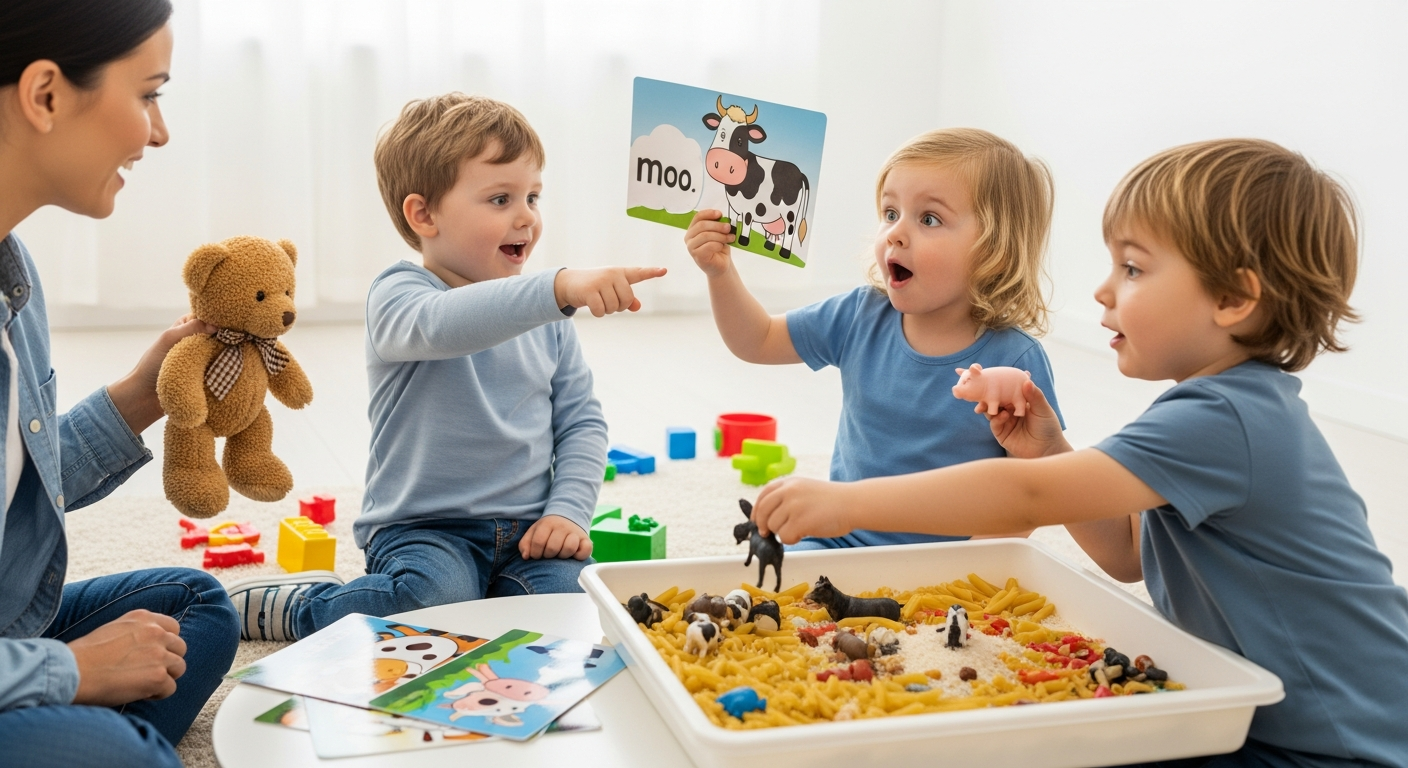
Table of Contents
- Introduction
- The Heart of Our Method: Why Play and Science Matter
- 10 Fun Speech Delay Activities at Home
- Setting Realistic Expectations
- Choosing the Right Path for Your Family
- Deep Dive: How to Use Speech Blubs for Specific Challenges
- Building a Language-Rich Environment
- The Importance of Adult Co-Play
- Frequently Asked Questions
- Conclusion
Introduction
Have you ever found yourself watching your child at the playground, observing how other children their age are chatting away, while your little one remains mostly quiet or relies on gestures to get their point across? That tightening in your chest—that mixture of love, worry, and the silent question, "When will I hear their voice?"—is something many of us have felt deeply. At Speech Blubs, we understand this journey because we’ve lived it. Our founders grew up with speech challenges themselves, and they created the very tool they wished they had as children.
The purpose of this post is to provide you with a comprehensive toolkit of speech delay activities at home that transform everyday moments into powerful learning opportunities. We will explore how play, narration, and even "smart screen time" can bridge the gap between silence and communication. We’ll dive into the science of video modeling, the importance of "expectant waiting," and practical ways to use your home environment to spark language.

If you are currently navigating the "late talker" phase, you aren't alone. In fact, 1 in 4 children will need some form of speech support during their development. Our thesis is simple: through joyful, low-pressure engagement and evidence-based strategies, you can foster a love for communication and help your child speak their mind and heart. Unsure if your child could benefit? Take our quick 3-minute preliminary screener to get a simple assessment and a free 7-day trial.
The Heart of Our Method: Why Play and Science Matter
Before we jump into the specific activities, it’s helpful to understand the "why" behind our approach. At Speech Blubs, we don’t believe in "drilling" children. Instead, we lean into the power of play and the scientific principle of video modeling.
The Magic of Video Modeling
Have you ever noticed how your child tries to mimic everything you do? That is the work of mirror neurons in the brain. Our unique approach utilizes peer-to-peer video modeling, where children watch other children—their peers—perform speech exercises. Seeing a child similar to them making a sound or saying a word is far more motivating and relatable than watching an adult or a cartoon. This method is backed by research and has earned us a high rating on the MARS (Mobile App Rating Scale), placing us in the top tier of educational apps worldwide.
Smart Screen Time vs. Passive Viewing
In a world full of flashy cartoons that offer passive "zoning out" time, we provide a screen-free alternative mindset. Even when using our app, we encourage what we call "smart screen time"—an interactive, co-playing experience where the screen acts as a bridge for family connection rather than a wall.
10 Fun Speech Delay Activities at Home
Supporting your child’s development doesn't require a classroom or expensive equipment. Your living room, kitchen, and backyard are the perfect laboratories for language growth.
1. Narrating Your Day: Self-Talk and Parallel Talk
One of the easiest yet most effective speech delay activities at home is simply "broadcasting" your life.

- Self-Talk: This is when you describe what you are doing. "I am washing the big red apple. Scrub, scrub, scrub! Now I am cutting it into slices."
- Parallel Talk: This is when you describe what your child is doing. If your 3-year-old is playing with blocks, you might say, "You are building a tall tower! Up, up, up! Oh no, it fell down. Boom!"
By putting words to actions in real-time, you are helping your child connect sounds to meanings without the pressure of having to respond immediately.
2. The Power of Choice: "This or That?"
Often, as parents, we become so good at anticipating our child's needs that they don't need to speak. We see them look at the juice, and we give it to them. To encourage communication, start offering choices for everything.
Instead of just handing them a snack, hold up two options. "Do you want the crunchy apple or the yellow banana?" Hold the items near your face so they can see your mouth moving as you say the words. This simple act empowers them to use their voice or a gesture to indicate their preference, reducing the frustration of being misunderstood.
3. Interactive Reading and Storytelling
Reading shouldn't be a one-way street. When you open a book, don't just read the text; talk about the pictures.
For a child who is a "late talker" but loves animals, you might look at a picture of a farm. Point to the cow and wait. Use "expectant waiting"—give them a solid 5 to 10 seconds of silence to see if they will fill in the blank. "The cow says... [pause]." If they don't respond, that's okay! You can provide the answer: "Moo!" and move on. To see how other parents have seen success with this type of engagement, check out our parent testimonials.
4. Mirror Play and Facial Mimicry
The mouth is a complex set of muscles. Sometimes, kids just need to see how those muscles move. Sit in front of a mirror with your child and make silly faces. Stick out your tongue, puff out your cheeks, and make "fish lips."
Then, try making simple vowel sounds like "Ah," "Oh," and "Ee." Watching themselves in the mirror while seeing you do it creates a feedback loop that helps them understand the mechanics of speech. This is a great pre-speech activity that builds the foundational physical skills needed for articulation.
5. Music, Rhythm, and Nursery Rhymes
Music is processed in multiple areas of the brain, making it a fantastic tool for language. Songs with repetitive lyrics and actions—like "The Itsy Bitsy Spider" or "If You're Happy and You Know It"—are goldmines for speech practice.
Try stopping in the middle of a familiar verse. "Twinkle, twinkle, little... [pause]." The rhythm of the song often carries the child into saying the next word almost automatically. This builds confidence and shows them that speaking can be a fun, rhythmic game.
6. The "Waiting" Game (Expectant Waiting)
This is perhaps the hardest activity for parents because it requires patience. When you know your child wants something, wait before giving it to them. If they are reaching for their favorite toy, look at them with an encouraging, expectant expression. Give them a few seconds to try and make a sound—any sound—to request it.
Even a "muh" for "more" or a "buh" for "ball" is a huge win! Celebrate these small attempts enthusiastically. You can download Speech Blubs on the App Store to find specific "Early Sounds" sections that focus on these foundational phonemes.
7. Creating a "Communication Temptation" (The Sabotage Technique)
Sometimes, we need to create a reason for our children to talk. This "sabotage" isn't mean; it's a strategic way to prompt communication. For example:
- Give them a bowl of cereal but no spoon.
- Put their favorite toy in a clear container they can't open.
- "Forget" to turn on the water during bath time.
These situations create a natural "problem" that the child needs your help to solve. It encourages them to use a word like "Help," "Open," or "More" to fix the situation.
8. Sensory Play and Language
Sensory bins—containers filled with rice, beans, water, or sand—are incredible for vocabulary building. As your child digs and pours, introduce descriptive words. "The rice is dry and bumpy." "The water is cold and wet."
If your child is fascinated by textures, use that interest! If they love the "Animal Kingdom" section of our app, recreate a sensory version of it by burying plastic animals in a "jungle" of green shredded paper. Ask them, "Who is hiding? Is it the lion? Roar!"
9. Sign Language Basics
There is a common myth that teaching sign language will stop a child from talking. In reality, the opposite is true. Signs provide a bridge. If a child can sign "More" or "Eat," their frustration levels drop because they are being understood. This success actually motivates them to try using the verbal word alongside the sign. Focus on high-utility signs: More, Help, Please, Eat, All Done.
10. Using "Smart" Digital Tools
While we always advocate for real-world interaction, we recognize that digital tools can be a powerful supplement. The key is choosing apps designed with speech therapy principles in mind.
Speech Blubs on Google Play offers a "Video Modeling" experience where your child sees other kids making sounds. This isn't passive watching; it's an invitation to join in. For instance, if your toddler is obsessed with cars, the "Toy Box" section lets them practice "Vroom vroom" sounds while watching a peer do the same. This peer-driven motivation is something cartoons simply cannot replicate.
Setting Realistic Expectations
It is important to remember that every child’s developmental path is unique. Our goal at Speech Blubs isn't to promise that your child will be giving public speeches in a month. Instead, we focus on fostering a love for communication, building foundational skills, and creating joyful family moments.
Progress often looks like:
- Less frustration during mealtime.
- An increase in eye contact and engagement.
- Moving from gestures to "word approximations" (like "ba" for "ball").
- A newfound confidence to try new sounds.
The activities listed above are designed to be a powerful supplement to your child’s overall development and, when necessary, professional speech therapy. We always encourage parents to work alongside professionals while using our tools to create a comprehensive support system.
Choosing the Right Path for Your Family
We want to make speech support accessible to as many families as possible, which is why we offer flexible options for accessing our full library of over 1,500 activities.
Monthly Plan
For $14.99 per month, you get full access to the Speech Blubs app. This is a great way to test the waters and see how your child responds to our video modeling methodology.
Yearly Plan (The Best Value)
The Yearly plan is our most popular choice for a reason. At $59.99 per year, it breaks down to just $4.99 per month—a 66% savings compared to the monthly option. But the value goes beyond just the price.
The Yearly Plan includes:
- A 7-day free trial: You can explore everything risk-free before committing.
- Reading Blubs App: An extra app designed specifically to help your child transition from speaking to reading.
- Early Access: Be the first to try our new updates and features.
- Priority Support: A 24-hour response time from our dedicated support team.
We believe in transparency and value. If you’re ready to dive in, creating your account on our web page is the fastest way to secure the yearly discount and start your trial.
Deep Dive: How to Use Speech Blubs for Specific Challenges
Let's look at a few practical scenarios where Speech Blubs can specifically help with speech delay activities at home.
Scenario A: The Late Talker Who Loves Animals
If your 2-year-old isn't talking yet but gets excited every time they see a dog, start with the "Animal Kingdom" section in the app. Use the video modeling of a child saying "Woof" or "Meow." Because your child is already motivated by animals, they are much more likely to attempt the sound. After the app session, grab a stuffed animal and "act out" the sounds you just practiced together.
Scenario B: The Child Struggling with Sentence Length
If your child uses single words but struggles to put them together, move to our "Living Colors" or "Giant Logbook" sections. These sections encourage the use of adjectives and verbs. You can model two-word phrases while playing with the app: "Red bird," "Big fish," or "Dog running."
Scenario C: The Child with Unclear Articulation
For children who speak but are hard to understand, focus on our "Mouth Gym." These are exercises designed to improve the coordination of the lips, tongue, and jaw. Because these are presented as fun "imitating" games with other kids, your child won't feel like they are doing "work."
Building a Language-Rich Environment
Beyond specific activities, your home environment plays a huge role. Here are some quick tips to make your home a "speech-friendly" zone:
- Reduce Background Noise: Turn off the TV if no one is watching it. A quiet environment makes it easier for your child to focus on the sounds of your voice.
- Get Down on Their Level: When you talk to your child, try to be at eye level. This makes communication feel more intimate and allows them to see your mouth more clearly.
- Use Simple Sentences: If your child is only using one word at a time, you should use two-word sentences. Aim for "one step ahead" of where they are currently.
- Repeat, Repeat, Repeat: Children need to hear a word hundreds of times in context before they may try to say it. Don't be afraid of being repetitive!
The Importance of Adult Co-Play
We cannot emphasize this enough: Speech Blubs is a tool for you and your child to use together. While the video modeling is powerful on its own, the real magic happens when you cheer for your child, imitate the sounds alongside them, and use the "Face Filters" in the app to get silly together.
Our mission is to empower children to speak their minds and hearts, but that journey is paved with the connections they make with their caregivers. We provide the "smart screen time," but you provide the love and encouragement that makes those words stick.
Frequently Asked Questions
1. How much time should we spend on speech activities daily?
Consistency is more important than duration. Aim for 15 to 20 minutes of dedicated play or app time, but try to weave "narration" and "choice-making" into your entire day. Even short 5-minute bursts of engagement during diaper changes or meals can add up to significant progress over time.
2. Is Speech Blubs a replacement for a speech-language pathologist (SLP)?
No, our app is designed to be a powerful supplement to professional therapy. Many SLPs actually recommend Speech Blubs to their clients as a way to keep the momentum going at home between sessions. It’s a tool that helps bridge the gap and provides parents with actionable strategies.
3. My child gets frustrated when they can't say a word. What should I do?
Frustration is a natural part of the learning process. When it happens, take the pressure off. Stop asking them to "say it" and instead go back to modeling. If they are crying for juice, say, "Oh, you want juice. Juice! Here you go." Validating their need while providing the word helps lower their stress and keeps communication feeling positive.
4. Which plan is best for a family just starting their speech journey?
We highly recommend the Yearly Plan. Not only do you save 66%, but you also get a 7-day free trial, which is the perfect amount of time to see if your child connects with the video modeling approach. Plus, the inclusion of the Reading Blubs app ensures that as your child’s speech grows, you have the tools ready for their next milestone: literacy.
Conclusion
Helping your child overcome a speech delay is a marathon, not a sprint. It’s a journey filled with small victories—a new sound, a first "Dada," a pointed finger that finally conveys a specific want. By incorporating these speech delay activities at home, you are doing more than just teaching words; you are building your child's confidence and opening up their world.
Remember that you are your child's best teacher and most important advocate. At Speech Blubs, we are honored to be a part of your team. Whether you are narrating your morning routine, playing "The Waiting Game," or engaging with our peer-led video models, you are taking vital steps toward helping your child "speak their mind and heart."
Ready to take the next step? Don’t wait to start building those vital communication skills. Ready to get started? Create your account and begin your 7-day free trial today. We strongly recommend selecting the Yearly Plan to unlock the full suite of features, including Reading Blubs and our 7-day free trial, at the best possible value. Let’s start this journey toward joyful communication together!
About the author