
Fun and Engaging Toddler Cognitive Development Activities
 By Speech Blubs Team•Mar 18, 2026•15 min.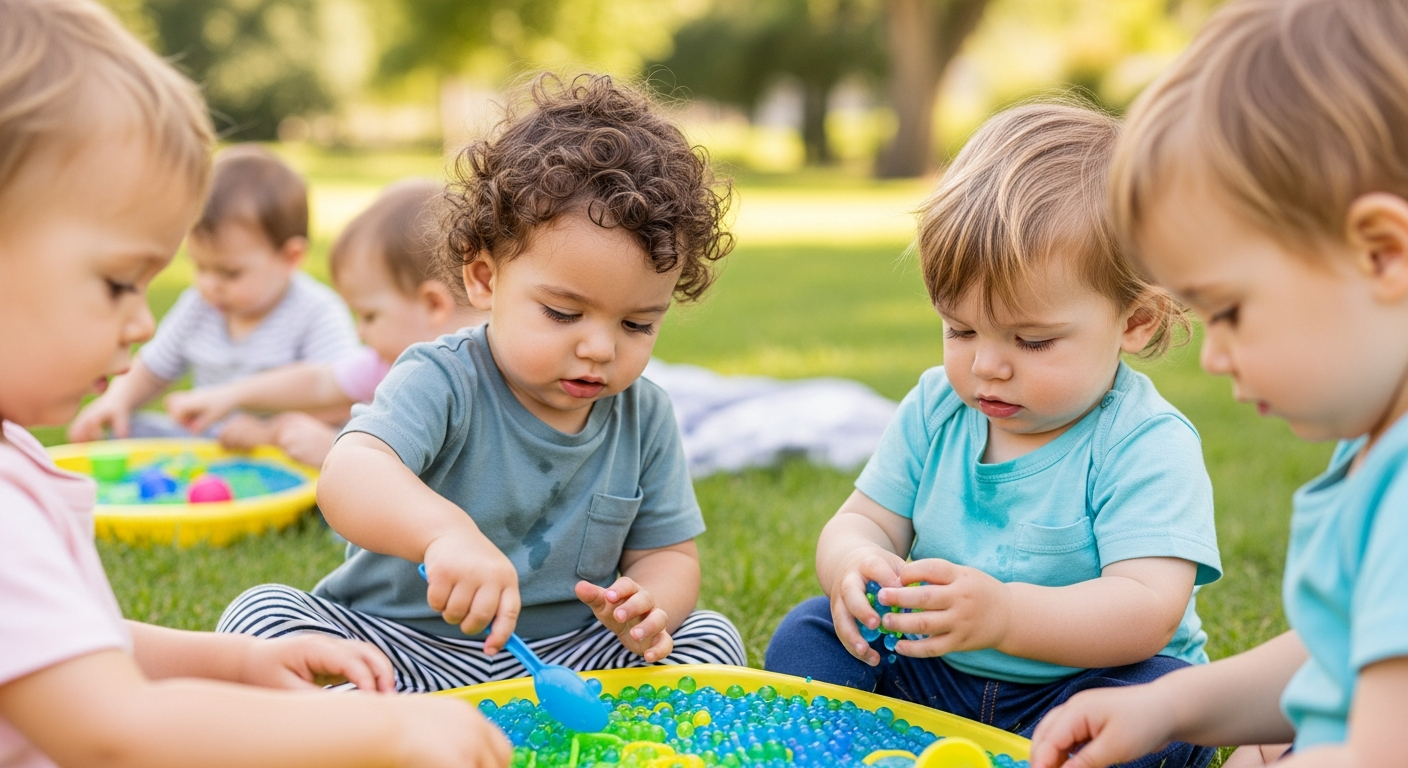
Table of Contents
- Introduction
- Understanding Cognitive Development in Toddlers
- The Power of Play-Based Learning
- Memory-Boosting Activities for Toddlers
- Logic and Problem-Solving Activities
- Language and Communication: The Heart of Cognition
- Sensory Play and Environmental Exploration
- How Speech Blubs Supports Cognitive Growth
- Practical Scenarios: Connecting Activities to Daily Life
- Choosing the Right Plan for Your Family
- Creating Joyful Family Learning Moments
- Summary of Key Takeaways
- FAQs
- Conclusion
Introduction
Did you know that during the first few years of life, a child’s brain forms more than one million new neural connections every single second? It is a staggering pace of growth that never happens again at any other point in adulthood. As parents, we often watch our little ones and wonder what is going on behind those curious eyes as they drop a spoon for the tenth time or stare intensely at a crawling ant. This period of rapid growth is what we call cognitive development, and it encompasses everything from memory and language to problem-solving and emotional regulation.
The purpose of this guide is to provide you with a comprehensive toolkit of toddler cognitive development activities that are easy to implement at home. We will explore why play is the "work" of childhood, how specific games build different parts of the brain, and how you can use modern tools to supplement traditional play. Whether your child is just starting to mimic your facial expressions or is already a "threenager" asserting their independence, these activities are designed to foster a lifelong love for learning. At Speech Blubs, our mission is to empower children to speak their minds and hearts, and we believe that building a strong cognitive foundation is the first step in that journey.

Understanding Cognitive Development in Toddlers
Before diving into the activities, it is helpful to understand what we are actually trying to nurture. Cognitive development refers to how a child perceives, thinks, and gains an understanding of their world. For a toddler, this involves several key areas:
- Memory: Both short-term (remembering where a toy was hidden) and long-term (remembering the words to a favorite song).
- Logic and Reasoning: Understanding cause and effect—for example, knowing that if they push a button, a toy will pop up.
- Problem-Solving: Figuring out how to fit a square peg into a square hole.
- Language Acquisition: Learning that sounds represent objects, actions, and feelings.
Between the ages of one and three, children often experience a "frustration gap." This happens because their curiosity and desire to express themselves grow faster than their physical ability to speak or perform complex tasks. This is often the root of those famous toddler tantrums. By engaging in targeted toddler cognitive development activities, we can help bridge this gap, giving them the skills they need to navigate their environment with more confidence and less frustration.
The Power of Play-Based Learning
At Speech Blubs, we lean heavily into the philosophy that play is the most effective teacher. Our company was born from the personal experiences of our founders, who all grew up with speech challenges and wanted to create the joyful, play-centered tool they wished they’d had.
When a child plays, they aren't just "having fun"—they are conducting experiments. They are testing gravity, social boundaries, and linguistic patterns. This is why we call our app "smart screen time." Unlike passive cartoons that act as "digital babysitters," interactive play requires the brain to stay active. By focusing on activities that promote active engagement, you are helping your child build sturdy brain architecture.
Memory-Boosting Activities for Toddlers
Memory is a foundational skill that supports almost every other aspect of learning. Here are some simple ways to exercise your toddler's "memory muscles" at home.

1. The Classic "What’s Missing?" Game
This is a fantastic way to build visual memory and attention to detail.
- How to do it: Place three familiar objects on a tray (e.g., a toy car, a spoon, and a ball). Let your child look at them for a few seconds, then cover them with a towel. Reach under the towel, remove one object, and hide it behind your back. Lift the towel and ask, "What’s missing?"
- Why it works: It forces the child to create a mental image of the objects and compare it to what they see in front of them.
2. Interactive Storytelling and Nursery Rhymes
Repetition is the secret sauce of toddler memory. There is a reason why your child wants to read the same book about a hungry caterpillar fifty times.
- The Strategy: As you read a familiar book or sing a song like "Twinkle Twinkle Little Star," start pausing before the key words. Wait for your child to fill in the blank.
- Speech Blubs Tip: For a parent whose toddler is obsessed with music, the "Sing Along" section in the Speech Blubs app uses video modeling to show other children performing the actions to famous songs. This encourages your child to not only remember the lyrics but also the physical gestures associated with them.
3. Hide and Seek with a Twist
Instead of hiding yourself, hide a noisy toy.
- How to do it: Take a toy that makes a ticking or beeping sound and hide it somewhere in the room while your child’s eyes are closed. Ask them to find it using only their ears.
- Why it works: This builds auditory memory and spatial awareness, helping the brain process and locate information based on sound cues.
Logic and Problem-Solving Activities
Logic is about understanding the "why" and "how" of the world. Toddlers are natural scientists, and these activities help them refine their theories.
4. Sorting and Classifying
Sorting is the precursor to mathematical thinking. It teaches children to look for patterns and categorize information.
- Daily Routine Idea: During laundry time, ask your toddler to find all the "blue socks" or all the "big shirts."
- Playtime Idea: Use a muffin tin and various colored pom-poms. Ask them to put the red ones in one hole and the yellow ones in another.
- Why it works: It requires the child to identify specific attributes (color, size, shape) and ignore irrelevant ones, which is a high-level cognitive skill.
5. Simple Puzzles and Shape Sorters
Puzzles are the ultimate problem-solving tool. They require hand-eye coordination, spatial reasoning, and persistence.
- The Scenario: Imagine a toddler who loves animals but gets frustrated when they can't make things "fit." Starting with a chunky wooden animal puzzle allows them to succeed.
- Growth Path: Once they master the single-piece puzzles, move to two- or three-piece puzzles. This gradual increase in difficulty builds "grit"—the ability to keep trying even when a task is hard.
6. Building Blocks and Gravity Experiments
Blocks are not just for building towers; they are for learning about physics.
- How to do it: Challenge your child to see how high they can build a tower before it falls. Discuss why it fell (e.g., "The top was too heavy!").
- Why it works: This teaches cause and effect. It also encourages "trial and error" learning, which is a cornerstone of cognitive development.
Language and Communication: The Heart of Cognition
Language is how we organize our thoughts. A child who can label their world can understand it more deeply. Our unique approach at Speech Blubs involves "video modeling," where children learn by watching and imitating their peers. This is based on the science of mirror neurons—the brain cells that fire both when we perform an action and when we see someone else do it.
7. Labeling the World
Toddlers love to know the names of things. It gives them power over their environment.
- Activity: Go on a "Labeling Walk" around the house. Touch a door and say "Door." Wait for them to repeat it.
- Enhancing the Experience: If your child is a "late talker" who is fascinated by the "Animal Kingdom" section of our app, use that interest as a springboard. After they watch a peer say "Moo" on the screen, go to your kitchen and find a toy cow to practice the sound in real life. This transition from "smart screen time" to physical play is where the magic happens.
8. Asking Open-Ended Questions
Instead of asking questions that only require a "yes" or "no" answer, try to ask questions that require a bit of thought.
- Example: Instead of "Is that a red truck?" ask "What is that truck doing?" or "Where do you think the truck is going?"
- Why it works: It encourages the child to retrieve words from their memory and construct a simple narrative, which builds the neural pathways for complex communication.
Sensory Play and Environmental Exploration
Cognitive development doesn't just happen in the brain; it happens through the hands, nose, and eyes.
9. Nature Scavenger Hunts
The outdoors is a sensory-rich environment that offers endless opportunities for learning.
- How to do it: Give your toddler a small basket and ask them to find one smooth rock, one crunchy leaf, and one yellow flower.
- Why it works: This activity combines following instructions (logic), finding specific items (visual discrimination), and experiencing different textures (sensory processing).
10. The "Mystery Bag"
- How to do it: Place several household items with distinct shapes (a comb, a ball, a block, a spoon) into an opaque fabric bag. Have your child reach in and try to guess what the object is before pulling it out.
- Why it works: This develops "stereognosis"—the ability to perceive and recognize the form of an object using cues from texture, size, and spatial properties without seeing it.
How Speech Blubs Supports Cognitive Growth
We understand that modern parenting is a balancing act. You want to provide the best toddler cognitive development activities, but you also need tools that are effective and engaging. Speech Blubs was designed to be a powerful supplement to your child's overall development plan.
Our app focuses on:
- Fostering a Love for Communication: By making sounds and words fun, we reduce the frustration that often leads to tantrums.
- Building Confidence: When a child sees another child on the screen performing a task, they think, "If they can do it, I can too!"
- Scientific Methodology: Our content is built on proven speech therapy techniques, ensuring that your child’s screen time is actually "smart." We are proud of our high rating on the MARS scale, which evaluates the quality of mobile health apps. You can read more about the research behind our method to see how we prioritize your child's development.
For parents who are unsure where their child stands, we offer a quick 3-minute preliminary screener. It consists of 9 simple questions and provides you with a personalized assessment and a next-steps plan. It’s a great way to gain peace of mind and see if your child could benefit from our specialized approach.
Practical Scenarios: Connecting Activities to Daily Life
To make these activities stick, it helps to see how they fit into a real-world context.
- Scenario A: Your 2-year-old is struggling with transitions (like leaving the park). You can use a cognitive strategy like "predictive counting." Tell them, "We are going to go down the slide three more times. Let’s count together: One... two... three!" This uses counting games to provide a logical structure to their day, reducing anxiety.
- Scenario B: Your child is a "visual learner" who loves looking at photos of family members. Use this to build memory by creating a "Family Book." Ask them, "Where is Grandma?" or "What is Daddy doing in this picture?" This builds the foundation for narrative comprehension and social-emotional intelligence.
- Scenario C: You are trying to prepare dinner, and your toddler is underfoot. Instead of turning on a passive cartoon, you can set them up with the Speech Blubs app. In the "Yummy Time" section, they can watch peers name different foods, which they can then "help" you identify in the kitchen.
Choosing the Right Plan for Your Family
We want to be transparent about how you can access the full suite of Speech Blubs features. We offer two main paths to help your child "speak their mind and heart."
- The Monthly Plan: At $14.99 per month, this is a great way to test the waters and see how your child responds to our video modeling methodology.
- The Yearly Plan (Best Value): This is our most popular choice for a reason. At $59.99 per year, the cost breaks down to just $4.99 per month—a 66% saving compared to the monthly rate.
More importantly, the Yearly Plan is designed to give your child a comprehensive learning experience. It includes:
- A 7-day free trial so you can explore all the content risk-free.
- The Reading Blubs app, which extends the learning from speech into early literacy.
- Early access to all new updates and features.
- Priority support with a 24-hour response time.
Ready to see the difference for yourself? You can sign up for your free trial on our website or download the app directly. We recommend the Yearly plan to ensure you have all the tools necessary for your child's long-term success.
Creating Joyful Family Learning Moments
While the science behind toddler cognitive development activities is complex, the implementation doesn't have to be. The most important "ingredient" in any activity is you. Your interaction, your encouragement, and your presence are what turn a simple block tower into a profound learning experience.
We aren't looking for public speeches in a month. We are looking for those "lightbulb moments"—the first time they correctly sort a shape, the first time they mimic a new word, or the first time they solve a problem without looking to you for help. These small victories are the building blocks of a confident, capable child.
As you integrate these activities into your daily life, remember to keep the focus on joy. If an activity isn't working today, put it away and try again next week. Every child develops at their own pace, and our goal is to support that unique journey with empathy and expertise. You can see how other families have found success by reading our parent testimonials.
Summary of Key Takeaways
To recap, fostering cognitive development in your toddler involves:
- Prioritizing Active Play: Choose "smart screen time" and interactive games over passive viewing.
- Focusing on Foundations: Use memory games, sorting tasks, and simple puzzles to build logical pathways.
- Encouraging Imitation: Use video modeling to help your child learn from their peers.
- Expanding Language: Label the world and ask open-ended questions to deepen their understanding.
- Maintaining Realism: Celebrate the process and the small wins rather than focusing on "guaranteed" outcomes.
FAQs
1. How much time should my toddler spend on cognitive activities each day?
There is no "magic number," but consistency is more important than duration. Even 15 to 20 minutes of focused, interactive play can make a significant difference. The key is to follow your child’s lead; if they are engaged and having fun, keep going! If they become frustrated or distracted, it’s okay to take a break.
2. Can digital apps really help with cognitive development?
Yes, provided they are interactive and designed with developmental principles in mind. Apps like Speech Blubs use "smart screen time" to encourage active participation, vocalization, and imitation. This is vastly different from passive viewing, as it requires the child to think, react, and engage with the content.
3. My child isn't interested in puzzles or blocks. What should I do?
Don't worry! Every child has different interests. If your child prefers physical movement, try "Maths with Movement" by counting jumps or steps. If they love art, focus on "Sensory Play" with finger paints. The goal is to integrate cognitive challenges into the things they already enjoy doing.
4. What is the benefit of the Speech Blubs Yearly plan over the Monthly plan?
The Yearly plan offers the best long-term value, reducing the monthly cost by 66%. It also provides a more holistic educational experience by including the Reading Blubs app and giving you a 7-day free trial to explore all features. It’s designed for parents who want a consistent, comprehensive tool to support their child's development throughout the year.
Conclusion
The journey of watching your toddler grow is filled with wonder, and providing the right toddler cognitive development activities is one of the greatest gifts you can give them. By focusing on play, imitation, and logical exploration, you are setting the stage for all the learning that is yet to come.
At Speech Blubs, we are honored to be a part of your family's story. We invite you to join our community of parents who are dedicated to helping their children "speak their minds and hearts."
Ready to jumpstart your child's progress?
Download Speech Blubs today on the Apple App Store or Google Play Store to begin your journey. For the best experience and the most comprehensive suite of features, be sure to select our Yearly plan. This includes your 7-day free trial, the Reading Blubs app, and full access to our peer-led video modeling library. Let’s create some joyful learning moments together!
About the author