
Fun and Simple Toddler Hand Turkey Craft Ideas
 By Speech Blubs Team•Feb 20, 2026•15 min.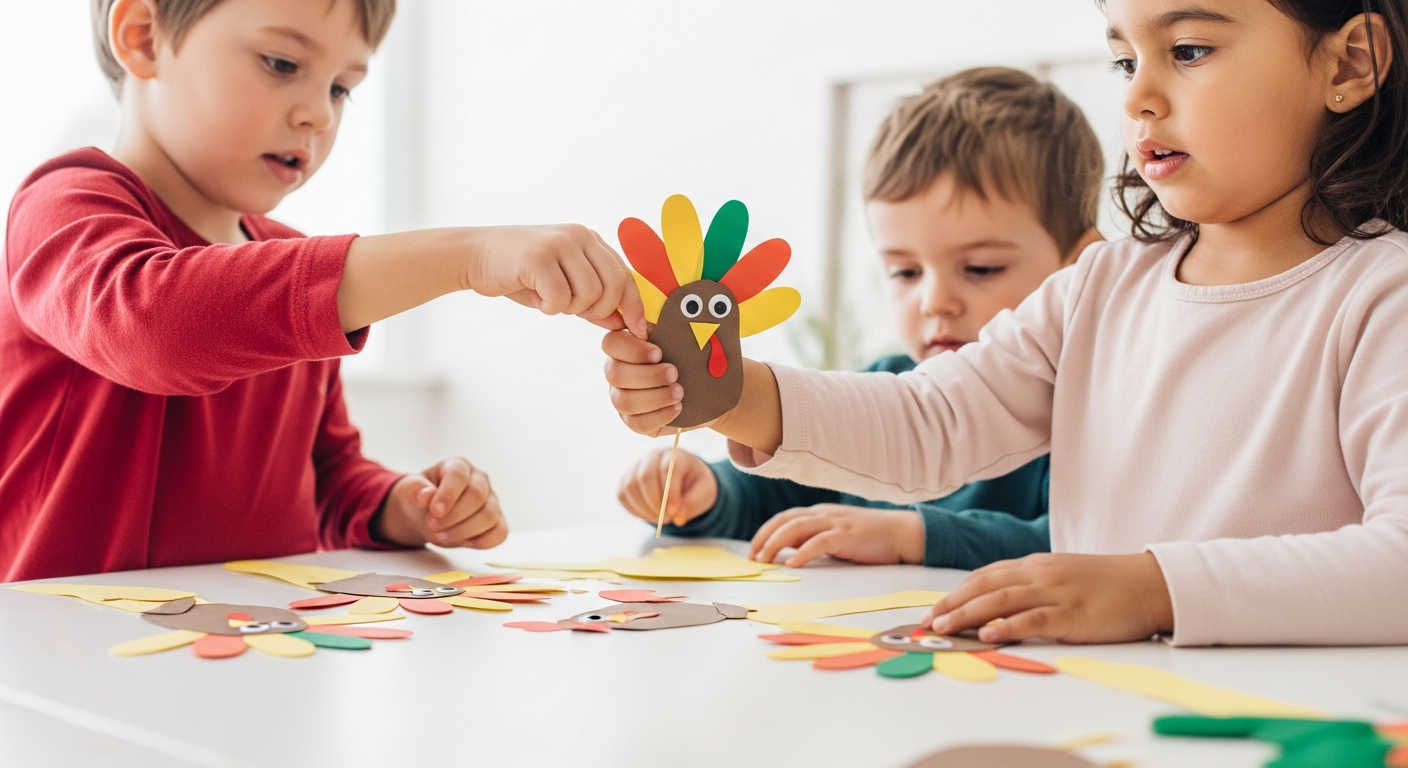
Table of Contents
- Introduction
- The Developmental Benefits of Crafting
- Essential Supplies for Your Turkey Crafting Session
- Method 1: The Classic Painted Toddler Hand Turkey Craft
- Method 2: The Trace-and-Cut Paper Turkey
- Method 3: The Multi-Generational Family Turkey
- Using the "Smart Screen Time" Approach to Crafting
- Boosting Language During the Craft
- Setting Realistic Expectations
- Choosing the Right Plan for Your Family
- How to Preserve Your Toddler's Masterpiece
- Why Speech Blubs is the Perfect Crafting Companion
- Summary of Key Takeaways
- Conclusion
Introduction
Did you know that by the time your child reaches their third birthday, their brain has already formed about 1,000 trillion connections? It’s a staggering statistic that highlights just how much learning happens in those early, fleeting years. As parents, we often find ourselves caught in a whirlwind of milestones, from those first wobbly steps to the very first time they say "Mama" or "Dada." Amidst this rapid growth, we often look for ways to freeze time, even if just for a second. This is where the classic toddler hand turkey craft becomes more than just a holiday activity—it becomes a tangible snapshot of your child’s development and a powerful tool for connection.
In this post, we are going to dive deep into the world of hand turkey crafting. We’ll explore different methods—from the classic messy paint approach to the clean-and-simple paper tracing technique—and show you how to turn these moments into opportunities for language development. At Speech Blubs, we believe that every interaction is a chance for a child to learn how to "speak their minds and hearts." Whether you are crafting a masterpiece for the refrigerator or looking for ways to boost your little one’s vocabulary, this guide will provide you with everything you need to make this Thanksgiving season both memorable and educational. Our goal is to help you foster a love for communication while building the foundational skills your toddler needs to thrive.

The Developmental Benefits of Crafting
Before we roll up our sleeves and get the paint out, it’s helpful to understand why activities like the toddler hand turkey craft are so beneficial. Crafting isn't just about the final product; it's about the process. For a toddler, every step of a craft involves complex cognitive and physical tasks.
Fine Motor Skill Development
When your child holds a paintbrush, squeezes a glue bottle, or tries to pick up a tiny googly eye, they are practicing fine motor skills. These small muscle movements in the hands and fingers are the same ones they will eventually use to write their name, button their coat, and use a fork.
Sensory Exploration
Toddlers learn about the world through their senses. Feeling the cold, squishy texture of paint on their palm or the roughness of construction paper provides essential sensory input. This helps their brains process different textures and temperatures, which is a key part of early childhood development.
Language and Vocabulary Building
Crafting is a "language-rich" environment. Think about all the words you use during a single session: sticky, wet, dry, colorful, press, lift, feathers, beak. By narrating what you are doing, you are helping your child connect words to actions and objects. This is a core part of our philosophy at Speech Blubs, where we emphasize that learning through play is the most effective way for children to acquire new skills.
Essential Supplies for Your Turkey Crafting Session
To make your crafting session go smoothly, it helps to have your supplies organized beforehand. Toddlers have short attention spans, so the less time you spend hunting for a glue stick, the better!
- Washable, Non-Toxic Paint: Look for tempera or finger paints in "turkey colors" like brown, red, orange, yellow, and green.
- Cardstock or Heavy Paper: Standard printer paper can wrinkle or tear when it gets wet with paint. White cardstock is much more durable.
- Construction Paper: Essential if you prefer the tracing and cutting method.
- Googly Eyes: These add instant personality to any turkey.
- School Glue or Glue Sticks: Glue sticks are often easier for toddlers to manage with less mess.
- Markers or Crayons: For adding legs, a beak, or a "wattle" (that red part under the turkey's chin!).
- Baby Wipes: These are a lifesaver for quick clean-ups before the paint reaches the carpet.
If you are curious about where your child stands in their development before starting these activities, you can take our quick 3-minute preliminary screener. It consists of 9 simple questions and provides you with an assessment and a next-steps plan to support your child’s communication journey.

Method 1: The Classic Painted Toddler Hand Turkey Craft
This is the version most of us remember from our own childhoods. It’s messy, it’s vibrant, and it produces a beautiful, textured keepsake.
Step-By-Step Instructions
- Prepare the Hand: Use a medium-sized paintbrush to apply a generous layer of brown paint to your child’s palm and thumb. The thumb will eventually become the turkey’s head.
- Paint the Feathers: Paint each finger a different color. You might do the index finger orange, the middle finger yellow, the ring finger red, and the pinky green.
- The Big Press: Guide your child’s hand onto the center of the cardstock. Tell them to "spread your fingers wide like a fan!" Press down gently on each finger and the palm to ensure the paint transfers evenly.
- The Lift: Carefully lift their hand straight up to avoid smearing.
- Wash Up: Immediately use those baby wipes! This prevents "turkey prints" from appearing on your furniture.
- Add the Details: Once the paint is completely dry, glue on a googly eye on the thumbprint. Use a marker to draw a small orange triangle for a beak and two little legs at the bottom of the palm.
Pro-Tip for Success
For a parent whose 2-year-old is a "late talker," use this moment to practice simple sounds. As you paint each finger, you can say, "Ooh, cold!" or make a "Pop!" sound when you lift the hand off the paper. This turns the craft into a functional communication exercise, much like the activities found in the Speech Blubs app, which uses peer-to-peer video modeling to encourage kids to mirror sounds and words.
Method 2: The Trace-and-Cut Paper Turkey
If the thought of paint gives you a headache, the paper-based toddler hand turkey craft is a fantastic, low-mess alternative. This version is also great for practicing scissor skills if your child is a bit older (with safety scissors and supervision, of course).
Step-By-Step Instructions
- Tracing: Place your child’s hand on a piece of brown construction paper. Use a pencil to slowly trace around their hand. This can be a very tickly and fun experience for a toddler!
- Cutting: Cut out the hand shape. If your toddler is very young, you’ll do the cutting. If they are in the "I can do it myself" phase, let them try the straight edges while you handle the tricky finger curves.
- Feather Accents: Cut out small "feather" shapes from other colors of construction paper and glue them onto the fingers of the brown handprint.
- Assembly: Glue the handprint onto a larger piece of paper. Add the face and legs using markers or scrap paper.
This method is excellent for building "joint attention," which is when you and your child focus on the same object or task together. Joint attention is a critical building block for social communication. To see how other families have used these types of bonding activities alongside our tools, check out our parent testimonials.
Method 3: The Multi-Generational Family Turkey
Why should the kids have all the fun? A family hand turkey is a beautiful way to show how everyone fits together.
- The Foundation: Trace the largest hand in the family (usually Dad’s or Mom’s) on a piece of red or brown paper and cut it out.
- Layering: Trace each family member’s hand, using different colors for each person.
- Stacking: Glue the hands on top of each other, starting with the largest at the back and ending with the toddler’s hand at the very front.
- The Body: Cut out a simple circle and oval for the turkey's body and head, and glue them onto the smallest handprint.
This creates a "3D" feather effect that looks wonderful when framed. It’s a great way to talk about "big," "bigger," and "biggest" with your toddler, helping them understand comparative concepts.
Using the "Smart Screen Time" Approach to Crafting
At Speech Blubs, we advocate for "smart screen time"—the idea that technology should be an active, engaging tool rather than a passive one. You can apply this same principle to your toddler hand turkey craft by using video modeling concepts.
Our app is built on the scientific principle of mirror neurons. When children see other children performing an action or making a sound, their brains react as if they are doing it themselves. You can use this during your craft! Show your child a video of another child making a turkey craft, or record a video of yourself doing a "practice" turkey. This visual guide helps them understand the sequence of events and reduces frustration.
If you are ready to see the power of video modeling in action, you can download Speech Blubs on the Google Play Store to explore our library of over 1,500 activities designed by speech therapists.
Boosting Language During the Craft
The secret to turning a craft into a speech lesson is "parallel talk." This means you describe what your child is doing as they do it.
- When they reach for the paint: "You are reaching for the red paint. It’s so bright!"
- When they press their hand down: "Press, press, press! Harder! Good job."
- When they see the finished product: "Look at your turkey! He has five feathers."
By providing the words for their actions, you are filling their "language bucket." For a child who loves animals, you can even incorporate the "Animal Kingdom" section of our app. After making the turkey, you can go into the app and practice the "gobble gobble" sound together. This reinforces the connection between the physical craft and the digital learning experience.
Setting Realistic Expectations
It’s important to remember that crafting with a toddler isn't always picture-perfect. Sometimes they’ll want to smudge the paint all over the paper instead of making a neat handprint. Sometimes they’ll lose interest halfway through and want to go play with their blocks.
That is okay!
Our mission at Speech Blubs is to provide a joyful solution for the 1 in 4 children who need speech support. Joy doesn't come from a perfect paper turkey; it comes from the laughter, the shared effort, and the pride your child feels when they show off their work. We don't promise that a single craft session will result in public speaking skills, but we do know that these moments build the confidence and foundational skills that lead to communication breakthroughs.
Choosing the Right Plan for Your Family
If you find that your child responds well to these structured yet playful activities, you might consider making Speech Blubs a permanent part of your daily routine. We offer two main ways to access our full suite of tools:
- Monthly Plan: For $14.99 per month, you get full access to our speech-boosting activities.
- Yearly Plan: This is our most popular and high-value option. At $59.99 per year, it breaks down to just $4.99 per month—a 66% savings compared to the monthly plan.
The Yearly Plan is designed for families who are committed to long-term progress. When you choose the Yearly option, you receive:
- A 7-day free trial to explore everything we have to offer.
- The Reading Blubs app, which focuses on early literacy and phonics.
- Early access to all our new updates and features.
- Priority 24-hour support response time.
The Monthly plan does not include the free trial or the Reading Blubs app, so we always recommend the Yearly plan to ensure you get the full "smart screen time" experience. You can create your account and start your trial today to see the difference for yourself.
How to Preserve Your Toddler's Masterpiece
Once the toddler hand turkey craft is finished, you’ll want to keep it safe. These tiny handprints won’t stay tiny for long!
- The Shadow Box: Place the turkey in a shallow shadow box frame. This protects the googly eyes and any 3D elements like feathers.
- The Memory Book: Many parents keep a dedicated "art portfolio" for each year of their child's life.
- The Digital Archive: Take a high-quality photo of the craft. You can use these photos to create custom Thanksgiving cards for grandparents.
- Lamination: If you used paper and markers, laminating the craft can protect it from spills and tears for years to come.
Why Speech Blubs is the Perfect Crafting Companion
Our founders grew up with speech problems themselves, and they created Speech Blubs to be the tool they wished they had. We know that the journey to clear communication can sometimes feel lonely or frustrating for parents. That’s why we’ve built a community and a tool that focuses on the joy of speaking.
When you sit down to do a toddler hand turkey craft, you are doing exactly what we encourage in our app: co-playing. Whether it’s through "smart screen time" or a physical craft, your presence and engagement are the most important factors in your child’s success. We provide the "how-to" and the scientific methodology, but you provide the love and encouragement.
To learn more about the science behind our approach, including our high rating on the MARS (Mobile App Rating Scale), feel free to explore our research page. We take pride in being a screen-free alternative to passive viewing, even when we are on the screen!
Summary of Key Takeaways
- Crafting is Learning: The toddler hand turkey craft supports fine motor skills, sensory processing, and language development.
- Variety is Key: Whether you choose paint, paper, or a family-style craft, the goal is engagement, not perfection.
- Narrate the Process: Use parallel talk to build your child's vocabulary while you craft.
- Supplement with Smart Tools: Use Speech Blubs to reinforce sounds and words related to your activities.
- Value Matters: The Speech Blubs Yearly plan offers the best value for families, including a free trial and extra educational apps.
FAQs About Toddler Hand Turkey Crafts
1. What if my toddler hates the feeling of paint on their hands? This is very common! Some children have sensory sensitivities. Instead of painting their hand, try the "Trace and Cut" method mentioned above. You can also let them wear a thin latex-free glove while you paint, or use a "stamp pad" instead of wet liquid paint, which can feel less overwhelming.
2. At what age can a child start doing hand turkey crafts? You can start as early as infancy for a keepsake (where you do all the work!), but toddlers aged 18 months to 3 years will get the most "educational" value out of it. At this age, they can begin to participate in the pressing, gluing, and naming of colors.
3. How can I prevent the paint from staining my toddler's clothes? Always use "washable" tempera paint. Even then, it’s best to use an old oversized T-shirt as a smock or let them craft in just their diaper if it’s warm enough. Keep baby wipes and a wet towel immediately available to catch drips before they dry.
4. Is this craft a replacement for speech therapy? No. While crafting is a wonderful way to support language development at home, it is a supplement to—not a replacement for—professional therapy. If you have concerns about your child's speech, we recommend consulting a pediatrician or a licensed Speech-Language Pathologist (SLP). Our app is designed to work beautifully alongside professional therapy to provide extra practice at home.
Conclusion
The toddler hand turkey craft is a timeless tradition for a reason. It bridges the gap between art and memory, creating a snapshot of a moment in time while helping your child develop the skills they need for the future. As you prepare for the holiday season, remember that the most valuable thing you can give your child is your time and attention.
At Speech Blubs, we are honored to be a part of your family’s journey. Our mission is to empower your child to speak their mind and heart, and we believe that every "gobble gobble" and every painted palm print is a step in that direction.
Ready to take the next step in supporting your child’s communication? Choose the Yearly plan today to start your 7-day free trial. Not only will you save 66% compared to the monthly rate, but you’ll also unlock the Reading Blubs app and get early access to our latest features. Download Speech Blubs on the App Store or sign up on our website to begin your journey toward more joyful family learning moments. Happy crafting!
About the author