
Fun and Simple Toddler Social Studies Activities
 By Speech Blubs Team•Feb 23, 2026•14 min.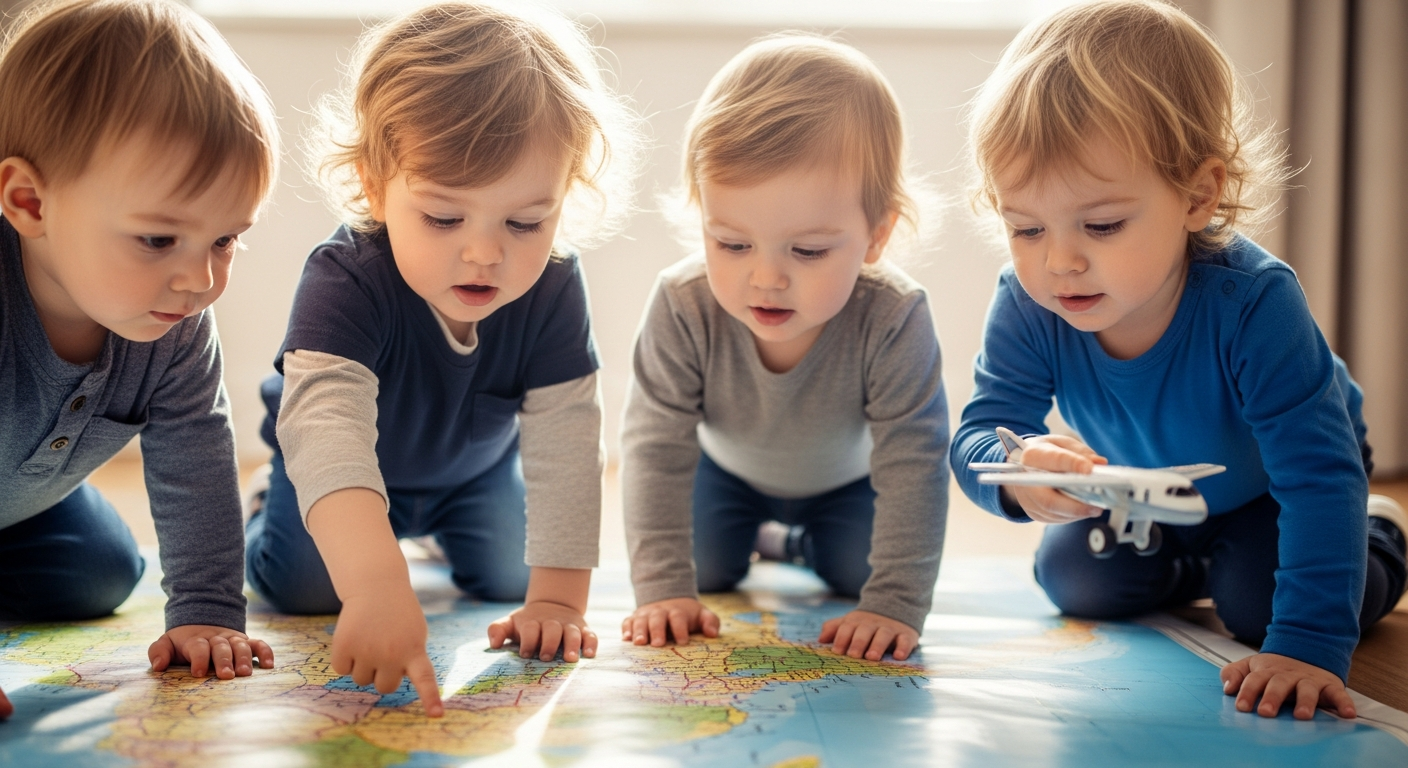
Table of Contents
- Introduction
- What is Social Studies for a Toddler?
- Building a Sense of Self: Identity Activities
- Our Community: Meeting the People Around Us
- Toddler Geography: Exploring Our Place in the World
- Civic Duty and Responsibility for Tiny Citizens
- Celebrating Diversity and Global Cultures
- The Science of Play: How Speech Blubs Supports Social Learning
- Practical Scenarios: Social Studies in Action
- Choosing the Right Path: Monthly vs. Yearly Plans
- Conclusion
- FAQ
Introduction
Did you know that by the time a child reaches their second birthday, they are already beginning to construct a complex map of the social world around them? It starts with recognizing "mama" and "dada," but quickly expands to understanding their neighborhood, the roles of people they meet, and the basic rules of sharing and kindness. Many parents think of social studies as a subject reserved for high schoolers memorizing dates and capitals, but at its heart, social studies is the study of people and how they relate to one another. For a toddler, every trip to the grocery store, every "thank you" said to a librarian, and every minute spent sorting recycling is a profound social studies lesson.
At Speech Blubs, our mission is to empower children to "speak their minds and hearts." We believe that communication is the bridge that connects a child to their community. Our founders, who all navigated speech challenges in their own childhoods, created our platform to be the joyful, effective tool they wished they’d had. We understand that for the 1 in 4 children who need speech support, the social world can sometimes feel overwhelming. By integrating social studies concepts into daily play, we help children find their voice within their family and the wider world.

In this blog post, we will explore a wide variety of toddler social studies activities designed to nurture curiosity, foster empathy, and build foundational communication skills. We will cover how to introduce concepts like geography, history, and civic responsibility through simple, hands-on play. Whether you are using a globe for the first time or visiting a local fire station, these activities are about creating joyful family learning moments. Our goal is to provide you with practical, realistic strategies to help your little one understand their place in this big, beautiful world.
What is Social Studies for a Toddler?
For the preschool and toddler set, social studies isn’t about textbooks; it’s about "me" and "we." It is the exploration of how individuals fit into groups. According to the National Council for the Social Studies (NCSS), these early experiences are vital because they shape a child’s attitude as a citizen of their classroom and their community.
When we engage in toddler social studies activities, we are focusing on five core pillars:
- Identity: Who am I, and who is my family?
- Community: Who are the people in my neighborhood, and what do they do?
- Geography: Where do I live, and what does the earth look like?
- Civics: What are the rules, and how can I be a "helper"?
- History: How do things change over time?
By focusing on these areas, we help children reduce frustration by giving them the vocabulary to describe their world. As children learn to label the people and places around them, they gain confidence in their ability to navigate social interactions. This is a cornerstone of our scientific methodology, which uses peer-to-peer video modeling to show children that they, too, can master complex communication and social skills.
Building a Sense of Self: Identity Activities
The very first "unit" in a toddler's social studies curriculum is always the self. Before a child can understand a community, they must understand who they are and how they relate to their immediate family.

Mirror Play and Self-Recognition
Grab a safe, child-friendly mirror and sit with your toddler. Point to your nose, then their nose. Ask, "Who is that?" This simple game builds self-awareness. You can expand this by talking about physical traits and emotions. "I see a happy face! What does your happy face look like?" This ties directly into social-emotional learning, helping children recognize and eventually label their own feelings.
Family Photo Sorting
Toddlers love looking at faces they recognize. Create a "Family Book" using simple 4x6 photos in a soft album. Talk about each person’s name and their relationship to the child. "This is Grandma. She lives in a house with a big garden." This activity helps children understand the concept of "family" as a social unit. It also provides an excellent opportunity for speech practice as they name their loved ones. If you are looking for more ways to jumpstart your child's communication journey, you can download Speech Blubs on the App Store to explore our "This is Me" and "Family" sections.
Key Takeaway: Identity activities help toddlers form a secure "home base" from which they can confidently explore the outside world.
Our Community: Meeting the People Around Us
Once a child understands their family, they begin to notice the "helpers" in their community. This is a perfect time to introduce the concept of roles and responsibilities.
The "When I Grow Up" Game
Community helpers—firefighters, doctors, mail carriers, and teachers—are fascinating to toddlers. You can use dress-up clothes or simple props to role-play these jobs. For a child who is curious about why the mail arrives every day, the "When I Grow Up" section in the Speech Blubs app offers a fun, motivating way to learn the sounds and words associated with different professions. By watching other children (peers) dress up and mimic these roles through our video modeling, your toddler will be inspired to join in the fun.
Field Trips to Local Landmarks
You don’t need a museum to have a successful field trip. A walk to the local post office, the fire station, or even the grocery store can be a rich social studies experience. Point out the uniforms people wear and the tools they use. "Look at the mail carrier's big bag! That’s how they carry letters to everyone on our street." These real-world connections make the abstract concept of a "community" tangible and exciting.
If you are unsure where your child stands in their development of these social and communication skills, we invite you to take our quick 3-minute preliminary screener. It consists of 9 simple questions and provides you with a personalized assessment and a next-steps plan.
Toddler Geography: Exploring Our Place in the World
Geography for toddlers isn't about latitude and longitude; it's about understanding the space they occupy and the variety of landscapes that exist.
The "Map Quest" Activity
Start by showing your child a map of your neighborhood or even a simple drawing of your house. Use Google Maps on your phone to show them the "blue dot" that represents your home. Then, zoom out slowly to show your city, your state, and finally the whole country. This helps them visualize that they are part of something much larger. You can say, "Here is our house, and here is the park where we play!"
Globe and Puzzle Play
Puzzles are a fantastic tool for teaching geography. Many wooden puzzles feature the 50 states or the continents. While a two-year-old might not remember every name, they are practicing shape recognition and spatial awareness. You can also use a globe to point out where different relatives live. If Grandma lives in another country, show them the distance across the blue ocean. This builds an early understanding of distance and the physical world.
Civic Duty and Responsibility for Tiny Citizens
It’s never too early to teach children about being responsible members of society. This starts with simple rules and the concept of taking care of our environment.
The "Recycle and Sort" Game
Teaching toddlers about recycling is one of the easiest ways to introduce environmental stewardship. Set up two bins—one for trash and one for recycling. Give your child clean items like a plastic bottle, a cardboard box, and a scrap of paper. Ask them to help you "save the planet" by putting the items in the right bin. You can even draw the universal recycling symbol together and tape it to your bin.
Household Helpers: Chores as Social Studies
In a toddler's world, the home is their first society. Giving them "jobs," like putting their toys in a bin or helping to wipe the table, teaches them about contribution and responsibility. This fosters a sense of belonging and shows them that their actions have a positive impact on the group.
For parents who want to see how these small habits build into larger developmental milestones, checking out parent testimonials can be incredibly encouraging. Seeing how other families have used play and routine to foster growth can give you the inspiration you need to keep going.
Celebrating Diversity and Global Cultures
Understanding that the world is full of different people, languages, and traditions is a vital part of social studies.
Around the World with Food and Music
You don’t need a passport to experience another culture. Have a "Cultural Night" once a month where you try a food from a different country and listen to its music. Talk about how the food tastes and how the music makes you feel. This simple exposure helps toddlers learn to appreciate diversity from a very young age.
Holiday Traditions Exploration
Whether it’s Christmas, Hanukkah, Diwali, or Eid, talking about how different families celebrate various holidays is a great way to discuss traditions. Use books with vibrant illustrations to show how people around the world dress, eat, and gather. This teaches respect for different ways of life and reinforces the idea that while we are all different, we all share the joy of celebration.
Ready to start this journey? You can get Speech Blubs on the Google Play Store today and begin exploring our diverse range of activities that celebrate global communication.
The Science of Play: How Speech Blubs Supports Social Learning
At Speech Blubs, we don't just create "apps"; we create "smart screen time" experiences. We are a screen-free alternative to passive viewing, like mindlessly watching cartoons. Instead, our app is a powerful tool for family connection, designed to be used by the child and parent together.
Video Modeling and Mimicry
Our unique approach is based on the science of mirror neurons. When a child watches another child perform an action or say a word, their brain reacts as if they are doing it themselves. This "video modeling" is the core of our methodology. In the context of social studies, this means your child sees their peers being "helpers," naming "family members," and exploring "nature." It makes these social concepts feel attainable and fun.
Smart Screen Time vs. Passive Viewing
Unlike apps that simply entertain, Speech Blubs requires active participation. We encourage children to make sounds, repeat words, and engage in the "mini-games" that reinforce the lesson. This active engagement is what builds the foundational skills needed for successful social interaction. We are proud to be a top-rated tool on the MARS scale, a testament to the scientific rigor we bring to our playful platform. You can learn more about our mission and values on our homepage.
Practical Scenarios: Social Studies in Action
To help you see how these activities look in real life, let’s look at a few common scenarios:
- For the child who loves vehicles: If your 3-year-old is obsessed with trucks, use the "When I Grow Up" section to look at fire trucks and mail vans. Then, go on a "Truck Hunt" in your neighborhood. When you see a garbage truck, explain that the driver is a helper who keeps our streets clean. This connects their passion to a social role.
- For the child who is a "late talker": If your child is struggling with verbal communication, focus on the "Animal Kingdom" section. Practicing "moo" and "baa" sounds is the first step toward more complex speech. You can then look at a map and talk about where different animals live (e.g., "The lion lives far away in Africa!"). This introduces geography without the pressure of complex sentences.
- For the child who struggles with transitions: Use the concept of "Time and History" to create a visual schedule. Talk about what we do "first," "next," and "last." Looking at photos of what the child did yesterday vs. what they will do today helps them understand the passage of time, a key social studies concept that also reduces daily anxiety.
Choosing the Right Path: Monthly vs. Yearly Plans
We believe in being transparent with our community so you can make the best choice for your family. We offer two main ways to access the full suite of Speech Blubs features:
- Monthly Plan: For $14.99 per month, you get full access to all the speech-boosting activities within the Speech Blubs app. This is a great way to try out the tool and see how your child responds.
- Yearly Plan (Best Value): Our Yearly plan is the clear choice for families committed to long-term growth. It costs $59.99 per year, which breaks down to just $4.99 per month—a savings of 66% compared to the monthly rate.
Why the Yearly Plan is Superior:
- 7-Day Free Trial: The Yearly plan includes a 7-day free trial, allowing you to explore everything risk-free before you commit.
- Reading Blubs App: You get exclusive access to our "Reading Blubs" app, which focuses on early literacy and phonics—the perfect companion to our speech activities.
- Priority Support: Enjoy 24-hour support response times and early access to all our new updates and features.
The Monthly plan does not include the free trial or the Reading Blubs app. To give your child the most comprehensive support, we highly recommend choosing the Yearly plan. You can create your account and start your 7-day free trial today.
Conclusion
Social studies for toddlers is about much more than just learning facts; it is about fostering a love for communication, building confidence, and creating a sense of belonging. By engaging in these simple activities—from sorting coins to exploring maps—you are helping your child develop the key foundational skills they need to become responsible, empathetic, and engaged members of society.
Remember, the goal isn't perfection or immediate mastery. It's about the process: the giggles during mirror play, the pride of putting a toy in the recycle bin, and the joy of discovering a new culture through music. These moments are the building blocks of a bright future.
We are here to support you every step of the way. Our tool is a powerful supplement to your child's overall development plan and can be a wonderful companion to professional therapy. We invite you to join our community of over 5 million parents who are helping their children find their voice.
Ready to get started? Choose the Yearly plan to unlock the full potential of Speech Blubs, including your 7-day free trial and the Reading Blubs app. Download Speech Blubs on the App Store or Google Play today and watch your little one begin to speak their mind and heart!
FAQ
1. At what age should I start social studies activities with my toddler? You can start as early as 18 months! Social studies for very young children is simply about exploring their immediate world. Simple activities like looking in a mirror, naming family members in photos, or pointing out a "stop" sign on a walk are all great ways to begin.
2. My child has a speech delay. Are these activities still appropriate? Absolutely. In fact, social studies activities are excellent for children with speech delays because they provide meaningful context for new words. Naming a "fireman" or saying "please" while sharing a toy gives them a functional reason to use language. Our app is specifically designed to support these learners through video modeling.
3. Do I need expensive materials for these activities? Not at all! Most of these activities use items you already have at home. A cardboard box can become a "mail truck," a kitchen bin can be for "recycling," and your own family photos are the best "history" books. Social studies is about the interaction, not the toys.
4. How does the 7-day free trial work? When you sign up for the Yearly plan on our website or through the app stores, you will receive 7 days of full access to all features for free. If you find the app isn't the right fit for your family, you can cancel before the trial ends and you won't be charged. This allows you to explore our "When I Grow Up," "This is Me," and "Animal Kingdom" sections risk-free!
About the author