
Fun Brain Activities for Kids: Boost Learning & Speech
 By Speech Blubs Team•Jan 13, 2026•18 min.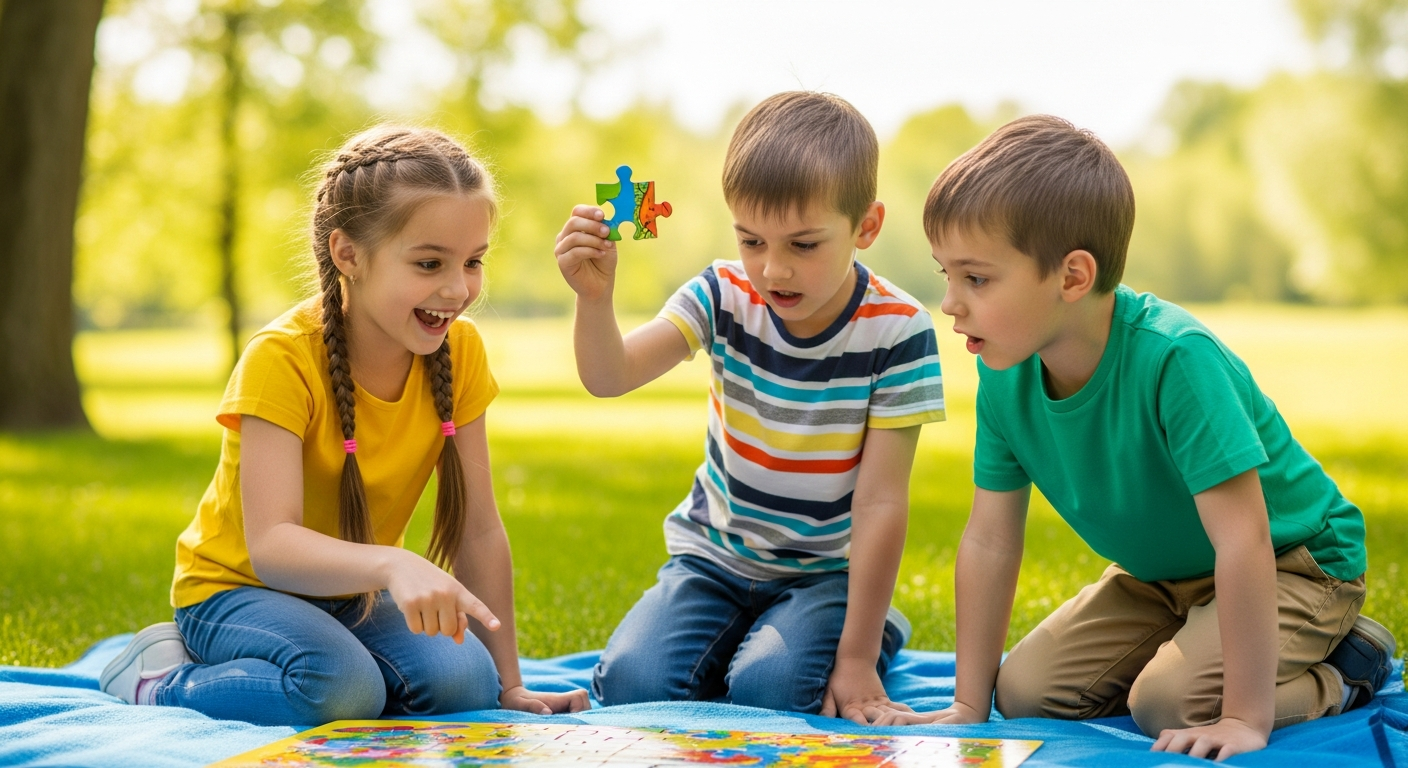
Table of Contents
- Introduction
- The Marvel of Your Child's Developing Brain
- Categories of Fun Brain Activities for Kids
- The Speech Blubs Difference: Smart Screen Time for Growing Minds
- Choosing the Right Tools for Your Child's Development
- Getting Started with Speech Blubs: Value and Features
- Conclusion
- Frequently Asked Questions
Have you ever watched a child completely absorbed in play – building a towering block castle, mimicking animal sounds, or telling an elaborate story to their favorite stuffed toy? It might look like simple fun, but what’s happening beneath the surface is nothing short of incredible. Play is the engine of childhood development, especially when it comes to building a robust brain and fostering essential communication skills. Far from mere entertainment, these seemingly simple activities are actually powerful "brain workouts" that lay the foundation for lifelong learning and confident expression.
In a world filled with distractions, harnessing the power of playful, engaging activities is more crucial than ever for parents and caregivers. This post will dive deep into why fun brain activities are so vital for your child’s growth, exploring a wide range of engaging games and interactions that support cognitive development, enhance speech and language, and strengthen family bonds. We’ll uncover how everyday play can boost memory, attention, problem-solving, and communication, and how tools like Speech Blubs integrate these principles to empower children to truly speak their minds and hearts.

Introduction
Imagine your child not just understanding the world around them, but confidently expressing their thoughts, feelings, and incredible imagination. This isn't a distant dream; it's a goal we can actively work towards through the magic of play. Many parents wonder how to best support their child’s development beyond basic care, particularly in areas like language and cognition. The answer often lies in engaging, joyful interactions that stimulate their growing brains. From the moment they are born, children are little scientists, constantly experimenting and learning. The right activities can significantly enhance this natural curiosity, building crucial neural pathways and fostering skills that extend far beyond the playground.
This article will serve as your comprehensive guide to understanding and implementing fun brain activities for kids. We’ll explore the science behind how play shapes the brain, detail various types of activities categorized by their developmental benefits (including language, logic, memory, and motor skills), and offer practical, real-world examples you can start using today. Crucially, we’ll also show how Speech Blubs, an app born from our founders' personal experiences with speech challenges, seamlessly blends scientific principles with play, offering a unique "smart screen time" solution to support your child’s communication journey. Get ready to transform playtime into powerful learning time, helping your child build confidence and a love for expressing themselves.
The Marvel of Your Child's Developing Brain
Your child’s brain is an astonishing wonder, a bustling construction site where billions of connections are being forged every second. From infancy through adolescence, this incredible organ undergoes rapid development, constantly adapting and learning. This period of intense growth is known as neuroplasticity, meaning the brain is highly moldable and responsive to experiences. Every interaction, every new sight, sound, and touch, contributes to building what experts call "sturdy brain architecture." This architecture forms the foundational pathways for lifelong health, resilience, and all future learning.

Building Blocks of Executive Function
Beyond basic sensory processing, play is particularly crucial for developing what are known as "executive function" skills. These are the higher-level cognitive processes that act like the brain's air traffic controller, managing thoughts, actions, and emotions. They include:
- Working Memory: The ability to hold and manipulate information in your mind, like remembering a sequence of instructions or recalling parts of a story.
- Cognitive Flexibility: The capacity to switch gears, adapt to new rules, or consider different perspectives.
- Self-Control (Inhibitory Control): The power to resist impulsive urges, stop an action, or stay focused despite distractions.
These skills are not just important for academic success; they are essential for navigating daily life, forming relationships, and becoming a well-adjusted individual. When children engage in playful activities, they are naturally practicing and strengthening these vital executive functions.
The Power of Play and Mirror Neurons
At Speech Blubs, we understand this profound connection between play and brain development. Our approach is deeply rooted in scientific methodology, emphasizing the power of engagement. For instance, our unique "video modeling" methodology leverages the fascinating concept of mirror neurons. These specialized brain cells activate not only when we perform an action but also when we observe someone else performing it. When children watch their peers in our app making sounds or movements, their mirror neurons fire, preparing their own brains and muscles to imitate. This makes learning complex communication skills feel natural and joyful, fostering a love for communication rather than rote memorization. Our dedication to combining scientific rigor with engaging play has even earned us a top-tier rating on the MARS scale for app quality. You can dive deeper into the science behind our methods by visiting our Research page.
Categories of Fun Brain Activities for Kids
To truly harness the potential of playtime, it's helpful to categorize activities by the specific cognitive and developmental areas they target. Remember, the best activities often overlap, stimulating multiple areas at once, and always benefit from active adult co-play and support.
Language & Communication Focused Activities
These activities are the bedrock for developing strong verbal and non-verbal communication skills, crucial for children to express themselves effectively.
Riddles, Rhymes, and Wordplay
Riddles and rhyming games aren't just fun; they're fantastic for developing phonological awareness (the ability to recognize and manipulate the sounds in spoken language), expanding vocabulary, and improving comprehension.
- Example Activity: "What Am I?" Riddles: Describe an object or animal using adjectives and actions, letting your child guess.
- Relatable Scenario: For a child who loves animals but is a late talker, you might say, "I have a long neck, spots, and I eat leaves from tall trees. What am I?" (Giraffe). This encourages them to associate descriptive words with concepts and practice animal names.
- Rhyming Word Chains: Start with a word like "cat," then take turns saying words that rhyme: "bat," "hat," "mat."
- Benefit: This builds auditory discrimination, a key pre-reading skill, and expands vocabulary.
Storytelling & Imaginative Play
Narrative skills are fundamental for communication, allowing children to organize their thoughts, sequence events, and express creativity.
- Example Activity: Collaborative Storytelling: Start a story with a sentence ("Once upon a time, a brave little squirrel found a magical acorn…") and take turns adding sentences.
- Benefit: Enhances vocabulary, sequencing, cause-and-effect understanding, and imaginative thinking.
- Puppet Shows or Dress-Up: Using puppets or costumes, encourage your child to act out different roles and scenarios.
- Speech Blubs Connection: For a child struggling with expressing complex emotions, practicing dialogue in a role-play helps build their emotional vocabulary and confidence. Our app provides a safe space for imitation that can translate to these real-world scenarios.
- Speech Blubs Integration: Our app provides rich thematic categories like "Animal Kingdom" or "Yummy Time" where children imitate sounds and words related to diverse topics. This video modeling approach, where they watch and imitate their peers, is invaluable for building articulation and vocabulary. For instance, in "Animal Kingdom," children can practice making "moo" and "baa" sounds, then mimic facial expressions and simple words, making the learning deeply engaging. Download Speech Blubs on the App Store or Google Play today to see this in action.
Logic & Problem-Solving Activities
These activities help children develop critical thinking, planning, and reasoning skills, essential for academic success and everyday challenges.
Puzzles and Building Games
- Example Activity: Jigsaw Puzzles: Start with simple, large-piece puzzles and gradually increase complexity.
- Benefit: Enhances spatial reasoning, problem-solving, fine motor skills, and hand-eye coordination.
- Building Blocks or LEGOs: Encourage children to build structures from their imagination or follow simple patterns.
- Relatable Scenario: For a child who struggles with following multi-step directions, giving them a set of blocks and saying, "First, put a red block on the bottom, then a blue block on top, and then a yellow block next to the blue one" helps practice sequential instructions and planning.
- Mazes and Logic Grids: Simple mazes or "find the path" games.
- Benefit: Develops visual tracking, planning, and sequential thinking.
Simple Lateral Thinking Problems
These challenges encourage "thinking outside the box" and foster creativity in problem-solving.
- Example Activity: "What's Missing?" Game: Place a few objects on a tray, let your child observe, then cover them and remove one. Ask them to identify what's gone.
- Benefit: Improves observation skills, memory, and logical deduction.
- Speech Blubs Connection: While Speech Blubs focuses primarily on language imitation, the app’s interactive nature encourages children to observe, process, and react, subtly building these foundational cognitive skills. For a child who might struggle with traditional puzzle-solving due to frustration, our engaging video models provide a lower-pressure environment to practice visual attention and imitation, which are precursors to more complex problem-solving.
Sensory & Motor Activities
Engaging multiple senses and developing both fine and gross motor skills are crucial for overall brain development and can directly impact speech readiness.
Fine Motor Skill Builders
- Example Activity: Play-Doh Fun: Rolling, squishing, cutting, and shaping Play-Doh.
- Benefit: Strengthens hand muscles crucial for writing, improves dexterity, and offers a wonderful opportunity for descriptive language (e.g., "This is a long, squishy snake!").
- Sorting Games: Provide various small objects (buttons, beads, small toys) and ask your child to sort them by color, size, or shape.
- Relatable Scenario: For a child who needs to work on fine motor control and categorization, sorting different colored pom-poms into matching cups, while saying the color names, offers a dual benefit.
- Painting and Drawing: Encourage creative expression with different mediums.
- Speech Blubs Connection: Many children struggle with motor planning for articulation. Activities that build general fine motor control can indirectly support the precise movements required for speech. The active engagement with Speech Blubs' video models—where children try to imitate mouth movements—is itself a form of motor practice.
Gross Motor Fun
- Example Activity: Obstacle Courses: Set up a simple course in your living room or backyard using pillows to crawl over, chairs to crawl under, and blankets to balance on.
- Benefit: Enhances body awareness, coordination, balance, and following multi-step directions.
- "Simon Says" with Actions: A classic game that builds listening skills, body awareness, and impulse control.
- Speech Blubs Connection: Unlike passive cartoons, Speech Blubs is "smart screen time" that often prompts children to make physical gestures or imitate facial expressions along with sounds, ensuring active engagement rather than just passive viewing.
Sensory Play
- Example Activity: Sensory Bins: Fill a bin with rice, beans, water, or sand, along with small scoops, cups, and toys.
- Benefit: Provides tactile stimulation, encourages imaginative play, and creates countless opportunities for language (e.g., "This sand feels gritty," "The water is cold").
Memory & Attention Builders
These activities help children focus, remember information, and filter out distractions – critical skills for learning and communication.
Classic Memory Games
- Example Activity: Matching Card Game: Lay cards face down and have your child flip two at a time to find matching pairs.
- Benefit: Directly strengthens working memory, visual discrimination, and concentration.
- "I Went to the Market" Game: Each person adds an item to a growing list, recalling all previous items.
- Relatable Scenario: For a child who struggles with recall, starting with just two items and gradually increasing the length of the list can be a gentle way to build their working memory.
Visual Attention Games
- Example Activity: "Spot the Difference" Pictures: Present two nearly identical pictures and have your child identify the differences.
- Benefit: Improves visual scanning, sustained attention, and comparison skills.
- "I Spy": "I spy with my little eye something green!"
- Benefit: Enhances observation skills, vocabulary, and ability to focus on specific attributes.
- Speech Blubs Integration: Our app's interactive nature, with its vibrant animations and engaging peer video models, demands and builds sustained attention. Children need to focus on the screen, listen to the prompts, and then imitate the actions and sounds, activating memory and attention pathways. Our mission is to provide an immediate, effective, and joyful solution for the 1 in 4 children who need speech support, and we achieve this by making sure every interaction is purposeful and attention-grabbing. Explore Speech Blubs to experience smart screen time that captivates and educates.
Social-Emotional Learning Through Play
Play isn't just about cognitive growth; it's also where children learn to understand and manage emotions, build empathy, and navigate social situations.
- Example Activity: Role-Playing Scenarios: Act out common social situations, like sharing toys or saying "please" and "thank you."
- Benefit: Develops emotional vocabulary, perspective-taking, and problem-solving in social contexts.
- Board Games: Playing simple board games (like Candy Land or Chutes and Ladders) teaches turn-taking, following rules, and gracefully handling wins and losses.
- Benefit: Fosters patience, negotiation skills, and frustration tolerance.
- Speech Blubs Connection: While primarily a speech tool, the app creates opportunities for joyful family learning moments. Parents and children engage together, fostering a sense of connection and shared accomplishment. This co-play is vital for social-emotional development, offering children the emotional support they need as they practice new skills.
The Speech Blubs Difference: Smart Screen Time for Growing Minds
In a world increasingly dominated by screens, it's natural for parents to be cautious about screen time. However, at Speech Blubs, we believe in "smart screen time" – an active, engaging, and scientifically-backed alternative to passive viewing. Our company was born from a very personal place: our founders all grew up with speech problems and created the tool they wished they had. This deep empathy drives our commitment to providing an immediate, effective, and joyful solution for the many children who need speech support.
Here's how Speech Blubs makes screen time truly smart and beneficial for your child's brain and speech development:
- Video Modeling: The Core of Our Method: Instead of animated characters, children in Speech Blubs learn by watching and imitating their peers. This "video modeling" method is incredibly powerful because it activates mirror neurons in the brain, making imitation natural and effective. It's like having a friendly, encouraging peer demonstrating every sound and word. This peer-to-peer interaction is a screen-free alternative to passive viewing like cartoons, fostering active participation and communication.
- Engaging and Thematic Content: Our app is packed with thousands of exercises across various themes like "Wild Animals," "Yummy Time," and "Our Body," keeping children engaged and motivated. Each activity is designed to be fun and interactive, ensuring children are not just watching but actively participating, mimicking, and learning.
- Foundation for Confidence: We focus on fostering a love for communication and building confidence. Our app helps reduce the frustration that often accompanies speech delays by providing a supportive environment for practice. We avoid overpromising, instead focusing on the benefits of the process: developing key foundational skills, building self-esteem, and creating joyful family learning moments.
- A Powerful Supplement: Speech Blubs is designed to be a powerful supplement to a child's overall development plan and, when applicable, professional therapy. It empowers parents to actively participate in their child's speech journey, transforming daily practice into playful interaction.
Don't just take our word for it. We are proud of the positive impact we've had on countless families. You can read inspiring stories from other parents who have seen their children thrive with Speech Blubs on our Testimonials page.
Choosing the Right Tools for Your Child's Development
Navigating the world of child development resources can feel overwhelming. It's important to choose tools that are not only engaging but also grounded in sound developmental principles.
If you're unsure whether your child could benefit from extra speech support, we've created a helpful starting point. Take our quick 3-minute preliminary screener. It involves 9 simple questions and provides you with an assessment and next-steps plan, along with a free 7-day trial of Speech Blubs. This can be a valuable first step in understanding your child's needs and how our app might fit into their developmental journey.
Remember, the goal is not to achieve perfection overnight, but to foster a love for communication, build confidence, reduce frustration, and develop key foundational skills that will serve your child throughout their life. Every small step, every new sound, and every shared smile is a victory.
Getting Started with Speech Blubs: Value and Features
We believe in making high-quality speech and language support accessible and effective for families. Our pricing structure is designed to offer flexibility while providing exceptional value, especially with our Yearly plan.
Here’s a clear breakdown of our plans:
- Monthly Plan: Priced at $14.99 per month. This plan offers access to our core features, allowing you to try Speech Blubs on a month-to-month basis.
- Yearly Plan: Our most popular and recommended option, priced at just $59.99 per year. This breaks down to an incredible value of only $4.99 per month! By choosing the Yearly plan, you save 66% compared to the monthly option, making it the smartest choice for sustained support.
The Yearly plan isn't just about significant savings; it also unlocks exclusive, high-value features designed to maximize your child's learning experience:
- 7-Day Free Trial: Only with the Yearly plan can you access a full 7-day free trial, giving you ample time to explore all the features and see the difference Speech Blubs can make.
- The Extra Reading Blubs App: Enhance your child's literacy journey with our bonus Reading Blubs app, included exclusively with the Yearly plan.
- Early Access to New Updates: Be among the first to experience our latest features and improvements.
- 24-Hour Support Response Time: Get faster, dedicated support whenever you need assistance.
The Monthly plan does not include these invaluable benefits. We strongly encourage you to choose the Yearly plan to get the free trial and unlock the full suite of features that will empower your child's communication journey and provide the best possible value for your family.
Conclusion
Engaging in fun brain activities with your children is more than just passing the time; it's a profound investment in their cognitive, emotional, and communicative development. From the earliest days, playful interactions are building robust brain architecture, sharpening executive function skills, and laying the groundwork for confident self-expression. By understanding the science behind play and actively participating in activities that stimulate language, logic, memory, and motor skills, you empower your child to thrive.
At Speech Blubs, we are dedicated to helping children speak their minds and hearts, and we believe that learning should always be joyful and effective. Our unique video modeling methodology turns screen time into "smart screen time," providing an engaging, scientifically-backed tool that complements your efforts. It’s a powerful supplement that transforms practice into playful interaction, fostering a love for communication and building confidence one sound and word at a time.
Ready to unlock your child's full communication potential and create more joyful learning moments? Download Speech Blubs today on the App Store or Google Play, or create your account on our website. Remember to select the Yearly plan to begin your 7-day free trial, gain access to the bonus Reading Blubs app, and enjoy all the exclusive benefits that offer the best value for your family!
Frequently Asked Questions
Q1: How do fun brain activities specifically help with speech development?
A1: Fun brain activities boost speech development by enhancing foundational skills like auditory processing, vocabulary acquisition, memory, attention, and motor planning. Games involving rhyming, storytelling, or imitating sounds directly practice speech-related abilities. Activities that develop fine motor skills can also indirectly support the intricate mouth movements required for articulation, while social-emotional play improves communication context and intent. Speech Blubs, with its video modeling, directly targets speech imitation and vocabulary in an engaging way.
Q2: What is "smart screen time" and how does Speech Blubs offer it?
A2: "Smart screen time" refers to using digital devices for active, engaging, and educational purposes, rather than passive consumption like watching cartoons. Speech Blubs offers smart screen time through its interactive "video modeling" method, where children actively watch and imitate their peers. This requires focused attention, vocalization, and physical imitation, stimulating multiple brain areas and promoting active learning rather than just observation.
Q3: How often should I engage my child in these brain activities, and what's the recommended duration for Speech Blubs?
A3: For general brain activities, consistency is key. Short, frequent play sessions (10-20 minutes multiple times a day) are often more effective than long, infrequent ones. For Speech Blubs, we recommend integrating it into your child's daily routine for around 10-15 minutes, perhaps in shorter bursts. The key is to keep it fun and engaging, stopping before your child loses interest to maintain a positive association with learning.
Q4: My child is already receiving professional speech therapy. Can Speech Blubs still be beneficial?
A4: Absolutely! Speech Blubs is designed to be a powerful supplement to professional speech therapy. It provides a fun, engaging, and consistent way for children to practice speech and language skills at home between therapy sessions. Many parents find it reinforces concepts learned in therapy, builds confidence, and offers additional opportunities for imitation and vocabulary building in a low-pressure, playful environment. Always communicate with your child's speech therapist about any supplemental tools you're using.
About the author