
Fun Christmas Activities for Kids & Language Growth
 By Speech Blubs Team•Dec 19, 2025•26 min.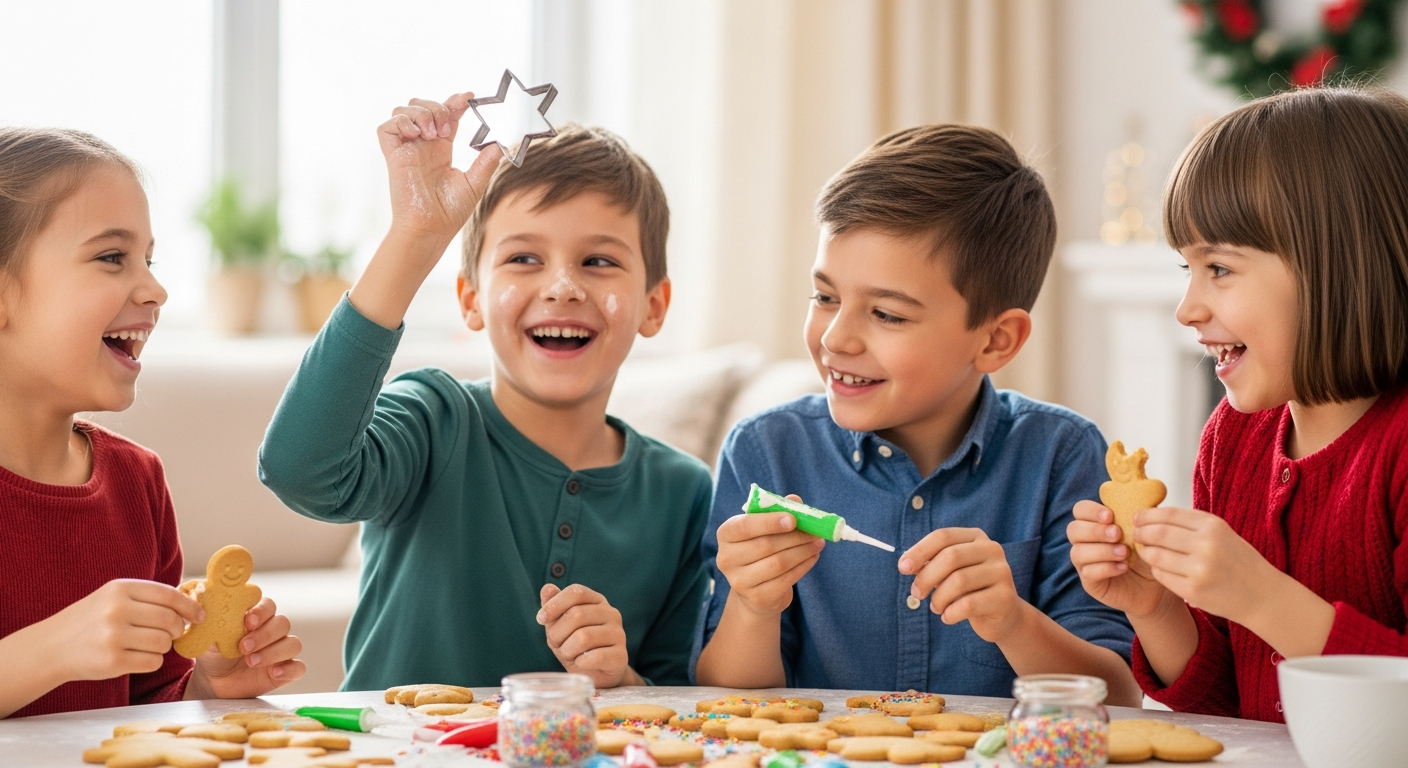
Table of Contents
- Introduction
- The Magic of Christmas for Childhood Development
- Setting the Stage: Preparing for Festive Fun & Speech Growth
- Crafting Connections: DIY Christmas Decorations
- Baking & Sweet Treats: A Recipe for Language
- Storytime & Songs: Weaving Words into Wonder
- Outdoor Adventures: Winter Wonderland Explorations
- Thoughtful Giving: The Language of Kindness
- Family Games & Traditions: Playful Communication
- Leveraging "Smart Screen Time": How Speech Blubs Can Help
- Choosing Your Speech Blubs Plan: Maximize the Magic
- Conclusion
- FAQ
The holiday season often feels like a whirlwind of joyful chaos – twinkling lights, festive music, the scent of pine and gingerbread, and the boundless energy of children. Amidst the excitement of presents and parties, it's easy to overlook the incredible, organic opportunities these special weeks offer for enriching your child's development, especially their speech and language skills. Imagine a season where every crafting session, baking adventure, and storytelling moment isn't just fun, but a stepping stone to clearer communication, richer vocabulary, and more confident self-expression. That's the magic we want to help you discover. This post isn't just about finding delightful ways to celebrate; it’s about transforming traditional holiday fun into powerful language-building experiences that will resonate long after the ornaments are packed away. We’ll explore how to harness the festive spirit to foster robust communication skills, making this Christmas not just memorable, but profoundly developmental.

Introduction
As parents, we often find ourselves juggling the demands of daily life, and the holidays can amplify that feeling of being stretched thin. Yet, within this busy time lies a unique window for connection and growth. For many families, the Christmas season is about traditions, warmth, and shared experiences. But what if these cherished moments could also be intentionally designed to nurture your child’s ability to "speak their minds and hearts"? At Speech Blubs, our mission is precisely that: to empower children through communication, creating a world where every child feels confident expressing themselves. Our company was born from a very personal place; our founders all grew up navigating speech challenges and created the very tool they wished they had—a joyful, effective, and immediate solution for the 1 in 4 children who need speech support. This Christmas, we invite you to blend scientific principles with play, transforming everyday festive activities into one-of-a-kind "smart screen time" experiences when you need them, and powerful tools for family connection all the time. Get ready to discover how to infuse language learning into every sparkle and cheer, making this holiday season a time of profound joy and incredible growth for your little one.
The Magic of Christmas for Childhood Development
Christmas is more than just a season; it's a sensory explosion and an emotional journey that offers a fertile ground for children's development. Think about it: the unique smells of cinnamon and pine, the vibrant colors of decorations, the sounds of carols, and the tactile experience of wrapping paper or soft blankets by a fire. These elements stimulate multiple senses, creating rich pathways for learning and memory formation.
From a language perspective, the holidays introduce a wealth of new vocabulary. Words like "ornament," "reindeer," "sleigh," "gingerbread," "carol," and "chimney" become commonplace, expanding a child's lexicon. Beyond individual words, the very fabric of Christmas—its traditions, stories, and social gatherings—encourages complex communication. Children learn about sequencing ("First we decorate the tree, then we open presents"), cause and effect ("If we leave cookies for Santa, he’ll bring gifts"), and social reciprocity ("Thank you for the gift!"). They engage in storytelling, asking questions, expressing desires, and navigating social interactions with relatives and friends.

Moreover, the emotional warmth and heightened family togetherness of the holidays create a safe and motivating environment for communication. When children feel loved, secure, and engaged, they are more likely to attempt new words, participate in conversations, and express their thoughts and feelings. These unique circumstances—a blend of sensory richness, novel vocabulary, social opportunities, and emotional security—make Christmas an unparalleled time for fostering robust speech and language skills. It’s a natural, joyful classroom waiting to be explored.
Setting the Stage: Preparing for Festive Fun & Speech Growth
Before diving into the activities, a little preparation can go a long way in maximizing the language-building potential of your Christmas season. It’s not about over-scheduling or creating pressure, but rather about consciously creating an environment that encourages communication.
Planning Ahead with Your Child: Involve your child in the planning process, even if it's just offering choices. "Would you like to make paper snowflakes or decorate cookies first today?" This simple act introduces choice-making, which is a foundational communication skill. It also provides opportunities for them to express preferences, negotiate, and articulate their ideas. For younger children, visual schedules or picture cards can help them understand the sequence of activities, building anticipation and reducing frustration. Use descriptive language as you plan: "We’re going to get sparkly red glitter for our shiny green ornaments!"
Creating a Language-Rich Environment: Throughout the holiday season, narrate what you're doing, even for seemingly mundane tasks. "I’m stirring the thick, sweet hot chocolate," or "We're folding the brightly colored wrapping paper." Label objects and actions clearly. Ask open-ended questions that encourage more than a "yes" or "no" answer, such as "What do you think Santa likes to eat most?" or "How do you feel when we put up the Christmas tree?" These questions prompt your child to formulate longer sentences and express more complex thoughts.
Consider designating a "communication corner" during activities – perhaps a spot at the kitchen table for crafts, or a cozy reading nook for stories. This creates a predictable space where engaging in language-rich activities becomes the norm. Remember, fostering communication isn’t about correcting every mistake, but about creating ample, joyful opportunities for expression and connection. If you're wondering whether your child could benefit from a little extra support, take our quick 3-minute preliminary screener to get a simple assessment and a free 7-day trial. It’s a great first step to understanding their needs and discovering a personalized next-steps plan.
Crafting Connections: DIY Christmas Decorations
Crafting is a cornerstone of holiday fun, and it's also a fantastic, hands-on way to build language skills. The tactile nature of crafts, combined with the need to follow instructions and describe creations, makes it a rich learning environment.
Making Ornaments
- Materials & Vocabulary: Gather various materials like glitter, pipe cleaners, felt, glue, cotton balls, and sequins. As you introduce each item, name it clearly and describe its properties: "This is soft felt," "These are sparkly sequins," "This glue is sticky."
- Actions & Verbs: Focus on action verbs. "We are cutting," "We are gluing," "We are sprinkling," "We are shaping." Encourage your child to imitate these actions and the corresponding words. For a parent whose child is working on early verb production, even simple phrases like "cut paper" or "glue star" can be significant victories.
- Description & Adjectives: Once the ornaments are made, encourage your child to describe them. "Tell me about your red sparkly star," or "This snowman has a long orange nose." This builds descriptive vocabulary and helps them articulate observations.
- Following Directions & Sequencing: Break down the steps into simple, sequential instructions: "First, put glue on the circle. Next, add glitter. Last, let it dry." This helps with auditory processing and understanding order.
Paper Chains
- Counting & Colors: Cut strips of construction paper in different colors. As you link them, count each loop together. "One red, two green, three white." This reinforces numbers and color recognition.
- Patterns & Prediction: Create simple patterns ("red, green, red, green") and ask your child what color comes next, fostering predictive language and cognitive skills.
- Spatial Concepts: Use words like "under," "over," "through," and "next to" as you connect the loops.
Handprint/Footprint Art
- Body Parts & Sensations: Discuss the body parts you're using: "This is your tiny hand," "Your wiggly fingers." Describe the sensation of the paint: "It feels cold," "It's squishy."
- Naming & Personal Connection: Once dry, turn the prints into reindeer, Santa, or snowmen. Help your child name their creation and talk about what they "made." "Look, you made a brown reindeer with your hand!"
These hands-on activities are a perfect real-world example of the "video modeling" methodology we use at Speech Blubs. Children naturally learn by watching and imitating their peers and adults. When you demonstrate how to cut paper or glue glitter, your child is absorbing both the action and the associated language, making these moments incredibly powerful for learning. By actively doing these crafts together, you're building a foundation of imitation and verbal expression that complements the smart screen time experiences offered by our app.
Baking & Sweet Treats: A Recipe for Language
The kitchen during Christmas is often a hub of activity, filled with delicious smells and the promise of sweet rewards. It's also an incredible place to whip up some serious language development alongside those festive goodies!
Cookie Decorating
- Following Instructions: Baking often requires following a sequence of steps. "First, get the flour. Next, crack the egg." Break down each instruction into simple, manageable chunks.
- Requesting & Expressing Preferences: Lay out various sprinkles, icings, and candies. Encourage your child to make choices and requests: "I want blue sprinkles," "Can I have more red icing?" This is vital for developing functional communication.
- Describing Tastes & Smells: As you bake and decorate, talk about the sensory experience. "Mmm, these smell sweet!" "The vanilla extract smells strong." When tasting, use descriptive words like "crunchy," "soft," "spicy," "sweet," or "chocolatey."
- Tool Names & Actions: Introduce the names of baking tools (spoon, whisk, cookie cutter, rolling pin) and the actions associated with them (stirring, mixing, rolling, cutting).
Gingerbread House Construction
- Spatial Concepts: This activity is a goldmine for spatial vocabulary. "Put the roof on top," "Place the candy canes next to the door," "The gumdrops go around the window."
- Problem-Solving & Negotiation: As pieces inevitably don't fit perfectly or structures collapse, talk through the challenges. "Oh, the wall fell down! What should we do now?" This encourages problem-solving language and collaborative discussion.
- Narrative Building: After the house is built, encourage your child to tell a story about who lives there or what happens in their gingerbread house. "Who lives in this sweet house? What do they do?"
These baking activities are fantastic for practicing imitation, just like our video modeling approach. When you demonstrate how to stir batter or place a candy on a cookie, your child watches and learns. They see your actions and hear your words, creating a strong link between the two. This active engagement turns passive observation into an opportunity for skill development, reinforcing the idea that learning can be joyful and delicious! For parents interested in seeing the scientific basis behind our playful approach, you can explore our research page. It highlights how our methods are backed by science, placing us in the top tier of speech apps worldwide.
Storytime & Songs: Weaving Words into Wonder
The holidays are synonymous with stories and songs, making them a natural springboard for language development. These activities immerse children in rich linguistic experiences, nurturing their listening skills, vocabulary, and expressive abilities.
Reading Christmas Books
- Vocabulary Expansion: Choose festive books that introduce new words related to the season. Point to pictures as you read and label objects clearly. "Look, a sparkling star!"
- Narrative Skills: Discuss the plot, characters, and setting. "Who is this story about?" "What happened first?" "How did the character feel?" This helps children understand story structure and develop their own narrative abilities.
- Comprehension Questions: Ask questions that go beyond simple recall. "Why do you think the Grinch changed his mind?" "What would you do if you saw Rudolph?" These encourage critical thinking and verbal reasoning.
- Predicting Outcomes: Before turning the page, ask your child what they think will happen next. "The snow is falling fast! What do you think Santa will do?"
- Emotional Literacy: Many Christmas stories explore themes of generosity, kindness, and joy. Discuss the emotions of the characters: "Why is the little elf feeling sad?" This helps children develop empathy and vocabulary to describe feelings.
Singing Carols
- Rhythm & Repetition: Carols are naturally repetitive, which helps children learn new words and phrases. The rhythm aids in articulation and fluency.
- Articulation Practice: Songs often feature distinct sounds and simple word patterns. Encourage singing along, focusing on clear pronunciation. For example, "Jingle Bells" provides ample opportunities to practice the "j" sound and consonant-vowel combinations.
- Vocabulary in Context: Songs like "The Twelve Days of Christmas" introduce specific, sometimes unique, vocabulary in a memorable way.
- Memory & Sequencing: Learning the lyrics to a song helps children with auditory memory and sequencing skills.
Creating Family Christmas Stories
- Imagination & Creativity: Start a story with a simple premise ("Once upon a time, on Christmas Eve...") and let each family member add a sentence or two.
- Sequencing & Cohesion: Guide the story to ensure it flows logically. "What happened next?" "Then what did he do?"
- Expressive Language: This open-ended activity encourages children to use a wide range of vocabulary and sentence structures to convey their ideas.
- Personal Connection: Incorporate family members or pets into the story to make it more personal and engaging.
At Speech Blubs, our mission is to empower children to "speak their minds and hearts," and these activities are perfect for nurturing that ability. Whether through reading about courageous reindeer or creating whimsical tales, children learn to use their voices to express creativity, understand emotions, and connect with others. Our app complements these rich real-world experiences by offering structured, engaging activities that target specific sounds, words, and sentences, all while reinforcing the joy of communication. To see how other parents have found success in helping their children unlock their voices, check out our collection of testimonials.
Outdoor Adventures: Winter Wonderland Explorations
Even when the weather turns chilly, the outdoors offers a refreshing backdrop for language development. Exploring a winter wonderland provides unique sensory experiences and opportunities for rich descriptive language.
Decorating the Yard
- Describing Lights & Objects: If you're putting up outdoor decorations, talk about them. "Look at the bright, colorful lights!" "That reindeer is sparkling!" "This snowman is so tall!"
- Spatial Concepts: Use prepositions as you place decorations: "Put the wreath on the door," "The fairy lights go around the bushes."
- Comparing & Contrasting: "Which string of lights is longer?" "Which ornament is bigger?" This encourages comparative language.
Snow Play (If Applicable)
- Action Verbs: If you have snow, engage in actions like "throw," "catch," "roll," "build," "slide," and "dig." Narrate each action as your child performs it.
- Descriptive Language: Talk about the snow itself: "It's cold," "It's fluffy," "It's wet."
- Making Snowmen/Snow Angels: Discuss body parts as you build a snowman ("head," "body," "arms") and describe the process. "We need a big snowball for the bottom."
- Imagination: "What do you think our snowman would say?" "Where would your snow angel fly?"
Christmas Scavenger Hunt
- Prepositions & Categorizing: Hide small, festive items around the yard or house (safe, non-breakable). Provide clues using prepositions ("Look under the red bucket," "Check behind the big tree") and categorizing ("Find something red," "Find something that jingles").
- Asking & Answering Questions: Your child will practice asking "Where is it?" and answering "I found it here!"
- Vocabulary Reinforcement: Reinforce the names of the hidden objects as they are found.
These outdoor activities naturally foster language through direct experience and interaction. While your child might be exploring a frosty garden or building a snowman, they are also actively observing, describing, and communicating, often mirroring the actions and words they hear from you. This kind of active engagement is a core tenet of our approach at Speech Blubs, where we provide a screen-free alternative to passive viewing experiences like cartoons, ensuring learning is always dynamic and interactive. When you're ready to bring some of that fun indoors, remember that Speech Blubs is a powerful tool for family connection, offering hundreds of engaging activities designed to complement these real-world learning moments. You can download Speech Blubs on the App Store or Google Play to begin your journey towards enhanced communication.
Thoughtful Giving: The Language of Kindness
The spirit of giving is central to Christmas, and it presents wonderful opportunities for children to learn the language of empathy, gratitude, and personal expression. These activities move beyond simply receiving and focus on the joy of contributing to others.
Making Cards
- Describing Feelings: Encourage your child to think about the person they are making the card for. "How does Grandma feel when she gets a card?" "What would make Aunt Sarah happy?" This builds emotional vocabulary.
- Writing Names & Simple Messages: For older children, practice writing names and simple holiday greetings ("Happy Christmas," "Love, [Child's Name]"). For younger children, you can write and have them decorate.
- Personalization & Creativity: Discuss the design elements. "What color does Grandpa like?" "Let's put a sparkly star on Dad's card."
Wrapping Gifts
- Describing Sizes, Colors, Textures: Talk about the different wrapping papers: "This paper is shiny," "This ribbon is soft," "This box is big and square."
- Action Verbs: Use verbs like "wrap," "cut," "tape," "tie," "decorate." "We need to cut the paper to fit the box."
- Sequencing: "First, we put the gift in the box. Then, we wrap it. Last, we add a bow."
- Perspective-Taking: "Who is this gift for? What do you think they will say when they open it?"
Choosing Gifts for Others
- Expressing Preferences (of others): This is a great exercise in understanding someone else's desires. "Mommy likes books," "Daddy needs a warm hat."
- Categorization: "What kind of toy would your cousin like? A building toy or an animal toy?"
- Justification: Encourage your child to explain why they chose a particular gift. "I chose this because my friend loves dinosaurs!"
These activities cultivate not only language but also vital social-emotional skills. They demonstrate the power of words to express care, gratitude, and connection. At Speech Blubs, our commitment to helping children "speak their minds and hearts" extends to fostering these deeper forms of communication. We understand that communication is not just about words, but about expressing emotions and building relationships. For parents looking for a robust tool to further support their child's language development in a structured yet playful way, we invite you to explore our app. We are committed to providing an immediate, effective, and joyful solution for the 1 in 4 children who need speech support, blending scientific principles with play into one-of-a-kind "smart screen time" experiences. You can create your account and begin your 7-day free trial today.
Family Games & Traditions: Playful Communication
Christmas is prime time for family traditions and games, which are incredibly potent for developing social communication skills, vocabulary, and problem-solving abilities. These interactions are often less structured, allowing for organic language growth in a fun, low-pressure environment.
Board Games
- Turn-Taking: Almost all board games require turn-taking, a fundamental social communication skill. "My turn!" "Your turn!"
- Rule-Following: Discussing and understanding game rules helps with listening comprehension and following multi-step directions.
- Vocabulary & Concepts: Many games introduce new vocabulary (e.g., "spinner," "dice," "pieces," "score") and concepts (e.g., "start," "finish," "ahead," "behind").
- Problem-Solving & Strategy: Talk through moves and strategies. "If I move here, then you might land on my space."
- Emotional Regulation: Learning to win and lose gracefully is a key life skill that involves language around expressing feelings, congratulating others, and managing disappointment.
Charades & Pictionary
- Non-Verbal Communication: Charades is excellent for understanding and conveying meaning through gestures and facial expressions, then translating those into words.
- Descriptive Language: Pictionary requires players to describe an object or concept visually, and guessers to use vocabulary to identify it.
- Categorization: Often, charades or Pictionary themes can be categorized (e.g., "Christmas movies," "winter animals"), reinforcing classification skills.
- Asking Clarifying Questions: "Is it an animal?" "Is it something you can eat?"
Family Movie Night Discussion
- Recalling Events: After watching a favorite Christmas movie, talk about what happened. "What was your favorite part?" "Who was the funniest character?"
- Expressing Opinions & Justification: Encourage children to share their thoughts and explain why they liked or disliked something. "I liked when the elf sang because it made me laugh."
- Predicting & Inferring: "What do you think happened after the movie ended?" "Why did that character make that choice?"
- Comparing: "How was this movie different from the other Christmas movie we watched?"
These family activities embody our commitment at Speech Blubs to providing a "screen-free alternative to passive viewing" for family connection. While passive viewing might occupy children, active play, especially with games and traditions, builds language through dynamic interaction and shared experiences. We believe in creating powerful tools for family connection, and these games are fantastic examples of that. They reduce frustration by providing clear structures for interaction, build confidence through successful communication, and create truly joyful family learning moments.
Leveraging "Smart Screen Time": How Speech Blubs Can Help
While the holiday season is rich with real-world language opportunities, we understand that modern life also includes screen time. At Speech Blubs, we’ve reimagined screen time, transforming it from a passive activity into a "smart screen time" experience that actively supports your child’s speech and language development. Our app is a powerful supplement to your child's overall development plan and, when applicable, professional therapy, providing an immediate, effective, and joyful solution for children who need speech support.
Our unique approach is rooted in our proprietary video modeling methodology. Unlike traditional apps that use animated characters, Speech Blubs features real children, often called "Blubbers," demonstrating specific sounds, words, and sentences. Children learn by watching and imitating their peers – a deeply intuitive and highly effective way to acquire complex communication skills. This leverages the power of mirror neurons, making learning feel natural and engaging.
Imagine your child enthusiastically imitating a peer making an animal sound, or confidently repeating a word after watching another child say it. This isn't just entertainment; it's targeted speech practice disguised as play. For instance, if your child is working on early sounds, our "Animal Kingdom" section can be a fantastic way to practice 'moo' or 'baa' sounds, building foundational phonological skills. Or, if they're struggling with expressing emotions, our "Emotions" section allows them to watch and imitate peers expressing happiness, sadness, or surprise, helping them connect words with feelings.
Here’s how Speech Blubs complements your Christmas activities:
- Reinforcement: After a day of singing carols, our "Sounds" section can reinforce specific consonant and vowel sounds in a fun, game-like format.
- Vocabulary Expansion: Introduce new vocabulary related to things you see during Christmas, then reinforce those words within the app's rich categories.
- Confidence Building: For children who might be shy or hesitant to speak, the non-judgmental, peer-to-peer imitation within Speech Blubs fosters confidence, reducing frustration and making communication feel less daunting.
- Joyful Learning: Our app is designed to be highly engaging and fun, making the learning process a positive experience. This aligns perfectly with the joyful spirit of Christmas.
Remember, Speech Blubs is not meant to replace your precious family interactions but to enhance and support your child's journey. It's a tool for active co-play, where you sit with your child, engage in the activities together, and celebrate their progress. We provide a screen-free alternative to passive viewing (like cartoons) and a powerful tool for family connection, ensuring that even screen time contributes meaningfully to your child's growth.
If you’re ready to see the difference smart screen time can make, download Speech Blubs today. It's an investment in your child's future, helping them build confidence and speak their minds and hearts.
Choosing Your Speech Blubs Plan: Maximize the Magic
We believe in making high-quality speech and language support accessible to every family. That's why we offer transparent and flexible plans designed to fit your needs, with clear advantages to help you make the best choice for your child.
Our Speech Blubs app is available through two main subscription options:
- Monthly Plan: This plan costs $14.99 per month. It's a good option if you want to try the app for a shorter period.
- Yearly Plan: This plan costs $59.99 per year.
When you look at the Yearly plan, the value truly shines through. At just $59.99 per year, it breaks down to an incredible $4.99 per month, which means you save 66% compared to the monthly subscription! This makes the Yearly plan the clear best choice for long-term support and value.
Beyond the significant cost savings, the Yearly plan also unlocks exclusive, high-value features designed to give your child the most comprehensive support:
- A 7-day free trial: This allows you and your child to explore the full range of Speech Blubs activities and see the magic of video modeling firsthand, completely risk-free. The Monthly plan does not include this free trial.
- The extra Reading Blubs app: This bonus app focuses on early literacy skills, complementing the speech and language development from Speech Blubs and providing an even broader foundation for learning. This invaluable resource is not included with the Monthly plan.
- Early access to new updates: Yearly subscribers are the first to experience our latest features, activities, and improvements, ensuring your child always has access to the most cutting-edge support.
- 24-hour support response time: We prioritize our Yearly subscribers, offering quicker access to our dedicated support team for any questions or assistance you might need.
Choosing the Yearly plan isn't just about saving money; it's about investing in the fullest, most enriching experience for your child's communication journey. It ensures continuous access to our scientifically backed, play-based learning environment, along with exclusive benefits that support holistic development.
To get started with the best value and unlock all these amazing features, we strongly encourage you to choose the Yearly plan. You can begin your 7-day free trial today and join countless other families who are empowering their children to speak their minds and hearts with Speech Blubs.
Conclusion
The Christmas season, with its unique blend of wonder, tradition, and togetherness, offers an unparalleled canvas for fostering your child's speech and language development. From the simple act of decorating an ornament to the collaborative effort of building a gingerbread house, every activity is a chance to build vocabulary, practice articulation, understand sequencing, and express feelings. We've seen how integrating language into these joyful moments can transform ordinary fun into extraordinary growth, building confidence, reducing frustration, and creating lasting family memories.
At Speech Blubs, we are deeply committed to empowering children to "speak their minds and hearts," and our app is designed to complement these real-world experiences with scientifically backed, play-based "smart screen time." By embracing activities that encourage interaction, description, and storytelling, coupled with the focused support of Speech Blubs, you’re providing your child with a robust foundation for communication that will serve them far beyond the holiday season.
Don't let this precious time pass without tapping into its full developmental potential. Ready to make this Christmas a season of joyful communication breakthroughs? We invite you to experience the full magic of Speech Blubs and join our community of empowered families.
Start your 7-day free trial today by choosing our Yearly plan! Not only will you save 66% on your subscription, but you'll also gain immediate access to the extra Reading Blubs app, early updates, and dedicated 24-hour support. It's the best way to give your child the gift of confident communication.
Download Speech Blubs now on the Apple App Store or Google Play Store, or simply create your account and begin your free trial on our website. Empower your child to find their voice, and celebrate a Christmas filled with connection, confidence, and clear communication.
FAQ
Q1: How can I encourage my shy child to participate in Christmas activities that involve speaking? A1: Start with low-pressure activities where you model the language first. For example, narrate your own actions while decorating or baking. Use questions that don't require a verbal answer initially, like "point to the red ornament." Gradually introduce opportunities for choice-making ("Do you want the red or green sprinkles?") and imitation. Remember that observing and listening are also important steps in language acquisition. Our Speech Blubs app uses video modeling with real children, which can be incredibly helpful for shy children as it allows them to learn by imitation in a non-judgmental, playful environment.
Q2: My child has a limited vocabulary. How can Christmas activities help expand it? A2: The holidays introduce a wealth of new, context-rich vocabulary. Focus on naming and describing objects, actions, and sensations related to each activity. For instance, while decorating, label "ornament," "tinsel," "star," and describe them as "shiny," "sparkly," "colorful." During baking, name ingredients and actions like "stirring" or "mixing." Repetition and consistent labeling within these engaging contexts are key. Speech Blubs offers hundreds of vocabulary words within various categories, providing a structured way to reinforce and expand this new holiday lexicon.
Q3: Are these activities suitable for children of all ages and developmental stages? A3: Yes, most of these activities can be easily adapted. For younger children, focus on single words, simple actions, and sensory exploration. For older children, encourage more complex sentence structures, storytelling, problem-solving, and abstract thinking. The key is to meet your child where they are and provide just enough challenge to foster growth without causing frustration. Our app also offers content designed for various developmental stages, ensuring that there are always engaging and appropriate activities for your child's specific needs.
Q4: How does Speech Blubs fit into these holiday activities? Should it replace family time? A4: Speech Blubs is designed to complement, not replace, valuable family time and real-world interactions. Think of it as a powerful, "smart screen time" tool that reinforces and expands upon the language skills your child is naturally acquiring through holiday activities. For example, if you're talking about animals during a nature walk, your child can then use the "Animal Kingdom" section in the app to practice those sounds and words. It’s an interactive learning tool that blends scientific principles with play, perfect for short, engaged sessions, and offers a screen-free alternative to passive viewing. We believe in strengthening family connections, and our app is meant to be a part of that journey, fostering a love for communication and building confidence.
About the author