
Fun Christmas Activities for Kids & Speech Growth
 By Speech Blubs Team•Dec 19, 2025•22 min.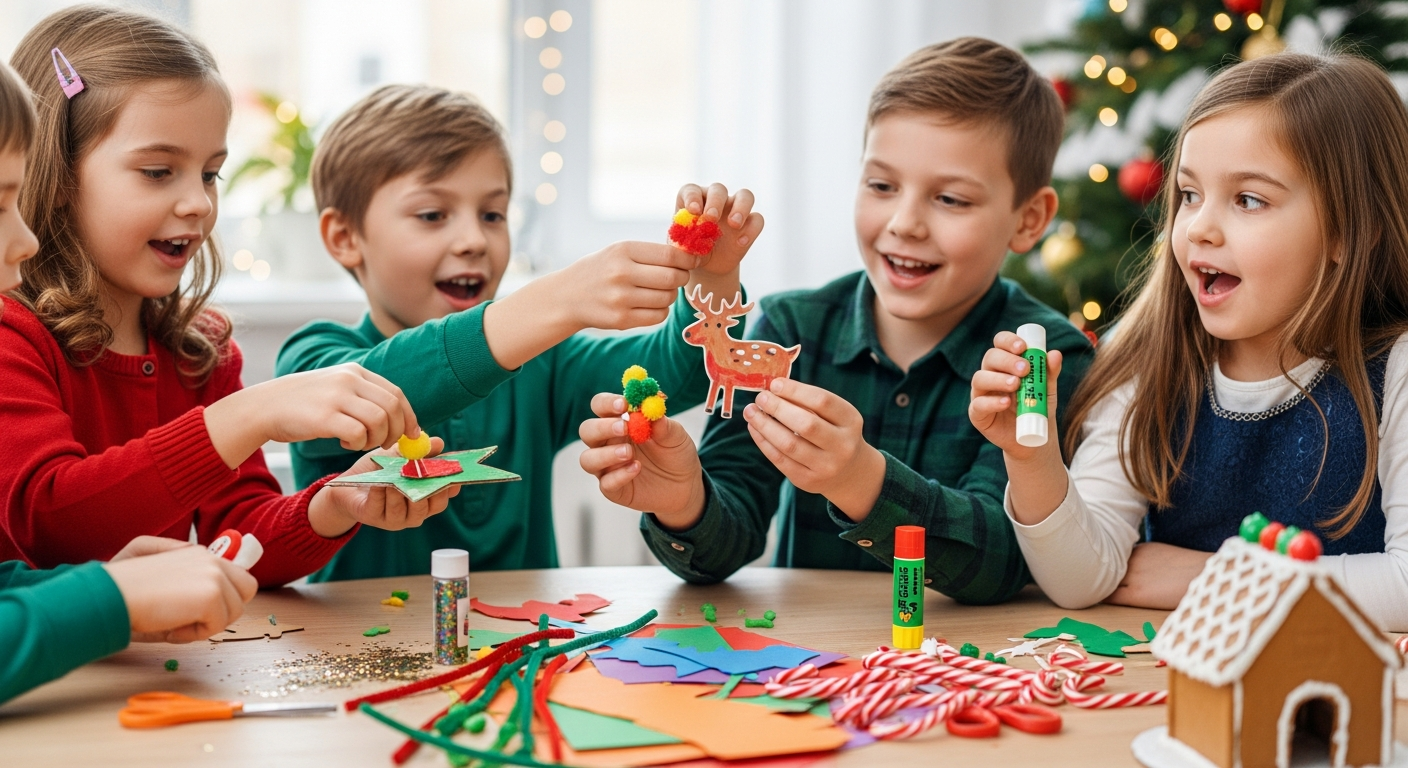
Table of Contents
- Introduction
- The Magic of Christmas: More Than Just Gifts
- Speech-Boosting Christmas Crafts & DIYs
- Culinary Christmas Adventures for Little Chefs
- Storytelling & Imaginative Play for the Holidays
- Outdoor & Active Christmas Fun
- Musical Merriment & Creative Expression
- Giving Back: Acts of Kindness & Communication
- Making Screen Time Smart Time with Speech Blubs
- Choosing the Right Plan for Your Family's Speech Journey
- Conclusion
- Frequently Asked Questions
Introduction
The holiday season is a whirlwind of joy, twinkling lights, and eager anticipation. For many parents, it’s a treasured time to create lasting memories with their children. Yet, amidst the excitement, it’s easy to feel overwhelmed, perhaps even wondering if your child is truly connecting with all the festive hustle and bustle. Are they engaging in meaningful ways? Are these precious moments helping them grow, especially in their communication skills?
The good news is that the magic of Christmas offers a unique and natural playground for speech and language development. Beyond the shiny presents and delicious treats, the holiday season is rich with opportunities for children to express themselves, learn new words, and practice their communication skills in joyful, low-pressure settings. This post is dedicated to exploring a wealth of engaging kids' activities for Christmas that not only fill your home with cheer but also provide invaluable chances for your child to strengthen their voice. We’ll delve into how simple festive traditions, from baking cookies to crafting ornaments, can naturally foster expressive language, listening comprehension, social interaction, and confidence. Our goal is to empower you with ideas to transform this holiday season into a period of delightful connection and remarkable growth, helping your child truly speak their mind and heart.

The Magic of Christmas: More Than Just Gifts
Christmas is inherently a season of connection. The traditions we build, the stories we share, and the activities we engage in as a family all contribute to a rich tapestry of experiences that are vital for a child's holistic development. Beyond the immediate joy, these activities create countless "teachable moments" – natural, spontaneous opportunities for learning and growth. For speech and language development, this is particularly powerful.
Think about it: every craft project involves naming colors and shapes, every song introduces new vocabulary and rhythm, and every shared meal offers a chance for conversation and turn-taking. These aren't just fun ways to pass the time; they are foundational building blocks for communication. When children are actively involved and enjoying themselves, their brains are more receptive to learning. The festive atmosphere reduces pressure, making it easier for them to experiment with new sounds, words, and sentence structures without fear of judgment. It’s a time when curiosity flourishes, and the desire to communicate about the exciting things happening around them becomes a natural驱动力.
Engaging in these shared experiences also strengthens family bonds, creating a secure and loving environment where children feel safe to express themselves. When parents actively participate, modeling language, asking open-ended questions, and responding enthusiastically, they become powerful facilitators of their child's speech journey. This empathetic engagement is at the heart of what we believe in at Speech Blubs, where our mission is to empower children to speak their minds and hearts by turning everyday interactions into opportunities for growth.
Speech-Boosting Christmas Crafts & DIYs
Crafting is a cornerstone of holiday fun, and it’s also a fantastic way to nurture speech and language skills. These hands-on activities engage multiple senses and provide concrete topics for discussion.
Decorating the Christmas Tree
This classic tradition is a goldmine for language development. As you unpack ornaments, talk about them!

- Vocabulary Expansion: "Look at this shiny red ball!" "This is a delicate angel." "Is this an old ornament or a new one?" Introduce words like fragile, sparkling, star-shaped, bell, pinecone.
- Descriptive Language: Encourage your child to describe the ornaments. "What color is it?" "What does it feel like?" "Is it heavy or light?"
- Following Instructions: "Hand me the blue ornament." "Put the star on the top branch."
- Sequencing: "First, we unbox the ornaments, then we hang them."
Making Handmade Ornaments
Crafting ornaments from simple materials offers a chance for creativity and conversation.
- Naming Materials: As you gather supplies, name them: "We need glitter, glue, paper, ribbon."
- Action Words: "We are cutting, gluing, painting, tying."
- Expressing Choices: "Do you want a red star or a green star?" "Should we add more glitter?"
- Narrative Skills: Talk about the finished product. "You made a beautiful snowman!" "How did you make it?"
DIY Gift Wrapping
Transforming plain paper into festive parcels is another fun activity.
- Prepositional Concepts: "Put the ribbon around the box." "Place the tag on the gift."
- Size and Shape Concepts: "This gift is big, so we need a big piece of paper." "This box is a square."
- Colors and Patterns: Discuss different wrapping papers. "I like the striped paper." "This one has reindeer on it."
Creating Holiday Cards
Writing or drawing holiday cards for loved ones is a thoughtful way to engage in communication.
- Greeting Practice: "What should we say to Grandma? 'Happy Holidays'?"
- Writing/Drawing Names: Practicing letter sounds and recognition for their own name or family members' names.
- Expressing Affection: "What do you want to draw for Aunt Sarah?" "Why do we love Uncle John?"
These craft activities provide a natural backdrop for the kind of interactive learning that is so effective. Just as children learn to imitate sounds and words from their peers in our app, these hands-on tasks encourage them to mimic actions and language modeled by adults, building their vocabulary and expressive skills. For parents whose children might need a little extra nudge to articulate their thoughts, these activities offer low-pressure, high-engagement moments. You can even use elements from our app, like the "Animal Kingdom" section, to inspire craft themes, creating a seamless connection between screen time and real-world play. When your child sees an animal in our app and then makes an animal ornament, they're reinforcing that vocabulary and concept in a powerful way.
To truly supercharge these holiday learning moments and access a vast library of interactive speech exercises, we invite you to download Speech Blubs from the App Store or Google Play today!
Culinary Christmas Adventures for Little Chefs
The kitchen often becomes the heart of the home during the holidays, and it's a fantastic sensory-rich environment for language development. Getting kids involved in cooking and baking offers countless opportunities for vocabulary building, following directions, and descriptive language.
Baking Christmas Cookies
This classic activity is a feast for the senses and for speech skills!
- Sequencing and Instructions: Talk through each step: "First, we add the flour, then the sugar." "Now, we mix it all together." This helps with understanding and recalling multi-step instructions, a crucial skill for communication.
- Vocabulary Expansion: Introduce words related to ingredients (cinnamon, ginger, sprinkles, dough), actions (stir, pour, measure, knead, roll), and tools (whisk, spatula, cookie cutter, baking sheet).
- Sensory Descriptions: "The dough feels sticky." "The cookies smell sweet." "They look so golden."
- Counting and Quantities: "We need two cups of flour." "How many cookies should we make?"
Making Hot Chocolate
A simpler activity that still packs a punch for language.
- Simple Instructions: "Pour the milk into the pot." "Add the cocoa powder."
- Descriptive Language: "The hot chocolate is warm." "Let's add fluffy marshmallows." "It tastes so chocolatey."
- Cause and Effect: "If we add too much sugar, it will be very sweet."
Setting the Holiday Table
Even preparing for a meal offers communicative benefits.
- Naming Items: "Please put out the plates, forks, and napkins."
- Prepositions: "Put the spoon next to the plate."
- Polite Requests: Practice saying "Please pass the..." and "Thank you."
In the kitchen, children learn by doing and by observing. This hands-on, imitative learning process is very similar to our "video modeling" methodology at Speech Blubs, where children learn by watching and imitating their peers. When they see you performing an action and hear you describe it, they are more likely to replicate both the action and the associated language. These shared experiences in the kitchen also foster a sense of accomplishment and shared joy, reducing communication frustration and building confidence – key pillars of our mission to provide an immediate, effective, and joyful solution for children needing speech support.
If you're wondering whether your child could benefit from a structured, playful approach to speech development, we encourage you to take our quick 3-minute preliminary screener. It involves 9 simple questions and provides an assessment and next-steps plan, along with access to a free 7-day trial of Speech Blubs.
Storytelling & Imaginative Play for the Holidays
The magic of Christmas lends itself perfectly to stories and imaginative play, both of which are critical for developing narrative skills, vocabulary, and social communication.
Reading Christmas Books
Snuggling up with a festive book is a cherished tradition that’s also highly beneficial for language.
- Shared Reading: Point to pictures, ask questions about the story, and encourage your child to turn the pages. "What do you think will happen next?"
- Vocabulary: Encountering new words in context, like sleigh, elf, reindeer, mistletoe.
- Character and Emotion: Discuss characters' feelings and motivations. "Why is the Grinch sad?" "How does Santa feel when he delivers presents?"
- Rhyme and Rhythm: Many Christmas books have a rhythmic quality that helps with phonological awareness.
Creating Christmas Stories
Encourage your child to be the author of their own holiday tales.
- Narrative Skills: Prompt them with questions: "Who is in your story?" "Where does it take place?" "What problem do they need to solve?" This helps children understand story structure (beginning, middle, end).
- Imagination and Creativity: Allow them to invent characters and scenarios. This fosters creative thinking and the ability to articulate complex ideas.
- Taking Turns: You can co-create a story, each taking a turn to add a sentence.
Puppet Shows or Role-Playing
Using puppets or dressing up as Christmas characters can bring stories to life.
- Perspective-Taking: Children learn to adopt different voices and personalities, enhancing their understanding of social roles and emotions.
- Dialog Practice: Encourage them to have conversations between characters, practicing turn-taking and conversational flow.
- Expressing Emotions: Puppets can be a safe way for children to explore and express various feelings associated with the holidays.
At Speech Blubs, we understand the power of play and imagination in learning complex communication skills. Our "smart screen time" experiences are designed to be engaging and interactive, much like a good story or a lively puppet show. Through video modeling, children see their peers express ideas and emotions, which naturally encourages them to imitate and integrate these skills into their own communication. Our app is a powerful tool for family connection, offering a screen-free alternative to passive viewing and empowering children to explore language in a dynamic, playful way. Learn more about the research behind our approach and how it places us in the top tier of speech apps worldwide.
Outdoor & Active Christmas Fun
Christmas isn't just about indoor activities. The crisp air and festive decorations outside offer unique opportunities for communication and exploration.
Christmas Light Scavenger Hunt
Driving or walking through neighborhoods to admire holiday lights is a beloved tradition that can be made interactive.
- Descriptive Language: "Look at the twinkling lights!" "That house has a giant inflatable Santa!" Encourage them to describe colors, shapes, and what they see.
- Following Directions: "Let's turn left at the corner to see more lights."
- Questioning and Answering: "Which house is your favorite?" "Why do you like the blue lights?"
Winter Wonderland Walks (Weather Permitting)
If you're lucky enough to have snow, a walk can be a magical language experience.
- Sensory Vocabulary: "The snow is cold and fluffy." "Do you hear the crunch of the snow?" Introduce words like frosty, slippery, icy.
- Observation Skills: Point out animal tracks, icicles, or bare trees. "What do you see?"
- Comparative Language: "This snowflake is smaller than that one." "The tree is taller than you."
Building a Snowman or Snow Play
(For those in snowy regions)
- Sequencing and Action Words: "First, we roll a big ball for the bottom." "Then we stack the middle." Use verbs like roll, stack, pat, decorate.
- Body Parts: "The snowman needs eyes, a nose, and arms."
- Creative Expression: "What kind of hat should our snowman wear?"
These outdoor activities encourage children to connect their observations with language, expanding their vocabulary and descriptive skills in a natural, exciting environment. The fresh air and movement can also stimulate sensory input, making learning more effective. Just as Speech Blubs offers a dynamic and interactive way to engage with new words and sounds, these real-world experiences provide a perfect complement, allowing children to practice what they've learned in a different context. They see, they do, they speak – solidifying their understanding and confidence.
Ready to bring more joy and communication into your daily routine? Create your Speech Blubs account and begin your 7-day free trial today to explore how our scientifically backed methods can empower your child.
Musical Merriment & Creative Expression
Music and movement are universal languages that resonate deeply with children and are incredibly beneficial for speech and language development. The rhythmic and melodic aspects of music enhance auditory processing, memory, and articulation.
Singing Christmas Carols
Gathering to sing carols is more than just a tradition; it's a powerful language exercise.
- Rhythm and Rhyme: Singing helps children develop a sense of rhythm and recognize rhyming patterns, which are foundational for phonological awareness and reading.
- Auditory Memory: Learning song lyrics helps improve memory and the ability to recall sequences of words.
- Articulation: Repeating words and phrases in a song can help children practice clear pronunciation and intonation.
- Group Participation: Singing together encourages turn-taking and shared experiences, vital for social communication.
DIY Instruments
Creating simple instruments and making music together.
- Sound Exploration: Use empty bottles filled with rice for shakers, pots and spoons for drums. Talk about the different sounds: loud, soft, rattling, banging.
- Vocabulary: Introduce instrument names: shaker, drum, cymbal.
- Action Words: Shake, tap, bang, strum.
Christmas Dance Party
Put on some festive tunes and let loose!
- Following Simple Commands: "Dance fast!" "Dance slow!" "Spin around!"
- Expressing Joy: Movement combined with music is a wonderful outlet for self-expression and emotional communication.
- Body Awareness: "Shake your hands!" "Stomp your feet!"
Music naturally enhances the joy of communication, making it less like a "task" and more like an integral part of fun. Our "smart screen time" at Speech Blubs incorporates elements of rhythm and repetition to make learning engaging and effective. Just as a catchy song helps children remember lyrics, our video modeling approach helps children recall and imitate speech sounds and words by leveraging the power of observation and play. We believe in harnessing these natural inclinations for learning, creating a joyful, screen-free alternative to passive viewing (like cartoons) that also acts as a powerful tool for family connection. The scientific methodology behind our app, designed by experts and born from the personal experiences of our founders who grew up with speech problems, is focused on blending scientific principles with play to empower every child.
For a deeper dive into the experiences of families just like yours, take a moment to read testimonials from other parents who have seen incredible growth with Speech Blubs.
Giving Back: Acts of Kindness & Communication
The holiday season is also a time for reflection, gratitude, and teaching children the importance of giving. These acts of kindness naturally create opportunities for meaningful communication and the development of empathy.
Making Gifts for Others
Creating handmade gifts for teachers, friends, or family.
- Expressing Gratitude: Discussing why you are making a gift for someone. "We're making this for Grandma because we love her very much."
- Planning and Execution: "What does Grandpa like?" "What materials do we need?"
- Descriptive Language: Explaining the gift to the recipient. "This is a hand-painted ornament, just for you!"
Donating Toys or Food
Teaching children about generosity through donations.
- Discussing Empathy: "Some children don't have many toys. When we share ours, we help make them happy."
- Explaining Actions: "We are taking these cans to the food bank so people have food to eat."
- Making Choices: "Which toy do you want to give to someone else?"
Visiting Loved Ones (Safely)
Whether in person or via video call, connecting with extended family is key.
- Practicing Greetings: "Hello, Grandma! Merry Christmas!"
- Conversational Skills: Encouraging children to share stories about their holiday activities and ask questions of their relatives.
- Social Etiquette: Learning about taking turns in conversation and listening attentively.
These activities cultivate not only speech and language but also crucial social-emotional skills. When children understand the impact of their actions and words, they become more motivated to communicate effectively. This holistic approach aligns perfectly with our vision at Speech Blubs: to empower children not just to speak, but to truly express their minds and hearts. We believe that a strong foundation in communication is essential for building confidence, fostering empathy, and creating meaningful connections in all aspects of life.
To embark on this journey with a trusted partner, remember that our commitment at Speech Blubs is to provide an immediate, effective, and joyful solution for the 1 in 4 children who need speech support. Our innovative approach blends scientific principles with play, creating one-of-a-kind "smart screen time" experiences that are powerful tools for family connection.
Making Screen Time Smart Time with Speech Blubs
While the holiday season is brimming with opportunities for hands-on, interactive play, we also live in a digital world. The key is to make screen time meaningful and productive. At Speech Blubs, we've revolutionized screen time, transforming it from a passive viewing experience into an active, engaging, and scientifically-backed learning journey. We call it "smart screen time."
Our app isn't just another game; it's a meticulously designed tool, born from the personal experiences of our founders who all grew up with speech problems. They created the very tool they wished they had—an immediate, effective, and joyful solution for the 1 in 4 children who need speech support. Our core methodology, "video modeling," is truly unique. Children learn by watching and imitating their peers, not animated characters. This approach leverages the power of mirror neurons, encouraging natural imitation and making learning both fun and incredibly effective. When a child sees another child making a sound or word, their brain is primed to replicate it, making the process intuitive and empowering.
Speech Blubs offers a wide range of activities that cover various aspects of speech and language development, from learning first words and sounds to mastering complex sentences and social communication. Our themed sections, like "When I Grow Up" or "Animal Kingdom," provide rich vocabulary and context for learning, mirroring the real-world experiences you create during the holidays. For example, after discussing different animals during a Christmas craft, your child can reinforce those words and sounds by interacting with our "Animal Kingdom" section. This integration bridges the gap between digital learning and real-life application, making every interaction count.
It's important to set realistic expectations: Speech Blubs is a powerful supplement to a child's overall development plan and, when applicable, professional therapy. We don't promise your child will be giving public speeches in a month, but we do promise to foster a love for communication, build confidence, reduce frustration, develop key foundational skills, and create joyful family learning moments. Our app encourages active co-play and adult support, ensuring that this "smart screen time" is also quality family time.
Ready to see the difference Speech Blubs can make? Download Speech Blubs from the App Store or Google Play to begin your journey toward empowering your child's voice.
Choosing the Right Plan for Your Family's Speech Journey
We believe in transparency and providing the best value for families. When you decide to join the Speech Blubs community, you have two primary subscription options, and we want to help you make the best choice for your child’s development and your family's budget.
Our Subscription Plans:
- Monthly Plan: This plan is available at $14.99 per month. It provides full access to the core Speech Blubs app and its vast library of engaging activities.
- Yearly Plan: Our most popular and highly recommended option, available at $59.99 per year. This breaks down to just $4.99 per month, representing a significant saving of 66% compared to the monthly plan!
Why the Yearly Plan is the Best Choice:
The Yearly plan isn't just about saving money; it's about unlocking the full potential of Speech Blubs and gaining access to exclusive, high-value features designed to support your child's communication journey comprehensively.
With the Yearly plan, you receive:
- A 7-day free trial: This allows you and your child to explore the entire Speech Blubs app risk-free, ensuring it's the perfect fit before committing. The Monthly plan does not include a free trial.
- The extra Reading Blubs app: This bonus app helps lay foundational literacy skills, complementing the speech and language development from Speech Blubs. This is not included in the Monthly plan.
- Early access to new updates: Be among the first to experience our latest features and content, keeping your child's learning fresh and exciting.
- 24-hour support response time: Get faster assistance whenever you need it, ensuring a smooth and uninterrupted learning experience.
We designed the Yearly plan to provide the most value and the most robust support for families committed to their child's speech and language growth. It ensures consistency in learning and gives you access to a broader suite of educational tools.
Don't miss out on the best value and the full range of features. We highly encourage you to start your 7-day free trial with the Yearly plan today to experience everything Speech Blubs has to offer.
Conclusion
The Christmas season is a truly extraordinary time, brimming with opportunities to connect, celebrate, and create cherished memories. As we've explored, these festive moments are not just about fun; they are invaluable catalysts for your child's speech and language development. From the simple act of decorating a tree and baking cookies to imaginative storytelling and acts of kindness, every activity offers a chance to expand vocabulary, practice articulation, enhance listening skills, and build confidence in communication. By embracing these joyful, interactive experiences, you're laying a strong foundation for your child to speak their mind and heart.
We at Speech Blubs are committed to supporting you on this journey. Our app provides "smart screen time" that complements these real-world activities, offering a scientifically-backed, playful, and effective way to empower your child's voice. By blending the magic of the holidays with thoughtful, communicative engagement and leveraging innovative tools like Speech Blubs, you can transform this Christmas into a period of remarkable growth and connection for your entire family.
Empower your child's communication journey this holiday season and beyond. Don't wait to discover the joy and progress that thousands of families have already experienced. To get the best value and access to all our exclusive features, including a 7-day free trial and the Reading Blubs app, we encourage you to choose the Yearly plan.
Download Speech Blubs from the App Store or Google Play today and start your free trial to embrace a season of communication, confidence, and connection!
Frequently Asked Questions
Q1: How can I encourage my child to talk more during Christmas activities?
A1: Focus on making it fun and low-pressure. Use open-ended questions like "What do you see?" or "How does that feel?" instead of yes/no questions. Model language by narrating your actions ("I am cutting the paper") and encourage imitation. Embrace silence and give your child plenty of time to respond without interruption. Remember, it's about connection, not perfection.
Q2: My child is a late talker. Are these activities still beneficial, or should I be seeking professional help?
A2: These activities are absolutely beneficial for all children, including late talkers, as they create rich language environments. However, if you have concerns about your child's speech development, it's always wise to consult a pediatrician or a speech-language pathologist. Additionally, you can take our quick 3-minute preliminary screener to get a simple assessment and next-steps plan. Our Speech Blubs app is designed to supplement therapy and home-based learning, offering a playful and effective way to practice crucial skills.
Q3: How does Speech Blubs fit into these traditional Christmas activities?
A3: Speech Blubs enhances these activities by providing targeted practice and reinforcement of communication skills. For instance, if you're talking about animals while decorating, your child can then use the "Animal Kingdom" section in the app to practice those sounds and words through video modeling. The app acts as a powerful complement, reinforcing vocabulary, articulation, and social skills learned during family activities, making learning consistent and enjoyable.
Q4: Is the yearly subscription really worth it compared to monthly?
A4: Yes, the Yearly plan offers significantly better value and includes exclusive features that the Monthly plan does not. For just $59.99 per year (equating to only $4.99/month), you save 66% and gain access to a 7-day free trial, the extra Reading Blubs app, early access to updates, and 24-hour support. This comprehensive package ensures your child has consistent, long-term support for their speech journey and maximizes your investment in their development. We strongly recommend the Yearly plan for the full Speech Blubs experience.
About the author