
Fun Christmas Craft Projects for Kids
 By Speech Blubs Team•Dec 22, 2025•18 min.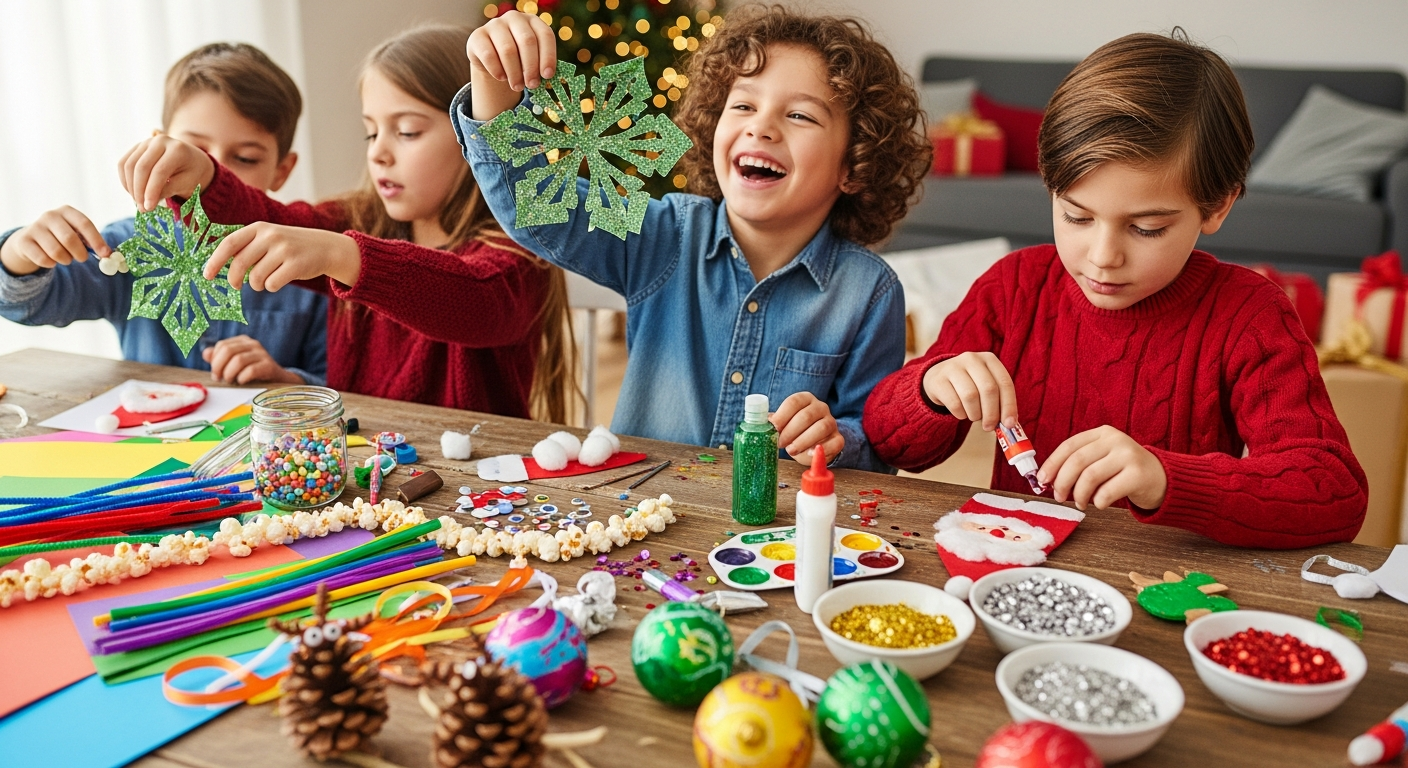
Table of Contents
- Why Christmas Crafts are More Than Just Fun
- Integrating Communication into Craft Time
- Speech Blubs: Your Partner in Festive Communication
- Simple & Engaging Christmas Craft Projects for Kids
- Maximizing Learning with Speech Blubs During Holiday Crafts
- Choosing the Right Speech Blubs Plan: Value for Your Family
- Conclusion
- Frequently Asked Questions (FAQ)
As the festive season twinkles into view, filling our homes with warmth and wonder, there's a unique magic that only children can truly capture. From the glowing lights to the anticipation of Santa's arrival, Christmas offers a world of sensory delights and imaginative play. For parents and caregivers, this special time presents an unparalleled opportunity to engage with children in meaningful ways, sparking not just creativity but also crucial developmental skills, especially in communication. This blog post will explore a sleigh full of engaging, easy-to-do Christmas craft projects for kids that do more than just deck the halls; they naturally encourage speech, language, and social interaction. We'll delve into how these hands-on activities can transform holiday fun into powerful learning moments, and how tools like Speech Blubs can amplify these benefits, helping your child to truly speak their minds and hearts.

Why Christmas Crafts are More Than Just Fun
Crafting during the holidays is a cherished tradition for many families, but its benefits extend far beyond simply creating pretty decorations. These activities are rich with opportunities for children to grow and develop in multiple areas.
Developing Fine Motor Skills
From wielding child-safe scissors to carefully placing glitter or threading beads, Christmas crafts are excellent for refining fine motor skills. These small, precise movements strengthen the muscles in the hands and fingers, which are vital for daily tasks like writing, buttoning clothes, and eating independently. The more children practice these actions, the more coordinated and agile their hands become, laying a strong foundation for future learning.
Boosting Creativity and Imagination
When given a pile of materials, children see possibilities that adults often overlook. A simple pinecone can become a majestic Christmas tree, and a paper plate can transform into Santa’s jolly face. Crafts encourage children to think outside the box, experiment with colors and textures, and bring their unique visions to life. This imaginative play is crucial for problem-solving skills and developing a flexible mindset, both essential for navigating a complex world.
Enhancing Cognitive Development
Crafting involves many cognitive processes. Children learn to follow instructions, sequence steps, identify shapes and colors, and understand cause and effect. For instance, knowing that glue will hold two pieces together or that cutting along a line creates a specific shape involves critical thinking. These mental gymnastics help build pathways in the brain, improving concentration, memory, and spatial awareness.
Building Confidence and Self-Esteem
There’s immense pride in creating something with one’s own hands. When a child proudly displays their handmade ornament or gift, they experience a boost in self-esteem. They learn that their efforts lead to tangible results, fostering a sense of accomplishment and encouraging them to take on new challenges. This positive reinforcement is invaluable for their emotional growth.

Fostering Family Connection and Communication
Perhaps one of the most heartwarming benefits of holiday crafting is the opportunity for family bonding. Sitting together, sharing materials, discussing ideas, and working towards a common goal strengthens family ties. These shared experiences create lasting memories and provide a natural, low-pressure environment for communication. Parents can model language, ask open-ended questions, and encourage children to articulate their thoughts and feelings about their creations. For a parent whose child is just starting to string words together, explaining the steps of a craft can be a fantastic way to practice sequencing words like "first," "then," and "next," or describing actions like "cut" and "glue."
Integrating Communication into Craft Time
Crafting time is a goldmine for language development. It’s a natural, engaging setting where children can absorb new vocabulary, practice articulation, and develop narrative skills without even realizing they’re learning.
Descriptive Language: Colors, Textures, Shapes
Imagine making a "sparkly, soft, red reindeer" or a "bumpy, green pinecone tree." Crafting naturally invites the use of adjectives. Encourage your child to describe the materials they’re using – "Is the cotton ball soft or hard?" "What color is the paint?" "Is this glitter shiny?" This helps expand their vocabulary and understanding of descriptive words, which are vital for expressing themselves clearly.
Following Instructions and Sequencing
Most crafts involve multiple steps. This provides a perfect opportunity to practice following multi-step directions. "First, glue the eyes, then add the nose." As your child becomes more comfortable, you can encourage them to repeat the instructions back to you or even explain the next step. This not only enhances listening skills but also strengthens their understanding of sequencing and time-based concepts.
Asking Questions and Expressing Ideas
Craft time can be a fantastic conversational springboard. Ask open-ended questions like, "What do you want to make next?" "How do you think we can make this part stick?" "What do you like most about your creation?" Encourage them to articulate their choices and preferences. Even simple statements like, "I want the blue crayon" are valuable communication practice.
Sharing and Social Interaction
If you're crafting with multiple children or as a family, sharing materials and space fosters social communication skills. Children learn to ask politely for an item ("May I please have the glue?"), take turns, and offer help. These interactions are crucial for developing social language and empathy.
The Power of Narration: Telling the Craft Story
Once a craft is complete, encourage your child to talk about it. "Tell me about your snowman!" "What did you use to make Santa's beard?" This helps them develop narrative skills, practice recalling events in sequence, and express their creativity verbally. This storytelling aspect is a powerful pre-reading and writing skill.
Speech Blubs: Your Partner in Festive Communication
At Speech Blubs, we deeply understand the journey of helping a child find their voice. Our mission is to empower children to "speak their minds and hearts." We believe every child deserves the opportunity to communicate effectively and joyfully. Our company was born from the personal experiences of our founders, who all grew up with speech problems and created the tool they wished they had – an immediate, effective, and joyful solution for the 1 in 4 children who need speech support.
How Video Modeling Amplifies Learning
Our unique approach blends scientific principles with play, creating one-of-a-kind "smart screen time" experiences. We stand apart from passive viewing like cartoons. Instead, Speech Blubs offers a powerful tool for family connection, centered around our "video modeling" methodology. Children learn by watching and imitating their peers, which research has shown to be incredibly effective. This method leverages mirror neurons, allowing children to intuitively understand and replicate actions and sounds. You can explore the research behind our methodology here.
"Smart Screen Time" for Skill Development
We turn screen time into an interactive, educational experience. Instead of just passively watching, children actively participate, repeat words, make sounds, and follow instructions alongside their peers in the app. This engagement is crucial for developing complex communication skills. For instance, if your child is making a paper plate Santa, they can then open Speech Blubs to sections like "What Am I Doing?" to practice action verbs like "cutting," "gluing," or "painting," or "My Body" to identify parts of Santa's face.
Real-world Scenarios
Our app is designed to connect directly with a child’s world. For a parent whose 3-year-old "late talker" loves animals, the "Animal Kingdom" section offers a fun, motivating way to practice "moo" and "baa" sounds, which can then be reinforced when discussing reindeer during craft time. Or, if your child is crafting a sparkly snowflake, the app provides a perfect, low-pressure opportunity to practice words like 'sparkle,' 'snow,' and 'star' aloud, perhaps with encouragement from our "Early Sounds" section. The interactive nature of our app encourages repetition and active participation, turning learning into a joyful game.
Simple & Engaging Christmas Craft Projects for Kids
Here are some delightful Christmas craft projects that are easy to set up, require minimal materials, and are packed with opportunities for speech and language development.
Craft 1: Paper Plate Santa
A classic holiday craft that brings a smile to every face!
- Materials: Paper plates, cotton balls, red construction paper, googly eyes, red pom-pom (for nose), glue stick, scissors.
- Instructions:
- Cut a large triangle from the red paper for Santa's hat and glue it to the top of the paper plate.
- Glue cotton balls along the bottom edge of the hat and around the bottom half of the plate for his beard.
- Attach googly eyes and a red pom-pom nose in the middle.
- Draw a big, happy mouth below the nose.
- Speech & Language Boosters:
- Colors: "Red hat," "white beard."
- Body Parts: "Eyes," "nose," "mouth," "beard."
- Action Words: "Cut," "glue," "draw," "stick."
- Sounds: "Ho ho ho!" (Santa's laugh).
- Descriptions: "Jolly Santa," "fluffy beard."
Craft 2: Cotton Ball Snowman
Simple, tactile, and endlessly charming!
- Materials: Blue or black construction paper, white glue, cotton balls, small twigs, googly eyes, orange construction paper (for nose), markers.
- Instructions:
- Draw three circles on the construction paper to outline the snowman's body.
- Apply glue inside the circles and have your child stick cotton balls to fill them.
- Add googly eyes, an orange triangle nose, and small twig arms.
- Draw a mouth and buttons with markers.
- Speech & Language Boosters:
- Adjectives: "Soft," "fluffy," "cold" (if talking about real snow), "round."
- Body Parts: "Head," "body," "arms," "eyes," "nose."
- Sequencing: "First we glue, then we stick."
- Counting: "One, two, three cotton balls."
- Prepositions: "On top," "next to."
Craft 3: Handprint Reindeer Ornaments
A precious keepsake and a fun activity rolled into one!
- Materials: Brown washable paint, cardstock or thick paper, googly eyes, red pom-poms (for Rudolph's nose), markers, ribbon.
- Instructions:
- Paint your child's palm and fingers brown.
- Press their hand onto the paper, fingers spread, to create the reindeer's antlers.
- Once dry, turn the print upside down (fingers become antlers).
- Glue on googly eyes and a red pom-pom for the nose.
- Draw a mouth. Punch a hole at the top and thread a ribbon.
- Speech & Language Boosters:
- Actions: "Paint," "press," "print," "dry," "hang."
- Colors: "Brown," "red."
- Counting: "How many fingers?"
- Concepts: "Big hand," "small hand."
- Storytelling: Talk about Rudolph flying and guiding Santa's sleigh.
Craft 4: DIY Salt Dough Ornaments
A sensory delight that can be painted and kept for years.
- Materials: 1 cup flour, 1/2 cup salt, 1/2 cup water, cookie cutters (Christmas shapes), rolling pin, straw, baking sheet, acrylic paints, brushes, glitter, ribbon.
- Instructions:
- Mix flour, salt, and water in a bowl until a dough forms. Knead for 5-10 minutes.
- Roll out the dough to about 1/4 inch thickness.
- Use cookie cutters to cut out shapes.
- Make a hole at the top of each ornament with a straw.
- Bake at 250°F (120°C) for 2-3 hours until hard. Let cool.
- Paint and decorate!
- Speech & Language Boosters:
- Action Verbs: "Mix," "knead," "roll," "cut," "bake," "paint," "decorate."
- Sensory Words: "Sticky," "smooth," "hard," "soft."
- Shapes: "Star," "tree," "bell" (whatever cookie cutters you use).
- Sequencing: Explain each step as you do it.
- Concepts: "Hot," "cold," "thick," "thin."
Craft 5: Pinecone Christmas Trees
A beautiful way to bring nature indoors.
- Materials: Pinecones, green paint, glitter, small pom-poms, glue, star stickers or small foam stars.
- Instructions:
- Paint the pinecones green (or other festive colors). Let dry.
- Apply glue to the tips of the pinecone scales and sprinkle with glitter.
- Glue small pom-poms onto the scales as "ornaments."
- Place a star sticker or foam star on the top.
- Speech & Language Boosters:
- Nature Words: "Pinecone," "tree," "forest."
- Colors: "Green," "red," "gold," "silver."
- Descriptions: "Pointy," "bumpy," "sparkly," "sticky."
- Prepositions: "On top," "inside," "around."
- Counting: "How many pom-poms did you use?"
Craft 6: Cardboard Tube Angels/Characters
Repurpose household items into festive figures.
- Materials: Empty toilet paper or paper towel rolls, construction paper (various colors), glue, markers, yarn (for hair), glitter, cotton balls.
- Instructions:
- Wrap cardboard tubes with construction paper for the body.
- Cut out circles for heads, and wings for angels, or other shapes for character accessories.
- Glue yarn for hair, draw faces, and decorate with glitter, cotton balls (for clouds or beards), etc.
- Create a whole family of holiday characters!
- Speech & Language Boosters:
- Character Names: "Angel," "elf," "Santa," "reindeer."
- Descriptive Words: "Tall," "short," "shiny," "pretty."
- Action Verbs: "Wrap," "cut," "draw," "decorate."
- Storytelling: Create a play with the characters you make. "The angel flew to the star."
- Comparing: "My elf is taller than your angel."
Craft 7: Cookie Cutter Stamping Cards
Easy and perfect for making personalized holiday greetings.
- Materials: Christmas-themed cookie cutters, washable paint, construction paper or blank cards, paper plates.
- Instructions:
- Squirt different colored paints onto separate paper plates.
- Dip the cookie cutters into the paint.
- Press the paint-covered cookie cutters onto the paper to make festive designs.
- Let dry, then write messages or have your child dictate them.
- Speech & Language Boosters:
- Shapes: "Star," "tree," "gingerbread man."
- Colors: "Red," "green," "gold," "silver."
- Action Verbs: "Dip," "press," "stamp," "make."
- Social Language: Discuss who the card is for and what message to write. "Happy Christmas, Grandma!"
- Sensory: "Squishy paint," "wet."
Craft 8: Jingle Bell Bracelets/Anklets
A noisy, fun craft that encourages sound play.
- Materials: Pipe cleaners, jingle bells (various sizes if possible).
- Instructions:
- Thread jingle bells onto a pipe cleaner.
- Once enough bells are on, twist the ends of the pipe cleaner together to form a circle that fits around your child’s wrist or ankle.
- Shake and make music!
- Speech & Language Boosters:
- Sounds: "Jingle, jingle!" "Shake, shake!"
- Counting: "How many bells did you put on?"
- Concepts: "Big bell," "small bell," "loud," "quiet."
- Actions: "Thread," "twist," "shake," "wear."
- Rhyme/Song: Sing "Jingle Bells" while wearing them.
Maximizing Learning with Speech Blubs During Holiday Crafts
The magic of Speech Blubs lies in its ability to take these wonderful craft experiences and transform them into structured, yet playful, speech and language practice.
Connecting Craft Themes to App Activities
After making a snowman, for example, open Speech Blubs and go to the "Animals" section to practice animal sounds or "What Am I Doing?" for actions like "jumping" (like a snowman leaping into snow!). If you've just crafted a beautiful Christmas tree, explore the "Colors" or "Shapes" sections to reinforce vocabulary, or even the "Early Sounds" section to practice sounds like 't' for 'tree' or 's' for 'star'.
Using the App to Practice Related Vocabulary
For a child who is expanding their vocabulary, Speech Blubs provides a visual and auditory library of words related to almost any theme. If your child is working on descriptive words during craft time, the app can offer further reinforcement through interactive activities that focus on adjectives. Our video modeling technique, where children watch and imitate their peers, is particularly effective for helping them produce new words and sounds with confidence.
Making it a Family Affair
Speech Blubs is designed for active co-play. Sit with your child, participate in the activities, repeat words together, and celebrate their efforts. This shared experience deepens your bond and makes learning even more enjoyable and effective. This is "smart screen time" that sparks conversation and connection, not just passive viewing.
Understanding the Science: Mirror Neurons at Play
Our method is deeply rooted in neurological science, leveraging the power of mirror neurons. When children watch other kids in the app making sounds and movements, their mirror neurons fire, helping them internalize and reproduce those actions themselves. This makes Speech Blubs a highly effective tool, placing us in the top tier of speech apps worldwide as recognized by the MARS scale. You can read more about the scientific backing of our app here.
A Quick Check: Is Your Child on Track?
Sometimes, parents wonder if their child's speech development is progressing as expected. If you have any concerns or simply want a clearer picture of your child's communication skills, we offer a valuable resource. Take our quick 3-minute preliminary screener today. It involves 9 simple questions and provides an assessment and next-steps plan, offering immediate value and guidance. It's a great way to understand if your child could benefit from targeted support, which can include a free 7-day trial of Speech Blubs. Many parents have shared their success stories; you can see what other parents are saying here.
Choosing the Right Speech Blubs Plan: Value for Your Family
We are committed to making effective speech and language support accessible to every family. That's why we offer transparent pricing with clear benefits for each plan.
Monthly vs. Yearly Plan Breakdown
We offer two main subscription options:
- Monthly Plan: Priced at $14.99 per month. This plan provides ongoing access to the core Speech Blubs app content.
- Yearly Plan: Our most popular and highly recommended option, priced at $59.99 per year. This breaks down to just $4.99 per month, offering significant savings.
Benefits of the Yearly Plan
The Yearly Plan isn't just about saving money; it unlocks a comprehensive suite of features designed to maximize your child's progress and your family's convenience:
- 7-day Free Trial: Only the Yearly plan includes a generous 7-day free trial, allowing you to experience the full benefits of Speech Blubs before committing.
- The Extra Reading Blubs App: Gain exclusive access to our companion app, Reading Blubs, designed to further support literacy development alongside speech.
- Early Access to New Updates: Be among the first to explore new activities, features, and content as soon as they're released.
- 24-hour Support Response Time: Enjoy priority customer support with a guaranteed response within 24 hours, ensuring you always have the help you need, when you need it.
The Monthly Plan does not include these additional benefits, making the Yearly Plan the clear choice for families looking for the best value and the most comprehensive support.
Why the Yearly Plan is the Best Choice
Opting for the Yearly Plan allows you to save a remarkable 66% compared to the monthly subscription. More importantly, it provides uninterrupted access to our expertly designed activities, ensuring consistency in your child's learning journey – which is key for developmental progress. With the added value of Reading Blubs and priority support, the Yearly plan truly offers the full Speech Blubs experience. Start your child’s journey toward confident communication by signing up for the Yearly plan and unlocking all these fantastic features! You can create your account and begin your 7-day free trial today.
Conclusion
The holiday season is a magical time, filled with opportunities for joy, connection, and growth. Engaging in festive Christmas craft projects for kids is more than just a way to decorate your home; it’s a powerful vehicle for developing fine motor skills, boosting creativity, and, crucially, enhancing speech and language abilities. From descriptive language to storytelling, these hands-on activities provide a natural, fun environment for children to explore and expand their communication skills. When combined with the interactive, "smart screen time" experiences offered by Speech Blubs, these holiday moments become even more impactful. Our video modeling methodology and commitment to empowering children to "speak their minds and hearts" ensure that learning is always joyful and effective.
This Christmas, make every craft a conversation, every decoration a declaration, and every moment an opportunity for growth.
Ready to bring the magic of communication to your home this holiday season? Choose the Speech Blubs Yearly plan to unlock your 7-day free trial, the Reading Blubs app, and a world of engaging speech development activities. Download Speech Blubs on the App Store or Google Play today and embark on a joyful journey of discovery and communication with your child!
Frequently Asked Questions (FAQ)
1. How do Christmas crafts specifically help with speech development?
Christmas crafts inherently involve various tasks that boost speech and language. Children use descriptive language when talking about colors, textures, and shapes of materials. They practice following multi-step instructions, enhancing their comprehension and sequencing skills. The shared activity encourages asking questions, expressing ideas, and storytelling about their creations, all of which are vital for communication development.
2. What age group are these Christmas craft projects suitable for?
Most of the crafts listed are adaptable for a wide range of ages, generally from toddlers (with significant adult supervision) up to early school-aged children. Simpler crafts like the cotton ball snowman or handprint reindeer are great for younger children, focusing on basic actions and vocabulary. Older children can handle more complex tasks like salt dough ornaments, allowing for more detailed discussion and creative expression. Adult supervision and participation are key for all ages.
3. How can Speech Blubs integrate with holiday craft activities?
Speech Blubs complements holiday crafts by providing targeted practice that reinforces vocabulary and concepts learned during crafting. For example, after making animal-themed crafts, children can practice animal sounds in the app. The app's video modeling helps children imitate sounds and words they might use while crafting, like action verbs or descriptive adjectives. This creates a cohesive learning experience that makes "smart screen time" an extension of hands-on play.
4. What is the best way to get started with Speech Blubs?
The best way to get started and experience the full benefits of Speech Blubs is by choosing our Yearly Plan. This plan includes a 7-day free trial, allowing you to explore all our features, including the companion Reading Blubs app, early access to updates, and priority support. You can create your account and begin your 7-day free trial by selecting the Yearly plan here, or simply download the Speech Blubs app from the App Store or Google Play Store and select the Yearly subscription for your free trial.
About the author