
Fun Christmas Game for Kids: Boost Communication!
 By Speech Blubs Team•Dec 23, 2025•15 min.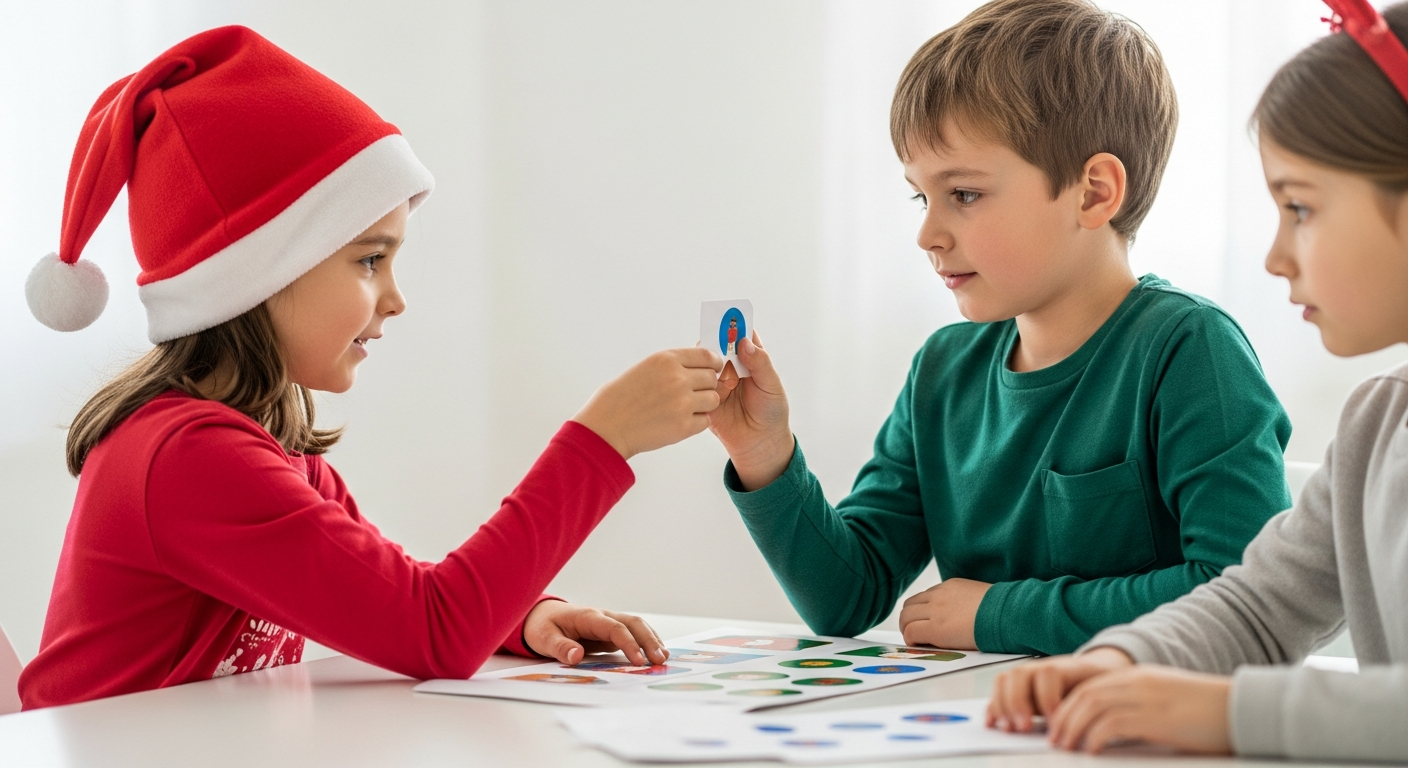
Table of Contents
- Why Holiday Games Are More Than Just Fun
- Making Every Christmas Game a Learning Opportunity
- Our Favorite Christmas Games for Kids (with a Speech Blubs Twist!)
- Beyond the Games: Year-Round Communication Growth
- Why Choose Speech Blubs for Your Family?
- Unlocking Full Potential: Our Pricing & Features
- Conclusion
- Frequently Asked Questions (FAQ)
The holiday season is a whirlwind of twinkling lights, festive carols, and eager anticipation. Amidst the joy and excitement, it's easy to get swept up in the endless to-do lists of shopping, baking, and decorating. But what if we told you that some of the most memorable and developmentally beneficial moments of the season could be found in the simplest of activities: playing games? Christmas games for kids offer more than just entertainment; they create powerful opportunities for family connection, cognitive growth, and crucially, speech and language development. This post will explore how you can transform everyday holiday fun into rich learning experiences, ensuring that this Christmas is not only merry but also a significant step forward in your child's communication journey. We’ll delve into a variety of engaging games, showing you how to adapt them for language learning, and how tools like Speech Blubs can amplify these efforts, helping your child speak their minds and hearts.

Why Holiday Games Are More Than Just Fun
Beneath the surface of giggles and friendly competition, holiday games are vibrant ecosystems for growth. For young children, play is their primary mode of learning. It’s how they explore the world, understand social cues, and experiment with language. During the holidays, these opportunities are amplified. Imagine a game where your child is asked to describe a picture of Santa's workshop: they're not just identifying objects; they're expanding their vocabulary, practicing descriptive adjectives, and developing narrative skills.
These games provide natural, low-pressure environments for practicing communication. Unlike formal lessons, the playful context reduces anxiety and encourages spontaneous speech. When families play together, children witness and imitate communication strategies from their parents and siblings – an incredibly powerful learning mechanism. This shared experience fosters a sense of belonging and joy, strengthening family bonds while simultaneously building confidence in their expressive abilities. At Speech Blubs, we believe in the power of play to unlock a child’s full potential, and the holiday season offers a unique backdrop for this philosophy.
Making Every Christmas Game a Learning Opportunity
Turning a simple Christmas game into a potent language-building activity doesn't require a speech therapy degree; it simply requires intentionality and a little creativity. The key is to engage, prompt, and expand.
Engage: Be fully present with your child during the game. Ask open-ended questions, encourage them to describe what they're doing, and model good communication yourself. Prompt: If your child is struggling to vocalize, offer gentle prompts. Instead of simply saying "Say 'present'," try "What do you see? A 'p-p-present'!" or "Tell me what color the present is." Expand: When your child speaks, even in single words, expand on their utterance. If they say "tree," you can say, "Yes, a big green Christmas tree!" This models more complex sentence structures and introduces new vocabulary.

This approach aligns perfectly with our mission at Speech Blubs: to empower children to speak their minds and hearts by blending scientific principles with play. Our founders experienced speech challenges themselves, and they created Speech Blubs to be the immediate, effective, and joyful solution they wished they had. We know that children learn best when they are engaged and having fun, which is why our app offers "smart screen time" experiences that are a screen-free alternative to passive viewing. Through our unique "video modeling" methodology, children learn by watching and imitating their peers, making the learning process feel natural and inspiring.
For parents who might be wondering if their child could benefit from a little extra support, we offer a quick 3-minute preliminary screener. It's a simple, 9-question tool that provides an assessment and a personalized next-steps plan, along with a free 7-day trial of Speech Blubs. It’s a great way to gain insight and discover the joyful learning journey we offer.
Our Favorite Christmas Games for Kids (with a Speech Blubs Twist!)
Here, we've compiled a list of fantastic Christmas games, adapted to specifically target various aspects of speech and language development.
Active & Movement-Based Games
These games get kids moving while incorporating crucial language skills.
1. Santa Says (A Holiday Twist on Simon Says)
How to Play: The leader (Santa) gives commands like "Santa says touch your red nose" or "Santa says march like a toy soldier." Children only follow if "Santa says" the command. Speech & Language Twist:
- Action Verbs: Focus on commands using action verbs: "Santa says jump," "Santa says wiggle," "Santa says spin." Model the actions and encourage the child to say the verb as they perform it.
- Body Parts: "Santa says touch your ear," "Santa says point to your knee."
- Following Multi-Step Directions: For older kids, "Santa says clap your hands, then stomp your feet."
- Relatable Scenario: For a child who is working on action verbs, "Santa Says" becomes a lively way to practice "jump," "wiggle," and "clap" – just like our "Action Verbs" section in Speech Blubs where kids see peers demonstrate the movements.
2. Shake the Snowballs Out
How to Play: Players tie a tissue box filled with ping pong balls (snowballs) around their waist. They must shake all the "snowballs" out without using their hands. The first to empty their box wins. Speech & Language Twist:
- Action Verbs & Adverbs: Encourage words like "shake," "wiggle," "fast," "slow," "more," "all done." "Shake the snowballs fast!"
- Counting: Count the "snowballs" as they fall out. "One, two, three snowballs gone!"
- Cause and Effect: Discuss "If I shake hard, then the snowballs fall out."
3. Gingerbread Shuffle
How to Play: Each player places a small gingerbread cookie on their forehead. On cue, players must get the cookie from their forehead to their mouth without using their hands. Speech & Language Twist:
- Oral Motor Skills: This game is fantastic for oral motor exercises, which are foundational for clear speech. Encourage lip movements, tongue control, and facial muscle engagement.
- Spatial Concepts: "Is the cookie on your nose? Is it above your mouth?"
- Problem Solving: "How can we get the cookie down?" This encourages verbal reasoning.
4. Candy Cane Hunt
How to Play: Hide candy canes around the house or yard. Children search for them, collecting them in a basket. Speech & Language Twist:
- Prepositions: Give clues using prepositions: "Look under the table," "Check behind the curtain," "Is it on the bookshelf?"
- Descriptive Language: When a child finds a candy cane, ask them to describe it: "What does it look like?" (red, white, swirly, shiny).
- Counting & Quantities: "How many candy canes did you find?" "Do you have more or less than your sibling?"
Creative & Descriptive Games
These games spark imagination and build vocabulary and descriptive skills.
1. Gingerbread House Contest
How to Play: Provide gingerbread house kits (or graham crackers and frosting) and various candies. Teams or individuals decorate their houses within a time limit. Speech & Language Twist:
- Descriptive Vocabulary: Focus on colors, shapes, textures, and positions. "What kind of candy are you putting on the roof?" "Is that a round gumdrop or a square one?"
- Sequencing & Planning: Encourage children to explain their steps: "First, I'm putting the frosting on. Next, I'll add the candy."
- Social Interaction: For teams, this is great for turn-taking, asking for items ("Can I have the red sprinkles?"), and collaborative problem-solving.
2. Cookie Decorating Competition
How to Play: Bake or buy plain Christmas cookies. Set up stations with various frostings, sprinkles, and edible decorations. Speech & Language Twist:
- Attribute Recognition: "Which sprinkles are sparkly? Which frosting is green?"
- Action Verbs: "Are you spreading the frosting, or dotting it?" "Are you sprinkling the candy?"
- Expressive Language: Encourage children to describe their finished cookie. "Tell me about your Santa cookie!"
3. Oh, Christmas Tree (Whipped Cream Edition)
How to Play: Give each player a can of whipped cream and a plate. Players have one minute to spray the whipped cream into the tallest or best-looking Christmas tree shape. Speech & Language Twist:
- Sensory Language: "How does it feel?" (soft, cold, squishy). "What does it smell like?" (sweet).
- Descriptive Adjectives: "Is your tree tall? Is it wide? Does it have a pointy top?"
- Cause and Effect: "If you press the button, what happens?" "The whipped cream comes out!"
Listening & Comprehension Games
These games enhance auditory processing and attention skills.
1. Christmas Bingo
How to Play: Create custom bingo cards with holiday images (Santa, reindeer, presents) or words. Call out items, and players mark them off. Speech & Language Twist:
- Vocabulary Building: Introduce and reinforce holiday-themed words.
- Auditory Discrimination: Help children distinguish between similar-sounding words or identify initial sounds of Christmas words.
- Categorization: Group items by category (e.g., "things for the tree," "things Santa uses").
- Relatable Scenario: For a child learning new vocabulary, Christmas Bingo is a playful way to associate words with images, much like the engaging visual prompts and peer modeling found in Speech Blubs' themed sections.
2. Holiday I Spy
How to Play: Create a festive scene (or look around your decorated home). Say "I spy with my little eye something..." and provide a clue. Speech & Language Twist:
- Descriptive Language: Use clues involving colors, shapes, sizes, textures, and functions. "I spy something red and sparkly." "I spy something we hang on the tree."
- Prepositions: "I spy something under the couch."
- Inferencing: For older children, provide more complex clues that require deductive reasoning.
Storytelling & Narrative Games
These games are perfect for building narrative skills and imagination.
1. Campfire Storytelling (Indoors or Out!)
How to Play: Gather around a "campfire" (real or a cozy blanket fort with a flickering lamp). Encourage everyone to share a holiday memory or make up a silly Christmas story. Speech & Language Twist:
- Narrative Skills: Encourage children to tell a story with a beginning, middle, and end. Prompt them with "What happened first? Then what?"
- Vocabulary Expansion: Introduce new words related to storytelling (e.g., character, setting, plot, twist).
- Imaginative Play: Encourage creativity and imaginative thinking.
2. Holiday Mad Libs
How to Play: Use pre-written Mad Libs or create your own holiday-themed stories with blanks for nouns, verbs, adjectives, etc. Have players provide words without knowing the context. Speech & Language Twist:
- Parts of Speech: This is an excellent, hilarious way to teach and reinforce understanding of nouns, verbs, adjectives, and adverbs.
- Humor & Social Pragmatics: The silly stories generate laughter, encouraging social interaction and understanding of humor.
Beyond the Games: Year-Round Communication Growth
While these Christmas games offer wonderful, seasonal opportunities for language development, communication is a year-round journey. This is where Speech Blubs truly shines as a powerful supplement to your child's overall development plan and, when applicable, professional therapy. We offer a comprehensive approach to speech and language learning that seamlessly integrates into your family’s daily routine. Our app transforms "screen time" from a passive activity into an active, engaging, and educational experience.
At Speech Blubs, we are committed to providing an immediate, effective, and joyful solution for the 1 in 4 children who need speech support. Our innovative video modeling method, where children learn by observing and imitating their peers, is backed by scientific principles and has been recognized for its effectiveness. You can learn more about the research behind our methodology and how it places us in the top tier of speech apps worldwide. This isn't just an app; it's a powerful tool for family connection, fostering confidence, reducing frustration, and building key foundational communication skills.
Why Choose Speech Blubs for Your Family?
Our mission at Speech Blubs is deeply personal. Our company was born from the founders' own experiences growing up with speech problems. They created the tool they wished they had—a fun, accessible, and effective way to overcome communication challenges. This personal connection drives our commitment to empowering children to speak their minds and hearts. We believe every child deserves the chance to express themselves clearly and confidently.
We blend scientific principles with play, ensuring that learning is always an adventure. With thousands of activities, covering everything from first words and sounds to complex sentences and social skills, Speech Blubs provides a rich environment for growth. We're proud to see children thrive and families connect through our app, making every learning moment a joyful one. Don't just take our word for it; see what other parents are saying about their child's success with Speech Blubs.
Unlocking Full Potential: Our Pricing & Features
We believe in transparency and providing exceptional value. To help your child embark on their communication journey, we offer two main subscription plans:
- Monthly Plan: For $14.99 per month, you get access to our extensive library of speech and language activities.
- Yearly Plan: Our most popular and highly recommended option, priced at just $59.99 per year. This breaks down to an incredible value of just $4.99 per month, meaning you save 66% compared to the monthly plan!
The Yearly plan isn't just cheaper; it's the gateway to our full suite of premium features designed to maximize your child's progress:
- 7-Day Free Trial: Experience Speech Blubs risk-free for a full week.
- Exclusive Reading Blubs App: Gain access to our companion app, Reading Blubs, designed to complement language development with early literacy skills.
- Early Access to New Updates: Be among the first to explore new content and features.
- 24-Hour Support Response Time: Get priority assistance whenever you need it.
The Monthly plan does not include these invaluable benefits. We highly encourage you to choose the Yearly plan to get the free trial and unlock the full, transformative suite of features for your child’s communication and literacy development.
Conclusion
The Christmas season is a precious time for creating cherished memories, and by intentionally incorporating language-rich games, you can make these moments even more impactful. From active "Santa Says" to creative gingerbread house contests, each game offers a unique opportunity to build vocabulary, practice articulation, enhance listening skills, and foster a love for communication. These playful interactions not only strengthen family bonds but also lay a strong foundation for your child's expressive confidence.
We believe that every child deserves the chance to speak their mind and hearts, and at Speech Blubs, we're dedicated to making that a reality. Our app provides an engaging, science-backed approach to speech and language development, complementing your family's efforts with smart screen time that truly educates and connects.
Ready to embark on a joyful journey of communication with your child this holiday season and beyond? Don't miss out on the incredible value and exclusive features of our Yearly plan. Start your 7-day free trial today by creating your account on our website or by downloading Speech Blubs directly from the Apple App Store or Google Play Store. Choose the Yearly plan to unlock everything Speech Blubs and Reading Blubs have to offer, ensuring a future filled with confident communication and delightful discoveries.
Frequently Asked Questions (FAQ)
Q1: How can Christmas games specifically help my child's speech development?
A1: Christmas games provide a natural, low-pressure environment for practicing various speech and language skills. Through engaging activities, children can expand their vocabulary, practice articulation, understand and follow directions, develop narrative skills, and improve social communication. The fun, festive context motivates children to participate and express themselves more readily.
Q2: What if my child is a "late talker"? Can these games still be beneficial?
A2: Absolutely! For late talkers, these games can be incredibly beneficial. The key is to adapt them to your child's current communication level. Focus on single words, gestures, sounds, and simple actions. Use visuals, model words clearly, and expand on any vocalizations your child makes. Paired with a tool like Speech Blubs, which offers targeted exercises and peer modeling, these games become a powerful part of a comprehensive support plan.
Q3: How does Speech Blubs integrate with playing traditional Christmas games?
A3: Speech Blubs acts as a powerful supplement. While you play these games, you’re creating real-world language practice. Speech Blubs reinforces this learning through structured, engaging activities using our video modeling methodology. For instance, if your child practices action verbs during "Santa Says," they can then reinforce those verbs by imitating peers in the "Action Verbs" section of our app. It helps solidify skills learned in play and extends the learning journey year-round.
Q4: Which Speech Blubs plan is best for families looking for comprehensive support?
A4: We strongly recommend the Yearly plan for the most comprehensive and valuable support. For just $59.99 per year (saving you 66% compared to the monthly plan), it includes a 7-day free trial, access to our companion Reading Blubs app, early access to new updates, and 24-hour support response time. These exclusive features ensure your child receives the full benefits of our program for both speech and early literacy development.
About the author