
Fun Christmas Tree Activities for Kids to Boost Speech Skills
 By Speech Blubs Team•Dec 19, 2025•19 min.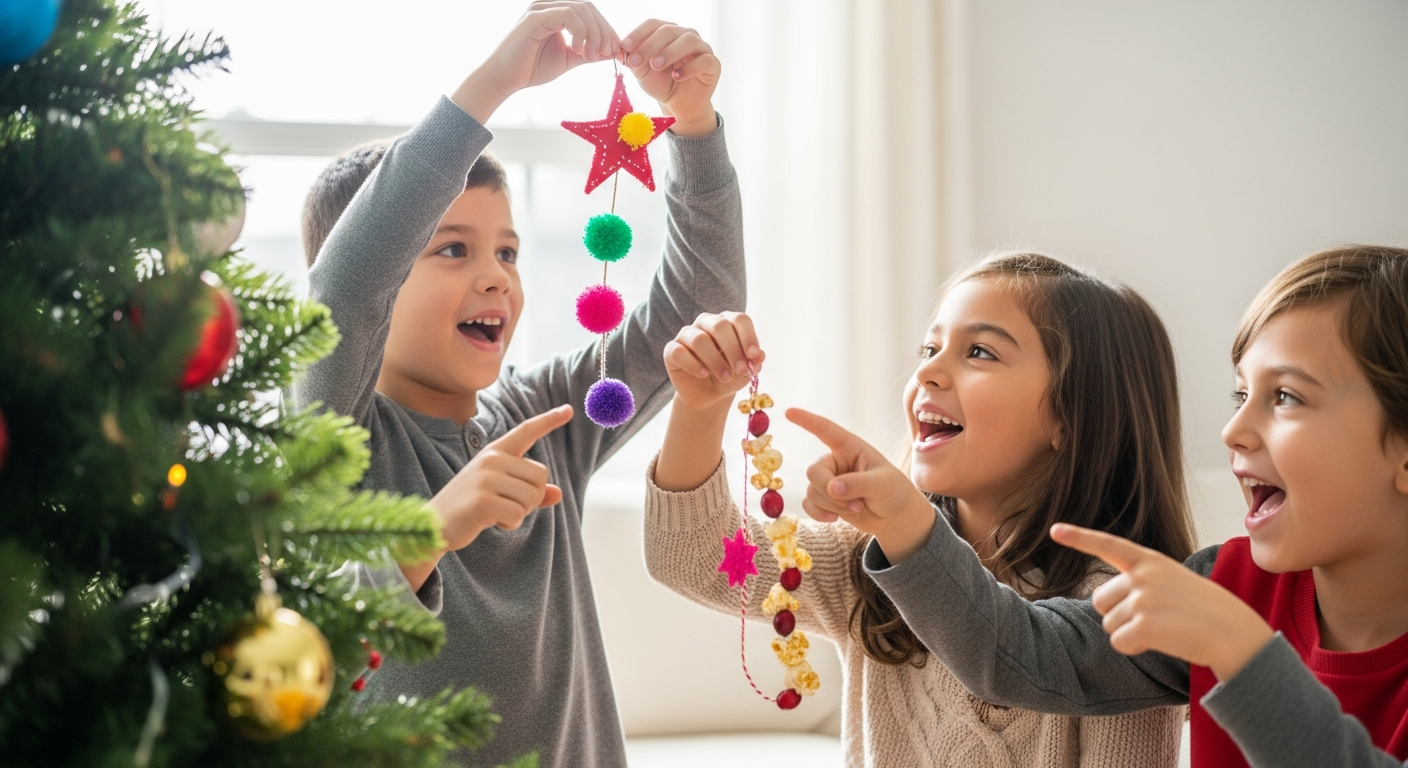
Table of Contents
- The Magic of Christmas Tree Play for Language Development
- Preparing for Festive Speech Fun: Setting the Stage
- Top Christmas Tree Activities for Kids (with Speech Focus)
- Integrating Speech Blubs into Your Holiday Routine
- Realistic Expectations & Celebrating Small Wins
- Conclusion
- Frequently Asked Questions
The twinkling lights, the scent of pine, the anticipation of holiday joy – there’s a special kind of magic that a Christmas tree brings into our homes each year. For children, it’s a source of wonder, curiosity, and endless fascination. But beyond the sheer delight, the simple act of decorating and interacting with a Christmas tree offers a treasure trove of opportunities to nurture your child's speech and language development. Imagine turning those precious holiday moments into powerful learning experiences, all while creating cherished family memories.
At Speech Blubs, we believe every child deserves to "speak their minds and hearts," and we know firsthand the challenges families face, as our company was founded by individuals who grew up with speech problems themselves. This inspired us to create a tool we wished we had – an immediate, effective, and joyful solution for the 1 in 4 children who need speech support. This holiday season, we’re here to help you blend scientific principles with festive play, transforming classic Christmas tree activities into rich language-building sessions. This post will guide you through a variety of engaging activities centered around your Christmas tree, explaining how each one can boost different aspects of your child's communication skills, from expanding vocabulary and improving articulation to fostering descriptive language and turn-taking. Get ready to sprinkle some language-learning magic on your holiday traditions!

The Magic of Christmas Tree Play for Language Development
The Christmas tree is more than just a decoration; it’s a dynamic, multi-sensory learning environment. For young children, its appeal lies in its novelty, its colors, textures, and the stories it holds. This natural fascination is a powerful springboard for speech and language development, offering a highly motivating context for learning new words and practicing communication skills.
Why Holiday Traditions Are Perfect for Speech Growth
The holidays naturally provide:
- Motivation and Engagement: Children are inherently excited about Christmas. This high level of interest makes them more receptive to learning and more willing to participate in activities that might otherwise feel like "work."
- Rich Vocabulary: From "ornaments" and "tinsel" to "pinecones" and "garland," the Christmas tree introduces a wealth of new and specific vocabulary. These are concrete objects children can see, touch, and interact with, making word acquisition more effective.
- Sensory Experiences: The smell of pine, the sparkle of lights, the soft texture of a felt ornament, the prickliness of pine needles – all these sensory inputs create a robust context for descriptive language.
- Opportunities for Social Interaction: Decorating a tree is a collaborative activity, perfect for practicing turn-taking, making requests, expressing preferences, and engaging in conversation.
- Repetition and Routine: Many holiday activities are repeated yearly, providing consistent exposure to vocabulary and communication patterns, which is crucial for language acquisition.
How Speech Blubs Enhances This Festive Learning
While hands-on activities are invaluable, combining them with smart screen time can further accelerate progress. At Speech Blubs, our unique "video modeling" methodology, where children learn by watching and imitating their peers, is a powerful complement to real-world experiences. For instance, after decorating your tree and talking about "red balls" or "shiny stars," your child can then use Speech Blubs to practice saying "red" or "star" by imitating children their age. This creates a screen-free alternative to passive viewing like cartoons, turning screen time into an active, engaging, and meaningful learning opportunity. We strive to provide a powerful tool for family connection, extending the learning and joy beyond just the app itself.

If you’re ever wondering if your child could benefit from a little extra speech support, we’ve created an easy way to find out. Take our quick 3-minute preliminary screener to get a simple assessment and a free 7-day trial.
Preparing for Festive Speech Fun: Setting the Stage
Before diving into the activities, a little preparation can go a long way in maximizing their speech-boosting potential.
Creating a Language-Rich Environment
- Talk, Talk, Talk: As you set up the tree or gather materials, narrate your actions. "We are opening the box of ornaments." "Look at this sparkly star!" Use descriptive words, action verbs, and prepositions.
- Ask Open-Ended Questions: Instead of "Do you like this ornament?" try "Tell me about your favorite ornament." or "What color is this one?" This encourages more than a yes/no response.
- Wait for Responses: Give your child time to process and formulate their thoughts or words. Avoid rushing them, and be patient.
- Follow Their Lead: If your child shows particular interest in a specific ornament or aspect of the tree, lean into that interest. Their engagement is key.
- Limit Distractions: Turn off the TV or other background noise to help your child focus on the conversation and activity.
Essential Materials for Your Language-Boosting Tree Activities
Most of these activities use common household items or easily found craft supplies:
- Your Christmas tree (real or artificial)
- Ornaments (various colors, shapes, textures)
- Garland, tinsel, lights
- Craft supplies: construction paper, felt, glue, glitter, scissors (child-safe), cotton balls, pipe cleaners, pom-poms
- Salt dough recipe ingredients
- Holiday-themed books
- Music player for carols
- Small basket or container for scavenger hunts
- Cookie cutters (tree shapes)
Top Christmas Tree Activities for Kids (with Speech Focus)
Let’s explore some delightful Christmas tree activities, designed to be fun for your child while also subtly building crucial speech and language skills.
1. Decorating the Real Tree: A Vocabulary Extravaganza
The ultimate Christmas tree activity! This offers a natural and highly motivating context for expanding vocabulary, practicing articulation, and understanding concepts.
- Vocabulary Focus: Nouns (tree, ornament, light, garland, star, hook, angel, tinsel), Adjectives (shiny, sparkly, round, bumpy, soft, spiky, red, green, big, small, heavy, light), Verbs (hang, place, put, string, plug in, wrap, glitter), Prepositions (on, under, above, next to, around).
- How to Play & Learn:
- "Show Me" Game: Hold up two ornaments and say, "Show me the red ball" or "Show me the sparkly star." This targets receptive language and vocabulary.
- Descriptive Conversations: As you hand your child an ornament, describe it: "This is a round, blue ornament. It's so shiny!" Encourage them to describe it back to you. "What color is this?" "How does it feel?"
- Action Verbs: Focus on the actions of decorating. "We are hanging the ornament." "Now we need to plug in the lights." Repeat these verbs and encourage your child to imitate or use them.
- Following Directions: Give simple, multi-step instructions: "First, get a green ornament, then put it on the bottom branch." This helps with auditory memory and understanding sequences.
- Speech Blubs Connection: After decorating, you can transition to Speech Blubs. For a child learning descriptive words, explore the "Colors" or "Shapes" sections within the app to reinforce vocabulary used during tree decorating. If they struggled with action verbs like "hang" or "put," look for activities that involve similar actions. This "smart screen time" provides a perfect bridge from real-world play to targeted speech practice, making it more effective than passive viewing. Download Speech Blubs on the App Store or Get Speech Blubs on Google Play to explore these categories.
2. DIY Ornament Creation: Articulation & Creative Expression
Creating handmade ornaments is a fantastic way to engage fine motor skills while also providing endless opportunities for language practice.
- Vocabulary Focus: Verbs (cut, glue, paint, sprinkle, tie, mix, roll, bake), Nouns (paper, glitter, glue, cookie cutter, dough, ribbon), Adjectives (sticky, colorful, sparkly, smooth, rough).
- How to Play & Learn:
- Salt Dough Ornaments: Make salt dough together. Talk about the ingredients ("We need flour, salt, and water"). Describe the process: "First, we mix the ingredients, then we roll the dough." Use cookie cutters for shapes. "What shape is this? A star!"
- Paper or Felt Ornaments: Cut out shapes and decorate them with glitter, cotton balls, or pom-poms. Focus on the sounds of the words. If your child is working on /g/ sounds, emphasize "glue" or "glitter." If it's /s/, focus on "scissors" or "star."
- Storytelling: Once the ornaments are made, encourage your child to tell you about their creation. "Tell me about your blue star. What does it like to do on the tree?"
- Speech Blubs Connection: For children practicing specific sounds, our articulation activities within Speech Blubs can be a perfect follow-up. If they created a "star," they can practice the "st" blend in the app. Or, if they enjoyed "cutting" paper, you can focus on words with the /k/ sound. Our peer video modeling makes learning sounds fun and engaging. Many parents have shared their success stories, which you can read on our testimonials page.
3. Felt or Paper "Decorate Your Own" Tree: Concepts & Pretend Play
For younger children or those who need a more accessible option, a felt or paper tree on the wall provides a wonderful canvas for language.
- Vocabulary Focus: Colors, Shapes, Sizes (big, small, medium), Prepositions (on, next to, under), Numbers, Sequencing.
- How to Play & Learn:
- Sorting and Categorizing: Provide a variety of felt or paper ornaments and ask your child to sort them by color, shape, or size. "Put all the red ornaments on the tree." "Find the big circles."
- Patterning: Create simple patterns with ornaments (e.g., star, ball, star, ball) and ask your child to continue the pattern.
- Pretend Play: Engage in imaginative play. "Oh no, the bear ornament fell off the tree! Can you put him back on?" Or "Let's pretend the tree is cold. Let's put a scarf on it!"
- Requesting: Have the ornaments out of easy reach and encourage your child to request items using full sentences: "I want the green circle, please."
- Speech Blubs Connection: The "Early Sounds" or "Guess the Word" sections of Speech Blubs offer activities that reinforce basic concepts like colors and shapes. Our app encourages children to mimic the movements of the mouth and tongue they see in the video models, making abstract concepts more concrete. This "smart screen time" ensures that even when your child is engaged with a device, they are actively participating in their speech development.
4. Christmas Tree Scavenger Hunt: Receptive & Expressive Language
This active game gets children moving while practicing their listening and speaking skills.
- Vocabulary Focus: Spatial concepts (on, under, behind, next to, in front of), Colors, Shapes, Object names, Question words (where, what).
- How to Play & Learn:
- Simple Instructions: "Find the blue ornament on the bottom branch." Start with one-step directions and gradually increase complexity.
- Descriptive Clues: "Find an ornament that is round and red and sparkly."
- Asking and Answering "Where?" Questions: Hide specific ornaments and ask, "Where is the angel ornament?" Encourage your child to answer with a full sentence: "It's behind the garland."
- "I Spy" with the Tree: "I spy something green and prickly." (The tree itself!) or "I spy something that twinkles." (Lights!)
- Speech Blubs Connection: Our app’s engaging scenes often require children to identify objects or follow directions, mirroring the skills practiced in a scavenger hunt. The interactive nature of Speech Blubs supports both receptive language (understanding instructions) and expressive language (naming objects and answering questions). You can learn more about how our methodology is backed by scientific research on our research page.
5. Christmas Tree Story Time & Songs: Narrative & Auditory Processing
The magical glow of the Christmas tree creates the perfect ambiance for reading and singing, both crucial for language development.
- Vocabulary Focus: Story elements (characters, setting, plot), Rhyming words, Rhythm, Memory recall, Emotional vocabulary.
- How to Play & Learn:
- Read Holiday Books: Choose books about Christmas trees or holiday traditions. Point to pictures, ask questions about the story ("What do you think will happen next?"), and talk about the characters' feelings.
- Create Your Own Story: Start a story about an ornament on your tree, and let your child add to it. "Once upon a time, there was a tiny little reindeer ornament..."
- Sing Christmas Carols: Singing songs helps with rhythm, rhyming, memory, and auditory processing. Point to objects as you sing about them. "Oh Christmas tree, oh Christmas tree, how lovely are thy branches!"
- Speech Blubs Connection: Speech Blubs incorporates elements of storytelling and auditory engagement through its interactive activities. While the app doesn't directly sing songs, it encourages auditory discrimination and verbal imitation, skills that are highly transferable to understanding and producing speech in stories and songs. For families ready to empower their children, you can easily start your 7-day free trial today and begin exploring our wide range of engaging activities.
6. Christmas Tree Sensory Bins: Tactile & Descriptive Language
A Christmas tree-themed sensory bin provides a contained space for exploration and rich descriptive language.
- Vocabulary Focus: Textures (prickly, soft, smooth, squishy, fluffy), Scents (pine, cinnamon, sweet), Temperatures (cold, warm), Colors, Sizes.
- How to Play & Learn:
- Materials: Fill a bin with pine needles (real or artificial), small, unbreakable ornaments, jingle bells, small pieces of tinsel, cotton balls (snow), cinnamon sticks, star anise, battery-operated tea lights.
- Explore & Describe: Encourage your child to touch, smell, and manipulate the items. "How does the pine needle feel? Is it prickly?" "Wow, this cotton ball is so soft like snow!" "What does this smell like? Cinnamon!"
- Imaginative Play: Provide small scoops, cups, or tongs. Your child might "decorate" a miniature tree, "make hot chocolate" with cinnamon sticks, or "unwrap" a tiny gift. These scenarios foster creative language and narrative skills.
- Speech Blubs Connection: Many sections of Speech Blubs, especially those focused on early vocabulary and concept building, help children connect words to sensory experiences. For instance, the app's "What's Missing?" or "Guess the Word" games often use visual cues that children can then describe, reinforcing skills learned in sensory play. We are committed to providing immediate, effective, and joyful solutions for children's speech development.
7. Baking & Decorating Tree-Shaped Treats: Sequencing & Requesting
Involve your child in making and decorating holiday cookies or treats in the shape of a Christmas tree.
- Vocabulary Focus: Verbs (mix, stir, roll, cut, bake, spread, sprinkle), Nouns (flour, sugar, butter, frosting, sprinkles, cookie cutters), Adjectives (sweet, sticky, warm, cool, round, pointy).
- How to Play & Learn:
- Following a "Recipe": Keep it simple. "First, we add the flour. Then we mix it." Talk through each step.
- Requesting Ingredients/Tools: "What do we need next? Do you want the spoon or the whisk?" Encourage them to make requests using phrases like "I want the..." or "Can I have the...?"
- Describing: As you taste the cookies, describe them: "Mmm, this is so sweet and delicious!" "This frosting is sticky."
- Comparing/Contrasting: "Is this cookie big or small?" "Your tree has green sprinkles, and mine has red sprinkles."
- Speech Blubs Connection: Our app’s structure helps children practice following visual and auditory cues, similar to following steps in a recipe. The "Fun with Food" section in Speech Blubs can further reinforce vocabulary related to baking and tasting, making the connection between the real-world activity and the app's learning content seamless.
8. "What's Missing?" Tree Game: Memory & Questioning
Once the tree is fully decorated, this simple game helps with memory, identification, and question formation.
- Vocabulary Focus: Object names, "What?" questions, "Is it...?" questions, "Where is...?" questions.
- How to Play & Learn:
- Identify & Hide: Point to a few ornaments and name them. Then, ask your child to close their eyes while you carefully remove one ornament.
- "What's Missing?": When they open their eyes, ask, "What's missing?" or "Which ornament is gone?"
- Guessing Game: If they struggle, give clues: "It was red and round." Or encourage them to ask "Is it the bell?"
- Turn-Taking: Let your child take a turn hiding an ornament for you to guess.
- Speech Blubs Connection: This activity directly relates to the "What's Missing?" and "Guess the Word" categories within Speech Blubs, which are designed to build vocabulary, memory, and cognitive flexibility. By reinforcing these skills both off-screen and on-screen, you create a powerful learning loop. At Speech Blubs, our mission is to empower children to speak their minds and hearts, and activities like this help build the cognitive foundations for expressive language.
Integrating Speech Blubs into Your Holiday Routine
These hands-on activities are fantastic, and Speech Blubs is designed to be a powerful supplement, making learning consistent and fun. Our founders, all of whom had personal experiences with speech problems, developed Speech Blubs as the tool they wished they had growing up. We provide a solution that blends scientific principles with play into one-of-a-kind "smart screen time" experiences.
Think of it this way: the real-world Christmas tree activities provide the context and the experience. Speech Blubs provides the targeted practice and reinforcement. For example, if your child is working on the /t/ sound and you’ve been talking about "tree" and "tinsel," they can then practice words with the /t/ sound within the app by imitating the video models of their peers. This unique approach of teaching complex communication skills through our "video modeling" methodology leverages the power of mirror neurons, making learning natural and effective.
Our app is not about passive viewing; it's an active learning tool that encourages engagement and interaction, serving as a powerful tool for family connection. By using Speech Blubs, you’re not just giving your child an app; you’re providing them with a scientifically-backed, joyful learning experience that helps them build confidence and reduce frustration.
Realistic Expectations & Celebrating Small Wins
It's important to approach speech and language development with realistic expectations. The goal is not to have your child giving public speeches in a month, but rather to foster a love for communication, build confidence, reduce frustration, and develop key foundational skills. Every sound, every new word, every attempt at a phrase is a victory worth celebrating.
Speech Blubs is a powerful supplement to your child's overall development plan and, when applicable, professional therapy. It’s about creating joyful family learning moments and empowering your child on their unique communication journey. Always remember that adult co-play and support are crucial for maximizing the benefits of both hands-on activities and app usage.
Conclusion
The holiday season, with its central icon of the Christmas tree, offers a truly special and engaging backdrop for nurturing your child’s speech and language skills. From decorating the branches with colorful ornaments to creating festive crafts and telling imaginative stories, each activity is an opportunity to expand vocabulary, refine articulation, build narrative skills, and strengthen social communication. By intentionally weaving language into these joyful traditions, you're not just creating memories; you're building a solid foundation for confident and effective communication.
At Speech Blubs, we are deeply committed to empowering children to speak their minds and hearts. Our unique approach, born from personal experiences and backed by scientific principles, transforms screen time into "smart screen time," providing immediate, effective, and joyful support for families like yours. Don't let this holiday season pass without tapping into its incredible potential for language growth.
Ready to make this holiday season a breakthrough for your child's communication? Take the first step today! We encourage you to start your 7-day free trial by downloading Speech Blubs. You can find us on the Apple App Store or Google Play Store. For the best value and full access to all our features, choose the Yearly plan for just $59.99 per year – that breaks down to only $4.99 per month, saving you a remarkable 66% compared to our Monthly plan ($14.99/month). The Yearly plan includes your 7-day free trial, the extra Reading Blubs app, early access to new updates, and 24-hour support response time. The Monthly plan does not offer these comprehensive benefits. Give your child the gift of communication this Christmas – download Speech Blubs today!
Frequently Asked Questions
Q1: How old should my child be to benefit from these Christmas tree activities?
A1: These activities are adaptable for a wide range of ages, generally from toddlers (18 months) to early elementary school children (6-7 years old). For younger children, focus on simple vocabulary, sensory exploration, and single-step directions. For older children, you can introduce more complex concepts, multi-step instructions, and encourage elaborate storytelling. The key is to tailor the complexity to your child's current developmental stage.
Q2: What if my child isn't interested in the activities?
A2: Every child is different! If your child isn't engaged, try observing what aspects of the Christmas tree do capture their attention. Perhaps they love the lights, or a particular ornament. Focus on that interest and build your language activity around it. Keep activities short, fun, and pressure-free. Sometimes, just a few minutes of focused, playful interaction is more effective than a long, forced session. You can also reintroduce the activity at a different time or simplify it further. Remember, consistency over intensity is often best.
Q3: How do these activities specifically help with speech sounds (articulation)?
A3: These activities create natural contexts for practicing specific speech sounds. For example, if your child is working on the /t/ sound, you can emphasize words like "tree," "tinsel," "top," and "light" during decorating. If it's the /s/ sound, focus on "star," "sparkly," "scissors," and "Santa." The repetition of these words in meaningful, engaging contexts helps children practice and generalize sound production. Our Speech Blubs app then provides targeted practice with peer video modeling to reinforce these sounds in a fun, interactive way.
Q4: Is Speech Blubs a replacement for professional speech therapy?
A4: No, Speech Blubs is designed to be a powerful supplement to professional speech therapy and a valuable tool for families seeking to support their child's language development at home. It provides engaging, scientifically-backed activities that reinforce skills learned in therapy and promote consistent practice. If you have concerns about your child's speech and language development, we always recommend consulting with a certified speech-language pathologist for a comprehensive evaluation and personalized guidance. Many parents use Speech Blubs to bridge the gap between therapy sessions or as a primary resource for early language stimulation.
About the author