
Fun & Classic Kids Birthday Party Games
 By Speech Blubs Team•Jan 28, 2026•24 min.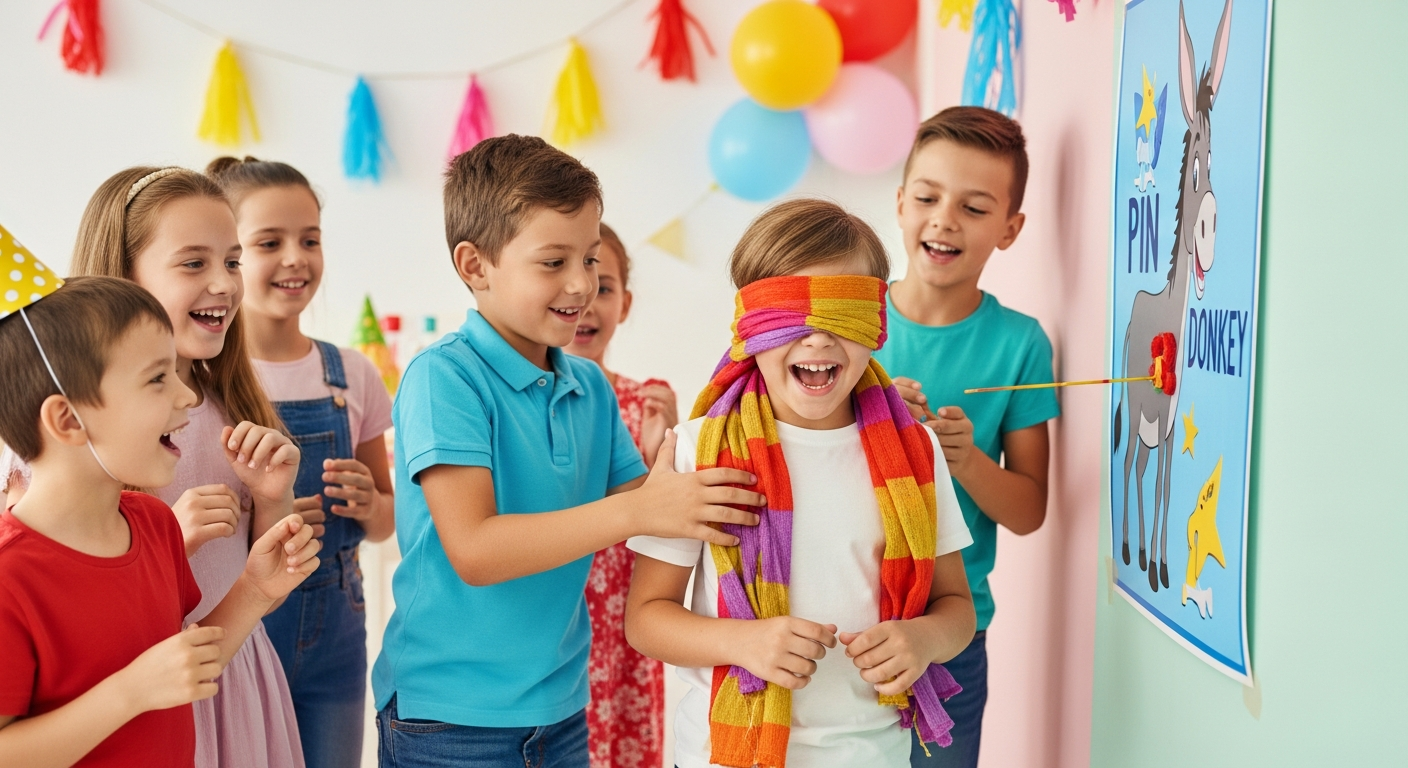
Table of Contents
- The Timeless Appeal of Classic Party Games
- Games that Get Them Moving: Active Classics
- Engaging Minds and Imaginations: Creative & Strategy Games
- Sensory and Social Delights: Interactive Games
- The Speech Blubs Difference: Empowering Communication Through Play
- Setting Realistic Expectations and Maximizing Fun
- Ready to Boost Your Child's Communication Journey?
- Frequently Asked Questions About Classic Kids Birthday Party Games and Speech Development
The joyful anticipation of a child's birthday party is a feeling many of us remember fondly. The vibrant decorations, the sweet smell of cake, and the delighted squeals of children are etched into our memories. But beyond the balloons and frosting, there's an often-overlooked ingredient that truly makes a party unforgettable: the games. These aren't just time-fillers; they are powerful catalysts for connection, laughter, and incredible developmental growth.
Yet, in an age brimming with complex toys and digital distractions, sometimes we forget the simple magic of the classics. The very games many of us played as children — games that require little more than imagination, a few household items, and eager participants — offer immense value. They foster social skills, enhance listening comprehension, encourage expressive language, and build confidence, all while creating cherished memories. For parents wondering how to blend timeless fun with meaningful developmental opportunities, especially for children on their speech and language journey, this post is for you. We’ll explore beloved classic party games, highlighting their unique benefits for communication and social growth, and share how tools like Speech Blubs can seamlessly support your child's progress, turning every play opportunity into a chance to grow.

The Timeless Appeal of Classic Party Games
Why do certain games stand the test of time, gracing birthday celebrations generation after generation? It's their inherent simplicity, adaptability, and the sheer joy they evoke. These games don't require elaborate setups or expensive equipment; they thrive on interaction, imagination, and the energy of the children playing them. More than just entertainment, classic party games are mini-laboratories for social and cognitive development.
From a speech and language perspective, these games are invaluable. They naturally encourage:
- Turn-taking: Fundamental for conversation and social interaction.
- Following instructions: A crucial receptive language skill.
- Expressive language: Opportunities to describe actions, feelings, and objects.
- Vocabulary expansion: Learning new words through context and action.
- Social pragmatics: Understanding non-verbal cues, practicing manners, and navigating group dynamics.
- Emotional regulation: Learning to win graciously and lose with resilience.
At Speech Blubs, we believe in empowering children to "speak their minds and hearts," and often, the most effective path to communication is through joyful, engaging play. Our founders, each with personal experiences navigating speech challenges in childhood, created Speech Blubs to be the immediate, effective, and joyful solution they wished they had. We know that real-world interaction, like that found in classic party games, combined with targeted support, can make a profound difference. These games perfectly complement our mission by creating natural, fun environments for communication to flourish.
Let's dive into some of our favorite classic kids' birthday party games and explore how they can be supercharged for speech and language development.
Games that Get Them Moving: Active Classics
Active games are fantastic for burning off energy, but they also offer rich opportunities for practicing motor commands, following sequential instructions, and using action verbs.

Musical Chairs
This beloved game is a masterclass in listening, quick reactions, and graceful exits (or at least, learning to be okay with being out!).
How to Play: Arrange chairs in a circle or two lines, one less than the number of players. Play upbeat music, and have children walk around the chairs. When the music stops, everyone scrambles for a seat. The child left standing is out, and one chair is removed for the next round. Continue until only one winner remains.
Developmental Benefits: Musical Chairs hones listening skills, develops motor planning as children navigate around chairs, and introduces the concepts of "in" and "out." For younger children, it helps them practice simple instructions like "walk," "stop," and "sit." Dealing with being out is also a great lesson in emotional regulation and turn-taking, helping children learn that everyone gets a chance.
Speech Blubs Connection: Imagine a child who struggles with auditory processing or following multi-step commands. Playing Musical Chairs provides a fun, low-pressure way to practice. For a child working on action verbs or prepositions, parents can narrate the game: "Walk around the chairs," "The music stopped!", "Quickly sit down!" With Speech Blubs, your child can practice these very action words and concepts through our interactive app activities, watching real children demonstrate the movements, which strengthens their understanding through our "video modeling" approach.
Simon Says
A classic for good reason, "Simon Says" is a fantastic game for developing listening comprehension and differentiating between instructions.
How to Play: One person is "Simon." Simon gives commands, but players should only follow commands that begin with "Simon says." If Simon says "Jump!" but not "Simon says Jump!", anyone who jumps is out. The last player remaining wins.
Developmental Benefits: This game is a powerhouse for receptive language. Children must actively listen for the key phrase "Simon says," practicing auditory discrimination and attention. It also expands vocabulary related to body parts ("Simon says touch your nose"), actions ("Simon says clap your hands"), and spatial concepts ("Simon says put your hands up"). It's excellent for impulse control and following complex instructions.
Speech Blubs Connection: For a child learning to process multi-step instructions or expand their action verb vocabulary, "Simon Says" is perfect. In Speech Blubs, many of our categories, like "Body Parts" or "Action Verbs," use video modeling to show children exactly what words mean, reinforcing the understanding they need for games like "Simon Says." For example, a child working on "jump" can see and imitate a peer jumping in the app, then immediately apply that learning in a game. This "smart screen time" provides a powerful screen-free alternative to passive viewing and a unique tool for family connection. Ready to give it a try? Download Speech Blubs on the App Store or Google Play to begin your journey.
Red Light, Green Light
Simple yet exhilarating, "Red Light, Green Light" teaches crucial self-regulation and directional concepts.
How to Play: One person stands with their back to the other players, who line up at a starting point. The person who is "it" calls out "Red light, green light!" and then quickly turns around. While their back is turned, players can run forward. When "it" turns around and shouts "Red light!", all players must freeze. Anyone caught moving is out and returns to the start line. The first player to reach "it" wins.
Developmental Benefits: This game is fantastic for understanding and responding to "stop" and "go" commands, developing impulse control, and improving listening skills. It also reinforces color recognition. The anticipation and quick transitions are engaging for children of various ages.
Speech Blubs Connection: Children needing to practice inhibitory control or responding to simple commands can greatly benefit. Parents can emphasize "Run!" during "Green light!" and "Freeze!" during "Red light!" The app has activities that focus on colors and action words, preparing children for these types of games. It’s a fun way to reinforce early language skills taught through our evidence-based methods, which are highlighted on our research page.
Egg and Spoon Race
A delightful blend of balance and careful movement, the Egg and Spoon Race is a fantastic outdoor activity.
How to Play: Each player balances an egg (real, hard-boiled, or plastic for less mess) on a spoon and races to a finish line. If the egg drops, the player must return to the start. The first to cross the finish line with their egg intact wins.
Developmental Benefits: This game promotes fine motor skills, coordination, and patience. It provides opportunities for descriptive language ("Careful!", "Slowly!", "Oh no, it fell!"), encouragement, and understanding cause-and-effect. Children learn to follow simple rules and celebrate small victories.
Speech Blubs Connection: Parents can use exclamations and simple phrases like "Go, go, go!", "Slow!", "Don't drop it!" For children working on sounds like "g" for "go" or "d" for "drop," these natural utterances are highly beneficial. Our app encourages speech practice through playful imitation, helping children articulate sounds and words that they can then use in real-life game scenarios.
Sack Race / Potato Sack Race
Hopping to victory, the sack race is pure, unadulterated fun.
How to Play: Players step into burlap sacks (or large pillowcases for smaller children), pull them up to their waists, and hold onto the edges. On "Go!", they hop their way to a finish line. The first one across wins.
Developmental Benefits: This game develops gross motor skills, balance, and coordination. It’s excellent for practicing action verbs like "hop," "jump," and "race." It also creates natural opportunities for cheering, counting hops, and expressing excitement.
Speech Blubs Connection: This game offers a fantastic context for words like "hop," "fast," "slow," "up," and "down." For children who are "late talkers" or are building their vocabulary, playing games like this while narrating actions ("Look! He is hopping!") can make word learning concrete and exciting. Our app offers numerous categories where children learn these action verbs, setting them up for success in interactive play.
Three-Legged Race
Teamwork makes the dream work in this hilarious cooperative race.
How to Play: Players pair up, and the inside leg of each partner is tied together with a scarf or soft rope. On "Go!", the pairs must coordinate their steps to race to the finish line without falling.
Developmental Benefits: The Three-Legged Race is superb for fostering teamwork, communication, and problem-solving. Partners must talk to each other, often giving simple commands like "Left, right, left!" or "Together!" It develops balance, coordination, and the ability to work collaboratively, strengthening social-pragmatic skills.
Speech Blubs Connection: This game naturally prompts cooperative communication. Children practice asking for help, giving directions, and encouraging their partner. These are all crucial social-pragmatic skills that Speech Blubs aims to build, not just through speech production but also through understanding the social context of communication. You can discover more about how we help families foster better communication and connection on our homepage.
Engaging Minds and Imaginations: Creative & Strategy Games
These games spark creativity, encourage imaginative thinking, and often involve descriptive language and problem-solving.
Pin the Tail on the Donkey (or Unicorn/Princess)
A classic that never fails to elicit giggles, especially when players are comically off target.
How to Play: A large picture of an animal or character with a missing part (e.g., a donkey without a tail, a unicorn without a horn) is affixed to a wall. Each player is blindfolded, spun around gently a few times, and then tries to pin the missing part as close as possible to its correct place.
Developmental Benefits: This game hones spatial awareness, body awareness (especially after being spun), and following verbal directions ("Go forward," "A little to the left"). It also encourages descriptive language as children watch and comment on their friends' attempts ("Oh, it's near the ear!").
Speech Blubs Connection: For children learning spatial concepts like "up," "down," "left," "right," "near," and "far," this game is fantastic. Parents can provide constant narration. For a child working on animal names or sounds, using a "Pin the Tail on the Pig" or "Pin the Horn on the Unicorn" variation directly ties into Speech Blubs' "Animal Kingdom" or "Magical Adventures" categories. Our video modeling shows children articulating these words and sounds, making it easier for them to imitate and use them while playing.
Scavenger Hunt / Treasure Hunt
A thrilling adventure that turns any party space into a quest for hidden treasures.
How to Play: Hide a series of clues around the party area. Each clue leads to the next, with the final clue revealing the location of a "treasure" (party favors, candy, etc.). Adjust clue complexity based on age.
Developmental Benefits: Scavenger hunts are fantastic for developing problem-solving skills, critical thinking, and following multi-step directions. They expand vocabulary through exposure to new objects and locations described in clues. Team-based hunts also foster collaboration and communication, as children work together to decipher clues.
Speech Blubs Connection: This game provides a rich context for receptive and expressive language. Children practice understanding descriptive language ("Find something red under the big chair") and using it to explain what they've found. For a child needing to practice object naming or descriptive adjectives, parents can strategically hide items from Speech Blubs categories. You can also craft clues that encourage practicing specific sounds or words. For instance, a clue might involve finding an item whose name starts with a "b" sound, similar to how Speech Blubs helps children master specific phonemes.
Charades
Unleash the inner actor with this hilarious game of silent communication.
How to Play: Write down various words or phrases on slips of paper (animals, actions, movie titles, etc.). Players take turns picking a slip and silently acting out what's written. Other players guess what they're miming. The first to guess correctly takes the next turn.
Developmental Benefits: Charades is exceptional for developing non-verbal communication, expressive language (when guessing), and understanding abstract concepts. It encourages creative thinking and quick vocabulary recall. For children struggling with verbal expression, it's a wonderful way to communicate ideas without pressure.
Speech Blubs Connection: This game perfectly complements Speech Blubs' focus on building a robust vocabulary and understanding. For a child learning new action verbs or animal names, charades reinforces their understanding through physical representation. Our "Guess the Word" games in the app can be a great precursor to charades, helping children build the necessary vocabulary. For example, if a child is practicing animal sounds and names in Speech Blubs, they can then act out those animals in a game of charades, reinforcing their learning in a fun, interactive way.
I Spy
A gentle and observational game perfect for all ages, especially younger children.
How to Play: One person says, "I spy with my little eye something..." and then describes an object they see (e.g., "...something red," "...something round," "...something that flies"). Other players guess what it is.
Developmental Benefits: "I Spy" is excellent for developing descriptive language skills (using colors, shapes, sizes, functions), observational skills, and early conversational turn-taking. It helps children practice asking questions ("Is it a ball?"), making guesses, and articulating their reasoning.
Speech Blubs Connection: This game is a natural fit for expanding vocabulary and descriptive adjectives. Many of Speech Blubs' categories, such as "Colors," "Shapes," and "Vehicles," are designed to help children master these exact concepts. For a child working on producing specific sounds, the "I Spy" player can choose objects that encourage those sounds, like "I spy something that starts with /b/..." for a child practicing the /b/ sound. This playful interaction directly supports the foundational skills taught in our app.
Obstacle Course
Transform your backyard or living room into an adventurous challenge.
How to Play: Create a course using household items or outdoor play equipment. Kids must navigate through, over, under, and around obstacles (e.g., crawl under a blanket, jump over pillows, climb through a tunnel). Time them or have them race.
Developmental Benefits: Obstacle courses are fantastic for gross motor skills, problem-solving, and following a sequence of instructions. They provide countless opportunities for using prepositions ("over," "under," "through," "around") and action verbs ("crawl," "jump," "climb," "balance"). It also encourages narration and descriptive language.
Speech Blubs Connection: This game is a goldmine for practicing spatial prepositions and action verbs, core components of early language development. Parents can narrate each step: "Now, crawl under the table," or "You're going over the log!" Speech Blubs features numerous activities that teach these precise concepts through engaging video models, allowing children to see and imitate actions, which then translates into better understanding and usage in real-world play.
Sensory and Social Delights: Interactive Games
These games engage multiple senses and focus heavily on social interaction, anticipation, and shared experiences.
Pass the Parcel
The anticipation of unwrapping a surprise makes this game a consistent crowd-pleaser.
How to Play: Wrap a main prize in multiple layers of wrapping paper. Between some layers, place small treats or favors. Players sit in a circle and pass the parcel as music plays. When the music stops, the child holding the parcel unwraps one layer. The game continues until the final layer and main prize are revealed.
Developmental Benefits: "Pass the Parcel" is excellent for teaching turn-taking, waiting patiently, and understanding sequential actions. It builds anticipation and offers opportunities to use words like "My turn," "Your turn," "Open!", and to name the small prizes discovered. It also teaches children to manage excitement and potential disappointment.
Speech Blubs Connection: This game is a natural fit for practicing core conversational skills like "My turn" and "Your turn," which are essential for social communication. For a child learning to express anticipation or surprise, the game provides a perfect context. Parents can help narrate: "Whose turn is it now?" or "What's inside?" These simple phrases and questions are building blocks that Speech Blubs helps reinforce through its interactive lessons, fostering confidence in verbal expression.
Piñata
A vibrant, energetic tradition that brings a burst of excitement (and candy!) to any celebration.
How to Play: Hang a piñata (filled with candy and small toys) from a sturdy branch or beam. Blindfold each child in turn, give them a stick or bat, spin them gently, and let them try to hit the piñata until it breaks open, showering treats.
Developmental Benefits: The piñata is fantastic for hand-eye coordination, motor skills, and turn-taking. It builds anticipation and offers many opportunities for expressive language like "Whack!", "Hit it!", "Candy!", and describing the shapes and colors of the treats. It's a high-energy activity that also teaches patience as children wait for their turn.
Speech Blubs Connection: This game is rich with expressive language opportunities. Children can practice "Hit!", "Go!", "More!" as they encourage each other. Naming the treats that fall out ("Look! A red lollipop!") expands vocabulary. For a child working on specific sounds or words, parents can gently guide them to use those words during the game. This joyous, high-energy interaction mirrors the engaging and motivating environment we strive to create in the Speech Blubs app, where children learn by watching and imitating their peers. This peer-to-peer "video modeling" is at the heart of our scientific approach.
Pop the Bubbles
For toddlers and preschoolers, sometimes the simplest games are the most captivating.
How to Play: Simply blow bubbles and let children chase and pop them! A bubble machine can provide continuous fun.
Developmental Benefits: This activity is wonderful for tracking objects with the eyes, gross motor skills (chasing, jumping), and fine motor skills (popping bubbles with fingers). It's excellent for practicing early language skills like "Pop!", "Big/Small," "Up/Down," "More," and "All gone." It naturally encourages shared attention and joint engagement.
Speech Blubs Connection: "Pop the Bubbles" is a perfect example of a game that naturally elicits early vocabulary and sounds. For a child just starting to babble or use single words, the repetitive nature of "pop" or "more" is incredibly beneficial. Speech Blubs integrates similar highly engaging, joyful activities that encourage children to vocalize and imitate, building a strong foundation for communication. You can explore how we make learning fun and effective by visiting our main website.
Sleeping Lions
A wonderfully calming game to wind down after energetic activities, especially for younger partygoers.
How to Play: All children lie down on the floor and pretend to be sleeping lions. The goal is to remain perfectly still and silent, no matter what silly things the "keeper" (adult) does or says to try and make them move or laugh. Anyone who moves or makes a sound is out. The last "sleeping lion" wins.
Developmental Benefits: This game helps children develop impulse control, self-regulation, and the ability to remain still and quiet. It's great for listening skills and understanding rules. It also offers a quiet moment, which can be beneficial for sensory regulation after a stimulating party.
Speech Blubs Connection: While less about active speech production, "Sleeping Lions" emphasizes receptive language (following instructions to be quiet and still) and self-regulation, both crucial for effective communication. Parents can use soft, gentle commands, practicing quiet speech. Our app also includes calming activities that help children focus and regulate, preparing them for more complex learning.
The Speech Blubs Difference: Empowering Communication Through Play
As we've explored, classic kids' birthday party games are more than just fun; they're vital tools for nurturing speech, language, and social skills. They offer real-world, interactive scenarios where children can naturally practice vocabulary, turn-taking, following directions, and expressing themselves.
At Speech Blubs, we recognize the incredible power of play and connection. Our mission is to empower every child to "speak their minds and hearts," providing an immediate, effective, and joyful solution for the 1 in 4 children who need speech support. Our company was born from the personal experiences of our founders, who all grew up with speech problems and created the tool they wished they had.
We believe in "smart screen time" – an active, engaging alternative to passive viewing like cartoons. Our unique "video modeling" methodology is at the core of our approach. Children learn by watching and imitating their real-life peers, not animated characters. This taps into mirror neurons in the brain, making learning intuitive and highly effective. Parents often tell us how much their children love seeing other kids just like them, making the learning process feel like play.
Discover the Value of Speech Blubs for Your Family
We’re committed to making high-quality speech and language support accessible. Here’s how you can join the Speech Blubs family:
- Monthly Plan: For $14.99 per month, you get access to our extensive library of engaging speech activities.
- Yearly Plan: Our Best Value! At just $59.99 per year, this plan breaks down to only $4.99 per month, allowing you to save 66% compared to the monthly option.
The Yearly Plan isn't just cheaper; it comes with exclusive, high-value features designed to give your child the best possible start:
- A 7-day free trial: Experience the full power of Speech Blubs before committing.
- The extra Reading Blubs app: An additional app to further boost literacy skills.
- Early access to new updates: Be the first to enjoy our latest features and content.
- 24-hour support response time: Get prompt assistance whenever you need it.
The Monthly plan does not include these fantastic benefits, making the Yearly Plan the clear choice for comprehensive and sustained support for your child’s communication journey.
For a parent whose 3-year-old "late talker" loves animals, our "Animal Kingdom" section offers a fun, motivating way to practice "moo" and "baa" sounds, which can then be reinforced during a "Pin the Tail on the Cow" game. Or, if your child is shy and struggles with social greetings, our "Social Skills" activities can help them practice "hello" and "goodbye" with video models, building confidence for real-life party interactions. See what other parents are saying about their child's success with Speech Blubs by reading our testimonials.
Setting Realistic Expectations and Maximizing Fun
It's important to remember that Speech Blubs, like classic party games, is a powerful supplement to your child's overall development plan. While our app provides incredible support and can significantly boost confidence and foundational skills, we always encourage parents to view it as a tool that works hand-in-hand with real-world interactions and, when applicable, professional speech therapy.
Our goal is not to suggest guaranteed outcomes like "your child will be giving public speeches in a month." Instead, we focus on fostering a love for communication, building confidence, reducing frustration, developing key foundational skills, and creating joyful family learning moments.
The most effective use of Speech Blubs, and indeed, any of these classic games, always involves adult co-play and support. Engage with your child, narrate the activities, ask questions, and celebrate their efforts. This interaction reinforces learning, strengthens your bond, and makes every moment a valuable step on their communication journey.
Ready to Boost Your Child's Communication Journey?
Classic kids' birthday party games offer a treasure trove of developmental benefits, nurturing everything from listening skills and vocabulary to social interaction and emotional regulation. By re-embracing these timeless activities, you're not just throwing a fun party; you're creating rich, engaging environments for your child to thrive.
Combine the magic of these games with the innovative support of Speech Blubs, and you unlock a powerful pathway to confident communication. Our app provides targeted, playful learning experiences that perfectly complement the skills honed during party play, all backed by scientific methodology and designed by founders who truly understand the journey.
Don't let another moment of potential growth pass by. Take the first step towards empowering your child to "speak their minds and hearts."
Create your account and begin your 7-day free trial today! Remember to choose the Yearly Plan during sign-up to unlock your free trial, gain access to the extra Reading Blubs app, enjoy early updates, and receive 24-hour support response time – it’s the best value for your child’s communication future!
Unsure if your child could benefit from speech support? Take our quick 3-minute preliminary screener to get a simple assessment and a free 7-day trial of Speech Blubs.
Frequently Asked Questions About Classic Kids Birthday Party Games and Speech Development
Q1: What age group are classic party games best for?
A1: Most classic party games are highly adaptable and can be enjoyed by a wide range of ages, from toddlers to school-aged children. For younger children, focus on simpler games like "Pop the Bubbles" or "I Spy" with lots of adult narration. For older children, you can introduce more complex rules, team challenges, or add creative twists to games like "Scavenger Hunt" or "Charades." The key is to adjust the complexity and expectations to match the children's developmental stage.
Q2: How can I encourage a shy child to participate in party games?
A2: Encouraging shy children requires patience and understanding. Start by inviting them to observe, or offer them a specific, low-pressure role, such as being the music stopper for Musical Chairs or helping to set up an Obstacle Course. Partner them with a supportive friend or adult for games like the Three-Legged Race. Positive reinforcement for any attempt at participation, no matter how small, is crucial. Remember that Speech Blubs helps children build confidence in a controlled, playful environment, which can make them feel more ready for group interactions over time.
Q3: What specific speech skills do classic party games help develop?
A3: Classic party games are rich in opportunities for speech and language development. They help with receptive language (following instructions in "Simon Says," understanding clues in a "Scavenger Hunt"), expressive language (describing actions in "Charades," naming objects in "I Spy"), vocabulary expansion (learning new words through context), social pragmatics (turn-taking in "Pass the Parcel," cooperative communication in "Three-Legged Race"), and articulation (practicing specific sounds through game-related words). They create natural and motivating contexts for communication.
Q4: How does Speech Blubs integrate with playing these games for better outcomes?
A4: Speech Blubs acts as a powerful complement to classic party games by building foundational communication skills in a targeted and engaging way. For instance, if a child is practicing action verbs or spatial prepositions in Speech Blubs' video modeling activities, they can then immediately apply those learned words in a game like "Simon Says" or an "Obstacle Course." The app strengthens vocabulary, articulation, and social skills in a low-pressure, playful environment, preparing children to confidently use those skills in real-world social interactions, like a birthday party. Our "smart screen time" ensures that learning is active and reinforced, providing a strong basis for real-life communication. Ready to see the difference? Download Speech Blubs on the App Store or Google Play today!
About the author