
Fun Dance Games for Kids: Moving, Grooving, and Growing
 By Speech Blubs Team•Jan 19, 2026•22 min.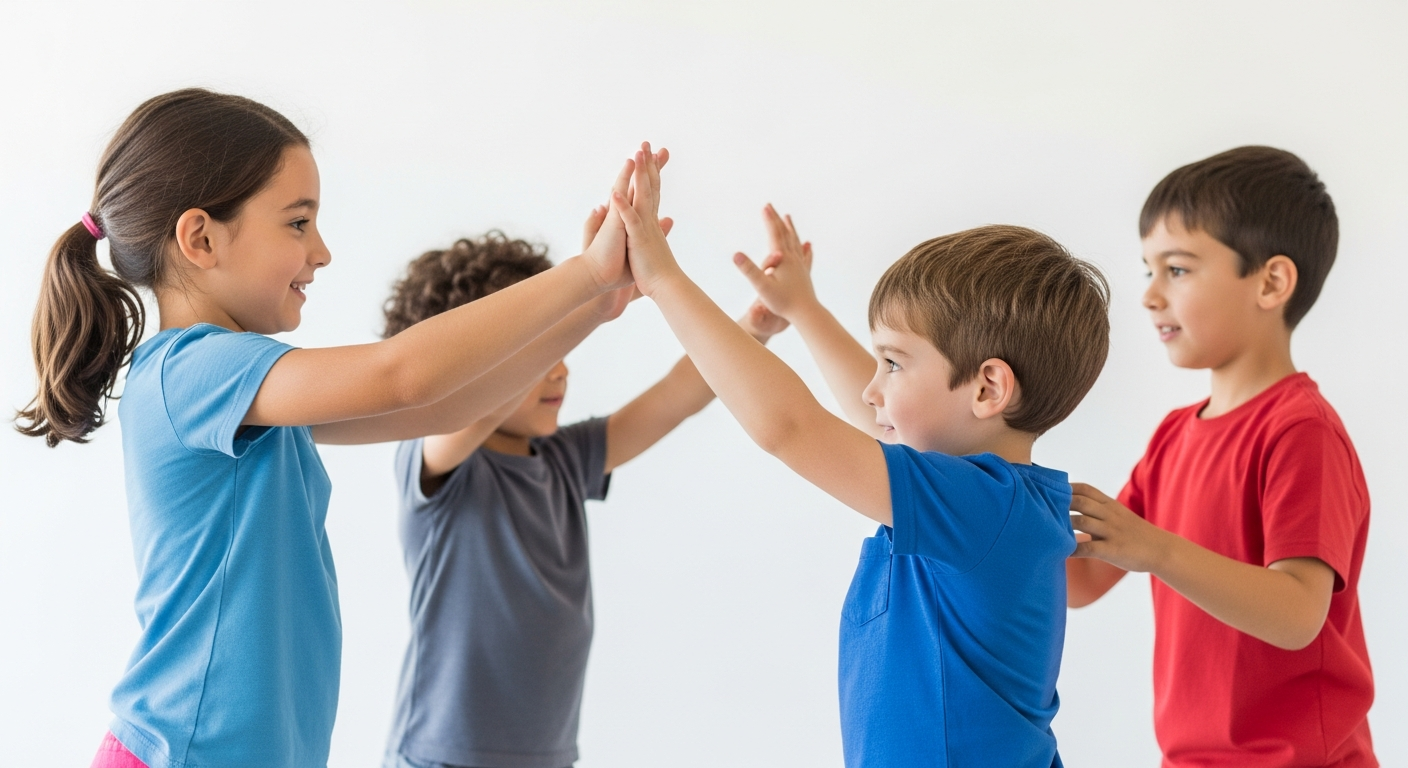
Table of Contents
- Introduction
- Why Dance Games Are More Than Just Fun: A Holistic Approach to Child Development
- Speech Blubs' Vision: Smart Screen Time and Communication
- Curated Collection of Fun Dance Games for Kids
- The Speech Blubs Difference: Empowering Communication Through Play
- Conclusion
- FAQ
Introduction
Do you ever feel like your little one has an endless well of energy, a constant need to wiggle, jump, and express themselves through movement? That vibrant, restless energy is a superpower in disguise! It’s the driving force behind incredible physical, cognitive, social, and emotional development. While screens often get a bad rap for promoting passivity, we believe in smart screen time that actively engages children, and outside of screen time, there's no better way to channel that energy into joyful learning than through fun dance games.
Dance isn't just about learning steps; it's a dynamic symphony of movement, music, and imagination that helps children connect with their bodies, minds, and others. It transforms any space—your living room, backyard, or a playdate—into a stage for discovery and growth. In a world where childhood often feels rushed, dance games offer a beautiful opportunity to slow down, play together, and foster a love for communication and expression.

This comprehensive guide will dive deep into the myriad benefits of dance games for kids, from building strong muscles and sharp minds to nurturing empathetic hearts and confident voices. We’ll explore a vibrant collection of easy, engaging, and unique dance games suitable for all ages and settings. We'll also show you how these activities perfectly complement the communication-focused work we do at Speech Blubs, where our mission is to empower children to speak their minds and hearts. Get ready to turn up the music and discover how movement can unlock a world of potential for your child!
Why Dance Games Are More Than Just Fun: A Holistic Approach to Child Development
Dance games are far more than just a way to burn off steam; they are powerful developmental tools that weave together physical, cognitive, social, and emotional learning into a tapestry of joy and engagement. For us at Speech Blubs, where our founders personally experienced speech challenges and created the tool they wished they had, we understand the profound connection between holistic development and effective communication. Every hop, spin, and sway contributes to a child's readiness to connect and express themselves fully.
Physical Prowess: Building Strong Bodies
The most immediate and visible benefit of dance games is their impact on physical health. Kids naturally love to move, and dance provides a structured yet free-flowing outlet for that instinct, laying foundational stones for a lifetime of healthy activity.
- Gross Motor Skills: Dance engages the whole body, refining large muscle movements essential for running, jumping, balancing, and coordinating limbs. Think of the boundless energy needed for a "Jumping Jack Dance" or the control required to "Hula Hoop Dance." These activities enhance overall fitness, improve balance, and increase flexibility and range of motion.
- Fine Motor Skills: While often associated with large movements, dance can also hone finer motor control. Activities like "Ribbon Dancing" or trying to pop bubbles in a "Bubble Pop Dance" with specific body parts demand precision and delicate manipulation, strengthening smaller muscles in the arms, hands, and even feet.
- Coordination and Spatial Awareness: Learning sequences of steps, mirroring a partner, or navigating a "Balloon Keep-Up Dance" without touching others significantly boosts coordination and helps children understand their body's position in space. This "body awareness" (proprioception) is crucial for everything from walking without tripping to handwriting readiness.
- Stamina and Cardiovascular Health: Sustained movement during dance games gets hearts pumping and builds endurance. It’s a fun, natural way for children to engage in aerobic activity, strengthening their cardiovascular system without them even realizing they're "exercising."
Cognitive Leaps: Sharpening Minds
Dance is a complex cognitive activity masquerading as pure fun. It challenges children to think, remember, and adapt, offering remarkable benefits for brain development.

- Memory and Sequencing: Many dance games involve remembering patterns, following sequences of moves, or recalling instructions. Games like "Counting Choreography" or "Describe a Dance" directly tap into working memory and the ability to process and recall information, much like remembering a new word or a sentence structure.
- Problem-Solving and Planning: When children need to "Get in Shape" with their peers without speaking, or decide how to embody an animal in an "Animal Dance," they are actively problem-solving and planning their movements. This encourages creative thinking and strategic decision-making.
- Attention and Concentration: Staying focused during a "Freeze Dance" or carefully listening for cues in "Dance as I Say, Not as I Dance" significantly improves attention span and listening skills. These are vital for learning in any context, especially for developing language comprehension.
- Language and Vocabulary Development: Describing movements, naming emotions, or interpreting stories through dance (like in a "Story Movement Interpretation" game) expands vocabulary and deepens understanding of descriptive language and narrative structures.
Social Harmony: Nurturing Connections
Dance games are inherently social, providing rich opportunities for children to learn about themselves in relation to others, fostering empathy, teamwork, and communication.
- Collaboration and Teamwork: Group dance activities, whether a "High Five Dance" with a partner or forming shapes in "Get in Shape," require children to work together, compromise, and synchronize their actions. This builds a strong sense of community and shared accomplishment.
- Communication Skills: Dance isn't just about verbal communication; it's a powerful tool for non-verbal expression. Children learn to read body language, express ideas through movement, and communicate intentions without words. Games like "Partner Mirror Dance" directly hone these observational and responsive communication skills.
- Turn-Taking and Empathy: Waiting for a turn in a "Dance Circle" or understanding how a peer might interpret an "Emoji Dance" fosters patience, empathy, and respect for others' contributions and feelings. These are cornerstones of healthy social interactions.
- Building Friendships: Shared laughter, overcoming challenges together, and celebrating successes in dance games forge strong bonds. These positive social experiences boost confidence and make children feel a valued part of a group, an essential part of growing up.
Emotional Resilience: Expressing Hearts
Movement and music are incredibly potent channels for emotional expression. Dance games offer a safe and joyful space for children to explore and regulate their feelings.
- Self-Expression and Creativity: Dance gives children a unique platform to express themselves freely, without judgment. There's no "right" way to "Paintbrush Dance" or embody a "Seasonal Movement Story," encouraging children to unleash their imagination and develop their unique style. This creative freedom is crucial for developing a strong sense of self.
- Boosting Confidence and Self-Esteem: Successfully mastering a new move, leading a dance, or simply feeling good about their movements builds immense confidence. This sense of achievement permeates other areas of a child's life, helping them approach new challenges with a "can-do" attitude. We at Speech Blubs know how important confidence is for children to speak their minds and hearts freely, and we love to see children thrive.
- Emotional Regulation: The "Emotion Expression Dance" or even a calming "Yoga Flow Dance" helps children identify, understand, and channel their emotions in healthy ways. Dance can be a joyful release, a way to process sadness, or a method to calm an overactive mind, reducing frustration and promoting emotional well-being.
- Reducing Frustration: For children who might struggle with verbal communication, dance offers a powerful alternative outlet for expression, which can significantly reduce feelings of frustration and helplessness. It provides a means to communicate when words are hard to find.
Speech Blubs' Vision: Smart Screen Time and Communication
At Speech Blubs, our mission is deeply rooted in empowering children to "speak their minds and hearts." This mission was born from the personal experiences of our founders, who themselves grew up facing speech problems and created the very tool they wished they had. We are dedicated to providing an immediate, effective, and joyful solution for the 1 in 4 children who need speech support, blending scientific principles with play into one-of-a-kind "smart screen time" experiences.
While dance games thrive in physical spaces, our app offers a unique digital environment where children learn vital communication skills in a similarly active, engaging way. We provide a screen-free alternative to passive viewing (like cartoons) and a powerful tool for family connection, much like a shared dance session.
Our unique approach hinges on video modeling, where children learn by watching and imitating their peers. This method is backed by extensive research, showing remarkable effectiveness in language acquisition and speech development. It mirrors the observational learning so prevalent in dance—watching someone else move and then trying to replicate it. The "mirror neurons" in a child's brain light up, facilitating learning through imitation, whether it's a dance move or a speech sound. You can explore the science behind our method and our high MARS scale rating on our research page.
Dance games and Speech Blubs, though different in medium, share a core philosophy: play is the most powerful catalyst for learning. The rhythm, sequencing, body awareness, emotional expression, and social interaction honed through dance are all foundational to developing strong communication skills. When a child understands rhythm, they can better grasp speech patterns. When they can express emotions physically, they gain a deeper understanding of the meaning behind words. And when they connect socially through play, they are more motivated to communicate.
Curated Collection of Fun Dance Games for Kids
Ready to get moving? Here's a diverse collection of dance games, perfect for igniting joy, building skills, and fostering communication in children. Many of these games can be adapted for individual play or larger groups, and remember, the goal is always fun and engagement, not perfection!
Classic & Engaging Starters
These are wonderful entry points to the world of dance games, easy to set up and loved by all.
- Freeze Dance with a Twist:
- How to Play: Play music, and everyone dances freely. When the music stops, everyone must freeze in place! Vary the music from upbeat pop to classical pieces to introduce different rhythms and moods. Challenge older kids to freeze in a "sculpture" pose, like a starfish or a tree, and hold it for longer durations.
- Benefits: Enhances listening skills, impulse control, body awareness, and introduces diverse music.
- Dance Follow the Leader:
- How to Play: One person starts as the leader, showing a simple dance move (a twirl, a hop, an arm wave). Everyone else copies. After a short period, a new leader takes over. Encourage creative, silly moves!
- Benefits: Promotes observation, imitation, quick thinking, and leadership skills. Great for building confidence in taking turns leading.
- Musical Statues/Chairs (Group Version):
- How to Play: For musical statues, everyone dances when the music plays and freezes when it stops. Anyone caught moving is out. For musical chairs, arrange chairs in a circle (one less than players), dance around, and find a seat when the music stops. Remove a chair each round.
- Benefits: Sharpens listening, quick reflexes, sportsmanship, and managing disappointment.
- High Five Dance:
- How to Play: Children pair up. To music or even without, they choreograph a short routine using various high fives, claps, low fives, and maybe a quick spin or jump. Encourage them to be creative with their hand gestures and body movements.
- Benefits: Excellent icebreaker, boosts coordination, collaboration, and non-verbal communication. It's a wonderful way for kids to connect physically and socially.
Imagination & Creativity Boosters
These games encourage children to tap into their inner worlds, fostering imaginative play and unique self-expression.
- Emoji Dance:
- How to Play: Show children emoji cards (happy, sad, excited, angry, surprised, silly). Play music and ask them to dance out the emotion shown on the card. Or, you can call out emotions directly.
- Benefits: Helps children identify and express emotions through movement, building emotional literacy and empathy. It’s a fantastic way to discuss feelings and connect them to physical sensations.
- Animal Movement Exploration / Animal Dance / Mask Dance:
- How to Play: Call out animal names (lion, snake, bird, frog). Children dance as that animal, imitating its sounds and movements. For a "Mask Dance," use simple animal masks and encourage them to observe and learn animal behaviors from videos beforehand, then dance their interpretation to music.
- Benefits: Boosts imagination, observational skills, vocabulary (animal names, descriptive movement words), and physical storytelling. It encourages kids to think about how different creatures move and express themselves.
- Paintbrush Dance:
- How to Play: Imagine you have a paintbrush on a specific body part (e.g., your elbow, nose, knee). To music, use that body part to "paint" imaginary pictures on the floor, walls, and air around you. Switch the "paintbrush" to different body parts.
- Benefits: Promotes body awareness, creative visualization, and encourages unique movement pathways. It's a playful way to connect different parts of the body to artistic expression.
- Ribbon Dancing:
- How to Play: Provide children with lightweight scarves or ribbons. Play flowing music and let them swirl, wave, and create patterns in the air with their ribbons. Encourage graceful, expansive movements.
- Benefits: Enhances fine motor skills, hand-eye coordination, sensory awareness, and promotes fluid, expressive movement. It's also excellent for developing good posture and stamina.
- Story Movement Interpretation:
- How to Play: Read a simple story aloud. As you read, encourage children to act out key events or characters through dance movements. For example, "the tree grew tall" (stretch up), "the rabbit hopped away" (jump).
- Benefits: Boosts imagination, narrative comprehension, language development, and physical expression. It helps children connect words to actions, a crucial step in early literacy. Parents can bring these stories to life further and discuss vocabulary, aiding in their child's communication journey. For more tools to spark conversation and develop speech skills, you can always explore the Speech Blubs app. Download Speech Blubs today on the App Store or get it on Google Play to support your child's journey!
Coordination & Awareness Challenges
These games focus on honing specific physical skills, challenging children to refine their movements and control.
- Balloon Keep-Up Dance:
- How to Play: Give each child a balloon. Play music and challenge them to keep the balloon in the air using only specific body parts (e.g., elbows, knees, head) or by tapping it with different parts in sequence.
- Benefits: Improves hand-eye coordination, reaction time, body awareness, and spatial orientation. It's a fantastic way to develop motor control and tracking skills.
- Body Part Isolation Dance:
- How to Play: Call out specific body parts (e.g., "right foot," "left hand," "head," "shoulders"). Children dance by moving only that body part, keeping the rest of their body still. Gradually increase complexity by asking for combinations like "right hand and left foot."
- Benefits: Promotes precise body awareness, laterality (understanding left/right), and fine motor control, which is key for various physical activities and even handwriting readiness.
- Balance Challenge Dance:
- How to Play: Children balance small, lightweight objects (beanbags, small stuffed animals) on their heads, shoulders, or even their feet while dancing. Start with slow music, then gradually increase tempo. Challenge them to squat or spin without dropping the object.
- Benefits: Enhances vestibular development, balance, core strength, focus, and body control. It teaches patience and careful movement.
- Say Ola to Hula (Hula Hoop Dance):
- How to Play: Provide hula hoops and play some lively music. Encourage children to try hula hooping around their waists, arms, or even just using the hoop as a prop for creative dance moves.
- Benefits: Excellent for coordination, rhythm, core strength, and creative use of props. It encourages persistence and trying new physical challenges.
Team-Building & Social Connection Games
These games highlight cooperation, communication, and the joy of shared experience, echoing the values we cherish at Speech Blubs.
- Describe a Dance:
- How to Play: Pair children up. One child thinks of a simple dance step or pedestrian movement (like skipping or jumping). They must describe the movement to their partner without using any dance terms or showing it. The partner then tries to perform the described move.
- Benefits: A powerful game for developing verbal communication, listening, analysis, and interpretation skills. It highlights how clearly we need to articulate our thoughts for others to understand – a core concept in speech development.
- Get in Shape:
- How to Play: Ask a group of children to hold hands in a long line. Challenge them to work together to form a specific shape (circle, square, triangle, or even a letter) without letting go of hands and without talking. They must use non-verbal cues and collective movement.
- Benefits: Fosters incredible non-verbal communication, collaboration, spatial awareness, and problem-solving. It's a fantastic exercise in group cohesion and understanding how to move as one unit. If you observe your child struggling with non-verbal cues or collaboration, it might be helpful to take our quick 3-minute preliminary screener to get a simple assessment and a free 7-day trial, helping you understand their communication needs better.
- Dance as I Say, Not as I Dance:
- How to Play: One child is the leader. They perform a movement while simultaneously saying another. For example, the leader might run in place but say, "Jump up and down with me!" The other dancers must follow what the leader says, not what they do.
- Benefits: Sharpens listening skills, observation, impulse control, and the ability to process conflicting information. It’s a hilarious and challenging game that demands careful attention.
- Group Dance-Off / Dance Circle / Rhythm Relay:
- How to Play: For a Dance-Off, divide into small teams and each team takes turns showcasing their best moves. For a Dance Circle, children form a circle, and one person enters the middle to show a move; the next person imitates it and adds their own. For a Rhythm Relay, form lines; the first person does a move, the next repeats and adds one, creating a chain.
- Benefits: Encourages creativity, healthy competition (in a fun way), teamwork, and builds individual confidence in performing for others. These games highlight the social joy of dance.
Tips for Parents: Maximizing the Fun & Learning
To truly leverage the power of dance games, your involvement as a parent or caregiver is key.
- Be Present and Participate: Your enthusiasm is contagious! Join in the dancing, be silly, and show your child that movement is joyful. This also models healthy active living.
- Adapt Games to Age and Ability: Don't be afraid to simplify rules for toddlers or add complexity for older children. The goal is engagement, not frustration.
- Focus on Process, Not Perfection: Emphasize the effort, creativity, and joy of movement rather than perfect technique. Celebrate every wiggle and giggle.
- Encourage Sound Effects and Verbal Descriptions: As your child dances, ask them to describe their movements, make animal sounds, or verbalize the emotions they're expressing. This links physical activity to language.
- Connect Movements to Words and Feelings: "How does that jump make you feel?" "Can you move like the word 'sluggish'?" This helps build a vocabulary around actions and emotions.
- Create a "Dance Space": It doesn't need to be large. Clear a small area, put on some music, and declare it the "dance zone" for a set time each day.
- Use a Variety of Music: Explore different genres, tempos, and cultural music. This broadens appreciation and offers different rhythmic challenges.
The Speech Blubs Difference: Empowering Communication Through Play
At Speech Blubs, we believe that every child deserves to find their voice. Our approach perfectly complements the holistic development fostered by dance games. Just as dance uses movement and imitation to build physical and cognitive skills, our app uses engaging "smart screen time" to develop foundational speech and language abilities.
Through our unique video modeling approach, children learn by watching and imitating their peers, making speech practice feel like play. This direct, visual learning is incredibly effective and engaging, transforming passive screen time into an active, communicative experience. It's a powerful tool for family connection, as parents can guide their child through the app's activities, just as they would participate in a dance game.
From practicing initial sounds to developing complex sentences, Speech Blubs provides a supportive and fun environment for children to build confidence and joy in their communication journey. Whether your child is working on specific sounds, expanding their vocabulary, or simply loving to express themselves, our app offers tailored activities that resonate with their developmental stage.
Ready to see how Speech Blubs can empower your child to speak their mind and heart? Create your account and begin your 7-day free trial today!
Understanding Speech Blubs Value and Pricing
We are committed to making effective speech and language support accessible and transparent for families. That's why we offer clear pricing options, with distinct benefits designed to give you the most value.
- Monthly Plan: For just $14.99 per month, you get access to our core Speech Blubs app. This plan is flexible, but it doesn't include some of our most valuable features.
- Yearly Plan: This is by far our most popular and recommended option, offering significant savings and exclusive benefits. At $59.99 per year, it breaks down to just $4.99 per month – a fantastic 66% saving compared to the monthly plan!
Why Choose the Yearly Plan?
The Yearly plan isn't just about saving money; it unlocks the full suite of Speech Blubs features designed for comprehensive learning:
- 7-Day Free Trial: Only the Yearly plan offers a generous 7-day free trial, allowing your family to experience the full potential of Speech Blubs before committing.
- Extra Reading Blubs App: You'll also gain access to our companion Reading Blubs app, providing additional literacy support.
- Early Access & Priority Support: Yearly subscribers receive early access to new updates and features, plus a 24-hour response time for customer support, ensuring you always have the best experience and assistance when you need it.
The Monthly plan does not include these valuable benefits. For the best value, the most comprehensive features, and the chance to try it risk-free, the Yearly plan is the clear choice.
Conclusion
Fun dance games for kids are a powerful, joyful pathway to holistic child development. They ignite physical prowess, sharpen cognitive abilities, foster social harmony, and build emotional resilience. From the simple joy of a "Freeze Dance" to the collaborative challenge of "Get in Shape," these activities are more than just play; they are foundational experiences that nurture confident, expressive, and well-rounded individuals.
Just as dance empowers children to move and express themselves physically, Speech Blubs empowers them to find their voice and communicate effectively. We believe that a confident mover is often a confident talker, and our app complements these physical activities by providing "smart screen time" that focuses on vital speech and language skills through engaging video modeling.
The journey of communication and self-expression is a continuous, beautiful dance. We invite you to make the most of every step along the way. Ready to unlock your child's full communication potential and discover how fun can lead to profound growth?
Begin your family's journey with Speech Blubs today! Download Speech Blubs on the App Store or get it on Google Play to start your 7-day free trial. Remember to select the Yearly plan to gain access to the free trial, the Reading Blubs app, early updates, and priority support for the best value and a complete learning experience. Don't wait – empower your child to speak their minds and hearts!
FAQ
What age are dance games suitable for?
Dance games are wonderfully versatile and can be adapted for children of almost any age, from toddlers to early teens. For very young children (ages 1-3), focus on simple, free-form movement, animal imitation, and sensory activities like ribbon or scarf dancing. For preschoolers (ages 3-5), introduce games with basic rules like Freeze Dance, and for school-aged children (ages 5+), you can incorporate more complex choreography, team challenges, and creative expression games. The key is to adjust the complexity and rules to match their developmental stage and interests.
Do dance games help with speech and language development?
Absolutely! Dance games offer significant benefits for speech and language development, even though they aren't directly verbal activities. They enhance listening skills (following music cues and instructions), improve memory (recalling sequences), boost cognitive processing (planning movements), and foster emotional expression (linking feelings to actions). All these are foundational skills for effective communication. Furthermore, encouraging verbal descriptions of movements, sound effects, and storytelling through dance directly integrates language practice into play, creating a rich environment for speaking and understanding.
How can I make dance games more educational for my child?
To maximize the educational value of dance games, actively engage with your child. Encourage them to describe their movements, ask open-ended questions about how they feel while dancing, or what stories their dance tells. Integrate learning by using themed music (e.g., songs about colors, animals, or numbers), asking them to count their steps, or forming shapes with their bodies. Connecting dance to vocabulary, emotional literacy, and even basic math concepts makes the experience richer and more deeply ingrained.
What if my child is shy about dancing?
It's perfectly normal for some children to feel shy or hesitant about dancing, especially in front of others. The best approach is to make it a low-pressure, fun experience. Start by dancing with them in a private, comfortable space, like your living room, without any audience. Let them lead, even if it's just gentle swaying. Use props like scarves or balloons to distract from self-consciousness, or play "Animal Dance" where they can hide behind a character. Emphasize that there are no "right" or "wrong" moves and that the goal is simply to have fun and express themselves. Your enthusiastic participation and encouragement will often be the key to helping them overcome shyness and embrace the joy of movement.
About the author