
Fun & Easy Craft Ornaments for Kids
 By Speech Blubs Team•Jan 13, 2026•19 min.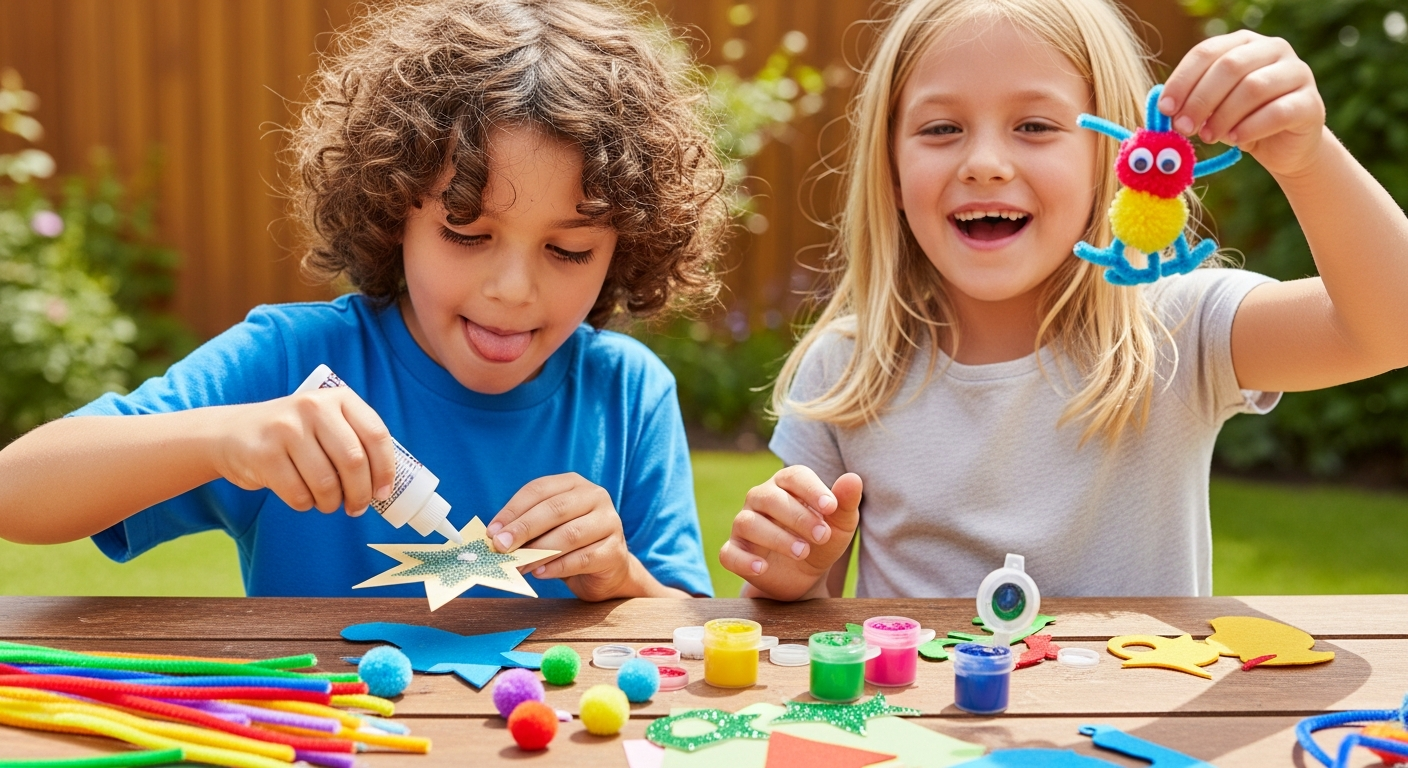
Table of Contents
- Introduction
- The Magic of Making: Why Crafting Matters for Communication
- Getting Started: Essential Supplies for Kid-Friendly Ornaments
- Our Favorite Easy Craft Ornaments for Kids (with a Speech Boost!)
- Elevating the Experience: How Speech Blubs Empowers Your Child's Communication Journey
- Maximizing Value: Choose the Right Speech Blubs Plan
- Conclusion
- Frequently Asked Questions (FAQ)
Introduction
Imagine the sheer delight in your child's eyes as they carefully hang an ornament they made themselves on your festive tree. That little piece of art isn't just a decoration; it's a tangible memory, a burst of pride, and an incredible catalyst for their development. In a world increasingly filled with passive screen time, engaging in hands-on activities like crafting offers a refreshing, vibrant alternative that stimulates creativity, fine motor skills, and, crucially, communication. This post isn't just about creating pretty ornaments; it's about harnessing the simple joy of making to unlock your child's full communication potential. We'll explore a variety of easy craft ornaments for kids, delve into the profound ways these activities boost speech and language development, and show you how Speech Blubs seamlessly integrates into this joyful learning journey, empowering your child to speak their minds and hearts.

The Magic of Making: Why Crafting Matters for Communication
Crafting, at its core, is a multi-sensory experience that engages children on many levels. It moves beyond passive observation, requiring active participation that stimulates various areas of development. While often seen purely as a creative outlet, the process of making things with their hands is a powerful, often underestimated, tool for building foundational communication skills.
Beyond the vibrant colors and sticky glitter, crafting encourages cognitive development, problem-solving, and emotional expression. It provides a natural, low-pressure environment for children to experiment with language, express their ideas, and interact with others. This isn't just about making a pretty bauble; it's about crafting confidence, building connections, and laying robust groundwork for clear, joyful communication.
Crafting a Foundation for Speech and Language
The connection between crafting and communication might not be immediately obvious, but it’s remarkably strong. Here’s how creating easy craft ornaments for kids can specifically boost speech and language skills:
- Vocabulary Expansion: As you craft, you naturally introduce a rich array of new words. Think about all the descriptive language involved: "rough" pinecones, "smooth" beads, "sticky" glue, "sparkly" glitter, "red" felt, "tiny" pom-poms. You'll use action verbs like "cut," "glue," "paint," "thread," "decorate," "twist," and "assemble." This constant exposure to new vocabulary in a meaningful context helps children build a robust internal dictionary. For a parent whose 3-year-old struggles with describing objects, asking "How does the pinecone feel?" or "What color is this felt?" during a craft project creates a natural, engaging opportunity to practice those descriptive words.
- Following Directions (Receptive Language): Crafting involves a series of steps. "First, we glue the eyes, then we add the nose." "Pick up the blue pipe cleaner, and then wrap it around the cookie cutter." Breaking down instructions and having your child follow them strengthens their receptive language skills – their ability to understand and process what is being said to them. This is a crucial precursor to complex communication and academic learning.
- Sequencing Skills (Expressive Narrative): After the ornament is complete, you can ask your child to recount the steps. "What did we do first to make our snowman?" "And then what happened?" This helps them organize their thoughts, use temporal words like "first," "next," and "finally," and practice telling a story in a logical order – a vital skill for both conversation and later literacy.
- Fine Motor Development: Cutting, gluing, threading beads, shaping clay – these activities require precise control of small hand muscles. The amazing thing is that fine motor skills in the hands are closely linked to oral motor skills, which are essential for speech articulation. Strengthening the muscles in the hands can indirectly support the dexterity needed for tongue, lip, and jaw movements required for clear speech.
- Joint Attention and Social Skills: Crafting is often a collaborative activity. You and your child share a common goal, focusing on the same object or task. This shared focus, known as joint attention, is fundamental for social communication. It also provides natural opportunities for turn-taking ("My turn to cut, your turn to glue"), sharing materials, asking for help ("Can you pass the glitter?"), and offering assistance, all of which are critical social communication skills.
- Emotional Expression: When children create something, they often feel a strong sense of pride and accomplishment. They can also express their creativity and individuality. Talking about their feelings ("I'm so proud of my ornament!") or discussing their choices ("I wanted a blue hat because it's my favorite color") fosters emotional literacy and encourages them to use language to convey their inner world. For a child who tends to get frustrated easily, completing a simple craft can be a powerful confidence booster, reducing frustration and making them more willing to attempt new communication challenges.
Getting Started: Essential Supplies for Kid-Friendly Ornaments
One of the best things about easy craft ornaments for kids is that you don't need a huge, expensive haul of supplies. Many items can be found around the house or purchased very affordably. Always prioritize kid-safe materials and provide adult supervision, especially with scissors or hot glue.

Here's a basic list to get you started:
- Adhesives: Kid-friendly glue sticks, liquid craft glue, and possibly a low-temp hot glue gun (for adult use).
- Cutting Tools: Child-safe scissors.
- Paper & Cardstock: Construction paper, scrapbooking paper, tissue paper.
- Drawing & Coloring: Markers, crayons, colored pencils, paints (washable is a bonus!).
- Embellishments: Pipe cleaners, pom-poms, beads (various sizes), googly eyes, yarn, felt scraps, glitter, sequins, buttons.
- Natural Items: Pinecones, small sticks, leaves, wood slices (often available at craft stores).
- Recycled/Household Items: Popsicle sticks, clothespins, cookie cutters, Mason jar lids, plastic ornaments (empty fillable ones), small cardboard pieces.
- Dough: Air-dry clay, salt dough ingredients (flour, salt, water).
With these simple materials, the possibilities are endless!
Our Favorite Easy Craft Ornaments for Kids (with a Speech Boost!)
Let's dive into some specific, super easy craft ornaments for kids and explore how each one can become a mini speech therapy session right at your kitchen table.
1. Nature's Treasures: Pinecones & Wood Slices
Bringing the outdoors in offers a wonderful sensory experience. Collecting items for these crafts can be part of the adventure!
- Painted Pinecones: Simply gather pinecones from your backyard or a local park. Kids can paint them in festive colors, add glitter, or even glue small pom-poms onto the scales. Once dry, attach a loop of twine or ribbon for hanging.
- Speech & Language Focus: Focus on descriptive language ("bumpy," "prickly," "smells like outside," "fluffy paint"). Practice action verbs like "gather," "paint," "drip," "glue." You can also discuss size concepts ("big pinecone, small pinecone").
- Relatable Scenario: For a child who is struggling with expressive vocabulary, ask open-ended questions like, "What colors are you using? Why did you pick those?" This encourages them to expand beyond single-word answers.
- Adorable Pinecone Ornaments: Take those painted pinecones a step further by adding a wooden bead for a face, felt for a cap, and a colorful scarf made from ribbon or yarn.
- Speech & Language Focus: Character development and storytelling. "Who is this little pinecone gnome?" "What kind of hat does he have?" "Where is his scarf?" Practice prepositions ("on top of his head," "around his neck").
- Drawing Wood Slice Ornaments: Purchase plain wood slices from a craft store. Let your child draw directly onto the wood with markers or paint. Once dry, seal with a light coat of decoupage medium and add twine for hanging. For extra personalization, consider adding their name and the year with vinyl letters (adult-assisted).
- Speech & Language Focus: Self-expression and narrative. "Tell me about your drawing." "What did you decide to draw?" This encourages verbalizing ideas and describing their artwork. For a child working on identifying shapes, encourage them to draw different shapes or objects.
- Animal Wood Slice Ornaments: Using wood slices as a base, children can paint animal faces (like foxes, bears, or owls) and then glue on felt ears and tails.
- Speech & Language Focus: Animal sounds and identification. "What sound does your bear make?" "Can you say 'woof-woof' for the dog?" If your child loves animals but needs help with their sounds, Speech Blubs' Animal Kingdom section is a fantastic complement, using video modeling to help them imitate animal sounds and names.
2. Everyday Wonders: Household & Recycled Crafts
Sometimes, the best craft supplies are right in your recycling bin or kitchen drawer!
- Clothespin Snowflakes: These look intricate but are surprisingly simple. Take wooden clothespins, unclip them, and glue the flat sides together in a snowflake pattern (usually 6 or 8 pieces radiating from a center point). Kids can then paint them white, silver, or bright colors and add glitter.
- Speech & Language Focus: Counting and patterning. "How many clothespins do we need for each point?" "Let's count them as we glue them." Practice spatial concepts ("in the middle," "around the edge").
- Popsicle Stick Snowflakes: Similar to clothespins, simply glue popsicle sticks into snowflake patterns. Paint, draw, or add embellishments.
- Speech & Language Focus: Following multi-step directions. "First, glue two sticks in an 'X' shape. Next, glue another two across them." This requires focused listening and sequential processing.
- Mini Wreath Ornaments (Cookie Cutters & Pipe Cleaners): Get creative with old cookie cutters! Kids can wrap colorful pipe cleaners around the cookie cutters, securing them with a bit of glue. Add miniature bows, beads, or small pom-poms for decoration.
- Speech & Language Focus: Color identification and fine motor skill development. "Which color pipe cleaner should we use next?" "Can you twist the pipe cleaner tight?" The twisting and wrapping motion is excellent for hand dexterity, which, as mentioned, aids in oral motor control.
- Mason Jar Lid Mini Landscapes: Repurpose metal Mason jar lids by removing the inner seal. Kids can paint the inside of the lid blue for a sky or white for snow. Then, they can glue in miniature trees, pom-poms (for snow or bushes), or tiny animal figurines to create a charming winter scene. Add a pipe cleaner and ribbon for hanging.
- Speech & Language Focus: Imaginative play and descriptive scene setting. "What's happening in your little world?" "Tell me about the snowman in your jar." This promotes imaginative language and descriptive storytelling.
- Felt Stocking/Tree Ornaments: Felt is wonderfully forgiving for little hands. Cut out simple stocking or tree shapes from felt. Kids can then glue on smaller felt shapes, buttons, or sequins as decorations. No sewing required!
- Speech & Language Focus: Shape and color recognition. "Glue the star on the top of the tree." "Find the red button." These simple instructions reinforce basic concepts.
- Filled Ornaments (Clear Plastic Spheres): Purchase clear, fillable plastic ornaments. Kids can fill them with a variety of small items: faux snow, glitter, tiny pom-poms, miniature pinecones, small beads, or even a rolled-up drawing. Seal the halves together.
- Speech & Language Focus: Categorization and quantity. "What are we putting inside the ornament?" "Do you want a little snow or a lot of snow?" "Let's fill it with sparkly things!" This helps them understand and use comparative language.
3. Dough-Lightful Creations: Clay & Salt Dough
Working with dough is a fantastic tactile experience that provides endless opportunities for language.
- Stamped Clay Ornaments: Air-dry clay is wonderfully easy to use. Kids can roll out the clay with a small rolling pin (or a smooth cup), then use cookie cutters or textured objects (leaves, stamps, even forks) to create unique shapes and patterns. Don't forget to poke a hole at the top before it dries for hanging!
- Speech & Language Focus: Sensory vocabulary and action verbs. "It's so squishy!" "Let's roll it flat." "Press hard with the stamp!" Practice sequencing as you go through the steps of rolling, cutting, stamping, and poking a hole.
- Baked Applesauce Ornaments / Tacky Dough Ornaments: Many recipes for homemade dough ornaments use ingredients like applesauce and cinnamon for a wonderful scent, or cornstarch and glue for a pliable texture. Kids can mix, roll, cut out shapes with cookie cutters, and decorate before baking or air-drying.
- Speech & Language Focus: Following recipes and describing sensations. "What does the dough smell like?" "Is it sticky or smooth?" This helps with process language and using senses to describe. Our research page shows that play-based activities are scientifically proven to enhance language acquisition, and dough crafting is a prime example!
4. Beading & Threading Fun
These crafts are excellent for fine motor skills and focused attention.
- Beaded Candy Canes: Take a pipe cleaner and bend it into a candy cane shape. Kids can then thread colorful wooden or plastic beads onto the pipe cleaner. Encourage them to create patterns (red, white, red, white) or choose their favorite colors.
- Speech & Language Focus: Color identification, counting, and patterning. "What color bead should go next in our pattern?" "How many red beads do you have?" This activity is perfect for practicing early math concepts and following visual instructions. The dexterity required for threading beads directly translates to the fine motor control needed for clear articulation.
5. Personalized & Themed Ornaments
These crafts allow for maximum self-expression and connection to familiar characters or personal stories.
- Personalized Chalkboard Ornaments: Start with a papier-mâché ornament or a wooden circle painted with chalkboard paint. Kids can use a white paint marker or chalk to write their name, draw a picture, or create a special message.
- Speech & Language Focus: Name recognition, letter sounds, and spelling. "What letter does your name start with?" "Can you spell your name for me?" This integrates early literacy with crafting.
- Christmas Gnome Ornaments: Using a small wooden egg (or even a painted cork), kids can glue on a felt cone for a hat, a cotton ball for a beard, and a tiny wooden bead for a nose.
- Speech & Language Focus: Descriptive characteristics and storytelling. "What color is your gnome's hat?" "Does he have a long beard or a short beard?" "Where does your gnome live?" Encouraging these narrative elements helps expand sentence structure.
- Festive Christmas Faces: Using felt, buttons, and fabric scraps, kids can create faces of Santa Claus, snowmen, or reindeer. They can glue on felt pieces for hats and scarves, buttons for eyes, and fabric scraps for rosy cheeks.
- Speech & Language Focus: Emotion recognition and facial feature vocabulary. "Is your snowman happy or silly?" "What color are his eyes?" This is great for discussing emotions and identifying facial parts.
- DIY Llama Ornaments: Purchase wooden llama cutouts or draw and cut them from thick cardboard. Kids can decorate them with markers, paint, glitter, and yarn for a colorful saddle or bridle.
- Speech & Language Focus: Following instructions, color choices, and creative descriptions. "What kind of saddle will your llama have?" "Describe your llama to me." This is a fantastic opportunity for children to express their artistic choices verbally.
Elevating the Experience: How Speech Blubs Empowers Your Child's Communication Journey
While crafting offers invaluable benefits for speech and language, it truly shines when complemented by targeted, evidence-based tools. At Speech Blubs, our mission is to empower children to "speak their minds and hearts," and we understand that every child's journey is unique. Our company was born from the personal experiences of our founders, who all grew up with speech problems and were driven to create the very tool they wished they had. We are committed to providing an immediate, effective, and joyful solution for the 1 in 4 children who need speech support, blending scientific principles with play into one-of-a-kind "smart screen time" experiences.
Think of crafting as a wonderful "screen-free alternative" to passive viewing like cartoons. It fosters active engagement, imagination, and hands-on learning. Speech Blubs then becomes a powerful extension of this active learning, offering "smart screen time" that is anything but passive. Our unique approach teaches complex communication skills through our "video modeling" methodology, where children learn by watching and imitating their peers. This technique is incredibly effective because it leverages mirror neurons in the brain, making learning feel natural and fun, much like learning from a playmate.
When your child is crafting an animal ornament, they're developing fine motor skills and vocabulary. Then, they can hop onto Speech Blubs and practice those same animal sounds and names, seeing and hearing other children do it. This creates a powerful reinforcement loop that builds confidence, reduces frustration, and develops key foundational skills. It’s about creating joyful family learning moments that extend beyond the craft table and into their digital learning experience.
We believe in fostering a love for communication and building confidence, not just reaching milestones. Our app is designed to be a powerful supplement to a child's overall development plan and, when applicable, professional therapy, creating a comprehensive approach to communication growth.
Unsure Where to Start? Our Quick Screener Can Help!
Sometimes, as parents, it's hard to tell if our child's speech development is on track or if they could benefit from extra support. If you're wondering if Speech Blubs could be a good fit for your little one, we've created a simple tool to help. Take our quick 3-minute preliminary screener – it involves just 9 simple questions. It provides an immediate assessment and next-steps plan tailored to your child's needs. It's a great way to get immediate insights and validate your concerns.
Maximizing Value: Choose the Right Speech Blubs Plan
We want to make Speech Blubs accessible and valuable for every family. To ensure you get the most out of our app, it's important to understand our subscription options.
We offer two main plans:
- Monthly Plan: For $14.99 per month, you get access to our core features.
- Yearly Plan: This is our most popular and value-packed option at $59.99 per year. This breaks down to just $4.99 per month, which means you save an incredible 66% compared to the monthly plan!
The Yearly Plan isn't just cheaper; it comes with exclusive, high-value features designed to supercharge your child's progress and your family's experience:
- A 7-Day Free Trial: Only with the Yearly Plan can you enjoy a full week of free access to all Speech Blubs features to see the amazing impact it can have.
- The Extra Reading Blubs App: This bonus app helps lay crucial pre-reading skills, offering even more comprehensive support for your child's early literacy journey.
- Early Access to New Updates: Be the first to try out exciting new features and content.
- 24-Hour Support Response Time: Get your questions answered quickly and efficiently by our dedicated support team.
The Monthly Plan, unfortunately, does not include these fantastic benefits. We strongly encourage you to choose the Yearly plan to unlock the 7-day free trial and the complete suite of features, giving your child the best possible start on their communication adventure. We're proud of our high MARS scale rating, which places us in the top tier of speech apps worldwide, a testament to our research-backed methodology. See what other parents are saying about their child's success with Speech Blubs by visiting our testimonials page.
Conclusion
Creating easy craft ornaments for kids is so much more than a holiday tradition; it's a profound journey of discovery, creativity, and communication. From the simple act of painting a pinecone to weaving a story around a homemade gnome, these activities provide invaluable opportunities for children to expand their vocabulary, follow instructions, develop fine motor skills, and express themselves with confidence. They are joyful moments of connection that lay a strong foundation for future communication success.
By embracing these hands-on activities, you're not just decorating your home; you're actively nurturing your child's ability to speak their minds and hearts. When combined with the engaging, evidence-based approach of Speech Blubs, which offers "smart screen time" through video modeling, you create a holistic and incredibly powerful learning environment.
Ready to combine the magic of crafting with cutting-edge speech development tools? Start empowering your child's voice today. We invite you to explore the full potential of Speech Blubs. Create your account and begin your 7-day free trial today. Remember to select the Yearly plan to unlock this free trial and gain access to all the exclusive features, including the Reading Blubs app and priority support.
You can also download Speech Blubs directly on your device:
Let's make memories, craft beautiful things, and empower incredible communicators, together!
Frequently Asked Questions (FAQ)
Q1: How do craft ornaments specifically help with speech development?
A1: Crafting engages multiple senses and skills that directly support speech development. It expands vocabulary (describing materials, colors, actions), strengthens receptive language (following instructions), builds sequencing skills (describing steps), and enhances fine motor control (which is linked to oral motor skills needed for articulation). It also promotes social interaction and emotional expression, all of which are crucial for holistic communication.
Q2: What age group are these easy craft ornaments suitable for?
A2: Many of these crafts can be adapted for a wide range of ages, from toddlers to early elementary children. For younger children, focus on simpler tasks like painting, gluing larger items, or exploring textures with supervision. Older children can handle more intricate steps like cutting shapes, detailed painting, or threading smaller beads. Always ensure adult supervision and age-appropriate materials.
Q3: How can Speech Blubs integrate with these crafting activities?
A3: Speech Blubs acts as a complementary tool. For example, if you're making animal ornaments, your child can then use Speech Blubs' "Animal Kingdom" section to practice animal sounds and names through our video modeling. If they're struggling with descriptive words while crafting, the app can reinforce these concepts. It provides "smart screen time" that offers targeted practice for the language skills used during hands-on play, creating a powerful learning synergy.
Q4: Is the Speech Blubs app primarily for children with diagnosed speech delays?
A4: While Speech Blubs is a powerful tool for children with diagnosed speech delays, it's also designed for any child who could benefit from speech and language practice, including late talkers, children building vocabulary, or those who simply need a boost in confidence and communication skills. Our mission is to empower all children to speak their minds and hearts, and our play-based approach is beneficial for a wide spectrum of developmental stages and needs.
About the author