
Fun & Easy Crafts for Kids: Boost Skills & Joy
 By Speech Blubs Team•Jan 13, 2026•19 min.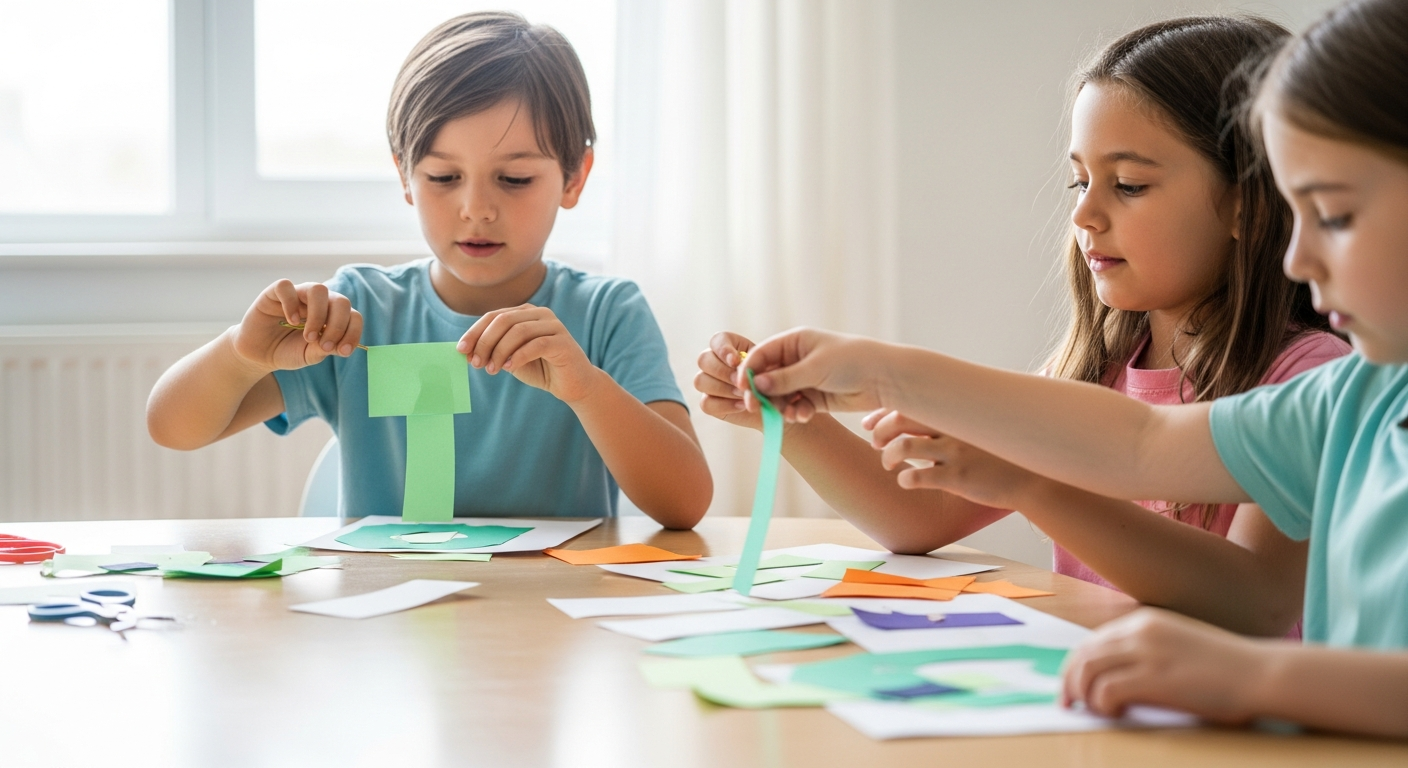
Table of Contents
- Introduction
- The Magic of Crafts: More Than Just Fun
- Stocking Your Craft Cabinet: The "No-Stress" Supply List
- Our Top Picks: Easy Crafts for Kids (Ages 3-10+)
- Fostering Communication During Craft Time: Tips for Parents
- Speech Blubs: Your Partner in Communication Development
- Conclusion
- Frequently Asked Questions
Introduction
Ever found yourself staring at a pile of discarded toys, hearing that familiar, slightly whiny plea of "I'm bored!"? In those moments, finding an activity that’s both engaging and beneficial for your child's development can feel like a quest for the Holy Grail. But what if we told you that the solution might be hiding in plain sight, perhaps in your recycling bin or a forgotten drawer? Crafts aren't just about keeping little hands busy; they are powerful, multi-faceted tools for fostering growth, imagination, and, crucially, communication.
This post will dive deep into the world of easy crafts for kids, showing you how simple, everyday materials can transform into incredible learning opportunities. We’ll explore the often-underestimated developmental benefits of crafting, from fine motor skills to problem-solving, and highlight how these activities naturally support speech and language development. We'll provide a treasure trove of simple craft ideas, discuss how you can maximize their communication potential, and introduce you to a resource that perfectly complements these hands-on learning experiences. Get ready to turn ordinary moments into extraordinary adventures in creativity and connection!

The Magic of Crafts: More Than Just Fun
Crafting might seem like a simple pastime, a way to fill an afternoon or create a handmade gift. But for children, it's a dynamic playground for development, engaging multiple senses and cognitive functions simultaneously. It's a holistic learning experience disguised as play, offering far-reaching benefits that extend well beyond the finished product.
Why Crafts Are Essential for Child Development
Engaging in arts and crafts offers a wealth of developmental advantages for children of all ages:
- Fine Motor Skills and Hand-Eye Coordination: Activities like cutting with scissors, gluing small pieces, drawing lines, molding clay, or threading beads are incredible workouts for the small muscles in a child’s hands and fingers. This precision and dexterity are foundational for tasks like writing, buttoning clothes, and self-feeding.
- Cognitive Development and Problem-Solving: Crafts often come with a goal, even if it's an abstract one like "make a silly monster." Children learn to plan, sequence steps, follow instructions, and troubleshoot when things don't go exactly as planned. They might ask, "What if I use this color instead?" or "How can I make this stick?" — all excellent exercises in critical thinking.
- Creativity and Imagination: With a blank paper plate or an empty toilet paper roll, the possibilities are endless. Crafts provide a canvas for children to express their unique ideas, experiment with colors and textures, and bring their imaginative worlds to life. This open-ended play is vital for fostering innovation and flexible thinking.
- Emotional Regulation and Patience: Crafting requires focus and persistence. Waiting for glue to dry, carefully cutting along a line, or trying a technique multiple times can teach children patience and perseverance. The pride they feel upon completing a project can significantly boost their self-esteem and encourage them to tackle new challenges.
- Sensory Exploration: From the squishy feel of homemade clay to the crinkle of tissue paper or the vibrant colors of paint, crafts offer a rich sensory experience. This engagement helps children process and understand the world around them, developing their perceptual skills.
The Communication Connection: How Crafts Enhance Speech and Language
While the visual and tactile benefits of crafts are evident, their impact on speech and language development is equally profound and often overlooked. Crafting sessions are natural, low-pressure environments for fostering robust communication skills.

Imagine a child meticulously gluing googly eyes onto a paper plate fish. As they work, they naturally encounter opportunities to:
- Build Vocabulary: Naming colors ("blue fish," "red eyes"), shapes ("circle body," "triangle fins"), actions ("cut," "glue," "paint"), and materials ("paper," "ribbon," "pom-pom"). Each new craft introduces a fresh set of words related to tools, textures, and the creative process itself.
- Follow Directions: Simple instructions like "First, get the scissors. Then, cut the circle" help children understand and sequence information, a crucial skill for listening comprehension.
- Describe and Narrate: "My robot has a big red head and wiggly arms!" or "I'm making a flower for Grandma." These descriptions encourage children to articulate their thoughts, observations, and intentions, expanding their descriptive language skills.
- Ask and Answer Questions: "What color should I use next?" "Where does the tail go?" "Can I have more glue?" Craft time is ripe with natural opportunities for asking clarifying questions and providing answers, promoting conversational turn-taking.
- Engage in Storytelling: Creating monster puppets or dinosaur feet naturally leads to imaginative play and storytelling. Children can invent personalities for their creations, narrate adventures, or describe scenes, building narrative skills.
- Practice Articulation: Repeating words related to the craft ("cut," "glue," "stick," "tape," "paint") provides natural practice for specific sounds and word structures in a fun, non-stressful context.
At Speech Blubs, our mission is to empower children to "speak their minds and hearts," and we see firsthand how engaging activities ignite communication. Our founders, who all grew up with speech problems, created Speech Blubs to be the tool they wished they had—a tool that blends scientific principles with play. We know that active, joyful participation, whether it's through crafting or our unique video modeling methodology, is the most effective path to communication growth.
Stocking Your Craft Cabinet: The "No-Stress" Supply List
One of the greatest joys of easy crafts for kids is that you don't need a specialty store or an expensive shopping spree to get started. Many of the most engaging projects can be created with items you already have around the house or can easily acquire during your regular grocery run. The key is simplicity and resourcefulness!
Essential Household Items for Easy Crafts
Think of your home as a treasure trove of potential craft supplies. Before you buy anything new, raid these common spots:
- Paper, Paper, Everywhere:
- Construction Paper: A rainbow of possibilities for cutting, folding, and gluing.
- Printer Paper/White Paper: Perfect for drawing, painting, or creating templates.
- Paper Plates: The ultimate versatile base for masks, animals, suns, pizzas, and more.
- Newspapers/Magazines: Great for collages, paper mache, or protecting surfaces.
- Cardboard Creations:
- Toilet Paper/Paper Towel Rolls: Essential for rockets, animals, telescopes, and puppet bodies.
- Cereal Boxes/Shipping Boxes: Sturdy material for robots, castles, guitars, or frames.
- Cutting, Sticking, and Connecting:
- Kid-Safe Scissors: For developing fine motor control.
- Glue Sticks/Liquid Glue: A must-have for adhering pieces.
- Tape: For quick fixes and building structures.
- Coloring and Painting:
- Crayons/Markers: Basic coloring tools for every craft.
- Kid-Safe Paint (Washable Tempera): For vibrant creations and sensory exploration.
- Brushes/Sponges: For applying paint.
- Miscellaneous Must-Haves:
- Popsicle Sticks: Build structures, create puppets, or make frames.
- Rubber Bands/Yarn/String: For adding texture, building instruments, or making puppets.
- Cotton Balls: For clouds, snow, or fluffy animal textures.
- Paper Bags: Perfect for puppets or gift bags.
Optional Add-ons (for Extra Sparkle!)
While the essentials cover most projects, a few optional items can add extra flair and excitement:
- Googly Eyes: Instantly bring characters to life! (Though drawing eyes works just as well!)
- Pom-poms: Soft, colorful additions for texture and decoration.
- Pipe Cleaners (Chenille Sticks): Bendable and versatile for limbs, antennae, or decorative accents.
- Glitter (Use Sparingly!): A touch of sparkle can be magical, but parents beware – it gets everywhere!
- Nature Items: Collect leaves, small pebbles, twigs, or flowers from a walk for organic collages and sensory bins.
The beauty of these supplies is their adaptability. A paper plate can be a sun, a pizza, or an animal mask. A toilet paper roll can be a telescope, a bunny, or a robot. Encourage your child to see the potential in everyday objects, fostering creativity and a resourceful mindset.
Our Top Picks: Easy Crafts for Kids (Ages 3-10+)
Now for the fun part! We've curated a list of fantastic, easy crafts that require minimal supplies and offer maximum engagement and developmental benefits. We'll categorize them roughly by age-appropriateness, but remember that many crafts can be adapted for older or younger children. The goal is to encourage creativity and communication, not perfection.
Crafts for Little Hands (Preschoolers & Early Elementary)
These crafts are perfect for developing foundational fine motor skills, exploring sensory input, and expanding basic vocabulary. Focus on simple steps and lots of opportunities for naming and describing.
- Paper Plate Animals (Fish, Doughnuts, Masks): Using paper plates as a base, children can transform them into anything. Paint a fish, add tissue paper scales, and draw a fin. Or paint a donut and glue on strips of colored paper for sprinkles. For a mask, cut out eye holes and let them decorate.
- Relatable Scenario: For a 4-year-old "late talker" who loves animals, making a "Paper Plate Fish" offers a fun, motivating way to practice words like "fish," "blue," "red," "cut," and "glue." As they work, you can narrate: "Let's paint the fish blue! Can you say 'blue'?" This interactive naming practice enhances vocabulary and reinforces communication.
- Homemade Finger Paint: Mix cornstarch, water, and food coloring for a safe, non-toxic, and incredibly tactile experience. Let them smear and swirl colors on large sheets of paper. This sensory activity is fantastic for pre-verbal children to express themselves and explore cause and effect.
- Ooey Gluey Suncatchers: Using glue and food coloring, kids can create beautiful, translucent designs on waxed paper. They learn about color mixing and patience as they wait for it to dry before hanging it in a sunny window.
- Pompom Ice Pops: Glue colorful pom-poms onto popsicle sticks to create pretend ice pops. This craft is great for practicing color names, counting pom-poms, and imaginative play ("What flavor is this?").
- Mail a Hug: Use a pre-drawn outline of a child's outstretched arms, cut it out, and let your child decorate it. Fold it up and send it to a loved one. This fosters empathy and provides an opportunity to discuss emotions and connection.
Just like in Speech Blubs where children imitate their peers in our video modeling activities to learn new sounds and words, these simple crafts provide visual and tactile cues for language development. Every color named, every action described, is a step towards clearer communication.
Crafts for Growing Minds (Elementary Schoolers)
As children grow, they can handle more complex instructions, finer motor challenges, and projects that involve more imaginative planning or simple scientific concepts.
- Goofy Robots: Gather cardboard boxes, toilet paper rolls, foil, bottle caps, and other recycled items. Let children use glue or tape to assemble their robot. They can then decorate it with markers, stickers, or paint.
- Relatable Scenario: A 7-year-old building a "Goofy Robot" can practice descriptive language, explaining its functions ("This is his scanning eye," "His arms can stretch!"), or describing the colors and shapes used to decorate it. This encourages extended dialogue, creative thinking, and even some early engineering concepts. "What does your robot do?" is a fantastic open-ended question to spark conversation.
- Recycled Guitars: A shoebox with rubber bands stretched over it makes a surprisingly functional guitar. Children can decorate the "body" and "neck" (from a paper towel roll) and experiment with how different rubber band thicknesses or tensions create different sounds. This introduces basic concepts of sound and vibration.
- DIY Sidewalk Chalk: Mix plaster of Paris with water and tempera paint to create custom chalk. Pour into molds (or toilet paper rolls) and let dry. This is a fun science experiment that results in a tool for more outdoor art, encouraging large-scale creativity.
- Monster Puppets: Turn old socks into playful monster puppets using googly eyes, yarn for hair, and fabric scraps for clothes. Children can invent personalities and backstories for their puppets, leading to spontaneous storytelling and role-playing.
- Cardboard Tube Telescope: Decorate a paper towel roll, and with a little imagination, it becomes a telescope for bird-watching or stargazing. This encourages observation and sparks curiosity about the natural world.
- Colorful Butterflies: Fold paper, apply watercolors, then fold again to create symmetrical patterns. Cut into butterfly shapes and add a pipe cleaner body. This craft teaches symmetry and explores color blending.
We know that engaging children in activities that spark their imagination, just like crafting a "Goofy Robot," directly supports their ability to articulate their ideas. It's why our app offers diverse categories, allowing children to choose themes that truly excite them and motivate them to speak their minds and hearts.
Fostering Communication During Craft Time: Tips for Parents
Craft time isn't just about the finished product; it's about the process and the invaluable interactions that happen along the way. As parents and caregivers, you are your child's first and most influential communication partner. Here's how to maximize the language-boosting potential of every craft session:
Narrate and Describe What You See and Do
Children learn language by hearing it modeled. As you craft together, verbalize your actions and observations.
- "I'm cutting the blue paper now."
- "You're gluing the shiny googly eyes onto the monster."
- "Look, the red and yellow paint are mixing to make orange!" This constant stream of language connects words to actions and objects, enriching their vocabulary.
Ask Open-Ended Questions
Move beyond "yes/no" questions to encourage more elaborate responses and critical thinking.
- Instead of: "Is your robot finished?" Try: "What part of your robot is your favorite? Tell me about it!"
- Instead of: "Do you like this color?" Try: "Why did you choose that color for the flower?"
- "What should we add next?"
- "How does that feel?" (e.g., the texture of homemade clay)
- "Tell me about your amazing creation!" These questions prompt children to use descriptive language, explain their choices, and engage in longer conversations.
Model Language and Expand on Their Sentences
When your child speaks, listen intently and then expand on what they've said.
- Child: "Fish blue." Parent: "Yes, that's a big blue fish! He's swimming in the ocean."
- Child: "Cut paper." Parent: "You're carefully cutting the paper with the scissors." This technique, known as "expansion," helps children hear more complex grammatical structures and vocabulary in a natural context.
Encourage Storytelling and Imaginative Play
Once the craft is complete, don't let the fun stop! Encourage your child to use their creation in imaginative play.
- "What kind of adventure will your monster puppet have today?"
- "Where does your cardboard tube telescope take you in your imagination?"
- "What does your paper plate pizza taste like?" Storytelling builds narrative skills, sequencing, and the ability to express complex ideas.
Prioritize Patience and Praise Effort, Not Just Perfection
Crafts are about the journey, not just the destination.
- Be patient: Allow your child to explore, even if it gets a little messy or takes longer than expected.
- Praise effort: "You worked so hard on that!" or "I love how you experimented with those colors." This builds confidence and a love for the creative process, reducing performance pressure.
- Embrace the "mistakes": Sometimes the most unique creations come from unexpected turns. "That's a very interesting way to put the eyes! What kind of creature has eyes like that?"
These strategies mirror our approach at Speech Blubs, where we create a supportive environment for communication. We understand that every child's journey is unique. If you're wondering if your child could benefit from a little extra support, our quick 3-minute preliminary screener can help. It involves just 9 simple questions and provides an assessment and next-steps plan, along with a free 7-day trial of our app. It's a perfect complement to these daily, enriching interactions.
Speech Blubs: Your Partner in Communication Development
While hands-on activities like crafts are incredibly valuable, sometimes children need an additional, specialized tool to support their speech and language journey. That's where Speech Blubs comes in. We offer a unique, immediate, effective, and joyful solution for the 1 in 4 children who need speech support, empowering them to "speak their minds and hearts."
Our company was born from a very personal place. Our founders all grew up with speech problems, experiencing firsthand the challenges and frustrations that come with communication difficulties. They created Speech Blubs to be the tool they wished they had during their own childhoods – a powerful, engaging, and scientifically-backed resource that helps children develop crucial communication skills in a fun and accessible way.
We are committed to blending scientific principles with play, creating one-of-a-kind "smart screen time" experiences. Unlike passive viewing (like cartoons), Speech Blubs provides a screen-free alternative that actively engages children. Our core methodology, "video modeling," is where children learn by watching and imitating their peers. Mirror neurons, the neurological basis for imitation, are highly active during these video sessions, making learning new sounds, words, and sentences incredibly effective and intuitive. This approach isn't just engaging; it's backed by robust research, placing us in the top tier of speech apps worldwide (you can explore our research page to learn more).
How Speech Blubs Complements Crafting:
- Vocabulary Reinforcement: Just as crafts introduce new words, Speech Blubs provides a structured environment to practice and master thousands of words across various categories, from animals and vehicles to emotions and actions.
- Articulation Practice: Our app guides children through specific sounds and blends, helping them practice articulation in a playful setting, often mimicking the sounds used in their craft-time storytelling.
- Following Directions: Many Speech Blubs activities require children to follow verbal instructions, reinforcing a skill essential for crafting.
- Confidence Building: The positive reinforcement and visible progress within the app, much like completing a craft project, significantly boost a child's confidence in their communication abilities.
- Family Connection: Speech Blubs is designed for active co-play. It's not about handing your child a tablet; it's about sitting together, laughing, imitating, and connecting, just as you would during a craft session. Many parents have shared their incredible success stories; you can read their testimonials here.
Ready to See the Difference? Explore Speech Blubs Pricing:
We believe in transparency and providing exceptional value to families. We offer two main subscription plans designed to fit your needs:
- Monthly Plan: For just $14.99 per month, you get access to our core Speech Blubs app. This plan is flexible, allowing you to subscribe month-to-month.
- Yearly Plan: Our Best Value! This is the clear best choice for families committed to their child's long-term speech and language development. For an annual payment of $59.99, it breaks down to just $4.99 per month – a phenomenal 66% saving compared to the monthly plan!
The Yearly Plan isn't just cheaper; it also includes exclusive, high-value features designed to give your child the most comprehensive support:
- A 7-day free trial: Experience the full power of Speech Blubs before committing.
- The extra Reading Blubs app: An incredible bonus to further boost early literacy skills.
- Early access to new updates and features: Be the first to enjoy our latest innovations.
- 24-hour support response time: Get prompt assistance whenever you need it.
The Monthly plan does not include these fantastic additional benefits. For the most comprehensive support, the best value, and to experience our full suite of features with a free trial, we strongly encourage you to choose the Yearly plan.
Conclusion
Easy crafts for kids are far more than simple pastimes; they are dynamic pathways to holistic child development, fostering fine motor skills, cognitive growth, creativity, and emotional resilience. Crucially, they serve as natural, joyful springboards for communication, enriching vocabulary, improving articulation, and building confidence in speaking. By transforming everyday items into imaginative projects, you're not just creating art; you're creating invaluable learning experiences and cherished family memories.
As you explore the wonderful world of hands-on crafting, remember that consistent, engaging communication is key. Whether you're narrating your actions, asking open-ended questions, or encouraging storytelling with a newly made puppet, every interaction strengthens your child's language foundation.
To further support your child's communication journey and build upon the skills nurtured through crafting, we invite you to experience Speech Blubs. With our scientifically-backed video modeling, playful activities, and dedication to empowering children to speak their minds and hearts, we are truly passionate about helping every child thrive.
Don't let another "I'm bored!" moment pass you by. Start fostering a love for communication and creativity today. Download Speech Blubs, claim your 7-day free trial, and join thousands of happy families witnessing incredible progress. Be sure to choose the Yearly plan to unlock all the premium features and get the best value for your child's developmental journey!
Download Speech Blubs on the App Store
Get Speech Blubs on Google Play
Sign up for your free trial and choose the Yearly plan today!
Frequently Asked Questions
What age group are these crafts best for?
Many of the crafts mentioned are adaptable, but generally, the "Little Hands" section caters to preschoolers (ages 3-5) and early elementary (ages 5-7), while the "Growing Minds" section is ideal for elementary schoolers (ages 7-10+). Always supervise young children, especially with scissors or small parts, and adjust activities to suit your child's individual skill level and interests.
How do crafts help with speech development?
Crafts naturally boost speech development by expanding vocabulary (naming colors, actions, materials), encouraging the following of multi-step directions, providing opportunities for describing creations and processes, and fostering storytelling through imaginative play. The interactive nature of crafting with an adult creates a rich environment for language modeling and conversational practice.
What if my child isn't interested in crafting?
Not every child will love every craft! Try to find crafts that align with their current interests (e.g., dinosaurs, space, animals). Focus on the process, not the perfect outcome, and keep sessions short and fun. Sometimes, simply having the materials available for free exploration can spark curiosity. Remember, any shared, engaging activity where you talk, describe, and interact can boost communication, whether it's crafting or something else!
How can Speech Blubs further support my child's communication?
Speech Blubs provides a structured, engaging environment for targeted speech and language development. Through our unique video modeling, children learn by imitating peers, which effectively builds vocabulary, improves articulation, and enhances social communication skills. It's a powerful supplement to everyday interactions and, when needed, professional therapy, offering thousands of activities designed to make learning to speak fun and effective.
About the author