
Fun & Easy Crafts for Kids: Boost Skills with Simple Supplies
 By Speech Blubs Team•Jan 13, 2026•20 min.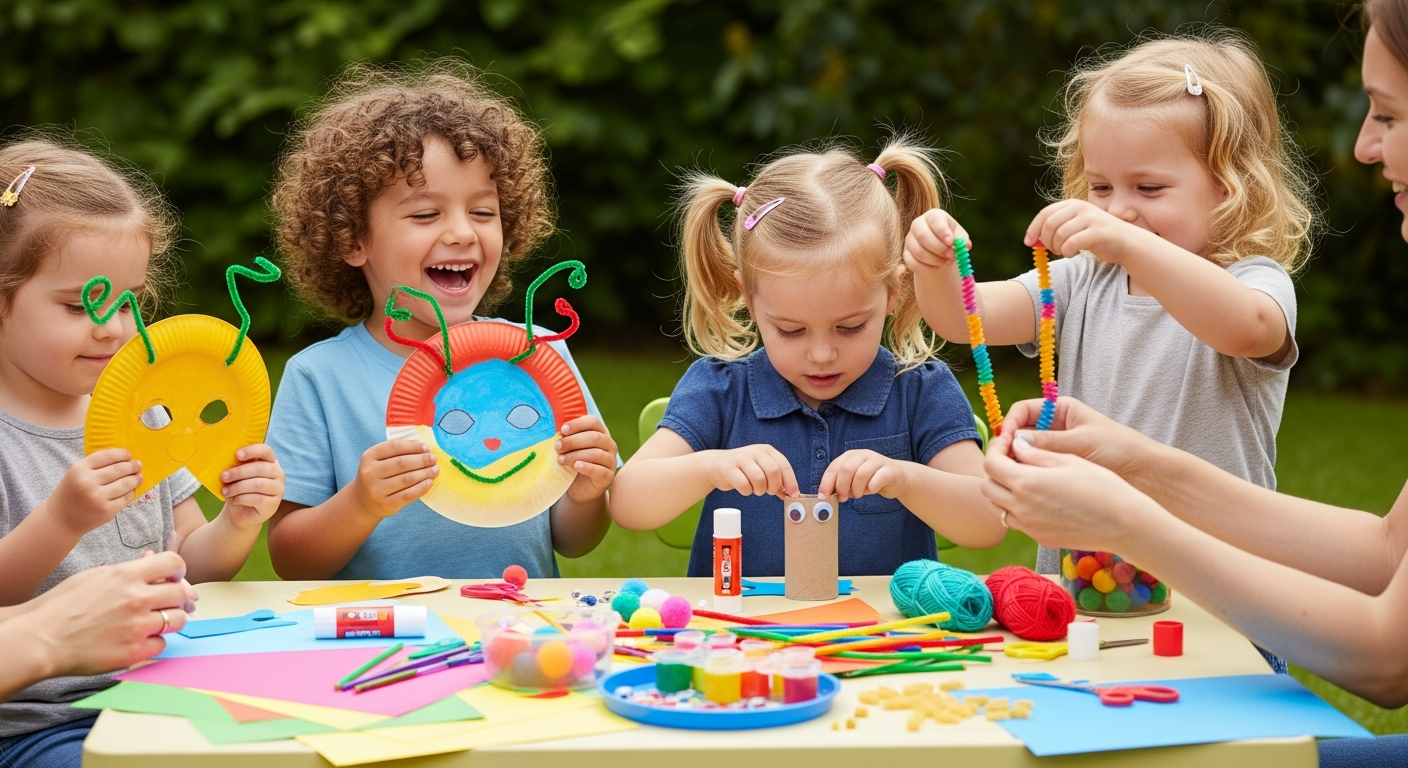
Table of Contents
- The Power of Simple Crafts for Growing Minds
- The Unsung Heroes: Everyday Craft Supplies
- Crafting Connections: How Simple Projects Boost Speech & Language
- More Than Just Fun: Diverse Developmental Benefits Continued
- Our Favorite Easy Simple Crafts for Kids (with a Developmental Twist)
- The Speech Blubs Difference: "Smart Screen Time" for Growing Voices
- Unlocking Full Potential: Our Value & Pricing
- Conclusion
- Frequently Asked Questions (FAQ)
The universal cry of "I'm bored!" can echo through any home, sparking a frantic search for engaging activities. While the allure of screens can be powerful, there's an enduring magic in the simple, tactile joy of crafting. Beyond just keeping little hands busy, engaging in easy, simple crafts for kids offers a profound pathway to developmental growth, fostering creativity, fine motor skills, and, crucially, language and communication abilities.
This post isn't just a list of craft ideas; it's a guide to transforming everyday items into opportunities for learning and connection. We'll explore how simple projects can become catalysts for conversation, problem-solving, and emotional expression. We'll also reveal how these hands-on experiences beautifully complement "smart screen time" tools like Speech Blubs, creating a holistic approach to nurturing your child's ability to speak their minds and hearts. Get ready to dive into a world where sticky fingers lead to blossoming imaginations and confident communication.

The Power of Simple Crafts for Growing Minds
Crafting with children isn't just about the finished product; it's about the process, the exploration, and the rich learning experiences embedded within. When kids engage in simple crafts, they're not merely gluing paper or painting rocks; they're developing a myriad of essential skills that lay the groundwork for future success in school and life.
Beyond Entertainment: Core Developmental Benefits
- Fine Motor Skill Development: From holding a crayon to cutting with child-safe scissors, peeling stickers, or twisting pipe cleaners, crafts are a fantastic workout for tiny hands and fingers. These activities strengthen the small muscles in their hands and improve hand-eye coordination, which are vital for tasks like writing, dressing themselves, and eating.
- Cognitive Growth and Problem-Solving: Every craft presents a mini-challenge. "How do I make this paper stay together?" "What color should I use next?" "How can I make my bird's wings flap?" These questions spark critical thinking, planning, and sequencing skills. Children learn to follow instructions, adapt when things don't go as planned, and make creative decisions.
- Emotional Expression and Self-Esteem: Crafts offer a safe space for children to express their feelings, ideas, and creativity without judgment. The pride a child feels when they successfully complete a project, no matter how simple, is immense. It builds self-confidence and teaches them the value of perseverance.
- Sensory Exploration: Many crafts involve different textures, smells, and visual stimuli. The squishiness of playdough, the stickiness of glue, the smell of crayons, or the feel of various craft materials all contribute to rich sensory experiences that are crucial for brain development.
These benefits are foundational, but the magic truly deepens when we consider how crafts inherently support the journey of language and communication.
The Unsung Heroes: Everyday Craft Supplies
One of the most wonderful aspects of easy crafts for kids is that you often don't need fancy, expensive materials. The best "craft store" might just be your own home! By repurposing everyday items, you not only save money but also teach children about resourcefulness and sustainability. Here’s a list of common household items that can kickstart countless creative adventures:

- Paper, Paper, Everywhere: Printer paper, construction paper, old newspapers, magazines, paper bags, paper plates, paper towels, and toilet paper rolls.
- Adhesives: Glue sticks, liquid school glue, masking tape, clear tape, duct tape.
- Coloring & Drawing Tools: Crayons, washable markers, tempera paint, watercolors, colored pencils.
- Cutting Tools: Child-safe scissors.
- Miscellaneous Treasures: Cotton balls, pipe cleaners, pom-poms, googly eyes (or just draw them!), yarn, string, buttons, old fabric scraps, craft sticks (popsicle sticks).
- Nature's Bounty: Leaves, small twigs, pebbles, pinecones, flowers (collected responsibly).
- Recyclables: Empty cereal boxes, plastic bottles, yogurt cups, egg cartons, old CDs.
The beauty of this list is its flexibility. Don't have pom-poms? Cut up some construction paper! No googly eyes? Draw them on with a marker. The key is to encourage creativity with what you have.
Crafting Connections: How Simple Projects Boost Speech & Language
This is where the real magic happens, especially for children who are developing their communication skills. Easy crafts provide a natural, low-pressure environment for rich language interaction. Every step of a craft project is an opportunity for a child to listen, understand, express, and engage verbally.
From Sounds to Sentences: Language Through Play
- Vocabulary Expansion: As you craft, you introduce new words. "Let's snip the paper," "Can you find the texture of the cotton ball?" "We need to adhere this piece here." Describing colors, shapes, tools, and actions constantly builds a child's lexicon. For a child learning to name objects, making a paper plate fish and talking about its "fins" and "scales" provides a concrete visual for new words.
- Following Directions: Simple crafts often come with a sequence of steps. "First, we glue the eyes, then we add the whiskers." This helps children practice receptive language skills – understanding and remembering instructions, a crucial pre-literacy skill.
- Descriptive Language: Encourage your child to describe their artwork. "Tell me about your red and blue monster!" "Why did you choose that shiny button for the nose?" This prompts them to use adjectives, verbs, and more complex sentence structures.
- Storytelling and Imaginative Play: Once a craft is finished, especially if it's a character or prop, it can become the star of a story. A toilet paper roll rocket might go on an adventure to the moon, or a paper bag puppet might have a silly conversation. This fosters narrative skills, creativity, and the ability to articulate imaginary scenarios.
- Asking and Answering Questions: Crafts naturally lead to a back-and-forth dialogue. "What do you think we should do next?" "Where does this piece go?" "Can you hand me the glue stick, please?" These interactions build conversational turn-taking and pragmatic language skills.
This direct, engaging approach to language development is precisely where tools like Speech Blubs come in. At Speech Blubs, our mission is to empower children to "speak their minds and hearts," and we believe in blending scientific principles with play to create effective and joyful learning experiences. While you're creating a bustling farm animal collage, talking about the "moo" of a cow and the "baa" of a sheep, you're setting the stage for reinforcing those very sounds and words with our app's engaging "Animal Kingdom" section.
For a parent whose 3-year-old "late talker" loves animals, the "Animal Kingdom" section of Speech Blubs offers a fun, motivating way to practice "moo" and "baa" sounds. Our unique "video modeling" methodology, where children learn by watching and imitating their peers, complements your hands-on activities, making those sounds stick. It's truly "smart screen time" that turns passive viewing into active learning, strengthening those early sound productions and expanding vocabulary.
Ready to see how Speech Blubs can support your child's communication journey? Download Speech Blubs on the App Store or Google Play to begin your free trial.
More Than Just Fun: Diverse Developmental Benefits Continued
Beyond the direct language benefits, crafts continue to provide a wealth of developmental advantages, cementing their role as a holistic learning tool.
Nurturing Growth in Every Stroke and Snip
- Problem-Solving and Critical Thinking: Crafts are mini-projects that require planning and execution. A child might encounter an issue, like a piece not sticking, and learn to try a different type of glue or tape. This teaches them to think on their feet and develop adaptive strategies. They learn to sequence steps: "First cut, then glue, then decorate."
- Patience and Perseverance: Not every craft turns out perfectly on the first try, and that's okay! Learning to stick with a project, even when it's challenging, fosters patience and perseverance – valuable life skills. It's about enjoying the journey, not just the destination.
- Creativity and Imagination: Crafts are a blank canvas for a child's imagination. There's no single "right" way to make a paper plate sun; it can have stripes, spots, or even googly eyes! This freedom encourages imaginative thinking and personal expression.
- Sensory Integration: The tactile experience of touching different materials (smooth paper, fuzzy pom-poms, rough sandpaper, gooey glue) helps children integrate sensory information, which is vital for how they perceive and interact with the world around them.
- Social Skills (when crafting together): Whether with a parent, sibling, or friend, crafting together teaches valuable social skills like sharing materials, taking turns, compromising on ideas, and collaborating on a shared project. It's a wonderful way to build family connection and create lasting memories.
Our Favorite Easy Simple Crafts for Kids (with a Developmental Twist)
Here are some wonderfully simple craft ideas, each designed to be accessible with common household items and packed with developmental benefits, especially for communication.
1. Paper Plate Animal Masks
- Supplies: Paper plates, crayons/markers/paint, construction paper scraps, child-safe scissors, glue stick, elastic string (optional).
- How To: Cut a paper plate in half or leave it whole. Have your child decorate it to look like their favorite animal (lion, bear, cat, dog). Use construction paper scraps for ears, noses, or whiskers. Cut out eye holes. If using elastic string, attach to the sides.
- Developmental Twist: This craft is fantastic for imaginative play and expressive language. Encourage your child to make the animal sound ("roar!" "meow!"), describe the animal's features ("It has a long tail," "Its fur is orange"), and act out the animal's movements. You can ask, "What does your lion eat?" or "Where does your bunny live?" This strengthens vocabulary and narrative skills. For a child learning to say "lion," practicing the "l" sound while roaring playfully is highly motivating.
2. Toilet Paper Roll Characters/Binoculars
- Supplies: Empty toilet paper rolls, paint/markers/crayons, construction paper, glue, yarn, pipe cleaners.
- How To:
- Characters: Decorate a roll to be a person, an animal, or a monster. Add arms and legs with pipe cleaners, hair with yarn, or clothing with paper.
- Binoculars: Glue two rolls together side-by-side. Decorate them. Punch holes and add a yarn strap.
- Developmental Twist: Creating characters naturally leads to storytelling and role-playing, boosting imaginative language. With binoculars, encourage observational language: "What do you see far away?" "Describe the bird's feathers." These activities provide perfect prompts for descriptive vocabulary and sentence construction.
3. Nature Collage Art
- Supplies: Cardboard or thick paper, liquid glue, natural items (leaves, twigs, small flowers, pebbles, grass) collected from a walk.
- How To: Go on a nature walk together to collect items. Talk about what you find. Arrange and glue the items onto the cardboard.
- Developmental Twist: The collecting phase is rich with language opportunities: describing textures ("smooth," "bumpy," "prickly"), colors ("What a vibrant red leaf!"), and sizes ("Find a tiny pebble!"). During assembly, discuss placement ("Put the big leaf next to the small one"). This boosts descriptive language, spatial concepts, and comparison skills.
4. DIY Playdough
- Supplies: Flour, salt, water, cooking oil, food coloring (optional), cream of tartar (optional, for longer lasting dough).
- How To: Search for a simple recipe online – many use basic kitchen staples. Mix ingredients, knead, and add food coloring.
- Developmental Twist: Making playdough is a fantastic sensory and sequential activity. Talk through each step ("First, we add the flour, then the salt"). Describe the textures ("sticky," "smooth," "squishy"). Once made, use it to practice shapes, build objects, or create pretend food, all while narrating the actions.
5. Salt Painting
- Supplies: Cardboard or thick paper, school glue, table salt, liquid watercolors or watered-down food coloring, droppers or small paintbrushes.
- How To: Draw a design on the paper with glue. Sprinkle generous amounts of salt over the glue. Shake off excess. Use droppers or brushes to gently touch the colored water to the salt lines, watching the color spread.
- Developmental Twist: This unique craft captivates children. Use descriptive words for the process: "Watch the colors blend and spread!" "It's so absorbent!" Discuss the colors and patterns they create. The precision of using droppers also enhances fine motor control.
6. Paper Bag Puppets
- Supplies: Paper lunch bags, construction paper, glue, markers, yarn, fabric scraps.
- How To: Decorate the bottom flap of the bag as the puppet's mouth. Add eyes, nose, hair, and clothing to the main body of the bag.
- Developmental Twist: Puppets are incredible for encouraging dialogue and storytelling. Give your puppet a name and a voice. Ask your child to make their puppet talk, sing, or answer questions. This is excellent for practicing different vocalizations, expressing emotions, and building narrative skills. If your child is working on specific sounds, creating a puppet that "only speaks in 's' words" can be a fun, targeted activity.
7. Cereal Box Mini-Storage Bins
- Supplies: Empty cereal boxes, child-safe scissors, ruler, duct tape or decorative paper, markers.
- How To: Cut a cereal box into smaller sections (e.g., 2-4 inches tall) to create open-top bins. Decorate with duct tape or paper, then label them for organizing small toys, craft supplies, or crayons.
- Developmental Twist: This craft blends creativity with practical organization. Involve your child in deciding what to store in each bin. "Where should the cars go?" "What color label should we use for the LEGOs?" This activity fosters categorization skills, spatial reasoning, and functional language related to sorting and tidying.
8. Rock Painting
- Supplies: Smooth rocks (collected outdoors), acrylic paints, paintbrushes, clear sealant (optional, for outdoor display).
- How To: Wash and dry the rocks. Paint them with various colors and designs.
- Developmental Twist: This is a wonderful way to connect with nature and express creativity. Discuss the colors, shapes, and patterns your child creates. If they paint faces or animals, encourage them to describe the characters. These painted rocks can then be used for storytelling prompts or even as "kindness rocks" to hide for others to find, sparking conversations about generosity.
9. Yarn Wrapped Sticks
- Supplies: Small sturdy sticks (collected outdoors), various colors of yarn, scissors.
- How To: Help your child secure one end of a yarn strand to a stick. Then, wrap the yarn tightly around the stick, covering it completely or creating patterns with different colors.
- Developmental Twist: This is an excellent fine motor exercise, requiring dexterity and patience. Discuss the colors, how the yarn feels ("soft," "fuzzy"), and the patterns being created. It's a meditative and calming activity that can lead to conversations about nature, colors, and art.
10. Coffee Filter Flowers
- Supplies: Coffee filters, washable markers, small spray bottle with water, pipe cleaners or craft sticks.
- How To: Flatten coffee filters. Have your child color them with markers. Lightly mist with water, watching the colors bleed and blend. Let dry. Gather the center and attach a pipe cleaner stem.
- Developmental Twist: This craft beautifully demonstrates color mixing and cause-and-effect ("What happens when we spray the water?"). Talk about the colors, how they change, and the different parts of a flower ("petals," "stem," "leaf"). This supports observation skills, color vocabulary, and understanding simple scientific principles.
These crafts are not just ways to pass the time; they are vital opportunities for growth. To further nurture these emerging language skills, consider how our Speech Blubs app extends these playful learning moments. We provide a screen-free alternative to passive viewing (like cartoons) and a powerful tool for family connection, ensuring that every interaction, whether digital or hands-on, is meaningful.
Don't wait to give your child the tools they need to communicate confidently. Create your Speech Blubs account and begin your 7-day free trial today.
The Speech Blubs Difference: "Smart Screen Time" for Growing Voices
At Speech Blubs, we understand the incredible power of play in a child's development, especially when it comes to communication. Our company was born from the personal experiences of our founders, who all grew up with speech problems and created the tool they wished they had. This personal journey fuels our commitment to providing an immediate, effective, and joyful solution for the 1 in 4 children who need speech support. We believe in harnessing the power of technology to make a positive impact, blending scientific principles with play into one-of-a-kind "smart screen time" experiences.
Our Unique Approach: Video Modeling
What makes Speech Blubs truly unique is our reliance on the scientifically validated "video modeling" methodology. Children learn by watching and imitating real kids, not cartoon characters. This peer-to-peer interaction leverages mirror neurons in the brain, making learning feel natural, intuitive, and fun. It's an active process that encourages imitation, repetition, and spontaneous speech, turning screen time into productive learning time.
Imagine a child practicing animal sounds through crafts, then transitioning to Speech Blubs where they see dozens of other children making those same sounds. This reinforces learning in a powerful way, building confidence and encouraging them to vocalize. Our app is designed to be a powerful supplement to a child's overall development plan and, when applicable, professional therapy, always with the implicit understanding of adult co-play and support. We're not just an app; we're a partner in your child's communication journey. Our method is backed by science, placing us in the top tier of speech apps worldwide, as detailed on our Research page.
Is Speech Blubs Right for Your Child?
Sometimes, parents wonder if their child could benefit from extra speech support. We've made it easy to get a quick insight. Take our quick 3-minute preliminary screener, which involves 9 simple questions. It provides an assessment and a next-steps plan, guiding you toward the best path for your child's development. Unsure if your child could benefit? Take our quick 3-minute preliminary screener to get a simple assessment and a free 7-day trial.
Unlocking Full Potential: Our Value & Pricing
We believe in making effective speech and language support accessible to every family. Transparency about our pricing helps us build trust, ensuring you know exactly what to expect from Speech Blubs. We offer two main plans, with the Yearly plan providing exceptional value and an enriched experience.
Our Plans: Simple & Transparent
- Monthly Plan: For those who prefer flexibility, our Monthly plan is $14.99 per month. While it offers access to the core Speech Blubs experience, it doesn't include some of our most valuable features.
- Yearly Plan: The Best Value & Full Experience: Our Yearly plan is by far the superior choice for families committed to their child's language development. At just $59.99 per year, it breaks down to an incredible $4.99 per month, allowing you to save 66% compared to the monthly option!
Why Choose the Yearly Plan? Exclusive Features You Won't Want to Miss!
The Yearly plan isn't just cheaper; it unlocks a comprehensive suite of benefits designed to maximize your child's learning and provide you with unparalleled support:
- 7-Day Free Trial: The Yearly plan is the only way to access our 7-day free trial. This allows you and your child to explore the app's full capabilities and experience the Speech Blubs difference firsthand before making a commitment.
- The Extra Reading Blubs App: Exclusively with the Yearly plan, you also get access to our companion Reading Blubs app, further supporting your child's literacy journey by building foundational reading skills.
- Early Access to New Updates: Be among the first to experience new features, activities, and content as we continuously enhance the Speech Blubs platform.
- 24-Hour Support Response Time: Get priority support from our dedicated team, ensuring any questions or concerns are addressed quickly and efficiently.
The Monthly plan does not include these exclusive benefits, making the Yearly plan the clear best choice for families seeking the most value and a complete set of tools for their child's development. We are committed to fostering a love for communication, building confidence, reducing frustration, developing key foundational skills, and creating joyful family learning moments.
Ready to provide your child with the best speech and language support available? Start your journey today! We encourage you to choose the Yearly plan to get your free 7-day trial and unlock the full suite of features designed to help your child thrive. Download Speech Blubs on the App Store or Google Play now.
Conclusion
Engaging in easy, simple crafts for kids is far more than just a way to fill time; it's a powerful avenue for comprehensive developmental growth. From the intricate coordination required for fine motor skills to the imaginative storytelling that expands language, crafts lay a rich foundation for learning. They nurture creativity, build confidence, and provide invaluable opportunities for communication, helping children discover their voices and articulate their thoughts and feelings.
These hands-on activities, when combined with purposeful, "smart screen time" from Speech Blubs, create a synergistic approach to fostering speech and language development. Speech Blubs, born from our founders' personal experiences with speech challenges, is dedicated to providing a joyful, effective solution, using scientific video modeling to empower children to speak their minds and hearts. Together, crafts and Speech Blubs form a comprehensive and engaging strategy to support your child's journey toward confident communication.
Don't let another "I'm bored!" moment pass without an opportunity for growth. Embrace the joy of crafting and complement it with the power of Speech Blubs. Ready to empower your child's communication journey? Create your account and begin your 7-day free trial today, and remember to select the Yearly plan to get access to the free trial, the Reading Blubs app, and a host of other exclusive benefits that provide the best value for your family. Join the thousands of parents who have seen their children's voices blossom. See what other parents are saying about their child's success with Speech Blubs.
Frequently Asked Questions (FAQ)
Q1: What are the best easy craft supplies to keep on hand for kids?
A1: To ensure you're always ready for spontaneous crafting, we recommend keeping a stash of versatile, inexpensive items. Essential supplies include construction paper, plain printer paper, child-safe scissors, glue sticks and liquid school glue, crayons and washable markers, and a variety of recycled items like toilet paper rolls, paper plates, and empty cereal boxes. Adding a few sensory items like cotton balls, pipe cleaners, and yarn can expand possibilities, all without needing a special trip to the store.
Q2: How do simple crafts specifically help with speech development?
A2: Simple crafts naturally create opportunities for rich language interaction. As children engage, they expand their vocabulary by learning new words for colors, shapes, textures, and actions ("snip," "glue," "smooth," "rough"). They practice following multi-step directions, which strengthens receptive language skills. Crafts also encourage descriptive language, as children explain their creations, and foster storytelling when they give voices and narratives to their crafted characters. This active verbal engagement during play is incredibly beneficial for communication growth.
Q3: How can I best integrate Speech Blubs with our family's craft time?
A3: Speech Blubs seamlessly complements hands-on craft time by reinforcing the skills learned offline. For example, if you're making animal puppets and practicing animal sounds, follow up with the "Animal Kingdom" section in Speech Blubs, where children imitate peers making those same sounds. If your child struggles with specific words or phrases they use during craft play, the app offers targeted practice using its video modeling methodology. This creates a powerful connection between tangible play and focused digital learning, making both experiences more impactful.
Q4: What makes the Speech Blubs Yearly plan a better value than the Monthly plan?
A4: The Yearly plan is designed to provide the most comprehensive value and experience for families. Priced at $59.99 per year (just $4.99/month), it saves you 66% compared to the Monthly plan ($14.99/month). Crucially, the Yearly plan includes exclusive benefits such as a 7-day free trial to explore the app fully, access to the extra Reading Blubs app for literacy support, early access to new updates, and priority 24-hour support response time. These added features are not available with the Monthly plan, making the Yearly option the clear choice for unlocking your child's full communication potential.
About the author