
Fun & Easy Crafts for Kids That Boost Communication Skills
 By Speech Blubs Team•Jan 13, 2026•18 min.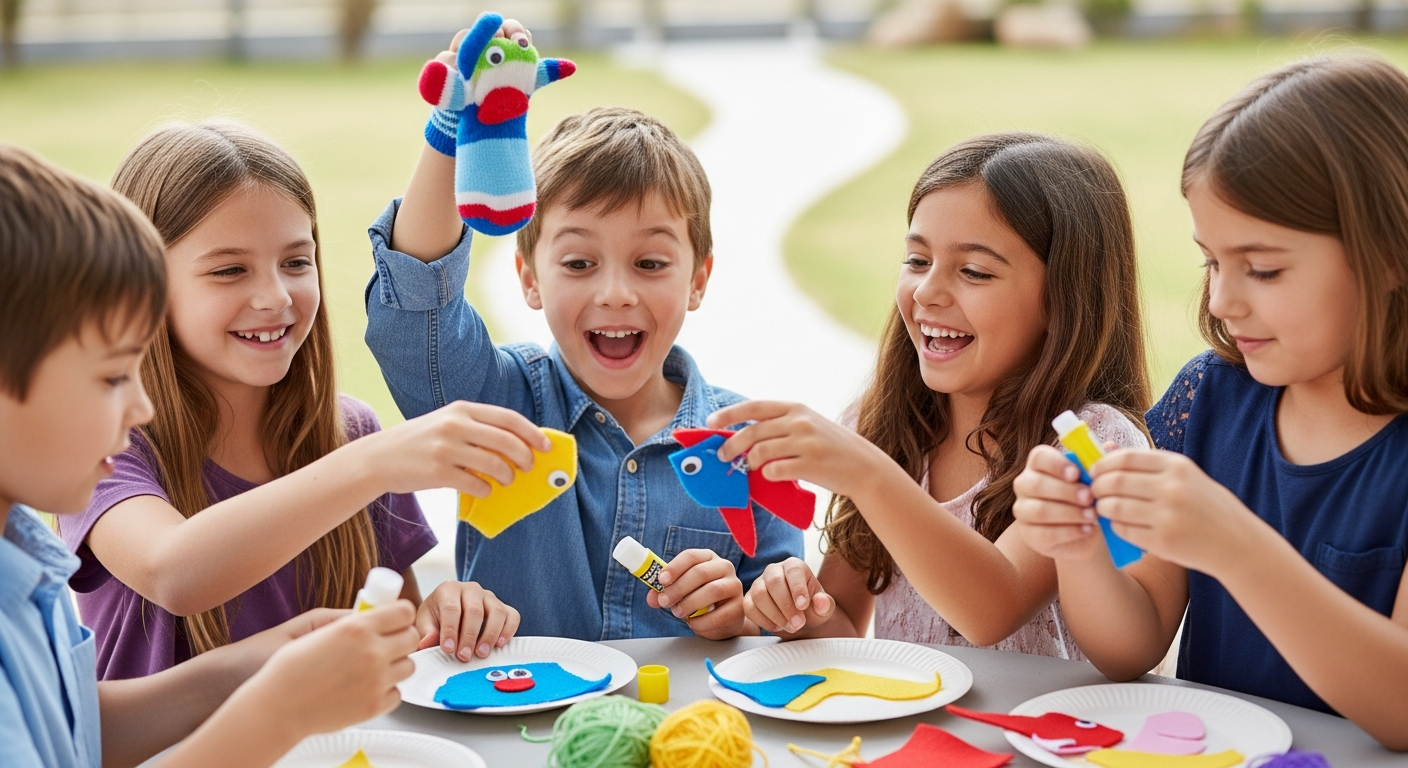
Table of Contents
- The Surprising Power of Easy Crafts for Kids
- Easy Crafts for Kids: Turning Play into Talk
- Making the Most of Craft Time: Tips for Parents
- When to Consider Extra Support: How Speech Blubs Can Help
- Our Commitment to Your Child's Voice and Development
- Conclusion
- Frequently Asked Questions
Ever found yourself surrounded by a rainbow explosion of craft supplies, giggling children, and a burgeoning pile of artistic creations, wondering how to channel all that wonderful energy into something even more enriching? You’re not alone! While the immediate joy of cutting, gluing, and painting is undeniable, easy crafts for kids offer a treasure trove of hidden benefits that extend far beyond a colorful refrigerator display. They are powerful catalysts for cognitive growth, fine motor skill development, and — perhaps most importantly for us at Speech Blubs — incredible opportunities for language and communication development.
This post isn't just about sharing a list of delightful craft ideas you can make with items you likely already have around the house. It's about empowering you, as a parent, to transform these playful moments into rich learning experiences that strengthen your child's ability to express their minds and hearts. We'll explore how simple craft projects can lay foundational speaking skills, build confidence, and create joyful family connections, all while your little one is happily immersed in creative play.

The Surprising Power of Easy Crafts for Kids
Crafting is often seen as a fun way to pass the time, especially on a rainy day or during school breaks. But for children, it's a dynamic playground for development. Every snip of the scissors, dab of glue, and stroke of a crayon engages multiple areas of their growing brains and bodies.
Developing Essential Skills Through Play
- Fine Motor Skills: The act of manipulating small objects, holding a brush, cutting paper, or peeling stickers refines the intricate muscles in a child’s hands and fingers. These are the same muscles crucial for writing, drawing, and even self-feeding.
- Cognitive Development: Crafting requires planning, problem-solving, and sequencing. "What color should I use next?" "How do I make this stick?" "Where does this piece go?" These questions, implicit in the crafting process, build critical thinking and executive function skills. Children learn to follow instructions, adapt when things don't go as planned, and see a project through from start to finish.
- Creativity and Imagination: Crafts provide an open canvas for children to express their inner worlds. There's no right or wrong way to make a paper plate monster or a pipe cleaner flower. This freedom fosters imaginative thinking, allowing them to transform ordinary materials into extraordinary creations.
- Emotional Expression: Art is a powerful outlet for feelings. Children can communicate joy, sadness, excitement, or even frustration through their color choices, textures, and themes, often before they have the words to articulate these emotions verbally.
Crafting a Foundation for Communication and Language
Beyond the obvious benefits, easy crafts for kids are exceptional tools for nurturing speech and language development. Every step of a craft project presents a natural opportunity for dialogue, vocabulary expansion, and practicing expressive language.
Imagine building a colorful creature from recycled materials. You might ask, "What color is its head?" (vocabulary, identification), "What sound does it make?" (articulation, imaginative play), or "Tell me about your silly monster!" (narrative skills, expressive language). These are the moments that strengthen neural pathways for communication.

At Speech Blubs, our mission is to empower children to "speak their minds and hearts." Our company was born from the personal experiences of our founders, who all grew up with speech problems and created the tool they wished they had. We know firsthand the frustration that can arise when a child struggles to communicate. That's why we’re committed to providing an immediate, effective, and joyful solution for the 1 in 4 children who need speech support. We blend scientific principles with play into one-of-a-kind "smart screen time" experiences, much like how crafts blend fun with learning.
Want to see how Speech Blubs can complement your child's developmental journey? Discover our engaging activities by downloading the app today. For Apple users, find us on the App Store, and for Android, get it on Google Play.
Easy Crafts for Kids: Turning Play into Talk
Here are some wonderfully simple craft ideas that require minimal supplies but offer maximum opportunities for speech and language development. Remember, the goal isn't a perfect outcome, but a rich, interactive process.
1. Paper Plate Animals: Roaring with Vocabulary
The Craft: Transform simple paper plates into beloved animals like lions, bears, or even fantastical creatures. Use paint, markers, construction paper cut-outs, yarn for manes, or cotton balls for fluffy tails.
Speech & Language Opportunities:
- Naming & Identifying: "What animal are we making?" "Can you find the orange paint for the lion's mane?"
- Animal Sounds: Practice "roar," "meow," "woof," "moo" as you create. This is excellent for early articulation practice.
- Descriptive Language: "Look at its long whiskers!" "It has a fluffy tail." "The lion is strong."
- Storytelling: Once the animals are complete, encourage your child to make them "talk" and act out a story. "The lion is hungry and wants to find a friend."
- Following Directions: "First, we paint the plate yellow. Next, we glue on the eyes."
Relatable Scenario: For a parent whose child is a "late talker" but loves animals, the "Animal Kingdom" section in Speech Blubs offers engaging video modeling, where children learn by watching and imitating their peers making animal sounds and names. This perfectly complements the hands-on fun of crafting animal masks or puppets.
2. Homemade Playdough: Sensory Exploration and Descriptive Words
The Craft: Whip up a batch of homemade playdough using basic kitchen ingredients like flour, salt, water, and food coloring. Add essential oils for scent or glitter for sparkle!
Speech & Language Opportunities:
- Action Verbs: "Roll the dough!" "Squish it!" "Pinch it!" "Stretch it!"
- Sensory Vocabulary: "Is it soft or hard?" "Does it feel sticky?" "What color did we make?" "It smells like lemon!"
- Concepts: Practice "big" and "small," "long" and "short" as you shape the dough.
- Following Multi-Step Directions: Involve your child in making the playdough, explaining each step: "First, we add the flour, then the salt, then the water."
3. Nature Collages: Discovering the World Around Us
The Craft: Go on a nature walk to collect leaves, twigs, small flowers, grass, and interesting pebbles. Back home, glue these treasures onto a piece of paper or cardboard to create a unique collage.
Speech & Language Opportunities:
- Object Naming: "What did you find?" "That's a smooth rock!" "Look at this prickly leaf!"
- Prepositional Phrases: "The leaf is on the paper." "The stick is under the flower."
- Describing Textures & Colors: "Rough bark," "soft moss," "bright red leaf."
- Sequencing: "First, we found the leaves. Then, we glued them down."
- Question Asking & Answering: "Where should this go?" "Why did you choose that leaf?"
4. Recycled Material Robots or Castles: Building Imaginary Worlds
The Craft: Gather empty cereal boxes, toilet paper rolls, paper towel tubes, plastic caps, foil, and other odds and ends. Provide glue, tape, and markers, and let your child construct a magnificent robot or a grand castle.
Speech & Language Opportunities:
- Naming Shapes & Sizes: "This is a big square box for the body." "Let's use a round cap for the robot's head."
- Body Parts/Structure: Name the robot's "arms," "legs," "eyes," "buttons." For a castle, talk about "towers," "walls," "windows."
- Imaginative Play & Storytelling: "What does your robot do?" "Who lives in your castle?" Encourage them to tell stories about their creations.
- Problem-Solving Language: "How can we make this piece stick?" "I need more tape here."
5. Popsicle Stick Puppets: Dialogue and Character Play
The Craft: Draw or print simple characters (people, animals, monsters) and glue them onto popsicle sticks. Alternatively, simply draw faces directly onto the sticks or attach googly eyes and yarn for hair.
Speech & Language Opportunities:
- Character Voices: Encourage your child to use different voices for each puppet, practicing pitch and tone.
- Dialogue Practice: Create simple conversations between two puppets. "Hello!" "How are you?" "I'm great!"
- Narrative Skills: Put on a puppet show! Help your child create a simple plot with a beginning, middle, and end.
- Emotional Vocabulary: Discuss how each puppet is feeling: "The bunny puppet looks happy!" "The bear puppet looks grumpy."
6. Homemade Cards: Spreading Kindness and Words
The Craft: Using construction paper, crayons, markers, stickers, and glitter, help your child create cards for family members, friends, or even community helpers.
Speech & Language Opportunities:
- Expressing Affection: "What message do you want to write for Grandma?" "We love you!"
- Personal Information: Practice saying family members' names.
- Sequencing: "First, we fold the paper. Then, we draw a picture. Last, we write our names."
- Vocabulary related to holidays/events: If making a birthday card, discuss "party," "cake," "presents."
7. Scribble Art & Storytelling: Unlocking Imagination
The Craft: Give your child a large piece of paper and various coloring tools (crayons, markers, pastels). Encourage them to scribble freely, without any specific goal. Once the page is full of colors and lines, turn the paper in different directions and ask them what they see in their scribbles. Outline shapes or figures they identify.
Speech & Language Opportunities:
- Descriptive Language: "I see a blue swirl and a jagged red line." "Your scribble looks like a fluffy cloud!"
- Imagination & Interpretation: "Tell me about the monster hiding in your green scribble." "It looks like a car driving on a bumpy road!"
- Narrative Development: Help them weave a story around the shapes and colors they identify. "The car is driving to the mountain, which is the purple scribble!"
8. Decorate a Time Capsule: A Glimpse into the Future
The Craft: Find an empty shoebox or plastic container. Decorate it with paint, drawings, stickers, and photos. Then, collect small mementos, drawings, or letters that represent your child's current interests, dreams, and family life. Seal it and set a date to open it in the future.
Speech & Language Opportunities:
- Temporal Concepts: Discuss "today," "yesterday," "tomorrow," "future," "when we are older."
- Describing Possessions: "What is your favorite toy right now?" "Why is this drawing important to you?"
- Expressing Hopes & Memories: "What do you hope you'll be doing when we open this?" "What do you want to remember about being this age?"
- Building a Narrative: Explain the purpose of a time capsule and what it means to preserve memories.
9. DIY Musical Instruments: Making Joyful Noise
The Craft: Transform a shoebox into a guitar with rubber bands, create shakers from empty plastic bottles filled with rice or beans, or make a drum from an oatmeal container. Decorate with paint, stickers, or fabric scraps.
Speech & Language Opportunities:
- Sound Identification: "What sound does your guitar make?" "Shake the shaker!"
- Action Verbs: "Tap," "shake," "strum," "bang."
- Rhythm & Beat: Encourage them to describe rhythms: "fast," "slow," "loud," "quiet."
- Singing & Rhyming: Sing songs together using their new instruments, focusing on rhyming words.
10. Finger Painting: A Full Sensory Language Experience
The Craft: Spread out a large sheet of paper and let your child explore non-toxic finger paints. This messier craft is fantastic for younger children, but older kids enjoy it too!
Speech & Language Opportunities:
- Sensory Vocabulary: "It's squishy!" "It feels cold!" "Look at the smooth paint."
- Color Recognition & Mixing: "What happens when we mix blue and yellow?" "We made green!"
- Action Verbs: "Smear," "swirl," "mix," "dab."
- Expressing Creativity: "Tell me about your painting." "What are you making with the red paint?"
11. Balloon or Pom-Pom Art: Counting and Spatial Concepts
The Craft: Dip balloons or pom-poms into paint and stamp them onto paper to create colorful, textured designs. You can create patterns, shapes, or abstract art.
Speech & Language Opportunities:
- Counting: "How many blue circles did you make?" "Let's count the red pom-poms."
- Color Naming: Reinforce color identification as they choose paints.
- Spatial Concepts: "Put a big balloon stamp above the small one." "Place a red dot next to the yellow one."
- Describing Actions: "Watch the balloon bounce!" "The pom-pom is soft."
12. Monster Puppets from Socks: Imaginative Play with Everyday Items
The Craft: Grab some old socks, googly eyes, yarn, fabric scraps, and glue. Help your child transform a plain sock into a whimsical monster puppet.
Speech & Language Opportunities:
- Character Development: "What's your monster's name?" "Is it a friendly monster or a silly monster?"
- Emotional Language: "How does your monster feel today?" "Why is your monster happy?"
- Creative Storytelling: Encourage creating a short play or dialogue with their new monster friend.
- Describing Features: "My monster has big green eyes and long purple hair."
13. DIY Story Stones: Unleashing Spontaneous Narratives
The Craft: Collect smooth rocks. With permanent markers or acrylic paint, help your child draw simple images on each rock: a house, a tree, a sun, a car, an animal, a person, a star, a flower, a cloud. Once dry, these become story prompts.
Speech & Language Opportunities:
- Narrative Building: Lay out a few stones and encourage your child to tell a story that connects the images. "Once upon a time, a girl saw a sun, and she walked to the house..."
- Sequencing: Help them build a logical sequence of events.
- Expanding Vocabulary: Introduce new words related to the images or story elements.
- Problem-Solving in Storytelling: "What happened next?" "How did the character solve their problem?"
14. Pasta Necklaces/Bracelets: Fine Motor and Patterning
The Craft: Dye various pasta shapes (like penne, ditalini, wagon wheels) with food coloring and rubbing alcohol (or just paint them). Once dry, thread them onto string or yarn to create colorful necklaces and bracelets.
Speech & Language Opportunities:
- Color and Shape Naming: "What color pasta are you using?" "Is that a round shape or a tube shape?"
- Counting: Count the pieces of pasta as they're threaded.
- Patterning: "Can you make a pattern? Red, blue, red, blue."
- Following Multi-Step Directions: "Pick up one piece, thread it on, then pick up another."
15. Pipe Cleaner Sculptures: Flexible Creativity and Description
The Craft: Provide a variety of colorful pipe cleaners and let your child twist, bend, and connect them to create abstract sculptures, animals, or characters.
Speech & Language Opportunities:
- Describing Creations: "What did you make?" "Tell me about your pipe cleaner dog."
- Action Verbs: "Twist," "bend," "wrap," "connect."
- Color Naming: Identify and name the colors of the pipe cleaners.
- Spatial Awareness: "The head is on top of the body." "The arms are next to the body."
Making the Most of Craft Time: Tips for Parents
The real magic of easy crafts for kids happens when you actively engage with your child. Here are some tips to maximize the communication benefits:
- Be Present and Participate: Sit with your child, get your hands messy, and show genuine interest in their project. Your active involvement makes it a shared, joyful experience.
- Ask Open-Ended Questions: Instead of "Is that red?", try "What color did you choose for that part?" or "Tell me about what you're making." This encourages more than a yes/no answer and prompts descriptive language.
- Narrate Your Actions and Theirs: "I'm cutting the blue paper," or "You're gluing the eyes on the monster." This provides a running commentary of language related to actions and objects.
- Focus on the Process, Not Just the Product: Celebrate effort and creativity, not perfection. "Wow, you tried so hard to cut that circle!" is more empowering than "That circle isn't perfectly round."
- Use Descriptive Language: Introduce rich vocabulary. Instead of "nice," say "That's a vibrant purple!" or "Look at that bumpy texture!"
- Connect to Real-World Experiences: If you're making a paper plate fish, talk about a time you saw fish at the aquarium or in a book.
- Be Patient and Give Time: Allow your child to lead and explore at their own pace. Sometimes silence is part of the creative process.
When to Consider Extra Support: How Speech Blubs Can Help
While crafts provide a wonderful foundation, some children may need a little extra nudge to truly "speak their minds and hearts." If you notice your child struggling with articulation, vocabulary, or forming sentences, easy crafts are a great start, and Speech Blubs can be a powerful partner in their development journey.
Unsure if your child could benefit from speech support? Take our quick 3-minute preliminary screener. It involves 9 simple questions and provides an assessment and next-steps plan, offering immediate value and guidance.
Speech Blubs offers a screen-free alternative to passive viewing (like cartoons) and a powerful tool for family connection. Our unique approach teaches complex communication skills through "video modeling," where children learn by watching and imitating their peers. This method is backed by science and has placed us in the top tier of speech apps worldwide, as detailed on our research page.
Parents rave about the progress their children make and the joy they find in learning with us. See what other families are saying on our testimonials page. Speech Blubs is designed to be a supplemental tool that works beautifully alongside your efforts at home and, when applicable, professional therapy. It fosters a love for communication, builds confidence, and helps reduce frustration for both children and parents.
Our Commitment to Your Child's Voice and Development
At Speech Blubs, we believe every child deserves the chance to communicate clearly and confidently. Our founders, having personally navigated speech challenges in their childhoods, built Speech Blubs to be the immediate, effective, and joyful solution they wished existed. We infuse scientific principles with engaging play, creating "smart screen time" experiences that are miles away from passive cartoon watching. With Speech Blubs, you're not just getting an app; you're getting a partner dedicated to your child's developmental milestones.
Seamless Learning with Speech Blubs: Our Value-Packed Plans
We want to make high-quality speech and language support accessible to every family. That’s why we offer transparent and flexible plans for Speech Blubs.
Our Monthly Plan is available for $14.99 per month. It provides ongoing access to our core features and activities, helping your child practice and learn consistently.
However, for the best value and comprehensive support, we highly recommend our Yearly Plan at $59.99 per year. This breaks down to just $4.99 per month, allowing you to save a significant 66% compared to the monthly option.
The Yearly Plan isn't just cheaper; it's packed with exclusive, high-value features designed to supercharge your child's progress:
- A 7-day free trial: Experience the full power of Speech Blubs before committing.
- The extra Reading Blubs app: Enhance literacy skills alongside speech development.
- Early access to new updates: Be the first to enjoy new activities and features.
- 24-hour support response time: Get prompt assistance whenever you need it.
The Monthly Plan does not include these valuable benefits. By choosing the Yearly Plan, you unlock the complete suite of tools and support that Speech Blubs offers, ensuring a richer and more effective learning journey for your child.
Conclusion
Easy crafts for kids are so much more than just pretty pictures or fun distractions. They are powerful conduits for learning, creativity, and, most importantly, communication. By intentionally incorporating language into your crafting sessions—describing colors, narrating actions, asking open-ended questions, and encouraging storytelling—you’re actively building a strong foundation for your child's speech and language development. These moments of shared creativity and conversation foster confidence, reduce frustration, and deepen your family bond.
As you embark on your next crafting adventure, remember that Speech Blubs is here to support your child's journey to express their minds and hearts. Our scientifically backed approach and engaging video modeling can provide that crucial extra boost, making learning fun and effective.
Ready to combine the joy of crafting with smart, effective speech development? Start your child's journey with us today! Choose the Yearly Plan to get your 7-day free trial and unlock the full suite of features, including the Reading Blubs app and priority support. Download Speech Blubs on the App Store or Google Play to begin a brighter, more communicative future for your little one.
Frequently Asked Questions
Q1: What kind of supplies do I need for easy crafts for kids?
Most easy crafts for kids can be made with common household items like paper plates, toilet paper rolls, construction paper, glue, scissors, crayons, markers, paint, cotton balls, yarn, and even natural items like leaves and twigs. The key is to be resourceful and creative with what you already have!
Q2: How can crafts specifically help with speech development?
Crafts naturally encourage descriptive language (colors, shapes, textures), action verbs (cut, glue, paint), following multi-step directions, asking and answering questions, and storytelling about the creations. Parents can facilitate this by actively engaging in conversation during the craft process.
Q3: My child seems disinterested in crafts. How can I encourage them?
Start with very simple, low-pressure crafts that allow for open-ended exploration rather than a specific end product. Focus on sensory experiences like playdough or finger painting. Let your child choose the materials or the theme. Most importantly, model enthusiasm and participate alongside them, making it a fun, shared activity rather than a task.
Q4: How does Speech Blubs fit in with doing crafts for speech development?
Crafts provide valuable hands-on, real-world opportunities for language practice. Speech Blubs complements this by offering structured, engaging "smart screen time" that uses video modeling to reinforce vocabulary, articulation, and sentence building through imitation. Together, crafts and Speech Blubs create a comprehensive and joyful approach to nurturing your child's communication skills, supplementing home activities and, when necessary, professional therapy. You can explore more about Speech Blubs on our homepage.
About the author