
Fun & Easy Fall Crafts for Kids: Boost Skills & Connection
 By Speech Blubs Team•Jan 13, 2026•27 min.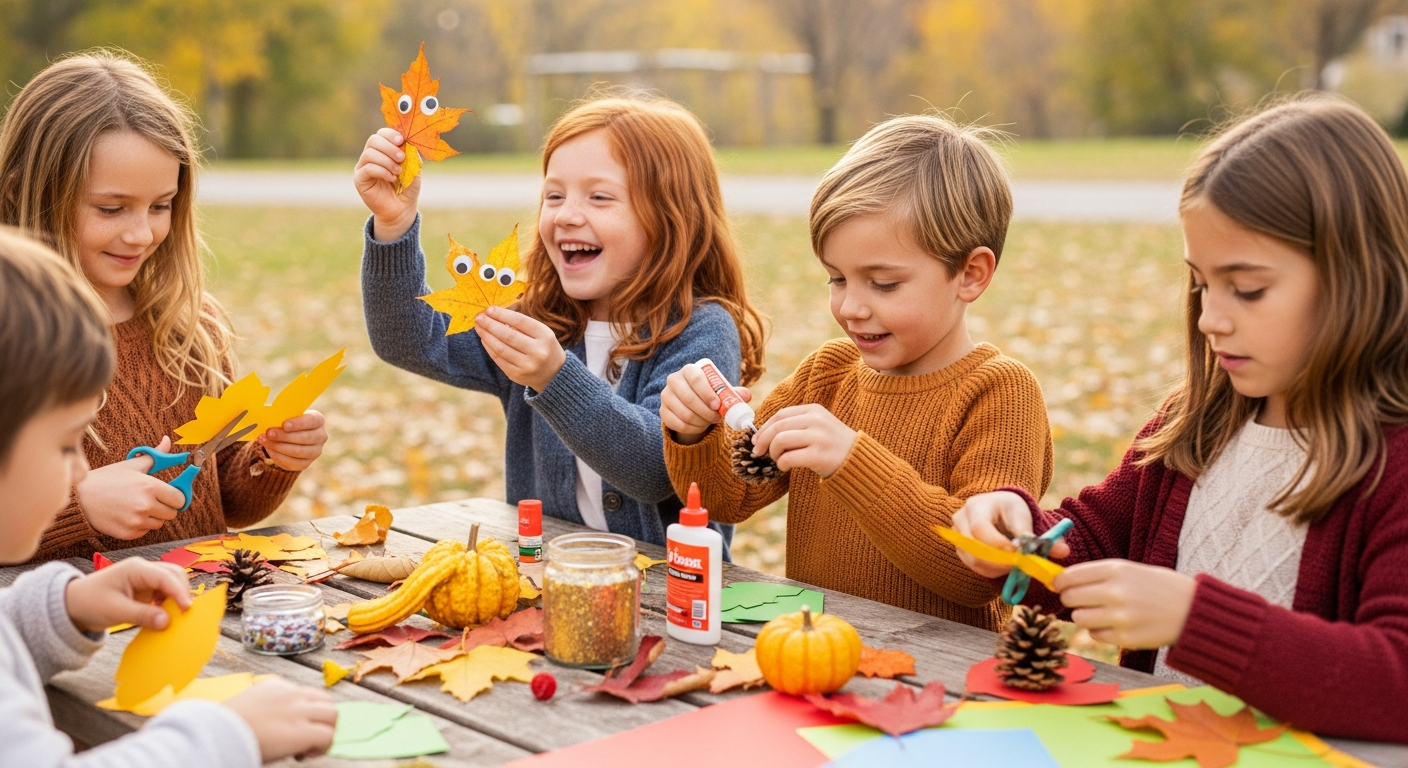
Table of Contents
- Why Fall Crafts? More Than Just Fun!
- Getting Started: Essential Fall Crafting Supplies
- Easy Fall Crafts for Toddlers & Preschoolers (Ages 1-5)
- Creative Fall Crafts for School-Aged Kids (Ages 6+)
- Boosting Communication with Fall Crafts: The Speech Blubs Way
- Ready to Empower Your Child's Voice? Discover Speech Blubs!
- Conclusion
- Frequently Asked Questions (FAQ)
As the crisp autumn air whispers through turning leaves, there's a unique magic that settles over our homes. The vibrant hues of red, orange, and gold call us to slow down, cozy up, and embrace the season's warmth. But fall isn't just about pumpkin spice and sweater weather; it's a golden opportunity for connection, creativity, and crucial developmental growth through engaging activities. If you've ever wondered how to turn those colorful leaves and acorns into more than just decorations, you're in the right place. This post is your comprehensive guide to an abundance of easy fall crafts for kids that are not only fun but also packed with developmental benefits, fostering everything from fine motor skills to imaginative play and, most importantly, joyful communication. Join us as we explore how simple autumn-themed projects can enrich your child's learning journey and strengthen family bonds, mirroring our mission at Speech Blubs to empower every child to speak their minds and hearts.

Why Fall Crafts? More Than Just Fun!
Crafting, especially with the rich sensory experiences that fall provides, offers a unique blend of learning and play. It's a hands-on way for children to explore their world, express themselves, and build foundational skills.
Sensory Exploration and Language
Think about the textures of dried leaves, the earthy smell of pinecones, the vibrant colors of paint. Fall crafts immerse children in sensory experiences that naturally spark curiosity and language development. As they touch, see, and create, they're building a rich vocabulary of descriptive words like "rough," "smooth," "shiny," "crunchy," "vibrant," and "warm." Talking about these sensations during craft time is a powerful way to enhance their expressive and receptive language skills.
Fine Motor Skills Development
Cutting, gluing, painting, tearing, pressing, and shaping are all integral parts of crafting. These actions are fantastic for strengthening the small muscles in children's hands and fingers, which are vital for daily tasks like writing, buttoning clothes, and self-feeding. The precision required in many crafts also improves hand-eye coordination and dexterity.
Creativity and Imagination
Fall crafts often encourage open-ended play, allowing children to interpret materials and ideas in their own unique ways. A pile of leaves can become a monster, a fairy, or a majestic tree. This fosters imagination, problem-solving, and the ability to think flexibly, empowering children to explore new ideas without fear of a "wrong" answer.
Family Bonding and Communication
Crafting together creates precious moments of shared experience. It's a time for parents and children to collaborate, chat, and connect. These interactions are invaluable for social-emotional development, teaching turn-taking, sharing, and active listening. At Speech Blubs, we believe in the power of these shared moments, recognizing that joyful, interactive experiences are the bedrock of strong communication skills. Our founders themselves grew up with speech problems and created the tool they wished they had—one that blends scientific principles with play to provide immediate, effective, and joyful solutions for children needing speech support, transforming screen time into "smart screen time" and fostering family connection.

Getting Started: Essential Fall Crafting Supplies
You don't need a craft store full of expensive materials to enjoy fall crafting. Many items can be found right in your home or backyard!
- Nature's Bounty: Leaves (various sizes and colors), acorns, pinecones, twigs, small stones, bark, seeds.
- Recycled Materials: Cardboard, paper towel rolls, egg cartons, plastic containers, bottle caps.
- Basic Craft Supplies: Construction paper, cardstock, washable paint (red, orange, yellow, brown, green), markers, crayons, glue sticks, liquid glue, child-safe scissors, googly eyes, cotton balls, clothespins, yarn scraps, coffee filters.
- Household Items: Forks, sponges, bubble wrap, toothpicks, old newspapers or art trays for mess protection.
Easy Fall Crafts for Toddlers & Preschoolers (Ages 1-5)
These crafts are designed for little hands, focusing on sensory exploration, simple steps, and big fun!
Nature's Masterpieces: Leaf & Outdoor Element Crafts
Collecting natural materials outdoors adds an extra layer of adventure and learning to these fall crafts.
1. Coffee Filter Leaves & Sun Catchers
Transform simple coffee filters into vibrant, translucent autumn leaves that glow in the sunlight.
- Materials: Coffee filters, washable markers in fall colors (red, orange, yellow, brown), a spray bottle with water, scissors, optional leaf template.
- Set-up: Lay coffee filters on an art tray or protected surface. Encourage your child to scribble all over them with the markers, using lots of different colors.
- Activity: Once the filters are covered in color, use the spray bottle to lightly mist them with water. Watch the colors bleed and swirl together—it's like magic! Let them dry completely (this can take a few hours). Once dry, you can trace leaf shapes onto the filters and cut them out, or simply admire the colorful, abstract shapes. Hang them in a window to catch the light.
- Developmental Benefits: This activity promotes color recognition, fine motor skills (holding markers, squeezing spray bottle, cutting), and cause-and-effect understanding. The bleeding colors are a wonderful sensory experience.
- Language Opportunities: Discuss "wet" vs. "dry," "light" vs. "dark" colors. Use descriptive words for the new colors formed: "Look at the orange and red swirling together, it looks like a fiery sunset!" Ask, "What shape is this leaf?"
2. Leaf Rubbings & Collages
A classic fall activity that reveals the intricate patterns of nature.
- Materials: Various fallen leaves (with prominent veins), thin paper, crayons (peeled of paper).
- Set-up: Place a leaf under a piece of paper, vein-side up.
- Activity: Use the side of a peeled crayon to rub gently over the paper where the leaf is underneath. The leaf's texture and veins will magically appear on the paper. Experiment with different colors and types of leaves. Afterward, children can cut out their leaf rubbings and glue them onto a larger piece of paper to create a fall collage, adding twigs, small acorns, or other collected treasures.
- Developmental Benefits: Develops fine motor skills (holding and rubbing crayons), texture recognition, and observation skills. It also introduces the concept of hidden patterns.
- Language Opportunities: "Feel the bumpy veins," "What color crayon should we use next?" Talk about the "shape" and "edges" of different leaves.
3. Leaf People & Creatures
Give collected leaves a personality!
- Materials: Assorted leaves, googly eyes, glue, markers, small twigs, thin paper strips.
- Set-up: Lay out a variety of leaves on a table.
- Activity: Encourage your child to imagine what their leaves could become. Use googly eyes to add faces, small twigs for arms and legs, and paper strips for hair or hats. Glue them onto a piece of paper to create a scene.
- Developmental Benefits: Enhances imagination, creative thinking, fine motor skills (gluing small items), and storytelling.
- Language Opportunities: "What kind of sound does your leaf monster make?" "Tell me a story about your leaf fairy." Use action words: "hopping," "flying," "dancing."
4. Bark Owls
Using natural textures for a wise old owl.
- Materials: Small pieces of bark, googly eyes, feathers (real or craft), glue.
- Set-up: Collect flat pieces of bark from outdoors.
- Activity: Children can glue googly eyes onto the bark to create owl faces. Add feathers for wings or tufts of "ear" feathers. These can be displayed or glued onto a paper "tree branch."
- Developmental Benefits: Focuses on texture exploration, fine motor control, and imaginative play.
- Language Opportunities: Discuss textures like "rough" bark and "soft" feathers. Practice animal sounds like "hoo hoo!" If your child is working on specific sounds, like the "oo" in "hoo," activities like this provide a natural context for practice. For parents whose little ones are mastering initial sounds or early words, our "Animal Kingdom" section in Speech Blubs offers engaging video modeling, showing peers making animal sounds and actions. Download Speech Blubs on the App Store or Google Play to explore this and many other fun activities!
5. Nature Painting
Using nature as your paintbrush!
- Materials: Leaves, pinecones, twigs, small sponges, washable paint, paper.
- Set-up: Pour different colors of paint onto separate plates or shallow containers.
- Activity: Instead of traditional paintbrushes, encourage children to dip natural items (leaves, twigs, small pinecones) into the paint and then press or drag them across the paper to create prints and patterns. They can also use cotton balls or sponges attached to clothespins for different textures.
- Developmental Benefits: Promotes sensory exploration, fine motor skills, creativity, and understanding of textures.
- Language Opportunities: Discuss the "marks" each item makes: "The pinecone makes bumpy lines," "The leaf leaves a flat print."
Mess-Free & Low-Prep Wonders
For days when you need something quick and easy with minimal cleanup.
6. Fork Printed Tree Craft
Create vibrant autumn foliage with a simple kitchen utensil.
- Materials: Cardstock paper, brown marker, washable paint in fall colors (red, orange, yellow).
- Set-up: Draw a tree trunk and branches on a piece of cardstock paper with a brown marker. Color in the trunk.
- Activity: Have your child dip the tines of a fork into the fall-colored paints and then press the fork onto the paper around the tree branches to create leaf prints. They can mix colors directly on the paper or create layers. Encourage them to make prints at the bottom of the page to represent fallen leaves.
- Developmental Benefits: Enhances fine motor skills, color mixing understanding, and creativity. It's an excellent process art activity for toddlers and preschoolers.
- Language Opportunities: "Which color are you dipping the fork in now?" "Let's make some red leaves and some yellow leaves." Count the "leaves" or talk about the "shapes" they make.
7. Cotton Ball Apple Tree Painting
A simple, tactile way to create a seasonal tree.
- Materials: Cardstock paper, construction paper (brown, green), washable paint (green, red), cotton balls, clothespins, glue stick.
- Set-up: Cut out a brown tree trunk and green tree top from construction paper and glue them onto the cardstock. Pour green and red paint onto separate plates. Attach a clothespin to a cotton ball.
- Activity: Children dip the cotton ball (held by the clothespin) into the green paint and dab it around the tree top to create foliage. Once dry, they can use their fingertips dipped in red paint to add "apples" to the tree.
- Developmental Benefits: Develops fine motor skills (pinching clothespin, finger painting), hand-eye coordination, and color recognition.
- Language Opportunities: "Let's make lots of green leaves!" "How many red apples can you add?" Discuss the feeling of the "soft" cotton ball and "sticky" paint.
8. Sticky Fall Trees
A beautiful, low-mess window decoration.
- Materials: Contact paper, tissue paper in fall colors (red, orange, yellow, brown, green), scissors.
- Set-up: Cut a large tree trunk shape from brown construction paper and stick it onto a window or wall (or draw directly on the contact paper if preferred). Cut contact paper into a large tree canopy shape (or a simple rectangle) and peel off the backing. Stick it to the window or wall, sticky side out. Tear or cut tissue paper into small squares or strips.
- Activity: Children stick the tissue paper pieces onto the sticky contact paper to create a colorful fall tree. They can layer colors or create patterns.
- Developmental Benefits: Fantastic for fine motor skills (peeling backing, tearing paper, precise placement), color recognition, and creative expression. The visual effect of light shining through the tissue paper is captivating.
- Language Opportunities: "What colors are you choosing for your leaves?" "Let's make some leaves fall down to the ground." Practice following directions: "First, put a red piece, then a yellow."
9. Washi Tape Pumpkins
Decorating without the mess of paint!
- Materials: Orange construction paper (cut into pumpkin shapes), various patterns of washi tape, scissors.
- Set-up: Provide pumpkin shapes and rolls of washi tape. For younger children, pre-cut strips of tape can be helpful.
- Activity: Children tear or cut pieces of washi tape and stick them onto the pumpkin shapes to create stripes, patterns, or abstract designs.
- Developmental Benefits: Excellent for fine motor skills (tearing/cutting tape, precision placement), pattern recognition, and creativity.
- Language Opportunities: "What pattern is on this tape?" "Can you make a stripe across the pumpkin?" "Let's cover the whole pumpkin with tape!"
Sensory & Textural Adventures
These crafts engage multiple senses, making them particularly rich for language development.
10. Sunflower Noodle Craft
A unique textured sunflower that's fun to create and touch.
- Materials: Cardboard or paper, acrylic paint (yellow, green, black/brown), ziplock bags, parchment paper, googly eyes, glue, pasta (e.g., small shells, elbow macaroni for petals; black beans or small pasta for the center).
- Set-up: Place pasta in ziplock bags with a small amount of yellow acrylic paint. Shake well to coat, then spread on parchment paper to dry completely. Repeat with black/brown paint for the center pasta/beans. On cardboard/paper, draw a circle for the sunflower center and a stem.
- Activity: Paint the sunflower center and stem. Once dry, glue the yellow pasta "petals" around the painted center. Then, glue the black/brown pasta or beans into the center. Add googly eyes for a whimsical touch! Once everything is dry, kids can explore the textures.
- Developmental Benefits: Sensory exploration, fine motor skills (gluing small items), color recognition, and creativity.
- Language Opportunities: "Feel the bumpy noodles," "What color are the petals?" "How many noodles did you glue?"
11. Noodle Pumpkin Craft
Another pasta-based creation, perfect for autumn decor.
- Materials: Cardboard or paper, acrylic paint (orange, green), ziplock bags, parchment paper, googly eyes, glue, various pasta shapes (e.g., wheel pasta for pumpkin, spiral pasta for leaves).
- Set-up: Paint pasta orange and green using the ziplock bag method (as with the sunflower noodles) and let dry. Draw and paint pumpkin shapes on cardboard/paper, adding stems.
- Activity: Once pasta and pumpkins are dry, children glue the orange pasta onto the pumpkin shapes, creating a textured surface. Then, they add the green spiral pasta for leaves near the stem. Don't forget to add googly eyes and draw a funny face for extra character!
- Developmental Benefits: Sensory input, fine motor skills, color identification, and imaginative play.
- Language Opportunities: "This pasta is shaped like a wheel!" "Let's make a silly face for our pumpkin." "What sound does a pumpkin make when you tap it?"
12. Fall Puffy Paint Crafts
Create dimensional, tactile art with homemade puffy paint.
- Materials: Cardboard or cardstock, equal parts foam shaving cream and white school glue, liquid watercolors or food coloring, bowls, spoons, paintbrushes, optional fall-themed templates (like an owl or pumpkin).
- Set-up: In a bowl, mix equal parts shaving cream and glue. Add a few drops of food coloring or liquid watercolor to create desired fall colors and stir gently until combined. Repeat for different colors.
- Activity: Have children use spoons to scoop the puffy paint onto their paper or cardboard. They can spread it with paintbrushes or their fingers to create textured designs. You can also use a simple fall template (like an owl or a pumpkin) to guide their creations. Let it dry for several hours (it will remain puffy!).
- Developmental Benefits: Incredible sensory experience, fine motor development, color mixing, and creativity.
- Language Opportunities: "Feel how fluffy and soft this paint is!" "Watch the colors mix together!" "It's so bumpy and cool." Discuss "texture," "volume," and "colors."
Learning Through Play: Alphabet & Name Crafts
Combine crafting with early literacy skills in a fun and engaging way.
13. Alphabet Pumpkins
Practice letter recognition with this adorable painting activity.
- Materials: Cardstock paper, green marker, orange washable paint, clothespins, small craft poms.
- Set-up: Draw several rows of pumpkins on a vine on a piece of cardstock paper. Write a different letter of the alphabet inside each pumpkin. Pour orange paint onto a shallow plate. Attach a craft pom to a clothespin.
- Activity: Call out a letter (e.g., "Find the letter A!"). Your child will use the pom-pom held by the clothespin to "stamp" or paint the inside of that pumpkin. Continue until all pumpkins are colored in.
- Developmental Benefits: Excellent for letter recognition, fine motor skills (pinching clothespin), hand-eye coordination, and listening skills.
- Language Opportunities: "What letter is this?" "Can you make the sound for this letter?" "Let's find the letter that starts your name!" For children practicing specific letter sounds or early words, activities like this reinforce learning. Speech Blubs’ many sections, like "Early Sounds" and "Word Play," use video modeling to help children learn by imitating peers, making learning engaging and effective.
14. Apple Tree Name Craft
A sweet way to build name recognition.
- Materials: White paper, construction paper (brown, green, red), glue stick, marker.
- Set-up: Cut out a brown tree trunk, a green tree canopy, and several red apple shapes from construction paper. If your child is old enough and enjoys cutting, they can help with this step.
- Activity: Have your child glue the tree trunk and canopy onto the white paper. On each red apple, write one letter of your child's name. Then, challenge them to glue the apples onto the tree in the correct order to spell their name.
- Developmental Benefits: Promotes name recognition, letter sequencing, fine motor skills (gluing, cutting), and early literacy.
- Language Opportunities: "What letter comes first in your name?" "Let's sound out your name as we put the apples on." "Can you tell me all the letters in your name?"
15. Fall Leaf Letters
Connecting nature to the alphabet.
- Materials: Assorted leaves, paper, glue, markers, optional letter templates.
- Set-up: Collect leaves on a nature walk. You can either draw large bubble letters on paper or print out letter templates.
- Activity: Children glue the leaves onto the paper to fill in the outline of a letter. They can create the first letter of their name, or practice the entire alphabet.
- Developmental Benefits: Letter recognition, fine motor skills, and sensory exploration.
- Language Opportunities: "Can you find a small leaf for this curve?" "What sound does the letter 'L' make, like 'leaf'?"
Creative Fall Crafts for School-Aged Kids (Ages 6+)
These crafts involve slightly more complex steps, encouraging greater precision and independent problem-solving.
Advanced Nature Creations
Transform collected treasures into lasting works of art.
16. Preserved Leaf Wreaths
A beautiful way to celebrate nature's changing colors.
- Materials: Freshly fallen leaves (various colors and shapes), wax paper, iron, wreath base (cardboard, wire hanger shaped into a circle), hot glue gun (adult supervision), ribbon.
- Set-up: Place leaves between two sheets of wax paper. Have an adult iron over the wax paper on medium heat (no steam) until the wax paper seals around the leaves, preserving their color. Cut out the individual leaves.
- Activity: Once many leaves are preserved, children can arrange and hot-glue them (with adult help) onto a wreath base. Layer them to create a full, vibrant wreath. Add a ribbon for hanging.
- Developmental Benefits: Encourages design thinking, pattern creation, fine motor skills, and an appreciation for nature's beauty.
- Language Opportunities: "Which colors look good next to each other?" "Let's make a pattern with the shapes of the leaves." Discuss the "process" of preserving the leaves.
17. 3D Fall Tree Craft
Bring a tree to life with simple materials.
- Materials: Cardboard tubes (toilet paper rolls), coffee filters, washable markers, spray bottle with water, scissors, glue, brown construction paper.
- Set-up: Cut slits into one end of a cardboard tube to create "branches." Draw designs on coffee filters with markers and then mist with water to create tie-dye effects (like the coffee filter leaves craft). Let dry.
- Activity: Cut the dried coffee filters into leaf shapes. Children can then glue these "leaves" onto the cardboard tube branches, creating a lush 3D tree. They can also create a base from brown construction paper for the tree to stand on.
- Developmental Benefits: Enhances spatial reasoning, fine motor skills, color mixing, and imaginative construction.
- Language Opportunities: "How can we make our tree stand up?" "Let's arrange the leaves to look really full." Use words like "branches," "trunk," "roots."
18. Paper Loop Sunflower Craft
A dimensional craft that pops off the page.
- Materials: Cardstock paper (yellow, green, brown), glue stick, scissors, ruler, black beans or sunflower seeds.
- Set-up: Use a ruler to draw straight lines on yellow cardstock. Cut these strips out. Cut a brown circle for the sunflower center and a green stem and leaves.
- Activity: Create loops by connecting the ends of the yellow strips with a glue stick. Children then glue these loops around the brown circle, creating the sunflower petals. Once all loops are attached, glue the stem and leaves onto a background paper. Finally, glue black beans or sunflower seeds to the center of the brown circle for a textured finish.
- Developmental Benefits: Excellent for developing fine motor skills (cutting, gluing small loops), geometry (circles, loops), and following sequential instructions.
- Language Opportunities: "How many loops do we need for our petals?" "What comes next in our steps?" Discuss "circle," "strip," "loop," "petal."
Mixed Media & Unique Techniques
Experiment with different materials and unexpected methods to create art.
19. Corn Painting
An exciting sensory and process art experience.
- Materials: Corn on the cob (raw), washable paint in fall colors, paper, art tray.
- Set-up: Pour different colors of paint onto a flat plate or art tray.
- Activity: Children roll the corn on the cob through the paint, then roll it across the paper to create unique patterns and textures. They can experiment with different colors and pressures.
- Developmental Benefits: Fantastic sensory experience, fine motor skills, color mixing, and understanding how different tools create different marks.
- Language Opportunities: "Feel the bumps on the corn!" "What kind of lines does the corn make?" "This paint feels cold/warm."
20. Marbled Autumn Salt Dough Ornaments
Create beautiful, swirling patterns for lasting decorations.
- Materials: 1 cup flour, 1/2 cup salt, 1/2 cup water, liquid watercolors or food coloring (fall colors), cookie cutters (leaf, pumpkin, acorn shapes), parchment paper, baking sheet, rolling pin, optional clear glaze.
- Set-up: In a bowl, mix flour, salt, and water to form a dough. Divide the dough into smaller portions. Add a few drops of different fall-colored liquid watercolors to each portion and knead gently until the color is mixed. (Don't overmix if you want a marbled effect.)
- Activity: Children combine different colored doughs, twist them gently, and then roll them out on parchment paper. Use fall-themed cookie cutters to cut out shapes. Bake at 250°F (120°C) for 2-3 hours or until hardened. Once cool, they can be painted or sealed with a clear glaze for protection.
- Developmental Benefits: Sensory exploration, fine motor skills (kneading, rolling, cutting), understanding of color mixing and marbling, and patience.
- Language Opportunities: "Feel the soft dough," "Watch the colors swirl together," "What shape cutter should we use?" Discuss "smooth," "bumpy," "swirling," "hard."
21. Scarecrow Crafts
Bring a friendly fall guardian to life.
- Materials: Cardboard (for head/body), acrylic paint, Sharpie, scrapbook paper (for hat, nose), straw or raffia, googly eyes, glue.
- Set-up: Cut a circle from cardboard for the head. Paint it a skin tone color. While it dries, cut a triangle for the nose and a hat shape from scrapbook paper.
- Activity: Once the head is dry, glue on googly eyes and the triangle nose. Use a Sharpie to draw a smiling mouth. Apply a thin line of glue along the top edge of the head and press straw/raffia onto it for hair. Finally, glue the scrapbook paper hat onto the back of the head, peeking over the top. These make charming fall decorations!
- Developmental Benefits: Encourages imaginative play, fine motor skills (gluing small parts, drawing), and design.
- Language Opportunities: "What color should the scarecrow's hat be?" "Let's give our scarecrow a happy face." "What job does a scarecrow do?"
22. Paper Plate Scarecrow
A simpler version of the beloved fall figure.
- Materials: Paper plate, yellow yarn or raffia, construction paper (various colors), markers, glue, scissors.
- Set-up: Cut out shapes for a scarecrow hat, eyes, nose, and mouth from construction paper. Cut short pieces of yellow yarn or raffia for hair.
- Activity: Children glue the hat to the top of the paper plate. Glue yarn pieces around the edges of the plate for hair. Then, glue on eyes, nose, and mouth to create the scarecrow's face. They can draw additional details with markers.
- Developmental Benefits: Fine motor skills (cutting, gluing), facial recognition, and imaginative design.
- Language Opportunities: "Where does the nose go?" "What color are the scarecrow's eyes?" "Can you make a silly scarecrow sound?"
Boosting Communication with Fall Crafts: The Speech Blubs Way
While hands-on crafts are incredible for development, we at Speech Blubs know that fostering communication sometimes needs an extra spark – especially for the 1 in 4 children who need speech support. This is where our unique, science-backed approach seamlessly integrates with your child's learning journey, transforming "screen time" into "smart screen time."
Turn Craft Time into "Smart Screen Time"
Imagine a common scenario: you’re making the bark owl craft with your three-year-old, a "late talker" who loves animals but struggles to make the sounds. You've practiced "hoo hoo," but they just can't seem to get it.
- Speech Blubs Solution: This is the perfect moment to transition to a quick, interactive session with Speech Blubs. Our app, born from the personal experiences of our founders who all grew up with speech problems, provides the immediate, effective, and joyful tool they wished they had. You can open the "Animal Kingdom" section, where your child will see real children, not animated characters, demonstrating how to make owl sounds and actions through our proven video modeling methodology. Watching and imitating their peers triggers mirror neurons in the brain, making learning natural and engaging. This isn't passive viewing; it's active imitation, a powerful tool for developing complex communication skills. Instead of just hearing "hoo hoo," your child sees and hears how to form the mouth movements and vocalizations. This can reignite their motivation and provide the clear visual guidance they need.
Our Mission: Empowering Every Child
At Speech Blubs, our mission is to empower children to "speak their minds and hearts." We understand the frustration and uncertainty parents face when their child needs speech support. That's why we created a tool that blends scientific principles with play, offering a screen-free alternative to passive viewing (like cartoons) and a powerful tool for family connection. We don't promise your child will be giving public speeches in a month, but we do promise to foster a love for communication, build confidence, reduce frustration, develop key foundational skills, and create joyful family learning moments that supplement your child's overall development plan and, when applicable, professional therapy.
How Speech Blubs Enhances Learning Through Play
- Video Modeling: The Science Behind the Fun: Our unique methodology, backed by extensive research, leverages the power of observing and imitating real children. This method is incredibly effective for speech and language development, making learning intuitive and engaging. We're proud to be rated in the top tier of speech apps worldwide by the MARS scale, a testament to our scientific rigor and user-friendliness.
- Beyond Passive Viewing: Interactive Learning: Unlike passive cartoons, Speech Blubs requires active participation. Children engage with their peers on screen, imitating sounds, words, and actions. This interaction makes learning dynamic and effective.
- A Tool for Connection, Not Isolation: Speech Blubs is designed for co-play. Parents and caregivers play alongside their children, creating shared experiences that strengthen bonds and encourage communication in a natural, supportive environment.
Ready to Empower Your Child's Voice? Discover Speech Blubs!
We believe every child deserves the chance to express themselves confidently. That's why we invite you to explore Speech Blubs and experience the difference our unique approach can make.
Choose the Plan That's Right for Your Family:
- Monthly Plan: For $14.99 per month, you get access to our core features, helping your child build communication skills.
- Yearly Plan: Unbeatable Value! At just $59.99 per year (which breaks down to an incredible $4.99/month), this plan offers superior value, allowing you to save 66% compared to the monthly option!
Exclusive Yearly Plan Benefits:
Choosing the Yearly Plan isn't just about savings; it unlocks a world of enhanced features designed to supercharge your child's development:
- 7-Day Free Trial: Experience the full power of Speech Blubs before committing.
- Extra Reading Blubs App: Get access to our companion app, designed to further support early literacy and language skills.
- Early Access to New Updates: Be the first to enjoy new features and content.
- 24-Hour Support Response Time: Get quick assistance whenever you need it.
The Monthly plan does not include these fantastic benefits. We highly recommend the Yearly plan to get the most out of your Speech Blubs experience, starting with the free trial.
Unsure if Speech Blubs is the right fit for your child? Take our quick 3-minute preliminary screener to get a simple assessment and a free 7-day trial. It involves just 9 simple questions and provides an assessment and next-steps plan tailored to your child's needs.
Don't just take our word for it—see what other parents are saying about their child's success and confidence-building journey with Speech Blubs by visiting our testimonials page.
Conclusion
Fall crafts offer an unparalleled opportunity to engage your child's senses, creativity, and developing mind. From the simplest leaf rubbings for toddlers to more intricate scarecrow designs for older children, these activities are more than just fun ways to pass the time; they are vital pathways to learning, communication, and cherished family memories. By embracing the season's bounty and getting crafty together, you're not only creating beautiful art but also nurturing essential developmental skills.
And when you're looking for an added boost to your child's communication journey, remember that Speech Blubs is here to support you. We blend the joy of play with proven scientific methods, empowering children to find their voice through engaging "smart screen time" that complements your family's interactive activities.
Ready to fill your home with laughter, learning, and the magic of autumn? Dive into these easy fall crafts for kids today! And for an extraordinary tool that empowers your child to "speak their minds and hearts," we encourage you to discover Speech Blubs. Create your account and start your free 7-day trial today, and be sure to select the Yearly plan to unlock all the premium features and best value for your family!
Frequently Asked Questions (FAQ)
Q1: What are the main developmental benefits of doing fall crafts with kids?
Fall crafts offer a wide range of developmental benefits, including enhancing fine motor skills through cutting, gluing, and painting; fostering sensory exploration with varied textures like leaves, noodles, and puffy paint; boosting creativity and imagination through open-ended play; and promoting language development as children learn new vocabulary and describe their creations and processes.
Q2: How can I adapt fall crafts to be easier for toddlers and preschoolers?
For younger children, focus on process over product. Pre-cut materials, provide larger items to handle, simplify instructions into one or two steps, and offer washable, non-toxic supplies. Activities like tearing paper, simple gluing, finger painting, or using large objects for stamping (like forks or corn on the cob) are excellent starting points. Emphasize sensory exploration and verbalize what they are doing and experiencing.
Q3: What if my child isn't interested in crafts? How can I encourage them?
Children's interests vary! Try incorporating their favorite themes (e.g., if they love animals, make leaf animals). Keep sessions short and engaging, focusing on just one or two steps. Allow them freedom to experiment without strict expectations. Sometimes, just having the materials available for free exploration, or working alongside them on your own project, can spark curiosity. Remember, even short bursts of interaction are beneficial.
Q4: How does Speech Blubs fit into our craft time, and how does it support language development?
Speech Blubs complements craft time by providing targeted speech and language practice that can be integrated before, during, or after a craft. For example, if you're making an animal craft, a quick session with Speech Blubs' "Animal Kingdom" can help your child practice relevant sounds and words through interactive video modeling with peers. This transforms screen time into active learning, reinforces vocabulary learned during crafting, and provides a playful, science-backed way to build communication skills, helping your child practice speech in a fun and motivating environment.
About the author