
Fun & Easy Pipe Cleaner Crafts for Kids
 By Speech Blubs Team•Jan 13, 2026•19 min.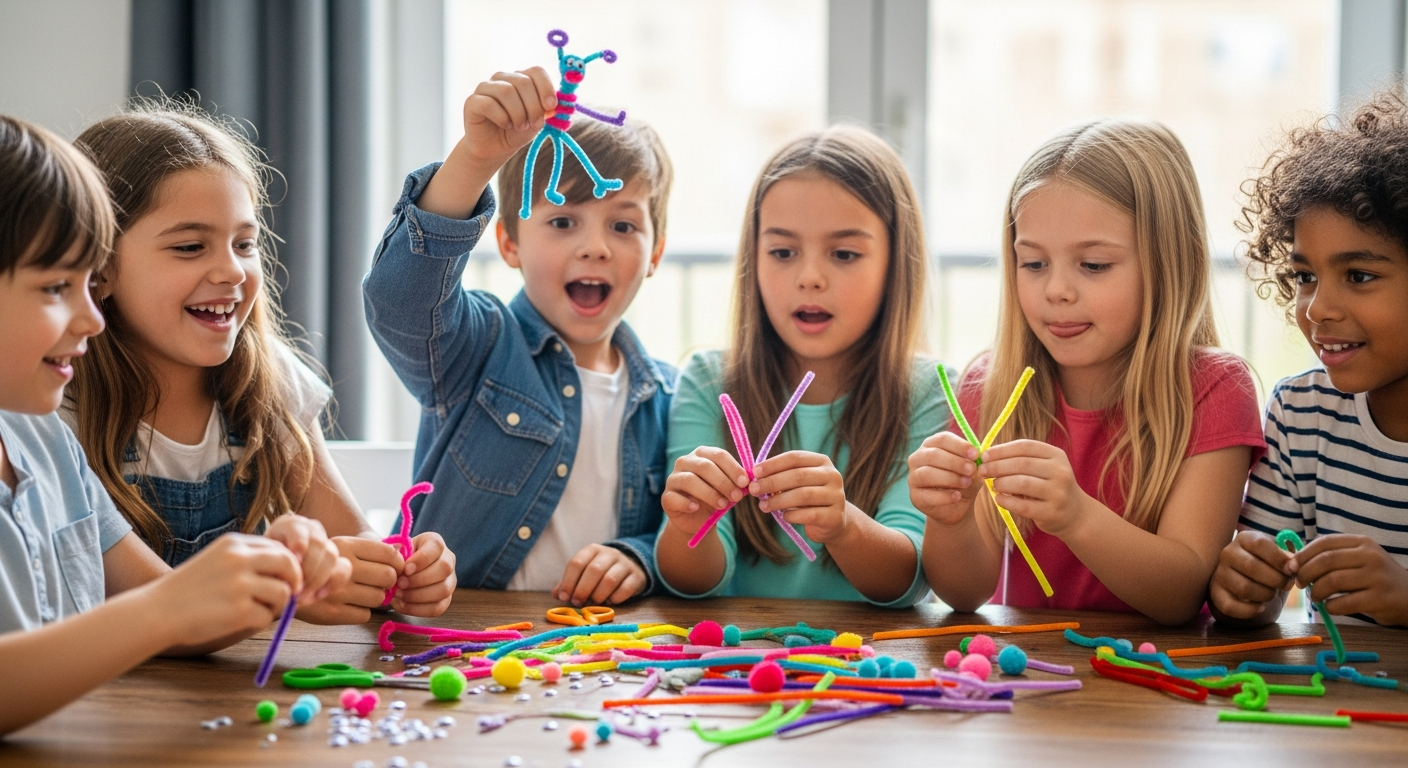
Table of Contents
- The Transformative Power of Pipe Cleaner Crafts
- Getting Started: Essential Materials for Pipe Cleaner Crafts
- Simple and Engaging Pipe Cleaner Craft Ideas for Kids
- Integrating Crafting with Speech Blubs for Enhanced Development
- Making the Most of Your Speech Blubs Experience
- Tips for a Successful Crafting Session and Language Boost
- Conclusion
- Frequently Asked Questions
Do you remember the sheer delight of transforming a simple, fuzzy stick into something magical with just a twist and a bend? For children, that feeling of creation is not just fun; it's a powerful pathway to discovery, learning, and developing essential skills. Pipe cleaner crafts, those wonderfully versatile and vibrant chenille stems, offer an incredible blend of simplicity and endless creative potential. They are a treasure trove for tiny hands and burgeoning imaginations, providing an immediate, tactile sense of accomplishment.
At Speech Blubs, we understand the profound connection between hands-on play and a child's overall development, especially when it comes to speech and language. Our mission is to empower children to "speak their minds and hearts," and we believe that engaging activities like crafting are fundamental to building the confidence and communication skills they need. This post isn't just a list of craft ideas; it's an exploration of how these humble, fuzzy sticks can become catalysts for learning, creativity, and precious family bonding, all while laying a strong foundation for language growth. We'll delve into a world of easy pipe cleaner crafts for kids, showing you how simple materials can spark complex learning, reduce frustration, and create joyful moments of connection.

The Transformative Power of Pipe Cleaner Crafts
Pipe cleaners are more than just fuzzy wires; they are incredibly versatile tools that foster a wide range of developmental benefits for children of all ages. Their flexibility and texture make them uniquely suited for little hands to explore and manipulate, leading to growth in many key areas.
Boosting Fine Motor Skills and Dexterity
One of the most immediate benefits of engaging with pipe cleaner crafts is the development of fine motor skills. As children twist, bend, cut, and thread these pliable stems, they are actively strengthening the small muscles in their hands and fingers. This intricate manipulation is crucial for tasks like:
- Pincer Grasp: Holding a pipe cleaner requires using the thumb and forefinger, refining this essential pre-writing skill.
- Bilateral Coordination: Using both hands simultaneously to hold and shape, which is vital for many daily activities like dressing and eating.
- Hand-Eye Coordination: Aligning beads onto a pipe cleaner or precisely bending a shape demands careful coordination between what the eyes see and what the hands do.
These skills are not just about crafting; they are foundational for writing, drawing, tying shoes, and countless other self-care tasks. For a child who might be struggling with pencil grip, the forgiving nature of a pipe cleaner offers a low-pressure way to practice similar movements.
Unleashing Creativity and Imagination
Pipe cleaners are wonderfully open-ended. Unlike structured toys, they don't dictate how they should be used, inviting children to let their imaginations soar. A few pipe cleaners can become a fantastical creature, a shimmering crown, or an abstract sculpture. This encourages:
- Creative Thinking: Children learn to visualize an idea and then problem-solve how to bring it to life with the materials at hand.
- Storytelling: As they create characters or scenes, children naturally develop narratives around their creations, enhancing their imaginative play.
- Experimentation: There's no "wrong" way to craft with pipe cleaners, fostering a safe space for trying new ideas and learning from the process.
This freedom to create helps children develop a sense of agency and builds confidence in their own abilities.

Fostering Problem-Solving and Critical Thinking
Crafting often involves a gentle form of problem-solving. How do I make this stand up? How can I attach these two pieces? Children learn to:
- Plan and Execute: They might decide to make a certain animal and then figure out the steps needed to achieve that goal.
- Adapt and Adjust: If a part doesn't quite work as planned, they learn to modify their approach, a valuable life skill.
- Spatial Reasoning: Bending and shaping pipe cleaners helps children understand three-dimensional forms and how they relate to each other in space.
These are the building blocks of critical thinking, all wrapped up in a fun, engaging activity.
The Undeniable Link to Language Development
Perhaps most importantly for us at Speech Blubs, pipe cleaner crafts are a fantastic, often overlooked, tool for language development. Every bend, every twist, every color choice presents an opportunity for rich conversation and vocabulary building.
- Vocabulary Expansion: As you craft together, you naturally introduce new words: "Bend," "twist," "wrap," "fuzzy," "sparkly," "long," "short," "circle," "square." For a parent whose child is a "late talker," simply naming colors ("Which red pipe cleaner should we use?") or actions ("Let's bend it into a circle") provides natural, meaningful exposure to language.
- Descriptive Language: Encourage your child to describe their creations. "Tell me about your fluffy blue monster!" or "What sound does your green snake make?" This prompts them to use adjectives, verbs, and more complex sentence structures.
- Sequencing and Following Instructions: Crafting involves steps. "First, we bend the pipe cleaner. Next, we add the beads." This helps children understand sequential order, a key pre-literacy skill.
- Storytelling and Narrative: Once a craft is complete, it can become a prop for imaginative play, inspiring stories and dialogues. For instance, if your child makes a pipe cleaner monster, you can then ask, "What is your monster doing? Is he friendly or silly?" This encourages them to expand on their ideas and verbalize them.
- Sound Practice: For children working on specific sounds, crafting can provide a playful context. Making a "s-s-s-snake" or a "f-f-f-fuzzy flower" can integrate sound practice organically into the activity.
At Speech Blubs, our scientific methodology, including our unique "video modeling" where children learn by watching and imitating their peers, is all about making learning engaging and effective. Hands-on activities like pipe cleaner crafts perfectly complement this approach by providing a tangible outlet for practicing newly acquired sounds and words in a real-world, playful context. It’s a powerful tool for family connection, creating moments where communication flows naturally.
Ready to see how Speech Blubs can further support your child's communication journey? Download Speech Blubs on the App Store or get it on Google Play to explore our interactive, speech-boosting activities.
Getting Started: Essential Materials for Pipe Cleaner Crafts
One of the best things about pipe cleaner crafts is how few materials you actually need. Most items are inexpensive and readily available, making them perfect for spontaneous crafting sessions.
Basic Supplies You'll Need:
- Pipe Cleaners (Chenille Stems): These are the stars of the show! Stock up on a variety of colors, sizes (standard, jumbo, thin), and even sparkly or striped ones for added fun. You can find them at any craft or bargain store, or easily online.
- Scissors: Child-safe scissors are great for cutting pipe cleaners, helping to develop scissor skills.
- Imagination: This is the most crucial ingredient!
Optional Enhancements:
To elevate your pipe cleaner creations and add more opportunities for sensory exploration and fine motor practice, consider adding:
- Googly Eyes: Instantly brings characters to life!
- Pom-Poms: Soft, colorful, and great for heads or bodies.
- Beads: Threading beads onto pipe cleaners is excellent for fine motor skills and pattern recognition.
- Craft Sticks (Popsicle Sticks): Can be used as a base or support for larger creations.
- Feathers: Adds texture and flair to animals or masks.
- Glue: Craft glue or a low-temp hot glue gun (with adult supervision) can help secure pieces.
- Construction Paper or Felt: For wings, clothing, or other decorative elements.
- Play-Doh or Foam Blocks: Great for pushing pipe cleaners into, especially for younger children, to create rainbow scenes or abstract art.
- Yarn: For hair on dolls or added texture.
Setting out a tray of these varied supplies and letting your child explore without a strict plan can lead to truly unique and engaging creations. It's a fantastic "invitation to play" that sparks independent discovery.
Simple and Engaging Pipe Cleaner Craft Ideas for Kids
Now, let's dive into some specific, easy pipe cleaner crafts that are perfect for children. Remember, the goal is not perfection, but participation, exploration, and the joy of creating.
1. Adorable Pipe Cleaner Animals
Animals are a perennial favorite, and pipe cleaners are perfect for bringing them to life. These crafts are fantastic for practicing animal names, sounds, and descriptive words.
- Twisty Snakes: Take one or two pipe cleaners, twist them together, and then coil them into a snake shape. Add googly eyes.
- Language Focus: Practice the "s-s-s" sound for snake, describe its color, length, and how it "slithers."
- Fuzzy Caterpillars: Thread colorful pom-poms onto a pipe cleaner, leaving a little extra at one end for antennae. Bend the antennae, add googly eyes to the front pom-pom.
- Language Focus: Count the pom-poms, name the colors, talk about what caterpillars eat, and how they "crawl."
- Spiders: Take four pipe cleaners for legs. Twist one around a pom-pom or another pipe cleaner for the body. Attach the legs, bending them into zig-zags. Add googly eyes.
- Language Focus: Practice "sp-sp-spider," count the eight legs, discuss where spiders live.
- Crocodiles: Use craft sticks as the body base, attach a green pipe cleaner for the spine and tail, and add googly eyes to the stick for the head.
- Language Focus: "Grr, green crocodile," talk about their sharp teeth, and where they live.
2. Wearable Wonders
Children love crafts they can wear! These are great for developing body awareness and for imaginative role-play.
- Pipe Cleaner Rings: Simple and quick! Twist a pipe cleaner around your child's finger to size it, then create a simple shape like a heart, flower, or spiral on top by twisting the ends together.
- Language Focus: Discuss colors, shapes, and what kind of "gem" their ring has. "Look at my sparkly purple ring!"
- Bracelets and Headbands: Braid several pipe cleaners together to make a sturdy base, then add beads or smaller twisted pipe cleaner shapes. For a headband, make sure it's long enough to wrap around the head.
- Language Focus: Count beads, name colors, discuss what kind of character wears a crown or bracelet.
- Bunny Ears: Use two jumbo pipe cleaners for the ears, bending them into ear shapes, then attach them to a standard headband with smaller pipe cleaner pieces or glue.
- Language Focus: Talk about bunnies, their sounds ("hop, hop"), and what they eat. Great for Easter or dress-up!
3. Nature-Inspired Creations
Bring the outdoors in with pipe cleaner versions of natural elements.
- Colorful Flowers: Twist several pipe cleaners together at one end for the stem, then bend the tops into petal shapes. Add a pom-pom in the center.
- Language Focus: Name flower parts (stem, petals, leaves), colors, and what flowers need to grow.
- Sparkly Snowflakes: Start with three pipe cleaners crossed in the middle. Twist them together to secure, then bend the ends into snowflake patterns.
- Language Focus: Discuss winter, cold, "brrr," and the unique patterns of snowflakes.
- Rainbow Arches: Push several colorful pipe cleaners into a foam block or Play-Doh to create a vibrant rainbow.
- Language Focus: Name colors of the rainbow, discuss weather, and describe "up" and "over."
4. Functional & Decorative Crafts
Crafts that have a purpose after they're made can be especially satisfying for children.
- Bubble Wands: Bend a pipe cleaner into a circle, heart, or star shape, leaving a straight end for the handle. Dip and blow!
- Language Focus: "Pop!" "Blow!" Describe the bubbles as "big," "small," "shiny."
- Bookmarks: Create a fun shape (a coiled snake, a silly monster head) at one end of a pipe cleaner, then use the straight part to mark a page.
- Language Focus: Talk about books, reading, and characters in stories. For bookworms, this adds a personal touch to their reading journey.
- Pencil Toppers: Twist pipe cleaners around the top of a pencil to create a fun character or shape.
- Language Focus: "Write," "draw," "color," and name the character on the pencil.
- Christmas Ornaments: Small pipe cleaner trees (spiral a green pipe cleaner around a pencil, then slide off) or wreaths (bend a pipe cleaner into a circle and decorate with beads).
- Language Focus: Holiday vocabulary, counting, colors.
5. Abstract Art & Sculptures
Sometimes, the best craft is one without a defined outcome. Just let kids explore the material.
- Freeform Sculptures: Provide a pile of pipe cleaners and encourage children to bend, twist, and connect them in any way they choose. This is pure creative exploration.
- Language Focus: "What did you make?" "Tell me about your art." "It's spiky! It's curvy!"
- Shape Exploration: Challenge older children to create specific geometric shapes (circles, squares, triangles) with pipe cleaners, then combine them.
- Language Focus: Name shapes, discuss angles and sides.
For a parent whose 3-year-old "late talker" loves animals, crafting a pipe cleaner snake and practicing the "s-s-s" sound, or making a "moo-moo" cow (using pom-poms and pipe cleaner horns) provides a fun, motivating way to practice sounds and words that seamlessly integrates with our app's approach. We strive to provide a screen-free alternative to passive viewing and a powerful tool for family connection, and these crafts are the perfect real-world complement.
Integrating Crafting with Speech Blubs for Enhanced Development
At Speech Blubs, we believe in a holistic approach to child development. While our app offers "smart screen time" that actively engages children through our unique "video modeling" method, we also strongly advocate for hands-on, interactive play that strengthens communication skills in diverse contexts. Pipe cleaner crafts are an excellent example of how creative play can directly support the foundational skills we work on in the app.
Bridging the Gap Between Screen Time and Real-World Communication
Our app uses engaging videos of real children as models, prompting imitation and encouraging speech. When children participate in hands-on activities like pipe cleaner crafts, they get to practice and apply those emerging skills in a tangible way.
- From Imitation to Expression: A child might practice animal sounds in the "Animal Kingdom" section of Speech Blubs. Then, when crafting a pipe cleaner lion, they can naturally roar and describe their "strong" or "fluffy" lion, moving from imitation to spontaneous expression.
- Vocabulary Reinforcement: If the app introduces words like "big" or "small," crafting provides immediate opportunities to use those words ("This pipe cleaner is long, that one is short").
- Story Creation and Narrative Skills: Speech Blubs features interactive stories and scenarios. Creating pipe cleaner characters allows children to extend these narratives, acting out scenes or inventing new ones with their own unique creations. This builds critical narrative skills, which are crucial for later literacy.
We built Speech Blubs from the personal experiences of our founders, who all grew up with speech problems and created the tool they wished they had. We know firsthand the frustration that can come with communication challenges, and our goal is to provide an immediate, effective, and joyful solution for the 1 in 4 children who need speech support. Combining the interactive learning of our app with the creative exploration of crafts offers a truly comprehensive approach.
Want to learn more about the science that makes Speech Blubs so effective? Explore the research behind our method and discover why we're rated among the top speech apps worldwide.
Making the Most of Your Speech Blubs Experience
To fully integrate pipe cleaner crafts with your child's speech and language journey, consider making Speech Blubs a consistent part of your routine. Our app is designed to be a powerful supplement to a child's overall development plan and, when applicable, professional therapy, making learning fun and accessible.
We offer flexible plans to fit every family's needs:
- Monthly Plan: For just $14.99 per month, you get access to all our core features and activities.
- Yearly Plan: This is our most popular and best-value option! At just $59.99 per year, it breaks down to an incredible $4.99 per month, allowing you to save 66% compared to the monthly plan.
Beyond the significant savings, the Yearly plan unlocks exclusive, high-value features designed to enhance your child's learning and your family's experience:
- A 7-day free trial: Experience the full power of Speech Blubs before committing.
- The extra Reading Blubs app: Double the fun and learning with a bonus app focused on early reading skills.
- Early access to new updates: Be the first to try new features and content.
- 24-hour support response time: Get quick assistance whenever you need it.
The Monthly plan does not include these fantastic benefits, making the Yearly plan the clear choice for families committed to their child's communication journey. We’ve seen countless parents thrilled with the progress their children make when they engage consistently. See what other parents are saying about their child's success with Speech Blubs.
Unsure if your child could benefit from speech support? Take our quick 3-minute preliminary screener. It involves 9 simple questions and provides an assessment along with a next-steps plan, and even includes a free 7-day trial!
Tips for a Successful Crafting Session and Language Boost
To truly harness the potential of pipe cleaner crafts for development, keep these tips in mind:
- Join In and Co-Play: Your involvement is key! Children learn best through interaction. Sit down with them, make your own creations, and engage in conversation. This models language and shows them the value of the activity.
- Follow Their Lead: While you can offer suggestions, let your child choose what they want to make. This fosters autonomy and keeps them engaged.
- Focus on the Process, Not Just the Product: Celebrate their effort, creativity, and problem-solving, rather than just the final outcome. "Wow, look at how you twisted that!" is more encouraging than "Is that supposed to be a bird?"
- Narrate and Describe: As you craft, talk about what you're doing. "I'm bending this blue pipe cleaner now. It's becoming a long, curvy line."
- Ask Open-Ended Questions: Instead of "What color is it?", ask "Tell me about your creation!" or "What do you like most about it?" This encourages more elaborate responses and builds confidence.
- Incorporate Specific Sounds or Words: If your child is working on a particular sound, try to incorporate it into your crafting conversation. For example, if they're working on "f," make a "fuzzy" pipe cleaner "fox" or "flower."
- Display Their Art: Show off their creations! This validates their efforts and boosts their self-esteem.
Remember, every crafting session is an opportunity for learning and connection. It doesn't have to be perfect or planned. Just gather your supplies, your child, and your willingness to play, and watch the magic unfold.
Conclusion
The humble pipe cleaner offers a world of creative possibilities for children, extending far beyond simple play. As we’ve explored, engaging in easy pipe cleaner crafts for kids is a joyful and effective way to develop crucial fine motor skills, unleash imagination, foster problem-solving abilities, and significantly boost language development. From twisting fuzzy caterpillars that encourage animal sounds to crafting vibrant flowers that expand descriptive vocabulary, these hands-on activities are powerful tools for learning and connection.
At Speech Blubs, we are dedicated to providing comprehensive and engaging resources that empower children to "speak their minds and hearts." We believe that combining the active, screen-based learning of our app with creative, tactile experiences like pipe cleaner crafts creates a rich, holistic environment for growth. It’s about building confidence, reducing frustration, and fostering a lifelong love for communication, one twist and bend at a time.
Don't miss out on the incredible opportunity to enhance your child's communication journey. Are you ready to dive into a world where speech development is fun, effective, and deeply engaging? Create your account and start your 7-day free trial today! Remember to choose the Yearly plan to unlock the full suite of benefits, including the bonus Reading Blubs app and priority support, all while saving 66%. Join the thousands of families who are already experiencing the joy and progress that Speech Blubs brings. Visit the Speech Blubs homepage to learn more.
Frequently Asked Questions
Q1: What age are pipe cleaner crafts suitable for?
Pipe cleaner crafts are wonderfully versatile and can be adapted for a wide range of ages. Toddlers (18 months+) can practice simple bending and pushing pipe cleaners into play-doh, always with close adult supervision to prevent mouthing small parts. Preschoolers (3-5 years) can start making simple shapes, threading large beads, and creating basic animals. Older children (6+) can tackle more intricate designs, combine materials, and develop complex sculptures, utilizing fine motor skills and creative problem-solving.
Q2: How do pipe cleaner crafts specifically help with speech development?
Pipe cleaner crafts offer numerous opportunities for speech development. They provide a natural context for vocabulary expansion (e.g., naming colors, shapes, actions like "bend," "twist"), descriptive language ("fuzzy," "sparkly," "long"), following instructions ("First, bend this; next, add that"), and storytelling. You can encourage children to describe their creations, narrate their crafting process, or use their finished crafts as props for imaginative play, thereby stimulating dialogue and sound practice.
Q3: Are pipe cleaners safe for kids?
Yes, pipe cleaners are generally safe for kids when used appropriately and with supervision. They are non-toxic. However, the internal wire can be sharp if cut, so adult supervision is recommended, especially when cutting pipe cleaners for younger children. For toddlers, ensure they do not put pipe cleaners or any small accompanying parts (like beads or googly eyes) in their mouths, as they can be a choking hazard. Always choose age-appropriate activities and materials.
Q4: How can I encourage my child to try new crafts if they seem hesitant?
The best way to encourage a hesitant child is to join in and model the activity yourself, without pressure. Start with very simple crafts that have immediate, visible results, like twisting a single pipe cleaner into a ring. Offer a variety of colorful materials and let them explore at their own pace. Focus on the process and the fun, not the perfect outcome. Praise their effort and creativity, and turn it into a playful, shared experience rather than a task. Connecting crafts to their existing interests (e.g., making a pipe cleaner version of their favorite animal or character) can also spark enthusiasm.
About the author