
Fun Educational Activities for Kids: Spark Joyful Learning
 By Speech Blubs Team•Jan 13, 2026•19 min.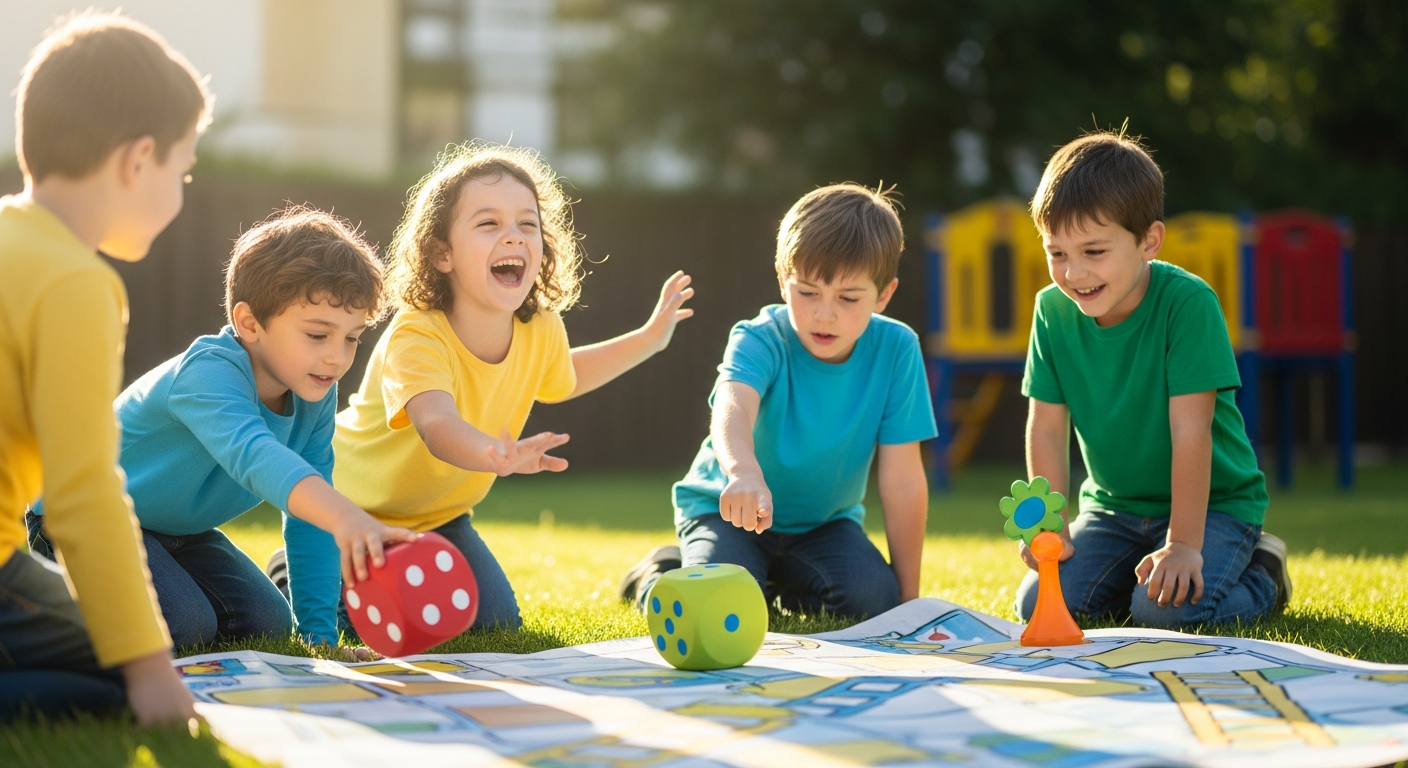
Table of Contents
- Introduction
- Why Play-Based Learning is Essential for Young Minds
- Cultivating Early Literacy Through Play
- Making Math an Adventure
- STEM and Critical Thinking Fun
- Developing Social-Emotional Skills
- Incorporating "Smart Screen Time" with Speech Blubs
- Taking the Next Step: Your Child's Learning Journey with Speech Blubs
- Conclusion
- Frequently Asked Questions (FAQ)
Introduction
Do you ever find yourself caught in the modern parenting dilemma: how to balance valuable learning with the ever-present allure of screens, all while ensuring your child is genuinely engaged and having fun? It’s a challenge many parents face. We all want our children to develop a lifelong love for learning, but sometimes, the traditional methods just don't click. If your little one seems more interested in building a fort under the table than reviewing flashcards, you're not alone. The good news is that learning doesn't have to be a chore; it can be an adventure, especially when we embrace activities that are as fun as they are educational.
This blog post is dedicated to exploring a wide variety of engaging, hands-on activities that ignite curiosity, foster critical thinking, and build essential skills across different developmental areas. We'll dive into creative ways to boost literacy, make math exciting, spark scientific exploration, and nurture social-emotional growth. Throughout our journey, we'll also discover how thoughtful integration of "smart screen time" with tools like Speech Blubs can enhance this learning experience, providing joyful and effective support for children's communication development. By the end, you'll have a treasure trove of ideas to transform everyday moments into powerful learning opportunities, empowering your child to speak their minds and hearts, and discover the sheer joy of learning.

Why Play-Based Learning is Essential for Young Minds
Imagine a child building a towering block castle. They're not just stacking; they're problem-solving, understanding balance, spatial reasoning, and even early physics concepts. This is the essence of play-based learning – a powerful, research-backed approach that taps into a child's natural curiosity and desire to explore. Far from being "just play," these experiences are foundational to cognitive, social-emotional, and physical development.
Moving beyond rote memorization, play-based learning encourages children to actively construct their understanding of the world. When learning is embedded in activities they find enjoyable and meaningful, children become more engaged, retain information better, and develop a deeper, more intrinsic motivation to learn. It’s about doing, discovering, and experiencing, rather than passively receiving information. This approach is particularly effective because it allows children to learn at their own pace, experiment without fear of failure, and develop crucial skills like creativity, resilience, and collaboration – skills that are far more valuable in the long run than simply memorizing facts. The science behind joyful learning is clear: positive emotions during learning lead to increased attention, better memory, and improved problem-solving abilities. When children are having fun, their brains are more receptive, making learning stick.
Cultivating Early Literacy Through Play
Literacy is the cornerstone of all learning, and introducing it through play can transform potential struggles into enthusiastic discovery. Children naturally gravitate towards stories and communication, making these areas ripe for playful exploration.
The Magic of Storytelling
Storytelling is an ancient art form that ignites imagination and builds language skills.
- DIY Story Stones / Story Cubes: Gather smooth stones from a nature walk or use wooden blocks. Draw simple pictures on them – a sun, a tree, an animal, a house, a person, a boat. Place them in a bag, and have your child pick a few. Then, challenge them to create a story using the images they've chosen. This activity fosters imaginative storytelling, helps children understand narrative structure, and encourages vocabulary use. For younger children, you can start by simply describing each picture and linking it to a short sentence.
- Interactive Storytelling with Props: Raid your dress-up box or gather everyday household items. Pick a favorite story or start a new one. As you narrate, use the props to act out parts of the story. Encourage your child to jump in, add their own ideas, or take on a character. A towel can become a superhero cape, a wooden spoon a magic wand. This brings stories to life, enhances comprehension, and encourages expressive language.
- Creating a Family Storybook: Empower your child to become an author and illustrator. Fold pieces of paper together to make a simple book. Have them draw pictures, and then either write captions themselves (for older children) or dictate their story for you to transcribe. This activity promotes early writing skills, sequencing, and the understanding that their words and ideas have value. It also creates a wonderful keepsake!
- Role-playing Favorite Book Scenes (Storytelling Charades): Choose a well-loved book and pick out key scenes or characters. Take turns acting them out without speaking, challenging your child to guess the scene or character. Once they've got the hang of it, switch roles! This activity enhances comprehension, encourages recall of plot points and characters, and develops non-verbal communication skills.
Building Foundational Language Skills
Beyond storytelling, targeted play can strengthen specific language components.

- Letter-Sound Scavenger Hunts: Hide letter cards or small objects that start with a particular letter sound around the house. Give your child a basket and the "sound" they're looking for (e.g., "Find everything that starts with 'buh' sound!"). They then hunt for items like a ball, a book, or a banana. This hands-on game is fantastic for phonemic awareness and connecting letter shapes to their sounds.
- Phonics Play with Magnets/Blocks: Use magnetic letters on the fridge or alphabet blocks to build simple words. Start with CVC (consonant-vowel-consonant) words like "cat," "dog," "sun." Talk about how changing one letter changes the word (e.g., "cat" to "bat"). This reinforces letter-sound relationships and lays the groundwork for decoding words.
- Vocabulary Treasure Hunts: Choose a "word of the day." Encourage your child to find this word in books, magazines, or even in conversations throughout the day. Discuss its meaning, use it in different sentences, and try to incorporate it into your family's daily language. This expands their vocabulary naturally and makes learning new words an exciting quest.
- Collage Sentences: Gather old magazines, newspapers, and catalogs. Challenge your child to cut out individual words and then arrange them to create funny or meaningful sentences. This activity is excellent for understanding sentence structure, parts of speech (nouns, verbs, adjectives), and visual recognition of words.
- Silent Letter Snap: Create cards with words containing silent letters (e.g., "knife," "write," "lamb"). Have your child draw a picture on each card to represent the word. Then, play a game of "Snap" where they match the words, calling out the silent letter as they do. This helps children become familiar with these tricky but common letter patterns in English.
At Speech Blubs, our mission is to empower children to speak their minds and hearts, and we know that building foundational language skills is key to this. Our unique approach utilizes a "video modeling" methodology, where children learn by watching and imitating their peers. This is incredibly powerful because it activates mirror neurons in the brain, making language acquisition feel natural and engaging, just like playing with friends. For a parent whose 3-year-old "late talker" loves animals, for example, the "Animal Kingdom" section in Speech Blubs offers a fun, motivating way to practice 'moo' and 'baa' sounds and even early sentences like "cow says moo" by watching other children. This active participation is a fantastic screen-free alternative to passive viewing experiences, fostering connection and communication rather than just consumption.
Making Math an Adventure
Math doesn't have to be limited to textbooks and worksheets. By integrating it into everyday life and creative projects, we can help children see math as a fun and practical tool.
Everyday Math Exploration
- Outdoor Math Walks: Take a stroll in a park or your backyard. Prompt your child to count everything they see: how many trees, how many red flowers, how many birds flying past. Bring a small notebook and pencil to draw tally marks, and then count them together. This connects abstract numbers to concrete objects, reinforcing counting and data collection. You can also look for shapes in nature, like circular leaves or rectangular fences.
- Pattern Bracelets: Using colorful beads, pasta shapes, or even cut-up straws, create pattern bracelets together. Start with simple patterns like "red, blue, red, blue" and progress to more complex ones. This activity fosters pattern recognition, sequencing, and fine motor skills. Plus, your child gets a cool piece of jewelry they made themselves!
- Cooking with Words: Involve your child in the kitchen. Read recipe instructions aloud together, encouraging them to identify letters or words on food labels. Practice measuring ingredients – "We need two cups of flour!" This hands-on activity integrates reading, following directions, and fundamental math skills like measurement and fractions, all while creating a delicious outcome. Why not start a personalized family cookbook as a delightful keepsake?
Creative Math Crafts
- Fraction Pizza Craft: Draw a large circle on a paper plate to represent a pizza. Help your child cut it into slices (halves, quarters, eighths) and label each slice with the correct fraction (e.g., 1/2, 1/4, 1/8). Decorate the slices with "toppings." Then, practice adding and subtracting fractions by combining and removing slices. This visual and tactile activity makes understanding fractions much more intuitive and fun, though it might spark cravings!
- Playful Puzzles: Create simple math puzzles using construction paper. Write out an addition, subtraction, multiplication, or division problem on one half of a piece of paper, and the answer on the other half. Then cut the paper into an irregular puzzle piece. Mix them up and have your child match the problems to their solutions. This turns rote practice into a fun, problem-solving game, helping children learn to apply mathematical operations.
- Dice Games: Use two large paper dice. On one, write numbers or draw dots; on the other, draw simple objects or actions. Roll both dice and have your child add the numbers and then incorporate the object/action into a sentence using that number (e.g., "I rolled a 3 and a flower, so I drew three flowers"). This combines math with imaginative storytelling and builds number fluency. You can adapt this for different age groups, from simple counting to multiplication.
STEM and Critical Thinking Fun
Introducing Science, Technology, Engineering, and Math (STEM) concepts early on sparks curiosity and develops crucial problem-solving skills.
Science Exploration at Home
- Science Dioramas: Choose a science topic that fascinates your child, such as ecosystems, the solar system, or different animal habitats. Help them create a diorama using a shoebox. Encourage them to collect natural materials like leaves, twigs, and pebbles from outside, or use craft supplies to represent elements of their chosen topic. As they build, discuss the science behind their creation. This hands-on approach reinforces understanding and makes learning science an interactive adventure.
- Nature Observation Journals: Arm your child with a notebook, crayons, and a magnifying glass. Head outside to a park or even your backyard. Encourage them to draw and describe what they observe: different types of leaves, insects, clouds, or patterns in tree bark. This activity develops observation skills, fosters a connection with nature, and encourages scientific inquiry.
- Simple Kitchen Science Experiments: The kitchen is a fantastic science lab! Try mixing colors with food coloring and water to understand color theory. Experiment with baking soda and vinegar for a classic volcano eruption, explaining acid-base reactions. Make "ice cream in a bag" to explore states of matter and temperature changes. These experiments are engaging, use readily available materials, and offer concrete examples of scientific principles.
Problem-Solving and Logic Games
- Building Challenges with Everyday Objects: Provide a pile of random household items: toilet paper rolls, paper clips, cardboard, string, tape, toothpicks. Give your child a challenge – "Build the tallest tower that can stand on its own," or "Create a bridge strong enough to hold a toy car." This encourages engineering thinking, spatial reasoning, and creative problem-solving.
- Board Games for Strategy and Critical Thinking: Many classic board games are excellent for developing logic, strategy, and critical thinking. Games like Chess, Checkers, Connect Four, and even simple memory games require children to think ahead, plan their moves, and adapt to changing situations. They also teach valuable social skills like turn-taking and sportsmanship.
Developing Social-Emotional Skills
Learning isn't just about academics; it's also about understanding and managing emotions, building healthy relationships, and navigating the world with empathy.
- Recognize Your Emotions: Print out or draw various emoji faces depicting different emotions (happy, sad, angry, surprised, confused, proud). Cut them out and have your child identify each emotion. Then, discuss situations where they might feel that way, or ask them to show you a time they felt that emotion. This helps children develop emotional literacy and empathy.
- Cooperative Games: Instead of competitive games where there's one winner, focus on cooperative games where everyone works together towards a common goal. Examples include building a giant fort together, solving a puzzle as a team, or playing board games designed for cooperation. This fosters teamwork, communication, and the understanding that working together can achieve more.
- Kindness Challenges: Introduce a "kindness jar" or a "kindness calendar." Encourage your child to perform small acts of kindness throughout the day (e.g., helping a sibling, sharing a toy, drawing a picture for a friend). Each act earns a sticker or a small token. At the end of the week, celebrate their kindness. This instills empathy, generosity, and positive social behavior.
Incorporating "Smart Screen Time" with Speech Blubs
In today's digital age, the concept of "screen time" can often come with guilt for parents. However, not all screen time is created equal. While passive viewing like cartoons offers limited educational value, "smart screen time" can be a powerful tool for learning and development. This is where Speech Blubs shines.
At Speech Blubs, our company was born from the personal experiences of our founders, who all grew up with speech problems and created the tool they wished they had. We are committed to providing an immediate, effective, and joyful solution for the 1 in 4 children who need speech support, blending scientific principles with play into one-of-a-kind "smart screen time" experiences. Our mission is to empower children to "speak their minds and hearts," and we achieve this through a unique approach that stands out from typical educational apps.
Our core methodology is "video modeling," where children learn by watching and imitating their peers. This isn't passive viewing; it's active, interactive participation. When children see other kids confidently making sounds, words, and sentences, it activates their mirror neurons, making the learning process feel natural and intuitive. This makes Speech Blubs a genuine screen-free alternative to passive viewing experiences because it requires and encourages your child's active engagement and direct response. For instance, if a child is hesitant to try new sounds, the "People Who Help Us" section in Speech Blubs can provide a supportive environment. Watching a peer confidently say "firefighter" or "doctor" can encourage imitation and reduce frustration, building confidence one sound at a time.
We are dedicated to fostering a love for communication, building confidence, and reducing the frustration that often accompanies speech development challenges. Our app develops key foundational communication skills through engaging activities and a vast library of words, sounds, and phrases. We’re proud that our method is backed by extensive research and places us in the top tier of speech apps worldwide.
Speech Blubs also serves as a powerful tool for family connection. We implicitly understand the importance of adult co-play and support. This isn't an app meant to babysit; it's designed to be a shared experience, creating joyful family learning moments as you and your child explore new sounds and words together. Don't just take our word for it; read heartwarming testimonials from parents whose children have found their voice with us. Ready to experience the difference? Create your account and begin your 7-day free trial today!
Taking the Next Step: Your Child's Learning Journey with Speech Blubs
Integrating fun, educational activities into your child's daily routine, complemented by smart tools like Speech Blubs, can truly transform their learning journey. It's about creating an environment where curiosity thrives, communication blossoms, and every moment is an opportunity for discovery. We aim to support parents in empowering their children, providing resources that are both effective and enjoyable.
We understand that as a parent, you might wonder if Speech Blubs is the right fit for your child. To help you, we've developed a simple, insightful preliminary screener. Unsure if your child could benefit? Take our quick 3-minute preliminary screener to get a simple assessment and a free 7-day trial. This quick assessment provides immediate value, offering a tailored plan based on your child's communication needs and guiding you on the next steps in their development.
At Speech Blubs, we believe in transparency and providing exceptional value. We offer two main subscription plans:
- Monthly Plan: Priced at $14.99 per month.
- Yearly Plan: Our best value, at just $59.99 per year. This breaks down to only $4.99 per month, meaning you save 66% compared to the monthly plan!
The Yearly Plan is truly the superior choice, offering exclusive benefits designed to maximize your child's learning experience:
- 7-day free trial: Experience the full potential of Speech Blubs before committing.
- Extra Reading Blubs app: Unlock even more literacy support with our companion reading app.
- Early access to new updates: Be among the first to explore new features and content.
- 24-hour support response time: Get prompt assistance whenever you need it.
The Monthly plan, while flexible, does not include these valuable extra features or the free trial. We encourage you to choose the Yearly plan to get the free trial and the full suite of features that will truly empower your child's communication and literacy skills. Don't wait to empower your child's voice. Download Speech Blubs now on the App Store or Google Play and choose the Yearly plan to unlock all features, including your free trial.
Remember, while Speech Blubs is a powerful supplement, it’s also an important tool for family connection and, when applicable, can complement professional therapy. We focus on fostering a love for communication, building confidence, reducing frustration, and developing key foundational skills, setting realistic expectations for a continuous and joyful learning process.
Conclusion
The journey of childhood is one of constant discovery, and as parents, we have the incredible opportunity to shape this journey into a joyous adventure. By embracing fun educational activities for kids, we move beyond passive learning and ignite a deep-seated love for exploration and understanding. From the magic of storytelling and hands-on math crafts to scientific inquiry and social-emotional games, every activity outlined here is a step towards nurturing a curious, confident, and articulate child.
These varied experiences, whether they involve mud pies in the backyard or interactive games on a tablet, all contribute to holistic development. They teach children that learning is everywhere, engaging their minds and bodies in ways that resonate deeply. With tools like Speech Blubs, we can further enhance this journey, providing targeted support for communication skills through engaging "smart screen time" that truly educates and connects families. We believe every child deserves the chance to find their voice and express themselves fully.
Ready to spark joy in your child's learning journey and empower them to communicate their unique thoughts and feelings? Take the first step today! Start your 7-day free trial now by signing up on our website or downloading Speech Blubs from the App Store or Google Play Store. Remember to choose the Yearly plan to unlock your free trial and access all the amazing features, including the Reading Blubs app and priority support! Let's embark on this exciting learning adventure together.
Frequently Asked Questions (FAQ)
Q1: What age range are these activities suitable for?
A1: The activities mentioned are generally suitable for preschool through early elementary school age children (roughly 3-8 years old), but many can be adapted for younger toddlers with parental guidance or extended for older children with more complex challenges. The key is to match the activity to your child's developmental stage and interests. Speech Blubs is designed for children ages 1-8 years, with content tailored to different developmental stages within that range.
Q2: How much screen time is appropriate for young children?
A2: The American Academy of Pediatrics (AAP) recommends varying screen time limits based on age, emphasizing that for children 18-24 months, screen time should be limited to video chatting with family. For children ages 2 to 5 years, they suggest limiting non-educational screen use to 1 hour per day and co-viewing educational content. The quality of screen time is crucial; interactive, educational apps like Speech Blubs, which encourage active participation and interaction, are considered "smart screen time" and can be a valuable part of a balanced learning plan when used with parental involvement.
Q3: How does Speech Blubs differ from other educational apps?
A3: Speech Blubs stands out primarily due to its unique "video modeling" methodology. Instead of animated characters, children learn by watching and imitating their real-life peers, which is highly engaging and scientifically proven to activate mirror neurons, making learning more effective. Our app is born from personal experience and a commitment to provide an immediate, effective, and joyful solution for children needing speech support, blending scientific principles with play to foster active communication rather than passive consumption. We also prioritize family connection, encouraging adult co-play.
Q4: What if my child is already receiving speech therapy?
A4: Speech Blubs can be a powerful supplementary tool to professional speech therapy. Many parents and speech-language pathologists use our app to reinforce therapy goals at home in a fun, engaging way. It provides consistent practice and exposure to target sounds and words in a motivating environment. We always recommend discussing the use of any supplementary tools with your child's therapist to ensure it aligns with their individual therapy plan. Our app is designed to support, not replace, professional guidance.
About the author