
Fun Fall Art Activities for Kids: Sparking Creativity & Communication
 By Speech Blubs Team•Jan 13, 2026•26 min.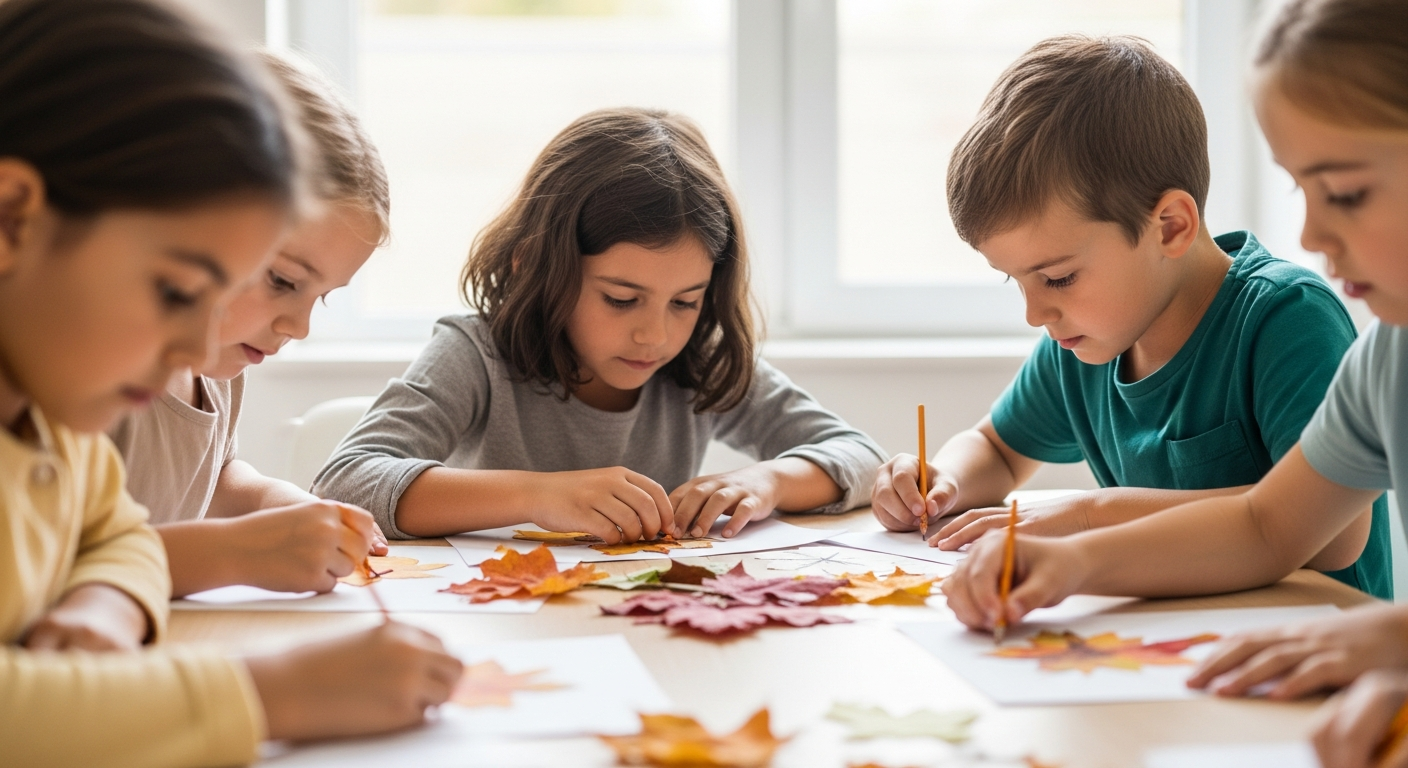
Table of Contents
- Why Fall Art Matters for Development
- Our Favorite Fall Art Activities: A Creative Collection
- Integrating Speech Blubs for Enhanced Learning and Connection
- Making the Most of Your Speech Blubs Experience: Pricing & Value
- Tips for a Successful Fall Art Session
- Conclusion
- Frequently Asked Questions (FAQ)
The vibrant tapestry of autumn colors isn't just a feast for the eyes; it's a powerful invitation for children to explore, create, and communicate. As leaves transform into fiery reds, oranges, and golds, and the air turns crisp, fall brings a unique sensory experience—the crunch of leaves underfoot, the earthy scent of pumpkins, the comfort of cozy days indoors. These natural wonders and seasonal shifts are perfect catalysts for imagination and discovery.
This post will dive into a world of engaging, easy-to-implement fall art activities that go beyond just making pretty pictures. We'll explore how these creative endeavors not only boost artistic skills but also naturally support crucial developmental areas, including fine motor skills, sensory processing, and, most importantly, language and communication. By embracing the magic of fall through art, parents and caregivers can create enriching environments where children thrive creatively and communicatively, building confidence and a lifelong love for expressing themselves.

Why Fall Art Matters for Development
Art is more than just a pastime; it's a fundamental pathway for children's holistic development. During the autumn months, when nature itself puts on a spectacular show, engaging in fall-themed art activities offers unparalleled opportunities for growth.
A Symphony for the Senses
Fall is inherently sensory. The diverse textures of leaves, acorns, and pumpkins; the rich palette of seasonal colors; the distinct smells of cinnamon and woodsmoke—all these elements provide a wealth of sensory input crucial for early brain development. When children interact with these natural materials through art, they're not just creating; they're touching, smelling, seeing, and sometimes even hearing the rustle of leaves. This multi-sensory engagement strengthens neural pathways and helps children make sense of their world, laying a foundation for future learning.
Nurturing Fine Motor Skills and Coordination
Many of the most joyous fall art activities are also covert exercises in fine motor skill development. Consider the intricate actions involved:
- Cutting: Snipping paper leaves or yarn for crafts.
- Gluing: Carefully applying adhesive to attach small items like seeds or pasta.
- Painting: Holding brushes, dipping fingers, or manipulating unconventional tools like forks or cotton balls.
- Drawing: Gripping crayons or markers to create outlines and details.
- Arranging: Positioning small collected items like pebbles or twigs.
Each of these actions strengthens the small muscles in the hands and fingers, vital for tasks like writing, dressing, and feeding themselves. They also foster hand-eye coordination and bilateral coordination, where both hands work together, a crucial skill for many daily activities.
Boosting Cognitive Growth and Problem-Solving
Art challenges children to think creatively and solve problems. How do I make this leaf stick? What colors should I use for my tree? What happens if I mix these two paints? These aren't just artistic questions; they're opportunities for cognitive growth:

- Following instructions: Understanding and executing multi-step projects.
- Making choices: Selecting colors, materials, and designs.
- Understanding cause and effect: Observing how different actions yield different artistic results.
- Exploring concepts: Learning about colors, shapes, patterns, and textures in a tangible, hands-on way.
- Spatial awareness: Understanding how objects fit together on a page or in a 3D creation.
The Power of Communication and Expression
Perhaps one of the most profound benefits of art is its role in communication. For many children, especially those who are still developing their verbal skills, art provides a powerful non-verbal language to express feelings, ideas, and observations that they might not yet have the words for. It's a safe space to explore emotions, tell stories, and share their unique perspective.
As children engage with fall art projects, they are naturally exposed to new vocabulary and concepts. Describing their artwork, the materials they're using, and the process itself becomes an organic way to practice language. This is where Speech Blubs shines, empowering children to "speak their minds and hearts" by giving them the tools to verbalize these creative experiences. Our founders experienced speech challenges themselves, so we deeply understand the importance of fostering communication from an early age and providing immediate, effective, and joyful solutions.
Our Favorite Fall Art Activities: A Creative Collection
Let's dive into some wonderful fall art activities that are sure to inspire creativity and boost development.
Nature-Inspired Creations
Bringing elements from the great outdoors into your art projects is a hallmark of fall fun. It connects children to their environment and provides a wealth of sensory input.
Leaf Art Extravaganza
Leaves are the quintessential symbol of autumn, offering endless possibilities for art.
- Pressed Leaf Collages: A Tapestry of Autumn Memories
- The Process: Embark on a nature walk with your child, collecting leaves of various shapes, sizes, and colors. This initial exploration is a fantastic sensory experience in itself! Once home, carefully press the leaves between pages of heavy books for a few days until they are flat and dry. Then, provide your child with paper, child-safe glue, and the pressed leaves. Encourage them to arrange and glue the leaves onto the paper, creating their own unique autumn tapestry.
- Developmental Benefits: This activity is a treasure trove for development. The act of collecting leaves encourages observation skills and fosters a connection with nature. Pressing leaves, though simple, teaches patience and observation of change. Arranging and gluing the leaves refines fine motor skills and hand-eye coordination. It also sparks imaginative play – maybe they’re creating a forest, a fantastic creature, or an abstract design!
- Boosting Communication: As you work, engage your child in conversation. Ask, "What color is this leaf?" "How does it feel?" "Can you find a leaf that is big/small?" Encourage them to describe their choices and their finished artwork. For children who are still building their vocabulary, Speech Blubs can be a wonderful companion. For instance, after collecting various-sized leaves, you could navigate to the "Early Sounds" section of Speech Blubs to practice comparative words like "big" and "small" by imitating the video models. Or, use the "Colors" section to reinforce the names of the hues they found in their leaves. This seamless transition from hands-on play to targeted speech practice makes learning fun and effective. Start your child's communication journey today by downloading Speech Blubs on the App Store.
- Leaf Rubbings & Chalk Pastels: Unveiling Nature's Details
- The Process: Gather freshly fallen leaves with prominent veins. Place a leaf beneath a thin sheet of paper. Using the side of a crayon or a chalk pastel, gently rub over the paper where the leaf is underneath. The intricate patterns of the leaf will magically appear! Experiment with different colors and layers.
- Developmental Benefits: This simple activity is fantastic for exploring texture, developing fine motor control through rubbing, and understanding the concept of relief printing. It encourages careful observation of nature's details.
- Boosting Communication: Discuss the textures: "Is it smooth or bumpy?" Talk about the "veins" and "stem" of the leaf. This provides concrete objects to associate with descriptive vocabulary.
- Painted Leaves & Autumn Mobiles: A Dance of Color
- The Process: Collect a variety of sturdy leaves. Provide tempera paints in fall colors (reds, yellows, oranges, browns, greens) and brushes. Children can paint the leaves entirely or create patterns. Once dry, you can string them together with fishing line or yarn and a stick to create a beautiful hanging mobile.
- Developmental Benefits: Painting leaves offers a unique surface to work on, enhancing fine motor control and color mixing skills. Stringing the leaves for a mobile improves bilateral coordination and sequencing.
- Boosting Communication: Focus on color naming and descriptive language ("shiny," "dull," "striped"). For a parent whose child loves pointing but rarely vocalizes, this activity provides a perfect opportunity to encourage both pointing and saying color names. If a child points to a red leaf, the parent can model "red leaf!" and then engage with Speech Blubs' color-themed activities in the app.
Branch & Twig Wonders
Even the simplest twigs can become works of art.
- Wrapped & Painted Branches: Textural Explorations
- The Process: Find small, sturdy fallen branches or twigs. Offer yarn in various fall colors, paints, or even thin strips of fabric. Children can wrap the branches with yarn, paint sections, or glue on small decorative elements.
- Developmental Benefits: Wrapping yarn around a branch is an excellent exercise for fine motor skills, grip strength, and hand-eye coordination. Painting engages creativity and color recognition.
- Nature Art Scrolls: Storytelling with Found Objects
- The Process: Take a long sheet of paper (like a roll of butcher paper). After a nature walk, gather small twigs, interesting pebbles, dried berries (non-toxic), tiny pinecones, and other treasures. Use glue to create a "scroll" by arranging and attaching these natural items.
- Developmental Benefits: This activity encourages imaginative play and storytelling. Arranging diverse items hones spatial reasoning and fine motor precision.
- Boosting Communication: Encourage children to tell a story about their "forest scene" or the creatures that might live there. Use descriptive words for each item. This creative storytelling lays important groundwork for narrative development.
Acorn & Seed Adventures
Small treasures from nature offer unique artistic possibilities.
- Acorn Cap Creations: Tiny Worlds of Imagination
- The Process: Collect acorn caps. Provide small amounts of paint, tiny pom-poms, beads, or felt scraps. Children can paint the caps or glue small decorations inside to create "acorn dolls" or miniature homes for tiny creatures.
- Developmental Benefits: This activity is excellent for fine motor control, particularly the pincer grasp, and promotes imaginative play on a small scale.
- Seed Mosaic Art: Patterns and Precision
- The Process: Use various seeds like pumpkin seeds, sunflower seeds, different colored beans, or small lentils. Provide paper with a pre-drawn simple fall shape (like a pumpkin or leaf) and glue. Children can apply glue and then carefully place the seeds to fill the shape, creating a textured mosaic.
- Developmental Benefits: This activity is superb for developing the pincer grasp, precision, and patience. It also introduces pattern recognition and sorting skills.
- Boosting Communication: Discuss the different sizes, shapes, and colors of the seeds. Encourage children to describe their patterns: "This row is yellow, then black, then yellow."
Pumpkin & Harvest-Themed Delights
Pumpkins, corn, and scarecrows are iconic symbols of fall, perfect for engaging art projects.
Pumpkin Painting & Decorating
No need for sharp knives—these projects are all about creative expression!
- No-Carve Pumpkin Fun: Personalizing Pumpkins
- The Process: Get a real or craft pumpkin. Provide various painting tools (brushes, sponges, cotton swabs) and acrylic or tempera paints. Children can paint designs, patterns, or even abstract art on their pumpkins. Add googly eyes, yarn, glitter, or felt shapes for extra flair.
- Developmental Benefits: This is a wonderful sensory experience (feeling the smooth surface of the pumpkin). It allows for broad strokes and detailed work, enhancing various fine motor skills. It also fosters creativity and self-expression.
- Alphabet Pumpkins: Playful Letter Recognition
- The Process: On a large piece of paper, draw several rows of simple pumpkin outlines on a vine. Write different letters of the alphabet (or numbers, or shapes) inside each pumpkin. Give your child a clothespin with a craft pom-pom attached (a "pom-pom dabber") and a small dish of orange paint. Call out a letter, and have your child find and "dab" the correct pumpkin with paint.
- Developmental Benefits: This activity is fantastic for letter or number recognition, matching skills, and a super fun way to practice fine motor skills through the clothespin grip.
- Boosting Communication: This activity pairs wonderfully with the literacy foundation activities in our Reading Blubs app, which comes exclusively with our Yearly plan! The combination fosters early literacy and speech skills. It provides a natural opportunity for verbal repetition and identification. Learn more about the science behind Speech Blubs!
Corn Crafts & More
Celebrate the harvest with these creative ideas.
- Model Magic Calico Corn: Sculpting Textures
- The Process: Provide children with white Model Magic clay (or homemade playdough). Help them roll it into a corn cob shape. Then, using various colors of acrylic paint, they can dab or paint small "kernels" onto the clay to mimic calico corn.
- Developmental Benefits: Sculpting with clay strengthens hand muscles and develops spatial reasoning. Painting small dots enhances fine motor control and precision.
- Boosting Communication: Focus on textures ("bumpy," "smooth"), colors, and counting the "kernels."
- Pasta Pumpkin/Sunflower Crafts: A Unique Sensory Experience
- The Process: Gather different pasta shapes (e.g., wheel pasta for pumpkin sections, spiral pasta for leaves, small round pasta for sunflower seeds). Paint the pasta in fall colors (orange, green, yellow, black). Once dry, children can glue the painted pasta onto paper outlines of pumpkins or sunflowers.
- Developmental Benefits: This craft offers a fantastic tactile sensory experience with the different pasta shapes. Painting small pasta pieces develops fine motor control, and gluing them hones hand-eye coordination and precision.
- Boosting Communication: Encourage children to describe the pasta shapes ("round," "twisty"), colors, and the feeling of the "bumpy" artwork.
Tree-Mendous Art Projects
Trees, in all their autumnal glory, are a rich source of inspiration.
Handprint & Fingerprint Trees
Classic and heartwarming, these projects are also great for development.
- Autumn Handprint Tree: A Personalized Keepsake
- The Process: Paint your child's hand and forearm brown to create a tree trunk and branches on paper. Once dry, provide red, orange, and yellow finger paints. Children can use their fingertips to create colorful "leaves" around the branches, making a vibrant autumn canopy.
- Developmental Benefits: This activity is wonderful for sensory exploration with finger paint and helps develop fine motor control through precise finger dabbing. It’s also a lovely way to create a personal keepsake.
- Cotton Ball Apple Tree Painting: Exploring Quantities
- The Process: Draw or glue a brown tree trunk onto a piece of paper. Attach a clothespin to a cotton ball. Dip the cotton ball in green paint and have children dab it around the trunk to create a leafy canopy. Then, switch to red paint and have them use their fingertips to create "apples" on the tree.
- Developmental Benefits: Using a clothespin to hold the cotton ball is an excellent way to strengthen the pincer grasp. Finger painting enhances sensory awareness and fine motor control.
- Boosting Communication: For a child learning to count or identify quantities, this activity provides a perfect visual aid. Parents can encourage "one apple," "two apples," and "many apples," reinforcing these concepts using Speech Blubs' numbers or quantity-focused activities.
Textured & Abstract Trees
Move beyond traditional painting to explore texture and color.
- Fork-Printed Fall Trees: Unexpected Textures
- The Process: Draw a simple brown tree trunk on paper. Provide washable paints in fall colors (red, orange, yellow). Show your child how to dip the tines of a plastic fork into the paint and then press it onto the paper around the tree trunk to create textured "leaves." They can even make some "fallen leaves" at the base.
- Developmental Benefits: This is a fantastic sensory art experience, exploring different ways to apply paint. It also strengthens grip and fine motor control.
- Yarn Trees for Little Learners: Pre-Scissor Skills
- The Process: Draw a simple tree outline on a piece of paper or cardboard. Cut strips of yarn in various fall colors. Children can apply glue within the tree outline and then arrange and press the yarn strips onto the glue.
- Developmental Benefits: This activity is excellent for developing fine motor skills, practicing pre-scissor skills (if they help tear or cut yarn), and exploring different textures. It’s also very calming and focused.
- Fall Tree Painting with Warm/Cool Skies: Color Theory Basics
- The Process: Paint or draw a bold tree trunk and branches. Then, explore color theory by painting the tree's leaves in warm colors (reds, oranges, yellows) and the sky in cool colors (blues, purples).
- Developmental Benefits: Introduces basic color theory, fine motor control through painting, and encourages observation of colors in nature.
Whimsical & Creative Crafts
Sometimes art is just about pure imaginative fun!
Scarecrow & Animal Friends
Embrace the playful characters of the season.
- Scarecrow Craft: Building a Friendly Face
- The Process: Provide a paper plate or cardboard circle for the scarecrow's face. Offer scraps of fabric, yarn for hair, googly eyes, construction paper for hats, and markers for drawing features. Children can cut, glue, and draw to create their unique scarecrow.
- Developmental Benefits: This activity involves a wide range of fine motor skills—cutting, gluing, drawing—and encourages imaginative character development.
- Boosting Communication: Encourage descriptions of facial features, clothing, and even a "personality" for their scarecrow.
- Fox & Owl Art: Woodland Wonders
- The Process: Incorporate fall animals into art by painting rocks as owls, creating paper plate foxes, or drawing hedgehogs with leaf "spines."
- Developmental Benefits: These projects spark creativity and observation of animal characteristics. They also improve painting and cutting skills.
- Practical Scenario: For a child who might struggle with consonant sounds like /f/ for "fox" or /ow/ for "owl," the "Animal Kingdom" section of Speech Blubs offers engaging video models to practice these sounds in a fun, motivating way. This directly links their artistic creations to targeted speech practice. Ready to empower your child's voice? Sign up for Speech Blubs today!
Sensory & Process Art
These activities emphasize the experience of making art, not just the final product.
- Coffee Filter Leaves: Magical Color Blending
- The Process: Have children scribble freely on coffee filters with washable markers. Place the colored filters on an art tray and use a spray bottle filled with water to lightly mist them. Watch the colors bleed and blend! Once dry, you can cut them into leaf shapes.
- Developmental Benefits: This is a wonderfully surprising process art activity that teaches color mixing and cause and effect. Squeezing the spray bottle strengthens hand muscles.
- Boosting Communication: Talk about the colors changing and blending: "What happens when blue and yellow mix?"
- DIY Puffy Paint Crafts: Tactile Textures
- The Process: Create puffy paint by mixing equal parts foam shaving cream and white school glue in a bowl. Add a few drops of food coloring for desired fall colors. Children can then spoon and spread this puffy paint onto paper or cardboard to create textured fall shapes like pumpkins, clouds, or animals. Allow several hours to dry, and it will be wonderfully fluffy and dimensional.
- Developmental Benefits: This provides a fantastic tactile sensory experience, exploring a unique paint texture. Spreading the paint with a spoon or brush improves fine motor control and hand-eye coordination.
- Boosting Communication: Activities like these are ideal for encouraging sensory language: "sticky," "soft," "fluffy," "smooth," "bumpy." Our app's preliminary screener can help parents identify if their child might benefit from targeted language support, offering an assessment and next-steps plan to kickstart their communication journey.
Integrating Speech Blubs for Enhanced Learning and Connection
We know that speech development is a journey, and every interaction counts. At Speech Blubs, our mission is deeply personal: we want to empower every child to "speak their minds and hearts." Our founders, having faced speech challenges themselves, built Speech Blubs to be the immediate, effective, and joyful solution they wished they had. We aim to support the 1 in 4 children who need speech support by blending scientific principles with play, creating one-of-a-kind "smart screen time" experiences.
How Speech Blubs Transforms Screen Time
Traditional passive screen time, like watching cartoons, often doesn't foster communication. Speech Blubs offers a dynamic, interactive alternative. Our unique "video modeling" methodology is at the heart of our approach. Children learn best by watching and imitating their peers, and that's exactly what our app facilitates. They see real children, just like them, making sounds, words, and sentences, which activates mirror neurons in their brains and naturally encourages imitation and speech development. This means our app offers a screen-free alternative to passive viewing, making it a powerful tool for family connection.
When you engage in fall art activities, you're creating rich opportunities for conversation. Your child might talk about the colors they're using, the texture of the leaves, or the story behind their drawing. Speech Blubs can then reinforce and expand upon these foundational communication skills, transforming these moments into powerful learning opportunities.
- Complementing Hands-On Play: After making a leaf collage, open Speech Blubs to the "Colors" section or "My Body" to talk about hands and fingers. After a pumpkin craft, explore the "Farm Animals" category to practice sounds and words related to fall harvest. This natural connection strengthens neural pathways, helping children generalize new vocabulary and concepts from one context to another.
- Building Vocabulary: When exploring new art materials, use the app to reinforce new words. For instance, if you're talking about "sticky glue," you can find other sticky items in the app to practice those sounds and words, expanding their descriptive language.
- Encouraging Imitation: If your child is shy about speaking during art, our video modeling helps them practice in a low-pressure, playful environment. This builds confidence, which can then transfer to their art discussions and other areas of communication. It reduces frustration and fosters a genuine love for expressing themselves.
Real Stories, Real Progress
We've seen countless families integrate Speech Blubs into their daily routines, creating powerful learning moments that build foundational skills. Parents frequently share how our app becomes a bridge, helping their children express themselves more clearly and confidently. Read testimonials from other parents who have witnessed their children's communication blossom with Speech Blubs. Our commitment to scientifically-backed methods means we are always striving for excellence, placing us in the top tier of speech apps worldwide with high MARS scale ratings, ensuring you get a tool that genuinely supports your child's development.
Making the Most of Your Speech Blubs Experience: Pricing & Value
We believe in making effective speech support accessible and valuable for every family. To help you get started and experience the full potential of our app, we offer clear and flexible subscription plans tailored to different needs.
Choose the Plan That's Right for You
- Monthly Plan: For $14.99 per month, you get access to our core Speech Blubs app features. This is a good option if you want to try it out for a shorter period, but it's important to note that this plan does not include a free trial, our Reading Blubs app, early access to new updates, or our expedited 24-hour support response time.
- Yearly Plan: The Best Value! This is by far our most popular and recommended plan, offering incredible value at just $59.99 per year. That breaks down to only $4.99 per month, which means you save a remarkable 66% compared to the monthly plan!
- Exclusive Yearly Plan Benefits:
- 7-Day Free Trial: Experience everything Speech Blubs has to offer before committing. This trial allows you to explore all features and see the impact on your child's communication journey without any immediate financial commitment.
- Includes Reading Blubs: Get our fantastic Reading Blubs app at no extra cost, designed to build crucial early literacy skills alongside speech development. This powerful duo supports your child's holistic communication journey, laying the groundwork for reading success.
- Early Access to New Updates: Be among the first to explore new features and content as soon as they're released, ensuring your child always has fresh, engaging material.
- 24-Hour Support Response Time: Get priority support from our dedicated team whenever you need assistance, ensuring a smooth and uninterrupted learning experience.
We strongly encourage you to choose the Yearly plan to unlock the comprehensive benefits and maximize your child's communication journey. It's an investment in their future, offering continuous support, reduced frustration, and a rich learning experience that fosters confidence and joy in communication.
Tips for a Successful Fall Art Session
Creating art with children should be an enjoyable and enriching experience for everyone involved. Here are some tips to make your fall art sessions successful and stress-free:
- Set the Stage for Creativity: Before you begin, clear a space, lay down old newspapers or a disposable tablecloth, and gather all necessary materials. Having everything ready minimizes interruptions and allows your child to dive straight into their creative flow.
- Embrace the Mess: Art, especially with young children, can be delightfully messy, and that's part of the fun! Focus on the process of creation and exploration rather than an immaculate end product. Dress children in old clothes or provide smocks. Easy cleanup tools (wipes, sponges) nearby can ease any parental anxiety.
- Talk About It, Don't Just Direct: Engage your child in conversation throughout the activity. Instead of asking "What is that?" (which can put pressure on them), try open-ended questions like "What colors are you using today?" "How does that feel in your hands?" "Tell me about your picture." These prompts encourage descriptive language and build their confidence in sharing their ideas.
- Join In the Fun: Sit alongside your child and create your own art piece. This models engagement, shows that you value creativity, and transforms the activity into a shared, connected experience. It also provides a gentle way to demonstrate techniques without direct instruction.
- Display Their Masterpieces: Showcasing your child's artwork—on the fridge, a dedicated wall, or even in a special binder—builds their self-esteem and pride in their accomplishments. It validates their efforts and encourages further artistic exploration.
- Be Patient and Positive: Every child develops at their own pace, and artistic expression is deeply individual. Celebrate effort, enthusiasm, and creativity over perfection or adherence to a specific outcome. Focus on the joy of the process.
- Safety First: Always ensure that all art materials are child-safe and non-toxic. Supervise young children closely, especially when using small natural items like acorns or beads, to prevent choking hazards.
Conclusion
Fall offers a breathtaking canvas for creativity and growth, inviting us all to connect with nature's beauty. By engaging in these fun fall art activities, you're not just creating beautiful keepsakes; you're nurturing essential developmental skills, sparking imagination, and building a strong foundation for confident communication. From the sensory delight of painted leaves to the fine motor challenge of crafting a scarecrow, each activity is an opportunity for learning, joyful interaction, and meaningful connection.
Remember, every creative act is a chance for your child to "speak their minds and hearts." And when you combine these rich, hands-on experiences with the targeted support of Speech Blubs, you're giving your child a truly powerful advantage. Our science-backed approach, coupled with the unique power of learning by imitating peers through video modeling, makes Speech Blubs a valuable partner in your child's overall developmental plan, helping them build confidence and reduce frustration on their journey to clear communication.
Ready to watch your child's confidence and communication blossom this fall? Start your journey today! Create your account and begin your 7-day free trial with the Yearly plan to unlock all features, including the Reading Blubs app, early access to updates, and premium support, all while saving a remarkable 66%! Alternatively, you can download Speech Blubs directly from the Google Play Store or the Apple App Store to get started on this exciting adventure toward empowered communication.
Frequently Asked Questions (FAQ)
Q1: What age group are these fall art activities best suited for?
A1: Many of these activities are adaptable for a wide range of ages, generally from toddlers (with adult assistance and supervision to ensure safety and guidance) through early elementary school. For younger children, focus on sensory exploration and simpler tasks like finger painting or large-motor gluing. Older children can tackle more intricate details, follow multi-step instructions, and engage in more complex discussions about their art. The beauty of open-ended art is that every child can participate and benefit at their own unique developmental level, making it a flexible and inclusive way to learn and grow.
Q2: How can I encourage my child to talk about their art if they're usually quiet or hesitant to speak?
A2: Creating a supportive, no-pressure environment is key. Start by describing what you see without judgment, e.g., "I see you used a lot of red and yellow leaves in your picture!" rather than a direct "What is it?" (which can feel like a test). Then, ask open-ended questions that invite more than a yes/no answer, such as "Tell me about this part," "What was your favorite part of making this?", or "How did you choose these colors?" Remember to give them ample time to respond without rushing. Utilizing apps like Speech Blubs can also build confidence in a playful, low-pressure environment, as children learn by watching and imitating their peers. This peer-to-peer modeling can help them feel more comfortable and motivated to express themselves verbally during hands-on activities.
Q3: What if I don't have access to many natural fall elements like vibrant leaves or acorns?
A3: No problem at all! You can still enjoy countless fall-themed art activities and capture the essence of the season. Consider using readily available craft supplies like construction paper, tissue paper, felt, or yarn in traditional fall colors to create paper leaves, pumpkins, and trees. You can also print out leaf templates online to color, paint, or use as stencils. Focus on the rich fall color palette (reds, oranges, yellows, browns, deep greens) and common fall symbols like apples, pumpkins, and scarecrows to evoke the autumnal spirit. The true value lies in the creative process and the engaging interaction, not necessarily the specific materials.
Q4: How does Speech Blubs help children with language development beyond just learning individual words?
A4: Speech Blubs is designed to foster holistic communication, moving beyond mere rote memorization of words. Our unique video modeling methodology, where children watch and imitate real peers, is scientifically proven to activate mirror neurons, which are crucial for natural imitation and speech acquisition. This approach helps children with articulation, expands their vocabulary, and significantly builds confidence in expressing their thoughts, feelings, and needs. Furthermore, the app promotes vital social-emotional development by teaching concepts like turn-taking, understanding emotions, and engaging in interactive play. It's designed to make "smart screen time" a powerful tool for developing not just words, but the profound ability to truly "speak their minds and hearts" and connect meaningfully with the world around them.
About the author