
Fun Fall Toddler Craft Activities for Speech Development
 By Speech Blubs Team•Feb 23, 2026•15 min.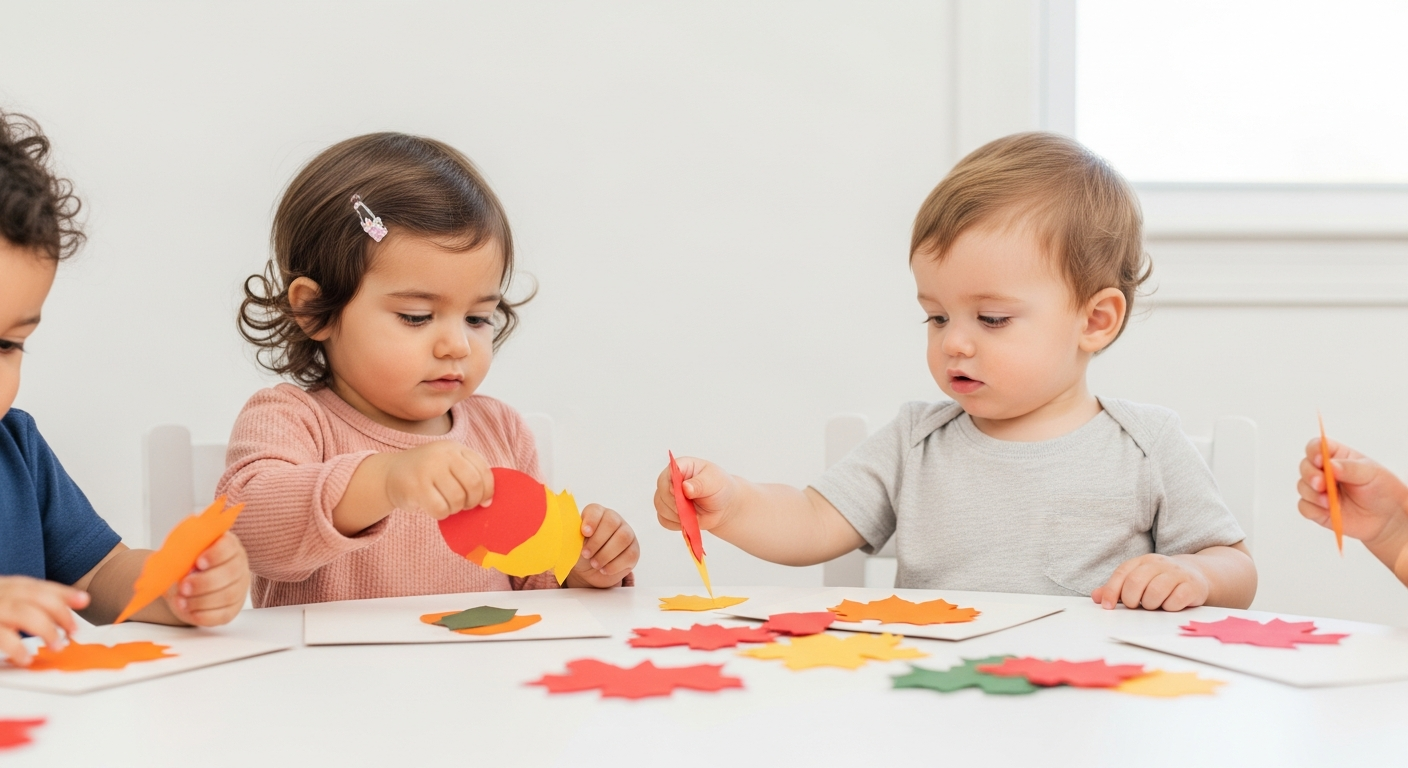
Table of Contents
- Introduction
- Why Fall is the Perfect Season for Language Learning
- The Science of "Smart Screen Time"
- 1. The Leafy Family Tree
- 2. Pinecone "Animal Kingdom" Friends
- 3. Pumpkin Stamp Art
- 4. The "Sticky" Fall Window Suncatcher
- Managing Expectations and Building Confidence
- Understanding the Value of Speech Blubs
- 5. Apple Print "Yummy Time" Art
- 6. Corn Husk Painting
- 7. Sensory Bin: The "Autumn Forest"
- 8. Paper Plate Sunflowers
- 9. Toilet Paper Roll "Fall Trees"
- 10. Contact Paper Leaf Masks
- Tips for a Stress-Free Crafting Session
- How Speech Blubs Supports Your Journey
- Conclusion
- Frequently Asked Questions
Introduction
Did you know that the simple act of picking up a crunchy, golden leaf can spark a massive surge in your toddler’s vocabulary? For a two-year-old, the world is a sensory explosion, and autumn—with its vibrant oranges, textured barks, and crisp air—is the ultimate classroom. But as parents, we often find ourselves wondering how to bridge the gap between a messy afternoon of "glue and glitter" and actual developmental progress. We want more than just a refrigerator decoration; we want to help our children "speak their minds and hearts."
In this post, we are going to explore the wonderful world of the fall toddler craft. We’ll dive into activities that aren't just fun, but are specifically designed to boost fine motor skills, sensory processing, and, most importantly, language development. We will also discuss how to integrate "smart screen time" into your routine to supplement these physical activities. At Speech Blubs, we believe that learning should be a joyful, family-centered experience. Whether you are navigating a speech delay or simply looking to foster a love for communication, these autumn-themed projects are the perfect starting point.

Our main message today is simple: Every craft is a conversation waiting to happen. By combining hands-on play with scientifically-backed tools, we can create a rich environment where your child feels confident to express themselves.
Why Fall is the Perfect Season for Language Learning
Autumn provides a unique palette of sounds and textures that are perfect for toddlers. Think about the "crunch" of a leaf, the "whoosh" of the wind, or the "splat" of a pumpkin being carved. These onomatopoeic words are often the first building blocks of speech. When we engage in a fall toddler craft, we aren't just making art; we are labeling the world.
For a parent whose 3-year-old "late talker" loves animals, a simple craft like making a paper plate owl can be the bridge to practicing "hoot-hoot" sounds. This is where our mission at Speech Blubs truly comes to life. Our company was born from the personal experiences of our founders, who all grew up with speech problems. They created the tool they wished they had—a way to turn screen time into an active, imitative learning session. For the 1 in 4 children who need speech support, these small, joyful moments of connection are the foundation of progress.
If you are curious about where your child stands in their development, we invite you to take our quick 3-minute preliminary screener. It involves just 9 simple questions and provides an assessment and a next-steps plan to help you support your little one.
The Science of "Smart Screen Time"
In a world full of passive cartoons, it’s easy to feel guilty about screen use. However, we advocate for "smart screen time." While a fall toddler craft focuses on tactile engagement, a tool like Speech Blubs uses "video modeling" to encourage children to vocalize. This methodology is based on the science of mirror neurons—when a child watches a peer on screen perform an action or make a sound, their brain reacts as if they are doing it themselves.
Our approach places us in the top tier of speech apps worldwide, a fact supported by our extensive research and high MARS scale rating. By using the app alongside physical crafts, you are providing a multi-sensory experience that reinforces new concepts from multiple angles.

1. The Leafy Family Tree
This is a classic for a reason. It combines a nature walk with the introduction of basic household tools like glue sticks.
The Activity:
Start by grabbing a bucket and heading outside. Collect leaves of all shapes, sizes, and colors. While you walk, use "parallel talk." If your child picks up a yellow leaf, say, "You found a yellow leaf! It’s smooth." This labels their actions and the object without demanding a response, which reduces pressure.
Back inside, draw a simple tree trunk on a piece of paper. This is where the "I do, we do, you do" method comes in.
- I do: You show them how to rub the glue stick on the paper.
- We do: You hold their hand and help them press a leaf onto the glue.
- You do: Let them take the lead, even if the leaves end up in a giant pile at the bottom of the tree.
Language Tie-in:
Focus on words like sticky, leaf, tree, and colors like red, yellow, and orange. If you want to take it further, download Speech Blubs on the App Store and look for the "Nature" or "Colors" sections. Seeing other children identify colors can motivate your toddler to try the words themselves.
2. Pinecone "Animal Kingdom" Friends
If your child is motivated by animals, this fall toddler craft is a winner. Pinecones have a wonderful, prickly texture that is great for sensory seekers.
The Activity:
Use googly eyes, felt scraps, or even just some colorful yarn to turn pinecones into owls, hedgehogs, or squirrels. As you work, talk about what the animal says.
Connection to Speech Blubs:
For a toddler who is obsessed with animals but hasn't started using many words yet, the "Animal Kingdom" section of our app is a powerful motivator. They can watch their peers make animal sounds and then try to mimic them while playing with their pinecone creations. This is a perfect example of how our app acts as a powerful supplement to a child’s overall development plan. You can get started on Google Play to explore these categories together.
3. Pumpkin Stamp Art
Don't throw away those "mini pumpkins" once they start to soften! They make excellent stamps for toddlers who are still developing their grip.
The Activity:
Cut a small pumpkin in half. Let your toddler dip the flat side into orange paint and press it onto white paper. The handle of the pumpkin provides a natural grip for tiny hands, making it an accessible craft for children with motor delays.
Language Tie-in:
Use action words! Push, lift, splat, and more. Repetition is key here. Every time they press the pumpkin down, say "Push!" Over time, they may begin to anticipate the word and eventually say it along with you.
4. The "Sticky" Fall Window Suncatcher
This craft is mess-free and provides a beautiful visual reward.
The Activity:
Use a piece of clear contact paper (sticky side up) taped to a window or table. Give your child bits of tissue paper in fall colors or small pressed leaves to stick onto the surface. Once finished, place another piece of contact paper on top to seal it.
Language Tie-in:
This is a great time to practice "prepositions." Talk about putting the paper on the sticky sheet, or placing a leaf next to another one. For more ideas on how to foster these skills, check out our testimonials to see how other parents have integrated these concepts into their daily lives.
Managing Expectations and Building Confidence
It’s important to remember that the goal of a fall toddler craft isn't a masterpiece; it’s the process. We are here to foster a love for communication and build confidence. Do not feel discouraged if your child only wants to play with the glue for five minutes or if they prefer tearing the leaves rather than sticking them.
At Speech Blubs, we don't suggest guaranteed outcomes like "your child will be giving public speeches in a month." Instead, we focus on the benefits of the process: reducing frustration, developing key foundational skills, and creating joyful family learning moments. We are a screen-free alternative to passive viewing and a powerful tool for family connection, as we always encourage adult co-play.
Understanding the Value of Speech Blubs
While crafting provides the physical foundation, Speech Blubs provides the digital "nudge." We want to be transparent about our pricing because we value the trust of the families we serve.
We offer two main plans:
- Monthly Plan: $14.99 per month.
- Yearly Plan: $59.99 per year.
The Yearly plan is undeniably the best choice for families committed to their child's progress. It breaks down to just $4.99 per month, saving you 66% compared to the monthly option. Furthermore, the Yearly plan includes exclusive, high-value features that the Monthly plan does not:
- A 7-day free trial to ensure it's the right fit for your family.
- The Reading Blubs app, which helps transition your child from speech to early literacy.
- Early access to new updates and a 24-hour support response time.
To get the full suite of features and the free trial, we encourage you to create your account and begin your journey today.
5. Apple Print "Yummy Time" Art
Apples are synonymous with fall. This craft is another excellent way to practice labeling and sensory exploration.
The Activity:
Slice an apple in half (vertically for a traditional shape or horizontally to find the "star" inside). Use red, green, and yellow washable paint. As your child stamps, talk about the taste of apples—are they sweet or sour? This connects the craft to the "Yummy Time" section of Speech Blubs, where children learn words related to food and eating.
Language Tie-in:
Practice the "ah" sound for apple or the "mmm" sound for something delicious. If you find your child is struggling with specific vowel sounds, our app's video modeling can show them exactly how other children position their mouths to make those sounds.
6. Corn Husk Painting
The texture of dried corn husks is incredibly unique. They can be used as "brushes" to create interesting patterns.
The Activity:
Provide your child with dried corn husks and a tray of tempera paint. Let them drag, swirl, and dot the paint across the paper. The scratching sound the husks make on the paper provides great auditory feedback.
Language Tie-in:
Focus on "descriptive" words. Is the husk rough or smooth? Is the paint wet or cold? By using these adjectives, you are expanding their expressive vocabulary beyond just simple nouns.
7. Sensory Bin: The "Autumn Forest"
While not a traditional "craft" that ends in a product, a sensory bin is a vital "crafting of an environment" for a toddler.
The Activity:
Fill a plastic bin with dried corn kernels, acorns, leaves, and small plastic forest animals. Give your child cups, spoons, and funnels.
Connection to Speech:
This is a prime opportunity for "Self-Talk." As you play alongside them, narrate your own actions: "I am pouring the corn. Scoop, scoop, scoop. Oh look, the bear is hiding under the leaf!" This models language in a low-stress, highly engaging way. To see more about how our methodology supports this kind of play, visit the Speech Blubs homepage.
8. Paper Plate Sunflowers
Sunflowers are the giants of the fall garden. Making a mini version helps toddlers understand scale and parts of a whole.
The Activity:
Paint the center of a paper plate brown. Glue yellow paper petals (or even yellow leaves!) around the edge. For the seeds in the middle, you can use real sunflower seeds or even dried black beans.
Language Tie-in:
Count the petals! Even if your toddler can't count yet, hearing you say "one, two, three" builds the mathematical foundations of language. Use words like big, middle, and round.
9. Toilet Paper Roll "Fall Trees"
This is a great way to recycle and practice "fine motor" precision.
The Activity:
The cardboard roll acts as the trunk. Cut two slits in the top. Your child can then slide a "treetop" made of green or orange construction paper into the slits. They can then decorate the top with "fingerprint" leaves using paint.
Language Tie-in:
"Up" and "Down" are the focus here. "Put the tree up." "The leaf falls down." These spatial concepts are crucial for following directions later in life.
10. Contact Paper Leaf Masks
Let your toddler transform into a fall sprite!
The Activity:
Cut a mask shape out of cardboard with holes for the eyes. Cover one side with contact paper (sticky side out). Let your child press small, colorful leaves onto the mask until it is covered. Attach a craft stick to the bottom so they can hold it up to their face.
Language Tie-in:
Use this for "social-emotional" language. "Who are you?" "I see you!" Play peek-a-boo with the mask to encourage turn-taking, which is a foundational skill for conversation.
Tips for a Stress-Free Crafting Session
We know that crafting with a toddler can sometimes feel like controlled chaos. Here are a few tips to keep the experience joyful:
- Keep it Short: A toddler’s attention span is usually only 5 to 10 minutes. If they want to move on, let them.
- Embrace the Mess: Use a tray or a plastic tablecloth. The more you worry about the mess, the less your child will enjoy the exploration.
- Focus on the Bond: The goal isn't the craft; it's the time spent together. Put away your phone (unless you're using Speech Blubs together!) and be present.
- Model, Don't Correct: If your child calls a red leaf "blue," don't say "No, that's wrong." Instead, say, "Oh, you found a beautiful red leaf!" This provides the correct model without hurting their confidence.
How Speech Blubs Supports Your Journey
At Speech Blubs, our mission is to empower children to speak their minds and hearts. We understand that every child develops at their own pace, and we are here to provide the tools to make that journey easier. Our app is designed to be an immediate, effective, and joyful solution for families. By blending scientific principles with play, we offer a "one-of-a-kind" experience that feels like a game but acts like a teacher.
If you are ready to give your child the best possible start, we recommend the Yearly plan. Not only do you get a 7-day free trial, but you also gain access to the Reading Blubs app, which is the perfect next step once your child starts mastering their first words. You can sign up on our website to lock in the best value.
Conclusion
The beauty of a fall toddler craft lies in its simplicity. Whether you are stamping pumpkins, sorting leaves, or turning pinecones into forest friends, you are doing the vital work of building your child’s brain. These activities provide the "raw materials" for language—the textures, the colors, and the shared moments of wonder.
Remember that you don't have to do this alone. Speech Blubs is here to support you with a scientifically-backed tool that children genuinely love. By combining physical play with our unique video modeling approach, you can create a powerful environment for growth.
Ready to see the difference for yourself? Download Speech Blubs on the App Store or Google Play today. We highly recommend choosing the Yearly plan for just $59.99 to take advantage of the 7-day free trial and the bonus Reading Blubs app. Let’s make this autumn a season of discovery, connection, and many, many new words.
Frequently Asked Questions
1. At what age can my toddler start using a glue stick for crafts?
Most toddlers are ready to be introduced to glue sticks around 24 to 30 months. However, it’s all about supervision and modeling. Start by using the "I do, we do, you do" method. Glue sticks are much better for toddlers than liquid glue because they require less grip strength and are far less messy.
2. We live in a city with very few trees. How can we do fall crafts?
You don't need a forest! A single tree in a local park can provide enough leaves for a craft. Alternatively, you can use "found objects" like brown paper bags (to tear into "bark"), or you can use the "Nature" section in the Speech Blubs app to show your child what fall looks like in other places before drawing your own leaves together.
3. Which Speech Blubs plan is best for a family on a budget?
The Yearly plan is the clear winner for value. While $14.99 a month is an option, the Yearly plan at $59.99 works out to only $4.99 per month. Plus, the Yearly plan is the only one that includes a 7-day free trial and the Reading Blubs app, making it a much more comprehensive tool for your child's long-term development.
4. How does the "video modeling" in Speech Blubs help with crafting?
Video modeling works by showing your child other children (their peers) engaging in speech and play. When your child sees a peer in the app making the "whoosh" sound of the wind or naming a "leaf," it triggers their mirror neurons. This makes them much more likely to imitate those sounds and words while they are doing their physical fall toddler craft with you.
About the author