
Fun Filipino Party Games for Kids
 By Speech Blubs Team•Jan 28, 2026•17 min.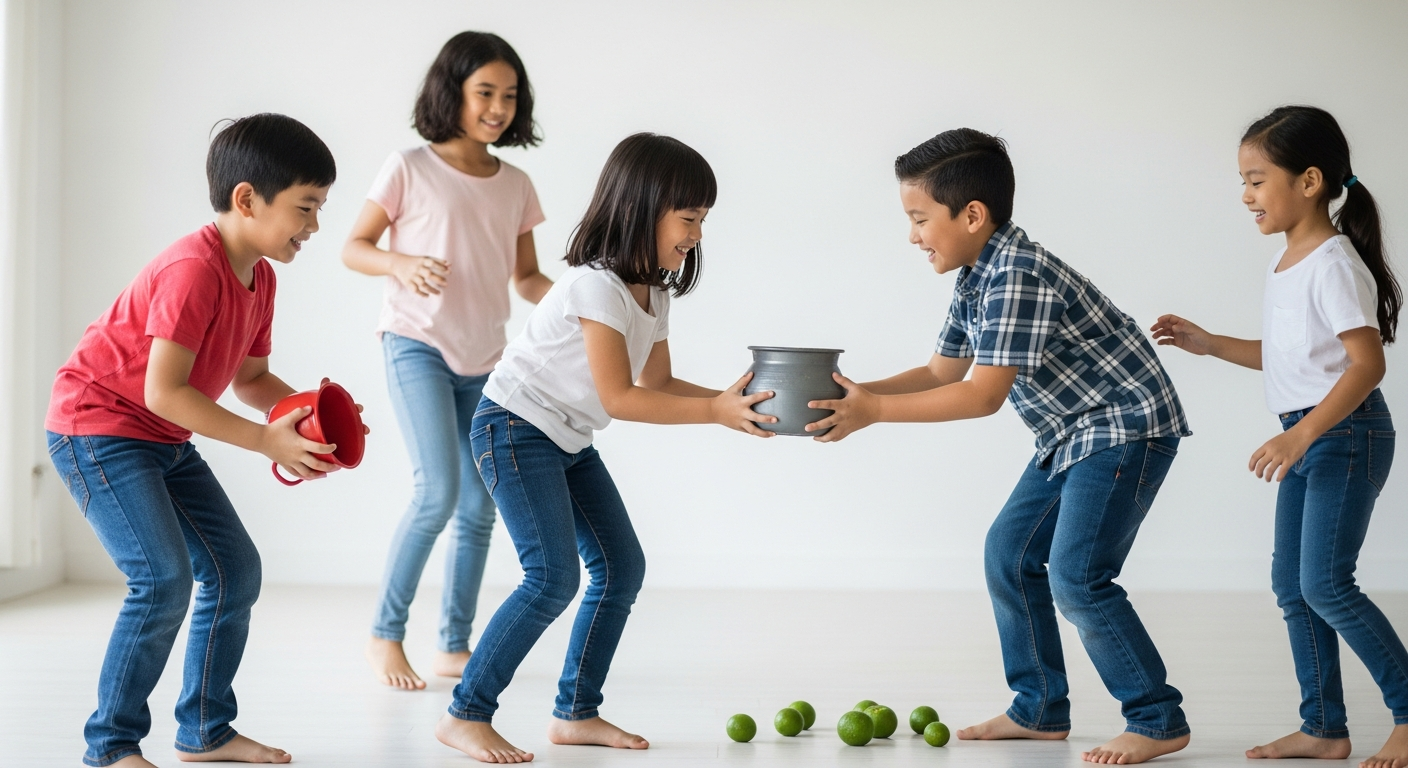
Table of Contents
- Introduction
- The Enduring Appeal of Pinoy Party Games
- Classic Filipino Party Games and Their Developmental Magic
- Beyond the Games: Fostering Communication with Speech Blubs
- Making the Most of Speech Blubs: Our Plans
- More Filipino Party Games to Spark Joy and Growth
- Conclusion
- FAQ
Introduction
Picture a bustling Filipino gathering, alive with laughter, the aroma of delicious food, and the infectious energy of children. In the midst of the festive chaos, a classic parlor game begins, instantly captivating every child present. These aren't just games; they are vibrant threads woven into the fabric of Filipino culture, passed down through generations. Far from being mere time-fillers, these traditional games are powerful tools for development, fostering social skills, critical thinking, and, perhaps most importantly for us at Speech Blubs, communication. We believe in the power of play to unlock a child's potential, empowering them to speak their minds and hearts. In this comprehensive guide, we'll dive into a treasure trove of beloved Filipino party games for kids, exploring how each game not only sparks joy but also lays crucial groundwork for their overall growth and language development. We'll show you how these playful interactions can complement your child's journey to confident communication, offering tangible benefits that resonate deeply with our mission at Speech Blubs.

The Enduring Appeal of Pinoy Party Games
Filipino party games, often referred to as "parlor games," carry a rich heritage. They are a testament to the Filipino spirit of community, resourcefulness, and joyful celebration. Unlike modern video games or passive entertainment, these games demand active participation, interaction, and often, a dash of friendly competition. They transform simple gatherings into unforgettable experiences, building bonds between children and even bridging generational gaps as parents and grandparents fondly recall their own childhood memories.
At the heart of these games lies a profound developmental benefit. They naturally encourage:
- Social Interaction: Children learn to cooperate, negotiate, and take turns.
- Language Development: Following instructions, expressing ideas, asking questions, and even storytelling are all part of the fun.
- Cognitive Skills: Problem-solving, quick thinking, and strategic planning become second nature.
- Gross and Fine Motor Skills: Running, jumping, balancing, and manipulating objects sharpen physical coordination.
- Emotional Regulation: Learning to win graciously and lose with resilience are invaluable life lessons.
These benefits align perfectly with our approach at Speech Blubs. Our app, born from the personal experiences of our founders who all grew up with speech problems, provides an immediate, effective, and joyful solution for the 1 in 4 children who need speech support. We blend scientific principles with play into one-of-a-kind "smart screen time" experiences, offering a screen-free alternative to passive viewing and a powerful tool for family connection. The traditional games we're about to explore offer a fantastic, unplugged way to further these developmental goals.
Classic Filipino Party Games and Their Developmental Magic
Let's explore some of the most cherished Filipino party games and uncover the hidden developmental gems within each one.
Trip to Jerusalem (Musical Chairs)
How to Play: Chairs are arranged in a circle, one less than the number of players. Music plays as children walk around the chairs. When the music stops, everyone scrambles to find a seat. The child left standing is eliminated, and one chair is removed for the next round. The game continues until only one winner remains.

Developmental Benefits:
- Auditory Processing: Children must listen intently for the music to stop, honing their ability to process auditory cues.
- Following Instructions: Understanding and executing the rules of the game (walking, sitting when music stops) is crucial.
- Gross Motor Skills: The game involves walking, running, and quick movements.
- Social Awareness: Children learn about competition and the concept of winning and losing.
- Emotional Regulation: Managing the excitement of finding a chair and the disappointment of being eliminated are key skills.
Relatable Scenario: For a child who might struggle with following multi-step instructions, Trip to Jerusalem provides a clear, repetitive structure. The visual cue of chairs and the auditory cue of music stopping make it easier to grasp, building confidence in processing commands. This interactive play complements the structured learning found in Speech Blubs, where children learn by watching and imitating their peers through our unique "video modeling" methodology.
Hampas Palayok (Hit the Pot)
How to Play: A clay pot (palayok) filled with candies and small toys is hung from above. A child is blindfolded, given a stick, and spun around a few times before being directed towards the pot. Other children call out directions, guiding or playfully misguiding the blindfolded player to hit and break the pot, releasing the goodies.
Developmental Benefits:
- Sensory Integration: Relying on hearing and touch while vision is removed sharpens other senses.
- Spatial Awareness: Navigating space without sight, guided by sound, enhances spatial reasoning.
- Listening Skills: The blindfolded child must listen carefully to the directions from their peers.
- Turn-Taking & Waiting: Children learn patience as they wait for their turn.
- Communication & Collaboration: The children shouting directions are practicing their descriptive language and giving clear instructions.
Relatable Scenario: Imagine a child who is typically quiet and hesitant to speak. Participating in Hampas Palayok, either as the blindfolded child following directions or as a guide, encourages verbal interaction in a fun, low-pressure environment. The excitement of the game makes communication feel natural and rewarding. Parents wondering if their child might benefit from more structured listening and verbal cues can take our quick 3-minute preliminary screener to get a simple assessment and a free 7-day trial.
Bring Me
How to Play: The host calls out an item (e.g., "Bring me a red shoe!", "Bring me something soft!"), and players must quickly find and bring the item back to the host. The first one to present the correct item wins the round.
Developmental Benefits:
- Vocabulary Expansion: Children are exposed to a wide range of words for objects, colors, textures, and categories.
- Receptive Language: Understanding and interpreting verbal commands and requests.
- Listening Comprehension: Actively listening to the item description and processing it quickly.
- Problem-Solving: Strategizing where to find the item efficiently.
- Categorization Skills: Identifying attributes and classifying objects (e.g., "something soft" could be a pillow, a stuffed animal, etc.).
Relatable Scenario: For children who are expanding their vocabulary, "Bring Me" is a fantastic interactive learning experience. It turns abstract words into concrete actions. If a child points to an item but struggles to name it, the game provides a gentle prompt for the parent to model the correct word. This kind of active, play-based learning is very much aligned with the philosophy behind Speech Blubs, which encourages children to learn through engaging activities rather than passive observation.
Pabitin
How to Play: A wooden lattice or bamboo frame, adorned with various small toys, candies, and snack bags, is suspended from above. It is then lowered and raised repeatedly, allowing children to jump and grab prizes as it comes within reach.
Developmental Benefits:
- Gross Motor Skills: Jumping, reaching, and coordination are key.
- Hand-Eye Coordination: Accurately grabbing items while in motion.
- Patience and Impulse Control: Waiting for the right moment to grab an item.
- Social Dynamics: Navigating a crowded space respectfully while competing for prizes.
Relatable Scenario: While not directly a language game, Pabitin contributes to overall motor development, which is foundational for speech. Strong motor skills, especially oral motor skills, are crucial for clear articulation. The excitement and anticipation also create a natural environment for expressive sounds and exclamations, which are early forms of communication. It's an example of how joyful physical play can contribute to a child's holistic development.
Newspaper Dance (Stop Dance)
How to Play: Pairs of children dance on a spread-out newspaper sheet while music plays. When the music stops, they must remain on the paper without any body part touching the floor. For subsequent rounds, the newspaper is folded in half, making the space smaller and more challenging.
Developmental Benefits:
- Balance and Coordination: As the space shrinks, children must improve their balance and work together.
- Problem-Solving: Figuring out how to fit on a smaller space with a partner.
- Teamwork and Cooperation: Pairs must work together to stay on the paper.
- Physical Proximity and Comfort: Learning to be comfortable in close quarters with others.
- Auditory Processing: Listening for music cues, similar to Trip to Jerusalem.
Relatable Scenario: A child who struggles with personal space or physical coordination might initially find this challenging, but the playful context encourages them to try. The need to communicate non-verbally with a partner to maintain balance also enhances social awareness. These are crucial elements for developing social-pragmatic language skills, which are essential for effective communication.
Calamansi Relay
How to Play: Teams race to pass a calamansi (small lime) from one player to another using only a spoon held in their mouth. If the calamansi falls, the player must start over from their last successful transfer point.
Developmental Benefits:
- Fine Motor Skills and Oral Motor Control: The delicate act of balancing the calamansi on a spoon and transferring it using only the mouth muscles strengthens oral motor skills, vital for articulation and speech clarity.
- Patience and Concentration: This game requires immense focus and steady movements.
- Teamwork and Sportsmanship: Encouraging teammates and understanding that everyone's effort contributes to the team's success.
- Following Multi-Step Directions: Understanding the sequence of actions and rules.
Relatable Scenario: This game is a fantastic, playful exercise for oral motor development. For children who might have difficulties with tongue control or lip closure, the Calamansi Relay provides targeted practice in a fun, non-clinical setting. This kind of motor practice can indirectly support speech production, much like the targeted activities within Speech Blubs are designed to build foundational language skills.
Pinoy Henyo
How to Play: Two players from a team participate. One player holds a headband with a word or phrase written on it (visible to everyone but them). The other player gives clues using only "Yes," "No," or "Maybe" responses. The goal is for the player with the headband to guess the word/phrase within a time limit.
Developmental Benefits:
- Deductive Reasoning & Critical Thinking: The guesser must make logical inferences based on limited information.
- Questioning Skills: The guesser learns to formulate effective questions.
- Vocabulary & Categorization: The clue-giver must think of ways to describe the word without saying it, expanding their descriptive vocabulary.
- Non-Verbal Communication: Often, gestures and facial expressions aid in giving clues.
- Patience & Frustration Tolerance: It can be challenging, but the fun nature helps manage frustration.
Relatable Scenario: Pinoy Henyo is a powerhouse for language development. For a child who struggles with expressive language, being the clue-giver allows them to practice vocabulary and descriptive skills. For a child working on receptive language, being the guesser helps them process information and make connections. This game emphasizes interactive communication and problem-solving, mirroring our philosophy at Speech Blubs, which champions interactive "smart screen time" experiences where children learn by watching and imitating their peers, fostering confident communication.
The Boat is Sinking
How to Play: The host shouts, "The boat is sinking! Group yourselves into [insert number here]!" Children quickly form groups of the specified number. Any child not in a group, or in a group of the wrong size, is eliminated.
Developmental Benefits:
- Numeracy Skills: Practicing counting and recognizing quantities.
- Quick Thinking & Reaction Time: Rapidly processing the instruction and acting upon it.
- Social Negotiation & Grouping: Quickly finding partners and forming alliances.
- Following Instructions: Responding accurately to the command.
- Spatial Awareness: Moving and orienting oneself within a group quickly.
Relatable Scenario: This game encourages children to interact quickly and audibly. Shouting out "One more!" or "Come here!" helps practice vocal projection and direct communication. For children who may be developing social interaction skills, this game provides a fun, structured way to engage with peers and practice verbal cues for group formation.
Beyond the Games: Fostering Communication with Speech Blubs
While these traditional Filipino party games offer incredible opportunities for growth, we understand that some children may need additional support on their communication journey. That's where Speech Blubs comes in. Our app is designed to complement these natural learning experiences, providing a focused, play-based approach to speech and language development.
At Speech Blubs, our mission is to empower children to speak their minds and hearts. We believe every child deserves the chance to communicate confidently. Our app was created by founders who personally experienced speech challenges, so we built the tool we wished we had. We are committed to providing an immediate, effective, and joyful solution for children who need speech support, blending scientific principles with play.
How Speech Blubs Enhances Your Child's Communication Journey:
- Video Modeling: Our unique approach uses "video modeling," where children learn by watching and imitating their peers. This natural, engaging method is highly effective, tapping into mirror neurons in the brain to facilitate learning. See what other parents are saying about their child's success with Speech Blubs.
- Interactive Learning: Unlike passive cartoons, Speech Blubs requires active participation. Children engage in various activities designed to encourage vocalization, articulation, and language comprehension, making it truly "smart screen time."
- Rich Content Library: From animal sounds to storytelling, from identifying objects to practicing complex sentences, our app covers a vast range of speech and language skills. For a parent whose child loves animals, the 'Animal Kingdom' section offers a fun, motivating way to practice 'moo' and 'baa' sounds, gradually building up to animal names and descriptive sentences.
- Family Connection: We encourage parents to play alongside their children, turning screen time into quality bonding moments and reinforcing learning in a supportive environment.
- Scientifically Backed: Our method is backed by science, placing us in the top tier of speech apps worldwide. Explore the research behind our approach.
We understand that every child's journey is unique, and we set realistic expectations. While Speech Blubs is a powerful tool, it's a supplement to a child's overall development plan and, when applicable, professional therapy. Our goal is to foster a love for communication, build confidence, reduce frustration, develop key foundational skills, and create joyful family learning moments.
Making the Most of Speech Blubs: Our Plans
We want to make Speech Blubs accessible to every family. That's why we offer flexible subscription plans to suit your needs.
- Monthly Plan: For just $14.99 per month, you can access our core features and help your child on their communication journey.
- Yearly Plan: This is our most popular and best value option, at just $59.99 per year. That breaks down to an incredible $4.99 per month, meaning you save 66% compared to the monthly plan!
Why Choose the Yearly Plan? The Yearly plan isn't just cheaper; it comes with exclusive, high-value features designed to give your child the ultimate learning experience:
- 7-Day Free Trial: Experience the full power of Speech Blubs before committing.
- Extra Reading Blubs App: Unlock an additional app focused on early literacy skills, perfectly complementing speech development.
- Early Access to New Updates: Be among the first to explore exciting new games, activities, and features.
- 24-Hour Support Response Time: Get priority assistance whenever you need it.
The Monthly plan does not include these fantastic benefits, making the Yearly plan the clear choice for families committed to their child's long-term development.
Ready to see the difference Speech Blubs can make? We invite you to explore all that we offer. Create your account and begin your 7-day free trial today!
More Filipino Party Games to Spark Joy and Growth
The fun doesn't stop there! Here are a few more traditional Filipino games that offer fantastic opportunities for play and learning:
Longest Line
How to Play: Teams are challenged to create the longest possible line using only their bodies, clothes, and any items they can take off (shoelaces, belts, etc.). Developmental Benefits: Creativity, problem-solving, teamwork, negotiation, and spatial reasoning.
Limbo Rock
How to Play: Children must bend backward and pass under a horizontal stick, which is progressively lowered each round. Developmental Benefits: Flexibility, balance, gross motor skills, and perseverance.
Eggplant Relay / Banana Eating Game / Donut Eating Race
How to Play: These variations often involve a challenge to eat or move an item without using hands, or to transport it in an unusual way (e.g., eggplant hanging from a string around the waist, donut tied to a string). Developmental Benefits: Oral motor skills, fine motor control (if using a spoon in mouth), patience, perseverance, and social laughter. These games are fantastic for practicing precise movements of the mouth, tongue, and lips, which are essential for clear articulation.
Pass the Parcel
How to Play: A heavily wrapped prize is passed around a circle while music plays. When the music stops, the person holding the parcel unwraps one layer. The game continues until the last layer is unwrapped, and that person keeps the prize. Developmental Benefits: Turn-taking, anticipation, fine motor skills (unwrapping), and emotional regulation.
Simon Says
How to Play: A leader (Simon) gives commands, but players only follow them if prefaced with "Simon says." If Simon says, "Simon says jump!" everyone jumps. If Simon just says, "Clap your hands," anyone who claps is out. Developmental Benefits: Selective listening, following complex instructions, impulse control, and memory. This game is especially beneficial for children who need to work on auditory discrimination and attention.
Conclusion
Filipino party games are more than just entertainment; they are cultural touchstones that enrich childhoods and build foundational skills. From the thrilling chase of "Trip to Jerusalem" to the strategic thinking in "Pinoy Henyo" and the fine motor challenge of "Calamansi Relay," each game offers a unique blend of fun and developmental benefits. By integrating these games into your family's playtime, you're not only creating cherished memories but also actively supporting your child's social, cognitive, and language development.
At Speech Blubs, we deeply appreciate the power of playful interaction. Our mission is to provide every child with the tools they need to communicate effectively and joyfully, complementing the rich, real-world learning experiences these traditional games provide. We believe that fostering a love for communication, building confidence, and creating joyful family learning moments are invaluable.
Ready to empower your child's voice and embark on a fun-filled journey of communication? Take the next step today! Download Speech Blubs on the App Store or get it on Google Play. We highly recommend choosing the Yearly plan to unlock your 7-day free trial and access to the extra Reading Blubs app, early updates, and 24-hour support. Give your child the gift of confident communication and make every moment a learning opportunity!
FAQ
Q1: Are Filipino party games suitable for all ages?
A1: Many traditional Filipino party games are adaptable for a wide range of ages. Younger children might enjoy simpler games like "Bring Me" or "Pabitin" with supervision, while older kids can engage in more complex games like "Pinoy Henyo" or "Calamansi Relay." The key is to adjust the rules or expectations to match the children's developmental stage.
Q2: How can these games specifically help with my child's speech development?
A2: These games naturally encourage various aspects of speech and language development. They enhance listening skills ("Trip to Jerusalem," "Simon Says"), expand vocabulary and receptive language ("Bring Me"), improve articulation and oral motor skills ("Calamansi Relay"), and foster social communication and turn-taking ("Pinoy Henyo," "The Boat is Sinking"). The interactive and engaging nature of play makes communication practice fun and effective.
Q3: What if my child is shy or hesitant to participate in group games?
A3: It's completely normal for some children to be shy. Encourage participation without forcing it. Start by letting them observe, or suggest they join a game where they can be part of a team without being the sole focus, like "The Boat is Sinking." You can also play modified versions with just family members first. Remember, the goal is joyful interaction, not perfection. Our app, Speech Blubs, offers a similar low-pressure environment where children can learn at their own pace, mimicking peers in a supportive setting.
Q4: Where can I find more resources for supporting my child's communication journey?
A4: Beyond these fantastic party games, Speech Blubs is a leading resource for children's speech and language development. Our app offers engaging activities, video modeling, and scientifically-backed methods to help children speak more confidently. We also encourage exploring our website's blog for articles on various speech and language topics. If you're unsure where to start, consider taking our quick 3-minute preliminary screener for an assessment and personalized next steps.
About the author