
Fun Fossil Activities for Kids
 By Speech Blubs Team•Jan 13, 2026•24 min.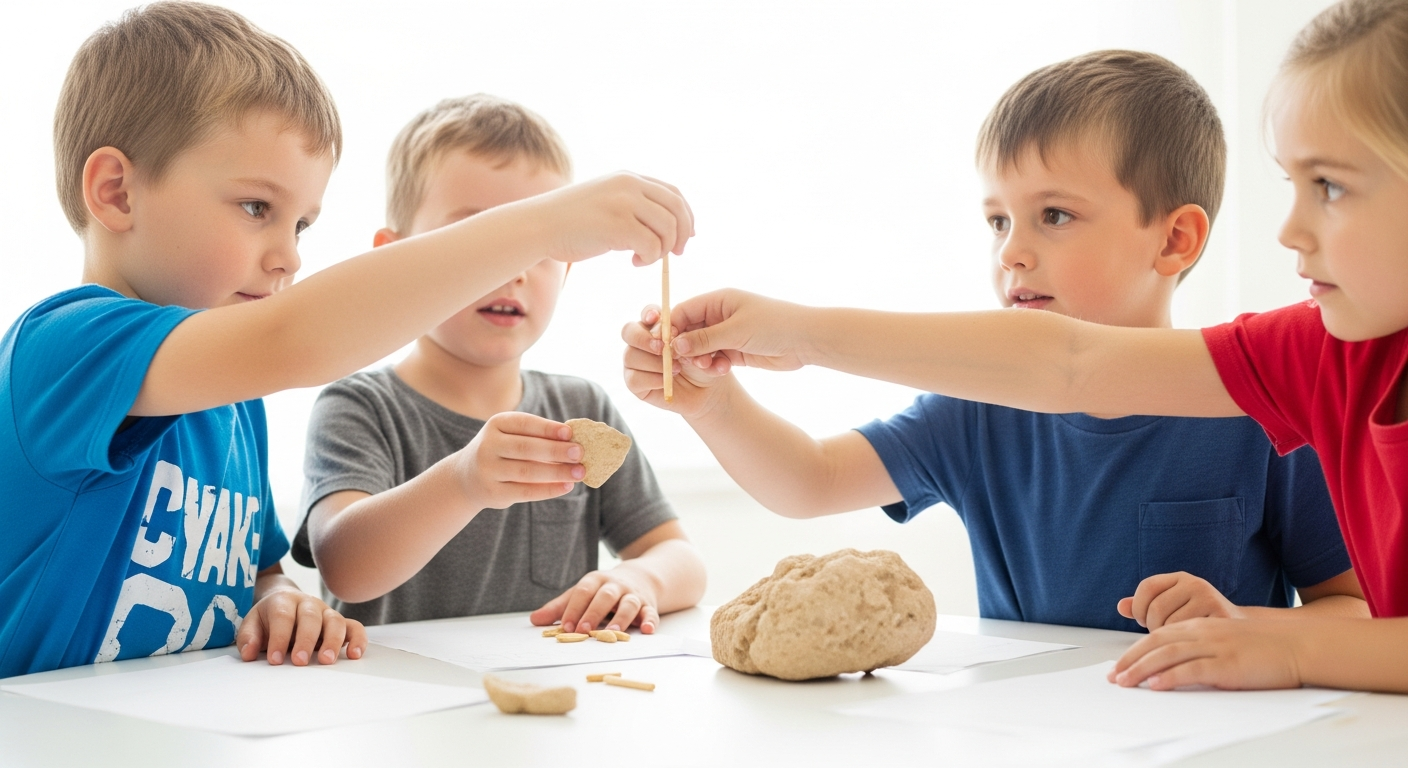
Table of Contents
- Why Fossils Spark Imagination & Learning
- Becoming a Junior Paleontologist: Hands-On Excavation Activities
- Crafting Ancient History: Fossil Creation & Art Projects
- Exploring the Past: Learning & Literacy with Fossils
- Venturing Out: Real-World Fossil Adventures
- Speech Blubs: Your Partner in Discovery and Communication
- Bringing It All Together: Tips for Parents
- Conclusion
- Frequently Asked Questions About Fossil Activities for Kids
Imagine digging up a piece of history, an echo from millions of years ago, right in your own backyard! The thrill of discovery, the wonder of ancient creatures – it’s a feeling that captivates not just seasoned paleontologists but also our youngest explorers. Children are naturally curious, and few topics spark their imagination quite like dinosaurs and the mysterious world of fossils. This inherent fascination provides a spectacular gateway for learning, exploration, and, crucially, developing vital communication skills.
In this comprehensive guide, we'll unearth a treasure trove of engaging and educational fossil activities perfect for kids of all ages. From hands-on digs and creative crafts to interactive learning and real-world adventures, these activities are designed to ignite a passion for science, history, and the natural world. More than just fun, we’ll explore how these prehistoric pursuits can significantly boost your child's language development, foster critical thinking, and build confidence – all while creating unforgettable family memories. We believe that empowering children to "speak their minds and hearts" begins with sparking their innate curiosity, and what better way to do that than by digging into the past?

Why Fossils Spark Imagination & Learning
Fossils are more than just old bones and imprints; they are storytellers from a time long past, holding clues about the Earth's history and the creatures that roamed it. This deep connection to history and mystery makes paleontology an incredibly engaging field for children. Engaging in fun fossil activities for kids provides a powerful platform for holistic development, touching on numerous educational and developmental areas:
- Vocabulary Expansion: Children are introduced to a whole new lexicon of exciting words like "paleontologist," "excavate," "sedimentary," "extinct," "era," "imprint," "replica," "trilobite," and "ammonite." Mastering these terms builds a richer vocabulary, which is a cornerstone of strong communication.
- Concept Understanding: They begin to grasp complex ideas such as deep time, geological processes, evolution, and the different types of life that have existed on Earth. They learn about how fossils form, the conditions necessary for preservation, and the vast scale of natural history.
- Fine Motor Skills: Activities like carefully brushing away sand, molding clay, cutting out shapes, and manipulating small objects during a "dig" significantly refine fine motor control and hand-eye coordination. These skills are also essential for tasks like writing and self-care.
- Problem-Solving & Critical Thinking: When children perform a "fossil dig," they're not just playing; they're hypothesizing, observing, and drawing conclusions. "What kind of creature made this print?" "How old do you think this is?" "What tools would a real paleontologist use?" These questions foster analytical thinking.
- Communication Skills: Perhaps most importantly, fossil activities naturally encourage children to communicate. They narrate their actions, describe their discoveries, ask questions, explain processes, and share their excitement. These moments are invaluable for developing expressive and receptive language.
- Confidence Building: The joy of discovery, the pride in creating a "fossil," and the ability to confidently use new scientific terms significantly boost a child's self-esteem and encourage further exploration.
While playing with fossils, children often narrate their actions ("I found a big, bumpy bone!"), ask "What's this?", and describe textures. These are prime moments for language growth. For a parent whose 3-year-old "late talker" loves animals, the "Animal Kingdom" section within Speech Blubs offers a fun, motivating way to practice "moo" and "baa" sounds, laying foundational descriptive skills. Similarly, working through the "My Super Duper Day" section on Speech Blubs can help children describe their fossil adventures. We know that fostering such a love for communication is key, and our approach at Speech Blubs is built on making learning joyful and effective, blending scientific principles with play.

Becoming a Junior Paleontologist: Hands-On Excavation Activities
Nothing sparks the imagination quite like the idea of digging up something ancient and mysterious. These hands-on activities transform your child into a real-life paleontologist, right in your home or backyard.
The Great Cookie Excavation
This classic activity is a fantastic introduction to the careful, precise work of a paleontologist.
What you'll need:
- Chocolate chip cookies (the more chips, the better!)
- Toothpicks or small wooden skewers
- Small, soft brushes (like paintbrushes or makeup brushes)
- Paper plates
- Magnifying glass (optional, but highly recommended)
How to play:
- Give each child a cookie, a toothpick, and a brush on a paper plate.
- Explain that the cookie is like an archaeological dig site, and the chocolate chips are the "fossils" they need to carefully excavate.
- Challenge them to remove as many chocolate chips as possible without breaking the cookie, using only their toothpick to loosen the chips and their brush to clear away the "dirt" (cookie crumbs).
- Encourage descriptive language as they work: "I'm gently brushing the dirt," "This chip is stuck," "Look at this big fossil!"
This activity is brilliant for developing fine motor skills and patience. It also opens up conversations about the importance of being careful and precise, just like real scientists.
Backyard Dino Dig
Take the excavation fun outdoors for a more expansive experience!
What you'll need:
- Toy dinosaurs, plastic bones, or shells (these will be your "fossils")
- A designated digging area in your backyard, a sandbox, or a large plastic bin filled with sand or soil
- Small shovels, trowels, and brushes
- Buckets or containers for their "finds"
How to play:
- Before the activity, bury the "fossils" in your chosen digging area. Make sure some are partially exposed to give a hint of what lies beneath.
- Provide your junior paleontologists with their digging tools.
- Encourage them to explore the area, carefully excavating their discoveries. As they dig, ask them questions: "What did you find?" "How are you digging it out?" "Is it heavy or light?"
- Once they unearth a "fossil," ask them to describe it – its size, shape, texture, and what kind of animal they think it might have come from.
These activities naturally encourage children to describe their actions and discoveries. For instance, a child might say, "I'm digging carefully!" or "Look, a dinosaur!" This is where Speech Blubs' unique "video modeling" method comes in handy. Children learn best by imitating their peers. If your child is struggling with verb tenses or expanding their sentences, our app provides engaging videos of real kids demonstrating clear speech, offering a powerful tool for family connection around these learning moments. Download Speech Blubs on the App Store or Google Play to explore activities that complement your fossil adventures.
DIY Fossil Ice Excavation
A cool twist on the digging theme, perfect for a warm day or indoor sensory play.
What you'll need:
- Small plastic toy dinosaurs, shells, or leaves
- Ice cube trays or small plastic containers
- Water
- Spray bottles with warm water, small hammers, or blunt tools (e.g., plastic screwdrivers)
How to play:
- Place a toy dinosaur or natural object in each compartment of an ice cube tray or container.
- Fill with water and freeze until solid.
- Once frozen, pop out the ice blocks.
- Provide your child with spray bottles filled with warm water, or safe blunt tools to chip away at the ice and free their "fossil."
- Discuss the concepts of hot and cold, solid and liquid, and the process of melting. "The ice is hard, but the warm water makes it melt!" "The dinosaur is trapped!"
This activity is not only fun but also excellent for sensory exploration and understanding basic physical properties of matter.
Crafting Ancient History: Fossil Creation & Art Projects
Bringing the science of fossilization to life through creative projects helps children visualize complex processes and express their understanding.
Salt Dough Fossils (Molds and Casts)
This hands-on project allows children to understand how molds and casts form, fundamental concepts in paleontology.
What you'll need:
- Salt Dough Recipe: 2 cups flour, 1 cup salt, 1 cup warm water (adjust as needed for consistency). You can add a tablespoon of coffee grounds for a "earthy" texture and color.
- Natural objects for imprints: leaves, shells, small pinecones, interesting rocks, or toy dinosaur feet.
- Waxed paper or parchment paper
- Rolling pin (optional)
How to play:
- Mix the flour, salt, and water in a bowl until a smooth, pliable dough forms. If adding coffee grounds, mix them in thoroughly.
- Have your child roll out small balls or flattened pieces of dough onto waxed paper.
- Press a natural object firmly into the dough to create an impression (the "mold").
- Carefully remove the object to reveal the mold.
- To make a "cast," you can use another piece of fresh dough or plaster of Paris (for older kids and with supervision) to fill the mold. Once set/dried, gently remove the cast to see the replica.
- Allow the salt dough fossils to air dry for 24-48 hours, or bake at a low temperature (200°F/90°C) for 1-2 hours until hard.
Language connection: This activity encourages children to describe textures ("smooth," "bumpy"), actions ("pressing," "rolling," "lifting"), and the concepts of "mold" and "cast." They can talk about what kind of creature or plant made their fossil.
Leaf Rubbings (Carbon Films)
A simple yet effective way to demonstrate how delicate imprints can be preserved.
What you'll need:
- Leaves with prominent veins
- White paper
- Crayons (without wrappers) or pencils
How to play:
- Place a leaf, vein-side up, under a piece of white paper.
- Using the side of a crayon or pencil (without its wrapper), gently rub over the paper where the leaf is.
- Observe as the intricate details of the leaf appear on the paper, creating a "carbon film" effect.
Language connection: Discuss how this is similar to how ancient plants might leave imprints in rock. Children can describe the different patterns and shapes they see, using words like "veins," "serrated," and "smooth."
Preserved Remains (Ice or Gelatin)
This activity illustrates a type of fossilization where an organism is trapped and preserved.
What you'll need:
- Small leaves, flowers, or plastic insects
- Ice cube trays or clear plastic cups
- Water or clear gelatin mixture
How to play (Ice):
- Place an object in each compartment of an ice cube tray or plastic cup.
- Fill with water and freeze.
- Once frozen, observe the preserved item within the ice. Discuss how animals can be preserved in ice or amber.
How to play (Gelatin):
- Prepare a clear gelatin mixture according to package directions.
- Pour a shallow layer into a clear plastic cup. Let it set slightly.
- Add a small plastic insect or leaf on top of the partially set gelatin.
- Pour another layer of gelatin over the object. You can layer multiple objects and colors (like rock strata).
- Let it fully set. Children can then "excavate" the items with plastic spoons.
Language connection: Children can describe the items, their appearance before and after preservation, and discuss what "preserved" means. This is a great opportunity to talk about how animals can get trapped in tar pits or tree sap.
Fossil Stamp Art
Combine creativity with the idea of fossil imprints.
What you'll need:
- Foam stickers (dinosaur shapes, simple geometric shapes)
- Cardboard scraps or plastic bottle caps (as stamp bases)
- Brown, gold, or grey tempera paint
- Paper
How to play:
- Help your child stick foam stickers onto cardboard scraps or bottle caps to create their own unique "fossil stamps."
- Pour small amounts of paint onto plates.
- Children dip their stamps into the paint and press them onto paper, creating repeating fossil patterns.
Language connection: Talk about the shapes and textures they are creating. "This is a bumpy dinosaur print," "I'm making a spiral fossil." This activity also helps with pattern recognition and color vocabulary.
Crafting involves following instructions, naming colors, shapes, and actions. "I'm rolling the dough," "This leaf is pointy," "Can I have the blue paint?" These are all opportunities for language practice. Our mission at Speech Blubs is to empower children to "speak their minds and hearts," and by blending scientific principles with play, we offer one-of-a-kind "smart screen time" experiences. Many of our sections, like "Yummy Time" or "Workout," involve following sequences and naming objects, mirroring the skills used in these crafts.
Dinosaur Skeleton Assembly
This activity blends art with an understanding of anatomy and spatial reasoning.
What you'll need:
- Printed dinosaur skeleton templates (easily found online)
- Scissors
- Glue sticks
- Construction paper
How to play:
- Print out various dinosaur skeleton pieces.
- Have your child cut out the individual bones. This is excellent for developing scissor skills and fine motor control. For younger children, pre-cut some larger pieces.
- Encourage them to arrange the bones on a piece of construction paper to reassemble the dinosaur skeleton.
- Once they are happy with the arrangement, they can glue the pieces down.
Language connection: As they cut and assemble, children can identify body parts ("leg bone," "tail bone," "ribs") and discuss the overall shape and size of the dinosaur. This activity is a fantastic way to develop spatial vocabulary ("above," "below," "next to") and problem-solving skills as they figure out where each piece belongs. For a child learning to articulate complex words like "Triceratops" or "Pterodactyl," Speech Blubs offers engaging practice through its themed sections, making these challenging words fun to learn.
Exploring the Past: Learning & Literacy with Fossils
Beyond the hands-on fun, fossils offer a wealth of opportunities for learning new facts, expanding vocabulary, and developing literacy skills.
Fossil Quizzes & Fact Finding
Turn learning into a game with simple quizzes and research tasks.
What you'll need:
- Dinosaur or fossil books
- Access to age-appropriate online resources (with supervision)
- Flashcards with fossil facts
How to play:
- Start with basic questions: "What is a fossil?" "Where are fossils usually found?" "What are people who study fossils called?"
- Encourage your child to find the answers in books or online.
- For older kids, introduce more complex topics: "What was the biggest dinosaur?" "How long ago did dinosaurs live?" "What caused the dinosaurs to go extinct?"
- Create flashcards with pictures of different fossils (e.g., ammonite, trilobite, dinosaur bone) and their names. Practice identification.
Language connection: This activity actively promotes question-asking, active listening, and information retrieval skills. Children learn to articulate answers clearly and use new scientific terms accurately.
Paleontology Crossword Puzzles & Word Searches
These classic activities are excellent for reinforcing new vocabulary in a fun, challenging way.
What you'll need:
- Printable fossil-themed crossword puzzles or word searches (many available online)
- Pencils
How to play:
- Provide your child with a puzzle.
- Help them read the clues and search for the words related to fossils and dinosaurs (e.g., "bone," "rock," "dinosaur," "T-Rex," "fossil," "prehistoric").
Language connection: This helps with spelling, word recognition, and understanding definitions in context. It's a low-pressure way to practice reading and writing skills.
Storytelling with Fossils
Unleash creativity by encouraging children to create their own narratives inspired by fossils.
What you'll need:
- Pictures of different fossils
- Paper and drawing materials
- "Mad Libs" style templates (optional, for older kids)
How to play:
- Show your child a picture of a fossil (e.g., a dinosaur footprint, a seashell fossil).
- Ask them to imagine the story behind it: "What kind of animal made this footprint?" "What was it doing when it left this print?" "What was its day like?" "How did this seashell become a fossil?"
- Encourage them to draw pictures to illustrate their story or dictate it to you to write down.
- For older children, create "Mad Libs" style stories where they fill in blanks with nouns, verbs, and adjectives related to paleontology, leading to hilarious and imaginative tales.
Language connection: Storytelling is paramount for developing narrative skills, imagination, and expressive language. Children learn to sequence events, create characters, and use descriptive language to bring their stories to life.
Rock Letters & Dinosaur-Themed Reading
Incorporate literacy directly into your fossil theme.
What you'll need:
- Dinosaur or fossil-themed books (fiction and non-fiction)
- Rocks or smooth stones with letters written on them (DIY or purchased)
- Alphabet magnets or letter tiles
How to play:
- Read aloud dinosaur and fossil books to your child. Discuss the new information, characters, and events.
- Use rock letters or alphabet tiles to spell out fossil-related words like "DINO," "BONE," "ROCK," or even longer words like "FOSSIL" or "EXCAVATE."
- For younger children, focus on letter recognition and matching. For older children, practice spelling and building sentences.
Expanding vocabulary and understanding concepts are core to language development. When children learn words like "extinction" or "sedimentary," they're building a rich mental lexicon. Speech Blubs supports this by introducing new words and concepts in an engaging, interactive way. Our app helps children practice articulation for these new words. For parents wondering if their child is on track, our quick 3-minute preliminary screener can provide an assessment and a next-steps plan, including a free 7-day trial to see how we can help.
Venturing Out: Real-World Fossil Adventures
Sometimes, the best way to learn is to see and experience things firsthand. Even without a genuine fossil dig site nearby, there are many ways to connect with the ancient past.
Museum Visits (In-Person or Virtual)
A natural history museum is a treasure trove of real fossils and educational exhibits.
What you'll need:
- A visit to a local natural history museum, or access to virtual museum tours online.
- A notebook and pencil for observations.
How to play:
- Before your visit, talk about what you expect to see. Look up some dinosaurs or fossils you might encounter.
- During the visit, encourage your child to observe the exhibits closely. Ask open-ended questions: "What do you notice about this fossil?" "How big do you think this dinosaur was?" "What questions do you have about this creature?"
- After the visit, discuss your favorite parts and what new things you learned.
Language connection: Museum visits are incredible for sparking curiosity and encouraging descriptive and analytical language. Children can share their observations, ask complex questions, and recount their experiences, all while expanding their vocabulary related to sizes, shapes, and scientific terms.
Local Park or Nature Center Exploration
While you might not find a T-Rex bone, local parks offer opportunities to observe modern "fossils" and discuss natural processes.
What you'll need:
- A visit to a local park, nature trail, or even your garden.
- Magnifying glass (optional)
How to play:
- Go for a walk and look for signs of life and natural processes.
- Point out things like animal tracks in mud or sand – explain how these are like "trace fossils" left behind by modern animals.
- Look for interesting rock formations, different types of soil, or even leaf imprints in damp ground. Discuss how these might, over millions of years, become fossils.
Language connection: This activity encourages observation, comparison, and the use of descriptive words for nature. It helps children understand the concept of time and change in a tangible way.
Creating a Collection
Learning to categorize and organize is a fundamental skill that fossil exploration can easily support.
What you'll need:
- A box or display shelf
- Interesting rocks, shells, leaves, or even small toys collected during outings
How to play:
- Encourage your child to collect interesting natural objects.
- Help them organize their collection: by color, size, shape, or type.
- Discuss why each item is special and how it relates to nature.
Language connection: This activity helps children develop categorization skills, descriptive language, and the ability to explain their choices. They can talk about the attributes of each item and why it belongs in a particular group.
Discussing observations from a museum visit or a nature walk is excellent for expressive language. "That dinosaur was so tall!" "I wonder what it ate?" For children who might be hesitant to express these thoughts, Speech Blubs provides a safe and motivating environment. Our scientific methodology, backed by extensive research, focuses on making communication fun and accessible, helping children build the confidence to share their experiences.
Speech Blubs: Your Partner in Discovery and Communication
At Speech Blubs, we believe that every child deserves to find their voice and express themselves confidently. Our mission is to empower children to "speak their minds and hearts." This commitment was born from the personal experiences of our founders, who all grew up with speech problems and created the tool they wished they had. We are dedicated to providing an immediate, effective, and joyful solution for the 1 in 4 children who need speech support, blending scientific principles with play into one-of-a-kind "smart screen time" experiences.
While your child is enjoying these fun fossil activities for kids, Speech Blubs can be a powerful supplement, enhancing their language development in a way that feels like play. Our app provides a screen-free alternative to passive viewing (like cartoons) and a powerful tool for family connection. We achieve this through our unique approach of teaching complex communication skills using our "video modeling" methodology, where children learn by watching and imitating their peers. This peer-to-peer learning is incredibly effective because children are naturally drawn to observing and mimicking other kids.
For example, if your child is fascinated by dinosaurs but struggles to articulate words like "Triceratops" or "Pterodactyl," Speech Blubs offers engaging practice through its themed sections. Our app helps break down sounds and words into manageable, fun exercises, giving children the tools to confidently voice their interests. From "Animal Kingdom" to "We All Feel," the app covers a wide range of vocabulary and emotional expression, making it a comprehensive tool for early language learners and those needing a little extra support.
Investing in Your Child's Future with Speech Blubs
We believe in transparency and value, especially when it comes to your child's development. We offer two main subscription plans designed to fit your family's needs:
- Monthly Plan: For $14.99 per month, you get access to our core Speech Blubs app. This is a good starting point if you want to try it out for a shorter period.
- Yearly Plan: For an incredible $59.99 per year, you get access to the full Speech Blubs experience, which breaks down to just $4.99 per month! This plan offers exceptional value and is the clear best choice for families committed to their child's long-term communication growth.
Why the Yearly Plan is the Best Value (Save 66%!): The Yearly plan isn't just cheaper; it's packed with exclusive, high-value features designed to give your child the most comprehensive support:
- 7-Day Free Trial: Try out everything Speech Blubs has to offer before committing.
- The Extra Reading Blubs App: Unlock our complementary Reading Blubs app, which provides additional literacy support, helping your child connect sounds to letters and build early reading skills.
- Early Access to New Updates: Be the first to experience new features, activities, and content as we continuously enhance the app.
- 24-Hour Support Response Time: Get priority assistance from our dedicated support team whenever you need it.
The Monthly plan does not include these fantastic benefits, making the Yearly plan the superior choice for maximizing your child's learning journey and your family's experience.
See what other parents are saying about their child's success with Speech Blubs. We're proud of the positive impact we've had on countless families, helping children develop confidence and a love for communication.
Bringing It All Together: Tips for Parents
Incorporating these fun fossil activities for kids into your routine can be incredibly rewarding. Here are some tips to make the most of your paleontological adventures:
- Co-Play and Engage: Your active participation is key. Join in the digging, crafting, and storytelling. Your enthusiasm is contagious and makes the activities more impactful for your child's language development.
- Be Patient and Positive: Learning takes time. Celebrate every small discovery and every new word spoken. Focus on the effort and the joy of the process, rather than just the outcome.
- Adapt to Your Child's Interests: If your child loves digging, spend more time on excavation activities. If they love art, focus on fossil crafts. Tailor the experiences to keep their engagement high.
- Integrate Naturally: Look for everyday moments to talk about fossils. While reading a book, point out a fossil illustration. While on a walk, talk about how mud might turn into rock.
- Use the Right Tools: For children needing extra language support, tools like Speech Blubs can provide targeted practice for articulation, vocabulary, and sentence structure, complementing these hands-on activities. Remember, Speech Blubs is a powerful supplement to a child's overall development plan and, when applicable, professional therapy.
- Create a Learning Environment: Have books about dinosaurs and fossils readily available. Provide art supplies and sensory bins for spontaneous exploration.
Conclusion
As you embark on these exciting fun fossil activities for kids, remember that every discovery, every conversation, and every moment of shared wonder is building a foundation for strong communication. From the thrill of a backyard dig to the creativity of crafting a salt dough fossil, these experiences do more than just entertain; they educate, inspire, and deeply engage your child's developing mind and voice.
At Speech Blubs, we are committed to being your partner in this incredible journey, turning "screen time" into "smart time" that empowers your child to explore, learn, and grow their voice. The blend of hands-on exploration and our scientifically-backed video modeling methodology provides a comprehensive approach to fostering language skills, making learning an immediate, effective, and joyful experience. We are here to help your child develop the confidence to "speak their minds and hearts," reducing frustration and creating more joyful family learning moments.
Ready to unearth your child's full communication potential? Start your adventure today! We highly recommend our Yearly plan for the best value and the most comprehensive learning experience. For just $59.99 a year (saving you 66% compared to monthly), you'll unlock a 7-day free trial, gain access to the amazing Reading Blubs app, receive early access to new updates, and benefit from 24-hour support response. The Monthly plan at $14.99 per month does not include these exclusive benefits, so choose wisely!
Download Speech Blubs on the App Store or Google Play Store and select your Yearly plan today. Let's make learning and communication a roaring success!
Frequently Asked Questions About Fossil Activities for Kids
1. What age are these fossil activities suitable for?
These fossil activities can be adapted for a wide range of ages, from preschoolers to early elementary school children. Younger children will enjoy sensory aspects like digging in sand or molding clay, while older children can delve deeper into the scientific concepts, vocabulary, and research aspects. Always tailor the complexity and required fine motor skills to your child's developmental stage.
2. How do fossil activities help with language development?
Fossil activities provide natural opportunities for language growth. Children learn new vocabulary (e.g., paleontologist, excavate, extinct), practice describing observations, follow instructions, ask questions, and engage in storytelling about ancient creatures. These interactions encourage expressive language, active listening, and critical thinking, all of which are vital for communication development.
3. Do I need special equipment for these activities?
Not at all! Many of these fun fossil activities for kids use common household items or materials found in nature, such as flour, salt, coffee grounds, leaves, twigs, and toy dinosaurs. For excavation, simple tools like toothpicks, paintbrushes, and small shovels work perfectly. The focus is on creativity and engagement, not expensive supplies.
4. Can Speech Blubs replace professional speech therapy?
Speech Blubs is a powerful tool designed to supplement and support your child's language development journey, offering engaging and scientifically-backed "smart screen time" that complements hands-on learning. While incredibly effective for building foundational communication skills and boosting confidence, it is not intended to replace professional speech therapy. If you have concerns about your child's speech and language development, we always recommend consulting with a certified speech-language pathologist for a personalized assessment and guidance.
About the author