
Fun Free Games for Kids: Boost Speech & Learning!
 By Speech Blubs Team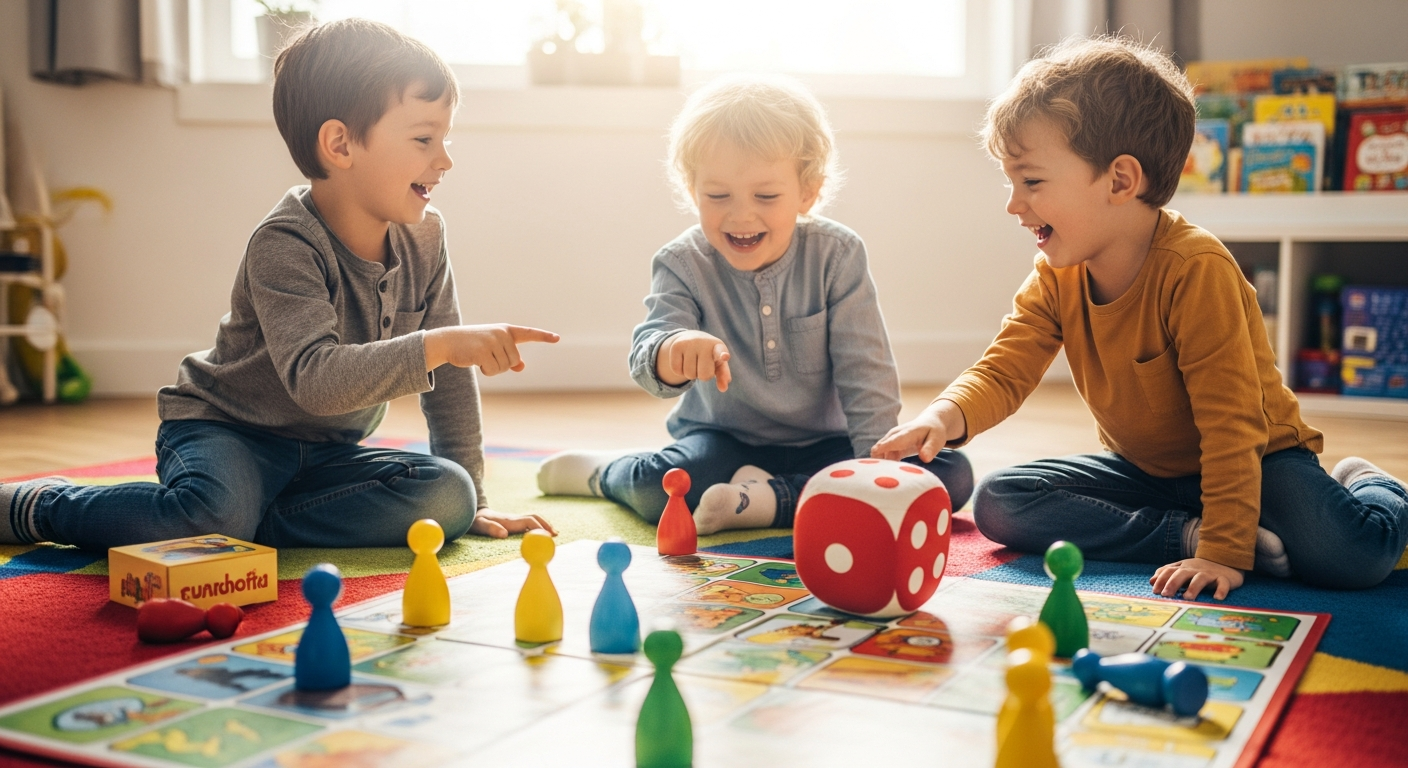
Table of Contents
- Why Play is the Ultimate Language Teacher
- Unlocking Communication: How Fun Games Pave the Way
- Screen Time Reimagined: Smart Play with Purpose
- Free Fun Games for Kids: Beyond the Screen
- Bringing Structured Fun Home: How Speech Blubs Can Help
- Is Speech Blubs Right for Your Child? A Quick Check
- Maximizing Value: Understanding Speech Blubs Pricing & Features
- Getting Started: Join Our Community of Communicators
- Frequently Asked Questions (FAQ)
Picture this: your child is completely absorbed in play, eyes sparkling with delight, little hands exploring, and suddenly, they utter a new word, string together a phrase, or confidently ask a question. It’s a magical moment, and it often happens during those seemingly simple times when kids are just having "fun." As parents, we inherently understand the power of play, but sometimes, the sheer volume of choices – from traditional toys to digital screens – can feel overwhelming. How do we ensure that the games our children play are not just entertaining, but genuinely supportive of their development, especially when it comes to vital communication skills?
This post is dedicated to exploring how fun games, both on and off-screen, can become powerful catalysts for speech and language development in children. We'll dive into the incredible connection between play and learning, discuss how to transform everyday activities into language-rich experiences, and introduce you to "smart screen time" solutions that make learning to communicate joyful and effective. Our mission at Speech Blubs is to empower children to "speak their minds and hearts," and we believe that purposeful play is at the core of achieving this. Join us as we uncover how to turn playtime into prime time for building confident communicators, all while embracing the spirit of "fun games for free for kids."
Why Play is the Ultimate Language Teacher
From the moment they are born, children are little scientists, constantly experimenting, observing, and making sense of the world around them. And their primary laboratory? Play! Play isn't just a way to pass the time; it's the fundamental mechanism through which children learn, grow, and develop crucial life skills, especially language.
The Power of Play in Early Development
Think about a toddler stacking blocks or a preschooler pretending to be a superhero. These activities, while seemingly simple, are complex learning experiences. When children play, they are:
- Engaging multiple senses: Touching different textures, hearing new sounds, seeing vibrant colors. This sensory input is vital for brain development and helps build connections that support language processing.
- Developing motor skills: Fine motor skills (like manipulating small toys) and gross motor skills (like running and jumping) are intricately linked to cognitive development, including the areas of the brain responsible for speech.
- Practicing problem-solving: How do I make this tower stand? How can I get my doll to "talk"? These questions spark critical thinking and encourage verbalization.
- Learning social cues: Playing with others teaches turn-taking, sharing, negotiation, and understanding emotions – all foundational for effective communication.
Without these playful experiences, a child's developmental journey would be significantly different. Language doesn't exist in a vacuum; it’s deeply intertwined with every other aspect of a child's growth.
Beyond Entertainment: Play as Skill-Building
While entertainment is certainly a wonderful byproduct of play, its true value lies in its power to build skills. When we talk about language development, play offers an organic environment for:
- Vocabulary acquisition: Naming objects, actions, and emotions encountered during play.
- Sentence structure: Experimenting with combining words to express desires or describe scenarios.
- Narrative skills: Developing stories during imaginative play, which lays the groundwork for later reading comprehension and written expression.
- Articulation practice: Making animal sounds, imitating car noises, or trying out new words learned in context.
Every giggle, every attempt, every shared moment in play is a building block for a child's linguistic repertoire. It's about providing rich, meaningful contexts for words to truly click.
Making Every Moment a Learning Opportunity
The beauty of play is that it doesn't require elaborate setups or expensive toys. It can happen anywhere, anytime. A walk in the park becomes an opportunity to name birds and describe colors. Helping with dinner offers chances to talk about ingredients and actions. Even waiting in line can be transformed into a simple game of "I Spy." The key is for adults to be present, engaged, and responsive, modeling language and expanding on the child's utterances.
"The moments we share in playful interaction are not just fleeting fun; they are deeply ingrained learning experiences that shape a child's ability to communicate with confidence and joy."
Unlocking Communication: How Fun Games Pave the Way
When we talk about "fun games for free for kids," we're really talking about creating environments ripe for communication. These aren't just distractions; they are purposeful pathways to stronger speech and language skills.
Building Foundational Speech Skills Through Play
Many speech and language challenges stem from difficulties with foundational skills. Fun games can naturally address these:
- Oral motor skills: Blowing bubbles, making silly faces in a mirror, or pretending to eat different foods during play strengthens the muscles involved in speech.
- Auditory processing: Games like "Simon Says" or identifying sounds in the environment help children listen attentively and distinguish between different sounds – a critical skill for understanding spoken language.
- Articulation: Role-playing, singing songs, or imitating animal sounds provides low-pressure, enjoyable opportunities to practice specific sounds and words. For instance, pretending to be a train ("choo-choo!") or a cow ("moo!") directly targets common early sounds.
Enhancing Vocabulary and Comprehension
Play naturally introduces children to a vast array of new words and concepts. Consider these examples:
- Board games: Naming colors, counting spaces, understanding simple rules, and discussing strategies expand vocabulary and comprehension.
- Construction play: Talking about "big" and "small," "above" and "below," "connect" and "separate" builds spatial and descriptive language.
- Dress-up games: Describing costumes, adopting character voices, and acting out scenarios introduces new nouns, verbs, and adjectives in an imaginative context.
When new words are encountered within an engaging play scenario, they are more likely to be remembered and understood because they are linked to a memorable experience rather than just rote memorization.
Fostering Social Communication and Emotional Expression
Communication is about more than just words; it's also about interacting with others and expressing feelings.
- Cooperative games: Building a fort together or solving a puzzle requires negotiation, listening to others' ideas, and expressing one's own thoughts clearly.
- Pretend play: Taking on different roles (e.g., doctor and patient, chef and customer) allows children to practice dialogue, empathy, and understanding different perspectives. They learn to interpret facial expressions, body language, and tone of voice.
- Games that involve turn-taking: These teach patience, reciprocal communication, and the rhythm of conversation. They help children learn when to speak and when to listen.
By engaging in these types of games, children develop the confidence and skills needed for successful social interactions, reducing frustration and building self-esteem.
The Role of Repetition and Engagement
Children learn through repetition, but repetitive drills can quickly become boring and ineffective. Fun games offer a brilliant solution: they embed repetition within an engaging, motivating context. A child might be happy to "moo" like a cow ten times if it's part of an exciting farm game, whereas simply being asked to repeat "moo" ten times might lead to resistance. The inherent joy of play makes the necessary repetition feel natural and enjoyable, solidifying new sounds, words, and concepts.
Screen Time Reimagined: Smart Play with Purpose
In today's world, screens are an undeniable part of children's lives. The question isn't whether to allow screen time, but how to make it beneficial. This is where "smart screen time" comes into play, transforming passive viewing into active, engaging, and developmentally supportive experiences.
Passive vs. Active Screen Time: A Crucial Distinction
Not all screen time is created equal. Understanding the difference is vital:
- Passive Screen Time: This is often characterized by children simply watching content without interaction. Think of endless cartoons or background videos. While these might entertain, they offer minimal opportunity for active engagement, response, or language practice.
- Active Screen Time: This involves interactive apps or programs that require children to participate, respond, and make choices. These experiences encourage problem-solving, creativity, and direct communication.
The goal is to shift the balance towards active screen time, turning a potentially isolating experience into a dynamic learning journey.
Introducing Smart Screen Time: Our Unique Approach
At Speech Blubs, we are deeply committed to providing an immediate, effective, and joyful solution for the 1 in 4 children who need speech support. Our company was born from the personal experiences of our founders, who all grew up with speech problems and created the tool they wished they had. We understand the challenges parents face and have dedicated ourselves to offering a "smart screen time" alternative to passive viewing.
We blend scientific principles with play into one-of-a-kind experiences. Our app isn't just a collection of games; it's a carefully designed environment where children learn vital communication skills through a method called "video modeling." We leverage the power of technology to create a screen-based activity that is as engaging and effective as possible.
Video Modeling: Learning from Peers
Our unique video modeling methodology is central to what makes Speech Blubs so effective. Instead of listening to an adult, children learn by watching and imitating their peers on screen. This approach is rooted in neuroscience, specifically the concept of "mirror neurons" – brain cells that fire both when we perform an action and when we observe someone else performing that action.
When a child sees another child happily making a sound or forming a word, their mirror neurons activate, making it easier for them to imitate and produce that sound or word themselves. This peer-to-peer interaction is incredibly motivating and helps children feel less intimidated and more confident in their own attempts. It's like having a friendly classmate right there with them, encouraging every step of the way. You can learn more about Speech Blubs and our mission.
From Founders' Experience to a Global Solution
Our founders’ personal journeys with speech challenges instilled in them a deep empathy and determination to create a tool that genuinely helps. They built Speech Blubs not just as an app, but as a movement to make speech therapy accessible, fun, and integrated into daily family life. We believe in harnessing the power of technology to bridge gaps and connect families, transforming screen time into a powerful tool for family connection and developmental growth.
Free Fun Games for Kids: Beyond the Screen
While digital tools offer incredible support, it's also essential to remember the wealth of "fun games for free for kids" that exist in the everyday world. These activities provide rich, screen-free opportunities for language development and family bonding.
Everyday Adventures: Turning Chores into Chants
Who says learning can't happen while doing chores?
- Laundry Day Linguistics: Sort clothes by color and size, using descriptive words ("red sock," "big shirt," "soft towel"). Talk about actions like "folding," "matching," and "putting away." Sing simple songs about colors or clothing items.
- Cooking Conversations: Involve your child in simple kitchen tasks. Name ingredients, describe tastes and textures ("crunchy carrot," "sweet apple"), and talk through the steps of a recipe ("first, we stir; then, we pour"). This builds vocabulary and sequencing skills.
- Grocery Store Gab: Before you go, make a simple picture list and talk about what you need. At the store, have your child find items and name them. Ask questions like, "Where are the apples?" or "What color is the banana?"
Outdoor Explorations: Nature's Classroom
The great outdoors is a free, sensory-rich environment perfect for language learning.
- Nature Walks: Go on a "listening walk" and identify sounds (birds chirping, leaves rustling, cars passing). Point out different plants, animals, and objects, describing their features ("tall tree," "tiny ant," "rough bark"). Play "I Spy" using colors, shapes, or attributes.
- Playground Patter: Talk about actions as your child plays ("You're swinging high!" "Let's slide down fast!"). Discuss the sounds they hear or the feelings they experience ("Are you happy to play?"). Encourage them to ask for turns or invite others to play.
- Garden Grow-Time: If you have a garden, involve your child in planting and watering. Talk about the seeds, the soil, and what plants need to grow. Name the vegetables or flowers. Even a potted plant on a windowsill can be a source of conversation.
Story Time & Imagination Play: Crafting Narratives
The simplest and often most powerful "free games" involve imagination.
- Storytelling Sessions: Beyond reading books, encourage your child to tell their own stories. Start a sentence and let them finish it, or use puppets/stuffed animals to create characters and dialogue. Ask open-ended questions to prompt their narrative ("What happened next?").
- Dramatic Play: Provide a box of old clothes, scarves, or props, and let their imaginations soar. Pretending to be doctors, chefs, astronauts, or animals allows children to experiment with different voices, vocabulary, and social roles. This is a fantastic way to practice expressive language in a low-stakes environment.
- Building Worlds: Use blankets and pillows to build a fort, or LEGOs/blocks to construct a city. As you build, talk about what you're creating, who lives there, and what adventures might unfold. This collaborative play is rich in descriptive language and problem-solving.
Simple DIY Games: Household Items, Endless Fun
You don't need fancy toys to create engaging language games.
- Silly Voice Challenges: Make different animal sounds, robot voices, or whisper words. This encourages vocal play and exploration of pitch and volume.
- "What's in the Bag?" Game: Put a few household objects in a bag. Have your child reach in, feel an item without looking, and describe what they feel. Can they guess what it is using their words? This boosts descriptive vocabulary.
- Rhythm and Rhyme: Clap out syllables in names or words. Sing simple rhyming songs or make up your own silly rhymes. Rhyming is a pre-reading skill that also builds phonological awareness, which is critical for speech development.
These "free fun games for kids" integrate seamlessly into daily life, fostering a love for communication and connection without needing any special equipment.
Bringing Structured Fun Home: How Speech Blubs Can Help
While unstructured play is invaluable, sometimes a more structured, targeted approach can make a significant difference, especially for children who need a little extra support with their speech and language development. This is precisely where Speech Blubs shines, offering a powerful supplement to a child's overall development plan.
Tailored Learning Journeys for Every Child
At Speech Blubs, we understand that every child is unique. Our app offers a vast library of activities organized into engaging categories like "Animal Kingdom," "Yummy Time," "Sing-Along," and "What's My Job?" These categories are designed to capture a child's interest and provide rich, varied contexts for language learning. Whether your child is fascinated by dinosaurs or loves exploring different shapes, there's an activity tailored to their passions. This personalized engagement helps maintain motivation and makes learning feel like pure play.
The Magic of Imitation: Our Core Methodology
Our app’s foundation is built on the power of imitation. Children watch real kids, their peers, performing actions, making sounds, and saying words. This isn't passive viewing; it’s an interactive mirror. When the child attempts to imitate, the app uses voice recognition technology to provide immediate feedback and encouragement, celebrating every effort. This gentle guidance helps children build confidence and refine their pronunciation without feeling pressured.
Engaging Content: From Animals to Everyday Life
Our content spans a wide range of topics, ensuring comprehensive language exposure:
- Sounds and Words: Focusing on basic sounds, initial consonant sounds, and core vocabulary words.
- Early Concepts: Exploring colors, shapes, numbers, and basic prepositions.
- Social Skills: Activities that encourage turn-taking, asking questions, and expressing emotions through role-playing.
- Storytelling: Simple narratives that prompt children to follow along and predict outcomes, building comprehension and narrative skills.
We also have a high MARS scale rating, a testament to our evidence-based approach and quality. Explore the science behind our approach to see how our methodology aligns with the latest research in child development.
Real-World Impact: Practical Scenarios
Let's look at how Speech Blubs helps in everyday situations:
- Scenario 1: The Animal Lover. For a parent whose 3-year-old "late talker" loves animals but struggles with expressive language, the "Animal Kingdom" section in Speech Blubs offers a fun, motivating way to practice sounds like "moo," "baa," and "roar." By watching and imitating their peers, the child enthusiastically attempts these sounds, building confidence and expanding their verbal repertoire, often surprising their parents with new animal names and sounds.
- Scenario 2: The Question-Asker. A parent notices their 4-year-old understands a lot but struggles to form questions clearly, leading to frustration. Speech Blubs includes activities that model asking and answering simple "who," "what," and "where" questions. Through playful imitation and guided practice, the child learns sentence structures for inquiry, reducing their frustration and making conversations smoother.
- Scenario 3: The Shy Talker. A 5-year-old child is reluctant to speak up in group settings, despite knowing many words. The non-intimidating, peer-focused environment of Speech Blubs allows them to practice new words and phrases in a safe space. They gain confidence through positive reinforcement within the app, which then translates into a greater willingness to participate verbally in real-world interactions.
These examples highlight how Speech Blubs seamlessly integrates targeted practice into engaging, kid-friendly activities. See what parents are saying about their children's progress and the joyful learning experiences they've had with our app.
Is Speech Blubs Right for Your Child? A Quick Check
It’s natural for parents to wonder if their child could benefit from a tool like Speech Blubs. Sometimes, a child's communication journey takes a unique path, and a little extra support can make all the difference.
Identifying Potential Communication Needs
While every child develops at their own pace, there are general milestones to consider. If you notice your child:
- Is not using words or sounds expected for their age.
- Struggles to be understood by family or friends.
- Gets frustrated when trying to communicate.
- Has difficulty following simple instructions.
- Doesn't respond to their name or other sounds.
...then it might be a good idea to explore resources that can provide support. Remember, early intervention is key, and fostering a love for communication from a young age can prevent potential challenges from escalating.
The Preliminary Screener: Your First Step
We understand that knowing where to start can be daunting. That's why we've created a helpful, no-pressure tool: our quick 3-minute preliminary screener. This involves 9 simple questions designed to help parents gain insight into their child's current communication development.
It's not a diagnostic tool, but it offers a simple assessment and a personalized next-steps plan. It’s an excellent way to get a clearer picture and, most importantly, provides access to a free 7-day trial of Speech Blubs, allowing you and your child to experience the app firsthand. Take our quick 3-minute preliminary screener today to get started.
Maximizing Value: Understanding Speech Blubs Pricing & Features
We are dedicated to making effective speech and language support accessible to as many families as possible. That's why we offer transparent pricing options designed to fit different needs, with the Yearly plan offering the best value by far.
Affordable Support for Every Family
Investing in your child's communication skills is one of the most impactful decisions you can make. With Speech Blubs, you’re not just getting an app; you’re gaining a scientifically backed tool developed by experts and refined through the experiences of our founders who faced similar challenges.
Monthly Plan: Convenience at $14.99
For those who prefer flexibility, our Monthly plan is available at $14.99 per month. This provides full access to the core Speech Blubs app and its vast library of engaging activities. It's a great option for trying out the app without a longer commitment.
Yearly Plan: The Smart Choice for Long-Term Growth
For the most significant savings and the fullest experience, we highly recommend our Yearly plan. At just $59.99 per year, it breaks down to an incredible value of only $4.99 per month – allowing you to save a fantastic 66% compared to the monthly subscription!
The Yearly plan isn't just cheaper; it unlocks an entire suite of exclusive, high-value features designed to supercharge your child's learning journey:
- 7-Day Free Trial: Only with the Yearly plan do you get a full 7 days to explore every corner of Speech Blubs with your child, completely risk-free.
- The Extra Reading Blubs App: This bonus app extends the learning beyond speech, focusing on early literacy skills. It's like getting two powerful learning tools for the price of one!
- Early Access to New Updates: Be among the first to experience exciting new games, activities, and features as soon as they are released.
- 24-Hour Support Response Time: Our dedicated support team is there for you, ensuring any questions or concerns are addressed quickly and efficiently.
The Monthly plan, unfortunately, does not include these exclusive benefits, making the Yearly plan the clear best choice for families committed to their child's long-term communication development.
Making the Most of Your Trial
When you choose the Yearly plan and begin your 7-day free trial, we encourage you to dive in! Explore different sections with your child, find out what activities they love most, and witness firsthand how our unique video modeling approach sparks their communication. This trial is your opportunity to truly understand the value Speech Blubs brings to your family. Ready to get started? Create your account and begin your 7-day free trial today and make sure to select the Yearly plan to unlock all the amazing benefits!
Getting Started: Join Our Community of Communicators
The journey of speech and language development is an adventure filled with little victories and joyful discoveries. By embracing purposeful play, both off-screen and with "smart screen time" solutions like Speech Blubs, you're giving your child the best possible foundation to "speak their minds and hearts." We believe every child deserves the opportunity to communicate confidently and joyfully.
We are here to support you every step of the way, providing a tool that combines scientific principles with engaging, child-friendly activities. Let's make learning to communicate a fun, positive, and empowering experience for your child.
Ready to see the difference Speech Blubs can make?
- Download Speech Blubs on the App Store
- Get Speech Blubs on Google Play
- Or create your account and start your 7-day free trial directly from our website. Remember to choose the Yearly plan to unlock the free trial, the bonus Reading Blubs app, and exclusive features!
Frequently Asked Questions (FAQ)
Q1: Is Speech Blubs a replacement for professional speech therapy?
A1: Speech Blubs is a powerful supplemental tool designed to complement and enhance a child's overall speech and language development. It provides engaging, daily practice in a fun, accessible format. While many parents see significant progress, especially for children with mild to moderate delays, it is not intended to replace professional therapy. If you have concerns about your child's development, we always recommend consulting with a speech-language pathologist for a personalized assessment.
Q2: What age range is Speech Blubs suitable for?
A2: Speech Blubs is primarily designed for children aged 1-8 years. Our diverse range of activities caters to various developmental stages, from early sound imitation and first words to developing complex sentences and social communication skills. The content is adaptable and engaging for a broad spectrum of early learners.
Q3: How does Speech Blubs ensure child safety and privacy?
A3: Child safety and privacy are paramount to us. Speech Blubs is a closed, secure environment with no ads or external links within the child-facing interface. We do not share or sell user data. Our content is carefully curated to be age-appropriate and positive. Parents are always in control of their child's profile and usage.
Q4: My child isn't interested in screen time. How can Speech Blubs still help?
A4: While Speech Blubs is a digital app, we encourage supervised, interactive screen time where parents play alongside their child. Our app is designed to be highly engaging and interactive, aiming to capture even hesitant children. However, if your child genuinely struggles with screens, remember the wealth of "free fun games for kids" we discussed for off-screen play. You can also integrate the language concepts learned in the app into real-world activities. Consistency and patience, combined with making learning fun, are key.