
Fun Get to Know You Games for Kids: Connect & Communicate
 By Speech Blubs Team•Jan 19, 2026•21 min.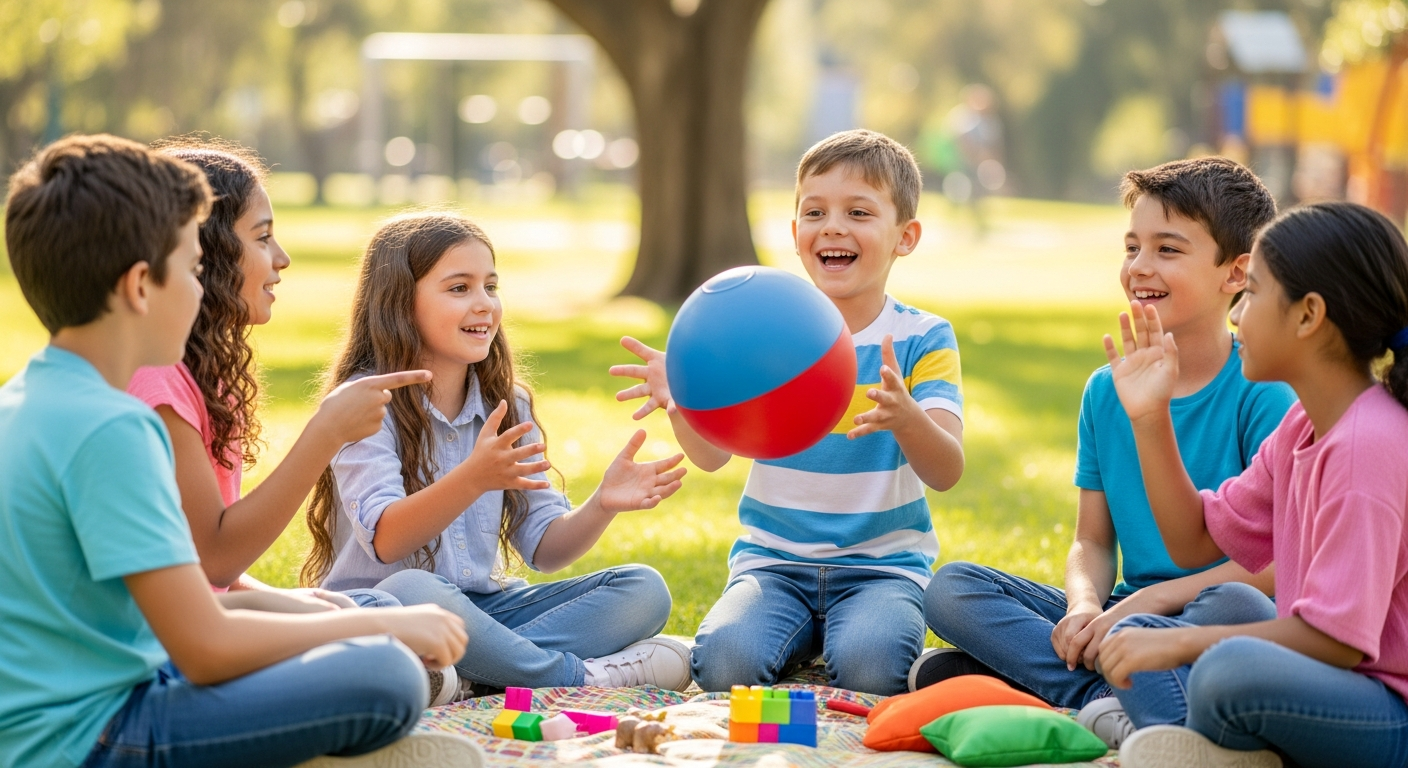
Table of Contents
- Introduction
- The Transformative Power of Get-to-Know-You Games
- Principles for Effective Icebreaker Play
- Fun Get to Know You Games for Kids: A Curated Collection
- Speech Blubs: Your Partner in Joyful Communication Development
- Conclusion
- FAQ
Introduction
Remember the nervous flutter in your stomach on the first day of school, summer camp, or a new playgroup? That mix of excitement and apprehension is universal, especially for children entering new social environments. Making friends, learning names, and feeling like part of a group can be daunting, but it's crucial for building confidence and developing vital communication skills. The right start can transform a hesitant silence into a symphony of shared laughter and connection.
This blog post is dedicated to exploring a treasure trove of engaging and effective "get to know you" games for kids. We'll dive into activities designed to melt away shyness, spark conversations, and forge friendships from preschool through elementary school. You’ll discover how these simple yet powerful games not only build social bonds but also naturally foster essential communication abilities, from active listening and clear articulation to expressing thoughts and feelings. At Speech Blubs, we believe in empowering children to "speak their minds and hearts," and these games are a fantastic, joyful step in that journey. By providing a warm and inviting atmosphere, we can help every child find their voice and connect with others.

The Transformative Power of Get-to-Know-You Games
Get-to-know-you games, often called icebreakers, are much more than just time fillers. They are carefully designed activities that create a low-pressure environment for children to learn about each other, build rapport, and feel comfortable in a new setting. For children, especially those who may be naturally shy or experiencing speech and language development delays, these games offer a gentle pathway into social interaction.
- Breaking Down Barriers: New situations can be intimidating. Icebreakers provide a structured way for kids to engage without the pressure of initiating conversation from scratch. This can significantly reduce anxiety, making them more receptive to learning and social participation.
- Building Confidence: Successfully participating in a game, even a simple one, can give a child a huge boost in confidence. When they share a fact about themselves and see positive reactions from peers, it validates their voice and encourages further interaction. This aligns perfectly with our mission at Speech Blubs, where we strive to build confidence in every child’s communication journey.
- Fostering Communication Skills: These games are mini-workshops in communication. Children practice listening actively, asking questions, understanding non-verbal cues, articulating their thoughts, and even learning new vocabulary. For instance, a game asking about favorite animals encourages a child to not only name an animal but perhaps also describe why they love it, building descriptive language skills.
- Developing Empathy and Understanding: Learning about peers' likes, dislikes, and experiences broadens a child's worldview and fosters empathy. They discover commonalities and celebrate differences, learning to appreciate the unique individuals around them.
- Creating a Positive Group Dynamic: A classroom or group where children feel connected and understood is a more inclusive and supportive environment. This positive dynamic can impact everything from academic performance to emotional well-being.
- Enhancing Memory: Many games involve remembering names or facts about others, which is excellent for cognitive development and social recall.
For children who might need extra support in developing their communication, these games serve as a fantastic real-world supplement to tools like the Speech Blubs app. Our app uses a unique video modeling approach, where children learn by watching and imitating their peers, much like they would observe and participate in these games. This "smart screen time" is not passive viewing; it's active learning that encourages interaction and builds foundational speech and language skills. Curious if your child could benefit from a structured approach? Take our quick 3-minute preliminary screener to get an assessment and a personalized next-steps plan.

Principles for Effective Icebreaker Play
To ensure these games are truly beneficial and enjoyable, consider these guiding principles:
- Age-Appropriateness is Key: What works for a preschooler won't necessarily engage a fifth grader, and vice-versa. Tailor the complexity, rules, and topics to the developmental stage of the children involved.
- Prioritize Low Social Risk: Avoid games that force shy children into the spotlight or require them to share deeply personal information. The goal is comfort and connection, not discomfort. Simple questions about favorites (color, animal, food) are often best.
- Focus on Commonality and Connection: Design activities that highlight shared interests or experiences. This helps children realize they have more in common than they initially thought, laying the groundwork for friendship.
- Facilitate, Don't Dominate: As an adult, your role is to introduce the game, explain the rules clearly, model participation, and gently guide. Step back and let the children interact, only intervening if needed to keep the game flowing or ensure everyone feels included. Adult co-play and support are implicitly understood to enhance the experience.
- Keep it Fun and Engaging: If a game feels like a chore, it defeats the purpose. Introduce activities with enthusiasm, keep them brief, and be ready to adapt or move on if the energy wanes.
- Emphasize Positive Reinforcement: Praise participation, good listening, and kind interactions. This creates a positive feedback loop that encourages children to continue engaging.
- Inclusive Design: Ensure games don't inadvertently exclude children based on family structure, background, or physical abilities. Questions should be universally relatable.
These principles mirror our approach at Speech Blubs, where we blend scientific principles with play to create effective and joyful learning experiences. We believe that learning, especially for speech and language, should always be fun and engaging.
Fun Get to Know You Games for Kids: A Curated Collection
Let's dive into some fantastic games that promise to bring smiles, laughter, and new connections!
Active & Movement-Based Games: Getting Wiggles Out and Connections In
Movement games are excellent for high-energy groups or for helping children who learn best through kinesthetic activities. They help reduce initial self-consciousness by focusing on action rather than just words.
1. Find Four Classmates / Classmate Scavenger Hunt
How to Play: Give each child a "Find Four" card or a simple scavenger hunt list. Each square or item on the list will have a criterion, such as "find someone who has a pet," "find someone who loves to read," or "find someone with a birthday in the summer." Children then move around the room, asking their peers questions to find classmates who fit the description. Once they find someone, they can write their name in the box. The goal is to fill their card.
Why it Works: This game gets kids moving and talking one-on-one. It encourages direct questioning and listening for specific information, promoting both expressive and receptive language skills. For a child who might be working on articulation, asking "Do you have a pet?" provides a clear, short phrase to practice.
2. Chase the Name / Toss It to Me!
How to Play (Chase the Name): A twist on "Duck, Duck, Goose." Children sit in a circle. One child, "it," walks around the outside, gently tapping each person's head and saying their name. When "it" says a special phrase (e.g., "Ms. Green's Class" instead of "Goose"), the tapped child chases "it" around the circle.
How to Play (Toss It to Me!): Kids stand in a circle. One child holds a soft ball or plush toy, calls out another child's name, and gently tosses the ball to them. The catcher then repeats the process.
Why it Works: These games are fantastic for name recognition and recall. "Chase the Name" adds an element of fun and gentle physical activity, while "Toss It to Me!" encourages direct eye contact and clear verbalization of names, which are foundational social and communication skills. For children developing their speech, clearly articulating names is a great practice.
3. Circle Up, If You / This or That
How to Play (Circle Up, If You): Place several colored circles on the floor (or designate areas). The leader calls out a statement, like "Run to the red circle if you love dogs." Children move to the designated area if the statement applies to them. You can increase complexity by having intersecting circles (e.g., "Stand where the red and blue circles meet if you love dogs AND have a younger brother").
How to Play (This or That): Designate one side of the room for "this" and the other for "that." Call out "Would you rather have a dog or a cat?" Children move to the "dog" side or the "cat" side. You can then encourage a few children to briefly explain their choice.
Why it Works: These activities promote active listening and decision-making, expressed through movement. The "This or That" variation particularly opens the door for simple explanations and sharing preferences, helping children practice expressing opinions and engaging in short discussions. These types of choices are also fun prompts within the Speech Blubs app, encouraging expressive responses.
4. Monkey See, Monkey Do / Freeze Dance
How to Play (Monkey See, Monkey Do): Children line up. One child performs an action (e.g., "I'm wiggling like a worm!"). Everyone else imitates. The next child then performs a new action.
How to Play (Freeze Dance): Play music and have children dance. When the music stops, everyone freezes. You can add a twist by having them freeze in a "happy" pose, a "silly" pose, etc.
Why it Works: These are fantastic for imitation skills, which are fundamental to speech development. Children learn by observing and mimicking, just as our video modeling methodology within Speech Blubs allows children to learn by watching and imitating their peers. These games also provide a low-pressure way to engage physically and release energy while still focusing on group interaction.
5. Sound Ball
How to Play: Children stand in a circle. One child starts by throwing an imaginary ball to another, making a unique sound (e.g., "boing!"). The catcher repeats the sound, then makes a new sound and "throws" the ball to someone else. You can gradually introduce more imaginary balls to increase the challenge.
Why it Works: This game boosts spontaneity, auditory processing, and creative sound-making. It's a playful way to practice vocalizations and listen carefully to reproduce sounds, which are crucial pre-linguistic skills.
Verbal & Conversational Games: Building Storytellers and Listeners
These games emphasize spoken language, turn-taking, and active listening, helping children hone their conversational abilities.
1. Two Truths and a Lie
How to Play: Each child comes up with three statements about themselves: two true and one false. They share their three statements with the group, and others guess which one is the lie. After guesses, the child reveals the lie and can share a bit more about the true statements.
Why it Works: This classic game encourages creative thinking, narrative skills, and careful listening. Children practice constructing sentences, presenting information, and deciphering clues from their peers. It builds rapport through shared discovery. This is particularly good for school-aged children (grades 2 and up).
2. Question Ball Toss / Beach Ball Get to Know You Game
How to Play (Question Ball Toss): Similar to "Toss It to Me!" but with questions. When a child catches the ball, they answer a question (e.g., "What's your favorite animal?"). Before tossing, they can either ask a new question or call out the next person's name to receive the ball.
How to Play (Beach Ball Get to Know You Game): Write different get-to-know-you questions on each panel of a blow-up beach ball with a permanent marker. Children toss the ball, and whoever catches it answers the question facing them before tossing it to the next person. Questions can range from "What's your favorite thing to do on the weekend?" to "If you could have any superpower, what would it be?"
Why it Works: These games make asking and answering questions a fun, interactive process. They encourage spontaneous speech, vocabulary expansion, and attentive listening. The visual cue of the ball helps children focus and signals whose turn it is to speak, aiding in conversational turn-taking.
3. Group Storytelling / A Round of Whispers
How to Play (Group Storytelling): The group sits in a circle. One person starts a story with a sentence or two. Going around the circle, each person adds a sentence or two, building on the previous contribution. The story evolves collaboratively.
How to Play (A Round of Whispers): Children sit in a line or circle. One child whispers a phrase or short sentence to the person next to them. That person whispers it to the next, and so on. The last child says the phrase out loud, often with hilarious results as it transforms through the whispers!
Why it Works: Group Storytelling fosters creativity, imaginative language, and the ability to listen and build upon others' ideas. "A Round of Whispers" highlights the importance of clear articulation and careful listening, demonstrating how miscommunication can occur, all in a lighthearted way. These skills are critical for effective communication in all contexts.
4. Would You Rather
How to Play: Pose "Would You Rather" questions to the group (e.g., "Would you rather fly like a bird or swim like a fish?"). Children can verbally share their choice and briefly explain why, or they can move to different sides of the room to indicate their preference (as in "This or That").
Why it Works: This game stimulates critical thinking, decision-making, and verbal expression. It encourages children to articulate preferences and justify their choices, building reasoning and conversational skills in a low-stakes environment.
Creative & Craft-Based Games: Visualizing and Expressing Identities
These activities allow children to express themselves through art and writing, providing visual prompts for sharing and discussion.
1. All About Me Poster / Draw My Life / Book About Me
How to Play: Provide children with a blank poster, a multi-page booklet, or a template. Prompts might include drawing a self-portrait, illustrating their favorite food, hobby, family members, or dreams. Once completed, children can share their creations with the group.
Why it Works: These activities offer a non-verbal way for children to express their identity and then use their creations as a visual aid for spoken sharing. This can be less intimidating than speaking spontaneously. It also allows for individual creativity and can provide rich material for questions and conversations later. Many children, especially visual learners, thrive when they can connect images with words. This aligns with Speech Blubs' visual-first approach, which makes learning engaging and accessible. Our app uses clear visuals to help children understand and imitate words and phrases effectively.
2. Get to Know You Fortune Tellers (Cootie Catchers)
How to Play: Provide templates for paper fortune tellers (cootie catchers). On the inner flaps, write simple get-to-know-you questions (e.g., "What's your favorite color?", "How many siblings do you have?"). Children can then pair up and play, asking and answering questions as they manipulate the fortune teller.
Why it Works: This combines a fun craft with interactive questioning. It provides a structured, playful way for children to ask and answer questions with a peer, enhancing conversational turn-taking and listening skills. Best for grades 3-6.
3. Match the Baby Picture
How to Play: Ask parents to submit baby pictures of their children beforehand. Display all the baby pictures (numbered) and have the children guess which picture belongs to which classmate.
Why it Works: This is a lighthearted game that creates curiosity and excitement. It encourages observation and can spark conversations about childhood and growth, fostering a sense of shared history and connection within the group.
4. Personality Bingo!
How to Play: Create Bingo cards with various personality traits or interests in each square (e.g., "Loves apples," "Has visited a beach," "Enjoys drawing," "Has a pet dog"). Children circulate the room, interacting with peers to find someone who fits a square, and then have that person sign or initial the box. The first to get Bingo wins.
Why it Works: This provides a structured framework for interaction, ensuring children talk to multiple peers. It's excellent for initiating short conversations, asking direct questions, and actively listening for specific information, all while moving around.
Quick & Engaging Icebreakers: Instant Connections
Sometimes you need a fast, fun way to energize the group and facilitate quick connections.
1. M&Ms Ice-Breaker / The Candy Bowl Questions
How to Play (M&Ms): Give each child a small handful of M&Ms. Assign a question to each color (e.g., red = "favorite food," blue = "favorite hobby," green = "a fun fact about yourself"). Children then share answers based on the colors they have.
How to Play (Candy Bowl): Have children pick out a certain number of candies from a bowl. The number of candies they pick dictates how many facts they share about themselves.
Why it Works: These games use a tangible, motivating item (candy!) to prompt sharing. They are quick, simple, and can easily be adapted for different age groups, making sharing facts fun and non-intimidating.
2. Hi-5 Someone with Brown Hair / What's in Common Here?
How to Play (Hi-5): Call out a characteristic (e.g., "Hi-5 someone wearing green!"). Children quickly find someone who fits the description and hi-five them. Continue with different characteristics.
How to Play (What's in Common): Divide children into small groups. Give them a short time to find as many things they have in common as possible (excluding obvious things like "we're all kids"). Then, each group shares their list.
Why it Works: These are fast, dynamic games that promote quick interactions and observation. "What's in Common Here?" is especially good for fostering teamwork and collaborative communication, as groups brainstorm and discuss shared traits.
3. Wipe That Smile Off Your Face / Try Not to Laugh!
How to Play: Children sit in a circle. One person starts by making a huge, cheesy smile at everyone else, trying to make them laugh without making any sounds or silly faces. Those who laugh are out or give a point to the smiler. The smiler then "wipes" the smile off and passes it to the next person.
Why it Works: This is a purely fun, non-verbal icebreaker that generates lots of laughter and helps to quickly lighten the mood and build camaraderie. It's great for breaking down inhibitions through shared silliness.
4. Animal Packs
How to Play: Prepare index cards with different animal faces. Hand them out to children. Without talking, children must make the sound of their animal and find others making the same sound to form "packs."
Why it Works: This is a fun, sensory game that encourages non-verbal communication, listening for specific sounds, and problem-solving to find their group. It's especially engaging for younger children and can also be an opportunity to imitate various animal sounds, a common early speech activity.
Speech Blubs: Your Partner in Joyful Communication Development
While these games are wonderful for building social bonds and foundational communication skills, some children need a little extra support on their journey to speaking confidently. That's where Speech Blubs comes in. We understand the challenges because our company was born from the personal experiences of our founders, who all grew up with speech problems and created the tool they wished they had.
Our mission at Speech Blubs is to empower children to "speak their minds and hearts." We provide an immediate, effective, and joyful solution for the 1 in 4 children who need speech support. We achieve this by blending scientific principles with play into one-of-a-kind "smart screen time" experiences. Unlike passive viewing like cartoons, our app offers a screen-free alternative that is powerful for family connection and active learning.
Our unique approach utilizes a "video modeling" methodology, where children learn by watching and imitating their peers. This natural, engaging process encourages imitation and speech practice in a fun, non-intimidating way. It helps children build confidence, reduce frustration, and develop key foundational skills that support their overall communication development. We constantly integrate new updates and features based on feedback and the latest research, ensuring we remain in the top tier of speech apps worldwide. You can explore more about the science behind our method.
Parents often share incredible stories of their children's progress, highlighting how our app fosters a love for communication and creates joyful family learning moments. Read some of their success stories and testimonials.
Ready to Empower Your Child's Voice?
Getting started with Speech Blubs is easy, and we offer flexible plans to fit your family's needs.
- Monthly Plan: For just $14.99 per month, you can access our core features.
- Yearly Plan: The Best Value! Our most popular and recommended plan is only $59.99 per year. This breaks down to an incredible value of just $4.99/month, allowing you to save 66% compared to the monthly plan!
Why choose the Yearly Plan? It's not just about saving money; it's about unlocking the full Speech Blubs experience:
- 7-Day Free Trial: Try the app risk-free for a full week to see the amazing progress your child can make.
- Bonus Reading Blubs App: Get access to our companion app, Reading Blubs, designed to complement your child's language journey with early literacy skills.
- Early Access to New Updates: Be the first to enjoy exciting new activities and features.
- 24-Hour Support Response Time: Get priority support whenever you need it.
The Monthly plan does not include these exclusive benefits. For the ultimate experience and value, we highly recommend the Yearly Plan.
Download Speech Blubs today on the Apple App Store or Google Play Store and start your 7-day free trial with the Yearly plan. You can also create your account and begin your journey on our sign-up page.
Conclusion
Fun get to know you games for kids are invaluable tools for fostering social connection, building confidence, and nurturing essential communication skills. From energetic movement games that break the ice to thoughtful conversational activities that encourage self-expression, these simple exercises create a welcoming environment where every child feels seen and heard. By intentionally integrating these activities into various group settings, we help children navigate new social landscapes with ease and joy, laying a strong foundation for lifelong friendships and effective communication.
Remember, every step in a child's communication journey is a triumph. Whether through playful group games or targeted support from resources like Speech Blubs, our goal is to empower children to confidently express their unique personalities and ideas.
Ready to see your child blossom into a confident communicator? Choose the Yearly plan for the best value and access all premium features, including a 7-day free trial and the Reading Blubs app! Download Speech Blubs on the App Store or Google Play today, or sign up for your free trial on our website.
FAQ
Q1: What is the main purpose of get-to-know-you games for kids?
A1: The primary purpose is to help children feel comfortable and connected in new social settings by breaking the ice. These games reduce shyness, build confidence, teach names, and encourage early social interactions and communication skills in a fun, low-pressure way.
Q2: How can I choose the best get-to-know-you game for my child's age group?
A2: Consider the complexity of the rules, the social risk involved, and the required attention span. For younger children (preschool-kindergarten), opt for movement-based games or simple imitation. For older elementary children, you can introduce more verbal games that require storytelling, questioning, or problem-solving. Always prioritize games that match their developmental stage and interests.
Q3: Are these games helpful for children with speech and language delays?
A3: Absolutely! Many get-to-know-you games naturally encourage listening, turn-taking, asking/answering questions, and expressing thoughts—all vital for speech and language development. Activities involving imitation, like "Monkey See, Monkey Do," can be particularly beneficial. They provide a joyful, real-world context for practicing the skills your child might also be learning with tools like Speech Blubs.
Q4: How does Speech Blubs complement these in-person games?
A4: Speech Blubs enhances the communication skills practiced in these games by providing structured, engaging, "smart screen time" exercises. Our app uses video modeling, where children learn by imitating their peers, reinforcing articulation, vocabulary, and sentence building. It's a powerful supplement that helps children gain confidence and joy in their ability to "speak their minds and hearts," making real-world interactions even more rewarding.
About the author