
Fun Golf Games for Kids: Learning & Laughter on the Green
 By Speech Blubs Team•Jan 19, 2026•21 min.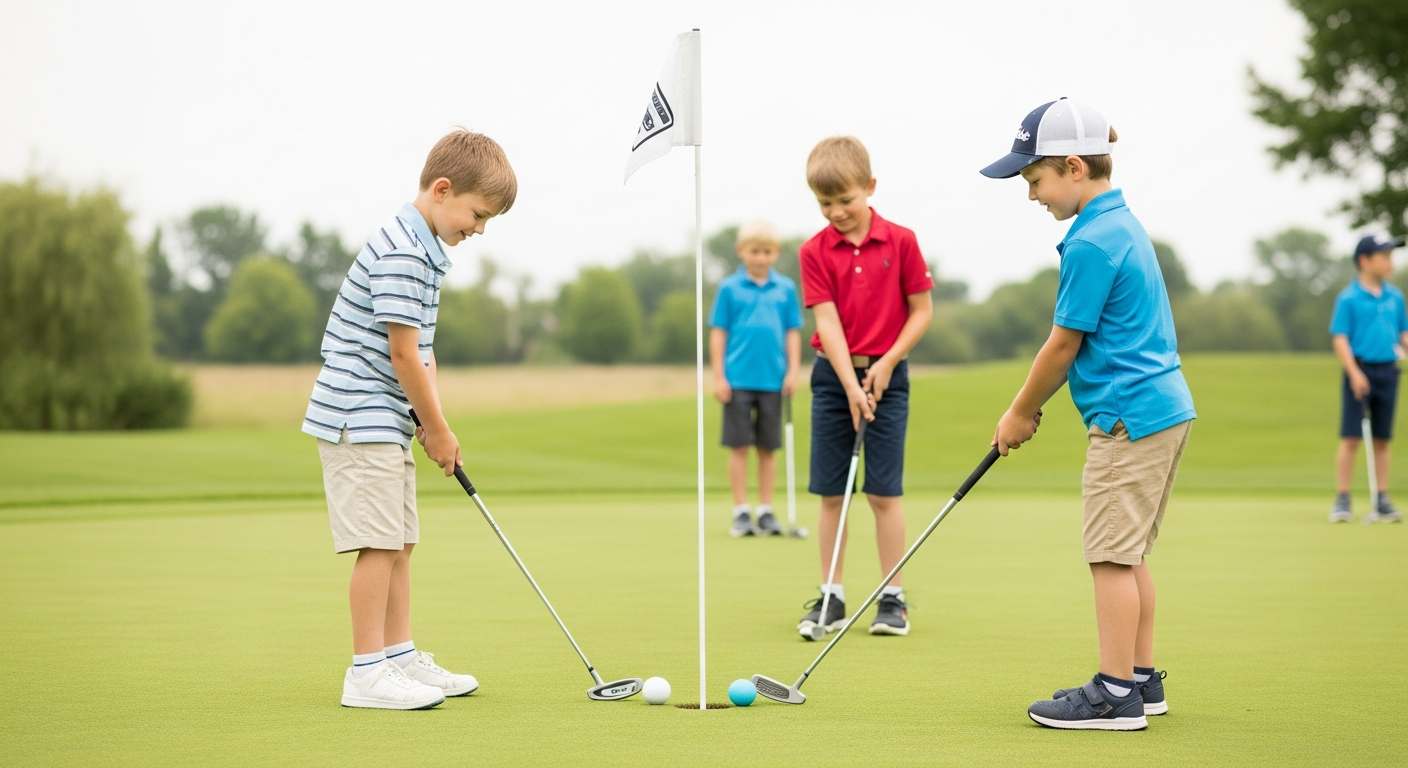
Table of Contents
- Introduction
- Why Fun Golf Games for Kids? The Power of Play
- Putting Games: Little Strokes, Big Fun
- Chipping Challenges: Aiming High
- Driving Range Adventures: Power and Precision
- On-Course Fun: Full Game Strategies
- DIY Golf Games: Creativity Knows No Bounds
- Nurturing Holistic Development: How Speech Blubs Complements Active Play
- The Speech Blubs Difference: More Than Just an App
- Maximizing the Benefits: Tips for Parents
- Conclusion
- Frequently Asked Questions
Introduction
The perennial quest for parents: how do we pry our children away from screens and into the great outdoors, or at least engage them in activities that are both enriching and genuinely fun? We've all been there – trying to find that perfect balance between stimulating development and simply letting kids be kids. Picture a sunny afternoon, a golf club perhaps a little too big for tiny hands, and a ball that just won't go where it's supposed to. Frustration looms, but then a simple tweak, a playful challenge, and suddenly, laughter erupts. Golf, often perceived as a serious, quiet sport reserved for adults, can transform into an arena of joy and discovery for children.
This post dives into a treasure trove of fun golf games designed specifically for children. We'll explore how these games not only introduce kids to the fundamentals of golf but also serve as incredible platforms for developing essential life skills – from problem-solving and focus to, most importantly, communication. By embracing a playful approach to golf, we can foster a love for the game in our children, nurture their physical and cognitive development, and subtly enhance their ability to express themselves confidently, paving the way for articulate minds and hearts, both on and off the course. Just as we believe in the power of joyful learning at Speech Blubs, these games offer a vibrant path to growth.

Why Fun Golf Games for Kids? The Power of Play
Golf offers a unique blend of physical activity, mental strategy, and social interaction. For children, however, the technicalities can quickly become overwhelming, turning a potential passion into a tedious chore. This is where fun golf games for kids become invaluable. They shift the focus from perfect swings and rigid rules to engagement, creativity, and simple enjoyment.
When children are having fun, they don't even realize they're learning. They're practicing hand-eye coordination, developing fine and gross motor skills, understanding cause and effect, and building patience – all under the guise of a playful challenge. This "stealth learning" is incredibly effective because it taps into a child's natural curiosity and desire to play.
Beyond the Green: Communication on the Course
What might surprise many parents is the incredible potential golf games hold for fostering communication skills. Think about it:
- Turn-taking: Every shot requires waiting for others, a fundamental social and communicative skill.
- Following instructions: Understanding game rules and applying them helps with receptive language.
- Expressive language: Describing a shot, explaining a strategy, or celebrating a success provides ample opportunity for children to use their words.
- Problem-solving discussions: "How should we hit this ball?" "What's the best way to get it in the hole?" These questions encourage dialogue and collaborative thinking.
- Emotional expression: Learning to articulate feelings of joy, frustration, or determination in a constructive way.
At Speech Blubs, we understand that empowering children to "speak their minds and hearts" isn't just about articulation; it's about building confidence in every facet of communication. Our founders, who themselves grew up with speech problems, created the very tool they wished they had – a joyful and effective solution for the 1 in 4 children who need speech support. Just as these golf games provide a playful, engaging context for communication, our app offers "smart screen time" experiences designed to be an active, not passive, learning tool, blending scientific principles with play.

Putting Games: Little Strokes, Big Fun
Putting is arguably the most accessible part of golf for young children, requiring less power and more precision. It’s perfect for indoor or backyard play, making these some of the easiest fun golf games for kids to set up.
Tic-Tac-Pitch (or Tic-Tac-Putt!)
- How to Play: Draw a large tic-tac-toe board on a putting green, a patch of grass, or even a carpet using chalk, tape, or string. Each player uses a different colored golf ball (or marks their balls). Players take turns putting their ball into one of the squares. The goal, like the classic game, is to get three of your balls in a row horizontally, vertically, or diagonally.
- Benefits: Encourages aiming, gentle touch, turn-taking, strategic thinking, and counting.
- Communication Connection: Children can verbally call out their intended square ("I'm aiming for the middle!"), announce their move ("My 'X' goes here!"), and even engage in friendly negotiation or strategy discussions ("If you put your ball there, I'll block you here!"). This verbalization builds expressive language and social interaction skills.
Birdie, Eagle, Par!
- How to Play: This versatile game is fantastic because it requires no special equipment beyond a putter and a ball. Players decide on a target (could be a hole, a specific spot on the carpet, or even a water bottle). The first person to "lose" by spelling out B-I-R-D-I-E (or another word like G-O-L-F) is out. Players take turns calling their shot – for instance, "I'm going to putt it straight into the cup with confidence!" or "This one needs to break a little to the left." The player whose ball is furthest from the hole after everyone has putts gets a letter.
- Creative Variations: Encourage kids to call out silly shots: "Putt with one hand!" "Putt between your legs!" "Putt while standing on one foot!" This adds immense fun and imagination.
- Benefits: Emphasizes putting accuracy, encourages creative thinking, keeps engagement high through imaginative play, and teaches kids to articulate their actions and observations.
- Communication Connection: The core of this game is verbalizing intent and observing outcomes. Children use descriptive language ("left to right break," "with speed"), practice giving and following multi-step instructions (for silly shots), and learn to process information in sequence. This is remarkably similar to the skills we develop through our video modeling methodology at Speech Blubs, where children learn by watching and imitating their peers, processing visual and auditory cues to produce sounds and words.
21
- How to Play: Select one or two holes. Players take turns putting. A successful putt into the hole earns 5 points. A "lip-out" (hitting the rim but not going in) gets 3 points. If the ball misses entirely, the player closest to the hole gets 1 point. The goal is to reach exactly 21 points; going over means you lose that round.
- Benefits: Develops putting touch, reinforces counting skills, and introduces basic addition, all while keeping the game competitive and engaging.
- Communication Connection: Children practice counting out loud, announcing scores, and discussing who is closest ("My ball is closer!"). This reinforces number concepts and comparative language.
Around The World Putting
- How to Play: Choose several spots around a single putting hole, creating a circle of challenges. Players must successfully putt from each spot in sequence. If they miss, they stay at that spot until they sink the putt before moving to the next. The first player to complete all the spots wins.
- Benefits: Improves putting from various distances and angles, builds focus, and teaches perseverance.
- Communication Connection: Players can discuss the difficulty of each spot ("This one has a big break!") and encourage each other, using phrases like "It's your turn," "Good try," or "You got this!"
Chipping Challenges: Aiming High
Chipping games introduce a bit more complexity, requiring children to learn how to lift the ball into the air. These are ideal fun golf games for kids in the backyard or a dedicated short-game area.
Avoid the Hazards Velcro Chipping Game
- How to Play: Using a velcro chipping mat (many are available online, or you can DIY with fabric and velcro), players aim to chip balls to stick onto designated target zones while avoiding "hazard" areas. Points are awarded for hitting targets, and points are deducted for hazards.
- Benefits: Develops chipping accuracy, hand-eye coordination, and control over ball trajectory.
- Communication Connection: Children can describe their aiming strategy, verbally identify targets ("I'm going for the red circle!"), and count their points. This engages spatial awareness and numerical language.
5 Ball Up-and-Down Challenge
- How to Play: From various locations around a practice green, players chip five balls. The goal is to get all five shots "up-and-down" (chip onto the green and then putt into the hole) in a row.
- Benefits: Highly effective for improving both chipping and putting under pressure. Builds resilience and a sense of accomplishment.
- Communication Connection: Children can narrate their process ("First, I chip; then, I putt."), articulate their frustrations and successes, and practice sequencing events verbally.
One Shot, Three Clubs
- How to Play: Players select a target area. They then take three shots, each with a different club (e.g., a sand wedge, a pitching wedge, and a 9-iron), trying to land each ball as close to the target as possible. The challenge is to adapt their swing for each club to achieve a similar outcome.
- Benefits: Teaches club selection, understanding loft and distance, and adapting technique.
- Communication Connection: Encourages children to talk through their club choice ("I'm using the sand wedge because I need to get it high"), describe the different ways each club feels, and compare results. This fosters analytical thinking and descriptive language.
Driving Range Adventures: Power and Precision
The driving range can be intimidating for kids, but with the right games, it becomes an exciting place to learn about power and aiming. These fun golf games for kids are perfect for harnessing energy.
Pinseeker
- How to Play: If the range has flagsticks, players pick a target flag and hit a set number of balls (e.g., 10) towards it. The winner is whoever gets the most balls closest to the pin (you can define "closest" as within 5 or 10 feet). Alternatively, pick a yardage sign and try to hit it without going over.
- Benefits: Encourages aiming, distance control, and consistent striking.
- Communication Connection: Children can announce their target, describe their swing ("I tried to hit it harder this time!"), and count their successful shots. They learn spatial terms like "closer" and "further," and practice comparing distances.
Keep It In The Fairway
- How to Play: Pick two imaginary boundaries on the driving range, essentially creating a "fairway." Players hit a set number of shots with their driver or another teeing-off club, trying to land the ball between these boundaries.
- Benefits: Teaches control off the tee, strategic aiming, and consistency.
- Communication Connection: Players define the boundaries verbally, explain their aim ("I need to hit it straighter"), and count how many balls land "in the fairway." This helps with defining parameters and using directional language.
H-O-R-S-E (Golf Edition)
- How to Play: Similar to the basketball game, one player "calls a shot" (e.g., "Hit the ball within 10 yards of the 100-yard sign with an 8-iron"). If they successfully execute it, the next player must attempt to replicate the shot. If they fail, they get a letter (H). The first player to spell H-O-R-S-E loses.
- Benefits: Develops a wide range of golf skills, encourages creativity in shot-making, and builds competitive spirit.
- Communication Connection: This game heavily relies on clear and concise verbal communication. Players must articulate complex instructions, listen carefully, and confirm understanding. It’s an excellent way to practice both expressive and receptive language skills, and for a parent whose child might be working on articulation or understanding multi-step directions, it’s a playful and motivating scenario. For parents who are exploring speech support for their children, our quick 3-minute preliminary screener can provide a simple assessment and a personalized next-steps plan.
On-Course Fun: Full Game Strategies
Taking kids onto a real golf course can be an amazing experience, especially when using these fun golf games for kids that adapt the traditional rules.
Bingo Bango Bongo
- How to Play: This game awards points for three achievements on each hole:
- Bingo: First player to get their ball onto the green.
- Bango: Player whose ball is closest to the pin once all balls are on the green.
- Bongo: First player to get their ball in the hole. Each achievement earns a point. The player with the most points wins.
- Benefits: Keeps all players engaged on every shot, regardless of skill level, and rewards different aspects of play.
- Communication Connection: Constant interaction and observation are required. Children call out "Bingo!" or "Bango!" for their achievements, announce who is closest, and keep track of scores, enhancing their verbal participation and social awareness.
Wolf
- How to Play: Best with four players. Before each hole, one player is designated the "Wolf" (this rotates). After everyone else has teed off, the Wolf decides if they want to partner with one of the other players for that hole. If they choose a partner, their combined score is taken against the other two players. If the Wolf decides to go "Lone Wolf," they play against all three other players, aiming for the lowest score on that hole.
- Benefits: Introduces strategic thinking, decision-making, and adapting to different team dynamics.
- Communication Connection: The "Wolf" must clearly communicate their decision ("I'm taking [player's name] as my partner!" or "I'm going Lone Wolf!"). This reinforces clear verbal choices and understanding game roles.
Stringball
- How to Play: Each player starts with a length of string (e.g., one foot of string per handicap stroke, or a set length like 5-10 feet). During the game, players can use their string to improve their lie. For example, if their ball is in a divot, they can use an inch of string to move it a foot. They measure the distance moved and cut that amount off their string. Once their string is gone, they can no longer move the ball.
- Benefits: Makes the game more forgiving for beginners, teaches creative problem-solving, and encourages careful measurement.
- Communication Connection: Players must announce when they are using their string, state how much they are cutting off, and explain why they are moving their ball. This builds descriptive and explanatory language skills.
DIY Golf Games: Creativity Knows No Bounds
You don't need fancy equipment or a golf course to enjoy fun golf games for kids. Many can be adapted for a backyard, park, or even a large living room!
- Target Practice: Use laundry baskets, hula hoops, old tires, pool noodles bent into shapes, or even chalk circles on the ground as targets. Assign different point values to each target based on distance or difficulty. Kids use almost-golf balls or soft practice balls and try to hit them into or onto the targets.
- Communication Connection: Children articulate their aim, count points, and discuss strategies for hitting different targets.
- Obstacle Course Golf: Set up a mini-golf course using household items. Putt through chair legs, chip over pillows, around buckets, and into a designated "hole" (a cup on its side, a small box).
- Communication Connection: Creating and navigating the course encourages children to describe spatial relationships ("under the chair," "over the pillow"), give and follow multi-step directions, and problem-solve together using language.
- Golf Croquet: Combine golf and croquet. Set up wickets (or simple arches made from wire hangers) across a yard. Players must putt their ball through each wicket in a specific order, then into a final hole.
- Communication Connection: This game involves sequential instructions, spatial language, and collaborative goal-setting, all key elements of strong communication.
Nurturing Holistic Development: How Speech Blubs Complements Active Play
While these fun golf games for kids are fantastic for physical, social, and cognitive growth, particularly for communication in an active, dynamic setting, we understand that some children need more targeted support for their speech and language development. That’s where Speech Blubs comes in, providing a complementary approach to nurture communication skills in a unique and effective way.
At Speech Blubs, we believe in the magic of "smart screen time." Instead of passive viewing, our app engages children through interactive video modeling, where they learn by watching and imitating their peers. This unique method is based on scientific principles and effectively utilizes mirror neurons, making learning fun and highly effective. For a child who might be a "late talker" or needs support with specific sounds, watching and imitating other children provides a powerful, motivating learning environment. For example, if a child is practicing animal sounds, our "Animal Kingdom" section offers playful video models that inspire them to practice "moo" or "baa" sounds, just as they might articulate "fore!" on the golf course.
Our mission is to empower children to confidently "speak their minds and hearts." We know firsthand the challenges some families face, as our company was born from the personal experiences of our founders, who all grew up with speech problems and created the tool they wished they had. We are committed to providing an immediate, effective, and joyful solution, blending scientific principles with play. We believe in providing a screen-free alternative to passive viewing (like cartoons) and a powerful tool for family connection, creating joyful learning moments that build foundational communication skills and confidence, reducing frustration along the way. Read inspiring testimonials from other parents who have seen their children flourish with Speech Blubs.
The Speech Blubs Difference: More Than Just an App
When it comes to supporting your child's communication journey, choosing the right resources is crucial. We offer flexible options, but we truly believe in the superior value and comprehensive features of our Yearly plan.
Our Plans:
- Monthly Plan: For $14.99 per month, you get access to our core app features, offering a flexible way to explore Speech Blubs.
- Yearly Plan: At just $59.99 per year, this plan breaks down to an incredible value of only $4.99 per month. That's a 66% savings compared to the monthly option!
Why the Yearly Plan is the Best Choice:
The Yearly plan isn't just about saving money; it's about unlocking the full potential of Speech Blubs and ensuring the most comprehensive support for your child's development. Here's what you get exclusively with the Yearly plan:
- 7-Day Free Trial: Experience all that Speech Blubs has to offer before committing. This allows you to see firsthand how engaging and effective our app can be for your child.
- Bonus Reading Blubs App: Reading is a critical skill closely linked to speech and language development. With the Yearly plan, you get the extra Reading Blubs app, providing even more educational value to support literacy.
- Early Access to New Updates: Be among the first to benefit from our continuous improvements and exciting new content.
- 24-Hour Support Response Time: Our dedicated support team is there for you, ensuring any questions or concerns are addressed promptly.
The Monthly plan does not include these valuable benefits. We encourage you to choose the Yearly plan to get the free trial and the full suite of features designed to empower your child's communication journey.
Ready to see the difference Speech Blubs can make? Download Speech Blubs on the App Store or get it on Google Play to begin your 7-day free trial today. If you prefer to sign up from your desktop, you can create your account and start your free trial here.
Maximizing the Benefits: Tips for Parents
No matter which of these fun golf games for kids you choose, remember that your engagement is key. Here are some tips to make the experience even better:
- Be a Partner, Not Just a Coach: Play alongside your child. Laugh at your own missed shots, celebrate their successes, and model good sportsmanship. Your presence makes the activity more meaningful.
- Focus on Fun First: Resist the urge to constantly correct technique. Let them experiment and discover. The goal is to build a positive association with golf, not to create a mini-pro overnight.
- Celebrate Small Victories: Did they hit the ball for the first time? Did they follow the rules? Did they try to explain their shot? Acknowledge and praise their efforts and progress, no matter how small.
- Encourage Verbalization: Ask open-ended questions: "What are you trying to do with this shot?" "How did that feel?" "What do you think happened?" This naturally promotes communication.
- Connect Learning: Just as these golf games teach patience and focus, remind your child that these skills are useful in other areas, including learning new words or sounds. This bridges the gap between different learning environments.
Conclusion
Golf for kids doesn't have to be a serious, technical endeavor. By embracing fun golf games for kids, we open up a world of physical activity, mental stimulation, and invaluable social and communication development. Whether it's a simple putting challenge in the living room or a strategic game on the course, these activities are powerful tools for building confidence, fostering a love for learning, and creating unforgettable family moments.
As parents, we strive to equip our children with the skills to navigate the world confidently, express their thoughts, and connect with others. Fun golf games contribute to this holistic development by offering a playful arena for learning. And for those moments when targeted speech and language support is needed, Speech Blubs stands ready to empower your child's voice through engaging, scientifically-backed "smart screen time."
Give your child the gift of joyful learning, both on and off the green. Encourage their budding communication skills with engaging play, and provide them with the best tools for development.
Ready to support your child's communication journey with a leading, effective, and joyful solution? Download Speech Blubs on the App Store or find us on Google Play to begin your 7-day free trial today! For the best value and access to exclusive features like the Reading Blubs app and early updates, remember to select the Yearly plan during sign-up. You can also create your account on our website to start your free trial.
Frequently Asked Questions
Q1: How young can kids start playing golf games?
A1: Children can start engaging in very simple golf-related activities as young as 2 or 3 years old. At this age, the focus should be purely on fun and exploration with plastic clubs and soft balls. For instance, just hitting a ball, rolling it into a target, or practicing basic hand-eye coordination. As they get older (4-6+), they can gradually move into more structured games with lightweight clubs, focusing on concepts like turn-taking, aiming, and simple rules. The key is to keep it playful and adapt to their attention span and motor skills.
Q2: What equipment do we need for these fun golf games for kids?
A2: You don't need much! For younger children or indoor play, plastic golf clubs and soft foam balls are perfect. For backyard or driving range play, a lightweight junior golf set is ideal. Beyond that, you can use everyday items as targets: laundry baskets, hula hoops, old buckets, pool noodles, or even just chalk to draw circles. For on-course games, a few golf balls, a putter, and a wedge are often enough to get started. The goal is creative fun, not expensive gear.
Q3: How do these golf games specifically help with communication skills?
A3: Golf games naturally create many opportunities for communication. Children learn to follow verbal instructions for game rules, describe their actions and strategies ("I'm aiming for the tree!"), articulate their successes and frustrations, and engage in turn-taking conversations. They also learn new vocabulary (e.g., "fore," "birdie," "putt"), practice counting scores, and develop the social skills of encouragement and sportsmanship. These interactive elements are powerful for building both expressive and receptive language in a natural, low-pressure environment.
Q4: How can Speech Blubs further support my child's communication journey alongside active play?
A4: While golf games provide excellent real-world communication practice, Speech Blubs offers targeted, expert-designed support. Our app uses a unique video modeling methodology where children imitate their peers, making learning engaging and effective. It's "smart screen time" that focuses on articulation, vocabulary, and language comprehension through playful activities, acting as a powerful supplement to a child's overall development plan. Just as golf builds physical skills, Speech Blubs builds foundational speech and language skills, fostering confidence in every child's ability to "speak their minds and hearts." Explore the science behind our effective video modeling method to understand how we empower children's voices.
About the author