
Fun Indoor Birthday Games for Kids
 By Speech Blubs Team•Jan 28, 2026•19 min.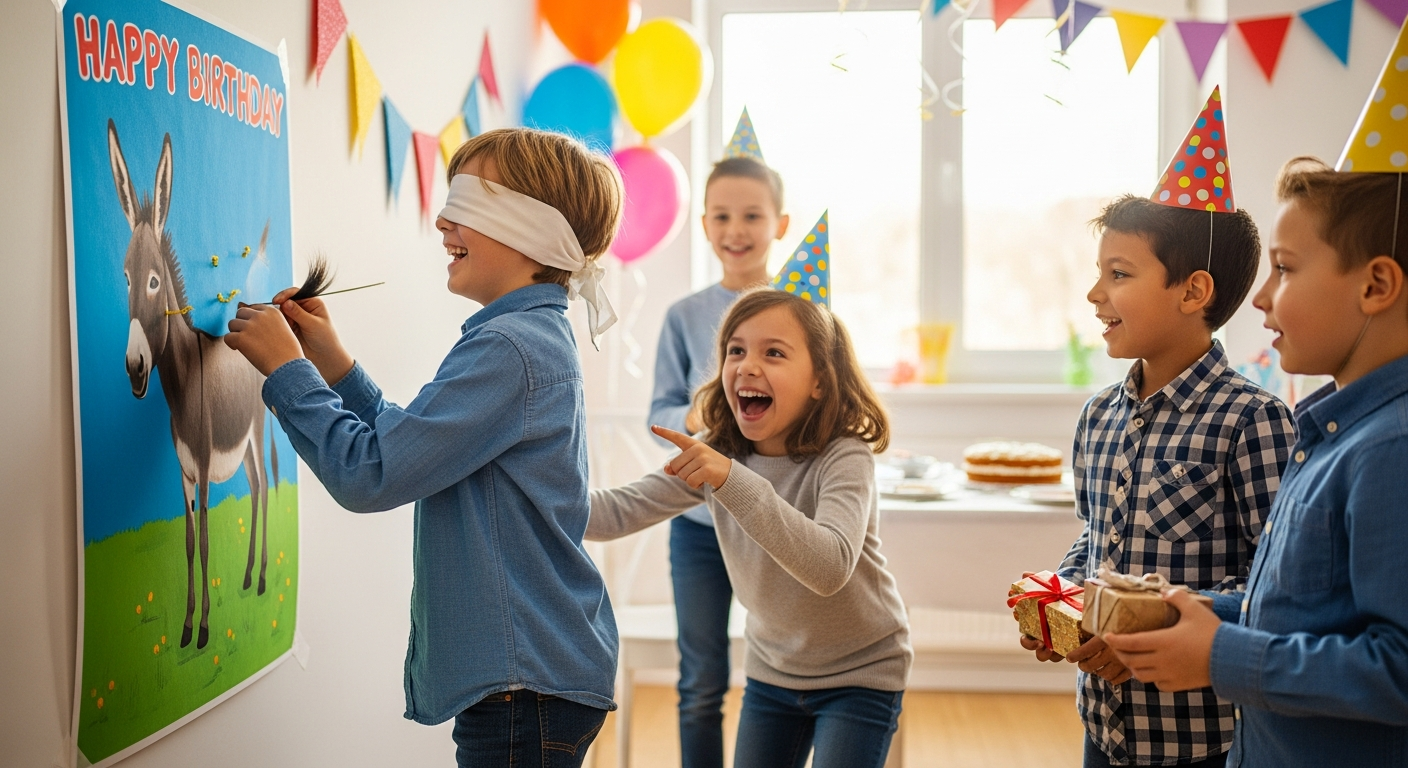
Table of Contents
- Introduction
- The Magic of Indoor Play: More Than Just Fun
- Planning Your Indoor Party Game Extravaganza
- Classic Indoor Party Games: Timeless Favorites
- High-Energy Indoor Games: Get Those Wiggles Out!
- Creative & Skill-Building Indoor Games: Sparking Imaginations
- Speech Blubs: Your Partner in Joyful Communication and Play
- Making the Most of Your Speech Blubs Experience
- Safety First: Tips for a Smooth Party
- Conclusion
- FAQ
The party invitations are out, the cake is ordered, but a glance at the weather forecast brings a familiar dread: rain, snow, or even just scorching summer heat. Suddenly, your dreams of an outdoor bash turn into a frantic scramble for indoor entertainment. But what if embracing an indoor birthday party wasn't a compromise, but an opportunity? Imagine a celebration filled with laughter, teamwork, and memory-making, all within the cozy comfort of your home or chosen venue. This post is your ultimate guide to transforming any indoor space into a vibrant playground, packed with engaging games that will delight children of all ages and make your child's birthday truly unforgettable, rain or shine. We’ll explore a treasure trove of creative, high-energy, and skill-building activities, ensuring that every child leaves with a smile and a story to tell.

Introduction
Ever found yourself stressing over a child's birthday party when the weather forecast takes an unexpected turn? The thought of relocating a meticulously planned outdoor event indoors can feel overwhelming, but it doesn't have to be. In fact, hosting an indoor birthday party opens up a world of creative possibilities, fostering a unique atmosphere of closeness and imaginative play that outdoor settings sometimes can't match.
We often underestimate the power of a well-orchestrated indoor party, viewing it as a fallback rather than a fantastic primary option. Yet, within the confines of a living room, a community hall, or even a cozy basement, magical moments of connection, laughter, and learning can flourish. This comprehensive guide is designed to equip you with an arsenal of exciting, easy-to-organize, and developmentally beneficial indoor birthday games that promise to keep every little guest engaged and entertained. Get ready to discover how to turn any indoor space into the ultimate party zone, ensuring your child's special day is a resounding success, regardless of what's happening outside.
The Magic of Indoor Play: More Than Just Fun
Indoor spaces offer a unique charm for children's parties that goes beyond just weatherproofing. They provide a controlled, intimate environment where children often feel more secure and can focus better on activities. This can be especially beneficial for younger children or those who might be easily overstimulated in larger, open outdoor settings. The confined space encourages closer interaction, teamwork, and imaginative problem-solving.
For instance, games played indoors naturally foster communication skills. Children have to articulate rules, negotiate turns, and express themselves more clearly in a slightly closer proximity. This aligns perfectly with our mission at Speech Blubs, where we empower children to "speak their minds and hearts." We believe that every interaction, every game, and every shared laugh is an opportunity for language development. Our company was born from the personal experiences of our founders, who all grew up with speech problems and created the tool they wished they had. We understand the importance of making communication accessible and joyful, and indoor party games are a fantastic, organic way to do just that.

Moreover, indoor games often require less elaborate setup and allow for more focused attention on the children's engagement. They can be tailored to various developmental stages, enhancing fine motor skills, gross motor skills, cognitive processing, and social-emotional intelligence. From quiet, creative challenges to boisterous group activities, indoor games provide a diverse palette for growth, making every birthday celebration a chance for children to learn and shine.
Planning Your Indoor Party Game Extravaganza
Successful indoor parties don't just happen; they're thoughtfully planned. Here are some key considerations to ensure your game lineup is a hit:
Consider the Age Group
The golden rule of party planning: know your audience! Toddlers thrive on simple, repetitive games, while preschoolers love imaginative play and following clear rules. School-aged children (5-8) can handle more complex instructions and enjoy team challenges, and older kids (9+) might appreciate strategic games or "Minute-to-Win-It" style activities. Always have a few backup games ready, just in case one doesn't quite land with your particular crowd.
Space and Logistics
Before you plan, assess your venue. Is it your living room, a school gym, or a rented community hall?
- Clear the decks: Move furniture, valuables, and anything fragile to create ample open space.
- Designate zones: If you have multiple rooms, you can have a "quiet zone" for crafts or calmer games and an "active zone" for movement.
- Flooring: Consider rugs for comfort or non-slip mats for active games on hard floors.
- Noise levels: Be mindful of neighbors, especially for very loud games.
Preparation is Key
Many games require minimal props, but having them ready saves stress:
- Equipment: Balloons, string, blindfolds, music player, small prizes, craft supplies, masking tape for floor markings.
- Adult Helpers: Recruit friends or family. Designate one person to be the "game master" to keep things flowing, while others supervise and assist.
- Flexibility: Always have more games than you think you’ll need. Kids' energy levels and interests can change rapidly!
Theme Integration
If your party has a theme (e.g., superheroes, jungle, outer space), try to weave it into your game choices. A "Pin the Tail on the Donkey" can become "Pin the Cape on the Superhero" or "Pin the Rings on Saturn." This adds an extra layer of magic and cohesion to the celebration.
Classic Indoor Party Games: Timeless Favorites
Some games never go out of style because they consistently deliver fun and engage children of various ages. These classics are perfect for getting everyone warmed up and involved.
Musical Statues, Bumps, or Chairs
These variations are fantastic for movement, listening skills, and self-regulation.
- Musical Statues: Play upbeat music and have the children dance. When the music stops, they must freeze in place like a statue. Anyone who wiggles is out. The last one standing wins!
- Musical Bumps: Similar to statues, but when the music stops, everyone must sit down as fast as possible.
- Musical Chairs: Set up chairs in a circle (one less than the number of players). Children walk around the chairs as music plays. When the music stops, everyone scrambles for a seat. One chair is removed each round until a winner is crowned. This classic teaches quick reactions and gracious losing.
Pass the Parcel
A staple for younger children, this game builds anticipation and teaches turn-taking.
- Wrap a small prize (or several small treats) in many layers of wrapping paper, with a tiny treat between some layers.
- Children sit in a circle and pass the parcel as music plays.
- When the music stops, whoever is holding the parcel unwraps one layer. The game continues until the final layer is unwrapped, revealing the main prize. For very young children, ensure everyone gets to unwrap at least one layer or receive a small prize to avoid disappointment.
Pin the Tail (or Anything Else!) on the Donkey
This classic game is endlessly adaptable and wonderful for fine motor skills and spatial awareness.
- Print a large picture of a character or object (e.g., a unicorn, a pirate ship).
- Print separate "tails" or themed items (e.g., a unicorn's horn, a pirate flag).
- Blindfold each child, spin them around a few times, and have them try to pin their item in the correct spot on the picture. The closest one wins.
Simon Says
This simple game is excellent for listening comprehension, following directions, and self-regulation.
- One adult is "Simon." Children follow instructions only if they begin with "Simon says."
- If Simon says, "Simon says touch your nose," everyone touches their nose. If Simon just says, "Jump," and a child jumps, they are out. The last child remaining wins. This game encourages focus and careful listening.
Hide and Seek (or Sardines)
A beloved game that encourages problem-solving and cooperation.
- Hide and Seek: One child counts while others hide. The counter searches for the hiders.
- Sardines: This fun twist has one person hide, and everyone else searches. When a searcher finds the hider, they join them in the hiding spot. The game continues until everyone is squeezed together like sardines in one spot, and the last person to find the group wins. This variation promotes teamwork and can be incredibly fun in a house with several good hiding spots.
Charades
This game promotes expressive language, non-verbal communication, and creative thinking.
- Write down various words, animals, movies, or activities on slips of paper.
- One child picks a slip and acts out the word/phrase without speaking.
- The first person to guess correctly gets to be the next actor. This can be adapted for themes or age groups (e.g., animal sounds for younger kids).
High-Energy Indoor Games: Get Those Wiggles Out!
Even indoors, children need to burn off energy. These games are perfect for getting them moving and laughing.
Balloon Bonanza (Pop & Relay)
Balloons are a party essential for a reason – they're cheap, cheerful, and incredibly versatile.
- Balloon Pop: Inflate several balloons and place a small piece of paper with a challenge inside each (e.g., "sing a song," "do 5 jumping jacks"). Children stomp or sit on balloons to pop them and complete the challenge. A note on safety: Be aware that some children are scared of popping balloons, so always have a quieter alternative for them.
- Balloon Relay: Divide children into teams. Have them race to move a balloon from one end of the room to another without using their hands (e.g., by balancing it between their knees, pressing it against their tummy with a partner, or fanning it with a paper plate). This promotes coordination and teamwork.
DIY Obstacle Course
Transform your living space into an adventurous challenge course.
- Use cushions to jump over, blankets to crawl under, chairs to weave through, and masking tape to create lines for balancing walks.
- Children navigate the course, either individually for time or in teams for a relay. This builds gross motor skills, problem-solving, and spatial awareness. For a unique challenge, have kids "commando crawl" under a sheet held up by two adults!
Keep It Up!
A simple, effective game for cooperation and focus.
- Using one or more balloons, the goal is for the team to keep the balloon(s) from touching the ground using only their hands or feet.
- Introduce rules like "no hitting twice in a row" or "must use both hands." This is great for fostering teamwork and hand-eye coordination.
Twister
A classic for a reason, Twister creates hilarious tangled fun.
- Lay out the Twister mat. The designated spinner calls out a color and a body part (e.g., "Right hand blue!").
- Players must place the specified body part on an empty circle of that color. If they fall or touch another part of their body to the mat, they're out. The last one standing (or contorted!) wins. This game is fantastic for balance, body awareness, and flexibility.
Creative & Skill-Building Indoor Games: Sparking Imaginations
Beyond just burning energy, party games can also stimulate minds and foster creative expression.
Scavenger Hunt
A scavenger hunt is a fantastic way to engage children's problem-solving skills and observational abilities.
- Hide various objects around the party area and provide a list (pictures for younger kids, written clues for older ones) for children to find.
- The clues can be riddles, descriptive hints, or even small puzzles. The first to find all items, or the team that finds the most, wins a prize. This encourages teamwork, reading, and critical thinking.
Word Scramble Challenge
Adapted for different ages, this game helps with early literacy and vocabulary.
- For younger kids, write simple, jumbled words (e.g., "DOG" as "OGD") related to the party theme on cards and have them unscramble.
- For older kids, use longer words or anagrams. The first to unscramble a word or solve a puzzle wins a point.
Tell Me A Story
This collaborative game is excellent for developing narrative skills and imagination.
- Sit in a circle. One person starts a story with a single sentence (e.g., "Once upon a time, a tiny dragon lived under a big, comfy sofa.").
- The next person adds another sentence, building on the previous one. Continue around the circle, creating a unique, often hilarious, group story. This game fosters active listening and imaginative expression. It's a fantastic way to practice expressive language in a low-pressure, fun environment – much like how we encourage natural communication through engaging content on Speech Blubs.
Shake, Rattle, and Guess
This sensory game enhances auditory discrimination and vocabulary.
- Fill opaque containers (film canisters, small plastic bottles) with different items that make distinct sounds (e.g., rice, beans, paper clips, coins, cotton balls).
- Children shake each container and try to guess what's inside. This is great for sensory exploration and developing descriptive language.
Face the Cookie
This silly and challenging game targets fine motor control of facial muscles.
- Each player places a cookie (or small cracker) on their forehead.
- Without using their hands, they must try to maneuver the cookie down their face and into their mouth using only facial expressions and muscle movements. It's harder than it looks and guarantees lots of giggles! This is a surprisingly good exercise for oral motor control and facial awareness.
Speech Blubs: Your Partner in Joyful Communication and Play
While party games are fantastic for social interaction and general development, sometimes children need a little extra support to confidently "speak their minds and hearts." That's where Speech Blubs comes in. Our mission is to provide an immediate, effective, and joyful solution for the 1 in 4 children who need speech support. We believe that learning to communicate should be an adventure, not a chore.
Our unique approach blends scientific principles with play into one-of-a-kind "smart screen time" experiences. We offer a screen-free alternative to passive viewing (like cartoons) and a powerful tool for family connection. How do we do it? Through our innovative "video modeling" methodology, children learn by watching and imitating their peers. This technique leverages the power of mirror neurons, encouraging natural vocal imitation and fostering confidence in a fun, non-intimidating way. You can explore the scientific research behind our video modeling method on our website.
Imagine a child who is a "late talker" and struggles with expressing themselves at a party. While they might be shy about joining "Tell Me A Story," a few minutes spent with Speech Blubs can provide a bridge. For a parent whose 3-year-old loves animals, the "Animal Kingdom" section of our app offers a fun, motivating way to practice "moo" and "baa" sounds, empowering them to confidently participate in animal-themed party games later. Similarly, our "Feelings" or "Actions" sections can introduce new vocabulary in a low-pressure, playful way, reinforcing social-emotional concepts that boost confidence in group settings. These skills then spill over into real-life interactions, making party participation more enjoyable.
Speech Blubs encourages co-play and interaction, turning screen time into a dynamic, educational experience that complements the social skills learned through party games. It’s a powerful supplement to a child’s overall development plan and, when applicable, professional therapy. You can read what other parents are saying about their child's success with Speech Blubs in our testimonials.
Ready to get started? Download Speech Blubs on the App Store or get it on the Google Play Store to explore how we can help your child find their voice.
Making the Most of Your Speech Blubs Experience
We believe in transparency and providing exceptional value to every family. To get the most out of Speech Blubs and empower your child's communication journey, we offer flexible plans:
- Monthly Plan: Priced at $14.99 per month, this option offers flexibility.
- Yearly Plan: Our most popular and highly recommended choice, priced at just $59.99 per year. This breaks down to an incredible value of only $4.99 per month – a saving of 66% compared to the monthly plan!
The Yearly plan is designed to give you the most comprehensive and rewarding experience. It includes exclusive, high-value features not available with the Monthly plan:
- A 7-day free trial: Experience the full power of Speech Blubs before committing.
- The extra Reading Blubs app: Enhance your child's literacy skills alongside speech development. Learn more on our homepage.
- Early access to new updates: Be the first to try new features and content.
- 24-hour support response time: Get prompt assistance whenever you need it.
The Monthly plan does not include these additional benefits. We encourage you to choose the Yearly plan to unlock the free trial and the full suite of features, giving your child the best possible tools for joyful communication and learning. Start your 7-day free trial today and discover the difference Speech Blubs can make. You can also take our quick 3-minute preliminary screener to get a simple assessment and a free 7-day trial to see if Speech Blubs is right for your child.
Safety First: Tips for a Smooth Party
Ensuring everyone has a safe and enjoyable time is paramount. Here are a few practical tips:
- Supervision Ratios: Always have enough adult supervisors for the number and age of children. Young children require closer supervision.
- Clear Boundaries: Before starting active games, clearly define the play area and any "off-limit" zones to prevent accidents.
- Allergy Awareness: Check with parents about any food allergies or sensitivities before offering snacks or prizes.
- Choking Hazards: Be mindful of small parts (like uninflated balloons, tiny game pieces) for children under 3. Dispose of popped balloons immediately.
- Designated Quiet Zone: For children who might get overstimulated, having a calm corner with books or quiet activities can be a lifesaver.
- First Aid Kit: Keep a basic first aid kit easily accessible for minor bumps and scrapes.
Conclusion
An indoor birthday party is far from a compromise; it’s an incredible opportunity to create a magical, intimate, and memorable celebration. By selecting a mix of classic, active, and creative games, you can ensure every child is engaged, entertained, and leaves with a heart full of happy memories. These games aren't just about fun; they're vital tools for fostering crucial developmental skills—from gross and fine motor coordination to listening, problem-solving, and, most importantly, communication.
At Speech Blubs, we are committed to nurturing these foundational skills, empowering children to confidently "speak their minds and hearts" in every situation, including lively party environments. We understand the power of play in learning, and our app complements the joy of group activities by building essential communication tools.
Don't let the weather dictate the success of your child's special day. Embrace the boundless possibilities of indoor play and watch as your party comes alive with laughter, creativity, and connection. Ready to give your child the gift of confident communication and endless fun? We invite you to experience the transformative power of Speech Blubs. Download Speech Blubs now and start your child's journey today! Remember to choose the Yearly plan for the best value, including a 7-day free trial, the Reading Blubs app, and priority support. Find us on the App Store and Google Play.
FAQ
Q1: How do I choose games suitable for different ages when I have a mixed group of kids?
A: When hosting a party with a mixed age group, it's best to offer a variety of games. Start with broadly appealing classics like Musical Statues or Pass the Parcel, which even younger children can enjoy with adult help. Then, you can introduce a couple of simpler games for the younger crowd (like "I Spy" or a sensory bin "Treasure Dig") and more challenging options for older kids (like a detailed Scavenger Hunt or Charades). Consider splitting into smaller groups for certain activities, ensuring everyone feels included and appropriately challenged.
Q2: What if I have limited space for indoor games?
A: Even in a small space, you can host a fantastic party! Prioritize games that require minimal movement or can be played while seated. "Simon Says," "Tell Me A Story," "Shake, Rattle, and Guess," "Cotton Wool Giggles," and "Face the Cookie" are all great options. You can also adapt active games: for example, an obstacle course can be simplified to a single "laser maze" made with string across a hallway. Clear furniture to create as much open floor space as possible, and remember that creative minds can make fun out of any constraint.
Q3: How can I encourage shy children to participate in party games?
A: Shyness is common, and the key is gentle encouragement, not pressure. Start with inclusive, low-pressure games where they can observe others first, like "Musical Statues" or "Pass the Parcel." Pair them with a friendly, outgoing child or an adult. Offer roles that don't require being the center of attention, such as being the "music changer" or "scorekeeper." For children who prefer quiet activities, have a designated "chill-out" zone with coloring books or puzzles. Remember, sometimes simply being present and enjoying the atmosphere is enough.
Q4: How can Speech Blubs help my child beyond party games?
A: Speech Blubs is designed to support your child's communication development in a comprehensive and joyful way. Beyond enhancing skills that are useful for party games, our app offers a vast library of engaging activities that target articulation, vocabulary, early literacy, social skills, and more. Through our video modeling technique, children learn by imitating real peers, building confidence in their speech. It provides daily "smart screen time" that is interactive and educational, offering a powerful tool for building foundational communication skills that benefit children in all aspects of their lives, from school to family interactions. It's a fantastic resource for ongoing speech practice and a complementary tool to any professional therapy your child may be receiving.
About the author