
Fun Kid Birthday Party Game Ideas for All Ages
 By Speech Blubs Team•Jan 28, 2026•21 min.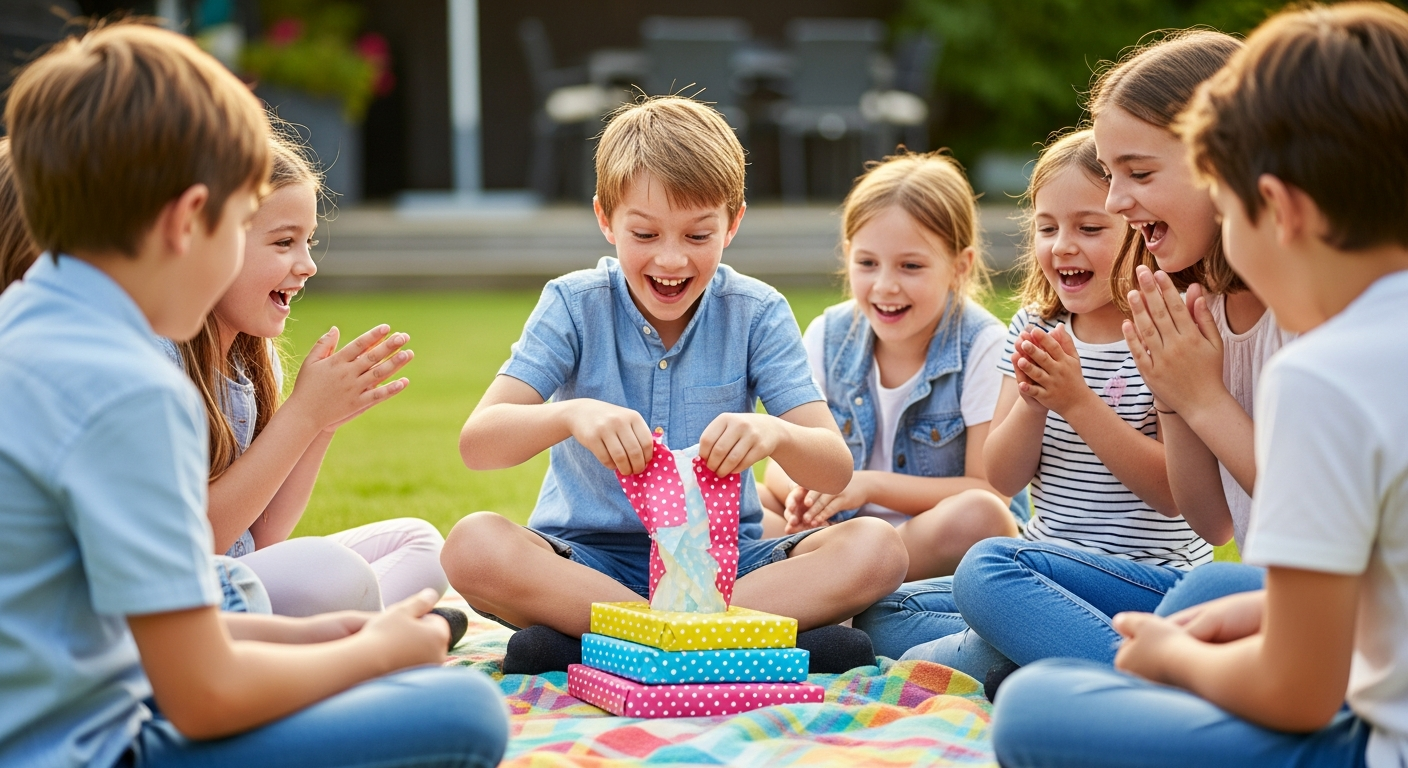
Table of Contents
- The Magic of Birthday Party Games
- Planning Your Party Game Extravaganza
- Classic Kid Birthday Party Game Ideas (Timeless Fun)
- Active & Energetic Games (Burn Off That Cake!)
- Creative & Mind-Bending Games (Engage Their Brains)
- Speech Blubs: Your Partner in Communication Fun
- Making Every Child's Voice Heard
- Conclusion
- FAQ About Kid Birthday Party Games
Has your child ever left a birthday party beaming, recounting every giggle and every thrilling moment of a game? Those aren't just fleeting memories; they're the building blocks of social skills, confidence, and pure, unadulterated joy. While planning a child’s birthday party can sometimes feel like orchestrating a symphony, finding the right mix of games is the crescendo that transforms a simple gathering into an unforgettable celebration.
At Speech Blubs, we understand the profound impact that engaging, interactive play has on a child's development, especially in fostering communication and social confidence. Our mission is to empower children to "speak their minds and hearts," and we believe that play, laughter, and connection are at the very core of this journey. This post isn't just a list of games; it's a guide to creating vibrant experiences that encourage interaction, build friendships, and bring out the best in every little party-goer. We’ll explore a treasure trove of kid birthday party game ideas, from timeless classics to energetic outdoor adventures and creative challenges, ensuring your next celebration is filled with happy voices and confident smiles.

The Magic of Birthday Party Games
Games are far more than just time fillers at a party; they are powerful tools for growth and connection. Think about the bustling energy, the shared laughter, and the triumphant cheers – each moment contributes to a child's development in profound ways.
Fostering Communication and Social Skills
Birthday party games naturally encourage children to interact, negotiate, and understand social cues. Whether it's taking turns in "Pass the Parcel," communicating strategies in "Capture the Flag," or listening intently during "Simon Says," these activities are rich with opportunities for practicing essential communication skills. Children learn to articulate their ideas, listen to others, understand different perspectives, and resolve minor conflicts – all vital components of healthy social development. For many children, especially those who might be working on their speech and language skills, games provide a low-pressure environment to try out new words, sounds, and social interactions.
Building Confidence and Self-Expression
Every time a child participates, takes a risk, or achieves a small victory in a game, their confidence grows. The encouragement from peers and adults can be incredibly affirming. Games offer a safe space for children to express themselves, whether through silly dances in "Freeze Dance," dramatic gestures in "Charades," or creative storytelling during a scavenger hunt. This self-expression is a cornerstone of our philosophy at Speech Blubs; we believe every child deserves the chance to express who they are, feel heard, and build the confidence to speak their minds.
Encouraging Physical Activity and Creativity
In an age where screens often dominate playtime, birthday party games are a wonderful way to get children moving, giggling, and using their imaginations. From running and jumping in "Red Light, Green Light" to crafting clues for a "Photo Scavenger Hunt," games engage both body and mind. They spark creativity as children invent new rules, adapt to challenges, and explore different roles within a game. These active and imaginative experiences are crucial for holistic development, complementing the structured learning that tools like Speech Blubs provide by encouraging real-world application of communication skills.

Planning Your Party Game Extravaganza
A successful party game lineup starts with thoughtful planning. Considering your guests, venue, and a few practical tips can make all the difference in creating a seamless and joyous experience.
Considering Age and Group Size
The ideal games will vary significantly based on the age range of your party guests. For toddlers and preschoolers, simple, repetitive games with clear rules and immediate gratification work best, such as "Pop the Bubbles" or a simple "Egg and Spoon Race" with plastic eggs. Older children might enjoy more complex team challenges like "Capture the Flag" or intricate "Minute to Win It" challenges that require strategy and cooperation. Likewise, the number of children can influence game choice; large groups might benefit from team-based games or stations, while smaller gatherings can enjoy more individualized or memory-focused activities. Always have a few backup games in mind in case one isn't clicking with the group or you need a quick change of pace.
Indoor vs. Outdoor Options
The weather and your chosen venue will dictate whether you lean towards indoor or outdoor games. Outdoor spaces are fantastic for high-energy activities like "Water Balloon Fights" (perfect for hot days!), "Obstacle Courses," or "Limbo." If you’re indoors, consider games that require less running space or can be adapted for smaller areas, such as "Musical Hats," "Kim's Game," or a "Riddle Balloon Game." It’s always wise to have both indoor and outdoor options prepared, even if you plan for one, just in case Mother Nature has other ideas.
Safety First: Tips for a Secure Playtime
While fun is the goal, safety should always be the priority. Before any game begins, clearly explain the rules and any boundaries. For active games, ensure the play area is free of hazards. If you're playing "Pinata," make sure children are well-spaced and supervised. For water games, adult supervision is paramount. Consider any allergies if food-related games are involved, and use non-toxic materials for crafts or DIY games. A little foresight goes a long way in ensuring everyone has a safe, happy time.
Keeping Everyone Engaged: Inclusivity Tips
Sometimes, the fastest or loudest children can dominate games, leaving others feeling left out. To foster an inclusive environment:
- Rotate roles: Ensure different children get a chance to be "it," the leader, or the one to find a clue.
- Team-based games: These can encourage cooperation and ensure everyone contributes, regardless of individual skill levels.
- Adapt rules: Don't be afraid to tweak rules on the fly to better suit the group's energy or abilities.
- Non-competitive options: Offer some games where the goal is participation and fun, rather than winning, like a collaborative "Artistic Relay" or making "DIY Flower Crowns."
- Positive reinforcement: Praise effort and good sportsmanship, not just winning.
For children who might struggle with verbal instructions or social interactions in group settings, tools like Speech Blubs can be invaluable in building their foundational communication skills. For example, a child who has been practicing imitation and sound production through our unique video modeling methodology might feel more confident joining in a game like "Charades" or clearly stating their turn. If you're curious about your child's communication development, take our quick 3-minute preliminary screener to get an assessment and a next-steps plan. It's a quick way to gain insights and can even lead to a free 7-day trial of Speech Blubs.
Classic Kid Birthday Party Game Ideas (Timeless Fun)
Some games never go out of style for a reason. They're easy to understand, universally loved, and bring guaranteed smiles.
Musical Chairs / Musical Hats
A simple twist on a beloved classic! Instead of chairs, use hats (or even just paper plates) scattered on the floor.
- How to Play: Arrange hats in a circle, one less than the number of players. Play upbeat music, and children walk around the hats. When the music stops, everyone scrambles to find a hat. The child left without a hat is out. Remove one hat each round until only one champion remains.
- Why Kids Love It: The anticipation of the music stopping, the quick scramble, and the silly fun of trying to claim a hat.
- Adaptation: For younger kids, don't eliminate players; just have fun dancing and finding a hat each round.
- Communication Connection: Great for listening skills and following multi-step instructions (walk, stop, sit/grab).
Pass the Parcel
Made popular by children's TV shows, this game is a favorite for its suspense and surprise.
- How to Play: Wrap a main prize in multiple layers of wrapping paper. Between some layers, include small treats or stickers. Children sit in a circle and pass the parcel while music plays. When the music stops, the child holding the parcel unwraps one layer. Continue until the last layer is unwrapped and the main prize is revealed.
- Why Kids Love It: The excitement of unwrapping, the small surprises, and the chance to win the main prize.
- Adaptation: For parity, ensure every child gets a small treat at some point.
- Communication Connection: Teaches turn-taking, patience, and anticipating events.
Pin the Tail (and other creative variations!)
This classic can be reimagined with any party theme!
- How to Play: Draw a large picture of a character (a donkey, a superhero, a unicorn) on a poster board. Create individual "tails" (or capes, horns, mustaches) for each child, with their name on it and a piece of tape on the back. Blindfold each child, spin them around gently a few times, and have them try to pin their piece in the correct spot.
- Why Kids Love It: The silliness of being blindfolded, the uncertainty, and the laughter at where their piece lands.
- Creative Variations: Pin the Crown on the Princess, Pin the Eyepatch on the Pirate, Pin the Star on the Spaceship.
- Communication Connection: Develops spatial awareness and following simple commands ("go straight," "a little to the left").
Limbo
How low can they go? This game is fantastic for flexibility and pure fun.
- How to Play: Two adults hold a broomstick or pool noodle horizontally. Children line up and take turns trying to pass under the stick while bending backward, without touching the stick or falling. After each round, lower the stick slightly.
- Why Kids Love It: The challenge, the funny poses, and cheering for each other.
- Adaptation: Ensure music is playing for a festive atmosphere.
- Communication Connection: Encourages non-verbal communication through body language and expressive sounds.
Scavenger Hunts
A wonderful way to encourage exploration, problem-solving, and teamwork.
- How to Play: Create a list of objects for children to find, or a series of clues leading to a hidden "treasure." Divide children into teams or let them work individually.
- Why Kids Love It: The thrill of the search, solving clues, and the reward at the end.
- Creative Variations:
- Photo Scavenger Hunt: Give teams a list of photos to take (e.g., "someone making a silly face," "something blue," "a group jump").
- Riddle Hunt: Each clue is a riddle that leads to the next location or object.
- Themed Hunt: Find items related to the party theme (e.g., "fairy dust" for a fairy party).
- Communication Connection: Encourages reading (if clues are written), verbal communication for strategy, and describing objects.
Red Light, Green Light / Simon Says
These games are excellent for practicing listening skills and following instructions.
- Red Light, Green Light:
- How to Play: One child is the "stoplight," facing away from the others. They yell "Green Light!" and the other players run towards them. When the stoplight yells "Red Light!" and turns around, players must freeze. Anyone caught moving is out. The last player to reach the stoplight wins.
- Simon Says:
- How to Play: One person is "Simon." Simon gives commands, but players only follow if the command starts with "Simon Says." If Simon says "Jump!" but doesn't say "Simon Says," anyone who jumps is out.
- Why Kids Love It: The suspense, the quick reactions, and the challenge of paying close attention.
- Communication Connection: Crucial for developing auditory processing, understanding commands, and impulse control. For children who are learning to process and respond to verbal cues, these games provide fantastic, low-stakes practice. Our app, Speech Blubs, uses scientific principles to help children build these foundational listening and comprehension skills, making games like these even more accessible and fun.
Active & Energetic Games (Burn Off That Cake!)
When children are bursting with energy, these games are perfect for getting them moving and laughing.
Tag Variations
Simple, effective, and endlessly adaptable.
- How to Play: The basic premise is one person chases others, trying to tag them to become "it."
- Why Kids Love It: High energy, simple rules, and endless variations.
- Creative Variations:
- Zombie Tag: "It" players must move like zombies (no bending knees or arms) to tag others, who then also become zombies.
- Sprinkler Tag: If it's warm, turn on a sprinkler and have kids try to run through without getting sprayed, or designated "it" players try to tag others only when they are in the water.
- Blob Tag: When tagged, players join hands with "it," forming a growing "blob" that chases others.
- Communication Connection: Encourages quick decision-making and non-verbal communication through movement.
Capture the Flag
A classic team game that encourages strategy and cooperation.
- How to Play: Divide players into two teams. Each team has a "flag" (a bandana, a toy) hidden in their territory. The goal is to capture the opposing team's flag and bring it back to your own base without being tagged. If tagged in enemy territory, players might be "frozen" until a teammate unfreezes them.
- Why Kids Love It: Strategic thinking, teamwork, and the thrill of the chase.
- Adaptation: Clearly mark boundaries and establish "safe zones" if desired.
- Communication Connection: Requires significant teamwork, planning, and verbal communication among teammates to devise strategies, warn each other, and coordinate attacks and defenses.
Obstacle Courses
Transform your backyard or living room into a challenging adventure!
- How to Play: Set up a series of "obstacles" for children to navigate. This could include crawling under blankets, stepping over pool noodles, jumping through hula hoops, balancing on a line of tape, or weaving through cones.
- Why Kids Love It: The physical challenge, the variety of tasks, and the sense of accomplishment.
- DIY Ideas: Use pillows, chairs, laundry baskets, cardboard boxes, ropes, or anything safe around the house.
- Communication Connection: Encourages following multi-step instructions, problem-solving, and spatial awareness. For a child who might need extra practice with directional words or sequencing, a personalized obstacle course can be a fantastic way to reinforce these concepts in a fun, active setting.
Water Games (Seasonal Fun!)
Perfect for warm weather, water games are always a splash hit.
- How to Play: From simple "Water Balloon Toss" to "Water Blaster Fights" or a classic "Slip and Slide," water adds an extra layer of excitement.
- Why Kids Love It: Cooling off, the sensory fun of water, and friendly competition.
- Creative Variations: "Water Balloon Baseball" (using plastic bats), "Duck Pond Matching Game" (match numbers/shapes on the bottom of floating ducks).
- Communication Connection: Great for cooperative play, sharing, and expressing excitement.
Wheelbarrow Races / Relay Races
Encourage coordination, balance, and teamwork with these active challenges.
- Wheelbarrow Race:
- How to Play: Pair children up. One child walks on their hands while the other holds their legs like a wheelbarrow. They race to a finish line.
- Relay Races:
- How to Play: Divide into teams. Children complete a task and then "tag" the next teammate to go.
- Creative Relay Ideas: "Egg-cellent Adventure" (balancing an egg on a spoon), "Sweet Sprint Skittles Relay" (collecting colored candies), "Puzzle Pursuit" (collecting and assembling puzzle pieces from Minted's Custom Name Puzzle), or an "Artistic Relay" where each child adds a stroke to a collaborative masterpiece.
- Why Kids Love It: The collaborative effort, the friendly competition, and the physical challenge.
- Communication Connection: Promotes teamwork, cheering on others, and understanding sequential instructions.
Creative & Mind-Bending Games (Engage Their Brains)
Beyond physical exertion, some games challenge children's minds, fostering creativity, memory, and problem-solving skills.
Minute to Win It Games
Quick, engaging challenges that are easy to set up with household items.
- How to Play: Prepare a series of one-minute challenges using simple props (e.g., stacking cups, moving cookies from forehead to mouth without hands, bouncing a ping-pong ball into a cup). Children take turns trying to complete as many challenges as possible in 60 seconds.
- Why Kids Love It: Fast-paced, silly, and everyone gets a chance to shine.
- Communication Connection: Requires quick thinking, focus, and often clear instructions for how to complete the task.
Kim's Game (Memory Game)
A quiet game that hones observation and memory skills.
- How to Play: Place 10-15 small, distinct items on a tray (e.g., a spoon, a coin, a toy car, a button). Allow children to observe the tray for one minute. Cover the tray, then give children two minutes to write down or verbally list as many items as they can remember.
- Why Kids Love It: The challenge of memory, concentration, and the satisfaction of remembering.
- Adaptation: For younger children, start with fewer items.
- Communication Connection: Encourages descriptive language and recall.
Riddle Balloon Game
Combine the fun of balloons with the challenge of riddles!
- How to Play: Write riddles on small slips of paper and their answers on others. Fold them and place one riddle and one answer into separate balloons. Give each child two balloons. Children pop their balloons and work together to match the riddles to their correct answers.
- Why Kids Love It: The excitement of popping balloons, the mental challenge, and teamwork.
- Communication Connection: Promotes problem-solving, cooperative communication, and vocabulary building.
Charades
A classic game that encourages non-verbal communication and imagination.
- How to Play: Write a variety of words or phrases (animals, actions, movie titles) on slips of paper. Children pick a slip and act out what's written without making a sound. The first person to guess correctly gets to go next.
- Why Kids Love It: Being silly, using imagination, and guessing.
- Adaptation: For themed parties, use only words related to the theme.
- Communication Connection: Develops expressive non-verbal communication, interpretation of body language, and vocabulary. For a child who might be hesitant to verbalize, Charades offers a different avenue for expression, which can be a stepping stone to greater confidence in verbal communication.
DIY Slime / Painting / Craft Stations
Engage children's senses and creativity with hands-on projects.
- How to Play: Set up a station where children can make their own slime (using glue, baking soda, contact lens solution), paint small canvases, or create simple crafts like "Handmade Flower Crowns."
- Why Kids Love It: The freedom to create, the tactile experience, and a take-home party favor.
- Communication Connection: Encourages descriptive language (colors, textures), following instructions, and sharing creative ideas.
Speech Blubs: Your Partner in Communication Fun
As parents, we know you want to provide every opportunity for your child to thrive. At Speech Blubs, we believe that joyful, engaging experiences are key to unlocking a child's communication potential. We were founded by individuals who grew up with speech problems themselves, inspiring us to create the supportive tool we wished we had. We’re committed to providing an immediate, effective, and joyful solution for the 1 in 4 children who need speech support.
How Speech Blubs Complements Party Play
Our app is designed to be "smart screen time," a powerful tool for family connection that offers a screen-free alternative to passive viewing. How does it tie into birthday party fun?
- Video Modeling for Social Cues: Many party games rely on understanding and imitating actions. Our unique "video modeling" methodology, where children learn by watching and imitating their peers, directly helps them practice these observational and imitative skills. This can build confidence for a child who might initially feel shy about joining in a game like "Charades" or a "Follow the Leader" activity.
- Building Confidence to Participate: For a child who might be a "late talker" or struggles with verbalizing their thoughts, the regular practice with Speech Blubs can significantly reduce frustration and build confidence. This means they are more likely to "speak their minds and hearts" during a game, ask for a turn, or even tell a silly joke that makes everyone laugh.
- Strengthening Foundational Skills: Games like "Simon Says" or an "Obstacle Course" rely heavily on understanding and following instructions. Speech Blubs’ activities are designed to develop receptive and expressive language, helping children grasp multi-step directions and articulate their needs clearly. For example, a child practicing animal sounds and words in our "Animal Kingdom" section can bring those skills to life during a "Pin the Tail on the Dinosaur" game, feeling more engaged and capable.
We integrate scientific principles with playful activities to create a one-of-a-kind learning experience. See what other parents are saying about their child's success with Speech Blubs and discover how we're making a difference.
Making Every Child's Voice Heard
Ultimately, the goal of any birthday party is to create happy memories and foster a sense of belonging. The games we choose play a huge role in achieving this. By incorporating a variety of activities that cater to different interests and skill levels, we can ensure every child feels included, valued, and empowered to participate.
Our founders experienced firsthand the challenges of speech difficulties, and their vision for Speech Blubs was to create a tool that not only teaches communication skills but also builds the confidence that comes with being able to truly "speak their minds and hearts." We believe in the power of play to develop key foundational skills, reduce frustration, and create joyful family learning moments. Whether your child is learning to express their first words or building more complex sentences, Speech Blubs is here to supplement their overall development plan and, when applicable, professional therapy.
Ready to provide your child with an immediate, effective, and joyful solution for their communication journey? Download Speech Blubs on the App Store or Google Play to begin today!
Conclusion
Birthday parties are magical milestones, and the games we play are the threads that weave those cherished memories. From the active excitement of "Capture the Flag" to the creative joy of a "DIY Slime Station," and the thoughtful concentration of "Kim's Game," there's an endless array of kid birthday party game ideas to ensure every celebration is filled with laughter, learning, and connection. These games do more than just entertain; they are vital for fostering communication, building confidence, encouraging physical activity, and sparking creativity in children of all ages.
At Speech Blubs, we are passionate about empowering children to communicate effectively, helping them engage more fully in all aspects of their lives, including the joyful chaos of a birthday party. Our app provides scientifically-backed, engaging experiences that build foundational speech and language skills, ultimately boosting confidence and reducing frustration. We’ve poured our personal experiences and expertise into creating a tool that provides "smart screen time" and strengthens family bonds through interactive learning.
Don't let speech and language concerns hold your child back from fully enjoying these precious moments. Start your child's journey to confident communication and joyful participation today.
Ready to bring the power of playful learning home? Create your Speech Blubs account and begin your 7-day free trial now! For the best value and access to all premium features, remember to choose the Yearly plan at just $59.99 per year (that's only $4.99/month!), saving you 66% compared to the Monthly plan ($14.99/month). The Yearly plan also includes our extra Reading Blubs app, early access to new updates, and 24-hour support response time – benefits not available with the Monthly plan. Give your child the gift of clear communication and endless fun! Download Speech Blubs on the App Store or Google Play and select the Yearly plan to unlock their full potential!
FAQ About Kid Birthday Party Games
Q1: How do I choose the right games for different age groups?
A1: Consider the developmental stage of the children. For younger kids (toddlers, preschoolers), opt for simple, active games with clear rules and minimal elimination, like "Freeze Dance" or "Giant Bubbles." For elementary school-aged children, you can introduce more complex team games ("Capture the Flag"), strategic challenges ("Scavenger Hunt"), or creative activities ("Minute to Win It"). Always have a few backup ideas if a game isn't clicking.
Q2: What are some good indoor birthday party games if the weather is bad?
A2: Many games can be adapted for indoors! Try "Musical Hats," "Pass the Parcel," "Kim's Game" (memory game), "Charades," "Riddle Balloon Game," or "Minute to Win It" challenges. Setting up a craft station for "DIY Slime" or "Party Painting" is also a great way to keep kids engaged and creative indoors.
Q3: How can I make sure all children are engaged and feel included, especially if some are shy?
A3: Focus on cooperative games over purely competitive ones. Rotate roles frequently so every child gets a chance to lead or be "it." Adapt rules as needed to suit the group's dynamics, and offer both active and quieter options. Emphasize participation and good sportsmanship over winning, and use positive reinforcement. For children who may be developing communication skills, tools like Speech Blubs can help build confidence, making them more likely to interact and express themselves during play.
Q4: What's the best way to handle prizes and competition in party games?
A4: For younger children, consider having small participation prizes for everyone, or a tiered system where multiple children can "win" something small. For older children, a single grand prize for a competitive game can be exciting, but always ensure there's an emphasis on fun and sportsmanship. Alternatively, many games don't require prizes at all; the joy of playing is reward enough! You can also offer a choice of small favors at the end for everyone instead of competitive prizes.
About the author