
Fun Kids' Christmas Crafts for Language & Joy
 By Speech Blubs Team•Dec 22, 2025•18 min.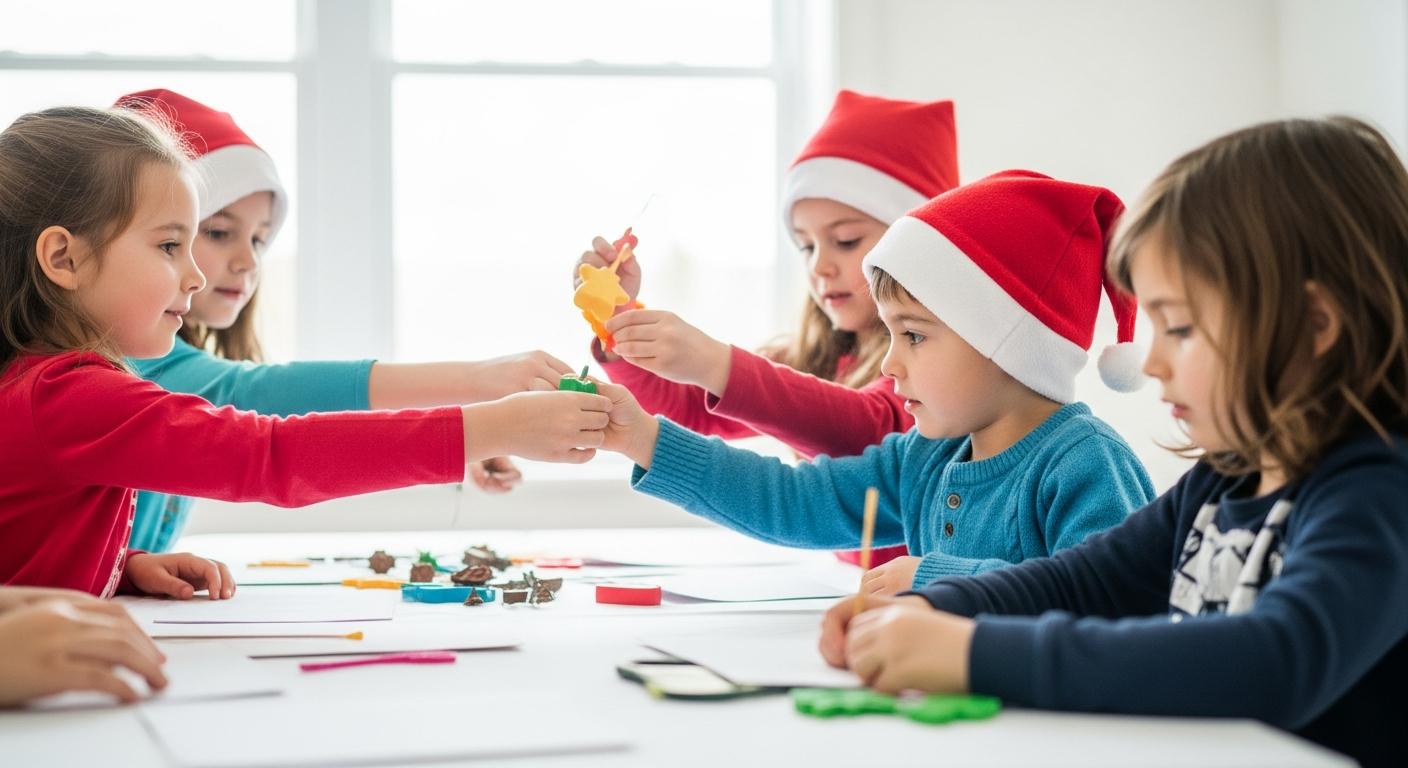
Table of Contents
- Introduction
- The Magic of Christmas Crafts for Communication
- Crafting with a Purpose: Engaging Activities for Every Age
- Maximizing Speech Opportunities During Christmas Crafts
- The Speech Blubs Difference: A Smart Screen Time Solution
- Unlocking Full Potential with Speech Blubs: Our Value & Pricing
- Conclusion
- FAQ
Introduction
The air is crisp, the lights are twinkling, and the scent of pine fills your home. Christmas is a magical time, often associated with heartwarming traditions, joyful carols, and, of course, delightful crafts. But beyond the glitter and glue, did you know that engaging in festive crafting can be a powerful catalyst for your child's speech and language development? It's true! What might seem like a simple art project is, in reality, a rich, multi-sensory learning experience that encourages communication, builds vocabulary, and fosters crucial cognitive skills.
At Speech Blubs, we believe that learning should always be joyful and engaging, turning everyday activities into opportunities for growth. This season, we invite you to transform your holiday crafting into a dynamic language laboratory. This comprehensive guide will explore how various fun kids' Christmas crafts can significantly boost your child's communication skills, from early sound imitation to complex narrative building. We’ll provide practical craft ideas for different age groups, offer tips for maximizing speech opportunities during crafting, and show you how Speech Blubs perfectly complements these hands-on activities to create a holistic and enriching learning environment.

The Magic of Christmas Crafts for Communication
Christmas crafts are far more than just pretty decorations; they are dynamic tools for holistic child development. When children immerse themselves in the creative process, they aren't just making something beautiful; they're building foundational skills that are critical for speech, language, and overall cognitive growth.
Beyond the Aesthetics: Crafts as a Multi-Sensory Learning Experience
Think about the sensory explosion involved in crafting: the smooth feel of paper, the stickiness of glue, the vibrant hues of paint, the distinct smell of markers or pinecones, and the sound of scissors snipping. Each sensory input provides a concrete experience that can be named, described, and discussed, building a child's understanding of the world around them and their ability to articulate it. This active engagement creates stronger neural pathways, making learning more memorable and effective.
Fine Motor Skills: The Unsung Heroes of Speech Development
While seemingly unrelated, the development of fine motor skills — the coordination of small muscles in the hands and fingers — is intrinsically linked to speech and language. The same areas of the brain that control precise hand movements are also involved in the intricate movements of the tongue, lips, and jaw required for clear speech. Cutting, gluing, painting, tearing paper, stringing beads, or molding clay all strengthen these crucial connections. The more dexterity a child gains in their hands, the better prepared their oral motor system often becomes for producing a wide range of sounds.
Cognitive Benefits: Problem-Solving and Planning in Action
Crafting presents countless opportunities for cognitive development. Children learn to follow multi-step instructions ("First, cut the paper; then, glue the shapes"), practice planning ("What color should I use next?"), and engage in problem-solving ("My glitter isn't sticking; what can I do?"). These cognitive processes are directly transferable to language skills, enabling children to understand sequences in stories, formulate coherent sentences, and express complex ideas.

Emotional Development: Patience, Self-Expression, and Pride
The crafting process teaches patience and perseverance. It provides a safe space for self-expression, allowing children to convey emotions and ideas non-verbally before they can articulate them fully. Completing a craft, especially one that will be displayed, instills a wonderful sense of accomplishment and pride. This boosts self-confidence, which in turn encourages them to communicate more freely and take risks with new words and phrases.
The Speech & Language Connection: A Direct Link to Communication Growth
Here’s a deeper look at how specific aspects of speech and language thrive during craft time:
- Vocabulary Expansion: Every material, color, tool, and action involved in crafting offers a new word. "Red," "green," "sticky," "smooth," "cut," "glue," "sparkle," "pinecone," "ribbon," "snowman," "star" – the list is endless. Parents can introduce new words naturally, pointing to objects and naming them.
- Following Directions: Simple crafts are perfect for practicing one-step commands, while more complex projects allow for multi-step instructions, essential for both receptive language and daily routines. "Pick up the glue stick," "Put the star on top," "First paint, then glitter."
- Describing: Crafts invite descriptive language. "Tell me about your shiny ornament," "What does the cotton feel like?" Encourage adjectives for colors, textures, shapes, and sizes. This helps children develop rich, detailed language.
- Sequencing & Narrating: As children work, they naturally follow a sequence of steps. Encouraging them to narrate their process helps with storytelling skills: "First, I drew a circle, then I cut it out, and now I’m gluing on eyes." This lays the groundwork for understanding and retelling stories.
- Requesting & Turn-Taking: Collaborative crafts inherently require requesting items ("Can I have the red marker, please?") and practicing turn-taking ("My turn for the glue, then your turn"). These are crucial social communication skills.
- Sound Practice: Crafts can be fantastic for targeting specific sounds. Making "snip-snip" sounds with scissors, imitating animal sounds for a reindeer craft, or blowing to dry paint can all be playful ways to practice articulation.
For a parent whose 3-year-old "late talker" loves animals, making a reindeer puppet allows them to practice the "moo" and "baa" sounds (or any animal sound) they're working on, mimicking the actions and sounds of their creation. This hands-on experience complements how children learn in our Speech Blubs app, where our unique "video modeling" methodology encourages children to imitate their peers, making sound production and vocabulary acquisition engaging and effective.
Crafting with a Purpose: Engaging Activities for Every Age
Let's dive into some specific Christmas crafts tailored for different developmental stages, highlighting their unique benefits for speech and language. Remember, the key is adult co-play and support, turning each craft into an interactive learning moment.
For Toddlers (1-3 years): Simple & Sensory Focus
At this age, crafts should be safe, easy to manipulate, and rich in sensory input. Focus on single words, sound imitation, and simple commands.
- 1. Sensory Shakers/Discovery Bottles (Christmas Themed)
- Materials: Empty plastic bottles, water, glitter, small festive beads, jingle bells, tiny pine needles (optional), food coloring.
- How-to: Fill bottles with water and various Christmas-themed items. Securely glue the lid shut.
- Speech Benefits: This craft is fantastic for introducing vocabulary like "shake," "shiny," "red," "green," "bells," "water." Encourage sounds like "shhh" (for shaking) or "jingle-jingle." Ask simple questions like, "What do you see?" or "Is it heavy or light?" It's a fun way to explore cause-and-effect ("When I shake, the glitter moves!").
- Relatable Scenario: For a toddler working on early sound imitation, shaking a bottle with jingle bells and saying "jingle-jingle" together provides an auditory and visual cue that can encourage vocalization.
- Speech Blubs Connection: This mirrors the early sound and word practice found in the Speech Blubs app, where children are introduced to new vocabulary through engaging video models, linking sounds to objects and actions.
- 2. Cotton Ball Snowman or Reindeer
- Materials: Blue or brown paper, cotton balls, glue stick, googly eyes, orange paper for a carrot nose, small twigs for arms/antlers.
- How-to: Help your child glue cotton balls onto the paper to form a snowman's body or reindeer's head. Add eyes, nose, and other features.
- Speech Benefits: Introduce descriptive words like "soft," "sticky," "fluffy," "white." Practice actions like "pat," "glue," "stick." Discuss body parts ("eyes," "nose," "arms," "antlers"). You can make "brrr" sounds for the snowman or "snort" sounds for the reindeer.
- Relatable Scenario: If your child struggles with describing textures, focusing on the "soft" cotton ball repeatedly helps solidify that adjective. You can model, "Oh, this cotton is so soft! Can you feel how soft it is?"
For Preschoolers (3-5 years): Expanding Vocabulary & Following Directions
Preschoolers are ready for slightly more complex tasks, involving two-step directions, color recognition, and expressing preferences.
- 3. Handprint/Footprint Ornaments
- Materials: Salt dough or air-dry clay, paint, glitter, ribbon.
- How-to: Press your child's hand or foot into the dough/clay. Bake or air dry, then paint and decorate.
- Speech Benefits: This craft naturally encourages talk about body parts ("hand," "foot," "fingers," "toes"), colors ("What color paint do you want?"), and actions ("press," "paint," "decorate"). It’s a wonderful opportunity for early narrative: "This is your handprint!" or "Do you remember when we made this?"
- Relatable Scenario: For a child learning to express choices, asking "Do you want blue paint or red paint?" during decoration empowers them to use expressive language.
- 4. DIY Christmas Cards (Collage Style)
- Materials: Construction paper, old magazines, glitter, glue sticks, various holiday stickers, fabric scraps, kid-safe scissors.
- How-to: Fold construction paper for cards. Provide a variety of materials for your child to cut (with supervision) and glue onto the cards.
- Speech Benefits: This is fantastic for requesting ("Can I have the red paper?"), turn-taking ("My turn with the scissors, then your turn"), describing objects ("a shiny star," "a bumpy fabric"), and identifying colors and shapes. You can also talk about who the card is for and what message it conveys.
- Speech Blubs Connection: This collaborative activity reinforces the social aspect of communication, much like the peer interaction within Speech Blubs fosters a sense of shared learning and motivation. Our app focuses on developing key foundational skills, building the confidence needed to "speak their minds and hearts" – a mission born from the personal experiences of our founders, who created the tool they wished they had when growing up with speech challenges.
- 5. Pinecone Animals or Ornaments
- Materials: Pinecones, googly eyes, pipe cleaners, small pom-poms, felt scraps, glue.
- How-to: Transform pinecones into festive creatures (reindeer, owls) or simply decorate them with glitter and bells for ornaments.
- Speech Benefits: Perfect for categorizing ("nature items," "craft supplies"), comparing sizes ("This pinecone is big, this one is small"), and describing textures ("bumpy," "spiky"). When making animals, practice animal sounds and names. Encourage storytelling about the pinecone creature: "What does your pinecone reindeer like to do?"
- Relatable Scenario: A child working on narrative skills can "tell the story" of their pinecone creation, practicing sequencing and descriptive language as they explain how they made it and what their little creature is like.
For School-Aged Children (5+ years): Complex Instructions & Narrative Building
Older children can handle more intricate crafts, allowing for discussions about planning, problem-solving, and more detailed storytelling.
- 6. Gingerbread House Decorating
- Materials: Pre-baked gingerbread house kit or individual gingerbread cookies, various candies, icing, sprinkles.
- How-to: Assemble and decorate gingerbread houses or cookies.
- Speech Benefits: This activity is rich in sequencing ("First, we put on the roof, then the icing, then the candy"), planning ("What candy should go where?"), and descriptive language ("sweet," "crunchy," "sparkly," "colorful"). It's also excellent for expressing preferences and negotiating turn-taking.
- Speech Blubs Connection: Just as this craft encourages structured thinking and sequencing, Speech Blubs uses "smart screen time" with focused activities like our "Building Blocks" section to reinforce these cognitive skills, helping children understand the order of events and ideas.
- 7. DIY Christmas Wreaths (Paper Plate or Natural)
- Materials: Paper plates (cut out the center), green construction paper, scissors, glue, various embellishments (pom-poms, buttons, glitter), or natural elements (small twigs, dried berries, tiny pinecones).
- How-to: Children can cut out green "leaves" to glue around the paper plate ring, or arrange natural elements. Decorate as desired.
- Speech Benefits: This craft fosters discussions about shapes ("circle," "leaf shape"), patterns ("red, green, red, green"), and following multi-step directions. It encourages descriptive language for the materials and their arrangement. Children can also express their aesthetic preferences ("I like this here!").
- Relatable Scenario: If a child is working on distinguishing between "inside" and "outside" or "on top" and "underneath," these spatial concepts can be naturally practiced while placing decorations on the wreath.
Maximizing Speech Opportunities During Christmas Crafts
To truly make craft time a language-rich experience, parents play a pivotal role. Here are some strategies to elevate the communication potential of every holiday project:
- Talk, Talk, Talk! Engage in a constant stream of conversation. Use open-ended questions like, "What do you want to do next?" or "Tell me about your shiny star." Describe what you are doing, what your child is doing, and what is happening around you (parallel talk). For instance, "I see you're cutting the red paper! Snip, snip, snip!"
- Model Language: Use clear, simple sentences and model correct grammar and vocabulary. If your child points, label the object. If they use a single word, expand it into a phrase. For example, if they say "glue," you can respond, "Yes, you need the sticky glue."
- Give Choices: Offer choices to encourage expressive language. "Do you want the red ribbon or the green ribbon?" "Should we put the eyes here or here?" This empowers your child and provides opportunities for them to use words like "this" or "that," or specific color names.
- Follow Their Lead: Encourage their ideas and creativity. If they want to make a purple snowman, embrace it! This validates their self-expression and makes them more likely to communicate their thoughts and preferences.
- Narrate Actions: Verbally describe the steps as you and your child complete them. "First, we're tearing the paper. Now we're gluing it. It's sticking!" This helps them internalize sequencing and build narrative skills.
- Praise Effort, Not Just the Outcome: Focus on the process and their attempts to communicate. "I love how you tried to say 'Christmas tree!'" or "You did a great job asking for the glitter." This builds confidence and reduces the pressure to be perfect.
- Connect to Speech Blubs: Remind them of similar activities they do in the app. "Remember how we practiced animal sounds with the 'Animal Kingdom' section on Speech Blubs? We can do that with our reindeer puppet too!" Our app's "video modeling" approach encourages direct imitation of peers, which can be incredibly motivating for children. This "smart screen time" is designed not to replace hands-on activities but to complement them, providing structured practice in an engaging format.
For instance, if your child's 3-year-old struggles with turn-taking during shared activities, a collaborative craft like decorating a gingerbread house offers a gentle, fun environment to practice. You can model, "My turn for the sprinkles," then hand them the sprinkles and say, "Your turn for the gumdrops!" This direct experience, reinforced by clear language, helps build those social communication skills.
The Speech Blubs Difference: A Smart Screen Time Solution
At Speech Blubs, we understand the challenges parents face when looking for effective and engaging ways to support their child's speech and language development. Our mission is to empower children to "speak their minds and hearts," providing an immediate, effective, and joyful solution for the 1 in 4 children who need speech support. Our company was born from the personal experiences of our founders, who all grew up with speech problems and created the tool they wished they had.
We are committed to blending scientific principles with play into one-of-a-kind "smart screen time" experiences. Unlike passive viewing like cartoons, Speech Blubs offers an active, interactive, and highly engaging alternative. Our unique approach utilizes "video modeling" methodology, where children learn by watching and imitating their peers. This natural way of learning helps children build confidence, develop key foundational communication skills, and reduce frustration, turning screen time into a powerful tool for family connection and growth.
Our method is backed by science, placing us in the top tier of speech apps worldwide. Read more about our research and methodology here. We don't just teach words; we foster a love for communication and build the confidence necessary for children to express themselves fully. Crafting alongside Speech Blubs creates a comprehensive learning ecosystem – real-world interactions paired with targeted digital practice.
We're proud to offer a tool that can be a powerful supplement to a child's overall development plan and, when applicable, professional therapy, making the journey to confident communication an enjoyable one.
Unlocking Full Potential with Speech Blubs: Our Value & Pricing
We believe that every child deserves the opportunity to communicate effectively, and we strive to make our award-winning speech therapy app accessible to as many families as possible. That's why we offer flexible subscription options designed to fit your needs, with the Yearly plan offering the best value and exclusive benefits.
You can choose between our Monthly or Yearly subscription plans:
- Monthly Plan: For just $14.99 per month, you get access to all core Speech Blubs features. It's a great option for trying out the app initially.
- Yearly Plan: This is our most popular and recommended option, priced at just $59.99 per year. This breaks down to an incredible $4.99 per month, allowing you to save 66% compared to the monthly plan!
Why choose the Yearly Plan? It's not just about the significant savings; the Yearly plan unlocks a full suite of premium features designed to enhance your child's learning journey:
- 7-Day Free Trial: The Yearly plan includes a generous 7-day free trial, allowing you and your child to explore the full app and its features before committing. The Monthly plan does not include this trial.
- The Extra Reading Blubs App: Get access to our companion app, Reading Blubs, designed to support early literacy skills.
- Early Access to New Updates: Be among the first to experience our latest features and improvements.
- 24-Hour Support Response Time: Enjoy priority support from our dedicated team.
We understand that investing in your child's future is important, and we want to provide the most value possible. The Yearly plan offers comprehensive support and features that will accelerate your child's progress and foster a lasting love for communication.
Unsure if your child could benefit? Take our quick 3-minute preliminary screener. It involves 9 simple questions and provides you with an assessment and a personalized next-steps plan, along with access to a free 7-day trial of Speech Blubs when you select the Yearly plan.
Conclusion
This Christmas, let's make memories that are not only beautiful but also incredibly beneficial for your child's development. Engaging in fun kids' Christmas crafts provides a unique, hands-on avenue to boost speech, expand vocabulary, refine fine motor skills, and cultivate emotional resilience. These joyful, shared experiences lay a strong foundation for effective communication, helping your child find their voice in a fun, natural way.
As you embark on your festive crafting adventures, remember that Speech Blubs is here to complement every glue stick and glitter sprinkle. Our app provides a scientifically backed, engaging "smart screen time" solution that reinforces the language skills practiced offline, giving your child the best of both worlds. By combining the interactive, peer-modeling approach of Speech Blubs with the sensory-rich world of Christmas crafts, you’re creating a powerful, holistic learning environment designed to empower your child to speak their minds and hearts.
Ready to see the magic unfold? Start your child's journey to confident communication today. Download Speech Blubs on the App Store or Google Play Store. For the best value and to access your 7-day free trial along with exclusive features like the Reading Blubs app, make sure to choose our Yearly plan. You can also create your account and begin your 7-day free trial on our website. Join thousands of happy parents who have witnessed their children blossom with Speech Blubs! See what other parents are saying about their child's success with Speech Blubs.
FAQ
1. What age are Christmas crafts best for? Christmas crafts are wonderful for all ages, from toddlers to school-aged children and even adults! The key is to select age-appropriate activities. For toddlers, focus on simple, sensory-rich crafts with large, safe materials. Preschoolers can handle slightly more complex tasks involving cutting and gluing. School-aged children can engage in intricate projects that require multi-step directions and fine motor precision. The most important thing is adult involvement and adaptation to the child's skill level.
2. How exactly do crafts help with speech delays or difficulties? Crafts help with speech delays in several ways. They provide rich opportunities for vocabulary expansion by introducing new words for materials, actions, and objects. They encourage following directions, which is crucial for receptive language. The sensory input and fine motor work involved also strengthen neural connections that support oral motor skills needed for articulation. Furthermore, crafts foster turn-taking, requesting, and descriptive language, all vital aspects of communication, making learning engaging and reducing pressure.
3. What if my child isn't interested in crafts? Every child is different! If your child isn't immediately drawn to traditional crafts, try to find what sparks their interest. Perhaps they prefer cooking, building, or outdoor activities. You can adapt craft concepts to these preferences. For example, decorating Christmas cookies (edible craft) or building a festive fort could be more appealing. Keep activities short, focus on their lead, and integrate elements they enjoy (e.g., favorite characters, specific colors). Remember, the goal is interaction and language, not a perfect end product.
4. How can Speech Blubs enhance our craft time? Speech Blubs perfectly complements craft time by providing structured, engaging practice that reinforces the language skills you're working on offline. While crafting, you can practice specific sounds, vocabulary, or sequencing. Then, open Speech Blubs to find activities that target those exact skills through fun, interactive video modeling. For example, if you're making an animal craft, you can then practice animal sounds in the app. This creates a cohesive learning environment, turning screen time into an active, valuable extension of hands-on play, helping children build confidence and accelerate their communication development.
About the author