
Fun Kids Christmas Crafts: Ideas for Festive Family Speech
 By Speech Blubs Team•Dec 22, 2025•20 min.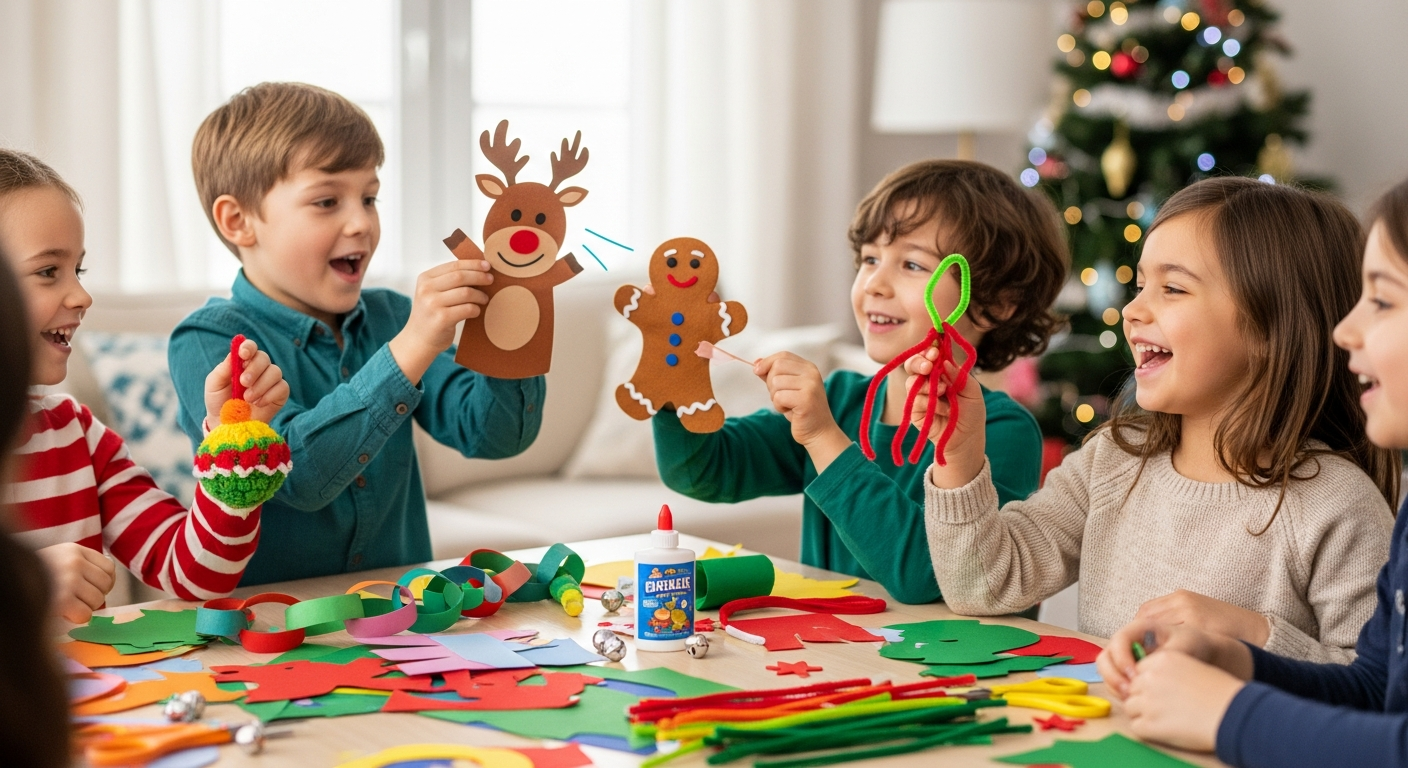
Table of Contents
- The Magic of Christmas Crafts for Communication Development
- Top Christmas Craft Ideas for Speech and Language Fun
- Integrating Speech Blubs into Your Holiday Fun
- Making the Most of Speech Blubs: Value and Features
- Conclusion
- Frequently Asked Questions (FAQ)
The air begins to chill, familiar carols play softly in the background, and a unique sparkle appears in children's eyes – it’s the magical season of Christmas! For many, the holidays are a time for warmth, wonder, and creating cherished memories. But beyond the twinkling lights and festive treats, this time of year offers a golden opportunity for something even more profound: fostering your child's communication skills through the joy of creative play. Sometimes, in the rush of holiday preparations, we might lean towards passive entertainment, missing chances for truly interactive experiences. This post is dedicated to showing you how delightful Christmas crafts can double as powerful tools for speech and language development, transforming simple activities into rich learning experiences. By engaging in festive crafts with your child, you're not just making decorations; you're building bridges for communication, nurturing confidence, and creating joyful family learning moments – a philosophy deeply shared by us at Speech Blubs.

The Magic of Christmas Crafts for Communication Development
Christmas crafts are so much more than just glitter, glue, and pretty decorations. They are dynamic playgrounds for a child's developing mind, offering a multifaceted approach to learning that naturally integrates speech and language practice. As parents and caregivers, we often observe the obvious benefits, like boosting creativity or fine motor skills, but the linguistic advantages are truly profound.
When a child engages in crafting, they're not just moving their hands; their brain is actively processing information, planning, and expressing ideas. Here’s a closer look at the hidden linguistic gems within every craft:
- Fine Motor Skills & Pre-Writing Readiness: The act of holding scissors, squeezing glue, or manipulating small embellishments strengthens the small muscles in a child’s hands, which are crucial for developing pre-writing skills. This physical readiness also primes the brain for more complex cognitive tasks, including language.
- Following Directions & Receptive Language: "First, cut the red paper. Then, glue it here." These simple instructions are vital for building receptive language skills – the ability to understand and comprehend language. As children follow multi-step directions, they learn to process sequences and remember information, honing skills critical for understanding stories and conversations.
- Vocabulary Expansion: Every craft introduces new words. From the names of materials ("felt," "glitter," "yarn") to descriptive adjectives ("sticky," "sparkly," "rough," "smooth") and action verbs ("cut," "glue," "paint," "stick"), the vocabulary explosion is immense. Children learn by doing, and by associating new words with tangible objects and actions, their understanding deepens.
- Descriptive Language: "Tell me about your shiny, bumpy ornament!" Encouraging children to describe what they are making, seeing, and feeling helps them articulate thoughts and expand their descriptive language. This practice improves their ability to tell stories and share experiences effectively.
- Sequencing & Narrative Skills: Crafting often involves a clear sequence of steps: "First we do this, then that, next this." This provides a natural framework for understanding and retelling sequences, a foundational skill for developing narrative abilities and telling coherent stories.
- Problem-Solving & Critical Thinking: "Oh no, the glue isn't sticking! What should we do?" Crafting inevitably presents small challenges, which are fantastic opportunities for problem-solving. These moments encourage children to think critically, propose solutions, and use language to explain their reasoning.
- Social Interaction & Turn-Taking: Crafting together is inherently social. It encourages children to share materials, ask for help, offer suggestions, and take turns. These interactions are invaluable for developing pragmatic language skills – the social rules of communication.
- Imaginative Play & Storytelling: Once a craft is complete, it often becomes a prop for imaginative play. A reindeer ornament might inspire a story about Santa's sleigh, or a homemade tree might spark a tale about woodland creatures. These imaginative scenarios are powerful ways to practice storytelling, character voices, and creative expression.
At Speech Blubs, we deeply understand the power of play in building communication skills. Our mission is to empower children to "speak their minds and hearts" by blending scientific principles with joyful, engaging experiences. We believe that learning to communicate should be an immediate, effective, and fun solution for the 1 in 4 children who need speech support. Our platform offers a unique "smart screen time" alternative to passive viewing, promoting active participation and family connection. Children learn complex communication skills through our "video modeling" methodology, where they watch and imitate their peers, making learning feel natural and motivating. You can learn more about our approach and how we're changing the game for kids' speech development on our homepage.

Top Christmas Craft Ideas for Speech and Language Fun
Let's dive into some fantastic Christmas craft ideas that are not only fun to make but are specifically designed to spark speech and language growth. For each craft, we’ll outline the materials, simple instructions, and most importantly, how to maximize its potential for communication development.
1. Reindeer Handprint Ornaments
This timeless craft captures a precious moment in time and creates a keepsake while being a fantastic language booster.
- Materials Needed: Salt dough (flour, salt, water) or air-dry clay, brown paint, red pom-poms (for Rudolph's nose), googly eyes, a small stick or brown pipe cleaner pieces for antlers, a hole punch (before drying), and ribbon for hanging.
- Instructions:
- Help your child press their hand firmly into the salt dough or clay.
- Carefully cut around the handprint shape, or leave it as a rounded oval if preferred. Use a pencil to poke a hole at the top for the ribbon.
- Bake the salt dough or let the air-dry clay dry completely according to instructions.
- Once dry, help your child paint the handprint brown. Talk about the color!
- Glue on the googly eyes at the "palm" end (where the wrist would be).
- Attach a red pom-pom below the eyes for the reindeer's nose.
- Glue small stick pieces or brown pipe cleaner pieces above the eyes for antlers.
- Thread a ribbon through the hole for hanging.
- Speech & Language Focus:
- Vocabulary: Introduce and reinforce words like "hand," "palm," "fingers," "clay," "dough," "paint," "brown," "red," "googly eyes," "antlers," "reindeer," "ribbon," "bake," "dry," "glue."
- Sounds: Practice initial 'r' sounds (reindeer, red, rough), 'h' sounds (hand, happy), 'p' sounds (paint, pom-pom), and 'm' sounds (make, my).
- Following Directions: "First, press your hand. Next, we'll paint it brown. Then, add the red nose." This helps with sequential understanding.
- Descriptive Words: Encourage children to describe the clay ("sticky," "smooth," "cold"), the paint ("wet," "messy"), and the finished reindeer ("cute," "sparkly," "brown").
- Storytelling & Imagination: "Where does Rudolph live? What does he eat? Can he fly?" Prompt imaginative questions to encourage narrative skills.
- Speech Blubs Connection: Discussing animal names, characteristics, and sounds like 'moo' or 'baa' (if you're making other animals) aligns perfectly with our "Animal Kingdom" section in the Speech Blubs app. Children can watch and imitate their peers making various animal sounds, reinforcing the vocabulary learned during craft time. Curious how our video modeling works? Take our quick 3-minute preliminary screener to get an assessment and see how Speech Blubs can support your child's communication journey.
2. Cotton Ball Santa Beard Craft
A simple yet incredibly effective craft for sensory exploration and language building.
- Materials Needed: Red construction paper, white paper, cotton balls, glue stick or liquid glue, safety scissors, markers or crayons.
- Instructions:
- Help your child cut out a large Santa hat shape from the red paper and a face shape (oval or circle) from white paper.
- Glue the hat to the top of the face shape.
- Show your child how to pull apart cotton balls slightly to make them fluffier.
- Apply glue around the lower half of the face shape and along the bottom edge of the hat.
- Help your child stick the cotton balls onto the glued areas to create Santa’s beard, mustache, and the trim on his hat.
- Use markers to draw Santa's eyes and a friendly mouth.
- Speech & Language Focus:
- Vocabulary: "Santa," "beard," "hat," "red," "white," "cotton," "glue," "fluffy," "soft," "trim," "draw," "stick."
- Sounds: Target 's' (Santa, soft, stick), 'b' (beard, big, white), and 'h' (hat, happy).
- Action Verbs: "Cut," "glue," "stick," "draw," "pull," "fluff."
- Concepts: "Soft/hard" (comparing cotton to paper), "big/small" (comparing hat to beard), "on top/underneath" (hat on top of face, beard underneath nose).
- Predicting & Role-Play: "What do you think Santa says? Ho ho ho!" "If Santa had a blue hat, what would he look like?"
- Speech Blubs Connection: For specific sounds like 's' and 'b', our app offers targeted practice in a playful, encouraging environment. Our "Sounds" section provides engaging activities to help children master consonant and vowel sounds, building their phonetic awareness. This type of focused practice complements the natural sound production encouraged by crafting.
3. Paper Plate Christmas Wreaths
A fantastic way to practice shapes, colors, and spatial concepts while creating a beautiful decoration.
- Materials Needed: Paper plates, green paint, paintbrushes, construction paper (red, green, yellow for holly, berries, bows), safety scissors, glue, glitter (optional).
- Instructions:
- Help your child cut out the center of a paper plate, leaving a ring shape.
- Paint the ring green and let it dry.
- From colored construction paper, cut out festive shapes like holly leaves, red circles for berries, and small bows. Older children can practice cutting these themselves.
- Glue the cut-out shapes onto the green wreath ring. Encourage creative arrangement.
- Add a touch of glitter if desired for extra sparkle!
- Speech & Language Focus:
- Vocabulary: "Wreath," "plate," "circle," "green," "holly," "berries," "bow," "glitter," "festive," "decorate."
- Shapes: "Circle," "star," "heart," "leaf." Identify and name each shape as you cut and glue.
- Colors: "Red," "green," "yellow," "gold." "Which color berry should we use?"
- Spatial Concepts: "On top," "underneath," "next to," "in the middle," "around." "Put a berry next to the holly."
- Following Multi-Step Directions: This craft is excellent for developing receptive language as children follow a sequence of actions.
- Speech Blubs Connection: This activity's emphasis on identifying shapes, colors, and following directions is fundamental to cognitive and language development. Our app's "Colors" and "Shapes" sections provide interactive ways to reinforce these concepts through video modeling. Our method is backed by science, showing high effectiveness in encouraging communication. You can explore the research behind our approach and see why Speech Blubs is a trusted tool for parents worldwide.
4. Pinecone Christmas Trees
A wonderful opportunity to connect with nature and explore sensory language.
- Materials Needed: Pinecones (collected from nature or purchased), green paint, small pom-poms, beads, sequins, or small buttons, liquid glue, glitter (optional).
- Instructions:
- Clean any loose debris from the pinecones.
- Help your child paint the pinecones green. Talk about the texture – "Is it bumpy? Prickly?"
- Once the paint is dry, use small dabs of glue to attach the pom-poms, beads, and sequins onto the pinecone scales, transforming them into mini Christmas trees.
- Add glitter for a snowy effect.
- Speech & Language Focus:
- Sensory Words: "Prickly," "rough," "smooth" (after painting), "smelly" (pine scent), "sparkly," "bumpy."
- Counting: "How many red pom-poms did you use? Let's count them!"
- Size Concepts: "Big pinecone," "small pom-pom," "tiny bead."
- Verbs: "Paint," "glue," "decorate," "count," "stick," "find."
- Comparative Language: "This pom-pom is bigger than that bead."
- Speech Blubs Connection: This activity encourages descriptive language and counting, which complements many of our early learning activities within the Speech Blubs app. For example, our "Numbers" section can help reinforce counting skills learned during craft time. The tactile nature of this craft, combined with the visual learning in our app, provides a well-rounded sensory experience for speech development.
5. DIY Snow Globe Jars
This craft is not only mesmerizing but also fantastic for predicting outcomes and describing actions.
- Materials Needed: Clear glass jars with tight-fitting lids, distilled water, liquid glycerin (a few drops help glitter fall slowly), glitter (silver, white, iridescent), small waterproof figurines (mini trees, Santa, reindeer, snowmen), waterproof super glue or epoxy.
- Instructions:
- Help your child choose a figurine. Using waterproof glue, attach the figurine to the inside of the jar lid. Let it dry completely and securely (adult supervision essential for glue).
- Fill the jar almost to the top with distilled water.
- Add a teaspoon or two of glitter. Add 1-2 drops of liquid glycerin – this makes the glitter fall slower, like real snow!
- Carefully screw the lid on TIGHTLY, ensuring it’s sealed. You may even want to add a bead of waterproof glue around the rim for extra security.
- Turn the jar upside down and shake gently!
- Speech & Language Focus:
- Vocabulary: "Jar," "lid," "water," "glitter," "snow," "figurine," "shake," "sparkle," "fall," "swirl," "clear," "tight."
- Action Words: "Fill," "glue," "shake," "watch," "pour," "turn."
- Concepts: "Fast/slow" (glitter falling), "up/down" (glitter movement), "inside/outside," "empty/full."
- Prediction: "What do you think will happen when we shake it?" "Will the glitter fall fast or slow?"
- Cause and Effect: "If we shake it, then the snow will fall."
- Speech Blubs Connection: Creating a snow globe inspires imaginative stories and descriptions of movement and events, just as our app sparks creativity by letting children explore different themes and characters in our engaging activities. Speech Blubs is designed to be a powerful tool for family connection, where parents and children can learn and play together. Ready to explore a world of communication with your child? Download Speech Blubs on the App Store or Google Play Store to begin your family's speech adventure!
6. Popsicle Stick Christmas Trees
A classic craft that’s perfect for practicing shapes, counting, and creative arrangement.
- Materials Needed: Green popsicle sticks (you can buy them pre-colored or paint regular ones), liquid glue, small decorations (sequins, beads, mini pom-poms, buttons), a yellow paper star.
- Instructions:
- Arrange green popsicle sticks into a triangle tree shape (e.g., three sticks in a triangle for the base, then add more across to fill it in). Glue them together securely.
- Once the glue is dry, encourage your child to decorate their tree with sequins, beads, or small pom-poms.
- Glue a yellow paper star to the very top of the tree.
- Speech & Language Focus:
- Shapes: "Triangle," "star." "We made a triangle tree!"
- Colors: "Green," "yellow," and various colors for decorations. "How many red sequins do you want?"
- Positions/Spatial Concepts: "Top," "bottom," "middle," "across," "straight," "slanted."
- Counting: Count the popsicle sticks, count the decorations. "One, two, three sticks!"
- Categorization: "Which decorations are shiny? Which ones are bumpy?"
- Speech Blubs Connection: This activity encourages critical thinking and categorization, skills that are foundational to language development. Our app provides "smart screen time" experiences that engage children in active learning, contrasting sharply with passive cartoon viewing. For a child learning new words for colors or shapes, our app offers engaging, interactive modules that reinforce what they've learned during craft time.
7. Ornament Decorating (Store-Bought or Homemade)
Simple, yet incredibly versatile, allowing for maximum creativity and expression.
- Materials Needed: Plain, shatterproof ornaments (plastic or wooden are best for kids), acrylic paints, paintbrushes, glitter glue, permanent markers, stick-on jewels, craft foam shapes.
- Instructions:
- Set up a workspace with newspapers or a craft mat.
- Provide a variety of decorating materials and let your child choose how they want to transform their ornament.
- Encourage free expression – there's no right or wrong way to decorate!
- Speech & Language Focus:
- Expressing Choices: "Which color do you want to use? Blue or green?" "I want the sparkly one!" This empowers children to make decisions and communicate their preferences.
- Describing Patterns: "My ornament has stripes!" "Look, I made dots!" "It's swirly!"
- Sharing & Showing Off: Encourage children to talk about their finished ornament, describe what they did, and explain their choices. "Tell Grandma about your beautiful ornament!"
- Turn-Taking: "My turn to add glitter, then your turn to add a jewel."
- Speech Blubs Connection: Empowering children to make choices and express themselves is at the heart of our mission. Our app helps children build confidence in expressing their preferences and ideas, providing immediate, effective, and joyful solutions. It's about giving them the tools to "speak their minds and hearts." When your child proudly shows off their decorated ornament, they are practicing vital communication skills, and our app can further enhance that confidence. Want to see the impact ourselves? Create your account and begin your 7-day free trial today.
Integrating Speech Blubs into Your Holiday Fun
These Christmas crafts are powerful communication tools on their own, but when combined with the targeted support of Speech Blubs, their impact multiplies. We designed Speech Blubs to be a dynamic supplement to your child's overall development plan, offering unique advantages:
- Building on Imitation Skills: Our core "video modeling" method encourages children to learn by watching and imitating their peers. This directly builds upon the natural imitation involved in crafting, where children often mimic your actions and verbalizations. It reinforces the idea that learning is a fun, social activity.
- Reinforcing Vocabulary and Concepts: Many of the words and concepts introduced during craft time – colors, shapes, animals, action verbs – are directly addressed in various sections of the Speech Blubs app. For a child who loves animals and is making reindeer crafts, our "Animal Kingdom" section offers a fun, motivating way to practice 'moo' and 'baa' sounds, or learn new animal names and characteristics. This creates a cohesive learning experience that bridges physical activity with interactive digital engagement.
- "Smart Screen Time" for Active Engagement: We firmly believe in "smart screen time" that encourages active participation rather than passive viewing. Unlike cartoons, Speech Blubs requires children to engage, respond, and imitate. This makes our app a powerful tool for developing speech skills in a captivating way, offering a break from hands-on crafts without a break from learning.
- Fostering Family Connection: Speech Blubs is designed for co-play. Parents and children can explore the app together, engaging in fun activities that spark conversation and shared laughter, strengthening your bond during the festive season.
- Tailored Support for Your Child's Journey:
- For the "late talker" who enjoys themed play: Our holiday-themed activities or sections like "When I Grow Up" can introduce festive vocabulary and role-playing, building on their interests.
- For the child struggling with specific sounds: Our "Sounds" section offers targeted practice with various phonemes, helping them master pronunciation in a playful, low-pressure environment.
- For the child needing to build vocabulary: Our vast library of words and concepts, presented through engaging video models, ensures consistent exposure and practice.
Our company was born from the personal experiences of our founders, all of whom grew up with speech problems and created the tool they wished they had. This personal connection drives our commitment to providing an immediate, effective, and joyful solution for children who need speech support. We don't promise guaranteed outcomes overnight, but we focus on fostering a love for communication, building confidence, reducing frustration, developing key foundational skills, and creating joyful family learning moments that contribute significantly to a child's speech journey.
Making the Most of Speech Blubs: Value and Features
We want every family to experience the magic of Speech Blubs and witness the joy it brings to a child's communication journey. We offer flexible plans to suit your family's needs:
- Monthly Plan: For $14.99 per month, you gain access to our core speech therapy app. While it provides valuable content, it's a more basic option.
- Yearly Plan: The Best Value & Full Experience! Our Yearly plan is priced at $59.99 per year, which breaks down to an incredible value of just $4.99 per month. This means you save 66% compared to the monthly plan!
The Yearly plan isn't just cheaper; it unlocks a comprehensive suite of features designed to maximize your child's learning experience:
- A 7-day free trial: Experience the full power of Speech Blubs before committing. This is crucial for seeing how your child connects with our unique video modeling and engaging activities.
- The extra Reading Blubs app: Enhance literacy skills alongside speech development with our complementary reading app.
- Early access to new updates: Be the first to try out exciting new content and features.
- 24-hour support response time: Get prompt assistance whenever you need it.
The Monthly plan does not include these exclusive benefits, making the Yearly plan the clear best choice for families seeking the most value and a truly holistic approach to their child's development.
To start your child's communication journey and unlock all these amazing features, we highly recommend choosing the Yearly plan. This ensures you get the valuable 7-day free trial and the full suite of tools to empower your child.
Ready to provide your child with an engaging, science-backed tool for speech development this holiday season? Download Speech Blubs on the App Store or get it on the Google Play Store today! When prompted, select the Yearly plan to activate your free trial and gain access to all the exclusive benefits.
Conclusion
The Christmas season is a precious time, filled with opportunities to connect, create, and celebrate. By embracing festive crafts, we do more than just make beautiful decorations; we open doors to rich communication experiences, fostering crucial speech and language skills in our children. These hands-on activities provide a natural, joyful environment for vocabulary expansion, following directions, storytelling, and social interaction.
Combining the magic of holiday crafting with the targeted, playful support from the Speech Blubs app can significantly boost your child's confidence and communication abilities. We are committed to providing an effective and joyful solution, empowering children to "speak their minds and hearts" through a unique blend of scientific principles and engaging play.
Don't miss out on creating joyful memories and fostering confident communicators this holiday season. Take the first step towards enhancing your child's communication journey. Start your 7-day free trial today by creating your account on our website or downloading the app. Remember to choose the Yearly plan to unlock the free trial and enjoy the full suite of exclusive features, including the Reading Blubs app and priority support!
Frequently Asked Questions (FAQ)
1. What age group are these crafts suitable for?
Most of these Christmas craft ideas are suitable for toddlers (with significant adult assistance) through early elementary school children (around 2-8 years old). We've suggested adaptations for varying skill levels, emphasizing the importance of adult co-play and support to maximize both safety and communication opportunities. For younger children, focus on the sensory experience, naming colors, and simple actions. For older children, encourage more independent creation, detailed descriptions, and complex storytelling.
2. How can I adapt these crafts for children with special needs or developmental delays?
Adaptation is key! Simplify instructions into one-step commands, use visual aids (like picture schedules), provide hand-over-hand assistance for fine motor tasks, or use larger, easier-to-handle materials. Focus on the process, not just the product. For children with speech delays, offer choices ("Do you want the red or green pom-pom?") to encourage verbal responses, model descriptive language, and accept any form of communication (gestures, sounds, single words). Remember, the goal is interaction and communication practice, so tailor the activity to your child's unique abilities and interests.
3. How does Speech Blubs specifically help with speech development?
Speech Blubs utilizes a unique "video modeling" methodology, where children learn by watching and imitating their peers on screen. This taps into the brain's natural mirror neuron system, making learning intuitive and engaging. The app offers a wide range of activities targeting specific sounds, vocabulary, descriptive language, storytelling, and more. Our approach is designed to be interactive and fun, making "smart screen time" an active learning experience that complements traditional therapy and hands-on activities, empowering children to build confidence in their communication.
4. Is the Speech Blubs app a replacement for professional speech therapy?
No, Speech Blubs is designed to be a powerful supplement to a child's overall development plan, and when applicable, professional speech therapy. While our app offers a comprehensive, engaging, and science-backed approach to speech development, it does not replace the individualized assessment, diagnosis, and treatment plan provided by a certified speech-language pathologist. We believe in providing valuable tools for parents to use at home, but always recommend consulting with a professional for personalized guidance on your child's communication needs.
About the author