
Fun Kids Summer Activities: Boost Speech & Spark Joy!
 By Speech Blubs Team•Jan 13, 2026•20 min.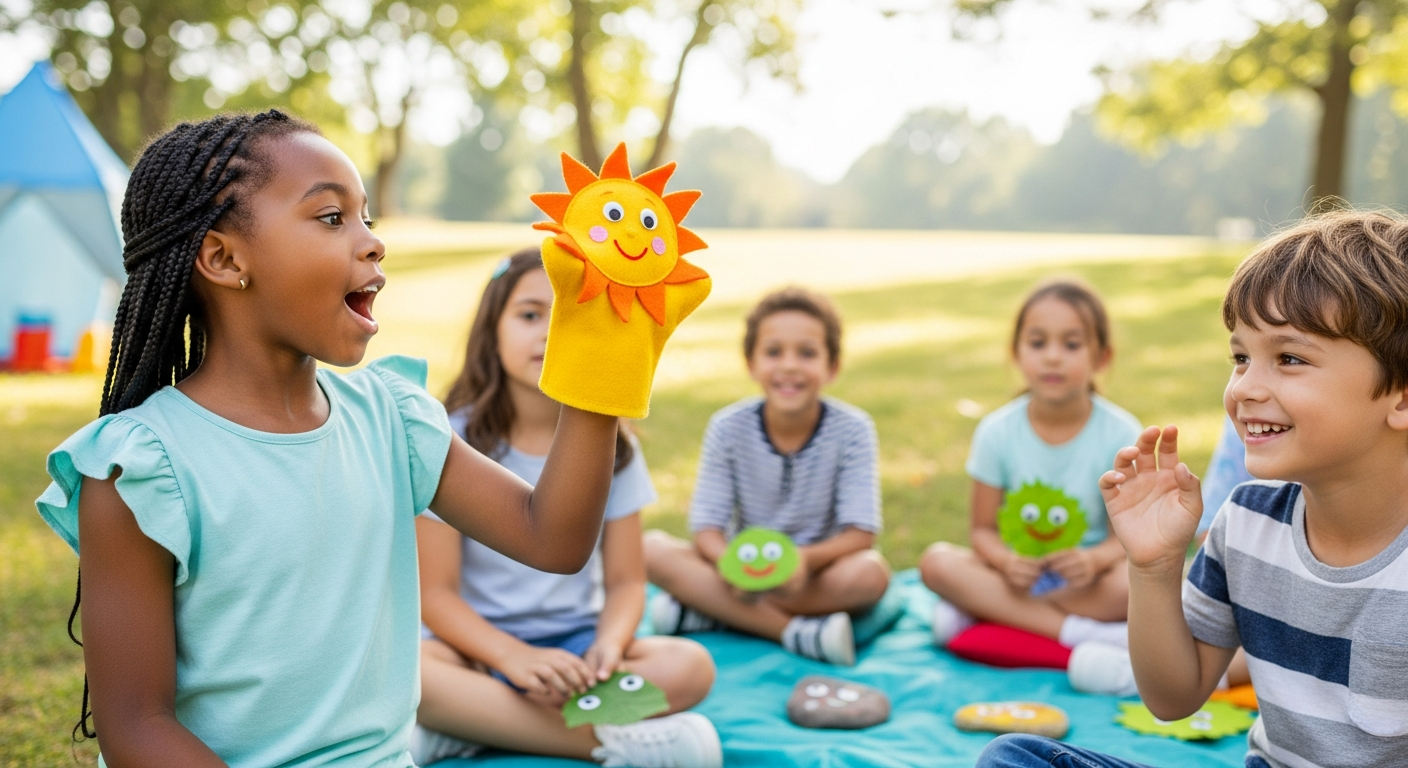
Table of Contents
- Introduction
- Why Summer Learning Matters for Speech Development
- Outdoor Adventures: Nature, Play, and Exploration
- Indoor Creativity: Arts, Crafts, and Imaginative Play
- Community Exploration: Discovering Local Gems
- Integrating "Smart Screen Time" with Speech Blubs
- Making the Most of Your Speech Blubs Journey
- Conclusion
- Frequently Asked Questions
The sound of summer, for many parents, is a symphony of contrasting notes: the joyful shouts of children playing, the quiet hum of a productive afternoon, and perhaps, occasionally, the dreaded cry of "I'm bored!" As the school year fades into memory, the long, sun-drenched days present a wonderful opportunity. Beyond just keeping children entertained, summer can be a powerful season for growth – a time to nurture their curiosity, build their confidence, and significantly advance their communication skills.
Imagine a summer filled with laughter, discovery, and those precious moments when your child articulates a new thought, describes an exciting adventure, or confidently shares their feelings. We know the challenge of balancing engaging activities with meaningful development, especially when children need extra support with their speech and language. That's why this post is dedicated to exploring over 50 fun, interactive summer activities that not only banish boredom but also create rich environments for language learning. We'll show you how everyday summer fun, combined with "smart screen time" from tools like Speech Blubs, can empower your child to speak their minds and hearts, building foundational communication skills in the most joyful ways.

Introduction
Summer has a magic all its own, a season brimming with potential for exploration and connection. Yet, for parents navigating the busy months, the prospect of keeping little ones engaged and learning without the structure of school can sometimes feel overwhelming. Many of us worry about too much passive screen time or the dreaded "summer slide" where hard-won skills from the school year begin to wane. But what if summer could be different? What if it could be a vibrant, active period where play and learning intertwine, especially for developing crucial communication skills?
The purpose of this comprehensive guide is to empower you with a treasure trove of fun kids summer activities that are not only exciting and memorable but also strategically designed to foster speech and language development. We'll delve into a variety of engaging experiences – from nature walks and creative crafts to community adventures and imaginative play – all aimed at building vocabulary, encouraging expression, and strengthening social communication. By the end of this post, you’ll have a clear roadmap for a summer filled with meaningful moments, reducing frustration and building confidence for every child, whether they are just beginning to babble or mastering complex sentences. Our main message is simple: summer offers a unique, joyful pathway to communication growth, blending everyday activities with targeted, engaging support.
Why Summer Learning Matters for Speech Development
Summer break, while a much-anticipated reprieve from academic routines, shouldn't signal a pause in your child's developmental journey, especially concerning speech and language. In fact, the unstructured nature of summer can be a golden opportunity. Without the pressures of classroom learning, children can explore their interests more deeply, engaging in activities that naturally spark communication. This is when their intrinsic motivation for interaction truly flourishes, creating fertile ground for language acquisition.

Think about it: during the school year, much of a child's language exposure comes from teachers, structured lessons, and peer interactions within a specific environment. Summer, however, opens up a world of new experiences – visits to the beach, nature hikes, family road trips, or simply playing in the backyard. Each new environment, each new activity, introduces novel vocabulary, encourages descriptive language, and provides fresh contexts for conversation.
For children who may be late talkers, have articulation challenges, or are still building their expressive language skills, these natural, play-based opportunities are invaluable. They allow for repetition in varied contexts, encouragement in low-pressure settings, and the chance to experiment with sounds and words without fear of judgment. These informal learning environments also strengthen the parent-child bond, turning shared experiences into moments of rich linguistic exchange. By intentionally integrating language-rich activities into your summer plans, you're not just filling time; you're building a robust foundation for lifelong communication success.
Outdoor Adventures: Nature, Play, and Exploration
Getting outside during the warmer months is one of the most natural ways to inspire curiosity and conversation. The world beyond your doorstep is a sensory wonderland, offering countless prompts for language development.
Nature Scavenger Hunts
A nature scavenger hunt transforms a simple walk in the park or backyard into an exciting quest. Provide your child with a list of items to find – a smooth stone, a crinkly leaf, something red, a feather, a specific type of flower. This activity is fantastic for:
- Vocabulary Expansion: Introducing words like "smooth," "rough," "spiky," "fragrant," "tiny," "enormous," and names of plants or animals.
- Descriptive Language: Encouraging children to describe what they see, hear, smell, and touch. "I found a fuzzy caterpillar!" or "This leaf is crinkly and brown."
- Following Directions: Children practice understanding and executing multi-step instructions as they search.
- Question Formulation: They might ask, "Where can we find something bumpy?"
Practical Tip: To make it even more engaging, take photos of each item found and create a "Summer Discovery Album" together, narrating each picture. For a child who might struggle with forming complete sentences, you can model sentence structures. For instance, if they point to a flower, you can say, "You found a red flower! It smells sweet." This provides a template for them to imitate and build upon.
Water Play Wonders
What's summer without water? From sprinklers to splash pads, water offers endless opportunities for sensory exploration and language.
- Action Verbs: Splashing, pouring, squirting, floating, sinking, stirring, dribbling.
- Prepositional Concepts: "Under the water," "over the bucket," "next to the hose."
- Cause and Effect: "If I pour water here, it will make a splash!"
- Social Interaction: Water balloon fights or shared play in a kiddie pool encourage negotiation, turn-taking, and playful banter.
Practical Tip: Set up a water table with various containers, sponges, and floating toys. Ask open-ended questions like, "What do you think will happen if we put the rock in the water?" or "Can you make the boat go fast?" For a child who might be hesitant to initiate conversation, simply narrating your own actions can be incredibly helpful. "I am scooping the water. Now I am pouring it out!"
Backyard Olympic Challenges
Transform your backyard into an exciting arena for movement and communication. Set up a simple obstacle course using pillows, hula hoops, tunnels, or even a sheet to crawl under.
- Sequential Language: "First, you crawl under the tunnel, then you hop over the rope, and finally, you run to the finish line!"
- Body Awareness & Action Words: Jumping, running, crawling, hopping, balancing, stretching.
- Encouragement & Turn-Taking: Cheer each other on and wait for your turn.
- Problem-Solving: Figuring out the best way to navigate an obstacle.
Practical Tip: Encourage your child to "coach" you through the course, giving you instructions. This empowers them to use directive language. "Go faster, Mommy! Jump high!" For children who thrive on structured imitation, our unique "video modeling" method at Speech Blubs, where children learn by watching and imitating their peers, can be incredibly motivating. This approach helps translate the visual learning of physical actions into verbal imitation.
Gardening for Growth
Planting seeds or tending to a small herb garden is a wonderfully tangible activity that connects children to nature and provides a rich context for learning.
- Vocabulary of Growth: Seed, soil, water, sun, sprout, stem, leaf, flower, fruit.
- Sequential Steps: "First, we dig a hole, then we put the seed in, next we cover it with soil, and finally, we water it."
- Patience & Observation: Watching a plant grow teaches waiting and noticing subtle changes.
- Sensory Language: Describing the smell of the soil, the feel of soft leaves, or the taste of fresh herbs.
Practical Tip: Let your child choose what to plant and give them their own small trowel and watering can. As you work, describe everything you're doing. "We are gently placing the tiny seed into the dark, soft soil." Even if your child isn't actively repeating words, they are absorbing the language associated with the actions.
Indoor Creativity: Arts, Crafts, and Imaginative Play
When the summer sun gets too hot or a rainy day keeps you indoors, creativity can soar. These activities nurture imagination and provide excellent opportunities for language development in a relaxed setting.
Storytelling and Dramatic Play
Building a fort, dressing up, or simply using puppets can ignite a child's imagination, leading to rich storytelling and role-playing scenarios.
- Narrative Skills: Developing plots, characters, settings, and conflicts. "Once upon a time, in a faraway land..."
- Character Voices & Emotion: Practicing different tones, pitches, and expressing various feelings.
- Problem-Solving & Negotiation: Children collaborate on storylines and rules.
- Creative Expression: Turning imaginative ideas into spoken words.
Practical Tip: Encourage your child to tell you a story about their favorite toy. Prompt them with questions like, "What happened next?" or "How did the character feel?" For a child working on social communication, dramatic play in a low-stakes environment, mimicking scenarios, can be very beneficial. This is a core part of what we champion at Speech Blubs, providing children with safe, engaging ways to practice complex communication skills.
Sensory Bins and Messy Fun
A sensory bin filled with rice, pasta, water beads, sand, or even shaving cream, along with small toys and scoops, provides tactile input that can relax and engage children, opening doors for descriptive language.
- Sensory Vocabulary: Sticky, squishy, smooth, gritty, soft, rough, wet, dry.
- Action Verbs: Scoop, pour, dig, hide, find, sprinkle, mix.
- Imaginative Play: Children create miniature worlds and scenarios within the bin.
Practical Tip: Provide tools like small shovels, cups, and animal figures. As your child plays, ask, "What does that feel like?" or "Can you hide the dinosaur under the sand?" Shaving cream "painting" on a high chair tray or table is another fantastic messy activity that naturally encourages comments and questions like "Wow, it's so foamy!" or "Can I make a big swirl?"
Building Challenges
Whether it's LEGOs, blocks, Magna-Tiles, or even cardboard boxes, building activities enhance spatial reasoning and provide a framework for descriptive language.
- Spatial Concepts: On top, under, next to, inside, outside, taller, shorter, wider.
- Planning & Problem-Solving: Discussing how to construct something. "We need a long block for the base."
- Descriptive Nouns & Adjectives: Tower, bridge, ramp, stable, wobbly, colorful.
Practical Tip: Give your child a specific building challenge: "Can you build a house for a tiny bear?" or "Let's see who can build the tallest tower!" Describe your own building process aloud. "I'm putting a red block on top of the blue one." For children who enjoy the visual aspect of building, connecting these activities to visual learning, much like our video modeling in Speech Blubs, helps solidify concepts and encourages verbalization.
Kitchen Adventures: Cooking & Baking
Involving children in simple meal prep or baking is a multi-sensory experience packed with language opportunities.
- Vocabulary of Ingredients & Tools: Flour, sugar, egg, whisk, spoon, bowl, oven.
- Sequential Instructions: Following a recipe step-by-step. "First, crack the egg. Next, mix the flour."
- Measurement Concepts: Half, full, empty, more, less.
- Sensory Descriptions: "The dough feels sticky," "The cookies smell sweet."
Practical Tip: Choose simple, child-friendly recipes like fruit skewers, no-bake cookies, or lemonade. Let your child perform age-appropriate tasks like stirring, pouring (with supervision), or washing fruits. Talk through each step, making predictions, and describing observations. "Look, the batter is getting thicker!" This also provides a practical context for applying new words and concepts, turning an everyday chore into a fun learning experience.
Community Exploration: Discovering Local Gems
Summer is a fantastic time to explore your local community. Each outing offers a new setting for conversation, observation, and social engagement.
Library & Museum Visits
Your local library is a treasure trove of stories and programs, while children's museums offer interactive exhibits that spark curiosity.
- Story Comprehension: Discussing plots, characters, and new facts learned from books or exhibits.
- Questioning & Answering: Asking and answering questions about what they see and read.
- Social Rules: Practicing quiet voices in the library, taking turns at exhibits.
- Vocabulary Expansion: Introducing specialized words related to science, art, or history.
Practical Tip: Before a library visit, talk about what kind of books you might look for. "Today, let's find a book about dinosaurs!" At a museum, encourage your child to point out interesting things and describe them. "What do you think that machine does?" Many libraries offer summer reading programs with incentives, providing a great way to motivate older kids and foster a love for literacy.
Farmers' Markets & Local Farms
Visiting a farmers' market or a local "pick-your-own" farm exposes children to the origins of their food and a vibrant community atmosphere.
- Food Vocabulary: Names of fruits, vegetables, and different farm animals.
- Sensory Descriptions: Discussing colors, textures, smells, and tastes of fresh produce.
- Social Interaction: Practicing polite requests and simple transactions with vendors.
- Categorization: Sorting fruits from vegetables, red items from green items.
Practical Tip: Give your child a small "shopping list" with pictures of items to find. Encourage them to ask the farmer a simple question, like "How do these strawberries grow?" or "What's your favorite vegetable?" This builds confidence in social settings and provides real-world communication practice.
Park Playdates & Picnics
Simple trips to the park or a picnic in a scenic spot offer classic summer fun and unstructured social opportunities.
- Social Language: Initiating play, sharing, negotiating, resolving conflicts.
- Action Verbs: Running, swinging, sliding, climbing, chasing.
- Descriptive Language: Describing the park equipment, other children, or the food in the picnic basket.
- Imaginative Play: Inventing games with friends.
Practical Tip: Pack a picnic with finger foods and talk about each item as you eat. "This sandwich is crunchy!" At the park, gently encourage interaction with other children. "Maybe you can ask that boy if he wants to play tag?" Sometimes, just being present and offering narrative comments about the environment ("Look at that big cloud!") is enough to spark a child's own observations.
Integrating "Smart Screen Time" with Speech Blubs
While many summer activities focus on getting unplugged, we understand that modern family life often includes screen time. The key, however, is to make that screen time smart – purposeful, interactive, and truly beneficial for your child's development. This is precisely where Speech Blubs shines, offering a screen-free alternative to passive viewing experiences like cartoons and transforming digital engagement into a powerful tool for family connection and communication growth.
At Speech Blubs, our mission is to empower children to "speak their minds and hearts." This commitment was born from personal experience; our founders all grew up with speech problems and created the very tool they wished they had during their own childhoods. We are dedicated to providing an immediate, effective, and joyful solution for the 1 in 4 children who need speech support, blending scientific principles with play into one-of-a-kind "smart screen time" experiences.
The Power of Video Modeling
Our unique approach to teaching complex communication skills is centered around our "video modeling" methodology. Children learn by watching and imitating their peers – real kids, not animated characters – performing various speech sounds, words, and actions. This method taps into the power of mirror neurons in the brain, which fire both when we perform an action and when we observe someone else performing it. This makes imitation a natural and highly effective learning mechanism.
- For the "Late Talker": For a parent whose 3-year-old "late talker" loves animals, the "Animal Kingdom" section offers a fun, motivating way to practice "moo" and "baa" sounds. Seeing other children make these sounds reduces inhibition and makes the learning feel like play.
- For Articulation Challenges: If your child is struggling with specific sounds, the various sections within Speech Blubs provide clear, peer-led examples of how to form those sounds, making practice engaging and less like "work." They can practice their /s/ sound by mimicking children saying "sun" while looking at a vibrant summer-themed scene.
- Building Confidence: The app creates a safe, encouraging environment where children can practice speech at their own pace. Successfully imitating words and phrases, even simple ones, builds immense confidence, reducing the frustration often associated with communication difficulties.
Engaging Features for All Stages
Speech Blubs is designed with a wide range of activities and features that cater to various developmental stages and interests:
- First Words: From "Animals" and "Vehicles" to "Yummy Time," these sections build foundational vocabulary.
- Sentence Building: As children progress, activities guide them in combining words into phrases and sentences, improving grammar and expressive language.
- Story Time: Interactive stories encourage narrative skills, comprehension, and imaginative thinking.
- Early Reading & Literacy: Our complementary Reading Blubs app (included with the Yearly plan!) provides an additional layer of support for pre-reading skills.
- Speech Blubs Face Filters: These interactive filters turn screen time into an active, playful mirroring exercise, encouraging children to make facial movements crucial for articulation.
A Tool for Family Connection
Crucially, Speech Blubs is not meant for passive, solo use. It’s a powerful tool for family connection. We encourage adult co-play and support, transforming the app into a shared learning experience. Imagine sitting with your child, laughing as they try to imitate a silly sound, or celebrating together when they successfully repeat a new word. These are the joyful, bonding moments that make learning unforgettable. Our scientific methodology, earning us a top-tier MARS scale rating, ensures that this fun is also highly effective. You can explore more about our research and methodology here.
Ready to see the difference smart screen time can make? Download Speech Blubs on the App Store or Google Play to begin your journey, or create your account on our website.
Making the Most of Your Speech Blubs Journey
Choosing the right tools to support your child's speech and language development is a significant decision. We believe in transparency and providing exceptional value, so you can make the best choice for your family. Speech Blubs offers two convenient subscription plans:
- Monthly Plan: For just $14.99 per month, you get access to our core speech development program.
- Yearly Plan: Our most popular and highly recommended option, priced at $59.99 per year. This breaks down to an incredible value of just $4.99 per month!
Why the Yearly Plan is the Best Value
The Yearly Plan is designed to give you the most comprehensive and rewarding experience, offering superior value and exclusive benefits. When you opt for the Yearly plan, you save 66% compared to the monthly subscription. But it's not just about the savings; it's about unlocking the full potential of Speech Blubs.
With the Yearly plan, you receive:
- A 7-day free trial: Experience the app completely risk-free before committing. This allows you and your child to explore all the features and see the engagement firsthand.
- The extra Reading Blubs app: This invaluable companion app focuses on early literacy and pre-reading skills, providing even more comprehensive support for your child's communication journey.
- Early access to new updates: Be among the first to benefit from our continuous innovation, new activities, and features.
- 24-hour support response time: Our dedicated support team is there for you, ensuring any questions or concerns are addressed promptly.
Please note that the Monthly plan does not include these additional benefits. To truly experience the full suite of our "smart screen time" solutions and ensure your child has every opportunity to thrive, the Yearly plan is the clear best choice.
Many parents have already discovered the power of Speech Blubs. See what other parents are saying about their child's success with Speech Blubs by visiting our testimonials page.
Unsure if your child could benefit? Take our quick 3-minute preliminary screener. It involves 9 simple questions and provides an assessment and a personalized next-steps plan, along with a free 7-day trial.
Conclusion
Summer is more than just a season; it's a vibrant tapestry of moments waiting to be woven into cherished family memories. By embracing a diverse range of fun kids summer activities – from the rustle of leaves on a nature walk to the joyous mess of an art project, and the engaging interactions within Speech Blubs – we can transform these months into a period of profound growth and connection. The importance of fostering communication skills during this time cannot be overstated. It’s about building confidence, expanding vocabulary, nurturing expressive language, and creating a lifelong love for connecting with the world around them. Remember, every shared giggle, every new discovery, and every word articulated is a step forward in your child’s journey to speak their minds and hearts.
We invite you to make this summer a milestone in your child's communication development. Ready to bring the fun and effective "smart screen time" of Speech Blubs into your home? Start your 7-day free trial today by creating your account on our website. For the best value and access to all our exclusive features, including the Reading Blubs app and early updates, be sure to select the Yearly plan. Alternatively, you can download Speech Blubs directly from the App Store or Google Play Store and begin your journey toward a summer of joyful communication and learning. Explore all our offerings and begin your adventure at SpeechBlubs.com.
Frequently Asked Questions
Q1: How can I encourage my child to talk more during summer activities?
A1: Engage actively with your child by narrating your actions, asking open-ended questions that require more than a yes/no answer ("What do you like most about this game?"), and modeling new vocabulary. Label objects, describe sensations, and encourage your child to retell events from the day. Using "smart screen time" tools like Speech Blubs can also provide engaging prompts and video modeling for imitation practice, especially when done together.
Q2: What if my child is resistant to trying new activities?
A2: Start small and offer choices. Instead of "We're going on a nature walk," try "Would you like to find smooth stones or fuzzy leaves on our walk?" Involve them in the planning process, allowing them to choose activities from a prepared list. Focus on their interests, even if it means doing the same activity multiple times, as repetition can build confidence. Remember, the goal is joy and engagement, not forced participation.
Q3: How does Speech Blubs prevent "too much screen time" during summer?
A3: Speech Blubs is designed for "smart screen time," meaning it's interactive, educational, and best used with adult co-play. Unlike passive viewing of cartoons, our app actively encourages imitation and participation, turning screen time into a dynamic learning session. We recommend short, focused sessions (10-15 minutes) integrated into a broader day of diverse activities, using it as a supplemental tool to reinforce skills learned through play and interaction.
Q4: My child has specific speech challenges. Can these general activities and Speech Blubs really help?
A4: Yes, absolutely! These general activities create rich language environments that naturally expose children to new words, concepts, and social interactions, which are crucial for all stages of speech development. For specific challenges, Speech Blubs offers targeted exercises and our unique video modeling method to practice articulation, vocabulary, and sentence structure in an engaging way. While Speech Blubs is a powerful supplement, we always encourage consulting with a speech-language pathologist for personalized guidance and therapy if you have concerns about your child's speech development.
About the author